Stop hatred, stop racism, stop anti-Semitism, STOP THIS STORY!
Join the global movement and put an end to the never-ending story of antisemitism.
Follow us https://www.instagram.com/stopthisstory/ and watch the full video on IGTV!


Stop hatred, stop racism, stop anti-Semitism, STOP THIS STORY!
Join the global movement and put an end to the never-ending story of antisemitism.
Follow us https://www.instagram.com/stopthisstory/ and watch the full video on IGTV!

Lithuanian MP and chairman of the parliament’s Commission on the Fight for Freedom and Historical Memory Arūnas Gumuliauskas announced earlier he is drafting a parliamentary resolution saying the Lithuanian state and the Lithuanian people are guiltless in the mass murder of Jews during WWII. The announcement made in mid-December provoked public discussion and it seems the author, who said earlier Lithuania’s position on the Holocaust cannot be the same as the West’s, has changed his mind and is now citing resolutions adopted by the European Parliament in 2009 and 2019 as the foundation for his resolution.
Lithuanian Jewish Community chairwoman Faina Kukliansky refrained from any categorical comment on the planned resolution because of the lack of information surrounding it.
“We only know about this draft from the press, so it’s very difficult to judge it, because we just don’t what it really says,” Kukliansky told alfa.lt
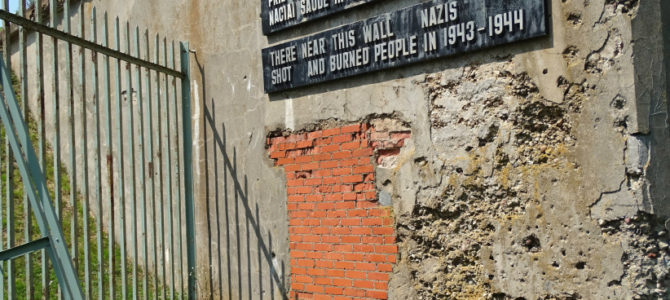
Photo: Adam Jones/Wikimedia
Lithuanian Government “shares concerns” of Jewish community over proposed Holocaust law

Lithuania’s Jewish community and members of the expatriate Lithuanian Jewish community in Israel have expressed serious concern about possible legislation in the parliament in Vilnius which would declare the Lithuanian state and people didn’t collaborate in the murder of Jews during the Holocaust.
Member of Lithuanian parliament Arūnas Gumuliauskas and chairman of its State Historical Memory Committee said last month he would propose legislation declaring the Lithuanian state didn’t participate in the murder of Jews because it was an occupied nation, first by the Soviet Union and then by Nazi Germany.
The parliamentary draft resolution has not yet been submitted to the parliament. The parliament goes into recess this Wednesday.
Gumuliauskas’s resolution, which he said was being prepared by the committee, would also claim the Lithuanian people could not have participated in the murder of Jews since Lithuanians were “an enslaved people” during World War II.
Full article here.

Press release, lrytas.lt
Representatives and technical coordinators from Lithuania’s Turto Bankas, which administers and maintains real estate belonging to the state, the Lithuanian Jewish Community and the Committee for the Preservation of Jewish Cemeteries in Europe have arrived at joint solutions for renovating Vilnius’s Palace of Sports as a conference and cultural venue and preserving the territory of the old Šnipiškės Jewish cemetery which surrounds the building.
The reached basic agreement on solutions for reconstruction and maintaining the cemetery territory.
The decisions made regarding the technical project are based on a protocol signed by Lithuanian Government and the Lithuanian Jewish Community in 2009 on heritage protection for the site and a buffer zone and on reconstructing the former sports arena for conferences and other cultural events. The Committee for the Preservation of Jewish Cemeteries in Europe approved the protocol in 2016.
by Arkadijus Vinokuras, translated by Geoff Vasil
Lithuania’s Genocide Center has published another finding of alleged historic dimensions, transforming Nazi collaborator Jonas Noreika into a Righteous Gentile who rescued Jews from the Holocaust. The story goes, he organized a network for rescuing Jews from the Šiauliai ghetto. How many professional historians did it take, after long discussion and examination of the facts, witnesses and circumstance, to come to this stunning conclusion exactly on Christmas Eve? One. And he’s not an historian, he’s a geologist working as a public relations expert.
What do the professional historians say about this finding (it was written based on testimony by the Catholic priest Jonas Borevičius to a court in the United States)? Director and senior academic of the Lithuanian History Institute, doctor habil. of the liberal arts Alvydas Nikžentaitis and Vilnius University History Faculty professor Dr. Nerijus Šepetys appear to hold the same opinion: if this were a student’s work, it wouldn’t weather critique and would receive a very poor grade indeed. It’s appalling the director of the Center for the Study of the Genocide and Resistance of Residents of Lithuania signed off on the finding.
Before I go further, I’d like to remind my detractors as well as proponents I have never, neither in writing or orally, demeaned Jonas Noreika’s nor Kazys Škirpa’s devotion to Lithuania from 1941 to 1944. If real, reliable documentary evidence were discovered demonstrating I have made a mistake, for example, regarding Jonas Noreika, I would change my mind. My criticism was and is directed against the criteria for heroization by which the Genocide Center facilely lionizes those who are tainted with the persecution of their Jewish fellow citizens.

Dear reader,
I was going to tell you about the importance of being #JewishandProud in the face of rising anti-Semitism.
I was going to try to string together some eloquent words about our responsibilities to our fellow Jews.
I was going to tell you that #JewishandProud is already being used around the world in 28 countries and counting; that it has attracted support and pledges of participation from Hollywood stars, to members of Congress, to British lords.
Find out how you can participate at AJC.org/JewishandProud.
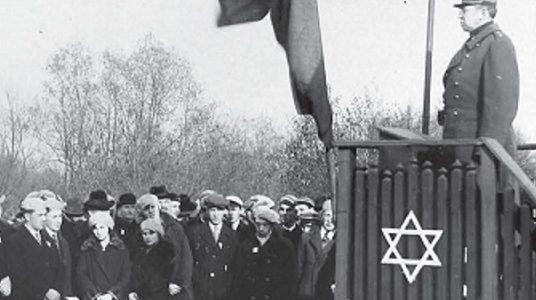
The Lithuanian parliament is hosting a photo exhibit called “Brave Jews of the Battle for Lithuanian Freedom” in its exihibt space from January 2 to 15. The photo exhibit chronicles Lithuanian Jewish veterans who fought for Lithuanian independence in the run-up to the first republic in 1919, including a large number of officers, recipients of military awards and those who laid down their lives for the new state.
The Lithuanian Jewish Community and the Vytis Support Fund organized the photo exhibit. It was inspired by a similar exhibit at Yad Vashem on Austrian Jewish military heroes.
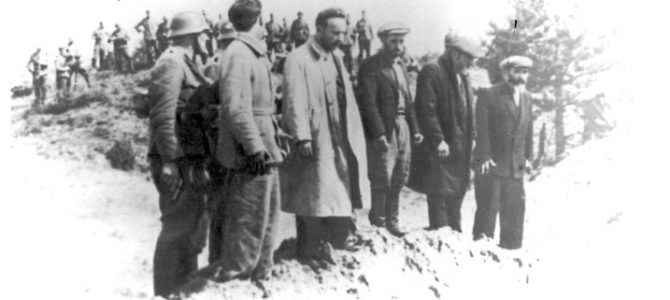
A Lithuanian MP announced December 16 he would draft and submit legislation for a parliamentary resolution declaring the Lithuanian nation or people and the Lithuanian state were not complicit in the Holocaust, since Lithuania was occupied by Nazi Germany at the time upwards of 96% of all Lithuanian Jews were exterminated, mainly at the hands of ethnic Lithuanians.
Arūnas Gumuliauskas, chairman of the parliament’s Commission on Battles for Freedom and State Historical Memory, allegedly announced his intention to introduce the legislation at an event at the Lithuanian National Library.
A press report on Lithuania’s 15min.lt website said the idea was reminiscent of Poland’s recent law making it illegal to call Nazi death camps in Poland “Polish.” Gumuliauskas refused to disclose details of the language of the resolution, saying it hadn’t been written yet, and hinted he would not reveal either who his advisors were in writing the document.
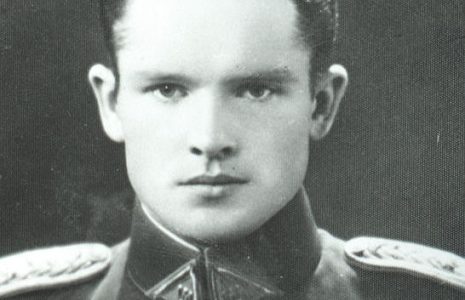
Just when the roiling waters surrounding the Noreika controversy in Lithuania started settling, Lithuania’s Orwellian Center for the Study of the Genocide and Resistance of Residents of Lithuania (abbreviated to Genocide Center among almost all vulgar mortals) has stirred the pot yet again with a new “historical finding” exonerating the Holocaust perpetrator, whom they plainly stated was a Holocaust perpetrator in their earlier “findings.”
Based on a deposition and/or court testimony allegedly made in Chicago in 1984 or 1986 by a Lithuanian Jesuit, the latest finding by Lithuania’s state-funded Holocaust distortion agency says Jonas Noreika set up a network of priests to smuggle Jews out of the Šiauliai ghetto to safety on the farms of sympathetic farmers, and that he was the leader of some mythical anti-Nazi underground resistance movement during the Nazi occupation of Lithuania.
Lithuanian Holocaust distorters in the past, including at the Genocide Center, have dismissed almost all Holocaust survivor testimony as hearsay which cannot be taken at face value without a deep review of the facts. Facts they claim only they are privy to. In actuality, when independent Holocaust researchers conducted studies on Noreika for Grant Gochin’s court case against the Genocide Center for the crime of Holocaust distortion and denial, the Center fired back on their website claiming Gochin’s research was amateurish and “might be” in violation of both the Lithuanian criminal code and the Lithuanian constitution. Gochin’s research, incidentally, turned up testimony by an eye-witness that Jonas Noreika as LAF commander in Žemaitija, the western region of Lithuania, directly issued the command to execute a group of over 1,000 Jews.
The Lithuanian Jewish Community strongly condemns irresponsible statements issuing from the Center for the Study of the Genocide and Resistance of Residents of Lithuania leading the public into error in connection with the actions of Jonas Noreika as head of the Šiauliai district during World War II.
The statement Jonas Noreika “didn’t understand ghettos were one of the stages of the Holocaust” till the liquidation of the Žagarė ghetto is an example of Holocaust revisionism and denial, committed by a state-funded institution. So-called evidence presented allegedly showing Jonas Noreika organized the rescue of Jews is not based on any facts or testimonies by Holocaust survivors. Does the staff of the Genocide Center really want us to believe they have now found a way to interview Jonas Noreika himself, and can therefore state definitively what he “knew” and “when he knew it?”
Based on Noreika’s actions just in establishing ghettos and selling the property of murdered Jews alone, the Lithuanian Jewish Community states once again, that Jonas Noreika was a Holocaust perpetrator. The LJC reserves the right to take the Genocide Center to court and to seek other legal remedies regarding their on-going speculations on the Holocaust.
by Rūta Miškinytė, 15min.lt

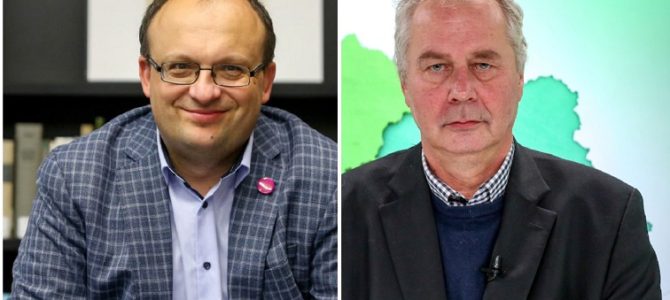
Following the publication by the Center for the Study of the Genocide and Resistance of Residents of Lithuania of a finding compiled by Dalius Egidijus Stancikas on Jonas Noreika’s alleged rescue of Jews from the Holocaust, Lithuanian historians have expressed dissatisfaction with the finding and its methodology. Lithuanian History Institute director Alvydas Nikžentaitis lambasted its uncritical acceptance of sources while Vilnius University History Faculty dean Nerijus Šepetys said the finding was a disgrace to the Genocide Center and highly mendacious.
The Genocide Center Wednesday published the finding claiming controversial figure Jonas Noreika Jonas Noreika engaged in rescuing Jews from the Holocaust and set up a network for doing this. The only piece of evidence offered was an oral testimony from Jesuit priest Jonas Borevičius published in the United States in 1986.
Full story in Lithuanian here.
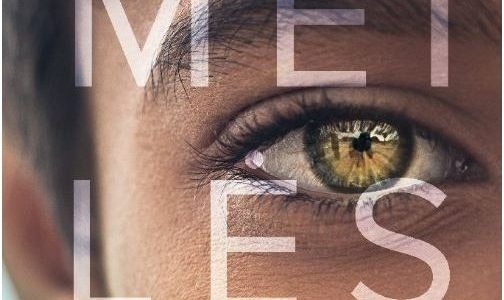
Israeli ambassador to Lithuania Yossi Levy is a veteran novelist with some six titles under his belt in the Hebrew book market. His latest, Love Peddlers (a provisional title since no English translation yet exists), was translated to Lithuanian and published by Sofoklis in Vilnius just recently under the title Meilės preikeiviai, roughly, “Merchants of Love,” certainly a more intriguing if not salacious hook for readers than the classic anti-war work Merchants of Death.
To celebrate the publication, a book launch was held at the Lithuanian National Library, moderated by Litvak author and former director of the Vilna Gaon Museum Markas Zingeris. The format was a sort of back-and-forth loose discussion, with Mr. Zingeris posing questions and thoughts, and Mr. Yossi responding. Unfortunately for whatever reason Markas Zingeris’s voice didn’t carry in the room in Lithuanian or English, so the effect was of some random words and phrases, followed by monologues by the Israeli ambassador which might or might not have addressed the question.
Yossi Levy’s side of the discussion was charming, personal, funny and at times spell-binding. He spoke about himself more than his work, which he said was both autobiographical and not autobiographical. He talked about his diplomatic career, which he said was wholly in Europe, and wondered why he chose Europe, since his family has no roots there. He shared the difficulties of being gay in Israel and elsewhere, and talked about his husband and their child. He also said there was a tension in his life between his role as writer and diplomat. As a writer he was able to explore topics which would be strictly taboo in the diplomatic sphere. As an example, he talked about something he wrote about a Jewish homeland in Europe, loosely centered on present-day southeastern Poland, whence Israeli Jews could be evacuated from the tense situation in the Middle East. “I called one city Tel-Lvov,” he said with a smirk.
Simonas Dovidavičius passed away December 14. He was deputy chairman of the Kaunas Jewish Community, the founding light and director of the Sugihara House museum in Kaunas, highly educated, a tour guide and a good friend. His loss is a great loss to the Lithuanian Jewish Community and the Kaunas Jewish Community. Our condolences to his many friends and loved ones.
Those wishing to bid him farewell may do so at the St. Anthony of Padua Church in Kaunas, Radvilėnų highway no. 15A, Kaunas, on Tuesday, December 17, beginning at 5:00 P.M. He will be buried at noon on December 18 at the Aleksotas Jewish cemetery in Kaunas.
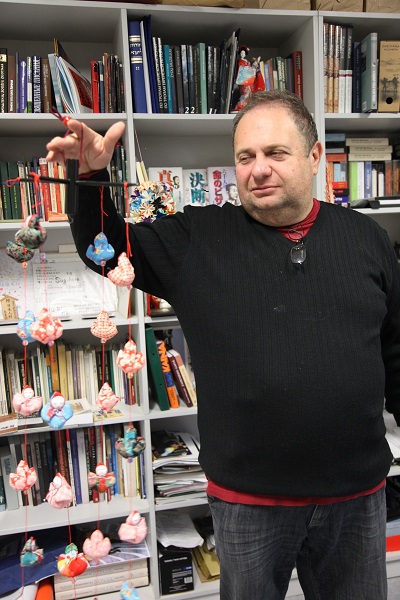

Come meet writer, yoga teacher and Community member Eva Tombak at 6:00 P.M. on Tuesday, December 17, at the LJC in Vilnius.
The Lithuanian translation of Israeli writer and Israeli ambassador to Lithuania Yossi Avni-Levy’s book Love Peddlers will take place at the Lithuanian National Library in Vilnius at 6:00 P.M. on December 18. The book-launch event will be moderated by Litvak writer Markas Zingeris. Promotional materials for the event say it will be held in English.
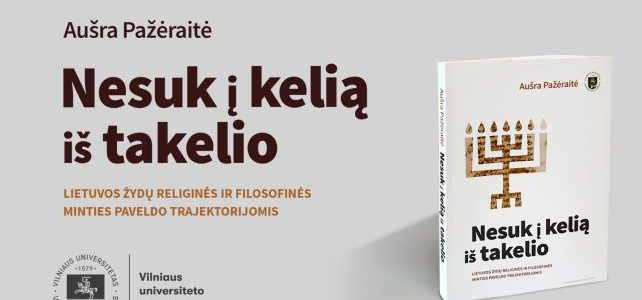
The publishing house of Vilnius University has published a new book called “Nesuk į kelią iš takelio. Lietuvos žydų religinės ir filosofinės minties paveldo trajektorijomis” [Don’t Quit the Path for the Road: Along the Trajectories of the Litvak Religious and Philosophical Thought Heritage]. The Lithuanian-language book contains extracts from the texts of the Vilna Gaon, Chaim of Volozhin, Grozdinsky, Israel Salanter and Emmanuel Levinas with commentaries.
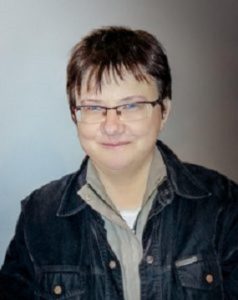
Dr. Aušra Pažėraitė has written a bit about her book especially for the www.lzb.lt website:
“It has long been my dream to write a book talking about, examining and interpreting the heritage of Litvak religious and philosophical thinking. … [Among others,] another problem which arose was the time-period and the range of what Litvak means. I mean the problem of geographical boundaries in which we can look for the Litvak heritage, which has changed drastically over history, and it happens that the same historical figures are assigned to Lithuania’s, Poland’s and Russia’s legacy… So I chose a narrower problem, the Litvak-ness which is associated with religious tradition, historically connected with the Vilna Gaon and his circle of followers. So this allowed for choosing a specific perspective which would allow me to connect schools of thought otherwise hard to reconcile: the Western understanding of religion which is still forming in the modern period, which seems to so many people self-evident… i.e., between the written sacred texts and the oral texts, the traditional of passing traditions on orally. …”
The book is available at the Vilnius University bookstore, at the Versmė chain of bookshops and on the internet sites patogupirkti.lt, knygos.lt and humanitas.lt
by Laura Kešytė
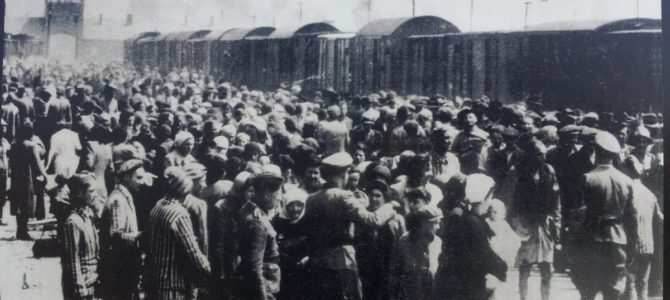
When did filmmakers start working on the topic of the Holocaust? How did they choose to portray it? Is it possible to present the horror of the Holocaust on camera? Cultural historian Violeta Davoliūtė-Opgenorth talks about this.
Violeta Davoliūtė-Opgenorth is a senior academic at the Lithuanian Cultural Research Center and is a visiting professor at the École des hautes études en sciences sociales. In 2015 and 2016 she worked as an academic at Yale’s Whitney and Betty MacMillan Center for International and Area Studies. She defended her dissertation “Testimony: From the Poetics of Place to the Politics of Memory” at University of Toronto.
The development of the topic of the Holocaust in cinema in Western Europe, especially in the 1960s and 70s, is closely connected with the trial of Adolf Eichmann and with Hanna Arendt’s articles about the trial compiled in her book Eichmann in Jerusalem and published in 1963, and with Raul Hilberg’s research, whose book published in 1961 distinguished clearly for the first time the categories of perpetrator, observer, judge and victim.
These sparked politically painful discussions in European countries about who the collaborators, victims and observers were in World War II and what their roles were, their prototypes and how to present them properly. This was directly connected with the cinema because the cinema exerted great influence on these discussions and historical research in general: it offered new perspectives for telling the story of WWII to its audiences. In other words, the cinema didn’t just reflect but actively encouraged a shift in the narratives of history.
Full text in Lithuanian here.
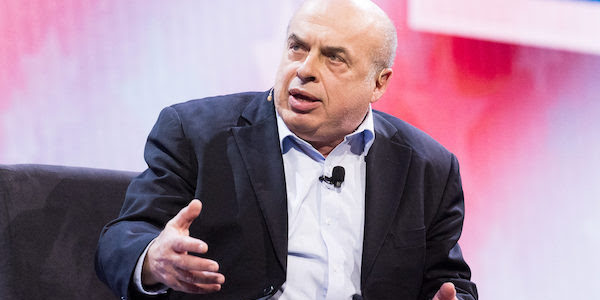
Photo: Natan Sharansky, a Soviet refusenik and Israeli lawmaker, was named the 2020 Genesis Prize laureate. (Michael Brochstein/SOPA Images/LightRocket via Getty Images)
by Laura E. Adkins
NEW YORK (JTA)–The Genesis Prize Foundation has announced that Natan Sharansky, a Jewish refusenik, prolific leader in the Soviet Jewry emigration movement and former Israeli politician, will be awarded the 2020 Genesis Prize.
The Genesis Prize, dubbed the “Jewish Nobel,” was started in 2013 and is financed through a permanent $100 million endowment. The annual award honors “extraordinary individuals for their outstanding professional achievement, contribution to humanity and commitment to Jewish values.”
Sharansky was selected to honor “his extraordinary lifelong struggle for political and religious freedoms, emphasizing the relevance of his work in today’s world,” the Genesis Prize Foundation said in a news release.
by Grant Arthur Gochin
The first mass murders of Jews in the Holocaust began in Lithuania. Germany had not yet decided to annihilate the Jews of Europe; they had put forth the idea to relocate Jews to Madagascar or Uganda, but the war made this plan impossible. Lithuania proved to the Nazis that there was indeed an alternative.
Between occupations by Russia and Germany in 1941, Lithuania was governed by an interim Provisional Government, led by Prime Minister Juozas Ambrazevičius Brazaitis. The Lithuanian Provisional Government displayed to Nazis how easily a population could be enticed into perpetrating genocide.
Upon Nazi arrival, Einsatzkommando 2 of the German Security Police asserted charge of murders of Jews. Einsatzkommando 2 reported the murder of 114,856 Lithuanian Jews as early as December 1, 1941. One hundred and thirty-nine Nazi personnel, of whom forty-four were secretaries and drivers, and ninety-five were murderers, directed this slaughter. Local Lithuanians enthusiastically and voluntarily conducted the looting, raping, torture, enslavement and murders of their Jewish neighbors. Thereafter, Germany introduce the Final Solution of the Jewish problem in January 1942.
Full text here.