
Learning

Warsaw Summons Israeli Ambassador Following Statement on Restitution

Warsaw Summons Israeli Ambassador Following Statement on Restitution

Warsaw Sunday reported they had summoned the Israeli ambassador for discussion following Tel Aviv’s statement a law adopted by the Polish parliament on restitution to Holocaust victims was “immoral.” Experts say the new law would basically halt the restitution of property to Jews and others.

Polish foreign minister Pawel Jablonski said Warsaw sought to clarify the situation regarding the new law. Israeli embassy chargé d’affaires Tal Ben-Ari Yaalon “was summoned and we explained to her clearly and based on facts about all of this,” Jablonski told Polish broadcaster TV Polonia about the meeting on Monday. “We believe, unfortunately, they we have come upon a situation where some Israeli politicians seek to exploit this for domestic political gain,” he said.

Holocaust Anniversary Commemoration in Gargždai

Holocaust Anniversary Commemoration in Gargždai

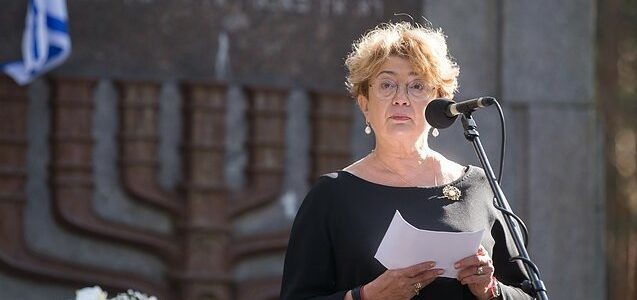
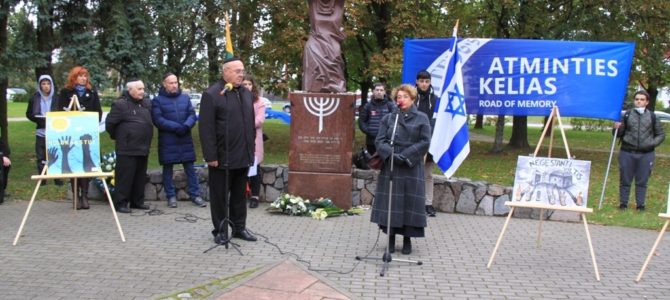
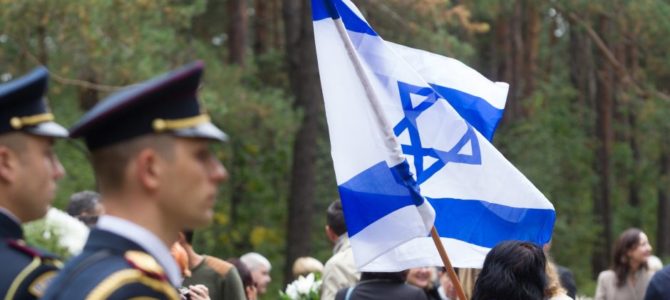
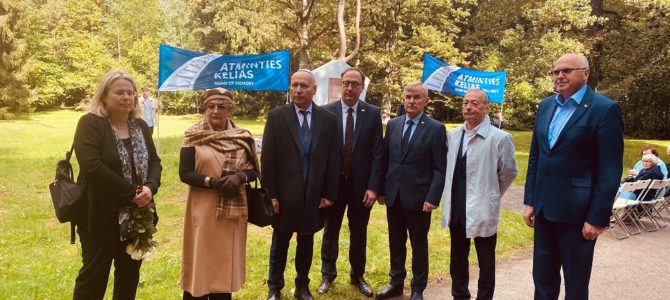
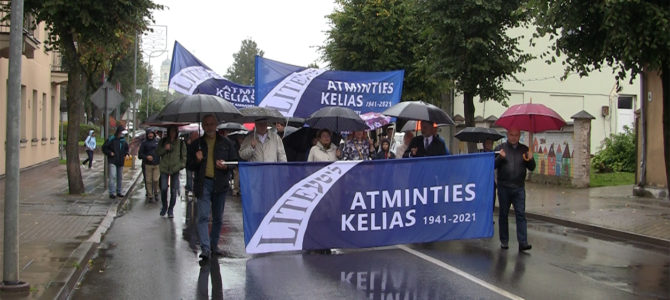
The first procession in this year’s series of “Path of Memory” commemorations to mark the 80th anniversary of the beginning of the Holocaust was held in Gargždai, Lithuania, on June 23. The Lithuanian prime minister, Lithuanian Jewish Community chairwoman and the chairmen of the Klaipėda and Palanga Jewish Communities attended and spoke at the event.

“We lost many of our fellow Jewish citizens during the Holocaust and we can only imagine what Lithuania’s academic, cultural and economic life might have been if not for the Holocaust,” Lithuanian prime minister Ingrida Šimonytė told reporters the day before the event.

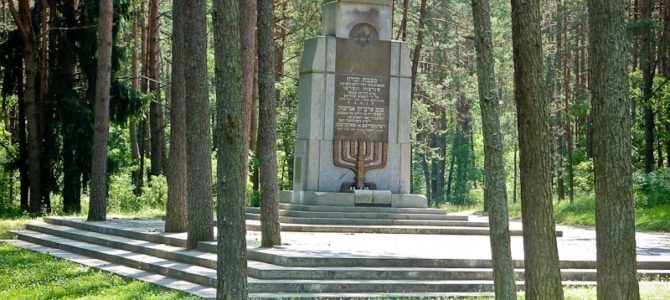
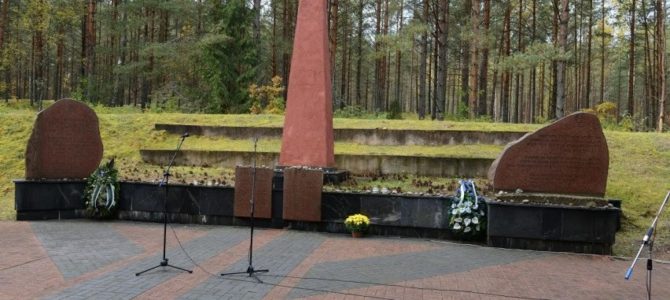
The commemoration took the form of a march from the site of a former synagogue to the Jewish mass murder site where a ceremony was held and speakers spoke. Some attendees carried stones with the names of murdered Jews on them, in keeping with the Jewish tradition of placing stones at a grave.

Here are some photos from the first “Path of Memory 1941-2021” commemoration held in Gargždai.

Photographs by Laima Penek, the Chancellery of the Government of Lithuania and others.

An Assessment of the Holocaust and Our Moral State: A Virtual Discussion

An Assessment of the Holocaust and Our Moral State: A Virtual Discussion

One of the most painful periods in Lithuania’s history began 80 years ago in the summer of 1941, the beginning of the Holocaust in this country. We lost hundreds of thousands of our fellow citizens constituting a significant portion of the population of Lithuania’s cities and towns. The Lithuanian Jewish Community is holding a virtual discussion in Lithuanian on June 28 to mark this painful anniversary.

Participants:

• LJC chairwoman Faina Kukliansky, attorney;
• Arūnas Bubnys, director of Lithuania’s Genocide Center;
• Saulius Sužiedėlis, professor emeritus, Millersville University;
• Justinas Žilinskas, writer, publicist and professor of the European Union Law Institute at Mykolas Romeris University;
• Vytautas Bruveris, writer and analyst, Lietuvos rytas newspaper;
• Paulius Gritėnas, philosopher, observer and member of the executive board of the Human Rights Monitoring Institute;
• Donatas Puslys, director of the media and democracy program, Vilnius Policy Analysis Institute.

Writer and director of the Šeduva Jewish Memorial Foundation Sergejus Kanovičius will moderate.

The discussion is scheduled for 7:00 P.M. on Monday, June 28. You can watch it live on the LJC facebook page:
https://www.facebook.com/events/777981389558688/

Lietūkis Garage Commemoration

Lietūkis Garage Commemoration

Around 50 Jewish men were tortured and murdered at the Lietūkis autoservice lot in Kaunas on June 27, 1941. Randomly grabbed off the streets, they were beaten with crowbars and water hoses were used to burst their stomachs. The victims included day workers, students, merchants, a musician, former director of the Industry and Trade Department of the Lithuanian Finance Ministry Jurgis Štromas and others. Many of the victims and perpetrators remain nameless to this day.

We will commemorate the victims of the Lietūkis Garage massacre and the 80th anniversary of the beginning of the Holocaust in Lithuania at 5:00 P.M. on June 28, 2021, at the monument to the victims located at Miško street no. 3 in Kaunas.

At 6:30 P.M. the same day we will unveil a new sign in remembrance of the victims at the Žaliakalnis Jewish cemetery, where it is believed they were buried.

The Kaunas Jewish Community and the city of Kaunas invite you to join us in remembering the innocent Jewish citizens of Lithuania who were murdered.

We would be grateful if you could announce your intention to attend by sending an email to ieva0102@yahoo.com

Gercas Žakas, chairman
Kaunas Jewish Community

Choral Synagogue Prayer Service for Holocaust Victims

Choral Synagogue Prayer Service for Holocaust Victims

June 22, 1941, was the date the Nazis invaded Lithuania, Belarus and neighboring countries and the Holocaust began. Today the Choral Synagogue in Vilnius will hold a prayer service to remember the beginning of the Holocaust in Lithuania. Unlike in the West, Jewish victims in the East were mainly executed near their homes. Over just a few months in the summer and fall of 1941 the vast majority of the once-populous Jewish community of Lithuania were exterminated.

Commemorations of the 80th Anniversary of the Holocaust around Lithuania

Commemorations of the 80th Anniversary of the Holocaust around Lithuania

Palanga

The Lithuanian Jewish Community, the Palanga municipality and the Klaipėda and Palanga Jewish Communities commemorated the beginning of the Holocaust in Lithuania with a ceremony at the stone commemorating victims in the Palanga Botanical Garden on June 22.

Gargždai

A procession called “Path of Memory 1941-2021” to mark the 80th anniversary of the onset of the Holocaust in Lithuania is to be held starting at noon on June 23. Participants are invited to assemble at the former synagogue located at Kvietinių street no. 3, next to the Minija movie theater, whence the procession will move to the Jewish mass murder site on Klaipėdos street next to the bus station, culminating in a commemorative ceremony there.

Commemorating the 80th Anniversary of the Holocaust in Panevėžys

Commemorating the 80th Anniversary of the Holocaust in Panevėžys

The Holocaust began in Panevėžys and Lithuania on June 22, 1941. We must not forget how Litvaks lived before the tragedy and how their history ended in 1941.

There are still eye-witnesses to the mass murder of the Jews who lived in the Panevėžys district before World War II. The first mass shootings began in July in the Panevėžys district when ghettos were set up in every town and city, in Panevėžys, Biržai, Kupiškis, Pasvalys, Rokiškis and elsewhere.

The Panevėžys Jewish Community and the scouts of Panevėžys have undertaken a project conceived by Michailas Adomas and Elena Adelina to maintain the mass murder sites in the district.

This time the clean-up began June 9 in the Kurganova Forest in the Panevėžys region. Volunteers including Panevėžys scouts and the chairman of the Panevėžys Jewish Community participated. The scouts learned about the Holocaust in Panevėžys, the Panevėžys district and Lithuania.

In total around 200,000 Jews were murdered in Lithuania with about 13,500 Jews murdered almost immediately in the Panevėžys region.

Lithuanian Parliament Adopts Resolution on Great Losses and Resistance to Totalitarian Occupational Regimes

Lithuanian Parliament Adopts Resolution on Great Losses and Resistance to Totalitarian Occupational Regimes

Photo: Children in Kaunas ghetto, courtesy Yad Vashem.

Today [June 15] the Lithuanian parliament adopted a resolution on commemorating the 80th anniversary of great losses and resistance to the occupations of Lithuanian by totalitarian regimes which says “After Nazi Germany occupied Lithuania, the Nazis began to carry out the genocide of the Jews of Lithuania, opening the way to mass murders and violence, leading to the loss of the larger part of the Jewish community.”

The language of the resolution is missing an essential element, a reminder that the mass murders were carried out with the aid of local collaborators. Would you like to put it more simply and clearly? There were people in the Lithuanian cities and towns who murdered their Jewish neighbors. Should we put it yet another way? There weren’t Nazi tanks and units standing by the side of the gravel pits on the forest margin, there were armed local men who fatally shot Jews lined up there, men, women and children [in Lithuania Jewish children were often murdered by smashing their heads against trees and rocks or with rifle butts in order to save ammunition–translator]. Another formulation which frightens us so much is also missing: there were Lithuanians among those who organized and physically carried out the genocide.

Does that sound horrible? But it’s the truth. The truth which is so hard to admit yet again. Perhaps the Lithuanian parliament is following the Lithuanian saying, “one teaspoon of tar ruins the barrel of honey?”

If so, it’s being misapplied, because the Lithuanian people aren’t a barrel of honey, and the Lithuanians who murdered Jews aren’t a teaspoon of tar. They are criminals who have committed crimes against humanity. A nation who can admit such people existed in its ranks is a brave and honorable nation. It’s not that their sins pass down to us, just that today’s generation is still afraid of the truth.

The Lithuanian Jewish Community had hoped the voice of the only Jewish member of the Lithuanian parliament, Emanuelis Zingeris, would be heard. He proposed amending the text of the resolution to read “the Nazis and their local collaborators.” He was not heard. Neither were the Lithuanian Jewish Community and the thousands of victims who stood before their armed neighbors, and millions of Jews and other people of goodwill around the world who are only asking for one thing, to face the truth.

Before writing this commentary, many people said: “It’s not worth raising the issue, it’s better to keep quiet, remain silent, not irritate, not sow discord.” But as Tomas Venclova said, “We should avoid descending into these scandals, but they will be inevitable as long as there are defenders of the Nazi collaborators.”

Faina Kukliansky, chairwoman
Lithuanian Jewish Community

Amehaye Summer Camp Coming Soon

Amehaye Summer Camp Coming Soon

The Lithuanian Jewish Community is pleased to announce the our annual Amehaye summer camp for 2021:

June 28-July 2 Children aged 7-10 (day camp), register here;
July 5-July 9 Ages 10 to 13 (including overnight), register here;
August 2-August 6 Ages 14 to 17 (overnight), register here;
July 18-July 23 Jewish scouts (overnight).

.

For more information send an email to amehaye2021@lzb.lt or call +370 601 46656.

Monument to Vilnius Jews

Monument to Vilnius Jews

by Victoria Sideraitė-Alon

The old Jewish cemetery in the Šnipiškės (Shnipishok) neighborhood in Vilnius wasn’t destroyed in a single day. Back at the turn of the 19th to 20th century, the remains of 700 Vilnius Jews buried there were exhumed and reburied in a different part of the same cemetery during construction in the surrounding area.

Later during the Soviet era during the mid-20th century when work went on to extend what is now Šeimyniškių street, encroaching again on the old Jewish cemetery, these 700 burials were again exhumed and sent to a different grave. They were rediscovered in 2003 during construction of apartment houses next to Vilnius’s King Mindaugas Bridge. At the time, Lithuanian Jewish Community chairman Simonas Alperavičius resolved to have these 700 reinterred at the still-operational Jewish cemetery on Sudervės road in Vilnius. The reburial ceremony was attended by LJC officials and rabbis. The new grave there was marked with four posts.

Litvak Nobel Prize Winner Bernard Lown Commemorated in Utena

Litvak Nobel Prize Winner Bernard Lown Commemorated in Utena

The city of Utena in northeast Lithuania has a new piece of public art, a bronze heart, to recall the birth there of Bernard Lown, Nobel prize winner and famous cardiologist who invented the defibrillator.

The statue comes as part of a project by cultural historian Sandra Dastikienė called “Old Neighbors” intended to bring public attention to the Jewish community’s legacy in the Utena region.

“To heal communication between the Lithuanian and Jewish peoples, we have to start at the grassroots level, from the culture of the small towns or shtetls, where both separate communities lived together in peace for centuries. It was that, namely neighborliness, that I want to emphasize with my project in Utena, Anykščiai, Molėtai and Dusetos,” Dastikienė said.

Lown was born in Utena on June 7, 1921, to a family of Jewish merchants. Fearing growing anti-Semitism and seeking a better life for their children, his parents took the family to the USA in 1935. Bernard Lown studied medicine there and was graduated in 1945. He passed away earlier this year in February at the age of 99.

Speech by President von der Leyen at the American Jewish Committee Virtual Global Forum 2021

Speech by President von der Leyen at the American Jewish Committee Virtual Global Forum 2021

June 9, 2021–European Commission president Ursula von der Leyen addressed thousands participating in the 2021 American Jewish Committee (AJC) Virtual Global Forum. She reiterated the Commission’s commitment to fighting antisemitism, fostering Jewish life, Holocaust remembrance and strong EU-Israel partnership.

“After taking office as Commission president in 2019, I stepped up Europe’s fight against anti-Semitism. This is why, later this year, the Commission will adopt its first-ever ‘EU Strategy on Combating Anti-Semitism and Fostering Jewish Life’ … All European students should learn about the Holocaust, no matter their background, family history or country of origin. … We want to foster Jewish life in Europe in all its diversity. We want to make sure that Jews are free to follow their religious and cultural traditions. … The European Commission has significantly increased the budget for preventing and addressing anti-Semitism and fostering Jewish life, and we will also take action if European money is used to call into question Israel’s right to exist.”

Full speech here.

Congratulations to Rūta Ribinskaitė on Earning Her Bachelor’s Degree

Congratulations to Rūta Ribinskaitė on Earning Her Bachelor’s Degree

The Lithuanian Jewish Community congratulates Rūta Ribinskaitė for successfully defending and taking first place among final works for earning a bachelor’s degree at the International Relations and Political Science Institute of Vilnius University. Her work was titled “(Un)Fading Stereotypical Images of Jews: A Qualitative Analysis of the Internet News Site Delfi.lt.”

She told us: “Thank you for the opportunity to connect with the Jewish community, to acquire a lot of information, to gain experience and get to know members of the community, which led to my successful completion of studies.”

Way to go, Rūta.

LJC Chairwoman Faina Kukliansky Part of Žiežmariai Synagogue Supervisory Assessment Commission

LJC Chairwoman Faina Kukliansky Part of Žiežmariai Synagogue Supervisory Assessment Commission

Lithuanian Jewish Community chairwoman Faina Kukliansky has participated in the commission for the final supervisory assessment of work done to restore the synagogue in Žiežmariai, Lithuania. Work on the ground floor is now complete.

Work on the building is drawing to an end and the synagogue is set to begin hosting educational, cultural, tourist and other public activities. Following completion, it could become an important community site and tourist attraction.

Currently the synagogue is hosting an exhibit of reproductions of drawings by Dora Pilianskienė. She came from Žiežmariai and as a young Jewish woman left her hometown, but at an advanced age began drawing and painting images she cherished from Žiežmariai. Her relatives have bequeathed her works to the Žiežmariai Culture Center.

US Rep: Quisling Lithuanian PM Brazaitis Wasn’t Exonerated or Rehabilitated

US Rep: Quisling Lithuanian PM Brazaitis Wasn’t Exonerated or Rehabilitated

United States representative Brad Sherman (D, Sherman Oaks, California) has asked the Lithuanian ambassador to the United States for clarification regarding claims by the Lithuanian Government the pro-Nazi prime minister in the Lithuanian Provisional Government of 1941 was somehow exonerated by the Congress in the 1970s.

Congressman-Sherman-to-Ambassador-Plepyte-Letter-Response1

Correspondence leading to the latest letter:

Help Mark the 80th Anniversary of the Beginning of the Holocaust in Lithuania This Year

Help Mark the 80th Anniversary of the Beginning of the Holocaust in Lithuania This Year

Dear Community members,

This year we’ll mark the 80th anniversary of the onset of the Holocaust in Lithuania. The Lithuanian Jewish Community is creating a digital chronicle to help the broader public understand how Litvaks lived before the Holocaust and what happened to their communities beginning in 1941.

We are asking you to share the stories and photographs of your relatives who lived in the Lithuanian shtetls and died in the mass murders in 1941 or the years following.

Everyone is invited to participate by sending copies of photographs and short texts including biographies and descriptions of murders to info@lzb.lt or zanas@sc.lzb.lt

Please indicate the names of people in photographs, locations and dates if available.