Learning, History, Culture

Conference at Lithuanian Parliament: “They Rescued Jews, They Rescued Lithuania’s Honor”

Seime organizuota konferencija „Gelbėję Lietuvos žydus, gelbėję Lietuvos garbę“

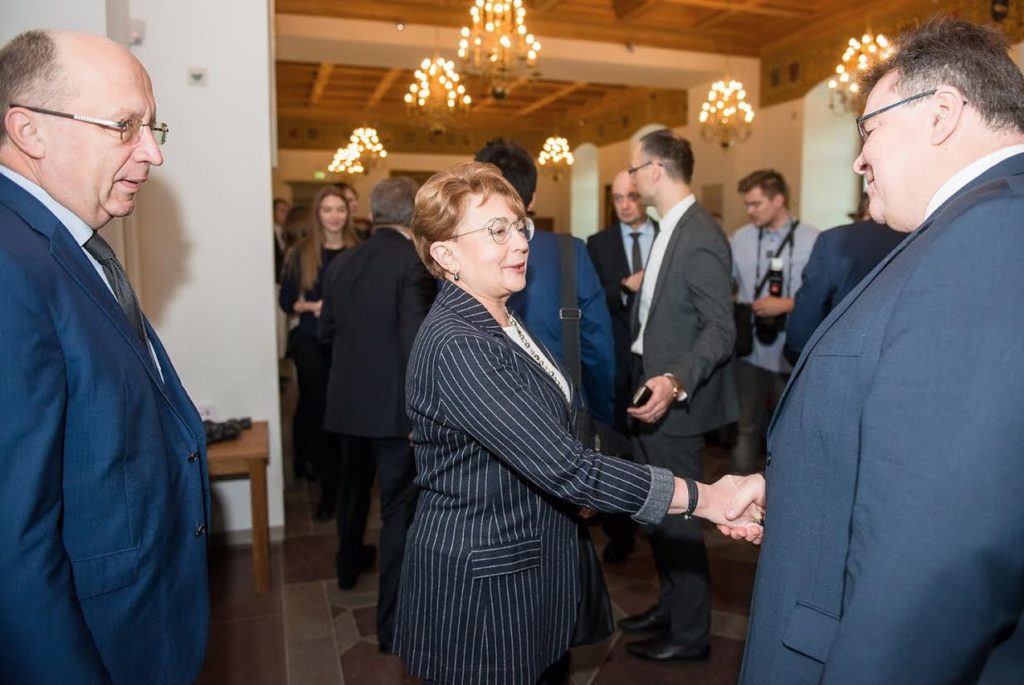
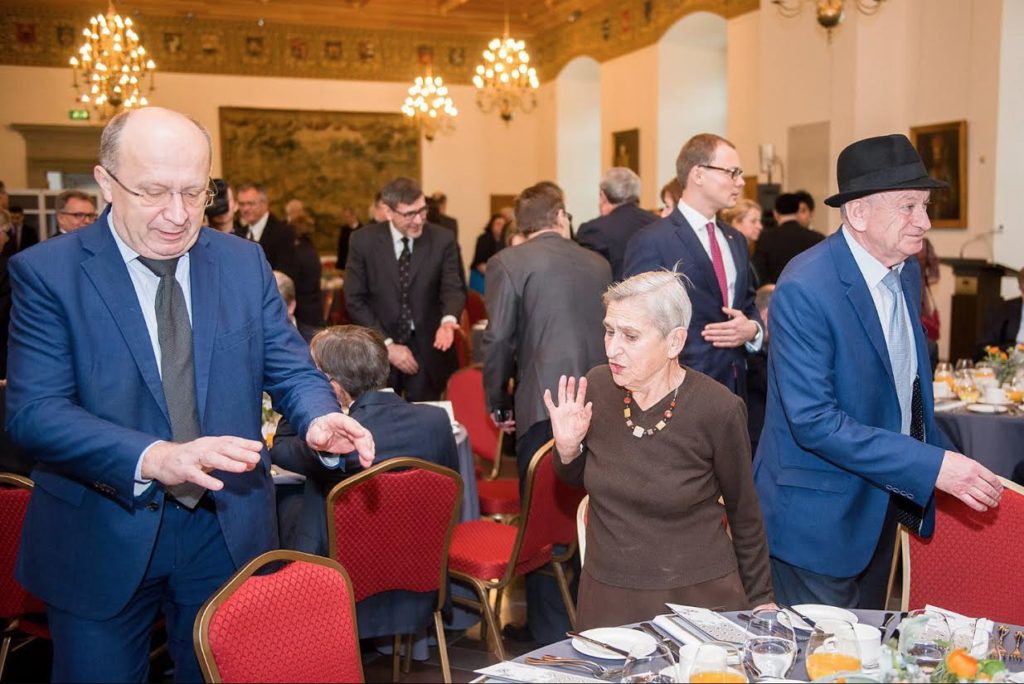
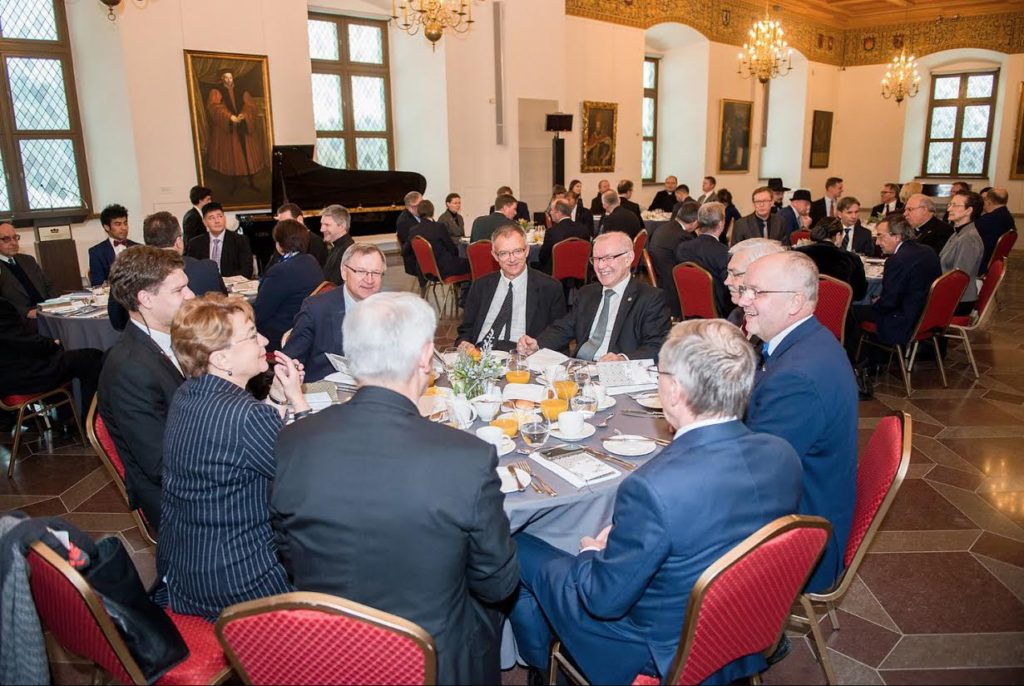
Vilnius, September 25, BNS–The Lithuanian parliament held a commemoration of the Lithuanian day of Holocaust remembrance Sunday. The Lithuanian Jewish Community organized a conference there called “They Rescued Jews, They Rescued Lithuania’s Honor.”

LJC chairwoman Fainia Kukliansky, American Jewish Committee international affairs director Andre Baker and US embassy chargé d’affaires ad interim Howard Solomon participated.

Historian Alvydas Nikžentaitis surveyed Jewish life in Lithuania, academic Joachimas Tauberis from Hamburg spoke about Hitler and Stalin’s policies and anti-Semitism in Lithuania from 1939 to 1941, historian Algimantas Kasparavičius gave a presentation about the policies of the Provisional Government of Lithuania and the beginning of the Holocaust in 1941 and recordings of testimonies by survivors and rescuers were played.

The Day of Remembrance of the Lithuanian Jewish Victims of Genocide has been marked in Lithuania since 1994. It is held on September 23, the day the Vilnius ghetto was liquidated in 1943.

Lithuanian Radio To Revisit Litvak Past

lrtradijas

Beginning September 25 Lithuanian state radio will broadcast a series about Lithuanian shtetls. Radio journalists will talk about nine small Lithuanian towns where only a few buildings stand in silent testimony to their once thriving Jewish life, and will interview people now in their 80s who remember that legacy from childhood.

The episodes in the series will be broadcast every second Sunday after the 11 o’clock news and during the Ryto garsai progream on Tuesdays at 9:00 A.M. The first episode for broadcast September 25 is about Molėtai.

Lithuanians and Jews lived in common in the shtetls before World War II and not only made a life for themselves, but contributed deeply to the creation of the Lithuanian state and the economic and cultural development of the towns. War and the Holocaust, which saw the complete destruction of entire Jewish shtetl communities, and the various roles played by Lithuanian neighbors, followed by decades of occupation, have largely pushed this part of history into oblivion.

Not all who remember the time of Jewish prosperity are eager to talk about it. Many people are still steeped in feelings of fear, guilt and shame. At the same time descendants of Holocaust survivors are coming back in ever greater numbers to the birthplaces of their parents, grandparents and great-grandparents and making sense of a land which for many years only kindled negative emotions. Some of them are working to strengthen Lithuanian-Jewish relations, others seek to preserve the memory of their ancestors.

This documentary series won’t be easy listening. Even 75 years later, witnesses to the Jewish tragedy aren’t able to quell their tears and many are unable or unwilling to understand this darkest period in Lithuania’s history. On the other hand, they also recall the happy life of Lithuanians and Jews before the war, including childhood friends, the many Jewish shops and the taste of fresh bagels.

Lithuanian national radio frequencies:

Vilnius 89.0 MHz

Kaunas 102.1 MHz

Klaipėda 102.8 MHz

Šiauliai 100.9 MHz

Panevėžys 107.5 MHz

First episode about Molėtai available in Lithuanian here.

Remembering the Holocaust in Panevėžys

Žydų tautos tragedija nepamiršta

Marking the Day of Remembrance of the Genocide of the Jews of Lithuania, in Panevėžys they remembered the Jews who lived here and those who saved them as well as the victims.

Darkest Page

September 23 wasn’t chosen arbitrarily. This was the day in 1943 when the Vilnius ghetto was liquidated. Some of the residents were shot, while others were taken to concentration camps.

Panevėžys Jewish Community chairman Gennady Kofman noted 75 years had passed since the first group of Jews were shot in the city and the arrests began. Fifty-seven Jews were arrested and then murdered in the Staniūnai Forest.

In July of 1941 a Jewish ghetto was set up in Panevėžys. Kofman said over its 42 days of existence, more than 14,000 Jews “passed through” the ghetto. The Community said initially there were 4,423 inmates. When the ghetto was liquidated, all the Jews were shot: 8,000 in Kurganava Forest and 4,500 in Žalioji Forest. Ninety-five percent of Jews of Panevėžys were murdered during the war.

Full story in Lithuanian here.

LJC Chairwoman Faina Kukliansky Speaks at Ponar September 23, 2016

LŽB pirmininkės F. Kukliansky kalba Paneriuose Holokausto aukų pagerbimo ceremonijoje

Dear participants,

I am sincerely thankful that you have gathered here today together with the Jewish Community to honor the memory of Holocaust victims.

But can we truly speak about honoring Holocaust victims when multiple streets in Lithuania are named after Kazys Škirpa, there is a school named after Jonas Noreika and the monument to Juozas Krikštaponis has still not been torn down?

We don’t have public spaces named after Ozer Finkelstein, Katz Motel or Volf Kagan. How many know the name of Liba Mednikienė, a scout in the Lithuanian battles for independence? Despite her service, she was murdered by Lithuanians during the Holocaust.

This and similar fates awaited the victims at Ponar. Our younger generation still doesn’t know about 650 years of Jewish history in Lithuania, before, during and after the Holocaust. Will the history textbooks teach this to the young citizens of Lithuania someday?

The Lithuanian Jewish Community has more questions than answers. The only sure thing is that an irreversible process has taken place and the country will never again be what it was before the Holocaust. But the Jewish Community is still here, and as long as it is, it will seek justice. But the highest value, truth, can only be restored when Lithuania works up the courage to name the perpetrators of the Holocaust. To remain silent about the Holocaust perpetrators, to forget the victims of the Holocaust and to disregard the living Jewish community is the same thing as killing the Jews again.

Today we mark the 75th anniversary of the beginning of the mass murder of the Jews in Lithuania. Our hope is that the smaller towns of Lithuania will remember their lost Jewish communities all year round, not just during Holocaust commemorations. From sporadic, random and often simply superficial events, memory of the Holocaust needs to become general knowledge, to become an integral part of the worldview of every conscientious citizen of Lithuania.

Thank you all who are not indifferent to the memory of the Holocaust, the Jewish tragedy, Lithuania’s tragedy.

Lithuanian Jewish Genocide Victims Honored at Ponar

Paneriuose pagerbtos Lietuvos žydų genocido aukos

lrkm.lrv.lt

A ceremony to honor the victims of the genocide of the Jews of Lithuania was held at the Ponar Memorial Complex on September 23. The event was organized by the Ministry of Culture, Ministry of Foreign Affairs, National Defense Ministry, the Lithuanian Jewish Community, the International Commission to Assess the Crimes of the Nazi and Soviet Occupational Regimes in Lithuania and the Vilnius municipality.

A minute of silence was observed and wreaths and flowers were laid at a monument to Holocaust victims. Students sang the Vilnius ghetto anthem. Vilnius ghetto inmates shared their thoughts. A cantor performed kaddish and an Israeli choir performed songs and hymns.

Before the ceremony participants in the Way of Memory civic initiative read the names of people murdered at Ponar, including the age and profession of victims, bringing the dead and the living closer together.

Lithuanian Defense Minister and Commander of Ground Forces Honor Victims at Ponar

Paneriuose rugsėjo 23 d. krašto apsaugos ministras Juozas Olekas ir Lietuvos kariuomenės Sausumos pajėgų vadas pagerbė Holokausto aukas

On September 23 Lithuanian defense minister Juozas Olekas and commander of Lithuanian ground forces brigadier general Valdemaras Rupšys participated at a ceremony to honor the victims of the Lithuanian genocide of Jews at the Ponar Memorial Complex. They placed a wreath at a monument there in the name of the ministry and the military.

Also participating at the ceremony were Lithuanian Independence Act signatory and chairman of the Lithuanian Supreme Soviet/Constituent Parliament Vytautas Landsbergis, members of parliament, other representatives from national defense and soldiers in the Lithuanian military’s honor guard.

Information courtesy the Lithuanian Ministry of National Defense.

Vilkaviškis Jewish Life before World War I (continued)

Vilkaviškio miesto žydų gyvenimas prieš Pirmąjį pasaulinį karą (tęsinys)
Photo from Ralph Salinger’s archive

Santaka.info (Part II) A Continuation, published in issue no. 103

A Frigid Climate and No Hospitals

There were no hospitals in Vilkaviškis, home to about 8,000 people. There were only two doctors and one midwife. Later, when I was a teenager, a dentist stayed in the community for a while. In cases of the unexpected, for example, appendicitis, the deeply afflicted either got better by themselves, or they died, because there were no surgeons. And there wasn’t even talk of health education. In every courtyard people had their own wells for drinking water which often stood… right next to excrement. So it was no surprise typhoid fever was epidemic. The disease took many lives.

Full story with continuation in Lithuanian here.

Remembering the Genocide of the Jews of Balbieriškis

There is a period in the history of the town of Balbieriškis (Balbirishok) when more than 50 percent of the population was Jewish. It is important for us to know what happened to the Jewish people in occupied Lithuania and Europe during World War II. It’s important we understand the Holocaust was the mass murder of the Jews, not just Ponar, the Ninth Fort in Kaunas or another Jewish mass murder site. The Holocaust is a tragedy, it is the loss of Jews who lived in Lithuania, Lithuanian citizens who lived in Lithuania and built our nation, while maintaining their own traditions and culture.

To mark the 75th anniversary of this tragedy, on September 23 Balbieriškis primary school principal Stasys Valančius gave a civics lesson to students in grades 5 through 10 to remember the Jewish victims of genocide of the town of Balbieriškis. After lighting symbolic candles and after a hush enveloped the auditorium, the names of Jews who lived here and were brutally murdered were read out loud: Sarah, Yitzhak, Chaim, Dora, Tsila, Riva, Gita, Keyla, Jaakov, Aaron…

Students in the art group aided by the teacher Ona Žvirblienė held an exhibit of drawings, using art to help make the pain and the tragic history more understandable. Representatives from grades 5 through 8, each carrying a stone in hand, traveled to Marijampolė and Prienai to join the citizens’ initiative “Memory Road.” The International Commission for Assessing the Crimes of the Nazi and Soviet Occupational Regimes in Lithuania has been marking this day for 12 years now. Symbolically, in our thoughts, we went down the same road along which the Jews of Balbieriškis were sent to their deaths. The stones of memory, warmed by young hands, were placed at the mass murder site.

We hope that by remembering the innocents who were murdered, by revisiting this tragic page of history, we will become more tolerant to one another, that we will not fan the flames of hatred, and that we will come to understand there is no such thing as someone else’s pain.

Reda Valančienė, teacher

Unforgotten Names: Plungė Photographer Movsha-Mendel Berkovich

Nepamiršti vardai. Plungės fotografas Movša-Mendelis Berkovičius

by Jolanta Klietkutė
bernardinai.lt

Looking through surviving photographs of residents of Plungė between the two world wars, we come to realize most of the photographs were taken by M. Berkovich. If you ask old-time residents of Plungė who he was, they’ll tell you he was a famous photographer in town back then, and they’ll take you to show you his home where his studio was. Sadly, that’s the full extent of the information available… everyone knew he was this photographer, but nothing more.

THe biography of Berkovich, one of the most famous photographers in Plungė between the wars, has not been written yet. In his book “Lietuvos fotografijos istorija’ [History of Lithuanian Photography], V. Juodakis only provides a single sentence: “There was a photographer named M. Berkovich (1905-1932) in Plungė.” When we look at surviving photographs by Berkovich in museums and collectors’ archives, however, we see he photographed from 1903 to ca. 1939.

The photographer’s name was even concealed in the stamp, which included only his first initial, M, and which was placed on the back of photographs.

Full story in Lithuanian here.

Seeking Holocaust Reconciliation in Lithuania, from Los Angeles

lith3

The Museum of Genocide Victims in Vilnius, the capital of Lithuania, occupies a stately stone building on a large, forested park in the city’s center. It is notably not a Holocaust museum. To find the Holocaust Exposition, look for a small, clapboard wooden building on a narrow side street.

Instead, the museum commemorates atrocities more often spoken of in Lithuania: the lethal brutality of the Soviet regime against citizens of the Baltic country, with Lithuanians as victims rather than perpetrators.

Half a world away, Grant Gochin, a wealth manager in Woodland Hills, has spent the better part of a quarter-century trying to bring about greater recognition for the genocide carried out largely by ethnic Lithuanians against their Jewish neighbors during the Holocaust.

Full story here.

Adam le Adam Concert in Vilnius Today

Israeli vocal ensemble Adam le Adam will perform one concert exclusively in Vilnius at the Old Town Hall square today at 6:00 P.M., September 22. The concert is free and open to the public.

Adam le Adam (Hebrew for “person for person”) is a group of 14 vocalists who perform Israeli and traditional Jewish folk songs in authentic arrangements. The ensemble was established by the late composer Jacob Hollaender in 1978. Under his musical direction the ensemble performed throughout Israel and recorded for radio and TV. Adam le Adam had also participated at International choir festivals in various countries around the globe.

During recent the musical director of the ensemble is maestro David Sebba.

Adam le Adam has won first place in choir competitions and has performed a novel program of choral soul music at the most distinguished festivals in Israel such as the Abu-Gosh Festival and the Vocalize in Acre. The ensemble has performed with the Raanana Symphonette Orchestra and the Israel Sinfonietta Beer-Sheva Orchestra at Nes-Amim Church and in the Bible-Lands Museum. Adam le Adam has also performed with other distinguished artists for the prime minister of Israel.

Vilnius concert song-list:

Farewell by S. Rosen, Y. Hollaender
Holiday Evening Alone by T. Attar, Y. Hollaender
Loved Her by T. Attar, Y. Hollaender
Prisoner No. 9/Thou Shalt Love Thy Neighbor by T. Alyagon, Y. Hollaender
Yom Kippur Prayer by O. Hammama
Bulgarian Folk Song/In the Vineyard of Yemen by N. Alterman,M. Zeira, M. Wilensky
Paneriai by A. Shlonsky, A. Tamir

Kaunas Jewish Community Visit Balbieriškis and Prienai

Kauno žydų bendruomenė lankėsi Balbieriškyje bei Prienuose.

The Kaunas Jewish Community visited Balbieriškis and Prienai, Lithuania at the invitation of Balbieriškis Tolerance Center director Rymantas Sidaravičius on the European Day of Jewish Culture, September 4. The delegation toured a Balbieriškis Tolerance Center exhibit on the history of the Jews of the town and reflecting the center’s current relationships and friendships with Jews from around the world. They also toured the town, where Jewish homes and buildings from before the war still stand, and honored the memory of the dead with a prayer at the old Jewish cemetery in Balbieriškis.

Representatives then went to Prienai and honored Holocaust victims there. In Prienai they attended a museum event dedicated to the European Day of Jewish Culture. The museum event included a stirring presentation of the history of the Jews of Prienai, funny stories from Jewish life from before the war, significant achievements, good relations between Jews and other town residents and the Holocaust. The event included passages in Hebrew and Yiddish. The hosts made the delegation feel right at home at every stop on their visit, as if they were visiting old friends.

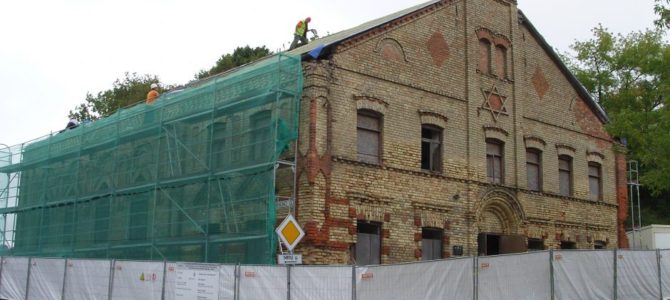
Former Alytus Synagogue to House Museum

Buvusi sinagoga taps muziejumi

lzinios.lt

Renovation has begun on a century-old synagogue in Alytus, Lithuania. The building was used to store salt in the Soviet era and is now set to become a city community center and museum of Jewish culture. The Lithuanian Jewish Community, the Cultural Heritage Department and Israeli ambassador to Lithuania Amir Maimon who visited the town all gave their approval to the plans by Alytus. Support was pledges to secure funding to set up the museum of Jewish culture there and to acquire the necessary exhibit items.

Full story in Lithuanian here.

March of Memory in Semeliškės

semel

March of Memory in Semeliškės

at the former ghetto, Užupio street no. 14, Semeliškės at 12 noon, October 6, 2016, to commemorate the mass murder of the Jews of Semeliškės, Vievis and Žasliai in the Dergionys Forest 75 years ago.

We invite all people of good will to join this initiative to honor the victims of the Holocaust. Our being together on that day will symbolize our solidarity, our respect for the history of our region and our aspiration to make sure this kind of tragedy never happens again.

Patron: Elektrėnai municipal administration
Organizer: Strėva Semeliškės community
Partner: Semeliškės aldermanship

“We all must tell ourselves: this is our nation’s past. We are the heirs and must accept our inheritance. We will not raise even one person from the grave, we will not reconcile the victim with his murderer, but perhaps we will learn the lesson, so that what happened happens never again.”

Father Ričardas Doveika

“To die and to forget share the same root in the Lithuanian language. The Jews of Lithuania were murdered once, but we can still remember the story of each one. We can still do that. So who are we, if we think this doesn’t concern us? Who are we? From what clay are we made? If they are not us, who are we? Who are we? What does ‘we’ mean?”

Virginijus Savukynas, journalist

LJC Olameinu International Children’s Camp 2016

LŽB tarptautinė vaikų stovykla Olameinu 2016

Lithuanian Jewish Community youth programs coordinator and camp programs director Pavel Gulyakov reported the only negative at the camp this year was some not-so-great weather, it rained, preventing the children from visiting beautiful Lake Asveja at times. The camp went international this year with children from Jewish communities in all three Baltic states.

Exiled to Siberia: Mama Didn’t Have a Kopek

Tremtinys I. Šliomovičius: mama neturėjo nė kapeikos

Text and photo by Daumantė Baranauskaitė manoteises.lt

More than seven decades ago the livestock cars began to leave Kaunas. Four-year-old Iser Shlomovich watched his father growing distant in one of those train cars. Iser, a Jew, his twin brother, sister and mother would all be deported to Siberia, too. When Lithuania was still an independent country, father and mother Shlomovich spoke Yiddish at home but spoke Russian to the children, so they would learn flawless Russian. As later events showed, they bestowed a great gift upon their children. Although most people don’t realize it, Lithuanian Jews were deported along with ethnic Lithuanians in 1941.

Full story in Lithuanian here.

Uncomfortable Cinema: The Holocaust

“Nepatogus kinas” – Holokausto tema

bernardinai.lt

The human-rights documentary film festival Nepatogus Kinas [Uncomfortable Cinema] is placibgspecial emphasis this year on the Holocaust. Many directors, film researchers and film historians continue to revisit the theme of historical memory and traumatic experience to this day. A retrospective called “Holocaust: Memory on the Silver Screen” is being organized with the Berlin-based film and video art institute Arsenal to digitize and restore film stock. The retrospective is being presented at Uncomfortable Cinema festival, the first opportunity for viewers in Lithuania to see the restored works. A conversation with film and video art institute Arsenal representative Gesa Knolle on Arsenal’s work and what memory on the silver screen means:

Looking at Lithuania, Germany and all of Europe, anti-Semitism as with any other form of xenophobia or racism is an important topic we need to discuss. How could it happen in 2008 that Jewish partisans were accused of World War II-era war crimes? And no charges have been laid against Lithuanians who collaborated with the Nazi Party? In German as in Lithuania anti-Semitism was widespread in the early 20th century. As Michael McQueen says, there was the aspiration that a “pure” Lithuanian people make up the state, and that was completely incompatible with the existence of the Jewish population in the country. Before the Nazis occupied Lithuania in 1941, the Jewish community in the state was a population of about 210,000 people. More than 95 percent of residents of Jewish origin were murdered during World War II. How was that possible?

Full story in Lithuanian here.

Bernardinai logo

In New York You Can Register to Vote in Yiddish

voterregister

In further efforts by city’s Board of Elections to expand voter access, registration forms now available for Yiddish-speaking constituents

JTA September 20, 2016

The New York City Board of Elections has made voting registration forms available in Yiddish.

The forms were available starting Monday, according to a statement by state Assemblyman Dov Hikind, a Brooklyn democrat.

Hikind, who is Jewish, said he requested in December that the Board of Elections provide the forms in Yiddish.

Our People Lie Buried Here

1919-zydu-zemes-ukio-mokykla-veliucionys

Simon Wiesenthal director and author Efraim Zuroff and Lithuanian author Rūta Vanagaitė are inviting Lithuanians to mark the Day of Remembrance of the Genocide of the Jews in Lithuania on September 23 this year by looking up the mass murder site closest to the their homes and making the trek there to light a candle and perhaps leave a small stone at the grave, a Jewish tradition.

Zuroff and Vanagaitė are focusing commemoration efforts on the town of Vėliučionys, a mass murder site about 12 kilometers outside Vilnius.

Efraim Zuroff:

This coming Friday, Lithuania commemorates the Holocaust, and Rūta Vanagaitė and I have launched a special initiative entitled “Čia guli Musiškiai” (Our People Lie Buried Here) to encourage Lithuanians to visit the mass grave of Shoa victims nearest their home. In all, there are 227 recognized mass graves in Lithuania, documented in the Lithuanian Holocaust Atlas, which is available online.

We are encouraging residents of Vilna/Vilnius to visit one of the most neglected mass graves near the city at a place called Vėliučionys, where 1,159 Jewish men, women and children were murdered by Lithuanian auxiliary police and a special mass murder squad on September 21 and 22, 1941. There will be a brief ceremony at 5 PM as we march from the manor where they were confined to the site of their murder.