
Litvaks

Opening of Exhibit “YIVO in Vilnius: The Legend Begins”

YIVO-d5281c3b6c78a6447dd232c1c135c8d3.jpg

You are invited to the opening of the exhibit “YIVO in Vilnius: The Legend Begins” at the Lithuanian National Museum at Arsenalo street no. 1 in Vilnius at 4:00 P.M., February 18. Exhibit curators: Dr. Lara Lempertienė and Dr. Giedrė Jankevičiūtė.

The exhibit was created to celebrate the 90th anniversary of the creation of YIVO in Vilnius. It includes previously unseen material from Lithuanian state collections on the history and work of YIVO. It demonstrates how YIVO’s work gave stimulus to the intellectual life of the Jews of Vilnius and the wider Central and Eastern European arena. It also presents the city and urban community as a source of inspiration and as the historical and cultural hearth and sustenance for the institute’s work. The exhibit was first shown at the Galicia Jewish museum in Cracow from September 30 to November 8, 2015. The exhibit to open in Vilnius contains additional material.
New Book about Jews of Ukmergė

kn w
by Daiva Zimblienė, lrytas.lt

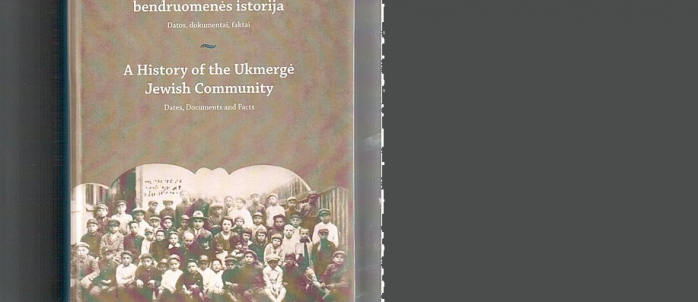
A new book called “Ukmergės žydų bendruomenės istorija” [History of the Jewish Community of Ukmergė] is being passed around from hand to hand in Ukmergė. The almost 500-page book published in Lithuanian and English contains many important historical dates, interesting facts, documents and quotations about the Jews who lived in Ukmergė.

“I am not an artist, only a collector of historical facts. For about 15 years I carefully selected and accumulated different facts about the history of the city and district of Ukmergė. One computer folder began to grow quickly with material about the Ukmergė Jewish community. And that makes sense, because Jews were for several centuries the largest ethnic community in Ukmergė, you could say the dominant one,” author Julius Zareckas, deputy director of the Culture and Public Relations Department of the Ukmergė Ukmergė regional administration, said.

He said the new book is the second book of the same title which first appeared in 2008, with additional material and much more solid research.

Full story in Lithuanian here.

La Cumparsita

by Sergejus Kanovičius

“Šeduva? Oi, oi, oi. What’s your name? Sergejus? Oi, great, come, I’m waiting. When will you arrive? Tomorrow. Really? Šeduva? Come. Oi…”

That’s how I rang into her life last spring. Neither I nor she knew what to expect from our unexpected meeting. I have knocked at the chambers of people’s memories knowing for some the trip back into the past will be pleasant, while for others it will perhaps not be such a joyful return to memories stashed away in the most remote drawers,

I found Frida’s house easily enough, after all it wasn’t very long ago, just two decades ago, that I lived almost right there. She opened the door for me, so fragile, so small, always smiling. After listening to my short introduction about how some strange people were concerned with recording her life and those of her neighbors, their deaths and the disappearance of their home town, she sighed and looking somewhere far off in the distance, as if at the Milky Way of memory, said:

“How long have I waited for you. How very long. All my life.”

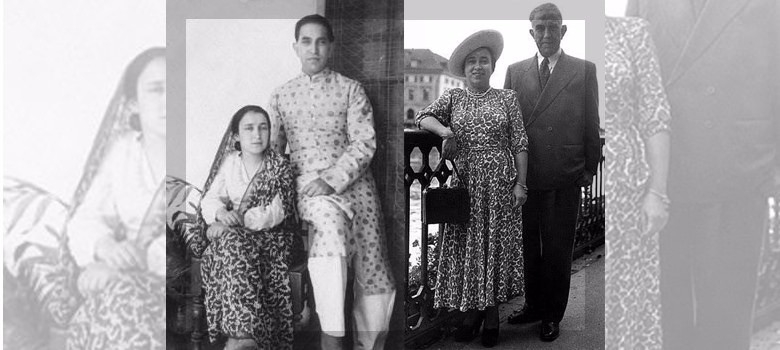
A Story of the Holocaust and the AIDS Epidemic: The Romance of an Indian Muslim Freedom Fighter and a Lithuanian Jewish Woman

headerphoto

by Kenneth X. Robbins and John Mcleod

In 1992 the editor of the Times of India telephoned one of Mumbai’s most prominent businessmen, Dr. Yusuf K. Hamied. The editor asked Hamied “as a Muslim leader” his opinion on the communal riots then taking place in the city. Hamied replied: “Why aren’t you asking me as an Indian Jew? Because my name is Hamied? My mother was Jewish!” His maternal grandparents perished in the Holocaust.

Estera Klabinaitė Grobman, 95, Survivor of the Kaunas Ghetto and Stutthof Concetration Camp, Remembers Everything

Arono mama
photo by Milda Rūkaitė

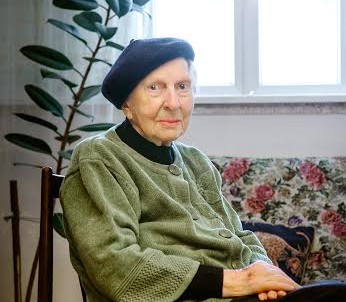
Estera Klabinaitė Grobman was born in November of 1920 in Kaunas to a well-to-do Jewish family who lived in their own home on Vaisių street. She had two brothers and there were three generations living under one roof: grandparents, parents and children. Her grandfather often said he was the Golden Miller because he had light hair and owned a mill. The place where the mill stood was called Klabiniai, so the family’s name was Klabinas. Estera says it was close to Širvintos, Lithuania. She calls herself a Kaunas native and her mother and father owned a small bakery in Kaunas. Fresh-baked bread was delivered by horse each morning in covered containers. They baked delicious bread and the business thrived. They delivered to several shops in the city. Estera remembers her grandmother, the daughter of a rabbi who wrote very neatly. She can’t forget that she was never able to equal her grandmother. According to family tradition her father should have been a rabbi as well and he studied for the rabbinate, but as a child he used to secretly read secular books, and he read much, educating himself. Estera inherited her love of books from her father and to the present reads in four languages: Yiddish, Lithuanian, Russian and German. She is interested in everything.

Events to Mark Holocaust Day in Panevėžys at Noon, January 26

On November 1, 2005, the General Assembly of the United Nations Organization adopted a resolution to mark International Holocaust Remembrance Day on January 27. Remembering the Holocaust is inseparable from studying the causes of this tragedy which rocked civilization to its core and inseparable from teaching and inculcating tolerance and human respect. Lithuania is a member of the International Holocaust Remembrance Alliance and an active participant in international programs to fight anti-Semitism.

The mass murder of Jews began even before the Nazis occupied Lithuania in 1941. Over a few months the majority of the Lithuanian Jewish community were murdered. Survivors were sent as slave labor to the ghettos set up in the cities and towns. The Nazis “liquidated” most of the ghettos after a few short months while the remaining ghettos in Vilnius, Kaunas and Šiauliai operated for another two to three years. The Vilnius ghetto was liquidated on September 23, 1943. Most of the inhabitants were shot to death at Ponar while others were transferred to concentration camps. The Panevėžys ghetto was liquidated on August 15, 1941. Thirteen and a half thousand Jews were shot. More than 200,000 Jews were murdered in Lithuania during World War II, accounting for approximately 95 percent of the Lithuanian Jewish community. There are more than 200 mass murder sites in Lithuania and about the same number of old Jewish cemeteries.

The Jewish community in Lithuania formed near the end of the 14th century. They were a thriving ethnic community in Lithuanian towns and cities by the beginning of the 20th century. In the period between the last half of the 19th and early 20th century, Jews accounted for between a quarter and a half of the population in many cities and towns. They were citizens of Lithuania with their own individual daily cares, worries and joys. Compared to other ethnic communities, the Jewish community was one of the largest in Lithuania.

Pre-War Cookbook Becomes Best Seller

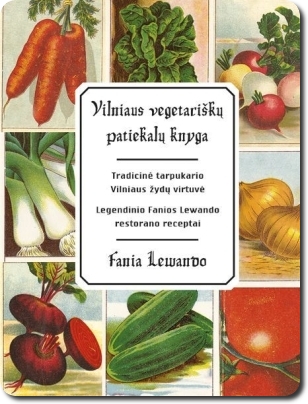
Did you know Fania Lewando operated an extremely popular vegetarian restaurant between the two world wars in Vilnius, a city which had few vegetarians? Diners included Marc Chagall and Itzik Manger, the Yiddish writer, who also left their impressions in the restaurant’s guest book.

The restaurant owner also had a cooking school and kept her healthy and tasty vegetarian recipes in her personal recipe book. It was long thought that book was lost following her death, but it unexpectedly resurfaced at an antiquarian book sale and became an international best seller. Now it has appeared in Lithuanian as well.

TMP_001

Grandson of Vilna Rabbis Awarded Prestigious Science Award

Solomb-Golumb_Nicer

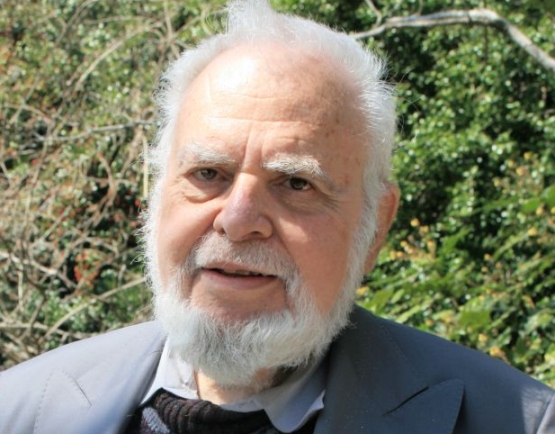
JTA reports a son and grandson of Vilna rabbis has been named the winner of a prestigious science award for his work in mathematics.

Solomon Wolf Golomb, a University of Southern California professor, will receive the Benjamin Franklin Medal given out by the Franklin Institute for his work on the leading edges of science and engineering. Golomb is to receive the Franklin Institute’s 2016 Benjamin Franklin Medal in Electrical Engineering for his work in space communications and the design of digital spread spectrum signals–transmissions which provide security, noise suppression and precise locations for applications such as cryptography, missile guidance, defense, space and cellular communications, radar, sonar and GPS. The award will be presented at the Philadelphia-based institute at a ceremony in April of 2016.

The Franklin Medal was the most prestigious of the awards presented by the Franklin Institute since 1824. With other awards, it was merged into the Benjamin Franklin Medal in 1998. With this award, Golomb will join the ranks of previous Franklin Medal recipients and distinguished laureates, which include Albert Einstein, Marie Curie, Stephen Hawking, Elizabeth Blackburn and Andrew Viterbi PhD ’62, the alumnus for whom the USC engineering school is named.

Review of Mini Limmud Conference 2015

2. sestadienis (340)
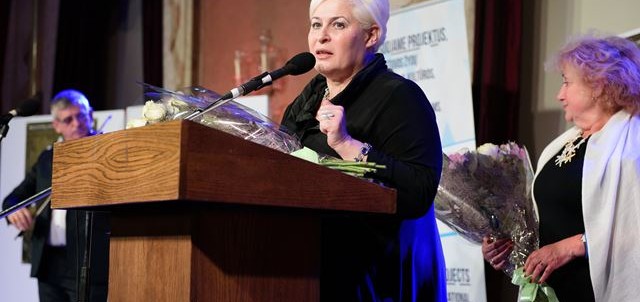
Organizer Žana Skudovičienė at the podium at Mini Limmud 2015.

The Mini Limmud conference is a large educational and entertainment event for Jewish families. The three-day program with overnight stays and entertainment at a hotel was instituted so that everyone might find something of interest and importance in learning about Jewish history, traditions, religion, Yiddish culture and current events. This year the organizer was Žana Skudovičienė. Responses by participants were positive and they expressed their thanks as well as a preference for more interesting speakers next year. Organizer Skudovičienė said they hadn’t been able to invite all the speakers they wanted this year.

“It’s hard for me to evaluate my success because this was the first year I was the organizer,” Skudovičienė said. “Junona Berznitski organized all the earlier Limmuds and I just participated as an MC, and I just had to worry about my clothes and appearance, create some scenes and write a text. But now it was a great challenge for me. I met all the potential speakers and selected only the most interesting people. These all agreed to participate, but there were others who wanted to participate but couldn’t because of plans made earlier. People requested we get reporter Viktor Topaller but everything was limited by funding. We were in touch with Viktoras Šenderovičius who wanted to come but couldn’t, but plans to next time. I wanted to find more Judaism and Jewish history experts, not necessarily from outside the country. Giedrius Jakubauskis delivered an extremely interesting presentation. Attendees were happy with the presentation of Saulius Šaltenis’s new book “Žydų Karalaitės dienoraštis” [“Diary of a Jewish Princess”]. They bought up all the copies of the book brought to Limmud, and we might have brought more from the publisher.”

Conference participants enjoyed meeting Israel’s ambassador to Lithuania Amir Maimon and were eager to learn about Israeli current events. There was a real discussion and people were concerned with why Israel always seems to be at the losing end of the propaganda war in the media. There wasn’t enough time for a comprehensive answer from the ambassador, but we hope to continue this discussion at the Community.

Report from the A Mehaye Winter Camp 2015

713

Pavel Guliakov, the LJC’s new director ew coordinator of youth programs, reports the A Mehaye winter camp is drawing to a close and was a wonderful success.

He said the winter camp is the largest annual youth program event with the greatest participation and requiring the most organizational work. This year a parents’ committee was called to help with organization and to draw up safety measures, rules and disciplinary measures, Guliakov reported.

A team of young but incredibly responsible and talented coordinators, counselors and professionals aided the camp leaders in their work this year. Guliakov noted there was a high level of comfort and familiarity because all of the members of the time except one (the Judaism coordinator) had themselves participated as children in Community youth programs, and besides working as camp guides were involved in all sorts of other outside activities including Jewish music and dance, art workshops and even professional cinematography.

Opening of Exhibition of Litvak Art Accompanied by Music Performed by Levickis

SveikasIzraeli_parodos kuratorė V.Gradinskaitė

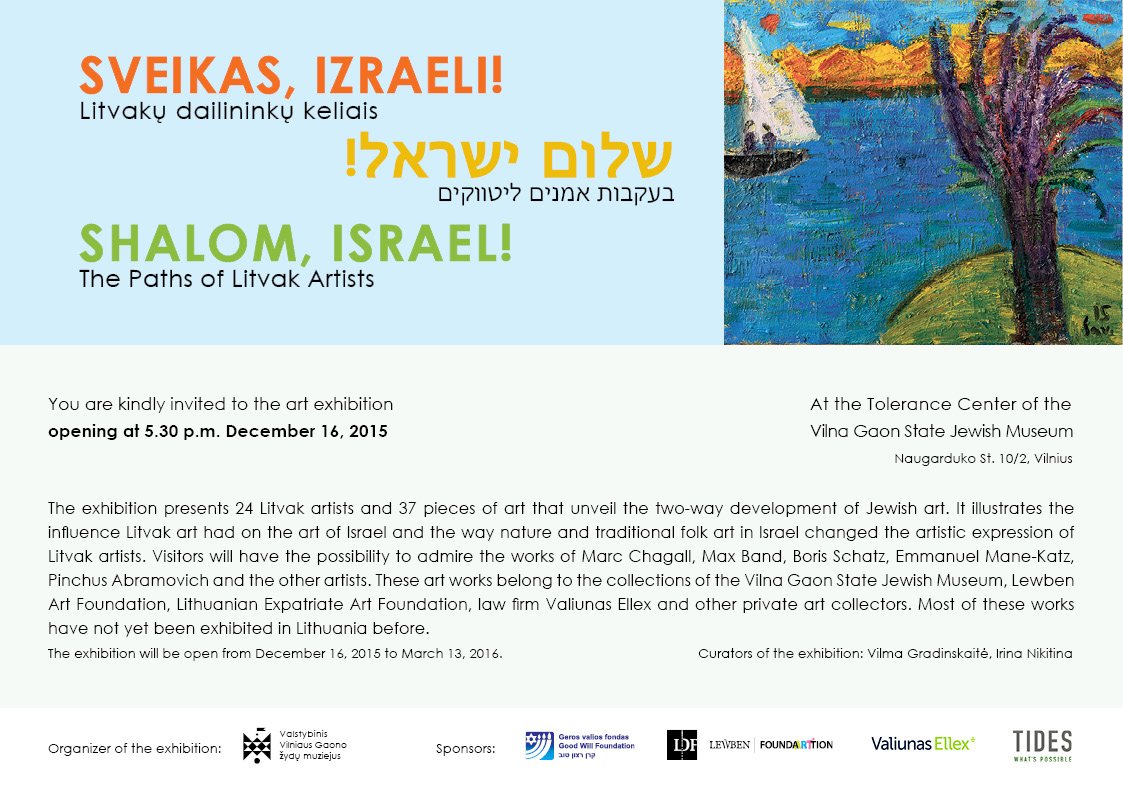
The Tolerance Center of the Vilna Gaon Jewish State Museum unveiled a new art exhibit December 16 called “Shalom Israel! Litvak Artists.” The show includes 37 works by 24 Litvak artists from the museum’s collections, the Lewben Art Foundation, the Lithuanian Exiles Art Fund, the attorney’s office Valiunas Ellex and other private collections. One of the more surprising items at the opening was a musical presentation by Martynas Levickis, accordion player and one of Lithuania’s most famous virtuosos. Levickis performed works by Paganini, Rossini and Vivaldi.

Deputy museum director Dr. Kamilė Rupeikaitė welcomed guests to the event and Valiunas Ellex director Rolandas Valiūnas, Lewben Art Foundation director Indrė Tubinienė and Lithuanian MP Emanuelis Zingeris spoke. Zingeris said Litvak artists kept putting Lithuania on the map even when the country was occupied and acted as Lithuanian ambassadors to the world. He said their Lithuanian origins were indicated next to their works at the most famous galleries everywhere.

Art history expert and curator Dr. Vilma Gradinskaitė presented the idea behind the exhibit and pointed out that almost all of the works on exhibit were being shown publicly for the first time. Two contemporary artists, R. Savickas and A. Jacovskytė, even created works especially for this exhibition. Dr. Gradinskaitė said: “Some of the paintings and graphics works, drawing and medals executed in various styles reveal a dual process in the development of Jewish art and demonstrate how Litvak artists shaped Israeli art, as well as how Israel’s natural environment and local folk-art traditions affected the artistic expression of Litvak artists, including scenery, manner of painting, color palette and mood.”

Jewish Cultural Heritage in Lithuania

The Cultural Heritage Department under the Lithuanian Ministry of Culture has posted a PDF document called Jewish Cultural Heritage in Lithuania:

Jewish Cultural Heritage in Lithuania

Jews settled in the territory of historic Lithuania during the rule of Grand Duke Gediminas in the first half of the 14th century. Economic and historic conditions in the Lithuanian lands proved to be conducive for the emergence of a unique community of Lithuanian Jews, which later became known as the Litvaks. The growing Lithuanian Jewish communities attracted rabbis, who were knowledgeable and experienced in the field of education. Jewish quarters were formed in each town, with a synagogue and a synagogue yard as a prayer house and schooling and administrative centre of the local community. As the authority of Lithuania-based rabbis grew and the Lithuanian Jewish communities prospered, yeshivas, Jewish spiritual high schools, were founded in various Lithuanian towns. From the end of the 19th century, and with yet greater intensity after World War I, a network of secular educational institutions developed in the Republic of Lithuania, in Vilnius, and in the surrounding areas, offering instruction in the Yiddish and Hebrew languages. Local printing houses produced sacred and secular books needed for the educational process. All this collectively created a solid foundation for the Jewish press and high culture—theatre, art and literature—to grow and flourish. The Lithuanian Jewry, like Jewish people everywhere else in Europe, was subjected to the horrors of the Holocaust in 1941–1945. Their cultural heritage fell victim to the destruction alongside its creators. In present day Lithuania, the quiet witnesses of this formerly glorious culture can be encountered in various Lithuanian towns and villages.

Maestro Anatolijus Šenderovas at the “Destinies” Series at the LJC

likimai7

The twenty-second installment of the “Destinies” series regularly organized by Lithuanian Jewish Community deputy chairwoman Maša Grodnikienė featured one of the most famous of contemporary Lithuanian composers, National Prize recipient Anatolijus Šenderovas. Kamilė Rupeikaitė-Mariniuk, PhD, deputy director of the Vilna Gaon Jewish State Museum and an expert in cantillation and music, led the conversation with the composer.

Šenderovas, considered modern composer of unique talent, spoke cheerfully of his life and his musical career. Lithuanians seem quite proud of their composer. His works are performed by many musicians and orchestras, and new variations upon them constantly appear. Many people turned out for the “Destinies” event and left the auditorium inspired by his amazing energy.

Square Named after Emmanuel Levinas in Kaunas

December 11, BNS–The Kaunas city council executive body has agreed to rename the square next to lift carrying passengers to the neighborhood of Žaliakalnis after the philosopher Emmanuel Levinas, the municipality reported Friday. Levinas is considered one of the most famous of Kaunas’s sons. He was born and lived there. Viktoras Bachmetjevas, an early proponent of the project to rename the square, said the proposal is four or five years old.

“I was thinking about how Levinas was one of the most important people ever born in Kaunas, and that there is almost no sign of him here. As a resident of Kaunas, I felt it my duty to increase the number of those signs. If he becomes an attraction in the city, that will be the best way to remember him,” Bachmetjevas commented. Levinas was an existentialist philosopher and a professor at the Sorbonne. He was born and lived in Kaunas’s Old Town and met his future wife there, whom he later married in Paris. His family living in Kaunas were murdered at the beginning of World War II.

A street in Kaunas was named earlier in his honor and there is a memorial plaque to mark his place of birth on a building on Karaliaus Mindaugo prospect.

BNS

Lithuanian Jewish Community in Japan Times

Faina -Japonija
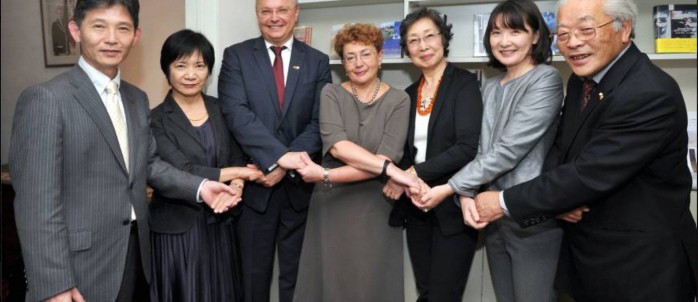
from left, vice-mayor Kazunori Nakayama, Tsuruga, Fukui Prefecture; Kazuko Shiraishi, ambassador for women, human rights and humanitarian affairs and ambassador in charge of Arctic affairs, Japanese Ministry of Foreign Affairs; Lithuanian ambassador Egidijus Meilūnas; chairwoman of the Lithuanian Jewish Community Faina Kukliansky; Michi Sugihara, executive director, Chiune Sugihara Visas for Life Foundation; Madoka Sugihara, vice-chairwoman, Chiune Sugihara Visas For Life Foundation and Shingo Akatsuka, mayor of Yaotsu, Gifu Prefecture, pose during the Chiune Sugihara event at the Lithuanian embassy in Tokyo on November 18. Photo: Yoshiaki Miura

LJC chairwoman Faina Kukliansky visited Tokyo, Japan in mid-November where she attended an event to honor the diplomat Chiune Sugihara at the Lithuanian embassy.

The large audience of Japanese were presented possibilities for cooperation in commemorating the Japanese diplomat who saved Jews during the Holocaust in Lithuania. They also learned about the cultural and intellectual legacy of the Litvaks, the Holocaust in Lithuania and the Lithuanian Jewish Community. The event created a stir and Jews who live and work in Japan participated. Chairwoman Kukliansky granted an interview to the Asahi Shimbun newspaper and their reporter showed great interest in the history of her family, their experiences during the Holocaust and impressions of Japan.

Tirkšliai Wooden Synagogue Gets Legal Protection

lz

A new cultural heritage site has been placed on the list of Lithuanian cultural treasures: the wooden synagogue of Tirkšliai in the Mažeikiai region of Lithuania. The synagogue is believed to be the earliest synagogue in the region built in the late classical style. Cultural Heritage Department director Diana Varnaitė said: “Wooden synagogues are now a rarity in Europe. Bearing in mind how the world values heritage made of wood from the past, we must understand that wooden synagogues are priceless.” She said she was glad another wooden synagogue had been added to the list of cultural treasures and that it will facilitate preserving the site. Antanas Eičas, head of the Telšiai section of the Cultural Heritage Department, said the Žemaitija region is exceptional for its wooden architecture and especially its wooden churches and synagogues. “The Tirkšliai synagogue built in the first half of the 19th century has been listed on the cultural treasures registry. It is now the only remaining wooden synagogue in the Mažeikiai region. It and the former Seda synagogue are from a similar late classical period. Up until World War II there was also wooden Jewish houses of prayer in Viekšniai, Židikai, Leckava, Laižuva and Pikeliai. Let’s preserve this rare and unique cultural heritage treasure,” Eičas commented.

Full story in Lithuanian here.

New Litvak Cultural Museum Concept Presented

Tarbut students on a field trip ca. 1939. Courtesy vilnaghetto.com

Tarbut students on a field trip ca. 1939. Courtesy vilnaghetto.com

The Tolerance Center of the Vilna Gaon Jewish State Museum hosted a presentation by director Markas Zingeris of plans to restore the museum’s building at Pylimo street No. 4 in Vilnius for use as a new museum of Litvak culture and achievements December 3.

Currently the building is mostly empty but formerly housed the museum’s History Department and Gallery of the Righteous. It is actually part of the same building now as the Lithuanian Jewish Community and is connected by corridors with the LJC. Formerly it was the Tarbut Gymnasium or high school established after World War I. The name of the proposed new center is the Center of Litvak Culture and Art.

Zingeris’s plan includes showcasing famous Litvaks who have contributed to culture and science and he presented a number of figures including Nobel Prize winners for inclusion. He emphasized the need to teach the Lithuanian public about Litvak achievements as part of their own history. He also had a map projected onto the overhead screen showing other Jewish cultural museums in Europe and spoke specifically about Vilnius’s place on “the Northern European Jewish route.” Whether this “route” is an official EU program or not wasn’t made clear.

Niv Shimoni Asks LJC for Help Finding Jewish Roots in Aukštadvaris

The Lithuanian Jewish Community has received a letter from Niv Shimoni of Israel. He is interested in his Lithuanian roots which he discovered only recently. His grandfather lived in Aukštadvaris. If anyone is able to help, please contact us via the Communicate section located on the right-hand side of the webpage.

Aukštadvaris

My grandfather, Sneur Razin, was born in Aukštadvaris in 1910, a small village 50 kilometers from Vilnius. During World War II most of his family was murdered in the Holocaust. Before the war he began studies in Kaunas in order to become a pharmacist yet decided to drop everything and make aliyah to Israel. He was active in the Zionist movement which greatly influenced him and of course helped him in his decision to come and be a part of Israel. Now, more than a hundred years later, his children wanted to see where their parents came from (their mother was from Latvia). They returned from this journey filled with emotional impressions, especially because after they discovered a small and remote Jewish cemetery in Aukštadvaris, the final resting place of their grandfather. I have now decided that I, too, must see with my own eyes his resting place and to discover more about him. It is impossible to describe the feelings I would have standing next to my great-grandfather’s resting place which until only a few weeks ago I did not imagine could ever be found. I have a special connection with the city of Vilnius, its past and future and ancient Jewish heritage. It is heartbreaking to see how one of the largest Jewish communities has disappeared almost completely.

All of my big family live in a small village in the north of Israel. They are people who contribute to the State of Israel and the Zionist movement in agricultural education and security. Our grandfather always said it was important to contribute to the state as much as possible. To do more and talk less. My goal is strengthening ties among Jewish communities with the land of Israel.

http://nivshimoni.wix.com/niv-s
http://nivshimoni.wix.com/niv-s#!contact/c24vq

Panevežys Jewish Community Conference Report

p2

Principal Aida Adiklienė opened the conference “The History of the Holocaust: A Bridge from the Past to the Future,” financed by the Goodwill Fund and held on November 25 at the Rožynas Pre-Gymnasium in Panevežys, Lithuania. She emphasized the institution she heads supports the recognition of human rights. In consideration of that, the gymnasium constantly emphasizes local history, including local Jewish history. “It says in the Universal Charter of Human Rights that everyone is born free and equal, with intelligence and conscience,” the principal said. “When we talk about the Holocaust, we are truly talking about our own history. We need to be glad that we have addressed this topic for more than ten years now at the gymnasium.” Adiklienė said the Holocaust is one of the most complicated topics and not all schools want to deal with it. She was disappointed that even now not all people accept people of other religions and ethnicities. She said there were clear signs of intolerance at work in our society.