Litvaks

Jewish Deportations in 1941

Žydų tremtis 1941m.
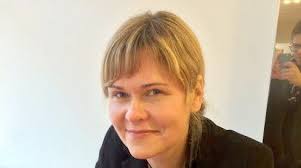
by Violeta Davoliūtė

Seventy-five years after the deportations from Lithuania on June 14, 1941, it’s important to remember they were multiethnic, and that deportees included Lithuanian Jews. Jewish families also appeared on the lists of “socially unreliable elements” and “class enemies” and, with children and infants, were stuffed into the same livestock cars. Most men were immediately separated from their families and sent to camps, while mothers and children were forced to endure a long and torturous journey to Russia’s northern wastes. Many died of hunger and suffering. This chapter in the history of the Jews of Lithuania is still little known by the public today. Yes, there is a study or two, statistics, lists, but, unfortunately, the perception still dominates that Lithuania’s Jews suffered only in the Holocaust, and the myth that all Jews supported the Soviet regime lives on, while society believes the deportations of 1941 are an exclusively ethnically Lithuanian historical experience. If you ask a high school student or even a professional working in higher education to name even one Lithuanian Jew deported by the Soviets, chances are many could not.

Fira Bramson-Alpernienė Has Died

FIRA Bramson
Fira Bramson-Alpernienė
December 18,1924-June 12, 2016

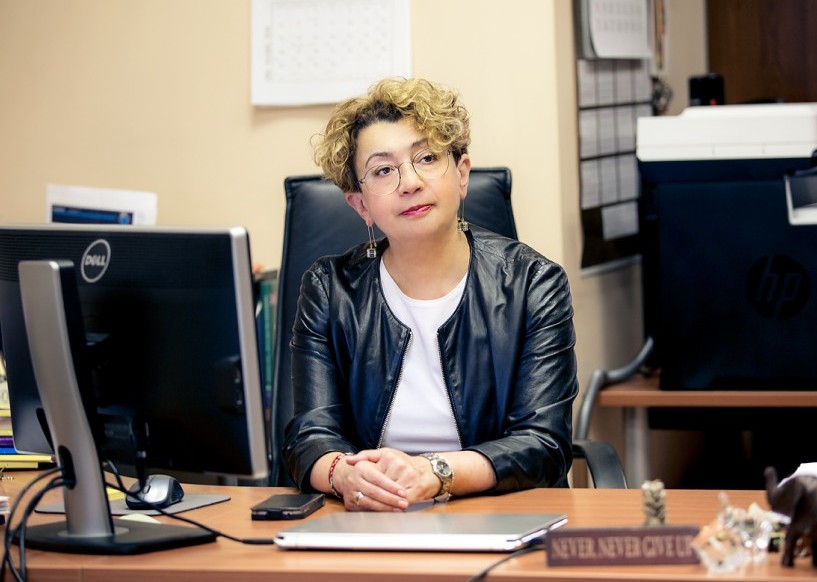
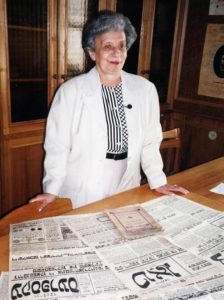
Estera Bramson-Alpernienė, whom everyone knew as Fira, has died. With her dies a bit of Litvak history. She belonged to a world of 20th century Jewish personalities, looming figures such as that of Shimon Dubnov, Max Weinreich and Tsemakh Shabad. She came from the famous Bramson family whose members have played a key role in Lithuanian Jewish and European Jewish life. The Bramsons were a center of gravity to Jewish intellectuals in Kaunas before the war. Fira was educated at the Sholem Aleichem Gymnasium with Yiddish as the language of instruction. For Fira family and school were holy, although her school life didn’t last long.

In 1941, before she could graduate from high school, the war forced her to bid a hasty farewell to family, to leave her only sister, to flee from the Nazi terror. Fira didn’t come back to Kaunas after the war because there was no one waiting for her there. Her entire family was at the Ninth Fort. She started a new life in Vilnius. In the late 1980s there was a movement in Vilnius to revive the Lithuanian Jewish Community. Fira was among the founders of that movement. Finally she could come back to her Yiddish roots and cultural hearth so important and crucial to her spiritual life. Some of her most important work since that time has been with Jewish books at the former Palace of Books, and with that collection now removed to the Lithuanian National Library. Her pride and joy became these surviving books, along with a small number of books from the private collections and libraries from before the war belonging to survivors of the Holocaust. Fira was one of the first conservators of this heritage and presented the legacy she protected to the Jewish community, but also to the wider audience in Lithuania and the world. She held exhibits and lectures, facilitated cooperation with academics and students and helped make use of this priceless inheritance. She wrote about what she achieved in her work of many years in the book “Prie judaikos lobių” [“Next to the Treasures of Judaica”].

Fira Bramson could be called the white knight of Yiddish culture. This woman, slight of build, fragile, driven and principled, fought for the protection and preservation of cultural treasures. Not only did she fight, she won. Even in difficult circumstances she never relented because she saw her life as a mission to safeguard that Yiddish culture so dear to her parents and ancestors, and to pass on memories of that culture to future generations. When she spoke at conferences and seminars, when she was part of educational programs in Lithuania, Europe and the USA, Fira would first speak not of herself, but about the founders of Yiddish culture. The grief of losing Fira Bramson is somewhat mitigated by the realization she lived a long, interesting and productive life and generously shared with others her love of Jewish culture. She was of keen intellect, a person with a warm heart whom, if you ever met her, you will never be able to forget. Let our vivid memory of her live on.

A wake will be held at the Nutrūkusi Styga funeral home Tuesday from 10:00 A.M. The coffin will be carried out at 3:45 P.M.

History of the Vilnius Jewish Community: Learn (Not) to Forget

francois-guesnet-5759438c61c31

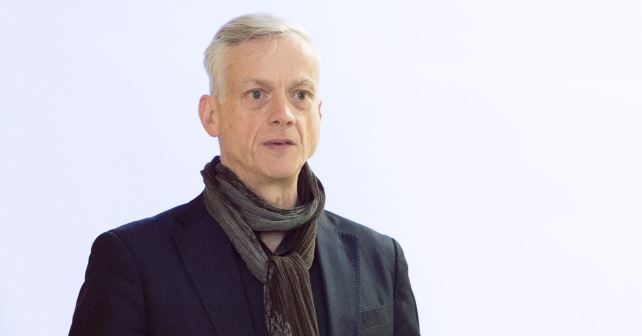
Professor François Guesnet, a reader at the Hebrew and Jewish Studies Faculty at University College London currently visiting at the History Faculty of Vilnius University, granted Nijolė Bulotaitė, a writer for VU’s news page, a long interview. Dr. Guesnet is also the secretary of the European Association for Jewish Studies. Excerpts translated from Lithuanian appear below.

What is the most interesting or most inspiring thing to you?

That’s a good question. We were just talking with a doctoral student about how some topics become very boring as the years go by and become stale. Partisan politics, let’s say, isn’t very sexy. Right now I’m most interested in the human body and the history of medicine, because it’s very interesting to explore who people understand themselves and their bodies. I also research the functioning of the Jewish communities in Eastern Europe. I was born in Germany, my mother is German, my father French; I grew up in a very European family and studied the history of Eastern Europe. I know Polish and Russian. Both languages were very important for me and Russian helped especially in researching archival material. I know Hebrew and Yiddish, otherwise it would be impossible to study the history of Eastern European Jews, at least a basic knowledge is required. My dissertation concerns the 19th century when the majority of official documents were in Russian.

World Jewish Congress Israel Delegation Visits LJC

WJC IZ7

A delegation from World Jewish Congress Israel visited the Lithuanian Jewish Community. The delegation included WJC Israel chairman Shai Hermesh (former MK), member of the board of directors J. Moshe Leshem, foreign relations council director Dr. Laurence Weinbaum, Knesset Christian Allies Caucus chairman MK Robert Ilatov, MK Yakov Margi, KCAC director Josh Reinstein and WJC Israel director general Sam Grundwerg. WJC Israel visits national capitals annually to meet with members of national parliaments and Christian community leaders to establish contacts and discuss shared problems, set up Israeli support groups and increase understanding of Jewish problems. This sort of support is especially sought by Israel now, when the Jewish state is increasingly facing isolation in the international arena and especially in the EU. Last year delegations visited Russia, Poland, Latvia and Estonia.

On June 1 the delegation visited the Lithuanian Jewish Community, met LJC chairwoman Faina Kukliansky and were greeted with a musical welcome of Jewish song and dance provided by the Fayerlakh ensemble, which warmed everyone’s hearts and facilitated better communication. Former MK, current vice president of the WJC and leader of WJC Israel Shai Hermesh shared with everyone heartwarming news he received on the trip to Lithuania.

List of Lithuanian Holocaust Perpetrators Could Run to 6,000

by Mindaugas Jackevičius, www.DELFI.lt

Avoiding the subject of the Holocaust and research in this field, Lithuania is in danger of becoming a nation of Jew-killers in the eyes of the world. Statements like that were aired at a conference held at the Lithuanian parliament Monday, where participants reiterated we still don’t know the true number of Jews murdered, or of the people who rescued Jews in Lithuania. MP Arvydas Anušauskas said at the conference people tend be very conservative in talking about the number of Lithuanian Holocaust perpetrators. He said it was difficult to calculate who took part in mass murder operations, for example, some people’s names are duplicated because they participated at different locations. There was also discussion of who should be included as perpetrators: should they only include people who fired weapons, or also those who transported the victims to the mass murder sites or otherwise aided the process.

Full story in Lithuanian here.
ejcdelfi

Lithuanian Citizenship: Only Successful Applicant Is a Dead Jew

JewishRaport_Logo

by Daniel Lutrin

It was gratifying to see a recent article regarding the plight that Jews of Lithuanian origin (Litvaks) are facing when applying to have their Lithuanian citizenship restored. The article, however, does not hone in on the critical matter at hand, namely the extent to which Lithuanian bureaucrats have gone to deny Jews of their ancestral right to citizenship.

In the background, a meticulous selection process has been underway which is nothing more than a modern manifestation of the same anti-Semitism which saw 95 per cent of Litvaks murdered in the Holocaust (the highest in all of Europe).

Denying Litvaks citizenship has been made easy in Lithuania by declaring, based on nebulous case law, that those Lithuanians who left the country during its years of independence (approximately 1919 to 1940) were not persecuted and are therefore not eligible for dual citizenship.

Israelis Visit Panevėžys Jewish Community

Pan1

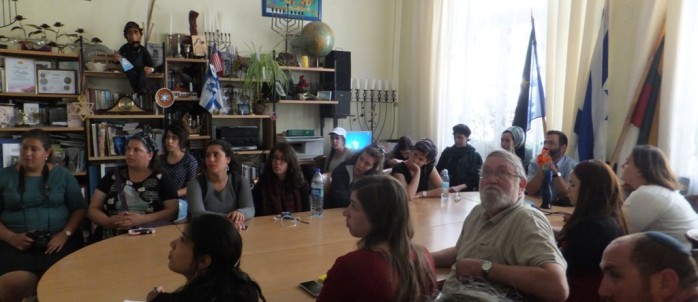
A large group of students and teachers from Jerusalem visited the Panevėžys Jewish Community May 26. Panevėžys Jewish Community chairman Gennady Kofman told the guests about the community’s activities in the Lithuanian city, including social welfare programs, and educational programs conducted with local schools. He also told them about the history of the city and of the Jews there. The guests appeared keenly interested and wanted to know what Jews there thought about Israel. A nun from the sisters of the Love of God was also at the meeting and showed guests pictures of Righteous Gentiles students had made at Marija Rusteikaitė Gymnasium.

Concert of Lithuanian Ethnic Minority Music and Lesson with Dr. Marija Kuprove-Berg

mk

Marija Kuprove-Berg will perform at the Tolerance Center, Naugarduko street no. 10/2, at 6:00 P.M. on Thursday, June 2, 2016. Violinist Vytautas Mikeliūnas will also perform. A lecture will be held in English as well. The event is being held by the Lithuanian Literature and Folklore Institute and the Tolerance Center of the Vilna Gaon State Jewish Museum. Entrance is free to the public.

Dr. Marija Kuprove-Berg’s repertoire includes songs in all the minority languages of Lithuania, including Yiddish, Ashkenazic Hebrew, Romany, Tartar and others, and embraces Karaïte musical traditions as well.

On Citizenship for Descendants of Litvaks

bbb
by Sergejus Kanovičius

First, the Litvaks died. Almost all of them.

Then began the first division of property stolen from them (with the “honorable” role played by general Vėtra in this).

After World War II, the Soviets legalized this theft, and no one was supposed to mention it, or even hint of it.

After March 11, 1990, that theft was legalized once again, by limiting dual citizenship and introducing into law the statement that “rights to surviving real estate are restored only to citizens of the Republic of Lithuania.” When I made an application for restoration of citizenship, I was told in a friendly way to include in the application the demeaning statement: “I don’t have any inherited property in the Republic of Lithuania.” And how could I inherit those pits on the margins of forests and villages? How could I inherit those two hundred graves where parents and grandparents lie buried? I don’t have any “property” except for this. Although others might. The fathers of independence have done everything to “protect” us from the completely legitimate property claims of Lithuanian Jews and Vilnius Poles–such an innocent desire that this time everything really would belong exclusively to, sorry, our people.

President of Israel Greets Holocaust Survivor, Partisan Fania Brancovskaja on Birthday

fb

Israeli ambassador to Lithuania Amir Maimon delivered a birthday greeting to Holocaust survivor, Vilnius ghetto prisoner and Jewish partisan Fania Brancovskaja at a small ceremony Friday, May 23, calling her an enduring miracle of hope and passion for everyone. He said her life was spoken of proudly and she serves as an inspiration and reminder to the younger generation.

Full story in Lithuanian

Exhibit of Works by Litvak Sculptor Victor Brenner in Šiauliai

brener

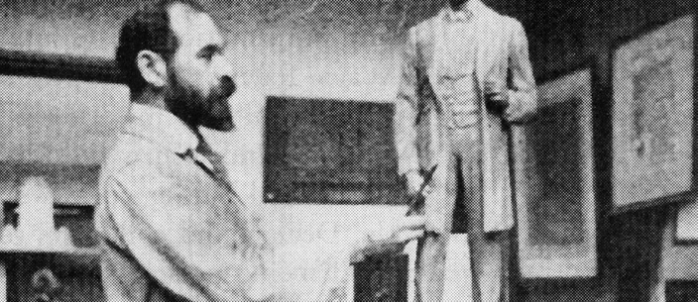
Victor David Brenner was born Viktoras Baranauskas April 12, 1871 in Šiauliai, Lithuania. His father was a jeweler and stamp maker. As an adolescent he helped his father complete easy orders. With his father’s help he set up an engraving shop in Šiauliai in 1887 and began to work on his own. In 1889 Victor and his parents moved to Kaunas where he achieved renown as a talented master engraver. He emigrated to the United States in 1890 and lived in New York. He took night classes at the Cooper Union college and worked at a New York metal ornament and medallion workshop.

Eight years later Brenner was in Paris, studying with the great French medalist, Oscar Roty at the Académie Julian. There he exhibited his work and obtained awards at the Paris Exposition of 1900. He returned to the United States, and from that time on his career prospered. He appeared to be on his way to the fulfillment of the splendid predictions made for his future by Rodin.

Darius Udrys: What Does Lithuania Owe Its Jews?

ud
Photo: by K. Čachovskis, courtesy Delfi.lt

Lithuanian Jews have contributed to the creation and success of the Lithuanian state from its very foundation.

This is an indisputable fact. As we sometimes like to say with pride (without thinking too much about what responsibilities history places upon us), the Grand Duchy of Lithuania was for its time a conspicuously liberal state which sheltered and safeguarded many tribal and ethnic groups as its own citizens.

One doesn’t have to look far back in the past to find the contribution made by Lithuanian Jews. Called upon and supported by their community leaders to do so, young Litvaks stood shoulder to shoulder with our grandfathers and great-grandfathers in the battle for Lithuanian independence from 1918 to 1920. As Donatas Januta reminds us in the Lithuanian-American newspaper Draugas, the volunteer battalion established and provisioned by Jews was one of the first armed units of the Lithuanian military. Many of its members were decorated for their bravery and sacrifice with medals, including the Order of the Cross of Vytis.

Lithuania’s Jews didn’t just support Lithuanian independence and consolidation through financing, weapons and their lives, they also supported it politically. Simanas Rozenbaumas, a Jew, successfully represented Lithuania in the Paris peace conference at Versailles and in negotiations with the Soviet Union, and Jews took part in the first Constituent Parliament as well. Jews also strongly supported the return of the Vilnius territory to Lithuania.

Kaunas Jewish Community Gets Together for Sabbath Every Friday

Šabatas Kaune

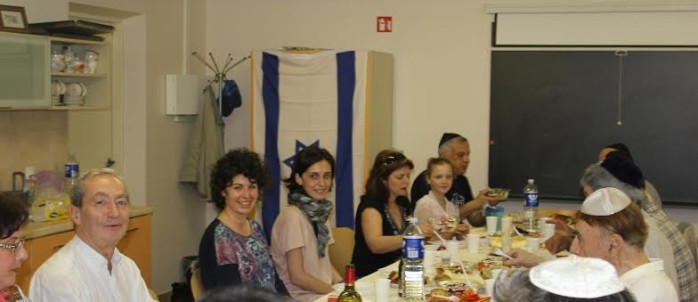
Every Friday evening about 30 members of the Kaunas Jewish Community gather to welcome in the Sabbath. They light candles, pray, provide commentary on a select passage of Torah, chat, eat together, remember those they have lost and offer congratulations on those personal milestones which come up. Often guests attend, whether they be Jewish students, teachers or tourists, who want to usher in the Sabbath with others, with the Jewish community. Often they are members of other ethnic groups who are interested in Jewish culture, traditions and history. Most recently two female students from Georgia and Serbia who are preparing a project about Jews in Lithuania at Vytautas Magnus University in Kaunas attended. As a rule the Kaunas Jewish Community offers its hospitality to those who show up. Almost always it turns out they aren’t strangers at all, only friends we haven’t met yet.

Start-Work Ceremony at Wooden Synagogue in Žiežmariai

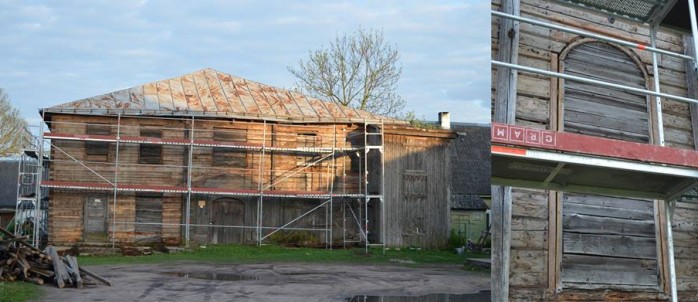
The Lithuanian Jewish Community’s heritage protection expert Martynas Užpelkis travelled to attend a ceremony in Žiežmariai, Lithuania to mark the beginning of work to renovate the unique wooden synagogue there, one of only a handful of wooden synagogues still standing in Lithuania. He took some snapshots which you can find below.

In related news, the board of supervisors of the Kaišiadorys regional administration, where Žiežmariai is located, approved the region’s membership in what is known as the Association of the Itinerary of Jewish Cultural Heritage, a new tourism network which includes the Kėdainiai, Ukmergė and Joniškis regional administrations now.

On July 30, 2015, the Kaišiadorys regional administration agreed to a 99-year lease agreement for the synagogue, the property of the Lithuanian Jewish Community, to be used by the regional administration without fee. In August an agreement was concluded between the LJC and regional administration on the uses to which the former synagogue could be put and for its restoration. Currently work has begun on the roof and façade and archaeological work is on-going. The regional administration has allocated 24,840 euros for restoration work. Further financing is being sought and the regional administration believes membership in the Association of the Itinerary of Jewish Cultural Heritage could open doors for new partners in Belarus and Poland under the Interreg program.

What Should Be Done with the Law on Dual Citizenship of Several Years Standing

fa

Dear members of the Lithuanian Jewish Community and Litvaks living abroad,

I would like to explain in an understandable way what the current situation is regarding the Lithuanian law on citizenship and its provisions affecting those who seek to restore Lithuanian citizenship without renouncing their current citizenship, whether that be of the Republic of South Africa, Israel, the United States, Great Britain or another country.

To begin, we are not at war, although it almost seems like a war for the Jews in South Africa, and the great majority of Jews in other countries enjoy a higher standard of living than we do. It is also clear the Lithuanian law on restoration of citizenship was not written especially for Jews. We, the Lithuanian Jewish Community, care about the Jews of the world and their legitimate aspirations to restore Lithuanian citizenship. The first question which undoubtedly comes up is, when exactly did Jews lose that citizenship?

Jews who left Lithuania with Lithuanian passports before the war, and those who were deported from Lithuania to concentration camps, and those who were deported to Siberia did not renounce Lithuanian citizenship voluntarily. In fact they formally lost it when Lithuania became independent again as people of non-Lithuanian ethnic origin (it turns out Jews who come from Lithuania are not considered people of Lithuanian origin, and are not members of Lithuanian émigré organizations abroad), and moreover, some of them have “repatriated” from Lithuania.

New Museum of Jewish Culture to Open in Slonim, Belarus

Synagogue Slonim2

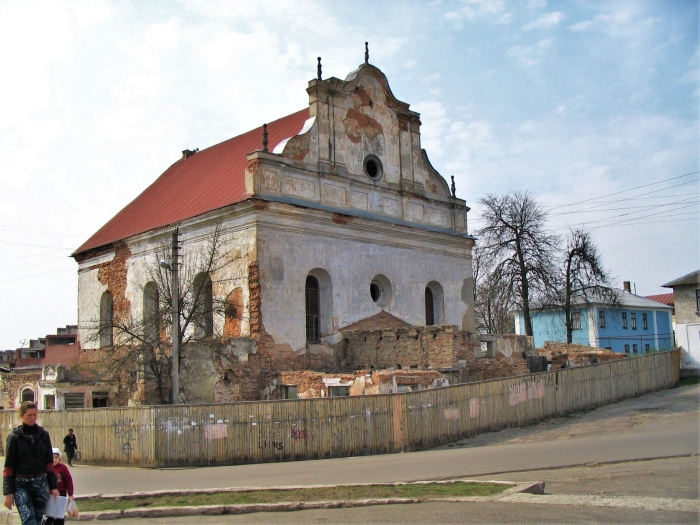
A new Museum of Jewish Culture will be housed in the 17th century synagogue in Slonim, Belarus, the BELITA news agency reports. The Slonim regional administration and the Slonim Jewish Association in Israel are to finance directly further restoration of the synagogue.

The synagogue, built in the mid-17th century, is located in the middle of the city of Slonim. Restoration work has been performed and the roof has been fixed. Original interior elements have been preserved.

“In earlier times Jews constituted more than 80% of the population in Slonim. Visitors from abroad continuously come to see the homes of their parents, grandparents and great-grandparents. Many visit the synagogue. The Jewish museum would be a tourist attraction and would draw more visitors to the city,” the regional administration observed.

Work to Renovate Žiežmariai Wooden Synagogue Begins

ZIEZM sin1

A ceremony was held at the unique wooden synagogue in Žiežmariai, Lithuania on May 19, 2016, to mark a new stage in its life: its resurrection. The ceremony marked the beginning of work by the Kaišiadorys Regional Administration and Lithuania’s Cultural Heritage Department to restore the house of worship and featured a concert by the Rakija Klezmer Orkestar and works of Paganini by violinist Gediminas Dalinkevičius.

An allocation of 85,000 euros from the Ministry of Culture to the Kaišiadorys Regional Administration and an additional 24,840 euros from the regional administration are to be used initially to fix the roof and repair the façade, stabilize the building and perform archaeological work. A total of 693,000 euros is needed for reconstruction of the synagogue and additional sources of funding are being sought.

“The Lithuanian Jewish Community agrees to turn the synagogue over for public use because the Jewish community of Žiežmariai no longer exists and the synagogue won’t be used as a house of prayer. The synagogue can be utilized very well for the cultural needs of the region and at the same time remain a place of commemoration for the Jewish community of the area,” LJC chairwoman Faina Kukliansky said.

Jews: Lithuania’s Misfortune

moletaikids1
by Marius Ivaškevičius

It appears we can finally say exactly what all those who today speak publicly about the mass murder of Jews in Lithuania are truly seeking. Either they are doing PR for themselves through this, advertising themselves, because this is trendy in Europe, or their activities are being financed by the Jews themselves.

All of those shocking details, talk about smashing the heads of Jewish infants on trees to save bullets, is nothing other than the scratching of still unhealed wounds with dirty, dilettante fingers.

In this manner the attempt is made to traumatize yet another generation of Lithuanians, our children born in a free Lithuania, because these sorts of actions, instead of inviting repentance or at least sorrow, actually create even greater hatred of Jews, because this is how the natural defensive reaction of the nation operates. Every nation is different, so Germany’s experience doesn’t fit our situation, that is, healing and finally recovering by demonstrating and revealing through education and openness the brutality of the Nazi concentration camps. All that took place in the period after the war, when events were still vivid, but today the murderers and the witnesses have all but died off, so Lithuania must blaze her own trail. It’s not for no reason at all that our intellectuals, chroniclers and commentators say: don’t do it, don’t pick at that wound with your fingers, let it first heal, let it be forgotten. Sometimes forgetfulness is more worthwhile than remembering.

I am from Molėtai. A small town of extraordinary beauty with three lakes inside the town and another three hundred in the surrounding area. There’s no need to say much, everyone knows Molėtai, Lithuanian vacationers’ paradise. During the war, or more precisely, during one day in the summer of 1941, two thousand Jews were shot there. In other words, eighty percent of the population of Molėtai. More than two-thirds of the town’s residents vanished over the course of a few hours and were buried in a mass grave. German Nazis were in command of the massacre. Local Lithuanians did the shooting. These are the cold, hard facts and numbers.

YIVO Awarded $260,000 by NEH

YIVO Receives $260,000 Grant from the National Endowment for the Humanities
May 16, 2016

New York, NY – The YIVO Institute for Jewish Research (YIVO) is pleased to announce that is a recipient of a major grant from the National Endowment for the Humanities (NEH) for the Vilna Collections Project, a seven-year initiative to preserve, digitize and virtually reunite YIVO’s prewar archives and library located in New York City and Vilnius, Lithuania, through a dedicated web portal.

The NEH’s Division of Preservation and Access has awarded $260,000 over two years for the processing, conservation and digitization of rare archival documents rescued from the destruction of the Holocaust. The materials, looted by the Nazis and recovered with the help of the U.S. Army, were brought to New York in the late 1940s. They are a diverse resource on Jewish life, community and culture in Europe. They span the range from handwritten autobiographies by Jewish youth and humble folktales and folk songs to the archives of scholars, such as that of Simon Dubnow, known as the father of Russian Jewish history. They include photographs, Yiddish theater and political posters and the administrative records of Yiddish and Hebrew schools and yeshivas.

As City University of New York historian Jack Jacobs noted in a letter of support for YIVO’s application to the NEH, “It is simply impossible to write a dissertation or do any serious research project related to Eastern European Jewry without consulting the YIVO materials.”

Full story here.

Litvaks Visit Panevėžys

Psvec2

Gilla Back from Melbourne and Leanne Cohen and her daughter from Johannesburg visited the Panevėžys Jewish Community and toured the city recently to learn more about the land whence their ancestors came.

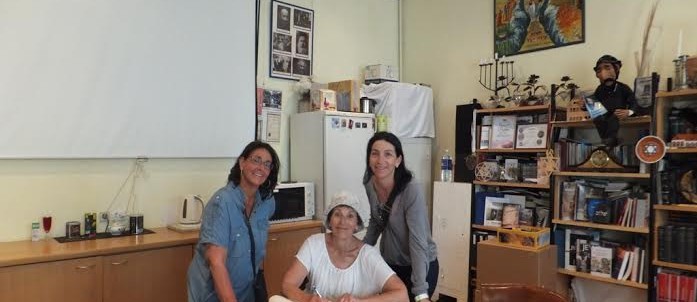
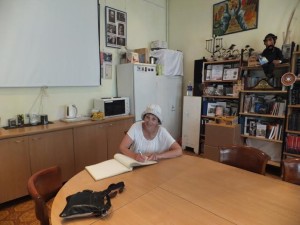
They examined displays of photographs at the community and talked about their ancestors who lived in the city. Cohen’s antecedents emigrated to South Africa in 1900. They signed the guest book and said it had been a real privilege to walk the streets and breath the air in the city, although the Ponevezh of their relatives no longer exists.

Psvec1