
Litvaks

LJC Chairwoman Faina Kukliansky on the Annihilation of Jewish Communities in the Lithuanian Shtetls

In the final days of August we mark the 75th anniversary of the extermination of the large Jewish communities who once lived in the Lithuanian shtetls (small towns). Neither the shtetls nor the Jews survived the brutal mass murder. For 75 years no one has spoken Yiddish any longer in those small towns. No one celebrates Sabbath, the synagogues are boarded up or are now storehouses or workshops. What does this anniversary mean to the Jews and the shtetls of Lithuania?
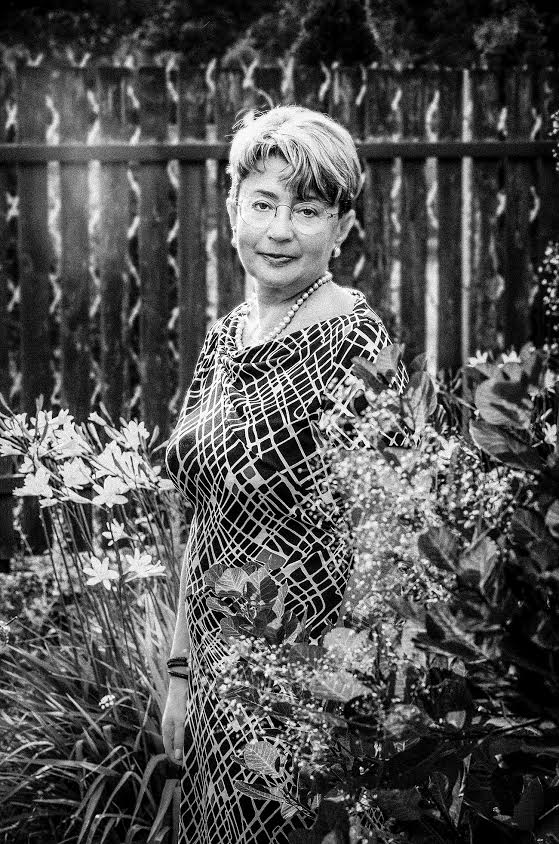
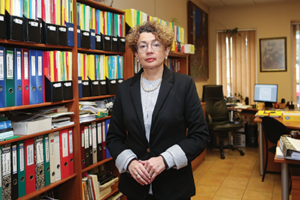
Fainos portretaa

We mark the anniversaries because the people are no longer with us. Those who still remember the Holocaust must mark the anniversaries of the mass murders, otherwise the small towns will forget entirely the murder of their Jewish neighbors, including men, women and children. Lithuanian society as a whole–and not without a lot of effort by the Jewish community–twenty-five years after Lithuanian independence has all of a sudden remembered that there were Jews here, and their contribution to everything we have in Lithuania today is huge. Jews created and built the centers of these small towns. They are no longer, or they are very few, and what will the old-timers in these towns tell their children and grandchildren?

After World War II Jews maintained the keyver oves tradition (from Yiddish keyver, “grave,” + oves “parents, ancestors”) where Jews would visit the mass murder sites where their relatives were buried, to remember them. They used to do it on exactly the anniversary of the day when the Jews of that shtetl were exterminated. I remember from my childhood how we used to go visit our murdered grandparents, and how others went to visit their murdered sisters, brothers and parents. No one marched in a procession, there were no marching bands playing. Keyver oves was a sad occasion. People were repentant, they cried and they prayed, hoping it such atrocities would never happen again. They went to the mass murder sites, of which there are 240 in Lithuania, not to give speeches. What else can be said after all these years? They gathered not to talk, but so that the town community would think about where they lived and with whom they lived, and so that they wouldn’t be ashamed to look their children and grandchildren in the eye. You cannot hide the truth, after all. You don’t need popular novels, and large print-runs cannot replace open communication about what happened. Everything was known long ago. It’s not the Jews who need public commemorations, we already know it all, for us it is sufficient to stand and to pray. Telling the truth and talking sincerely and openly is needed in every small town where Jews lived before the war.
The Road to Death (75th Anniversary of the Murder of the Jews of Molėtai)

Attorney Kazys Rakauskas sent the following to the Lithuanian Jewish Community webpage.

On central Vilniaus street in Molėtai the flowers bloom and the brightly-painted kindergarten greets the eye of passers-by. The bridge next to the statue of St. Nepomuk is also festooned with garlands of flowers. Small fish flash in the sun in the pure lake water flowing into the river. Cars quietly pass and young people flex their muscles on bicycles. The people of Molėtai hurry to work on foot.

They are a different generation of people. Even their parents only heard vaguely of the terror, tears and suffering which once overtook this street. Seventy-five years ago hundreds of Jews of Molėtai realized where they were being taken at this bridge. They threw their things they had taken with them when they were removed from the synagogues under armed guard into the Siesartis river. This street leading from the three synagogues on Kauno street became the road to death for two thousand people. They had been held prisoner there [in the synagogues] for days without food or water.

Headstone Fragments Returned to Jewish Cemetery

Paminkliniai akmenys pagarbiai sugrįžta į senąsias Žydų kapines Olandų gatvėje

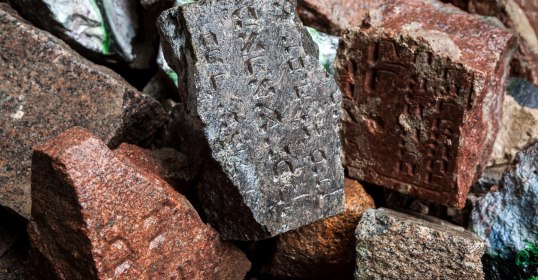
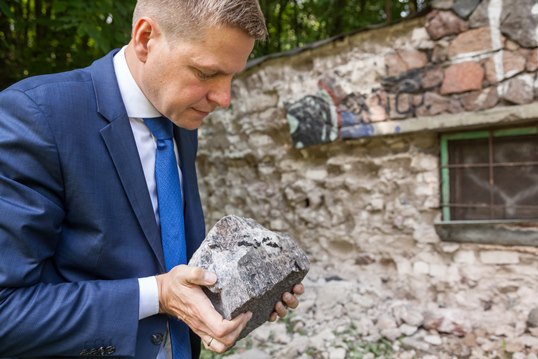
Fragments of Jewish headstones, removed from a transformer substation and other locations in Vilnius where they were used as construction material by the Soviets, have been returned to a Jewish cemetery in the Lithuanian capital. The city municipality this week ordered all fragments, both with legible fragments of inscriptions and without, to be removed to a clearing at the former Jewish cemetery on Olandų street. The move begun today was supervised by architects and representatives of the municipality, the Cultural Heritage Department, the Lithuanian Jewish Community and the Verkiai and Pavilniai Regional Park administration.

Photos by Martynas Užpelkis, heritage protection expert, Lithuanian Jewish Community

“It’s clear that it was time long ago to make sure Jewish gravestones be returned with dignity to the old Jewish cemetery and that such examples of the barbarism of the Soviet regime no longer remain in the city. Today I am glad that these thoughts have turned into concrete deeds: the city has renovated a vast territory of the old cemetery, and slowly alleys and paths have emerged there, and now the commemorative stones are being returned with dignity to the renovated territory. There has been exemplary and very constructive cooperation with the Jewish community and different institutions, and even though we haven’t had great resources, we’ve managed to find solutions which allow us to show due respect to the memory of the dead and testify to our values and culture,” Vilnius mayor Remigijus Šimašius said.

Šimašius Akmenys


Full story in Lithuanian here.

March to Commemorate Murdered Jews of Molėtai, Lithuania on August 29

A march to commemorate the 75th anniversary of the mass murder of the Jews of Molėtai is scheduled for August 29 in Molėtai, Lithuania.

There will be a conference and exhibit at the Molėtai Art Gallery at 3:00 P.M.

A procession will then walk down Vilniaus street in Molėtai at 4:00 P.M.

Unveiling of a monument by Davidas Zundelovičius follows at 5:00 P.M. at the mass murder site and mass grave of the Jews of Molėtai. Teachers Ela Pavinskienė and Roza Bieliauskienė of the Sholem Aleichem Gymnasium in Vilnius have organized an exhibit about cleaning up the old Jewish cemetery in Molėtai with photographs by Yehuda Vagner and Maceva volunteer Marius Lukoševičius.

Holocaust Commemoration in Biržai August 28

A series of events in Biržai, Lithuania, to commemorate the Jewish community murdered there during the Holocaust are scheduled to begin at 11:00 A.M. on August 28. The events include an initial “March of the Living”-type procession culminating in a conference and discussion. For more information, contact Sania Kerbelis at 370 698 85131 or Simona Ražinskienė at 370 699 03023. There is a possibility those needing a ride from Vilnius might be able to get one provided by the Lithuanian Jewish Community; contact info@lzb.lt to find out.

Rabbi Ben Tzion Zilber Visits Latvia and Lithuania

Rugpjūčio 15-16 Latvijoje ir Lietuvoje lankėsi rabinas Bentsiyonas Zilberis

Rabbi Ben Tzion Zilber, son of legendary Rabbi Yitzchok Zilber, visited Latvia and Lithuania August 15 and 16.

Rabbi Kalev Krelin of the Vilnius Jewish Community escorted Rabbi Zilber to locations where the latter’s ancestors lived. His father Rabbi Yitzchok Zilber belonged to a long line of scholars and suffered under Stalin, both at labor camps and under the atheist policies of the Soviet Union. Despite extremely difficult circumstances, Rabbi Yitzchok Zilber not only managed to hold steadfastly to his faith in the Creator and to keep His laws, but also to deepen his Torah study and teach others. After making aliyah to Israel Rabbi Yitzchok Zilber had hundreds of followers in whom he inspired faith in the Creator and adherence to the Torah.

Commemoration in Dusetos of 75th Anniversary of Krakynė Massacre

August 26, 2016, marks the 75th anniversary of the massacre which was perpetrated in the Krakynė Forest (Degučiai alermanship, Zarasai region) when 2,569 Jews from Zarasai region and surrounding areas were murdered.

The unveiling of a commemorative monument will take place where the Dusetos Synagogue once stood on Independence Square in Dusetos, Zarasai district, at 2:00 P.M. We will commemorate the Dusetos Jews who were murdered between 1941 and 1944, visit the mass murder site in Krakynė Forest and distribute a publication called “Desetų žydai” (Jews of Dusetos).

Zarasai regional administration
Dusetos aldermanship
A joint project by the Dusetos aldermanship and parish community

Keeping the Faith in Vilnius

VilnaFaina
photo © Delfi/K. Cachovskis

Ellen Cassedy, author of We Are Here: Memories of the Lithuanian Holocaust (ellencassedy.com), has written about the Lithuanian Jewish Community and the Bagel Shop initiative.

Amit Belaite adores the long ode to the city of Vilna that was penned by writer and poet Moyshe Kulbak 90 years ago. Lines from the poem about Vilna’s stones and streets were running through her head on a warm summer afternoon as she led a walking tour through the narrow, winding streets of the city now known as Vilnius, the capital of the small Baltic nation of Lithuania.

Belaite, 23, heads the Lithuanian Union of Jewish Students. When she posted the announcement for the group’s tour of Jewish Vilnius, she expected a couple of dozen people to be interested. To her amazement, 400 signed up, many of them non-Jews.

“People know the city is rich in Jewish history,” she said. “They feel a big need to learn about it.”

Anniversary of Intellectuals Aktion, Mass Murder of Jews of Petrašiūnai

The Kaunas Jewish Community will mark the 75th anniversary of the murder of the Jews of Petrašiūnai and the Intellectuals Aktion on August 26, 2016. The ceremony will begin at 3:30 P.M. at the stele in memory of the Jews of Petrašiūnai. Then we will move to the Fourth Fort in Kaunas where the Intellectuals Aktion, the first mass murder of Jews imprisoned in the Kaunas ghetto, was perpetrated.

Lithuanian and Japanese Cities Join in Commemorating Righteous Gentile

Pasaulio tautų teisuolio atminimas sujungė Japonijos ir Lietuvos miestus ir žmones

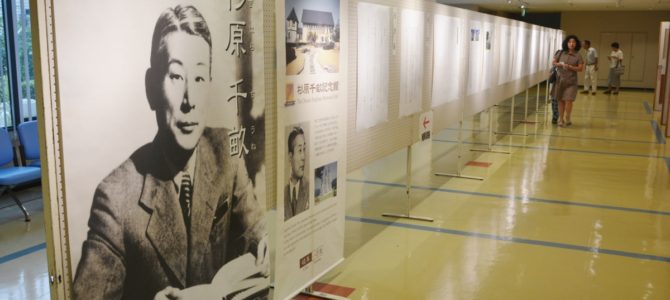
Events to commemorate Chiune Sugihara, Japanese WWII-era consul in Kaunas and a Lithuanian festival were held in Sugihara’s hometown of Yaotsu, Japan, from July 31 to August 7.

Sugihara rescued thousands of Lithuanian Jews from the Holocaust and has been recognized as a Righteous Gentile and awarded the status of Righteous among the Nations by the Yad Vashem Holocaust memorial authority in Israel.

The week of commemorations was opened by the signing of a memorandum of cooperation by Yaotsu mayor Masanori Kaneko and Kaunas municipality representative Inga Pukelytė.

Acting Lithuanian ambassador to Japan Violeta Gaižauskaitė noted the events came on the 25th anniversary of the restoration of diplomatic ties between Japan and Lithuania and characterized ties between the people of Japan and Lithuania as sincere, and relations btween the two nations friendly. She also said both countries were dedicated to preserving the memory of the noble Japanese diplomat for future generations.

Commemoration of the Holocaust in Šeduva, Lithuania

UPDATE: Event organizers are providing transport from Vilnius and several free seats are left! Please register for a place before August 23 by sending an email to info@lostshtetl.com

You are invited to an event to commemorate the Šeduva Jewish community murdered in the Holocaust. The event is on on August 30 and will be a kaddish at the 3 mass murder sites and the old Šeduva Jewish cemetery.

Commemorative program

9:00–9:30 Kaddish at the Jewish mass murder site in Pakuteniai forest
https://goo.gl/maps/tdN5Y3mrWJw

9:45–10:15 Kaddish at Liaudiškiai Jewish mass murder site I
https://goo.gl/maps/fhjnq5ubSfk

10:30–11:00 Kaddish at Liaudiškiai Jewish mass murder site II
https://goo.gl/maps/mYLnGLUmVuK2

11:15–11:45 Kaddish at the Šeduva Jewish cemetery
https://goo.gl/maps/ZuHGdK9EHvF2

12:00–12:30 Coffee break at the Šeduva Culture and Crafts Center

12:45-1:30 Mass at the Holy Apparition of the Cross Church in Šeduva

1:30–2:15 Yiddish song concert by Rafailas Karpis and Darius Mažintas at the church in Šeduva

Download PDF format event program

More here.

Lithuanian Debut at the Olympics: The Isaac Anolik Story

by D. Baranauskaitė
manoteises.lt

“All riders have reached the finish line and the injured have been brought by automobile, but we haven’t seen Mr. Anolik and he isn’t found among the injured. Everyone has left. The stadium is empty, but he’s still not here. Asked by telephone, all the checkpoints reported they didn’t know and that there was not a single cyclist left on the route. He only came back at 11 at night, cold and hungry.”

This is how the newspaper Sportas reported the debut of the Lithuanian state at the Olympic Games in 1924. The subject of the report, Isaac Anolik, was a Lithuanian athlete of Jewish origins and the country’s cycling champion many times over. His accomplishments didn’t matter during the Holocaust. The leading Lithuanian cyclist was shot at the Ninth Fort.

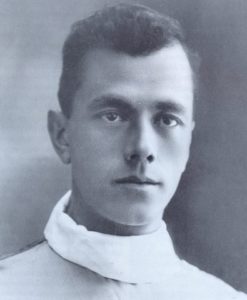
isakas-anolikas-395x480

Full story in Lithuanian here.

Plaque to Honor Union of Jewish Soldiers in Kaunas

Kaune atsiras atminimo lenta, skirta Žydų karių sąjungai

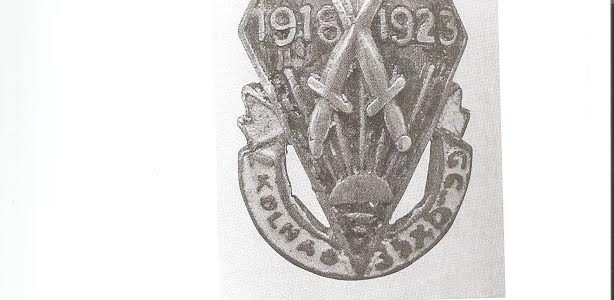
Work has begun to produce a memorial plaque to commemorate the pre-WWII Union of Jewish Soldiers Who Fought for Lithuanian Independence. The project was initiated by the Kaunas Jewish Community with support from Lithuanian Jewish Community chairwoman Faina Kukliansky, LJC cultural heritage expert Martynas Užpelkis and sculptor Gediminas Pašvenskas, who designed the plaque. The plaque is to be placed on the building formerly housing the Union at A. Mapu street no. 10 in Lithuania’s interwar capital.

Established in 1933, the Union of Jewish Soldiers Who Fought for Lithuanian Independence was originally based in Joniškis and moved to Kaunas in 1934. Besides fostering patriotism and loyalty to the state, the union also encouraged cultural cooperation between Lithuanians and Jews and operated throughout the country, with about 3,000 members in total. Twenty Jewish soldiers were decorated with the Order of the Cross of Vytis for bravery in battle and other orders and decorations were also bestowed on the veterans of the early Lithuanian struggle for independence following World War I. The union participated with its regalia at official events and ceremonies and publicly displayed their devotion and loyalty to Lithuania.

Memorial to Samuelis Petuchauskas to Be Unveiled in Šiauliai

A memorial to Samuelis Petuchauskas, deputy mayor of Šiauliai from 1921 to 1940, is to be unveiled at the city of Šiauliai municipality at Vasario 16 street no. 62 at midday on August 29, 2016. Šiauliai mayor A. Visockas is to open the ceremony.

Šiauliai Jewish Community chairman J. Buršteinas and other members are scheduled to attend along with other notable local figures, representatives of the Lithuanian Foreign Ministry, members of the family of Jackus Sondeckis family and others.

More information to follow.

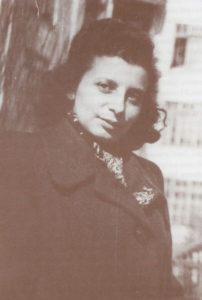
In Memoriam Fira Bramson

In an article published on the website of the literary and arts magazine Literatura ir Menas, Mindaugas Kvietkauskas shares his memories of the late Fira Bramson.

Esther’s Scissors
by Mindaugas Kvietkauskas

Nuotrauka iš asmeninio archyvo

I will call her by a biblical name, Esther. Now I may. That was how the rabbi called her to eternity so recently his prayer uttered before the first three handfuls of earth were sprinkled on her shrunken body, cut off from the world of the living.

In life it was different: she was Fira, sometimes Firochka. I smile when I think how unrecognizably the name of the queen of Persia, meaning morning star, has changed in our lands, in the daily language of the Yiddish dialect washed by the great Slavic languages. But now that she has entered a time of more perfect reckoning, Fira has again become Esther, the daughter of Israel, the morning star, Ester bat Israel.

Bramson Esfira Fira Bramson in 1949

Full piece in Lithuanian here.

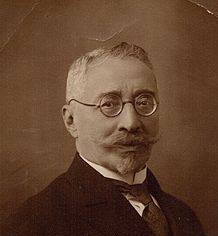
Jakub Wygodzki, Vilnius Doctor

Vygodskis Jakovas

In her memoirs Alexandra Brushtein, the only child of famous prewar Vilnius doctor Jakub Wygodzki, said her father was the only person who could explain to her why one or another person is stupid. She said it was sad her father didn’t have time to talk with her because he was a busy doctor.

Besides being a doctor, Wygodzki was a member of the council for the restoration of Lithuanian statehood, the minister for Jewish affairs in the first government and the chairman of the Vilnius Jewish Community.

But he is best known because of his good heart and selflessness. He treated poor patients and came back from operations at night so tired he couldn’t eat. Later, in old age, he saved Jews fleeing persecution, and his life was cut short at the Gestapo prison in Vilnius.

Full story in Lithuanian here.

Clarification

To whom it may concern,

In light of Mr. Gary Eisenberg’s recent article about Lithuanian citizenship for Litvaks published in Israel and South Africa, the Lithuanian Jewish Community states for the record:

1. There is no special legislation or program for recruiting Litvaks for Lithuanian citizenship. This is disinformation. The existing legislation on applications for Lithuanian citizenship by prewar citizens of Lithuania and their offspring was only reworded slightly to prevent misinterpretations of the intent of legislators by public servants to the detriment of Jewish applicants and applicants of other ethnicities. As far as we are aware, there is no “Lithuanian Citizenship Programme” for Litvaks in Lithuania or anywhere else, despite what was written in Mr. Eisenberg’s article.

2. The Lithuanian Jewish Community and the Choral Synagogue in Vilnius with the Vilnius Religious Jewish Community are firm followers of the traditions of the Vilna Gaon and have nothing to do with Chabad Lubavitch or their rabbi. We have a rabbinate of two rabbis who are firmly within the mitnagedic tradition. Mr. Eisenberg’s statements he celebrated Sabbath with Chabad Lubavitch Rabbi Krinsky, followed by the statement he visited the Choral Synagogue, could mislead some readers into thinking the Choral Synagogue in Vilnius is a Chabad Lubavitch center, which it is not.

Sincerely,

Faina Kuklianskay, attorney,
chairwoman,
Lithuanian Jewish Community

Yiddish Vegetarian Potluck

head

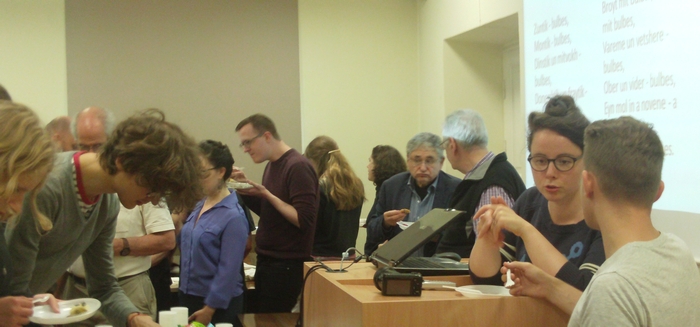
As another successful summer program of the Vilnius Yiddish Institute at Vilnius University wound down, writer Ellen Cassedy and the students, faculty and staff held a vegetarian potluck August 10.

Cassedy gave a brief presentation in Yiddish about the remarkable prewar vegetarian cookbook by Fania Lewando and spoke about her life and her vegetarian restaurant which was located on what is now Vokiečių street in Vilnius. Using slides Cassedy showed period photographs and pictures of foods featured at the restaurant, occasionally clarifying her remarks in English.

A full classroom of perhaps 30 people listened intently as latecomers filtered in, some bearing plates and bowls of food. A long table in front of the podium enticed the eye with a variety of dishes made by the students and staff themselves.