
Litvaks

Seeking Holocaust Reconciliation in Lithuania, from Los Angeles

lith3

The Museum of Genocide Victims in Vilnius, the capital of Lithuania, occupies a stately stone building on a large, forested park in the city’s center. It is notably not a Holocaust museum. To find the Holocaust Exposition, look for a small, clapboard wooden building on a narrow side street.

Instead, the museum commemorates atrocities more often spoken of in Lithuania: the lethal brutality of the Soviet regime against citizens of the Baltic country, with Lithuanians as victims rather than perpetrators.

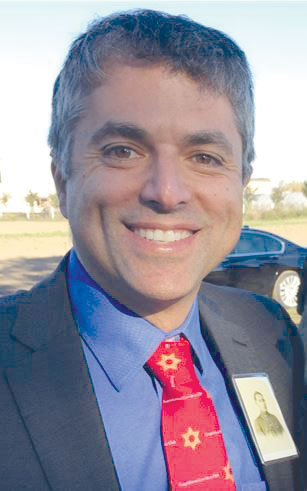
Half a world away, Grant Gochin, a wealth manager in Woodland Hills, has spent the better part of a quarter-century trying to bring about greater recognition for the genocide carried out largely by ethnic Lithuanians against their Jewish neighbors during the Holocaust.

Full story here.

Kaunas Jewish Community Visit Balbieriškis and Prienai

Kauno žydų bendruomenė lankėsi Balbieriškyje bei Prienuose.

The Kaunas Jewish Community visited Balbieriškis and Prienai, Lithuania at the invitation of Balbieriškis Tolerance Center director Rymantas Sidaravičius on the European Day of Jewish Culture, September 4. The delegation toured a Balbieriškis Tolerance Center exhibit on the history of the Jews of the town and reflecting the center’s current relationships and friendships with Jews from around the world. They also toured the town, where Jewish homes and buildings from before the war still stand, and honored the memory of the dead with a prayer at the old Jewish cemetery in Balbieriškis.

Representatives then went to Prienai and honored Holocaust victims there. In Prienai they attended a museum event dedicated to the European Day of Jewish Culture. The museum event included a stirring presentation of the history of the Jews of Prienai, funny stories from Jewish life from before the war, significant achievements, good relations between Jews and other town residents and the Holocaust. The event included passages in Hebrew and Yiddish. The hosts made the delegation feel right at home at every stop on their visit, as if they were visiting old friends.

Former Alytus Synagogue to House Museum

Buvusi sinagoga taps muziejumi

lzinios.lt

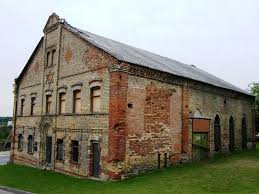
Renovation has begun on a century-old synagogue in Alytus, Lithuania. The building was used to store salt in the Soviet era and is now set to become a city community center and museum of Jewish culture. The Lithuanian Jewish Community, the Cultural Heritage Department and Israeli ambassador to Lithuania Amir Maimon who visited the town all gave their approval to the plans by Alytus. Support was pledges to secure funding to set up the museum of Jewish culture there and to acquire the necessary exhibit items.

Full story in Lithuanian here.
March of Memory in Semeliškės

semel

March of Memory in Semeliškės

at the former ghetto, Užupio street no. 14, Semeliškės at 12 noon, October 6, 2016, to commemorate the mass murder of the Jews of Semeliškės, Vievis and Žasliai in the Dergionys Forest 75 years ago.

We invite all people of good will to join this initiative to honor the victims of the Holocaust. Our being together on that day will symbolize our solidarity, our respect for the history of our region and our aspiration to make sure this kind of tragedy never happens again.

Patron: Elektrėnai municipal administration
Organizer: Strėva Semeliškės community
Partner: Semeliškės aldermanship

“We all must tell ourselves: this is our nation’s past. We are the heirs and must accept our inheritance. We will not raise even one person from the grave, we will not reconcile the victim with his murderer, but perhaps we will learn the lesson, so that what happened happens never again.”

Father Ričardas Doveika

“To die and to forget share the same root in the Lithuanian language. The Jews of Lithuania were murdered once, but we can still remember the story of each one. We can still do that. So who are we, if we think this doesn’t concern us? Who are we? From what clay are we made? If they are not us, who are we? Who are we? What does ‘we’ mean?”

Virginijus Savukynas, journalist

LJC Olameinu International Children’s Camp 2016

LŽB tarptautinė vaikų stovykla Olameinu 2016

Lithuanian Jewish Community youth programs coordinator and camp programs director Pavel Gulyakov reported the only negative at the camp this year was some not-so-great weather, it rained, preventing the children from visiting beautiful Lake Asveja at times. The camp went international this year with children from Jewish communities in all three Baltic states.

Exiled to Siberia: Mama Didn’t Have a Kopek

Tremtinys I. Šliomovičius: mama neturėjo nė kapeikos

Text and photo by Daumantė Baranauskaitė manoteises.lt

More than seven decades ago the livestock cars began to leave Kaunas. Four-year-old Iser Shlomovich watched his father growing distant in one of those train cars. Iser, a Jew, his twin brother, sister and mother would all be deported to Siberia, too. When Lithuania was still an independent country, father and mother Shlomovich spoke Yiddish at home but spoke Russian to the children, so they would learn flawless Russian. As later events showed, they bestowed a great gift upon their children. Although most people don’t realize it, Lithuanian Jews were deported along with ethnic Lithuanians in 1941.

Full story in Lithuanian here.
Our People Lie Buried Here

1919-zydu-zemes-ukio-mokykla-veliucionys

Simon Wiesenthal director and author Efraim Zuroff and Lithuanian author Rūta Vanagaitė are inviting Lithuanians to mark the Day of Remembrance of the Genocide of the Jews in Lithuania on September 23 this year by looking up the mass murder site closest to the their homes and making the trek there to light a candle and perhaps leave a small stone at the grave, a Jewish tradition.

Zuroff and Vanagaitė are focusing commemoration efforts on the town of Vėliučionys, a mass murder site about 12 kilometers outside Vilnius.

Efraim Zuroff:

This coming Friday, Lithuania commemorates the Holocaust, and Rūta Vanagaitė and I have launched a special initiative entitled “Čia guli Musiškiai” (Our People Lie Buried Here) to encourage Lithuanians to visit the mass grave of Shoa victims nearest their home. In all, there are 227 recognized mass graves in Lithuania, documented in the Lithuanian Holocaust Atlas, which is available online.

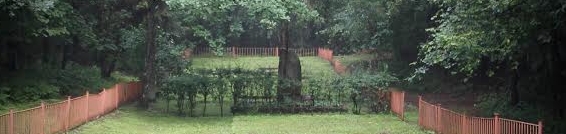
We are encouraging residents of Vilna/Vilnius to visit one of the most neglected mass graves near the city at a place called Vėliučionys, where 1,159 Jewish men, women and children were murdered by Lithuanian auxiliary police and a special mass murder squad on September 21 and 22, 1941. There will be a brief ceremony at 5 PM as we march from the manor where they were confined to the site of their murder.

Press Release

September 20, 2016

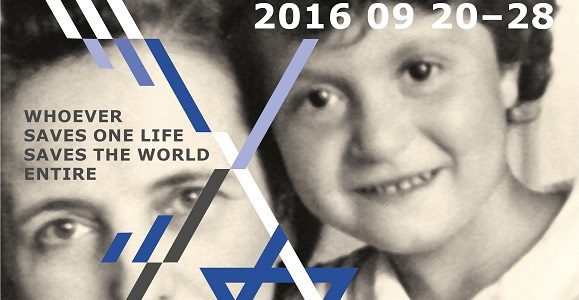
Events to mark the Day of Remembrance of Jewish Victims of Genocide in Lithuania and to honor those who rescued Jews during the Holocaust begin this week, running from September 20 to September 28. It begins Tuesday with a volunteer group clean-up of the Jewish cemetery on Sudervės road in Vilnius. On September 21 a tour of Jewish Vilna will be offered, and a screening of the film “Gyvybės ir mirties duobė” [The Pit of Life and Death] will be held at 6 P.M. On September 22 the Israeli vocalist group Adam le Adam will hold a free concert at the square in front of the Old Town Hall in Vilnius at 6 P.M. A monument to commemorate the children who died in the Vilnius ghetto will be unveiled in the Garden of Brothers at the Vilnius Sholem Aleichem ORT Gymnasium. Then a ceremony will be held to commemorate Holocaust victims at the Ponar Memorial Complex outside Vilnius.

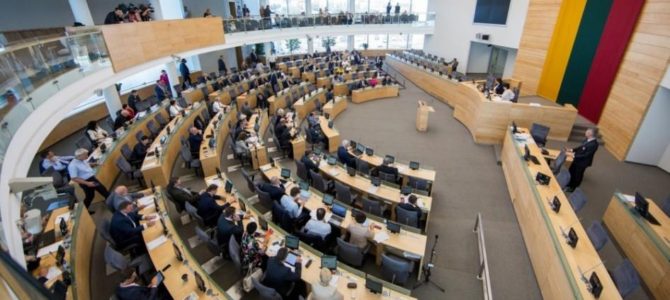
The conference “They Rescued Lithuania’s Jews, They Rescued Lithuania’s Honor” will be held at the Lithuanian parliament from 11:30 A.M. to 4:00 P.M. on September 25, followed by a presentation of the Lithuanian Jewish Community Jewish calendar for the year 5777. The events at parliament mark the 75th anniversary of the beginning of the Holocaust in Lithuania and the 150th anniversary of the birth of Lithuanian president and Righteous Gentile Kazys Grinius. A ceremony to present awards to rescuers of Jews is scheduled for September 28 at the Lithuanian President’s Office.

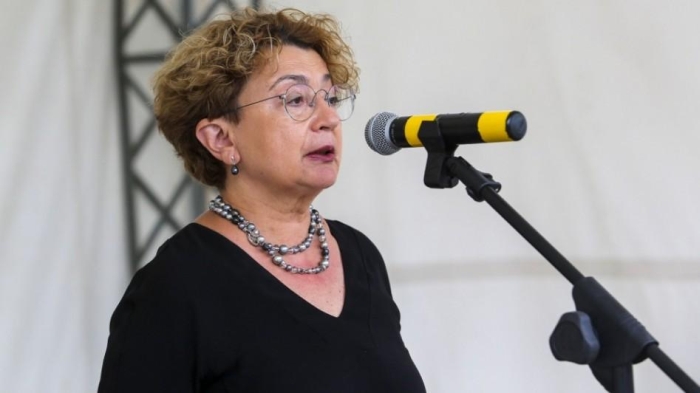
“This year this special emphasis on the small towns whose tragedy affected all people living in Lithuania. The mass murder of the Jews of the shtetls has revealed the full dimension of the tragedy,” Lithuanian Jewish Community chairwoman Faina Kukliansky said. “Lithuania is changing, a much braver younger generation is coming of age who take a different view of the history of their nation. The German press has called Lithuania the first state in Eastern Europe to openly raise the question of its own citizens’ complicity in the Holocaust. Lithuania is coming of age; we hope the country sets an example for neighboring states.

“As we remember every year the extremely painful losses we Jews have experienced, we advocate for analyses of the historical facts, what happened, what the Provisional Government of Lithuania did, how the Lithuanian Activist Front behaved. The Lithuanian Jewish Community is not an academic institution, but as much as we are able, with help from the state, without fanfare and sensationalism, we strive to make sense of the facts and circumstances in the Holocaust, and to educate the Lithuanian public on the history of the Jews of Lithuania. Again and again we dive deeper into Lithuanian history trying to understand why and how neighbor could turn on neighbor and murder their innocent, until then peaceful, well-educated and cultured good neighbors, including men, women, children and the elderly. Then stealing their property, and for decades denying they took part in the Holocaust. Forever and ever, but especially today, we remember our honorable fellow citizens, the Lithuanians who rescued Jews,” chairwoman Kukliansky said.

Events program here.

www.lzb.lt

Jewish Street Gets New Sign in Yiddish, Hebrew

Vilniuje Žydų gatvės pavadinimas užrašytas dar dviem kalbomis – ir יידישע גאס (jidiš klb.), ir רחוב היהודים (hebrajų klb.)

Žydų gatvė (Jewish Street, aka Yidishe Gas, aka ulica Żydowska), where the traditional Jewish quarter and the Great Synagogue of Vilnius was located, got a new sign in Yiddish and Hebrew Tuesday.

This was one in a continuing series of new signs in foreign languages, a controversial effort by Vilnius mayor Remigijus Šimašius to showcase the multicultural identity of the Lithuanian capital. Earlier signs in “minority” languages included ones for Islandijos [Iceland] street, Washington Square, Varšuvos [Warsaw] street, Rusų [Russian] street and Totorių [Tatar] street in Vilnius.

Names of Jews Murdered To Be Remembered in Lithuania

vardai7

On September 22 and 23, the 75th anniversary of the mass murder of the Jews of Lithuania, the names of Holocaust victims will be read out loud on the eve and day of the Day of Remembrance of the Jewish Genocide Victims of Lithuania. The civic initiative VARDAI [NAMES] invites the public to remember the brutally exterminated citizens of Lithuania by uttering their names and surnames at the locations where they once lived.

VARDAI coordinator and museum specialist Milda Jakulytė-Vasil said: “A person is not a number. The reading of the names is a personal expression of commemoration and empathy. It only takes five minutes. We welcome everyone who wants to remember.” Participants at the events have said this kind of Holocaust victim commemoration helped them comprehend the scope of the tragedy in a very personal way. When you say a person’s name, it’s no longer possible to pretend that person never existed, and the statistics telling us 90 percent of 220,000 Jews living in Lithuania were murdered becomes more than just a number.

This will be the sixth annual reading of the names in Lithuanian cities and towns, to include more communities than ever before. At least several dozen cities and towns are participating in reading the names this year, including Vilnius, Kaunas, Marijampolė, Ukmergė, Merkinė, Molėtai, Jonava, Kėdainiai, Švėkšna, Dieveniškės, Eišiškės, Kretinga, Jurbarkas, Žemaičių Naumiestis and others. Many of these events include additional components, such as cleaning up mass murder sites, visiting old Jewish cemeteries and meetings with survivors.

Jewish Street in Vilnius to Get Trilingual Street Sign

Žydų gatvė (Jewish street, aka Yidishe gas, aka ulica Żydowska), where the traditional Jewish quarter and the Great Synagogue of Vilnius was located, is about to get signs in Yiddish and Hebrew.

The special event to unveil the new sign is scheduled for 11:30 A.M., Tuesday, September 20 at Žydų street no. 2.

The program includes a performance of a piece by the Jewish song and dance ensemble Fayerlakh, followed by Vytautas Mitalas, chairman of the Vilnius municipal council’s culture, education and sports committee, presenting Vilnius mayor Remigijus Šimašius. Šimašius is to present a small speech. Mitalas will then introduce Lithuanian Jewish Community chairwoman Faina Kukliansky, who will also deliver a small speech. The mayor and the chairwoman will then unveil the new street sign. Fayerlakh is then scheduled to perform another song.

The historic street and a neighboring street were cleared of their mainly Jewish residents in 1941 when the Nazis and Nazi collaborators set up the Vilnius ghetto. The residents were murdered and a large population of Jews from other parts of the city were forced into the cramped quarters there. It was part of the so-called Small Ghetto in Vilnius, liquidated in October of 1942. Žydų gatvė was the site of the Shulhof, the collection of buildings built around the location of the residence and study of the Vilna Gaon and the Great Synagogue.

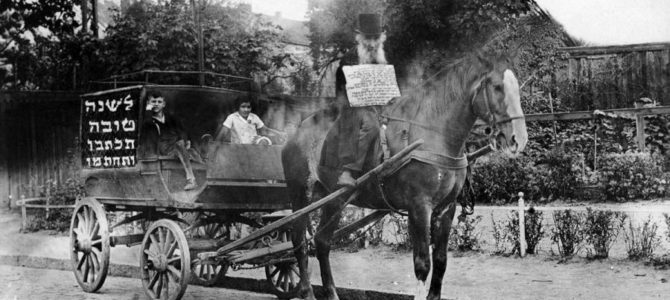
Vilkaviškis Jewish Life before World War I

Vilkaviškio žydų gyvenimas prieš Pirmąjį pasaulinį karą
Seventy percent of Vilkaviškis residents were Jewish. Photo from Ralph Salinger’s archive

from http://www.santaka.info/ Santaka: Newspaper of the Vilkaviškis Region

On September 23 Vilkaviškis will also mark the Day of Genocide of Jews of Lithuania. Jewish history researcher Ralph Salinger who has donated so very much historical material about the Jews who once lived in our town and region will again visit. This man has collected where possible from Israeli museums and has allowed us as well as our regional history museum to use the material.

Thanks to him we can now share with our readers interesting stories from our town’s past. We present to you the history of the Jews who lived here, and of course Lithuanians as well, from 100 years ago.

This long story are recollections written in 1890 in Vilkaviškis by Harold Fryd, a Jew born and raised here, translated from English. His grandson David Perl has preserved these memoirs and has agreed to share them. The photographs next to the articles are from a later period, since photography wasn’t very developed or very widespread at the time. The photographs Ralph Salinger has sent are from 30-50 years later in the life of the town, but one realizes while reading the text that the town hadn’t changed much in the intervening period. Some of the memories are perhaps known to us, but some appear rather incredible and unexpected.

They Did Farming and Trade

At that time in my town, Vilkaviškis, there were about 8,000 people living there, of whom 70 percent were Jews. The rest were Lithuanians, Poles, Russians and a few Germans.

Translation to be continued.

Lithuanian original here.

Support the Lithuanian Jewish Community

Even your small donation today can help the Lithuanian Jewish Community achieve great things tomorrow.

The Lithuanian Jewish community has roots going back 700 years. Only a remnant survived the Holocaust. Although the current community is small, we are extremely active and are working hard to foster Jewish identity, maintain traditions and culture, commemorate Holocaust victims, provide social services to our members and promote tolerance in society.

We invite you to contribute to reviving at least a small portion of the legendary Jerusalem of Lithuania. Perform your mitzvah (good deed) today!

Award

Apdovanojimas

Lieutenant Artūras Jasinskas, commander of the Lithuanian military’s volunteer defense forces, awarded Nicholas Benjamin Israel, head of Baltic regional military information operations support team of US special operations in Europe, for his exceptional personal contribution to expanding and strengthening cooperation between the US military and Lithuania’s volunteer defense forces Friday, September 9.

The name of the Lithuanian military medal is “For Distinguished Service.”

Israel’s cousin, Lithuanian Jewish Community chairwoman Faina Kukliansky, attended the ceremony.

I’m Not Jewish

marius-ivaskevicius
by Marius Ivaškevičius

That’s what I want to tell everyone who the last three months have tactfully asked this of my friends and relatives. I am not Jewish at all, I don’t have a drop of Jewish blood. So why is he casting his lot with those Jews, what wild insect bit him? That’s another question heard often.

I can answer it almost by rote: I was bitten by a tick. Three years ago I filmed one scene at the old Jewish cemetery in Warsaw and it sucked my blood there. Furthermore, I got Lyme disease. And it so happened, or perhaps it was decided beforehand by that treacherous Jewish tick, that when I was taking antibiotics I became interested in the Jews in my town, their fate in my native Molėtai. And my hair stood on end and I got goose-bumps when I realized I had been living for 40 years in complete ignorance, on the margins of a gigantic tragedy without even sensing it existed. I knew there had been Jews, they had lived here, because their old cemetery still exists in Molėtai, as does their old “red bricks,” a long building, the oldest in the town, of connected shops, a sort of shopping mall of the period. I knew some unknown number of them had been killed, since, as I thought, some of them had been involved in Communist activities.

LJC Chairwoman Faina Kukliansky Thanks European Day of Jewish Culture Organizers

LŽB pirmininkė F. Kukliansky dėkoja Europos žydų kultūros dienos Lietuvos žydų (litvakų) bendruomenėje organizatoriams
Photo: Dr. Mindaugas Kvietkauskas, director, Lithuanian Literature and Folklore Institute, reads poems by Abraham Sutzkever

The European Day of Jewish Culture was celebrated September 4 in Vilnius with a klezmer music concert and Yiddish poetry readings. We are glad it was such a real holiday, and proud of its organizers!

Lithuanian Jewish Community chairwoman Faina Kukliansky thanks everyone who contributed to organizing the event and who sacrificed their time for the Jewish community’s benefit.

Faina sveikina

“Thank you to the staff of the Bagel Shop Café who prepared special Jewish treats for everyone. Only though joint effort can our small community organize celebrations of such high caliber and take pride in them along with a large group of friends and guests. Thank you to the small group of volunteers who truly helped. Thank you to the Vilnius Sholem Aleichem ORT Gymnasium, fostering students who honor and are interested in their roots and culture, the young Europeans for whom understanding of tolerance and civic-mindedness is an urgent matter. Thank you to the gymnasium students who took part in the celebration,” chairwoman Kukliansky said.

Film Gitel Looks at Lithuanian Holocaust

gitel

A cinematic premiere has been added to list of important events to honor Lithuania’s Holocaust victims. British director Robert Mullan’s film Gitel, filmed in Lithuania and elsewhere, will open at cinema theaters September 23. The film looks at the mass murders of 1941 through the eyes of a female survivor who has lost her family.

Litvak Wit in Yiddish Sayings

Dita Sperling2 2016

It’s important for people to hear the sound of Yiddish. There are many interesting sayings. My grandma used to say “one butt can’t be at two fairs at once.” Takhrikhim is a linen cloth used as a burial shroud. I remember I had this rich uncle who was stingy. Something needed to be purchased for the bathtub, but he’s not buying it. I said to him: “Uncle, takhrikhim have no pockets. And what do we keep in our pockets? Money. When they are burying you, you can’t take your money with you.” After I said that, uncle went and bought everything right away. Incidentally, pockets in Yiddish are “keshenes,” almost the same as Lithuanian “kišenės.”

Aphorisms, sayings and etc.

On Sunday I thought I’d go on Monday, but I put it off, and I didn’t go on Tuesday, either, because there was market on Wednesday. And why should I go on Thursday, since Friday is the start of Sabbath?

When the mouse is full, the flour is bitter.

No man scratches his head without reason: either he has worries, or lice.

Molėtai Holocaust Procession Draws Record Crowd

eisena-skirta-iszudytiems-moletu-krasto-zydams-pagerbti-faina

More than 2,600 and perhaps as many as 4,000 people attended a rally and walked the route along which 2,000 Jews were marched to their deaths 75 years ago in the sleepy Lithuanian town of Molėtai Monday. The population of Molėtai was roughly 6,400 when last counted in 2011.

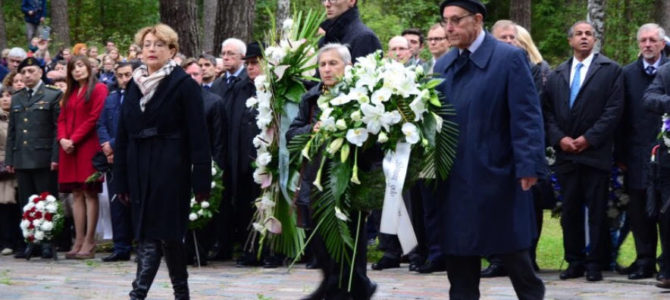
The town center and surrounding streets were filled with local residents and people from around the world, including Holocaust survivors and their descendants. Many Lithuanians brought their children and there were people from Estonia and a number of Lithuanian officials in the crowd. One group of young people waved Polish flags–the Polish Armia Krajowa operated in the area in 1944. A small group of Lithuanian boy and girl scouts attended, while another small group carried a Lithuanian flag, and others sported Israeli flags. A monk in black robes stood by the stage, on the other side of which there was a long line of people holding posters with names, faces and descriptions. A central area contained about twenty folding chairs for elderly and distinguished guests, including Vytautas Landsbergis and Holocaust survivor Irena Veisaitė. Lithuanian MP Emanuelis Zingeris, a Litvak, also attended. The priest Tomas Šernas was also there, as was Lithuanian Jewish partisan Fania Brancovskaja. Other distinguished guests included Conservative Party and parliamentary opposition leader Andrius Kubilius, Lithuanian defense minister Juozas Olekas and deputy foreign minister Mantvydas Bekešius.

Record Turnout for Biržai Holocaust Commemoration

Around 200 people attended an annual commemoration of the Holocaust victims of Biržai, Lithuania Sunday, August 28, 2016. In prior years those travelling to the rural town near the Latvian border numbered in the dozens. Only members of four families survived the Holocaust in Biržai. Their descendants now live in other locations in Lithuania and Israel and have been making the pilgrimage back to honor their murdered relatives since the end of World War II.

A Holocaust historian who attended said larger interest this year was likely the result of publicity for the Molėtai Holocaust commemoration on August 29.

Ten speakers spoke at the commemoration, including a moving speech by Lionginas Virbalas, the Catholic archbishop of Kaunas who was born and grew up in Biržai. Lithuanian Jewish Community chairwoman Faina Kukliansky also spoke eloquently about the past and the future. Israeli ambassador Amir Maimon spoke and a representative from the US embassy whose Jewish family roots are in Biržai also participated.

There wasn’t a formal march to the killing site. Instead there was a walking tour of Jewish sites in Biržai, including the former synagogue, Jewish houses and buildings and the old Jewish cemetery, where a portion of the Jews of Biržai were murdered. The group then moved to the killing site about 2 kilometers outside town where prayers were said by representatives of different religious communities.