
Holocaust

Leonidas Donskis: When Will the Truth Finally Set Us Free?

Leonidas Donskis: When Will the Truth Finally Set Us Free?

Bernardinai.lt

In marking the anniversary of the June Uprising of 1941, let’s look at what the late Leonidas Donskis wrote in 2010.

I will admit that reading commentaries by political analyst Kęstutis Girnius on the Lithuanian Provisional Government and the Lithuanian Activist Front, and the allegedly small amount of academic research and documentation on these phenomena, I find myself hardly able to believe that a person whom I consider one of the soberest and keenest of our political commentators could write this. Without quoting from his earlier statements on radio and in print on this issue, I will present a link to a new comment by Kęstutis Girnius.

Full story in Lithuanian here.

Vilnius YIVO Headquarters Commemorative Plaque Ceremony Held

Vilnius YIVO Headquarters Commemorative Plaque Ceremony Held

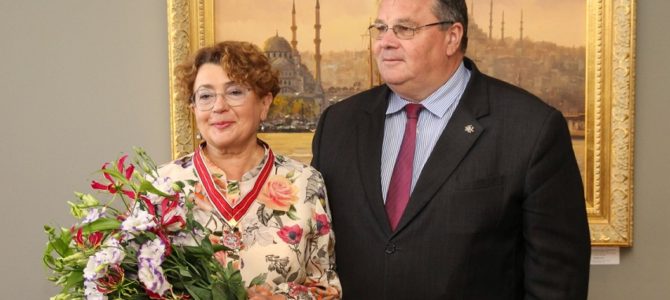
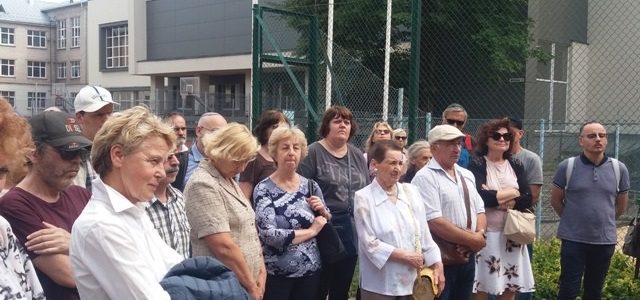
The Lithuanian Foreign Ministry and the Lithuanian Jewish Community invited guests and the public to a ceremony to unveil a plaque near the site of the former Vilnius headquarters of YIVO on Vivulskio street in Vilnius June 20. Those attending included deputy to the LJC chairwoman professor Leonidas Melnikas, the heads of YIVO, Lithuanian foreign minister Linas Linkevičius, Lithuanian culture minister Dr. Mindaugas Kvietkauskas, Jewish partisan Fania Brancovskaja and the mayor of Vilnius.

YIVO began in Vilnius in 1925 and was originally housed in the apartment of its founder and prime mover Max Weinreich on Basanavičiaus street (aka Pogulanskaya, Pogulnaka and Wielka Pohulanka street) in Vilnius. Dedicated to research on the language, literature, culture and history of Jews in Eastern Europe, the institute collected a large mass of documents and archive material from local Jewish communities before the Holocaust.

Architect and designer Victoria Sideraitė-Alon designed the new YIVO plaque.

Although much of YIVO’s material was lost during the war, some made its way to the provisional war-time headquarters in New York, which became world headquarters following the war.

Some Glimpses of the Unusual New Holocaust Memorial in Biržai

Some Glimpses of the Unusual New Holocaust Memorial in Biržai

A ceremony to unveil the unusual new Holocaust memorial in the Pakamponys forest outside Biržai in northern Lithuania took place June 16 with over 50 people from around the world attending. Also attending were Lithuanian MPs, ambassadors, visitors from other towns and local residents and young people.

Panevėžys Jewish Community chairman Gennady Kofman, a member of the executive board of the Lithuanian Jewish Community, represented the LJC at the ceremony and presented a thank-you letter to Biržai regional administrator Vytas Jareckas. Sofia and Michael Tabakina of Israel, who arrived in Panevėžys on June 14 and who are frequent visitors, also attended the ceremony. Sofia’s family came from Panevėžys, Šiauliai and Biržai. Her ancestors were murdered in Biržai. As many Litvaks living in Israel do, every year Sofia Tabakina visits sites where her relatives were murdered in Lithuania.

Visitors Flock to Panevėžys Jewish Community for Summer

Visitors Flock to Panevėžys Jewish Community for Summer

Achikam and Riva Shapira of Israel paid an unexpected visit to the Panevėžys Jewish Community on June 16 seeking information about their relatives, who previously lived in Kupiškis, then moved to Panevėžys with some relatives moving to South Africa. Achikam’s grandfather God Shapira and his wife Khana were born in Memel, which is now called Klaipėda and his grandfather’s brother David Shapira lived in Kupiškis and moved to Panevėžys.

Only migration saved the family from the Holocaust, except for the elder brother Mordechai Shapira who stayed in Lithuania and was murdered in Skuodas during the Holocaust. Family members still remember everything connected with their former life in Lithuania. Achikam donated some family photographs to the Panevėžys Jewish Community archives.

Sheryl Silber of the USA and Alin Silberg of Canada visited on June 17 after taking part in the unveiling of the new Holocaust memorial in Biržai, Lithuania. They told their family’s story. Their great-grandparents, Dora Dviera (née Zak, 1863-1932) and Harry Moishe Meirovitch were born in Panevėžys, as did their other great-grandparents Yakhvida and Liba Zak. Their great-great-grandparents moved to South Africa in 1906 while some of their relatives remained in Lithuania and died in the Holocaust. After viewing photographs at the Panevėžys Jewish Community, the two women expressed the desire to see Jewish heritage sites in city. The Panevėžys Jewish Community received new information about the Zak, Meirovitch and Silberg families.

International Project Connects New York and Vilnius YIVO Archives

International Project Connects New York and Vilnius YIVO Archives

Lithuanian culture minister Dr. Mindaugas Kvietkauskas has met with YIVO director Jonathan Brent and YIVO head of archives Dr. Stefanie Halpern. In the meeting they discussed the implementation of YIVO’s Vilna project, a seven-year-long international effort to preserve, digitize and connect the pre-war YIVO archives in New York and Vilnius. The project aims at recreating the Strashun Library, one of the largest Jewish collections in Europe before the Holocaust.

The Lithuanian side expressed the hope that next year, when the Baltic country marks the Year of the Vilna Gaon and Litvak History, YIVO would loan the pinkas of the Vilna Gaon shul, a book of statistics kept by the Jewish community which is considered one of the most important documents testifying to the life and history of the Vilnius Jewish community.

Full story in Lithuanian on the Lithuanian Culture Ministry webpage here.

Help Identify This Woman

Stasė Jusaitė, a museum expert at the Ninth Fort Museum in Kaunas, is asking the public for help identifying the woman on the left in the photograph below. The woman on the right is Ona Fridmanienė, the wife of Vulf Fridman, who lived on Italijos (now Mickevičiaus) street in Kaunas before World War II. After her husband died she remarried, to a man named Gustas. Returning from some hiding place–it’s not clear where–she found a Jewish baby boy in a basket and brought him home. When the boy was about three years old, his mother and father came from Vilnius and took him home. When they boy was between 7 and 9, they came to visit Ona again. Ona’s great-granddaughter is searching for the woman and her son.

Exhibit on Slobodka

Exhibit on Slobodka

The Kaunas Regional State Archive invited the public to come celebrate International Archives Day on June 11, although technically June 9 is the date set as an annual day by the International Council of Archives.

On June 11 the regional state archive showed an exhibit called “The History of the Suburbs of Kaunas: Vilijampolë from Manor Estate to City.” Vilijampolë is the Lithuanian name of the former Jewish neighborhood of Slobodka which became the Kaunas ghetto during the Holocaust.

Archive director Gintaras Druèkus welcomed visitors and said the exhibit was the first in a new series of exhibits featuring the suburbs and neighborhoods of Kaunas. He began a discussion of Slobodka with Kaunas Regional State Archive senior specialist and exhibit curator Nijolë Ambraškienë, department director Vitalija Girèytë, Kaunas Regional Public Library local history expert Dr. Mindaugas Balkus, social activist Dr. Raimundas Kaminskas, Kaunas Jewish Community chairman Gercas Žakas, Jewish representative Michailas Duškesas and others, who informed the audience of different aspects of the history of the suburb.

Holocaust Memorial Unveiled in Biržai

Holocaust Memorial Unveiled in Biržai

A new Holocaust memorial was unveiled in the Biržai region on June 16. The 30-meter-long monument commemorates 522 known victims. About 2,400 people, 900 of them children, were shot in the Pakamponys (aka Astravas) forest in 1941, but not all names are known. Jews were an integral part of the culture and history of the northern Lithuanian town of Biržai.

Trees were planted along Žemaitės street to honor those who risked their lives to save Jews, the Biržai Jewish Culture and History Association reported.

A procession walked the same route Jews were forced to march to their deaths in 1941, from the site of the ghetto on Žemaitės street to the mass murder site in Pakamponys forest, where the new monument was revealed. This is only the sixth site in Lithuania where Holocaust victims are commemorated with inscriptions of names.

Joseph Rabie from France designed the monument. His great-grandparents came from Biržai and some of his relatives were murdered at Pakamponys. Abel and Glenda Levitt from Israel initiated the commemoration project. Philanthropist Ben Rabinowitz from Cape Town who also has roots in Biržai was a strong contributor to the project.

Lithuania Marks Day of Mourning and Hope June 14

Lithuania Marks Day of Mourning and Hope June 14

Mass deportations to Stalin’s camps began on this day in 1941.

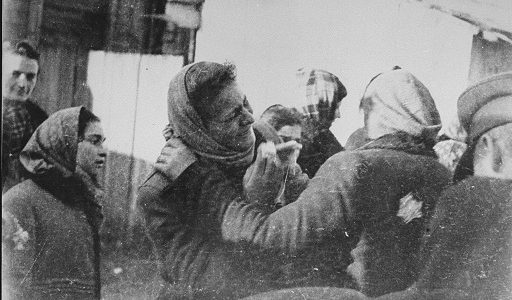
About 17,500 people were deported from Lithuania between June 14 and 18, 1941, (the fates of 16,246 have been determined so far), a number derived from the 4,663 arrested and 12, 832 people officially deported. The deportations were a huge loss and tragedy for Lithuania. Not all those deported were ethnic Lithuanians: about 3,000 Jews, according to various sources, were also deported and about 375 Jews died at the camps and in exile.

Jews deported to Siberia resisted the brutality and terror of the oppressive Soviet organs with a deep spirituality and faith. In 1941 about 1.3 percent of the total Lithuanian Jewish population were deported, and as a percentage constitute the largest group by ethnicity deported from Lithuania.

Santariškės Children’s Hospital doctor Rozalija Černakova tells the story of what happened to her grandfather and family. Her grandparents were deported with their families. Rozalija’s parents were still children when they were deported: her mother 11 and her mother’s brother 8. They were sent to the Altai region. That’s where Rozalija was born.

Lithuanian Supreme Court to Hear Noreika Appeal

Grant Gochin, an LA-resident Litvak as well as a Lithuanian citizen and a member of the Lithuanian Jewish Community, has reported the Lithuanian Supreme Court will hear his appeal of a lower court’s dismissal of his case against the Center for the Study of the Genocide and Resistance of Residents of Lithuania regarding the latter’s finding WWII-era Lithuanian captain Jonas Noreika was not culpable in Holocaust crimes. As reported earlier, Gochin has been waging a battle for several years now to have the finding reversed and a commemorative plaque to Noreika removed from its location in central Vilnius. Following the earlier court’s finding Gochin didn’t have “standing,” the Center for the Study of the Genocide and Resistance of Residents of Lithuania issued a non-attributed document which the International Holocaust Remembrance Alliance (IHRA) said fell within its definition of anti-Semitism.

IHRA response here.

Gochin’s appeal here.

Commemorative Plaque to Mark Site of Former YIVO HQ in Vilnius

Commemorative Plaque to Mark Site of Former YIVO HQ in Vilnius

The Lithuanian Foreign Ministry and the Lithuanian Jewish Community invite the public to attend an unveiling ceremony of a plaque to commemorate the site of the former headquarters of YIVO in Vilnius at 3:00 P.M. on June 20 at the building now located at Vivulskio street no. 18 in Vilnius. YIVO, the most significant center for the study of Jewish culture, history and languages in Eastern Europe, was located near this site from 1925 to 1941. Its founder moved its activities to New York which became world headquarters following the German invasion in 1941.

Participants at the ceremony are to include YIVO director Jonathan Brent and YIVO board of directors deputy chairwoman Irene Pletka.

Sabbath with Designer Agnė Kuzmickatė

Sabbath with Designer Agnė Kuzmickatė

For a number of years now the Lithuanian Jewish Community has been inviting artists and special guests to celebrate Sabbath with the community. Last Friday LJC executive director Renaldas Vaisbrodas presented Lithuanian designer Agnė Kuzmickatė to members. She holds a doctorate and is sometimes called butterfly queen because of her use of her butterflies in her designs.

Renaldas led the discussion and tendered questions to the famous young designer, starting with questions about her family. Her father is the philosopher Bronislovas Kuzmickas, PhD, who was a founding member of Sąjūdis, the Lithuanian independence movement, who went on to become a member of parliament, a signatory to the Lithuanian declaration of the restoration of independence and served as deputy to parliamentary speaker Vytautas Landsbergis.

Agnė Kuzmickatė’s grandmother Gita Jekentienė was at a children’s summer camp in Palanga, Lithuania, when World War II arrived. She and some of the other children were evacuated to safer locations in the Soviet Union. When she spoke of her family, Agnė Kuzmickatė repeatedly returned to her grandmother Gita’s experience and said she only know understood how her grandmother’s environment shaped her. She said she and her grandmother often spoke about Jewish identity, about the Yiddish language and the tragic loss of family, all of whom, except for her grandmother’s brother, were murdered at the Ninth Fort in Kaunas. Returning to Lithuania after the war, her grandmother experienced all sorts of bullying and name-calling because she was Jewish. Agnė Kuzmickatė said she had never experienced this and everyone at school respected her because of her father’s activities on behalf of independent Lithuania.

New Litvak History Exhibit in Cape Town

New Litvak History Exhibit in Cape Town

URM.lt

The Lithuanian Embassy to South Africa presented a mobile exhibit at the South African Jewish Museum in Cape Town June 6 called “One Century Out of Seven. Lithuania, Lite, Lita.” The installation informs viewers of different aspects of Jewish history in Lithuania from the time of the Grand Duchy to the present. The exhibit travelled to South Africa’s second-largest city from the Holocaust and Genocide Center in Johannesburg.

Lithuanian ambassador Sigutė Jakštonytė welcomed the large audience including members of the Cape Town Jewish community and members of the parliament of the Republic of South Africa. She told them the Lithuanian parliament had named 2020 the Year of the Vilna Gaon and Litvak History in appreciation of the Litvak contribution to the Lithuanian state and to preserve the memory of Holocaust victims. The ambassador also thanked the museum in Cape Town for four years of close cooperation.

The exhibit at the South African Jewish Museum in Cape Town runs till the end of June.

Unusual Holocaust Memorial to Be Unveiled in Biržai

Unusual Holocaust Memorial to Be Unveiled in Biržai

DELFI.lt

An event to commemorate the Jews of Biržai and Holocaust victims is to be held on Sunday, June 16, including honoring rescuers of Jews, a memorial procession and the unveiling of a 30-meter-long Holocaust memorial.

The Biržai Jewish Cultural and History Association, the Biržai regional administration and the Sėla Museum in Biržai are organizing the event. Partners include the Israeli embassy to Lithuania, the Lithuanian Foreign Ministry and the secretariat of the International Commission to Assess the Crimes of the Nazi and Soviet Occupational Regimes in Lithuania.

Jewish Community Remembered in Kalvarija

Jewish Community Remembered in Kalvarija

In the period between the two world wars, the Jewish population was the majority population in Kalvarija, Lithuania. The architecture of the old town, a unique synagogue complex (with a winter and summer synagogue and the Talmud school) and the only surviving Jew, Moishe Segalis–all of this stands as a testimony to that time. For four Saturdays in a row now, as spring blossoms forth, there have been readings from Icchokas Meras’s novel “Lygiosios trunka akimirką” held near the synagogues in Kalvarija and in their courtyards. Lithuanian Jewish Community executive director Renaldas Vaisbrodas attended the final reading on May 24.

Students and soloists from the Sonantem choir in Kalvarija read from the work about the life of the Vilnius ghetto and about life which can be decided by the movement of a single piece on the game board.

A youth initiative invited the local community to an informal meeting with the relatives of those who once lived in Kalvarija, with our ancestors and neighbors.

Merkel: German Synagogues, Jewish Schools Require Police Protection

Merkel: German Synagogues, Jewish Schools Require Police Protection

German chancellor Angela Merkel said Tuesday her country should remain vigilant regarding growing nationalist tendencies in Europe because of Germany’s Nazi past. “It’s clear we have to view these [nationalist movements] in a specific context, the context of our past,” she said in an interview with Christiane Amanpour on CNN. “That means we must be more vigilant than others.” Merkel condemned growing anti-Semitism in Germany and remarked: “unfortunately we have always had a certain amount of anti-Semites.”

Full description of interview in Lithuanian here.

Vilnius: Jerusalem of the North, Jerusalem of Lithuania

Vilnius: Jerusalem of the North, Jerusalem of Lithuania

15min.lt

A New, Free Tourist Route: Why Vilnius Was Called the Jerusalem of the North

With those who fled coming back and traditional Jewish holidays again becoming part of city life, Jewish culture is experiencing a renaissance in Vilnius. Now there will be another opportunity to discover why Vilnius was called the Jerusalem of the North. A free new tourist route called “Discover Jewish Heritage in Vilnius” will help tell the stories of the Jews who lived and worked in Vilnius, according to a press release from the Vilnius municipal tourism and business growth agency Go Vilnius, which has compiled this guidebook as a way to learn about the world-famous Litvaks whose humble origins were in Vilnius, to discover what traces of them remain and to learn about the history of the Jewish community of Vilnius, including the best of times and the most tragic of times.

Full story in Lithuanian here.

Small but Significant Features of Jewish History in Vilnius

Small but Significant Features of Jewish History in Vilnius


bernardinai.lt

Before World War II a large Jewish community lived in Vilnius whose cultural, religious and social traces are only recalled today in statues and commemorative plaques. It’s a rare resident of the city who knows why Vilnius was called the Jerusalem of Lithuania, who knows what an active community life bustled on the narrow streets of the Old Town and how the tragic events of World War II changed forever the face of the Lithuanian capital.

For many years Vilnius was a Jewish spiritual and academic center. Besides some faded inscriptions in Hebrew characters on buildings which were part of the Vilnius ghetto, there are more surviving traces of the history of this people. Before World War II Jews accounted for more than a third of all city residents.

Today we invite you to discover with us some small details of this history, small but important to our city.

Full text in Lithuanian here.