Holocaust

Remember the Victims of the Children’s Aktion in Kaunas

A ceremony to mark the 72nd anniversary of the Children’s Aktion in the Kaunas ghetto will be held at 4:00 P.M. on March 25, 2016, at E. Ožeškienės street No. 13 in Kaunas. We will never forget the horror of that day when over 2,000 children were torn from their families and brutally murdered.

Goodwill Fund Granted Greater Freedom to Spend

March 17, BNS–The Lithuanian parliament Thursday adopted fast-track amendments to allow the Goodwill Fund administering compensation for Jewish religious community property to allocate funds more freely. The vote was 81 MPs for, 1 against and 5 abstentions. Under the new amendment, the Goodwill Fund will be allowed to cover its administrative costs using monies from the state. It suggests fixing administration costs so they never exceed 10 percent of the annual amount of compensation paid out by the treasury according to the annual state budget.

Last year the fund spent 125,942 euros on expenses, but the Office of State Comptroller warned the law didn’t allow the fund to use state allocation for administrative costs. The amendments also allow the fund to invest monies paid into the fund but not used. Such a move would require careful consideration of investment security, liquidity, annual profits and other factors.

A Yiddish Play in Russian Translation

poo

Under the Skin
(a drama based on real events)

Written by: Jonathan Calderon
Directed by: Rakefet Benjamin

Tel Aviv during the first Gulf War. A young German reporter knocks on the door of an elderly Holocaust survivor and starts questioning her about the secret affair that took place between her and her SS officer. Throughout the play, the Tel Aviv scene is cut into flashbacks to the concentration camp in which the reporter from Germany also plays the prisoner Charlotte while the elderly Holocaust survivor becomes the Nazi officer.

Old Jewish Cemetery in Klaipėda Added to Registry of Cultural Treasures

klaipeda cemetery 2

The old Jewish cemetery in on Sinagogų street in Klaipėda has been given legal protection, the Culture Heritage Department under the Ministry of Culture reports.

Although there used to be several dozen cemeteries in Klaipėda, only a few survive. “The only Jewish cemetery in the city is the one from the early 19th to mid-20th century period. It used to be bigger than what has survived and listed on the registry of cultural treasures. It’s now about 13,000 square meters. But what has survived obviously enriches the history of the city of Klaipėda and is an important part of the city,” Audronė Puzonienienė, director of the Klaipėda office of the Cultural Heritage Department, said.

Puzonienienė cited Jonas Tatoris’s book “Senoji Klaipėda. Urbanistinė raida ir architektūra iki 1939 m.” [“Old Klaipėda. Urban Development and Architecture till 1939”] as the richest source of information about the old Jewish cemetery in the Lithuanian port town formerly known as Memel. The author of that book says there were 22 cemeteries in Memel/Klaipėda in the period from the 16th century to the early 20th century. At the beginning of the 19th century a ravelin—part of the earthen fortification for the defense of the port city— was allocated for the Jewish cemetery. The Jewish cemetery first appears on the city map in 1840, as a still rather small area surrounded by hedgerows. It was enlarged in the early 20th century. “The layout of the Jewish cemetery was different from the Lutheran cemetery: it didn’t have a central square and intersecting paths, and the territory was divided up into rectangular blocks,” Tatoris says.

Vytautas Mikuličius, Journalist and Son of Righteous Gentiles, Has Died

With deep sadness we note the passing of journalist Vytautas Mikuličius who with his parents Petras and Ona rescued Julija Remigolskytė-Flier, now a Canadian violinist, during World War II.

Petras and Ona lived with their three children at Minkovskių street no. 110 in Kaunas. Jews from the Kaunas ghetto were used as forced labor near their home, including Klara Gelman. During the winter of 1942-1943 Klara asked Ona and Petras to save her two-year-old daughter Julija. Petras and Ona took her in and raised her as their won. The little girl quickly learned to speak Lithuanian, and her foster parents told the neighbors she was the daughter of Ona’s dead sister.

From Vytautas Mikuličius’s recollections:

Our family had many friends and acquaintances. Our mother was very involved with the women in the area especially. Russians, Jews, Poles… When the Nazis put their regime in place, mother didn’t drop her girl friends, but visits became brief and secret.

Canadian Jews Demand Deportation of Ukrainian Member of Nazi Death Squad

oberlander

Jewish groups are calling on Canada to strip citizenship from a 92-year-old man who was once a member of a Nazi death squad.

In a letter to Citizenship Minister John McCallum, the groups say it is time to conclude a 20-year battle to deport Helmut Oberlander.

“As has been clearly established, Mr. Oberlander was a member of one of the most savage Nazi killing units, responsible for the murder of more than 90,000 Jewish men, women, and children during the Holocaust,” states the March 9 letter. “He is here illegally, was associated with a horrific and murderous enterprise for which he has neither demonstrated nor expressed any remorse, and he ought to have his Canadian citizenship revoked immediately,” it adds.

Born in Ukraine, Oberlander immigrated to Canada in 1954 and became a citizen in 1960. Ottawa began trying to strip him of his citizenship in 1995, prompting a protracted court battle.

Argentine Director Returns to Jewish Roots with “The Tenth Man”

In his new movie, filmmaker Daniel Burman explores the Buenos Aires of his youth and the people who live there
by Igal Avidan

Daniel-BURMAN_Credito_Marcos_Lopez-e1457359753841

BERLIN–Usher, who heads a Jewish welfare foundation in Buenos Aires, is an unlikely movie star. But the middle-aged Argentinean Jew, whose real name is Oscar Barilka, is the central figure in Jewish-Argentinian director Daniel Burman’s new feature film, “El Rey del Once” (The Tenth Man).

Usher, playing himself, is almost always off-camera, but he is often heard as he works to bring his son Ariel (played by actor Alan Sabbagh) back to his roots.

“Usher is a real tzadik [righteous person] who doesn’t even know he is one,” says award-winning writer-director Burman, who won the Grand Jury Prize in 2004 for his film “El Abrazo Partido” (Lost Embrace), a comedy-drama about the grandson of Polish Holocaust refugees.

Rain and Low Turnout at Annual Vilnius Neo-Nazi March

101_3997sm

The parade of nationalists and neo-Nazis which has marred Lithuanian independence day celebrations for 7 years in a row went forward this March 11 as well.

Despite attempts by organizers to make the event acceptable and mainstream by calling it “traditional” and “patriotic” and to play down the swastikas and calls for the death of ethnic minorities prominent in earlier years, this year’s march was smaller than last year’s.

From 200 to 300 people, according to estimates by outsiders, gathered at the statue on Cathedral Square at around 4:00 P.M. on March 11, the more important of Lithuania’s two independence days which marks the date in 1990 when the Lithuanian Supreme Soviet parliament declared independence from the Soviet Union. The square was the final point by another march earlier in the day dedicated to celebrating Lithuanian independence and tolerance, which travelled the same route but in the opposite direction, from Independence Square outside the Lithuanian parliament to Cathedral Square. A large trailer painted military colors behind the gathering at the statue for the 4 o’clock march was outfitted with an oven and volunteers dressed as Lithuanian soldiers were still passing out free hot food to children as a variety of Lithuanian ultranationalists, neo-Nazis, biker gang members and various followers milled about waiting for the march.

Major American Jewish Leader Changes His Mind about Israel

An Amazing Turn for a Major Leader of the American Jewish Mainstream: David Gordis Rethinking Israel

David Gordis has served as vice president of the Jewish Theological Seminary of America and of the University of Judaism in Los Angeles (now American Jewish University). He also served as executive vice president of the American Jewish Committee and was the founding director of the Foundation for Masorti Judaism in Israel. He founded and directed the Wilstein Institute for Jewish Policy Studies which became the National Center for Jewish Policy Studies.

David Gordis is president emeritus of Hebrew College where he served as president and professor of Rabbinics for fifteen years. He is currently visiting senior scholar at the University at Albany of the State University of New York. Here is the article he submitted to Tikkun. We publish it with the same sadness that Gordis expresses at the end of this article, because many of us at Tikkun magazine shared the same hopes he expresses below for an Israel that would make Jews proud by becoming an embodiment of what is best in Jewish tradition, history, and ethics, rather than a manifestation of all the psychological and spiritual damage that has been done to our people, which now acts as an oppressor to the Palestinian people. For those of us who continue to love Judaism and the wisdom of our Jewish culture and traditions, pointing out Israel’s current distortions gives us no pleasure, but only saddens us deeply.
–Rabbi Michael Lerner

Reflections on Israel 2016
David M. Gordis

While reading Ethan Bronner’s review of a new biography of Abba Eban, I was reminded of a time when in a rare moment I had the better of a verbal encounter with Eban. It happened about thirty years ago at a meeting of the Conference of Presidents of Major American Jewish Organizations, which brought together leaders of American Jewish organizations, sometimes to hear from a visiting dignitary, in this case Eban, Israel’s eloquent voice for many years. I was attending as Executive Vice President of the American Jewish Committee. Eban had a sharp wit as well as a sharp tongue. He began his remarks with a mildly cynical remark: “I’m pleased, as always, to meet with the Conference of Presidents of Major American Jewish Organizations, though I wonder where the presidents of minor American Jewish organizations might be.” I piped up from the audience: “They are busy meeting with minor Israeli government officials.” A mild amused reaction followed and Eban proceeded with his remarks.

On 100th Anniversary BMW Expresses Regret for Using Slave Labor to Supply Nazi Arms

by Shiryn Ghermezian

German car manufacturer Bavarian Motor Works (BMW) expressed regret on Monday for using forced labor to help supply weapons components to the Nazis during WWII, the UK’s Daily Mail reported.

Under the National Socialist regime in the 1930s and ’40s, BMW operated exclusively as a supplier to the German arms industry, the company said in a statement. As demand for its aero engines increased, BMW recruited forced laborers, convicts and prisoners from concentration camps to assist in manufacturing them.

EJC Expresses Deep Concern about Growth of Neo-Nazi Parties in Europe

Dear Friends,

Please find below EJC’s statement following Slovakia’s elections where the neo-Nazi party Our Slovakia gained 14 parliamentary seats, entering the National Council for the first time.

Thank you and kind regards,
The EJC team

*********

EJC Expresses Deep Concern about Growth of Neo-Nazi Parties in Europe after Our Slovakia Makes Gains in Parliamentary Elections

(Brussels, Monday, March 7, 2016)–European Jewish Congress president Dr. Moshe Kantor has expressed alarm and concern after the latest neo-Nazi party made gains in a European national parliamentary election. A neo-Nazi party named Our Slovakia has gained 14 parliamentary seats in Slovakia’s elections, entering the National Council for the first time. The far-right extremists scored 8 percent in an election that failed to produce a majority result.

Rina Zak: “Markas Petuchauskas: Theater in the Shadow of Death”

Publisher, translator and editor Rina Zak [Zhak, Žak, Рина Жак], one of the iconic figures in Russian-speaking Israel, is also well known outside of the biggest linguistic community in the country. Rina also engages in educational activities, in the everyday activities of the Geographical Society of Israel and in the periodical press, writing in Isrageo magazine, as well as on facebook, where she posts little-known passages from Jewish and Israeli history. Rina Zak was born in Kaunas and was graduated from the Journalism Faculty of Vilnius University.

We are pleased to offer for your consideration a passage by Rina Zak:

Markas Petuchauskas: Theater in the Shadow of Death

In 2015 he published a book of memoirs of his time as a young prisoner of the Vilnius ghetto called “Price of Concord.”

Strange as it might seem to some, the ghetto was a venue for musical performances and festivals, literary competitions and art exhibitions. There clinics and hospitals, schools and kindergartens, a youth club and a café. There were plans for a museum, a publishing operation… but these ideas were not destined to happen. The Vilnius ghetto lasted only two years, and its population of about 40 thousand people was almost completely exterminated.

Lithuania Pledges Support to Japan’s Bid to Include Sugihara Documents on UN Register

VILNIUS, March 4, BNS–Lithuania will support a Japanese application to include the documents issued by its vice-consul Chiune Sugihara in Kaunas in the UNESCO Memory of the World Program.

“Lithuania supports the initiative. Sugihara’s heroic deed must be remembered, immortalized and promoted as triumph of humanity even in the face of deadly threat. I am glad our nations share values,” Lithuanian parliamentary speaker Loreta Grauziniene said after meeting with Japanese prime minister Shinzo Abe in Tokyo.

During World War II Japanese vice-consul Sugihara issued Japanese visas to Jewish nationals fleeing Nazi oppression, saving many lives.

BNS_logotipas

Makabi Club Book Launch

Makabi knyga

A large group turned out for the launch of the new book “Lietuvos sporto klubas ‘Makabi’ 1916-2016” [The Lithuanian Athletics Club Makabi, 1916-2016] at the Lithuanian Jewish Community on the last day of February, 2016. The appearance of the book is a milestone not just for the Lithuanian Jewish Community, but for Lithuanian sport as a whole, because Makabi is the oldest athletics club in Lithuania. The book tells the story of the origins of Makabi a century ago, activities in the first Lithuanian Republic, how the club was reconstituted after Lithuanian independence from the Soviet Union and its activities since then over the last 25 years. It includes information on Makabi’s participation at European and World Maccabiah Games and other sporting events, and showcases athletes. The book is richly illustrated with photographs depicting the history of Makabi.

This year is the 100th anniversary of the club, which began in German-occupied Vilnius. On October 23, 1916, the Makabi Jewish Sports and Gymnastics Association was established in the ancient Lithuanian capital. Kaunas Makabi was established in 1919. The entire Maccabee athletics movement took place as part of the early spread of Zionism.

Prosecutor General Responds to Lithuanian Jewish Community Call to Release the List of Suspected Holocaust Perps

March 2, 2016 No. 37

Office of Prosecutor General
of the Republic of Lithuania

February 29, 2016 No. 17.2.-2521
re: February 11, 2016, No. 179

To: Faina Kukliansky, attorney, chairwoman,
Lithuanian Jewish Community

Re: possible actions in connection with a list compiled by the Center for the Study of the Genocide and Resistance of the Residents of Lithuania of people suspected of committing or otherwise abetting the murder of people of Jewish ethnicity during World War II

Directed by the leadership of the Office of Prosecutor General, the Criminal Prosecution Department has examined your letter of February 11, 2016, to the Prosecutor General of the Republic of Lithuania and the director general of the Center for the Study of the Genocide and Resistance of the Residents of Lithuania (henceforth CSGRRL) containing proposals by the Lithuanian Jewish Community on possible actions in connection with the list of people alleged to have committed or otherwise abetted the genocide of people of Jewish ethnicity during World War II compiled by the CSGRRL, and having considered these suggestions, we affirm that the Prosecutor General’s Office, operating within its area of competence and under the criminal code of the Republic of Lithuania, and under the law of the Republic of Lithuania of May 2, 1990, on the restoration of rights of people repressed for opposing the occupational regimes, after receiving from the CSGRRL a detailed list based on complete archival data of people alleged to have taken part in the genocide of the Jewish people, will assess all information received. After assessing it and only if there is a legal foundation for beginning a pretrial investigation of one of the aforementioned people on the list for the aforementioned criminal actions, for which there is no statute of limitations for criminal prosecution, the prosecutor will undertake the appropriate decisions for proceeding with the case.

Farewell Herr Schwarz (Schnee von gestern, 2013)

You’re kindly invited to the preview of the documentary “Farewell Herr Schwarz” (2013, Germany / Israel) and the meeting with the director Yael Reuveny. The event is to be held at the Tolerance Center of the Vilna Gaon Jewish State Museum (Naugarduko street 10/2) at 4.00 P.M. on March 10, 2016.

The documentary is in several langaugues with English and Lithuanian subtitles. The discussion with the director is to take place in English. 

Kvietimas_EN

Meeting the New Rabbis

Rebbe3

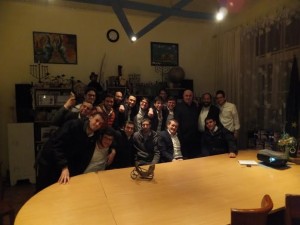
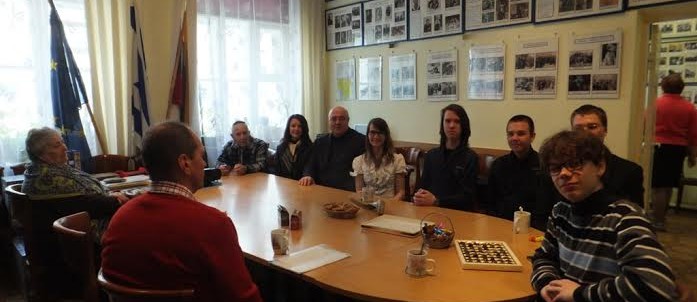
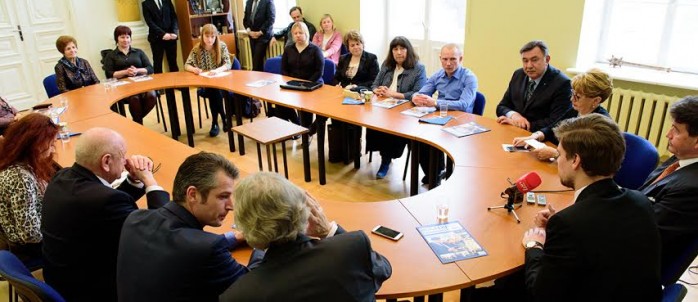
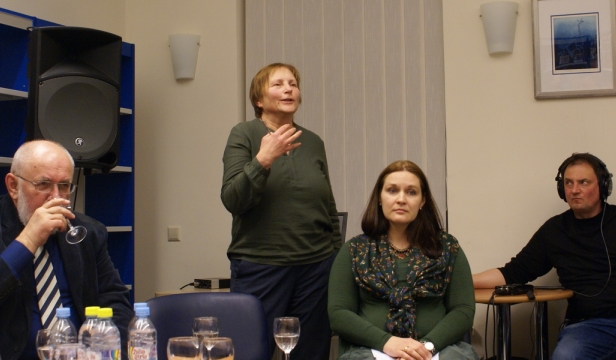
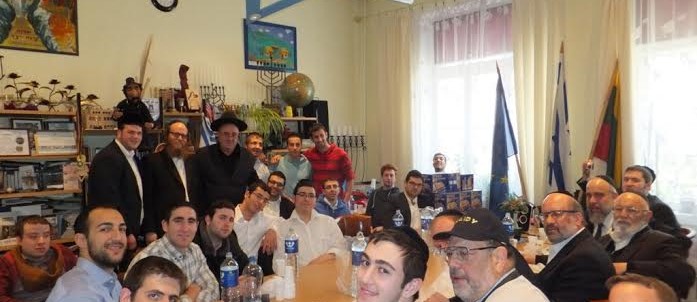
A meeting of the newly appointed rabbis Kalev Krelin and Shimshon Daniel Izakson (Isaacson) was held at the Lithuanian Jewish Community February 29. Participants included representatives of foreign embassies in Vilnius, the Lithuanian Foreign Ministry, Parliament, the Catholic Church, the Lithuanian Ministry of Culture and the regional Jewish communities in Lithuania. Also attending was Vilnius auxiliary bishop Arūnas Poniškaitis.

Shmuel Levin, director of the Lithuanian Jewish Religious Community, spoke at the meeting and said: “The physical genocide by the Nazis and the spiritual genocide by the Soviet regime destroyed the Jewish communities in Europe and especially in Lithuania. Today Judaism is an exotic religion, not just for the other religions, but for us ourselves. We hope Rabbi Izakson and Rabbi Krelin will be successful in reviving and preserving the Litvak tradition, Jewish spiritual life.”

Lithuanian Jewish Community chairwoman Faina Kukliansky welcomed the new rabbis to the community and wished them every success in their work.

Lithuanian Jewish Community Requests Finding on Holocaust Crimes of Molėtai Priest

The Lithuanian Jewish Community
Pylimo street No. 4, Vilnius

February 29, 2016
No. 190

To: the honorable Birutė Burauskaitė
Center for the Study of the Genocide and Resistance of the Residents of Lithuania

the honorable Evaldas Pašilis
Office of the Prosecutor General of Lithuania

the honorable Stasys Žvinys
Molėtai regional administration

Re: Assessment of the Actions of Father Jonas Žvinys and Bronius Žvinys

The Lithuanian Jewish Community, possessing information about the direct and personal participation of Bronius Žvinys in the murder of Jews during World War II and his brother Father Jonas Žvinys’s collaboration in the murder of Jews, requests:

I. the Center for the Study of the Genocide and Resistance of the Residents of Lithuania (hereafter Center)

1. to perform a study, or if this has been done already, to perform a new study of the aforementioned people for their possible involvement in the stated criminal activity, and to make public, i.e., to acquaint the public with, the conclusion of this study and the material used in this study.

2. If the Center determines the information held about the criminal acts committed by the aforementioned people is true, to recommend to the Molėtai regional administration and/or other regional and municipal administrations to take no actions to commemorate Bronius Žvinys and/or Jonas Žvinys, i.e., not rename streets after them and not to make other commemorative markers intended to honor these people.

II. The Office of the Prosecutor General of Lithuania

1. In light of the conclusion and material from the Center regarding the aforementioned people, to investigate whether the Supreme Court of Lithuania legally and correctly rehabilitated Father Jonas Žvinys.

Sincerely,

Faina Kukliansky, attorney at law, chairwoman
Lithuania Jewish Community

Jerusalem Post on Plans to Rename Street in Molėtai after Alleged Holocaust Perp

In an article dated February 28, the Jerusalem Post reported on plans to rename a street in Molėtai, Lithuania after a man suspected of complicity in the mass murder of 1,200 Jews from the town during the Holocaust.

The man in question is the late priest Jonas Žvinys, long dead but honored with a state medal by Lithuanian president Valdas Adamkus in 1999.

The Jerusalem Post article quotes Lithuanian author and activist Rūta Vanagaitė complaining no one is will to take responsibility in investigating the supposed hero’s past. Vanagaite also said that after searching through KGB archives she discovered the priest in fact had set up the unit responsible for the mass murder operation in Molėtai, and that one of the unit’s commanders was his brother who later confessed to his role in the massacre.

Dr. Efraim Zuroff, Holocaust researcher, author and director of the Simon Wiesenthal Center, told the Jerusalem Post the Žvinys case reflects a “much wider problem.”

Mass Murder of 1,200 Molėtai Jews in Hero Priest’s Past?

jonas-zvinys-70489814
by Mindaugas Jackevičus

An initiative is underway in Molėtai, Lithuania, to rename part of Darbo street after the priest Jonas Žvinys, but material from the Lithuanian Special Archives casts doubt on his reputation: could he have organized the mass shooting of 1,200 Jews from Molėtai? Proponents ask how the reputation of a man given a national award by the president can even be questioned.

Local residents also have questions, but no one has approached historians for a professional opinion.

Awarded but not Checked

The Molėtai regional administration is considering whether to rename the street. The plan is to name just part of the current Darbo street after the priest, spanning only a few houses.