Holocaust

More on Sugihara Week in Kaunas

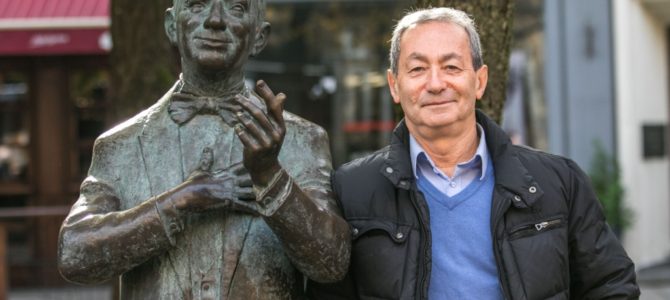
Sugihara Week celebrations in Kaunas drew a large number of guests from Japan, including his eldest son Hiroki’s widow Michi Sugihara and the only surviving son Nobuki Sugihara.

Mr. Sugihara laid a wreath and observed a minute of silence for the Jews murdered in Garliava, a suburb of Kaunas. The scion of the Sugihara legacy said his father inculcated in him an interest in history and taught him respect for those who didn’t escape.

The Holocaust Remembered


by Loreta Ežerskytė, Gimtoji žemė, the newspaper of the Ukmergė region

For more than 60 years now the mass murder of 12,000 Jews has been marked on the first Sunday in September in the Pivonija forest near Ukmergė [Vilkomir]. The commemoration happens at noon at the mass grave. Those who cannot attend, whose family members or other loved ones are buried here, mark the tragedy by lighting candles and praying at home. On Sunday many candles burned in Israel, the United States, South Africa and other countries whither fate sent Jews from Ukmergė.

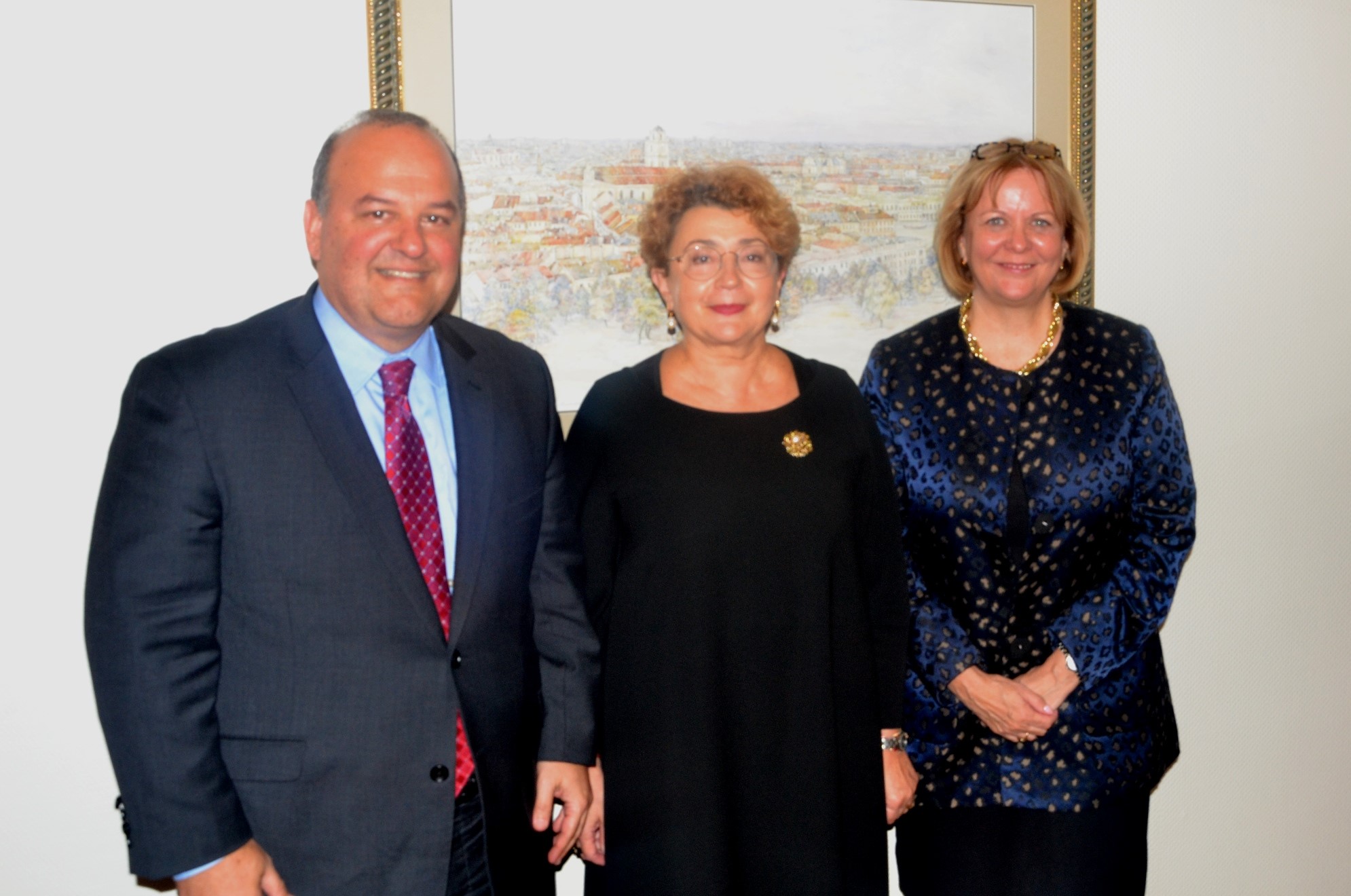
The commemoration of the third-largest Holocaust mass murder site in Lithuania was attended by members of the Ukmergė Jewish Community and a large contingent of Jews from the Panevėžys, Šiauliai, Vilnius and Kaunas Jewish Communities as well as from other cities and countries. Regional administration head Rolandas Janickas and municipal administration director Stasys Jackūnas attended, and US embassy Vilnius deputy chief of mission Howard Solomon attended for the second year in a row.

A group from the Dukstyna primary school and local residents also attended the commemoration. Ukmergė Jewish Community chairman Artūras Taicas told those in attendance about how Jews were brought in groups there 76 years ago: “They were brought by the Nazis and local collaborators. No one had any mercy for the women or children, never mind the men. They all suffered the same fate. They were murdered because they were Jews. Only a few individuals survived, those who were deported. In the Taicas family only my grandfather survived, and that’s why I am standing here…”

Chiune Sugihara a True Humanitarian Who Lived in Kaunas

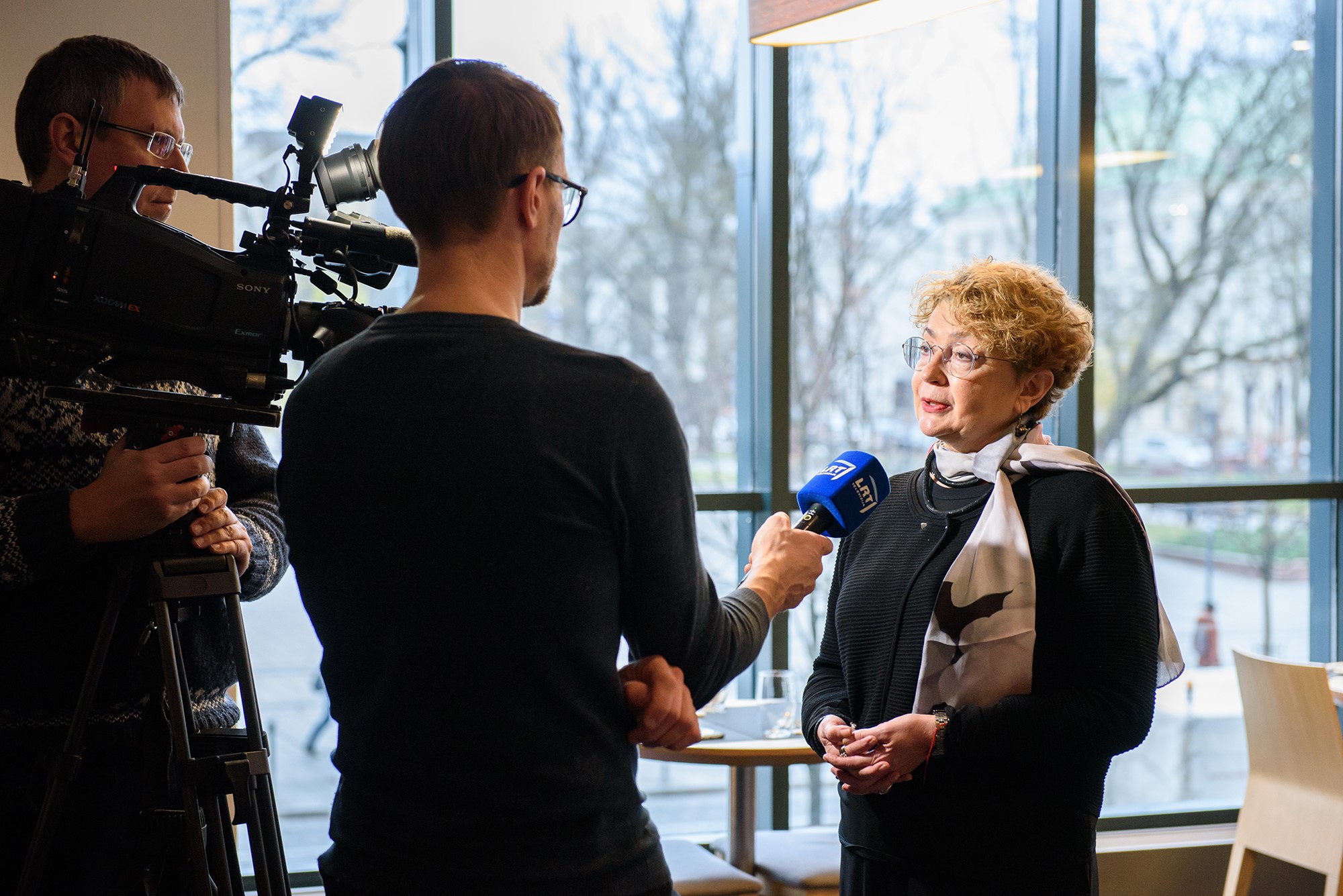
Dr. Aurelijus Zykas, the director of the Asian Studies Center of Vytautas Magnus University which formerly occupied the second floor of the Sugihara House museum in Kaunas, characterized Japanese diplomat and Righteous Gentile Chiune Sugihara this way in an interview granted to the “What’s Happening in Kaunas” webpage. Dr. Zykas was one of the organizers of the Sugihara Week celebration in Kaunas from September 2 to 9.

Full interview in Lithuanian here.

Japanese Kites Color Kaunas Skyline during Sugihara Week

Kaunas residents got to learn more about Japanese culture during Sugihara Week. A Japanese kite festival and Japanese and Jewish art workshops became keynotes of the celebrations.

On Thursday the Jurgis Dobkevičius Pre-gymnasium hosted an extraordinary event. Students flew rendako and rokkaru kites (kites flown in train and six-sided Japanese fighting kites, respectively). Japanese who came for the festival brought 30 rendako-type kites. Arranged in three long trains of kites, they appeared as a snake of three colors in the air. High school students in Iwate Prefecture in Japan made the kites. The kite festival was dedicated to the memory of the victims of the large earthquake and tsunami in eastern Japan in 2011.

The event at the school included a Japanese drum performance.

Full story in Lithuanian here.

Story Told through Dance at Kaunas Railroad Station Bridges Peoples and Eras

A story told through dance at the Kaunas railroad station bridged peoples and eras. This was where Japanese diplomat and Righteous Gentile Chiune Sugihara issued his final “visas for life” through the train window as he and his family departed for Berlin. Choreographer and dancer Kyrie Oda (織田 きりえ) and dancer Love Hellgren of Sweden (with Jewish roots) have lived in Kaunas for several years and belong to the Aura dance troupe. They have performed their “Aušra” [Dawn] routine in Norway, Japan, Sweden and Great Britain. They performed the same piece inspired by the deeds of Sugihara at the Sugihara House museum and the historic Hotel Metropol (est. 1899, where Sugihara and family spent their last night in Lithuania before leaving on September 1, 1940) in Kaunas as well. Photos by Jonas Petronis here.

Time for Remembrance in Rokiškis and Panemunėlis

Residents of Rokiškis, guests and representatives of the Panevėžys Jewish Community gathered in the hall of the Rokiškis Regional History Museum on the afternoon of September 8. They gathered for an event to celebrate the European Day of Jewish Culture. Event organizer Neringa Danienė presented the program, the first part of which honored Molėtai Regional History Museum director and Lithuanian linguist Viktorija Kazlienė. Visitor from the USA F. Shapiro presented her the Ruvin volunteer award and thanked her for promoting Jewish heritage and for her contribution to the march of memory in Molėtai.

Thank You

A week has passed during which Lithuanian remembered her shtetlakh. The fourteenth celebration of the annual European Day of Jewish Culture has taken place in Lithuania, this year with the theme “Diaspora and Heritage: The Shtetlakh.” Lithuanian towns which used to be called shtetlakh hosted events, tours of surviving old towns and Jewish residential sections, interesting talks on the former life of Litvaks there. The word shtetl was heard much in Lithuania after the Holocaust, with the loss of the former Litvak world and the Yiddish language.

This year the European Day of Jewish Culture was observed in more than 20 towns and cities, including Alytus, Jurbarkas, from Kaunas to Žasliai and Žiežmariai, Kelmė, Klaipėda, Kretinga, Molėtai, Palanga, Pakruojis, Pandėlys, Pasvalys, Pikeliai, Šiauliai, Šilalė, Jonava, Joniškis, Kupiškis, Darbėnai, Šeduva, Švėkšna, Ukmergė, Zarasai and Želva.

The Lithuanian Jewish Community thanks all the participating cities and towns for remembering the shtetlakh and the Jews who lived, traded, created and built there. They deserve to be remembered. Many cities and towns held lectures, conferences, exhibits, concerts and film screenings this year.

LJC chairwoman Faina Kukliansky also thanks the organizers of the events at the Jewish Community for their interesting program, and thanks the participants and speakers who spoke about the remaining traces of the shtetlakh in Lithuania. We thank Fania Brancovskaja, Vytautas Toleikis, Sandra Petrukonytė, Ilona Šedienė, Rimantas Vanagas and Antanas Žilinskas not just for their interesting presentations, but also for their own work, books and research on Jewish history, contributing to making the shtetlakh part of the heart of our country, without which Lithuania is impossible to imagine.

Thank you also to the Bagel Shop Café for the tasty Jewish dishes, the Sabbath ceramics exhibit and the holiday atmosphere, and to the Fayerlakh ensemble for the wonderful concert!

Our sincere thanks to everyone.

Most Important Event in Sugihara Week: Discussion of Sugihara’s Lessons, Applicable Today

Svarbiausiame „Sugiharos savaitės“ renginyje – pokalbiai apie Č.Sugiharos pamokas, pritaikomas ir šiandien

15min.lt

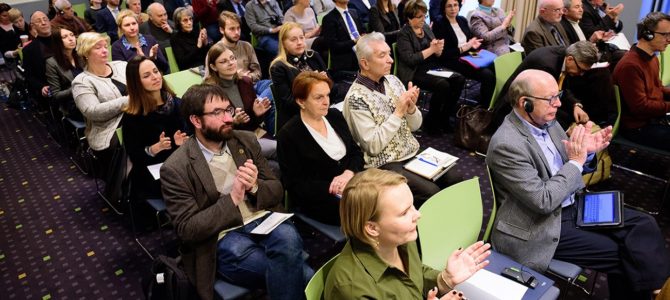
For Japanese people he is a hero, known to all, from the youngest child to the oldest person. The diplomat Chiune Sugihara is also well known in Lithuania. Even so, greater attention to his life and deeds is only know being paid. A group of scholars, public figures, politicians and diplomats from Lithuania and Japanese discussed Sugihara’s extraordinarily heroic deed at a conference in Kaunas September 6.

Full story in Lithuanian here.

Sugihara Week Continues in Kaunas

Events for the Sugihara Week being celebrated in Kaunas are scheduled from September 2 to 8.

Sugihara Week is a series of events to commemorate Japanese diplomat and Righteous Gentile Chiune Sugihara’s life and deed. From 1939 to 1940 Sugihara and Dutch consul Jan Zwartendijk saved over 6,000 Jewish lives from the Holocaust by issuing so-called visas for life.

“Consul Sugihara has become ever more known in the world and I am happy ever new ways to commemorate his heroism are appearing. It is significant that this wonderful initiative for a Sugihara Week came from Kaunas, which is the epicenter of the entire Sugihara story,” Toyoei Shigeeda, Japan’s ambassador to Lithuania, said.

Japanese Restorers of Sugihara House Arrive

Kaunas, September 4, BNS–A group of painters dressed in white just arrived from Japan gathered at the residence and now museum of famous interwar Japanese diplomat and Righteous Gentile Chiune Sugihara Monday to help in the renovation of the building.

Tokon International chairman Keiichi Yasuda, whose company sent the painters, told BNS the painters wanted to help and make people happy.

“There are many companies which do everything for money, but money doesn’t bring happiness, the meaning of life is not money, but happiness, and we wanted to do something to help make people happy,” Mr. Yasuda said.

Chiune Sugihara Week in Kaunas

Saturday a week-long celebration of Japanese diplomat and Righteous Gentile Chiune Sugihara began in Kaunas, Lithuania. The audience learned of Sugihara’s life-saving mission in concert with Dutch consul Jan Zwartendijk which resulted in over 6,000 Jews being saved from the Holocaust. The events included creative workshops, lectures, screenings of films, concerts and exhibits for young and old.

Lithuanians and Jews during the Nazi Occupation

by Ona Šimaitė
translated by Gloria Berkenstat Freund

At the time of the Second World War, Lithuanian-Jewish relations took on a sharply tragic form that could not have been imagined in earlier times. As a Lithuanian woman, it is bitter for me to assert that during the years of the worst torture of the Jews by the Germans, not all of the people in my country showed an elementary, humane sympathy to their Jewish neighbors of many generations and the worst of the Lithuanians–to my great pain!– even had their hand in the extermination.

The Lithuanian Special Squad (Ypatingasis Bûrys) together with the Nazis murdered Jews in a series of places. Such scoundrels as Babialis, Piragius and others will remain accursed not only by Jews, but also by Lithuanians.

Lithuanian police divisions not only carried out Hitler’s orders to kill Jews, but in many localities they themselves asked to do the mitzvah [commandment, usually translated as “good deed”) of murdering Jews or they randomly initiated various persecutions. I had more than one occasion to watch how Lithuanian policemen fined Jews for trifles and how hard-hearted and malicious they were during the deportations of Jews in the ghetto. Even leading the Jews to death, deeply degenerate Lithuanian policemen did not have the elementary tact not to show–during the last tragic hours of thousands of lives–their animal-like fury.

The Global Face of the Holocaust, or, What Must Happen for Me to Begin to Act?


Jews in the Radom ghetto, May, 1941. Photo courtesy German Bundesarchiv.

by Ieva Elenbergienė

“The Holocaust is not just a horrible story which happened a long time ago and to someone else. If we want humanity never to experience genocide again, we must understand that this is our history, not just ‘theirs,’ which happened not ‘somewhere’ but right here, to us,” political science professor Dovilė Budrytė said during our interview. Budrytė teaches at Georgia Gwinnett College, part of the higher education system of the US state of Georgia, which awarded her for best teaching within the state college and university system. Her list of publications includes books on traumatic experience, memory and multiculturalism.

Presenting the events of history in a human context, they become closer to us, they become visible through the prism of personal experience. So in teaching the Holocaust, is it possible to speak very emotionally about human nature?

“Now, as the world faces war and ecological crises, it’s popular to research how people act in catastrophes, how they resist, how human dignity is preserved. The history of the Holocaust is the basis for so-called resilience studies. It’s interesting to look at, for example, how some Jews entered into armed resistance while others were passive, believing they needed to be patient and wait for the situation to improve. But how would I act in that sort of situation? What does it mean to be not just a victim or a perpetrator, but an observer? After all, that category of people was the largest in Lithuania during the Holocaust. Is the role of witness innocently guilty? This is a very broad question which applies today to us as well. In the US, for example, we and the students talk about elected senators and presidents whose policies, let’s say, some people really don’t like and even seem threatening. The students think about ‘what will I specifically do now? Will I even lift a finger? What must happen for me to act? And what will I do? And why?'”

Panevėžys Jewish Community Invites Public to Attend Events to Commemorate Olkin Family

The Rokiškio teatras association is carrying out a project to commemorate the Olkin family from Panemunėlis, Lithuania. The family was murdered in the Holocaust. The Panevėžys Jewish Community is a partner in the project. The play Nutildytos Mūzos [Silenced Muses] based on real events will be performed at 4:30 P.M. at the Rokiškis Regional History Museum on September 8 as part of the project. At 6:30 P.M. a statue commemorating the poetess Matilda Olkin will be unveiled at the Panemunėlis railroad station. A monument to commemorate the murdered Olkin and Yoffe families will be unveiled at Šeduikiškės village at 7:30 P.M. All events are open to the public.

Condolences

Our deepest condolences to Markas Buslovič and his family and friends on the loss of his beloved wife.

Union of Ghetto and Concentration Camp Prisoners and Lithuanian Jewish Community

Kaunas Native Bella Shirin Says Sugihara Week a Bridge Between Peoples

The parents of artist Bella Shirin (formerly Bela Šifrisaitė) miraculously survived the Dachau concentration camp. They moved to Kaunas after the war where Bella was born. At 17 she and her parents moved to Israel, in 1963, but she says she always missed her hometown.

She came back to Kaunas in 2004, and last year moved permanently to Lithuania’s second largest city. She says she felt happy again following the move. Now the artist lives next to the street of her childhood, Freedom Alley, and makes a daily practice of trying to bring Jews and Lithuanians closer.

Kaunas residents will soon have several opportunities to get to know the life story of the Kaunas: European Capital of Culture 2022 ambassador. On September 2 celebrations of Sugihara Week began in Kaunas and the Litvak Photography Center will present a photo-collage of Shirin’s family history there. The artist herself was to appear the same day at the opening concert for Sugihara Week at Vytautas Magnus University in Kaunas, and was to speak at the Sugihara symposium scheduled for September 6.

Full story in Lithuanian here.

Great Synagogue Listed on Cultural Treasures Registry


information from the Cultural Heritage Department under the Ministry of Culture of the Republic of Lithuania and other sources

A commission for assessing cultural heritage real estate from the Cultural Heritage Department has provided legal protection to the remains of the Great Synagogue in Vilnius. The Great Synagogue of Vilnius was one of the largest religious institutions in Eastern Europe. It was renowned as an important Jewish spiritual and educational center and put Vilnius on the map as a center of Jewish scholarship. The Cultural Treasures Registry lists the construction (fragments of brick wall dating from the 18th century and entrance to the synagogue, southwest wall fragment with niche for the aron kodesh and eastern wall fragment), architectural features, remains of the former building complex including mikvehs dating from the late 19th century, a utility trench on Žydų street and cultural strata as valuable and protected features of the synagogue complex.

Originally the site hosted a wooden synagogue, believed to have been built around 1573. It burned down and was replaced at least once. In 1630 and 1633 royal grant was issued to allow a brick and mortar synagogue to be built there.

Monument Commemorates Jewish Community of Žagarė, Lithuania

Paminklas Žagarės žydų bendruomenės atminimui

A metal apple tree was “planted” at the Litvak Commemorative Garden in the Žemaitija National Park by the Jakovas Bunka Charity and Sponsorship Fund to commemorate the former Jewish community of Žagarė, Lithuania. The metal sculpture was made by Artūras Platakis. Rabbi Kalev Krelin, Jewish rescuer family member Leonas Levinskas and Israeli ambassador to Lithuania Amir Maimon attended the ceremony in mid-August in Medsėdžiai village near Plungė, Lithuania.

Events for September at the Panevėžys Jewish Community

September 20

Competition “Who? What? Where?” for students at the Panevėžys Jewish Community, Ramygalos street no. 18, Panevėžys. The theme of the contest is Holocaust events in Lithuania. The competition starts at 2:00 P.M. There will be six teams from schools and gymnasia in the area. Each team will have 5 members and 1-2 teachers from each educational institution. In total 35 participants will compete.

September 22

Rosh Hashanah celebration at the Rojaus paukštė café, Respublikos street no. 4a. Starts at 6:00 P.M. Please register by September 12 with Zinaida Zaprudskaja to attend this event.

September 23

Commemoration of Jewish Genocide Day: at 1:00 P.M. there will be a commemoration at the statue of the Jewish mother on Atminites square; at 1:30 P.M. there will be an excursion to the Holocaust mass murder site in the Kurganava forest; at 2:00 P.M. there will be an excursion to the Holocaust mass murder site in the Žalioji forest; at 2:30 P.M. there will be a screening of a documentary film about Auschwitz at the Panevėžys Jewish Community, Ramygalos street no. 18, Panevėžys.

Please register with Zinaida Zaprudskaja by September 12.

A bus will carry visitors to the sites, departing from Atminities square at 1:30 P.M.

All events are supported by the Goodwill Foundation.

Kaunas Jewish Community Throws Party for Righteous Gentile

On August 20 the Kaunas Jewish Community threw a birthday party for Righteous Gentile Aldona Radzevičienė (maiden name Norvaišaitytė), who just turned 90. KJC chairman Gercas Žakas and KJC Rescuers Committee chairwoman Judita Makevičienė attended the festivities. Mrs. Radzevičienė didn’t just sit passively through all the well-wishes and gift-giving, but got up and danced the waltz and even performed a song.

Although she doesn’t make a big deal of it, as a young teenage Mrs. Radzevičienė helped her parents Uršulė and Juozas tremendously and the entire family took part in rescuing Alper Kirkilovski, Haim Chernevski, the sisters Shenke and Tzipke Vėberytė and the Shavel family from Kaunas in the Vilkaviškis region of Lithuania during the Holocaust. The had a hideout in the forest during and during the winter they slept in the barn. Juozas Norvaišaitis was arrested by the Nazis after neighbors informed on him. He was deported to Saxony in Germany and nothing further was ever heard of him. All of the Jews the family rescued survived the Holocaust. The father, mother and Aldona Radzevičienė were recognized as Righteous Gentiles in 2001.

Happy birthday to Aldona Radzevičienė, to whom we bow our heads. May you live to 120!