History of the Jews in Lithuania

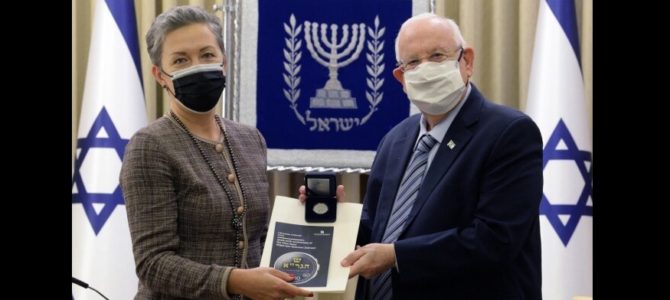
Maša Rolnikaitė, Girgoriy Shur Holocaust Books to be Given to All Lithuanian Schools, Libraries

Maša Rolnikaitė, Girgoriy Shur Holocaust Books to be Given to All Lithuanian Schools, Libraries

by Eugenijus Bunka

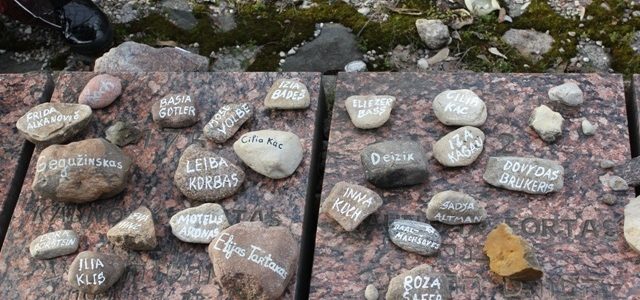
When you speak with those who aren’t there, it’s called Memory. Therefore Maša Rolnikaitė’s book “I Must Tell” [Turiu papasakoti] and Grigoriy Shur’s “Entries: Chronicle of the Vilnius Ghetto, 1941-1944” [Užrašai: Vilniaus geto kronika 1941-1944 m.] are books of Memory. And in memory of those whose lives were cut short, as they began or half-way through, who were consumed in the flames of the Holocaust.

Not one of the people mentioned in these books died a natural death. That inherent human right was taken from them.

They died without notice in World War II, but Maša and Grigoriy who had stood with them spoke loudly.

If a Red Army soldier hadn’t found Maša frozen, lying in a snow drift on the final death march from the Stutthof concentration camp, this book would not exist. The diary she kept hidden on her person would have been buried with her. But she survived and now in eighteen languages her story tells the world what humanity may never allow to happen again.

LJC Makes Virtual Sabbaths with Global Communities a Regular Thing

LJC Makes Virtual Sabbaths with Global Communities a Regular Thing

The Lithuanian Jewish Community has been using the Zoom platform to hold virtual Sabbath celebrations with Jewish communities around the world, including lessons on Jewish subjects and meetings with Liberal or Progressive Judaism congregations.

On March 19 the LJC held a joint virtual Sabbath with Rabbis Alexandra Rait and Igor Zinkov at the London Liberal Synagogue.

Rabbi Alexandra’s ancestors came from Plungė, Lithuania. Her great-grandfather N. Levit was also a rabbi. Her grandfather left Lithuania for New York, but ended up in Dublin instead. It seems the ship’s captain lied to the young man about their final destination.

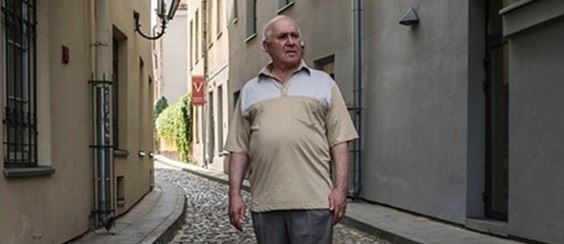
Rabbi Alexandra Rait said her family visited Lithuania several years ago and toured Vilnius, Kaunas and Plungė. She recalled ushering in the Sabbath in an abandoned synagogue in Plungė where her ancestor had led prayer services. “There was no electricity and we read the prayers by candle light. There was loud thunder, and it rained. … We also visited the mass murder site in Plungė. My cousin was working with the Tolerance Center in Plungė.” She recalled how her family financed a commemorative marker at that mass murder site. “We also met the last Jew from that shtetl, the famous woodcarver and sculptor Jakovas Bunka, and his son Eugenijus,” Rabbi Rait said during the virtual Sabbath last week.

Rabbi Igor Zinkov was born in Chelyabinsk to a family of secular Jews with roots in Odessa and Kiev.

History of the Alytus Synagogue: From House of Prayer, to Salt Storehouse, to Poultry Hatchery

History of the Alytus Synagogue: From House of Prayer, to Salt Storehouse, to Poultry Hatchery

Cultural Infrastructure Center

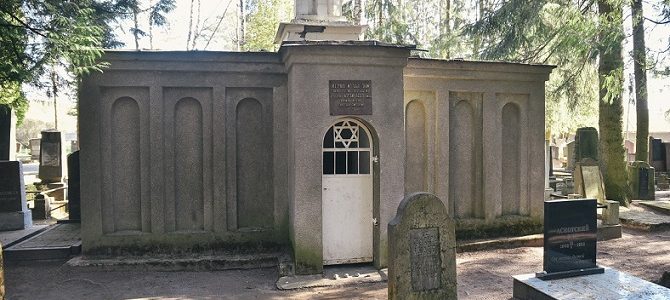
The Cultural Infrastructure Center of Lithuania is completing renovation work on the synagogue in Alytus. Emergency preservation work followed by renovation led to a fuller restoration and the building is now housing a section of the Alytus Museum.

The old synagogue on Kauno street in Alytus, Lithuania, appeared in total ruin just five years ago, with boarded-up windows and bricks falling from the walls. Experts saw even worse things at work.

“The condition of the outer wall was poor… In spots several bricks were missing, and in some places even larger sections of bricks had fallen out. The mortar on the lower portion was visibly damaged by moisture or salt which it will still take several years to drive out of the building walls. The façades on the southern side of the building were especially damaged. We found the interior also deeply damaged, with the floor dug up and windows and doors removed,” Cultural Infrastructure Center acting deputy director Viktoras Vilkišius said.

Strong Jewish Community Formerly Lived in Alytus

The first wooden synagogue was built in the western section of Alytus in 1856 apparently at the same site the currently restored synagogue occupies. It was a small building heated with a stove and housed a school and the rabbi’s living quarters.

Sabbath Lesson on Branches of Judaism

Sabbath Lesson on Branches of Judaism

Viljamas Žitkauskas held an internet Sabbath discussion called “Differences and Shared Features of Branches of Judaism: Orthodox, Conservative, Modern, Progressive” last Friday as part of the continuing series of internet Sabbath meetings and discussion. He spoke about the unprecedented decision by the Supreme Court of Israel March 1 following 15 years of hearings recognizing conversion to Judaism in conservative and reform communities, and that every convert has the right to move to Israel.

Žitkauskas thought this decision and the recent joint Sabbaths the Lithuanian Jewish Community has held with Reform synagogues in Johannesburg and Minsk would be a good starting point to talk about the different schools of thought and differences among the currents in Judaism.

He began by defining the terms “Jew,” “Jewish people,” and “our sons, the pride of Israel.”

Community members from Vilnius, Panevėžys and other Lithuanian towns and cities participated in the Zoom conference. Participants learned about the origins of Judaism, what the words Torah and Tanakh mean, what the religious significance of being a Litvak is, that misnagdim means orthodox, how misnagdim differ from chassidim, how reform Judaism arose and more.

The lecture/discussion concluded with the havdalah ceremony, distinguishing the Sabbath from the working days of the week.

Forgotten History: How Jews Fought for Lithuanian Independence

Forgotten History: How Jews Fought for Lithuanian Independence

lrytas.lt

The Lithuanian Jewish Community held a virtual lecture on contributions made by Lithuania’s Jews in the battles for national independence. Journalist and history researcher Vilnius Kavaliauskas presented to the wider audience little-known historical facts about Jewish volunteer soldiers who fought for the independence of the young Lithuanian state one hundred years ago.

“This is an undeservedly forgotten story which we want to tell everyone today. In 1918 Jews consciously chose to be citizens of the independent Republic of Lithuania then being born, were active participants in public life and introduced many important innovations.

“All of that is being forgotten now. Our goal is to remember their stories and their names, and I personally hope this will lead to an end of talking about Jews as foreigners, as ‘others.’ We were and are the joint creators of Lithuanian history,” said LJC chairwoman Faina Kukliansky, who initiated the discussion.

Journalist and author Vilius Kavaliauskas, who has taken a keen interested in the period of the battles for independence and has shared the information and discoveries he’s uncovered, agreed: “Researching the lists of the Lithuanian volunteers who were awarded for contributions to the Lithuanian state during the first republic, I find many Jewish surnames. Some also have a date of birth and a date of death, while others lived on and continued to contribute to creating a better Lithuania later on. The Jewish histories are especially interesting in that they were and our suppliers, medics and organizers for our military, which goes to show the volunteer Lithuanian military was well-organized, highly-qualified people served in it. This is extremely important to take into account; Lithuania has always appreciated competence and knowledge.”

Lithuanian Jewish Community Marks Sabbath with Johannesburg Rabbi Julia Margolis

Lithuanian Jewish Community Marks Sabbath with Johannesburg Rabbi Julia Margolis

Julia Margolis of the Beit Luria Progressive Shul in Johannesburg led a Sabbath celebration with the Lithuanian Jewish Community last Friday via the internet. She was the first female rabbi to open a progressive synagogue in South Africa along with others from the South African Union of Progressive Jews. The synagogue is the eleventh progressive synagogue in South Africa and the first in Gaunteng province in many years.

Tull Eckhart provided music during the virtual meeting.

Trans-Atlantic Dialogues II: Teaching the Holocaust in Challenging Times

Trans-Atlantic Dialogues II: Teaching the Holocaust in Challenging Times

U.S. Department of State | Thursday, March 18, 2021 | 11:30 a.m.-12:30 p.m. EDT

The State Department’s Special Envoy for Holocaust Issues cordially invites you to a webinar on the challenges European and American educators face in teaching about the Holocaust to a new generation of learners. Holocaust educators will compare educational landscapes, discuss best practices and areas for cooperation, and speak to the challenges presented by rising anti-Semitism worldwide as well as the greater reliance on virtual schooling in a (post)-COVID world.

Please register by completing the form below.

This Zoom webinar will be in English. Participants will have an opportunity to submit questions in writing during the webinar or in advance by email to: SEHI-EVENTS@state.gov. This invitation may be shared with trusted colleagues and friends.

Featuring:

Invitation to Celebrate Sabbath with Beit Luria Progressive Shul Rabbi Julia Margolis

Invitation to Celebrate Sabbath with Beit Luria Progressive Shul Rabbi Julia Margolis

Shalom haverim! The Lithuanian Jewish Community invites you to usher in the Sabbath together at 6:00 P.M. on March 5 with a virtual meeting with Rabbi Julia Margolis of the Beit Luria Progressive Shul in Johannesburg, South Africa. The Sabbath event will be held in English. Please register at the link below to receive Zoom room credentials.

Registration: https://forms.gle/cn5KCv3mLdb1c4Z36

One Hundred and Ten Years of Fighting for Women’s Rights and Peace

One Hundred and Ten Years of Fighting for Women’s Rights and Peace

Now 110 years have passed since German socialist Klara Zetkin proposed setting aside one day per year for women around the world to talk about their rights. The first such day happened in 1911. According to reports from the time, crowds of people in Austria, Denmark, Germany and Switzerland took to the streets to demand for women the right to study, vote and work. On March 8 two years later, on the eve of World War I, women marched for peace.

The Lithuanian Jewish Community is marking this anniversary of the struggle for women’s rights with a virtual meeting with female leaders of different ages and cultural backgrounds. Participants will include Svetlana Novopolskaja, director of the Roma Social Center; a representative from the Lithuanian Human Rights Center; Natalja Cheifec, teacher of Judaic and Jewish tradition as well as Choral Synagogue guide; and others.

The meeting will be held mainly in Lithuanian and broadcast live on youtube March 8.

Israeli Modern Art Curator Ory Deassau: Give Artists the Freedom to Decide

Israeli Modern Art Curator Ory Deassau: Give Artists the Freedom to Decide


by Jolita Jankuvienė, www.DELFI.lt

Well-known Israel art curator and writer Ory Dessay with the modern art gallery Vartai presented an international exhibition at the end of 2020 called “An Unfinished Project” to mark the Year of the Vilna Gaon and Litvak History. It wasn’t easy to hold the exhibition during the virus pandemic and the curator was unable to travel to Lithuania as had been planned, but despite everything, art is priceless in removing limitations, it is free and mobile, posing questions as well as answers, which the curator presented to the public in a virtual form.

Which exhibit was the most significant and memorable for you?

As the musician Duke Ellington once said when asked about his best musical work, I would repeat that the most important exhibit is the one coming up next which I will curate. I give all of myself to the project on which I am working. Currently an exhibit is taking place at the Vartai art gallery in Vilnius. This location makes the process of my curating and presentation easy. I am especially intrigued by the historical conditions of the location of the exhibit “An Unfinished Project,” it is part of Jewish history. There are many untold stories here which we can show to the audience. I am enchanted by the vitality of Vilnius, not just because of the recent success Lithuanians enjoyed at the 58th modern art Biennale in Venice, but because I really feel a strong attraction to this city.

Full interview in Lithuanian here.

Sabbath Discussions: New Project by Lithuanian Jewish Community and Viljamas Žitkauskas

Sabbath Discussions: New Project by Lithuanian Jewish Community and Viljamas Žitkauskas

It has been said the Sabbath is the time to forget food for the body and provide food to the soul. The Lithuanian Jewish Community and Viljamas Žitkauskas have invited members and the public to a series of Sabbath discussions, the first one dedicated to Zionism among Litvaks.

Viljamas Žitkauskas recounted to the virtual audience historical facts about the Vilna Gaon and his contribution to Zionism. Religious Litvak Zionists consider the Gaon the father of the national movement. Eliezer Ben-Yehuda, the father of the modern Hebrew language, spent his whole life adapting Hebrew, which had become mainly a liturgical language, for use in daily life. Abraham Mapu was a Hebrew novelist. Menachem Begin helped found the State of Israel and served as Israel’s seventh prime minister.

Žitkauskas spoke about these Litvaks and the history of Zionism and his audience showed rapt interest throughout.

The virtual meeting and discussion concluded with the havdalah ceremony to mark the end of Sabbath.

Lithuanian Media on Billionaire Litvak Roman Abramovich and His Yacht

Lithuanian Media on Billionaire Litvak Roman Abramovich and His Yacht


Litvak Roman Abramovich is still working on the 140-meter-long yacht he bought which will have eight decks and a helicopter pad. No amount of money was spared either on the two advanced electric motors which will make this the most powerful yacht in the world when construction is complete.

Roman Abramovich’s grandparents came from Jurbarkas and Tauragė and that’s why we call him a Litvak. Before the war, 80% of vessels in Jurbarkas belonged to Jews. This yacht is a tribute to his grandmother Tauba Liya Berkover. The Berkover surname means ship owner in Yiddish. In June of 1941 his grandfather Nakhman Abramovich was arrested and sent to the gulag in Krasnoyarsk. That’s where he also died. In 1942 his grandmother and her children were deported to Siberia. His grandmother wasn’t allowed to return to Lithuania right up to her death in 1960.

The yacht, christened Solaris, is almost ready for sea trials and the 54-year-old owner of the Chelsea soccer team should take delivery by this summer, according to the Sun newspaper in Great Britain. Lloyd Werft shipyard in Bremerhaven, Germany, is building it. The hangar where work is taking place in bigger than Buckingham Palace, …

Full story in Lithuanian here.

Condolences

Judita Mackevičienė, a long-time active member of the Kaunas Jewish Community, has died. She was born in 1936. She served as chairwoman of the Rescuers’ Committee and for many years planned and held events to commemorate those who rescued Jews from the Holocaust and carefully researched and documented these stories.

A survivor of the Holocaust herself, Mackevičienė didn’t harbor bitterness and always displayed love and goodwill towards the world and the people around her.

We send our deepest condolences to her daughers, grandchildren and many friends and relatives.

Family Recipe for Hamantaschen

Family Recipe for Hamantaschen

Photo: Tarbut Gymnasium students in Pabradė prepared for the Purimspiel, March 3, 1939. Courtesy YIVO.

Purim starts February 25 this year. Purim is the happiest of Jewish holidays dedicated to remembering the miraculous salvation of the Jewish people from destruction. Traditionally the triangular pastry Hamatasch are eaten on this day and the Lithuanian Jewish Community will share them with the leaders of the state this year as well.

“The essence of Purim is to celebrate life in all its fullness. This is a happy holiday, on this day you need to eat deliciously and much, especially the traditional hamantaschen pastry. This traditional treat reminds us that the plans of evildoers often turns back upon them, while wise rulers always receive the help to make the right decisions. We will also be sending hamantaschen pastry to the leaders of the country, wishing them to make wise decisions beneficial to the people,” Lithuanian Jewish Community chairwoman Faina Kukliansky said.

Vilnius Jewish Religious Community director Simas Levinas recalls the Purim story which reaches back into biblical times when the Jewish people were exiled from Jerusalem to Babylon. Although the king married the Jewish beauty Esther, the magnates and bureaucrats of Babylon really hated the Jews in their country, who weren’t there by their own choice. The vizier Haman came up with a plan to exterminate all Jews and cast lots (פור) to discover an auspicious time for this.

Purim Greetings from the Panevėžys Jewish Community

Purim Greetings from the Panevėžys Jewish Community

The entire Jewish people celebrate the happy spring Purim holiday. Although the times are not amenable to personal meetings and celebrations together, Jews do not give up to despair. As Esther revealed evil schemes and save the Jewish people from destruction and slavery, so will the Purim holiday lighten the mood and bring joy to every home.

The Panevėžys Jewish Community has prepared holiday Purim food parcels for our members and gifts for the children which will be distributed as will the holiday spirit.

Vilnius and Cape Town Celebrate Sabbath

Vilnius and Cape Town Celebrate Sabbath

A special joint internet Sabbath celebration was held between Vilnius and Cape Town, South Africa last Friday, February 19.

Cape Town Rabbi Greg Alexander greeted the internet celebrants in both cities and presented Lithuanian Jewish Community chairwoman to those in South Africa.

The Sabbath was ushered in with song. The rabbi and Millian Rivlin sang and played guitar, after which prayers were delivered. Despite the distance between the two cities, communication was almost instantaneous, and it felt as if everyone were in the same room at home.

The vast majority of Jews living in South Africa were and are Litvaks. That affinity was clear during the internet Sabbath.

Prosecutor Declines Investigation of Statements by Lithuanian MP

Prosecutor Declines Investigation of Statements by Lithuanian MP

The prosecutor at the Vilnius District Office of Prosecutor has decided not to begin a pre-trial investigation of statements made by member of parliament Valdas Rakutis in his article “International Holocaust Day and Historical Memory.” The prosecutor said the decision was made based on the lack of an act of a criminal nature, a press release said.

The decision not to initiate a pre-trial investigation was made following a statement from the chairwoman of the Lithuanian Jewish Community which indicated historian and MP Rakutis published the article on International Holocaust Remembrance Day on an internet site which allegedly incited hatred against Jews and their people, and possibly engaged in Holocaust denial.

The informant asked the prosecutor to consider whether or not the statements made in the article constituted the criminal act defined in article 170, part 2 of the Lithuanian criminal code, “incitement against any national, racial, ethnic, religious or other kind of group of people,” and article 170-2, part 1, “public approval for international crimes, crimes committed by the USSR and Nazi Germany against the Republic of Lithuania or residents thereof, and their denial or gross trivialization.”

The decision to decline beginning a pre-trial investigation stated the criminal acts defined in article 170, part 2, and article 170-2, part 1, can only be committed by direct intention.