History of the Jews in Lithuania

Sholem Aleichem Students Celebrate Hanukkah

Vilniaus Šolomo Aleichemo ORT gimnazijos vaikai švenčia Chanuką

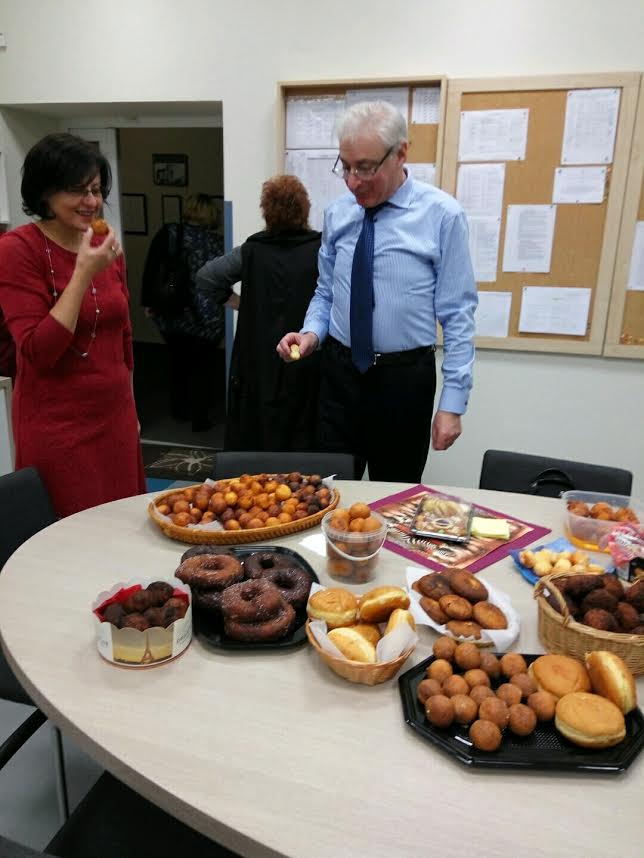
Gymnasium director for informal education Ela Pavinskienė said students in a volunteer group had learned how to make decorative garlands which were hung up around the school. The teacher taught students in grades 1 to 5 about the holiday, story and meaning of Hanukkah, and about kosher food rules. The students learned how to make traditional Hanukkah doughnuts.

Pavinskienė said students from grades 1 to 4 held a concert directed by third-graders, with each grade contributing a song, dance or skit. All participants received a doughnut and a small gift. The children came to the concert in their holiday best and in a festive mood. There was a contest for best homemade menorah. The menorahs are now on display on windowsills on the second floor. Each grade also held a light-show with music.

Children were asked to make doughnuts at home with their parents, and so many delicious doughnuts were brought in. A lottery was held for those who had contributed doughnuts with the winner selected at random who received a special prize.

ort-spurgu-ragavimas

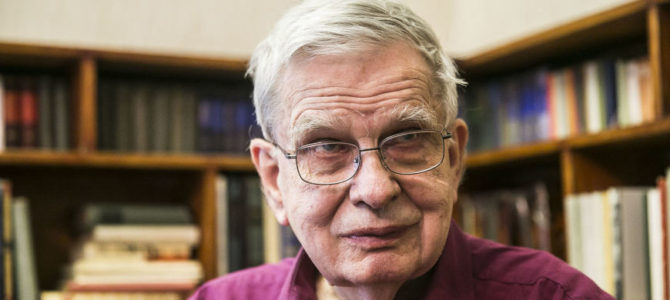
Writer and Thinker Tomas Venclova Condemns Street Named after Lithuanian Nazi in Vilnius

Tomas Venclova: „Škirpa nusipelnė gatvės ne daugiau negu Paleckis“

“Škirpa doesn’t deserve a street named after him any more than Paleckis does.”

Poet, writer, translator and intellectual professor Tomas Venclova, currently living in the U.S., is highly critical of a street in Vilnius still named after interwar Lithuanian diplomat and colonel Kazys Škirpa.

“I think Kazys Škirpa, who obsequiously served Hitler and worked with the Gestapo, has no more earned having a street named after him than has Justas Paleckis, who kowtowed to Stalin and worked with the NKVD,” Venclova said in a statement which was read at a discussion at the Old Town Hall in Vilnius.

“The argument that Škirpa was in favor of independence while Paleckis was against is demagogic and full of error. THey both attempted to preserve independence formally but not actually under the protection of totalitarian regimes, and both of them killed independence,” the professor of literature and one of the five founders of Lithuania’s Helsinki Group said.

Full story here.

A Story of Moral Courage

screen-shot-2014-11-04-at-9-19-16-pm

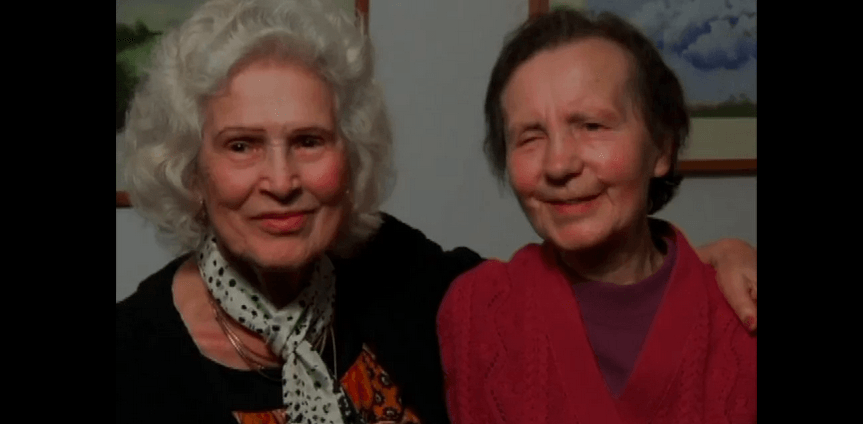
SKOVAGALIU, LITHUANIA… NOVEMBER 1943 Lea Port and Samuel Ingel were members of a resistance group in the Kovno ghetto. They escaped the ghetto and walked more then 100 kilometers towards the village of Simnas. There they met Semonas Tamulinas, a communist who had been hiding from the Germans for three years. He said that since Lea did not look Jewish she could pass as a Christian and his sister, Elena Ivanauskai, would take her into her home. Lea lived with Elena and Petras Ivanauskai and their two children, Giedrute and Gintautas. At first Elena did not know that Lea was Jewish, but once she found out she agreed to keep hidding her. As the weather became colder Lea asked Elena if Samuel could hid in their barn. Elena agreed to help Samuel too. Lea and Samuel stayed with the Ivanauskai family until the area was liberated by the Soviet army in August 1944. In 2006 the JFR reunited Lea with Giedrute.

To read more about Giedrute and Gintautas Ivanauskai click here.

Read more at: https://jfr.org/video-library/reunion-2006/

Hanukkah Greetings from Jewish Telegraphic Agency

jta

Friends,

JTA was founded in 1917 to inform the world about the plight of Jewish refugees after World War I.

As we get set to turn 100, more than 1 million Jews still live in Europe. They aren’t refugees, but they face alarming developments — including anti-Jewish violence from jihadist terrorists and spikes in anti-Semitism, anti-Israel activism and political extremism. The post-Holocaust framework that has kept the peace in Europe for 70 years is teetering.

One thing that hasn’t changed and won’t change: JTA is paying attention — and keeping you informed about the lives of our brothers and sisters in Europe.

We are on the ground with a full-time reporter and a network of correspondents.

To continue and even expand our reporting efforts, we need your help.

Your financial support is critical to our efforts. Please make a tax-deductible gift today. Join our community of supporters who believes that keeping everyone informed and connected helps Jewish communities throughout the world remain safe and strong.

May the Hanukkah lights bring much warmth and joy to your home.

Sincerely,

Ami Eden,
CEO and executive editor
newsdesk@jta.org

P.S. A generous donor will match all new and increased gifts to JTA. Thank you in advance for your support. Should you wish, mail your check to JTA, 24 W. 30th St., 4th Floor, New York, NY 10001.

If you have already made you year-end gift, you have my heartfelt thanks.

Fayerlakh 45th Birthday Concert: No Signs of Old Age Yet

A concert to celebrate the 45th anniversary of the founding of the Fayerlakh Jewish song and dance ensemble took place December 18 with an overflow crowd of well-wishers and fans. A large screen projection by the stage relayed images to those in the very back of the hall, and Jews from the regional communities as well as the Lithuanian capital turned out in abundance. The group performed some songs in Yiddish and the birthday coincided with the issuing of a new CD by the collective which includes qualified musicians from across the generations, from children to the elderly.

Of the ensembles 40 or so members, the youngest is just five and the most senior about to turn 70. The little flame which sprang up in 1971 burns on, and the audience on December 18 included more non-Jews than Jews, including a delegation from the Association of Disabled Poles who attended in wheelchairs.

The entire year has been a celebration of the collective’s birthday and in March Lithuanian prime minister Butkevičius sent warm wishes for their continued success. The ensemble was presented with a large cake with small flames at the mid-December celebration, and Lithuanian parliamentary speaker Pranckietis hailed the longest-surviving musical group in Lithuanian history as well.

Klaipėda Jewish Community Hold Charity Action at Klaipėda Children’s Hospital

For the fifth year in a row the Klaipėda Jewish Community has carried out a charity campaign to help the patients at the Klaipėda Children’s Hospital. According to Jewish custom, children receive a bit of money and gifts during Hanukkah which they must share. Children donated gifts to children being treated at the trauma unit of the hospital. Children’s Hospital chief physician Klaudija Bobianskienė told children and parents about the Children’s Hospital and showed them the latest diagnostic equipment. Diapers were donated to the newborns’ unit during the charity event as well.

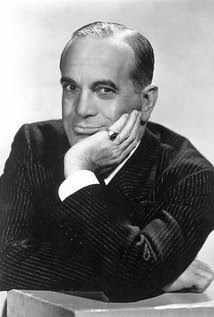
Al Jolson Birthday Concert

al-jolson

You are invited to a concert to celebrate the 130th birthday of Litvak musician and screen star Al Jolson at 7:00 P.M. on Tuesday, December 20, 2016 at the Lithuanian Jewish Community, Pylimo street no. 4, Vilnius.

Free to the public, come and enjoy!

Radio Documentary: Jews of Zarasai Region United by Love of Nature and Tragic Fate

lrtradijas

At 11:05 A.M. on Sunday Lithuanian National Radio, to be rebroadcast Tuesday at 9:00 A.M.

Lithuanian National Radio and Television looks back at the forgotten past of the Jews of Lithuania.


“Zarasai occupies a very warm place in my heart. There I spent what were probably the most important years of my childhood,” famous US cartoonist Al Jaffee (Mad Magazine and others) says. One might say his mother was killed by her love of her native land, according to a biography of the famous caricaturist from Zarasai. Those who left the region and the children of Holocaust survivors have a palpable nostalgia for the land with its lakes, forests and easy-going and care-free life. This sense is shared by all the residents of the different towns and villages interviewed, and who are creating their own initiatives to remember this forgotten part of their history.

Zarasai, Dusetos, Salakas, Antalieptė–the life of all the Jews who lived in these towns was snuffed out in Krakynė forest. Radio Documentary will take a look at the past of all these interconnected towns and how the Jewish community there is remembered today.

Hostess Vita Ličytė

Let’s Honor Our Hanukkah Traditions

Lithuania is a country with roots in the Litvak (mitnagdic, Jewish Orthodox) tradition. Our community is the direct inheritor of more than 600 years of Jewish history and the successor to the traditions of the Vilna Gaon, and we keep our traditions.

When the Jewish museum chose the Gaon’s name for their title, we understood it as a sign of respect for mitnagdic tradition. Has someone proposed changing that name? Let’s honor our traditions during Hanukkah as well. Lighting a menorah in a city square is a Chabad tradition, and Litvaks do not encourage that sort of celebration of Hanukkah, instead, everyone is invited to Vilnius’s only working synagogue.

Electric lights are most often used in huge Hanukkah candelabra displays in central squares or other prominent areas of cities. Chabad reports this “tradition” began with the seventh Chabad rebbe, Rabbi Menachem Shneerson, who ordered these types of Hanukkah menorah displays in public spaces, the first having been set up in Philadelphia in 1974. Chabad Hassidim then began to carry out these sorts of campaigns around the world. These campaigns have not always and not everywhere met with support and approval. Besides different anti-Semitic attacks, there are on-going discussions even now, at least in the USA and other countries which adhere to the principle of the separation of church and state, which precludes displays of religious symbols in public spaces, a ban which is now and again in places applied to Christian symbols, and therefore should be applied to other religious symbols as well. Different municipalities, however, find a way around this ban, adopting decisions which, for example, state that neither Christmas trees nor gigantic menorahs erected in public spaces are religious. We could probably agree with that belief, having in mind these huge menorahs are not traditional in public spaces. All the more so since they employ electric lights rather than wax candles or oil. But the diverse politicians who participate in these lighting ceremonies likely participate viewing them as a cultural rather than religious holiday, seeking to demonstrate their tolerance towards ethnic minorities living in their countries.

For a number of years there has been a giant menorah set up in Vilnius at the initiative of Chabad, and politicians and diplomats like to attend the lighting ceremonies, thinking they have found an opportunity to express solidarity with the Jews of Lithuania, while the more ancient tradition of lighting the Hanukkah candles in private homes and at their entrances goes largely unnoticed. It is these lights which are supported to perform the role of testimony, the most important religious meaning: the lights should be lit at the entrance to the home or on window sills, so they can be seen from outside, as a testimony, according to the Talmudic sages. Although Chabad Hassidim are historically inseparable from the Jews of Lithuania (their communities in Vilnius date back to the time of the Russian Empire), they do not represent all Jews of Lithuania, and especially not those who consider themselves misnagdim, often referred to simply as Litvaks. Perhaps the city of Vilnius this year could look for some sort of Solomonic solution which wouldn’t preclude the Litvak community and would respect their traditions. Or simply point out that the erection of gigantic menorahs is not automatically perceived as a universal Jewish tradition.


Litvak Holocaust Historian Dov Levin is Dead

dov-levin

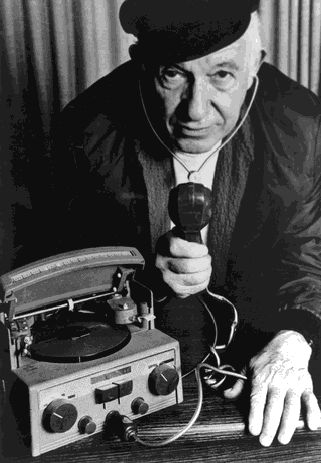
Dov Levin, scholar and Jewish historian, passed away December 3. The Lithuanian Jewish Community mourns the loss of the great Litvak scholar and extends our condolences to his loved ones. May his memory shine on.

Professor Levin was one of the most accomplished researchers working in Eastern European Jewish community history. Born in Kaunas in 1925, he attended a Zionist school with instruction in Hebrew and was a member of the Youth Zionist movement. He and his family were imprisoned in the Kaunas ghetto. His father Tzvi Hirsh, his mother Bluma Wigoder and his nine sisters all perished and Dov was the only survivor. In 1943 he fled the ghetto and joined the partisans. After Soviet liberation his partisan group, Death to the Occupiers, was moved to Vilnius, and Levin resolved to go to Palestine. He left Vilnius on foot for Israel in 1945. He was part of the founding of the State of Israel and fought in battles for independence. He completed his education and Hebrew University in Jerusalem and received a doctorate in history. He was a Fulbright scholar at the University of Chicago and became director of the Oral History Division of the Harman Institute of Contemporary Jewry at Hebrew University. Over 50 years he recorded more than 610 interviews with Holocaust survivors from the Baltic states. In 1960 he spearheaded efforts to record the testimonies of survivors in Israel and elsewhere. He is the author of over 520 academic articles and 16 books in Hebrew and English, including Lithuanian Jewry’s Armed Resistance to the Nazis 1941-1945 (1985); Baltic Jews under the Soviets (1994); Lesser of Two Evils: 1939-1941 (1995) and Litvaks: A Short History of the Jews in Lithuania (2000). Most of his work is dedicated to preserving the memory of the murdered communities, the history of the Holocaust and Holocaust denial in the Baltic states.

Three Cities to Commemorate Artist, Teacher Boris Schatz Simultaneously

sacas-medal

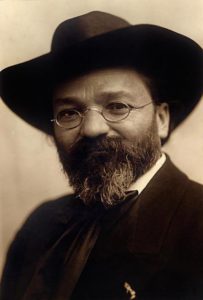
The Tolerance Center of the Vilna Gaon Jewish Museum is to open an exhibit of international medals decided to the memory of Boris Schatz at 5:30 P.M. on December 20. The same exhibits are to open in Sofia, Bulgaria and Jerusalem, where the artist lived and worked.

Boris Schatz (1866-1932) began his artistic career in Lithuania. Born in Varniai, he studied at the Vilnius School of Drawing, later moving to Bulgaria where he lived for a decade and taught at the Royal Academy of Art. At the age of 40 he went to Jerusalem, and in 1906 founded the Bezalel art school there, now known as the Bezalel Academy of Art and Design.

Irena Veisaitė’s Personal History Provides View of Four 20th Century Epochs

bernardinai.lt

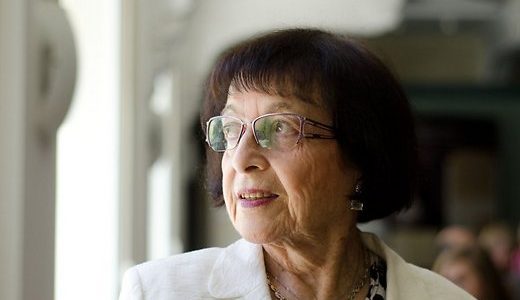
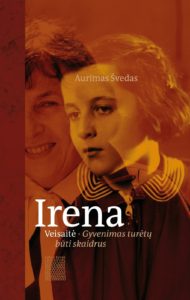
We offer an excerpt from the newly-published book of conversations by historian Aurimas Švedas called “Irena Veisaitė. Gyvenimas turėtų būti skaidrus“ [rena Veisaitė: Life Should Be Transparent] (lAukso žuvys publishing house) with German literature scholar, theater specialist and long-time director of the Open Society Fund of Lithuania Irena Veisaitė about her life story and thoughts about history. The book was launched at the Vilnius Picture Gallery December 15. The author and Veisaitė herself attended the book launch along with other people who know of her achievements in life and her influence on Lithuanian culture.

Švedas in his introduction to his book said: “Irena Veisaitė’s personal history allows us a glimpse of four 20th-century epochs: the interwar period, the time of the first Soviet and the Nazi occupation, the Soviet period and the years of restoration and consolidation of Lithuanian independence. The book’s heroine’s retelling of her life helps interpret the aforementioned epochs and build bridges over the gaps of miscommunication and misunderstanding which separate them. So as we spoke, I didn’t just pose the question of what really happened, I also constantly looked for opportunities to think about what, how and why we remember,”

Your life is simply suffused with the most varied events and extreme experiences. Did you ever think about sitting down and recording some of it on paper?

Fayerlakh Birthday Concert

Celebrating their 45th birthday, the Jewish song and dance group Fayerlakh is inviting everyone to a concert at the Vilnius Polish House of Culture (Naugarduko street no. 76, Vilnius) at 5:00 P.M. on Sunday, December 18. The concert will feature Jewish dance, Yiddish songs and a group of klezmer musicians.

The ensemble is constituted of over 40 members and the youngest Fayerlakh member is just 5 years old. The oldest is now almost 70. Although times change, Fayerlakh stands as an unextinguished flame, formed way back in 1971.

Tickets just 8 euros for Jewish Community members!
Get your tickets by internet here: http://www.tiketa.lt/jubiliejinis_koncertas_fajerlech__45_75662

Hanukkah Chess Championship

sachmatu-turnyras

As we near the eight days of Hanukkah, the Lithuanian Jewish Community and the Rositsan and Maccabi Elite Chess and Checkers Club invite you to a chess tournament to be held at the LJC, Pylimo street no. 4, Vilnius, at 5:00 P.M. on Sunday, December 18.

Tournament director: FIDE master Boris Rositsan
For more information, please contact:

info@metbor.lt
+3706 5543556

The Religious and Secular Meaning of Hanukkah and Litvak Traditions

Religinės ir pasaulietinės Chanukos šventės prasmės bei litvakų tradicijos

for lzb.lt by Dr. Aušra Pažėraitė, associate professor and lecturer, Religious Studies and Research Center, Vilnius University

“…While the Chabad Hassidim cannot be excluded from the ranks of Lithuanian Jews (their communities in Vilnius go back to the time of the Russian Empire), they do not represent all Lithuanian Jews, and especially not those who consider themselves misnagdim, largely known simply as Litvaks. Perhaps the Vilnius municipality this year could seek for some sort of Solomonic solution which wouldn’t step on the toes of the Litvak community and would take their traditions into account. Or simply point out that the erection of a giant menorah is not tacitly understood as a universal Jewish tradition…”

The holiday of Hanukkah, celebrated for 8 days beginning on Kislev 25, is one of those holidays which the Torah does not demand be celebrated. That’s understandable, since the holiday comes from a time after the Torah was given. The name of the holiday is explained by examining the root, which indicates inauguration, celebration, dedication, establishment, and these actions are connected with the reconsecration of the Temple in Jerusalem. The holiday is begun by lighting a candle or an oil lamp, over the eight days lighting one more flame each day. The Talmud (Shabbat 21b-22a) relates that one school of thought in the first century, Beit Shammai, was of the opinion all eight flames should be lit initially and successively extinguished one by one daily, while Beit Hillel followers believed one flame should be lit the first day, two the second day until all eight were lit, which is the belief which took hold and is followed till today. As Rabba bar bar Hana explains, relying upon what Rabba Johanan said on the issue: “The thinking of Beit Hillel is that we should grow in the light, not shrink” (Shabbat 22a). Light should increase daily. It is the opinion of many authors that something which burns up by itself in a limited time should be burned, and that there be just enough “fuel reserves” that it extinguish itself within 30 minutes after “the onset of night.” Therefore electric light bulbs are inappropriate. Although some allow their use, if there is nothing else available, no special blessing is said upon their lighting.

The Four Epochs of Professor Irena Veisaitė: Images, Portraits, Words and Theater

Cultural historian Aurimas Švedas’s book “Irena Veisaitė. Gyvenimas turėtų būti skaidrus” [Irena Veisaitė. Life Should Be Transparent] will be launched at the Vilnius Picture Gallery at 6:00 P.M. on December 15. Historian Saulius Sužiedėlis says the book contains unforgettable images of 20th century Lithuanian history, including the Jewish and Lithuanian interwar period in Kaunas, the ruthless reality of the war and the Holocaust, rescue and rebirth.

veisaite-knygos-virselis-73117528

Author Švedas, the subject of the book Irena Veisaitė herself, theater producer Audra Žukaitytė, director Gintaras Varnas and literary scholar Kęstutis Nastopka are to attend the book launch, to be moderated by Vytenė Muschick. The book details the extraordinary life of the German literature specialist, drama expert and long-time director of Lithuania’s Open Society Fund.

Poet, translator and student of culture Tomas Venclova said of the book: “This book belonging in the genre of long conversational is a prerequisite for everyone who is interested in Lithuanian history over recent decades. Irena Veisaitė is one of the most enlightened people of our land, the incarnation of tolerance and common sense. She devotes the most attention to culture, especially the theater, and the cultural opposition in the Soviet period, but very wisely, avoiding extremism and empty words, also lays out painful philosophical questions.”

Full story in Lithuanian here.

Condolences

Word has reached the Lithuanian Jewish Community Dov Levin passed away December 3. Levin was born in Kaunas January 27, 1925. He joined the partisans and left Lithuania on foot for Jerusalem on January 17, 1945. He is the author of numerous groundbreaking works about the Holocaust in Lithuania and about Litvak culture. Our deepest condolences to his family and loved ones on the death of a man who meant so much to so many.

Plaque Commemorating Litvak Coin Designer Victor David Brenner Unveiled in Šiauliai

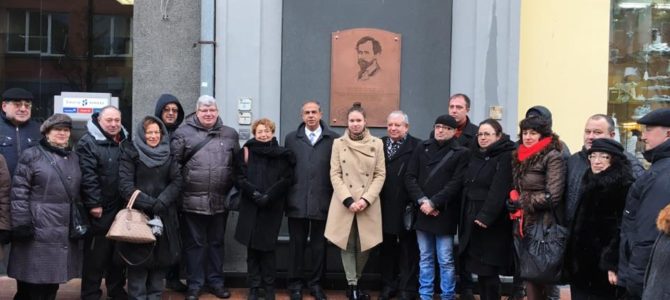
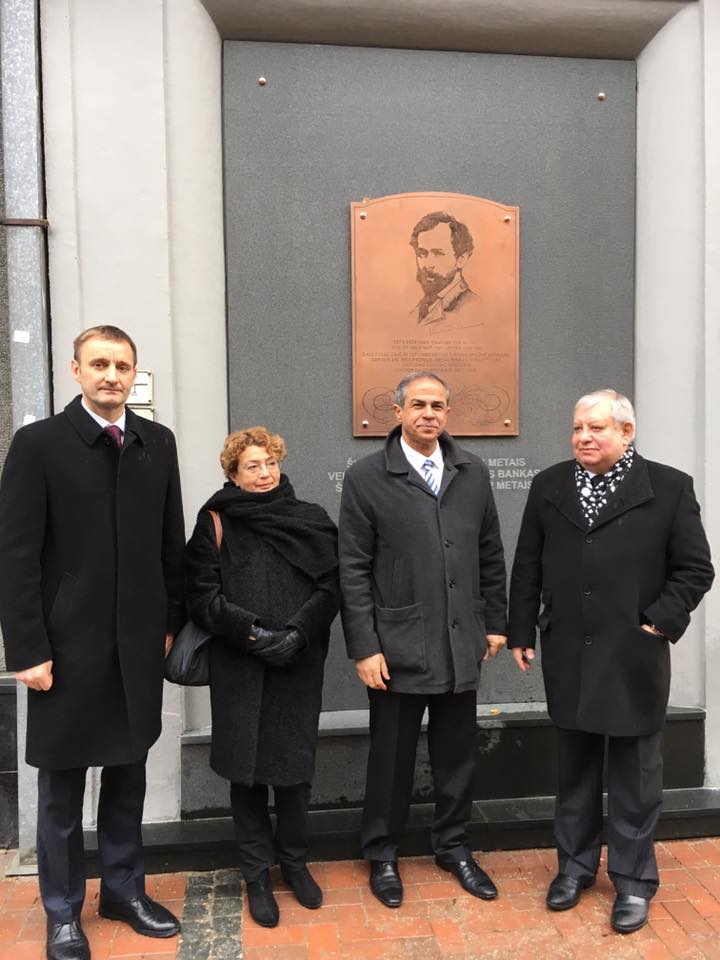
A plaque commemorating Litvak coin and medal designer Victor David Brenner (1871-1924) was unveiled in his hometown Šiauliai (Shavl) December 14. Lithuanian Jewish Community chairwoman Faina Kukliansky, Israeli ambassador Amir Maimon, Šiauliai mayor Artūras Visockas, Šiauliai Jewish Community chairman Josifas Buršteinas and Community members took part in the ceremony to unveil the plaque on the outside wall of the Šiauliai Bank building at Tilžės street no. 149. Brenner designed the Lincoln-head United States one cent piece still in circulation over 100 years ago.

lenta-brener2