Heritage

Jewish Gravestones Removed from Electric Substation

Iš elektros pastotės išimami žydų antkapių akmenys

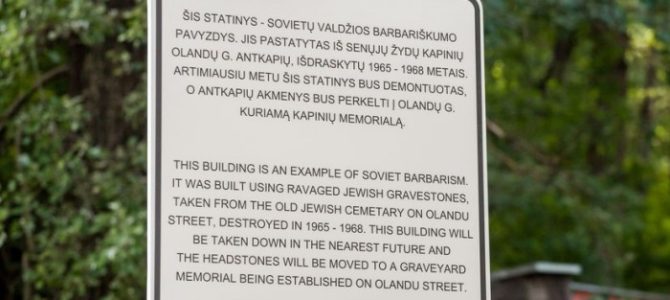
VILNIUS, June 22, BNS–This week removal began of fragments of Jewish headstones used in the construction of an electric substation in Vilnius. The fragments will be removed to the Jewish cemetery on Olandų street to be used in a Jewish cemetery memorial to be erected there, the municipality informed BNS. “Currently work is underway to remove stones set in different walls,” Kęstutis Karosas, acting director of the city’s Heating and Water Department said. The plan is to remove all the stones by September 1.

The cost to the municipality is unknown so far. Karosas said payment will be made for work done. The electric substation on Olandų street was constructed during the Soviet period using headstones from the Jewish cemetery there. Jewish headstones, especially from the cemetery on Olandų street, were used all over Vilnius for construction during the Soviet era.

Archaeologists Dig at Vilnius Great Synagogue

Vilniaus Didžioji sinagoga žydams buvo svarbi, kaip katalikams Vatikanas

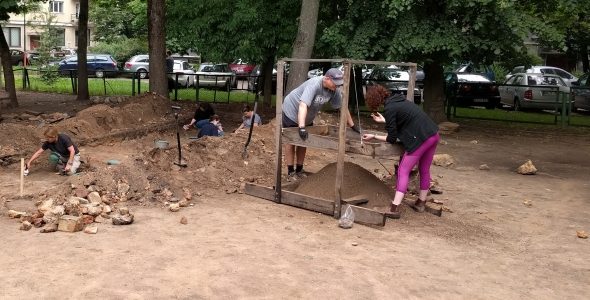
VILNIUS, June 21, BNS–A team of experts from the United Kingdom, Canada, Israel and Lithuania is starting to investigate the remains of the Great Synagogue of Vilnius and other buried buildings.

An international team of archaeologists using non-invasive geophysical techniques plans to investigate the remnants of a mikvah buried 2 meters below the surface under a school built by the Soviet regime after 1960.

“Our geophysical studies can map below the street without destroying any infrastructure and then to identify exactly where to dig, map and retrieve artifacts to understand the historical context,” one researcher said.

350-Year-Old Torah Scroll Returns to Vilnius

350 m. skaičiuojatis toros ritinys grįžta į Vilniaus choralinę sinagogą

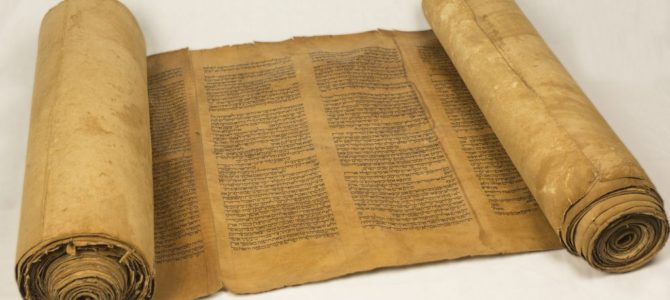
The Vilnius Jewish Religious Community cordially invites you to celebrate this extraordinary event, the return of the Torah scroll, at the Vilnius Choral Synagogue.

This 350-year-old Torah scroll, which survived the destruction of the Vilnius ghetto during World War II and was taken out of the country to protect it, is finally coming home.

The ceremony of bringing in the Torah is to take place at 1:00 P.M. on Monday, June 27, at the Choral Synagogue in Vilnius.

The Vilnius Jewish Community is tremendously grateful to Judah Passow for his initiative in returning the Torah scroll. The family of London-based photojournalist Judah Passow safeguarded the Torah scroll for 56 years after it left Vilnius. The ceremony will feature a short presentation of the history of the Torah and what this most important book means.

Meeting the Past at a Chess Match

kazys_grinius_cropped
by Geoff Vasil

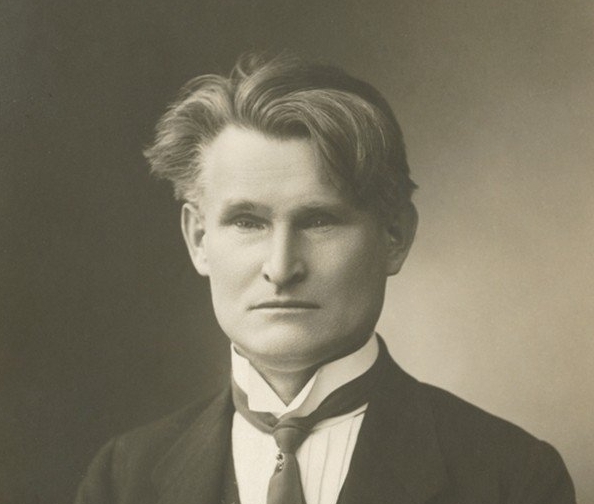
Sometimes you open a door and walk into a room expecting nothing, and the strangest things happen. I went to the Rositsan Elite Chess and Checkers Club chess tournament dedicated to the memory of chess enthusiast and interwar Lithuanian president Kazys Grinius at the Lithuanian Jewish Community on Sunday morning, June 19, and thought I saw the president himself, although he died many years ago in exile in America.

At the chess tournament held in his name, there were tables with timers and boards set up both inside the Jascha Heifetz hall and in the foyer and people of all age groups from pre-teen to people in their 80s waiting for the games to begin. I expected some sort of formal nod of the head to the former president, a cursory commemoration after which the players would get down to business. The organizers had a much different idea of what it means to honor someone. Multiple speakers took the podium, gifts were lavished, chess medallions were passed out and there was a sincere recollection of the man himself.

Borisas Gelpernas, former chess champion, spoke about how Kazys Grinius rescued his mother and father from the Kaunas ghetto. At first his father refused the offer of help, not wanting to put Grinius in danger, but the former Lithuanian president kept insisting, and after the actions–mass shootings of Jews–began, he and his wife did hide in Grinius’s own apartment for several months, along with Kristina, Kazys’s second wife.

Lithuanian Parliament Rushes to Aid of Litvaks

Lithuanian Parliament Rushes to Aid of Litvaks

By Raimonda Ramelienė

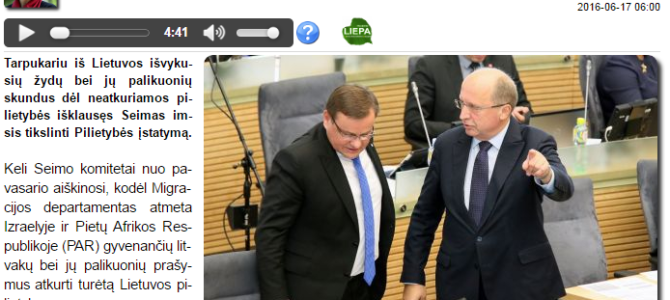
The Lithuanian parliament has heard complaints from Jews who left Lithuania between the wars and their descendants over their inability to restore Lithuanian citizenship and has begun amending Lithuania‘s law on citizenship.

Several parliamentary committees have been trying to determine since spring why the Migration Department has been rejecting requests by Litvaks and their descendants living in Israel and South Africa for restoration of Lithuanian citizenship.

Although members of parliament determined bureaucratic obstacles were hindering the process, they decided to put an end to conflicting legal opinions by amending the law. The initiator was oppoisition conservative leader Andrius Kubilius, aided by European Affairs

Star of David Shows the Way to Jewish Heritage Sites

Dovydo žvaigždė nukreips į žydų paveldą

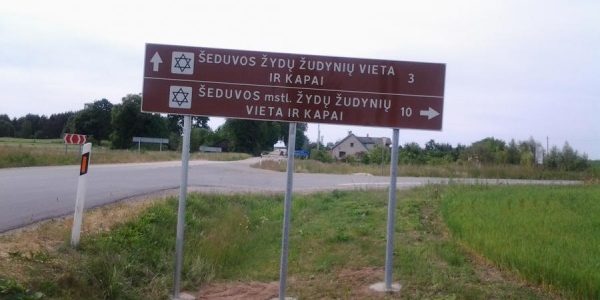
Thirty road signs have gone up in the area around Šeduva, Lithuania with star of David designs to show the way to the different sites which are part of the Lost Shtetl project by the Šeduva Jewish Memorial Foundation, including a renovated Jewish cemetery and monuments at three mass grave sites. This has never been done before in Lithuania.

“We’re glad we were able to set a precedent without any complications at all, so that now people who don’t understand Lithuania will understand how to reach the sites connected with Lithuanian Jewish history by following the signs,” Sergejus Kanovičius, founder of the Šeduva Jewish Memorial Foundation and head of the Lost Shtetl project, said.

Kanovičius said he hopes this simple decision will soon spread throughout Lithuania. At the end of 2018 the foundation plans to open its Lost Shtetl museum next to old Jewish cemetery in Šeduva.

For more information, see www.lostshtetl.com

Full article in Lithuanian here.

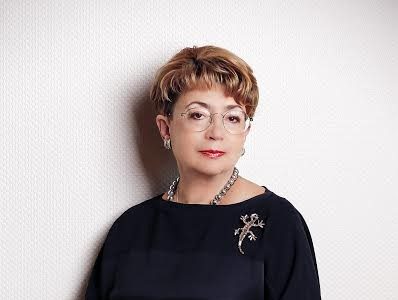
Chairwoman Faina Kukliansky’s Speech at the Lithuanian Parliament at Commemoration of the Day of Mourning and Hope and the Day of Occupation and Genocide

LŽB pirmininkės Fainos Kukliansky kalba Lietuvos Respublikos Seime, minėjime, skirtame Gedulo ir vilties bei Okupacijos ir genocido dienoms atminti

Over the entirety of Lithuania’s 25 years of independence the Lithuanian Jewish Community hasn’t had the opportunity to share our thoughts publicly during the marking of the Day of Mourning and Hope at the Parliament of the Republic of Lithuania. Seventy-five years have passed since the beginning of the mass deportations of Lithuanian citizens. For the Jewish people, who suffered prophetic exile from the times of the Assyrians, Babylonians and Romans, the experience of exile could be considered part of our historical identity. Seventy-five years ago about one precent of the Lithuanian Jewish community at that time were deported, and as a percentage represent the largest group to be deported from Lithuania. State repression did not put an end to Jewish identity: Zionist organizations operated underground, there was a Hebrew educational system, and all sorts of measures were employed to enable members of the Jewish community to leave for Palestine.

According to Jewish historiography, during the deportations of June, 1941, alone about 3,000 Jews were deported, including Jewish activists from the left and right side of the political spectrum and owners of large industrial enterprises and factories, with about 7,000 people being deported in total during the first year of Soviet rule. On the eve of the first Soviet occupation the majority of Lithuanian Jews were involved in different cultural, social and political organizations and associations. The tradition of Zionism, however, has always been especially strong in the Lithuanian Jewish community; in Lithuania between the two world wars members of the Jewish conservative cultural orientation were the most active and influential, and spoke out for the creation of an independent Jewish nation-state in Palestine. In this regard the confrontation with the Soviet system was especially vivid.

Solomon Atamuk reports there 16 Jewish daily newspapers, 30 weeklies and 13 non-periodical publications as well as 20 collections of literature being published in Lithuania before World War II. After the June 14, 1940 ultimatum to Lithuania and the consequent occupation the Jewish community soon experienced social and cultural repression. All newspapers, belong both to organizations on the Jewish political left and the right, were shut down. Even the Folksblat newspaper, popular with Communists and issued by the Jewish People’s Party, was closed.

Fira Bramson-Alpernienė Has Died

FIRA Bramson
Fira Bramson-Alpernienė
December 18,1924-June 12, 2016

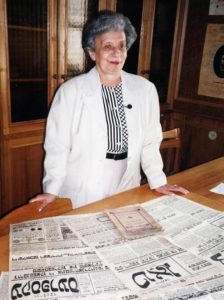
Estera Bramson-Alpernienė, whom everyone knew as Fira, has died. With her dies a bit of Litvak history. She belonged to a world of 20th century Jewish personalities, looming figures such as that of Shimon Dubnov, Max Weinreich and Tsemakh Shabad. She came from the famous Bramson family whose members have played a key role in Lithuanian Jewish and European Jewish life. The Bramsons were a center of gravity to Jewish intellectuals in Kaunas before the war. Fira was educated at the Sholem Aleichem Gymnasium with Yiddish as the language of instruction. For Fira family and school were holy, although her school life didn’t last long.

In 1941, before she could graduate from high school, the war forced her to bid a hasty farewell to family, to leave her only sister, to flee from the Nazi terror. Fira didn’t come back to Kaunas after the war because there was no one waiting for her there. Her entire family was at the Ninth Fort. She started a new life in Vilnius. In the late 1980s there was a movement in Vilnius to revive the Lithuanian Jewish Community. Fira was among the founders of that movement. Finally she could come back to her Yiddish roots and cultural hearth so important and crucial to her spiritual life. Some of her most important work since that time has been with Jewish books at the former Palace of Books, and with that collection now removed to the Lithuanian National Library. Her pride and joy became these surviving books, along with a small number of books from the private collections and libraries from before the war belonging to survivors of the Holocaust. Fira was one of the first conservators of this heritage and presented the legacy she protected to the Jewish community, but also to the wider audience in Lithuania and the world. She held exhibits and lectures, facilitated cooperation with academics and students and helped make use of this priceless inheritance. She wrote about what she achieved in her work of many years in the book “Prie judaikos lobių” [“Next to the Treasures of Judaica”].

Fira Bramson could be called the white knight of Yiddish culture. This woman, slight of build, fragile, driven and principled, fought for the protection and preservation of cultural treasures. Not only did she fight, she won. Even in difficult circumstances she never relented because she saw her life as a mission to safeguard that Yiddish culture so dear to her parents and ancestors, and to pass on memories of that culture to future generations. When she spoke at conferences and seminars, when she was part of educational programs in Lithuania, Europe and the USA, Fira would first speak not of herself, but about the founders of Yiddish culture. The grief of losing Fira Bramson is somewhat mitigated by the realization she lived a long, interesting and productive life and generously shared with others her love of Jewish culture. She was of keen intellect, a person with a warm heart whom, if you ever met her, you will never be able to forget. Let our vivid memory of her live on.

A wake will be held at the Nutrūkusi Styga funeral home Tuesday from 10:00 A.M. The coffin will be carried out at 3:45 P.M.


History of the Vilnius Jewish Community: Learn (Not) to Forget

francois-guesnet-5759438c61c31

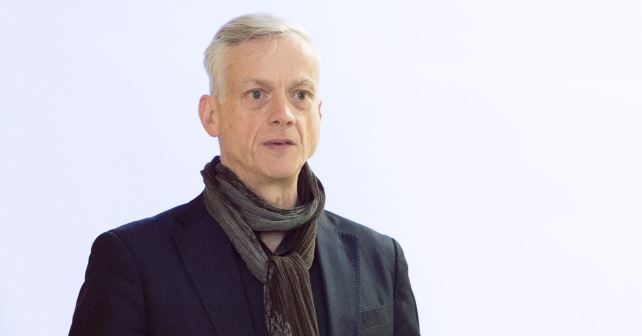
Professor François Guesnet, a reader at the Hebrew and Jewish Studies Faculty at University College London currently visiting at the History Faculty of Vilnius University, granted Nijolė Bulotaitė, a writer for VU’s news page, a long interview. Dr. Guesnet is also the secretary of the European Association for Jewish Studies. Excerpts translated from Lithuanian appear below.

What is the most interesting or most inspiring thing to you?

That’s a good question. We were just talking with a doctoral student about how some topics become very boring as the years go by and become stale. Partisan politics, let’s say, isn’t very sexy. Right now I’m most interested in the human body and the history of medicine, because it’s very interesting to explore who people understand themselves and their bodies. I also research the functioning of the Jewish communities in Eastern Europe. I was born in Germany, my mother is German, my father French; I grew up in a very European family and studied the history of Eastern Europe. I know Polish and Russian. Both languages were very important for me and Russian helped especially in researching archival material. I know Hebrew and Yiddish, otherwise it would be impossible to study the history of Eastern European Jews, at least a basic knowledge is required. My dissertation concerns the 19th century when the majority of official documents were in Russian.

Work to Commemorate and Clean Up Jewish Cemeteries and Memorial Sites Continues in Kaunas

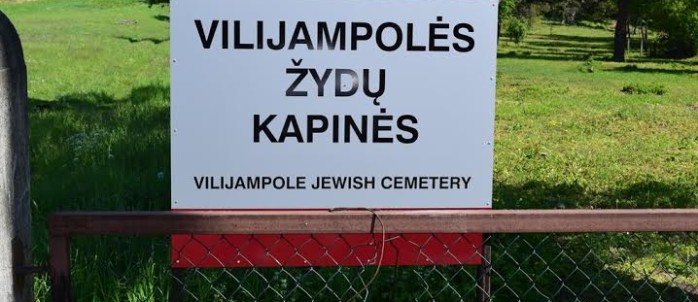
Kkapai3

Work to commemorate and clean up Jewish cemeteries and memorial sites in Kaunas continues, performed by the Kaunas municipal administration and city departments. The work was initiated by the Kaunas Jewish Community and Israeli ambassador Amir Maimon and their initiatives have the support of Kaunas mayor Visvaldas Matijošaitis and other ranking city officials.

The photographs below show new information boards and signs at the old Jewish cemeteries in Slobodka (Vilijampolė) and Žaliakalnis neighborhoods and at the operating Jewish cemetery on H ir O Minkovskių street. The gate to the Slobodka cemetery is now being kept locked and automobile traffic prohibited. The territory of the Seventh Fort memorial was cleaned up and there are preparations underway to cut trees blocking the view of the site from the other side of Sukilėlių street. The mass murder grave site at the Seventh Fort should be cleaned up this year with a monument to mark the tragic location.

Start-Work Ceremony at Wooden Synagogue in Žiežmariai

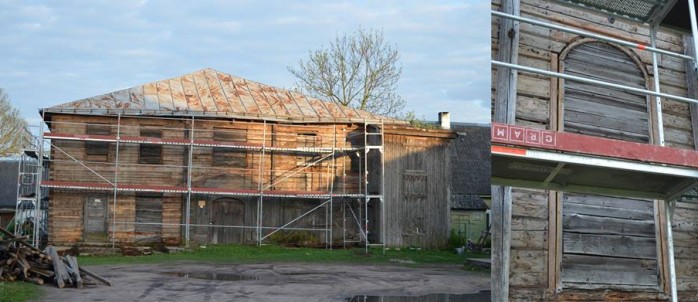
The Lithuanian Jewish Community’s heritage protection expert Martynas Užpelkis travelled to attend a ceremony in Žiežmariai, Lithuania to mark the beginning of work to renovate the unique wooden synagogue there, one of only a handful of wooden synagogues still standing in Lithuania. He took some snapshots which you can find below.

In related news, the board of supervisors of the Kaišiadorys regional administration, where Žiežmariai is located, approved the region’s membership in what is known as the Association of the Itinerary of Jewish Cultural Heritage, a new tourism network which includes the Kėdainiai, Ukmergė and Joniškis regional administrations now.

On July 30, 2015, the Kaišiadorys regional administration agreed to a 99-year lease agreement for the synagogue, the property of the Lithuanian Jewish Community, to be used by the regional administration without fee. In August an agreement was concluded between the LJC and regional administration on the uses to which the former synagogue could be put and for its restoration. Currently work has begun on the roof and façade and archaeological work is on-going. The regional administration has allocated 24,840 euros for restoration work. Further financing is being sought and the regional administration believes membership in the Association of the Itinerary of Jewish Cultural Heritage could open doors for new partners in Belarus and Poland under the Interreg program.

What Should Be Done with the Law on Dual Citizenship of Several Years Standing

fa

Dear members of the Lithuanian Jewish Community and Litvaks living abroad,

I would like to explain in an understandable way what the current situation is regarding the Lithuanian law on citizenship and its provisions affecting those who seek to restore Lithuanian citizenship without renouncing their current citizenship, whether that be of the Republic of South Africa, Israel, the United States, Great Britain or another country.

To begin, we are not at war, although it almost seems like a war for the Jews in South Africa, and the great majority of Jews in other countries enjoy a higher standard of living than we do. It is also clear the Lithuanian law on restoration of citizenship was not written especially for Jews. We, the Lithuanian Jewish Community, care about the Jews of the world and their legitimate aspirations to restore Lithuanian citizenship. The first question which undoubtedly comes up is, when exactly did Jews lose that citizenship?

Jews who left Lithuania with Lithuanian passports before the war, and those who were deported from Lithuania to concentration camps, and those who were deported to Siberia did not renounce Lithuanian citizenship voluntarily. In fact they formally lost it when Lithuania became independent again as people of non-Lithuanian ethnic origin (it turns out Jews who come from Lithuania are not considered people of Lithuanian origin, and are not members of Lithuanian émigré organizations abroad), and moreover, some of them have “repatriated” from Lithuania.

A School Bar/Bat Mitzvah

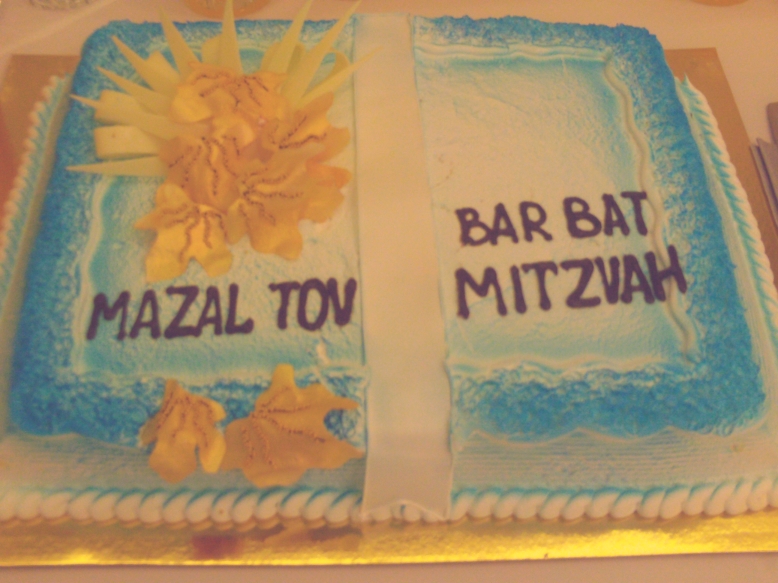
barbatcake

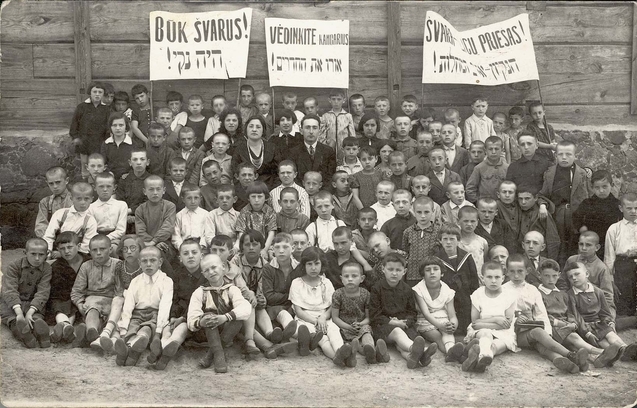
The ORT Vilnius Sholem Aleichem Gymnasium held a Jewish rite of passage Monday as a small group of Jewish boys and girls were ushered into adulthood at a public Bar and Bat Mitzvah on the third floor of the Lithuanian Jewish Community.

School principal Miša Jakobas greeted an overflow audience of parents, pupils, friends and Community members, and singled out the children undergoing the ritual, saying if he could wish them one thing, it would be patience.

Lithuanian Jewish Community deputy chairwoman Maša Grodnikienė congratulated the youngsters and spoke with evident joy about a new generation of Lithuanian Jews reaching maturity. She noted it was the 100th anniversary of the birth of the famous Yiddish writer Solomon Naumovich Rabinovich whose pseudonym was Sholem Aleichem, and wished everyone peace and health.

New Museum of Jewish Culture to Open in Slonim, Belarus

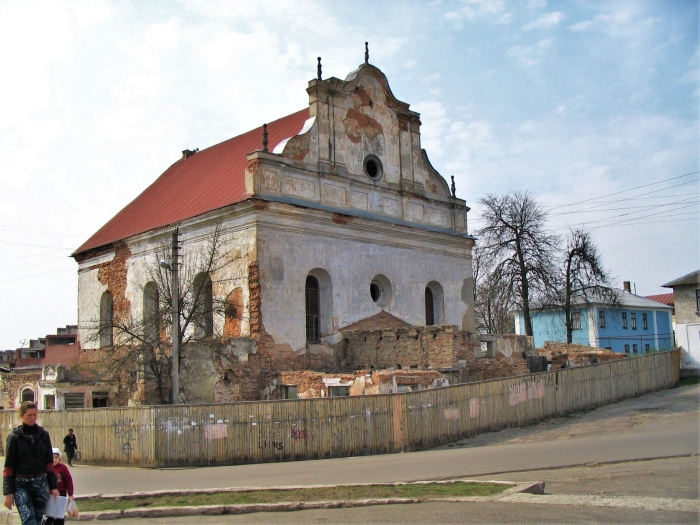
Synagogue Slonim2

A new Museum of Jewish Culture will be housed in the 17th century synagogue in Slonim, Belarus, the BELITA news agency reports. The Slonim regional administration and the Slonim Jewish Association in Israel are to finance directly further restoration of the synagogue.

The synagogue, built in the mid-17th century, is located in the middle of the city of Slonim. Restoration work has been performed and the roof has been fixed. Original interior elements have been preserved.

“In earlier times Jews constituted more than 80% of the population in Slonim. Visitors from abroad continuously come to see the homes of their parents, grandparents and great-grandparents. Many visit the synagogue. The Jewish museum would be a tourist attraction and would draw more visitors to the city,” the regional administration observed.

Work to Renovate Žiežmariai Wooden Synagogue Begins

ZIEZM sin1

A ceremony was held at the unique wooden synagogue in Žiežmariai, Lithuania on May 19, 2016, to mark a new stage in its life: its resurrection. The ceremony marked the beginning of work by the Kaišiadorys Regional Administration and Lithuania’s Cultural Heritage Department to restore the house of worship and featured a concert by the Rakija Klezmer Orkestar and works of Paganini by violinist Gediminas Dalinkevičius.

An allocation of 85,000 euros from the Ministry of Culture to the Kaišiadorys Regional Administration and an additional 24,840 euros from the regional administration are to be used initially to fix the roof and repair the façade, stabilize the building and perform archaeological work. A total of 693,000 euros is needed for reconstruction of the synagogue and additional sources of funding are being sought.

“The Lithuanian Jewish Community agrees to turn the synagogue over for public use because the Jewish community of Žiežmariai no longer exists and the synagogue won’t be used as a house of prayer. The synagogue can be utilized very well for the cultural needs of the region and at the same time remain a place of commemoration for the Jewish community of the area,” LJC chairwoman Faina Kukliansky said.

Jews: Lithuania’s Misfortune

moletaikids1
by Marius Ivaškevičius

It appears we can finally say exactly what all those who today speak publicly about the mass murder of Jews in Lithuania are truly seeking. Either they are doing PR for themselves through this, advertising themselves, because this is trendy in Europe, or their activities are being financed by the Jews themselves.

All of those shocking details, talk about smashing the heads of Jewish infants on trees to save bullets, is nothing other than the scratching of still unhealed wounds with dirty, dilettante fingers.

In this manner the attempt is made to traumatize yet another generation of Lithuanians, our children born in a free Lithuania, because these sorts of actions, instead of inviting repentance or at least sorrow, actually create even greater hatred of Jews, because this is how the natural defensive reaction of the nation operates. Every nation is different, so Germany’s experience doesn’t fit our situation, that is, healing and finally recovering by demonstrating and revealing through education and openness the brutality of the Nazi concentration camps. All that took place in the period after the war, when events were still vivid, but today the murderers and the witnesses have all but died off, so Lithuania must blaze her own trail. It’s not for no reason at all that our intellectuals, chroniclers and commentators say: don’t do it, don’t pick at that wound with your fingers, let it first heal, let it be forgotten. Sometimes forgetfulness is more worthwhile than remembering.

I am from Molėtai. A small town of extraordinary beauty with three lakes inside the town and another three hundred in the surrounding area. There’s no need to say much, everyone knows Molėtai, Lithuanian vacationers’ paradise. During the war, or more precisely, during one day in the summer of 1941, two thousand Jews were shot there. In other words, eighty percent of the population of Molėtai. More than two-thirds of the town’s residents vanished over the course of a few hours and were buried in a mass grave. German Nazis were in command of the massacre. Local Lithuanians did the shooting. These are the cold, hard facts and numbers.

YIVO Awarded $260,000 by NEH

YIVO Receives $260,000 Grant from the National Endowment for the Humanities
May 16, 2016

New York, NY – The YIVO Institute for Jewish Research (YIVO) is pleased to announce that is a recipient of a major grant from the National Endowment for the Humanities (NEH) for the Vilna Collections Project, a seven-year initiative to preserve, digitize and virtually reunite YIVO’s prewar archives and library located in New York City and Vilnius, Lithuania, through a dedicated web portal.

The NEH’s Division of Preservation and Access has awarded $260,000 over two years for the processing, conservation and digitization of rare archival documents rescued from the destruction of the Holocaust. The materials, looted by the Nazis and recovered with the help of the U.S. Army, were brought to New York in the late 1940s. They are a diverse resource on Jewish life, community and culture in Europe. They span the range from handwritten autobiographies by Jewish youth and humble folktales and folk songs to the archives of scholars, such as that of Simon Dubnow, known as the father of Russian Jewish history. They include photographs, Yiddish theater and political posters and the administrative records of Yiddish and Hebrew schools and yeshivas.

As City University of New York historian Jack Jacobs noted in a letter of support for YIVO’s application to the NEH, “It is simply impossible to write a dissertation or do any serious research project related to Eastern European Jewry without consulting the YIVO materials.”

Full story here.

Litvaks Visit Panevėžys

Psvec2

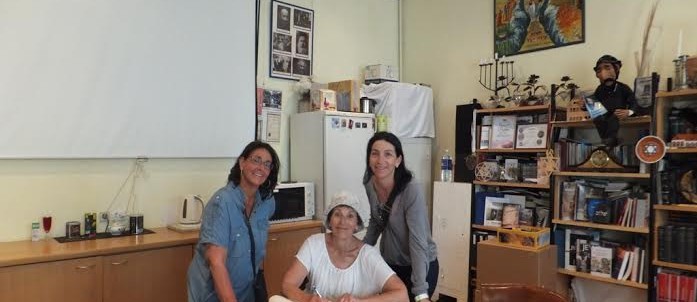
Gilla Back from Melbourne and Leanne Cohen and her daughter from Johannesburg visited the Panevėžys Jewish Community and toured the city recently to learn more about the land whence their ancestors came.

They examined displays of photographs at the community and talked about their ancestors who lived in the city. Cohen’s antecedents emigrated to South Africa in 1900. They signed the guest book and said it had been a real privilege to walk the streets and breath the air in the city, although the Ponevezh of their relatives no longer exists.

Psvec1

Lithuania to Grant 30,000 Euros to Vilnius YIVO Project in 2017

maxw

The Lithuanian Ministry of Culture plans to allocate 30,000 euros in 2017 for the Vilnius YIVO project.

The Vilnius YIVO project is a seven-year endeavor to preserve, digitize and join together virtually two pre-war YIVO collections in New York and Vilnius. The project will also attempt to recreate digitally the Strashun library, one of the largest collections of judaica in pre-war Europe. YIVO, the Lithuanian Central State Archives and the Lithuanian Martynas Mažvydas National Library are partners in the project.

The project covers approximately 10,000 rare and unique books and publications and around 1.5 million documents. Material includes literary works, correspondence, memoirs, theater posters, photography, rare books, brochures, newspapers, political pamphlets and documentation of religious and communal activities.

lrkm.lrv.lt

LJC Chairwoman Speaks on Lithuanian National Radio about Citizenship for Litvaks

MILDAR-0065web

Lithuanian Jewish Community chairwoman Faina Kukliansky was one of three distinguished guests on the late morning Aktualiju studijas [News Studio] program on Lithuanian radio May 12.

“This question keeps bothering me: when did the institution of citizenship, when did that institution stop, when was it interrupted? Was it when the person was imprisoned in the ghetto? When he was transported to the concentration camp? Nobody saved those passports anywhere. You see this is such an inhumane, such an unintelligent step when you look to the future. But as the chairwoman of the Lithuanian Jewish Community I would like to say, that Litvaks are welcome in our community, with or without a passport, and we would be very proud if our Lithuanian Jewish Community grew thanks to those people who left Lithuania. So we gladly invite and welcome them without regard to their political status,” Faina Kukliansky said during the discussion.

The main topic for the show as “Why don’t we want to grant citizenship to Litvaks?” The introductory blurb for the show was: “Lithuanian Jews–Litvaks–are not just people who have achieved great things in the world, they contributed greatly to the strengthening of the Lithuanian state as well. They sought Lithuanian independence and they fought in the battles for independence [in 1918-1919]. Unfortunately, almost all of them were murdered during World War II. Only a small portion survived. Today some Lithuanian bureaucrats don’t want to grant citizenship to the small group of Jews who want it. Why not?”

The other two guests were former Lithuanian prime minister, current deputy parliamentary speaker MP Gediminas Kirkilas and the historian Alvydas Nikžentaitis.

The audience was invited to call in and pose questions.