Heritage

Children’s and Youth Club Activities in April

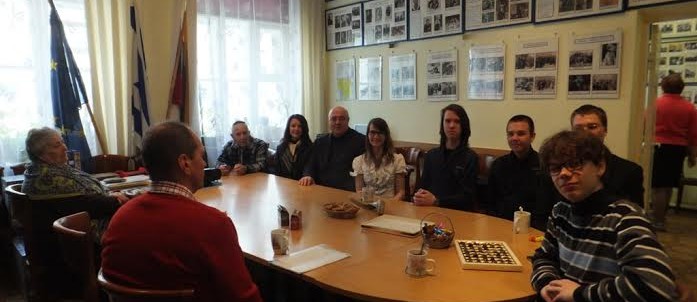
The Ilan Club and its young directors continued their work and planned for the end of the season and children’s camps. There was a drop-off in attendance as the weather improved and parents kept their children home Sunday afternoons.

April 10, 2016: Activities at the Children’s Club of the LJC. As usual, children came to have both a fun and informative time. This time the activities centered around Jewish love and weddings. We spoke about customs and traditions.

April 17: These activities at the Children’s Club were regarding the upcoming Eilat Beach Party. We had fun, played games and tried to give a sense of the pleasantness of Eilat.

An Unforgettable Concert

foto (48)

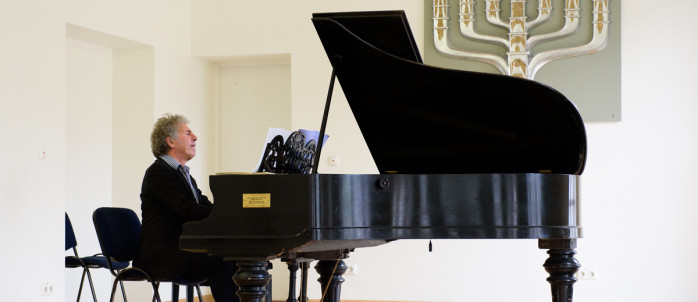
Dutch pianist Marcel Worms performed melodies by interwar Jewish composers at the Lithuanian Jewish Community on April 29, in the same hall where he played 11 years ago. Most of the composers were murdered in the Holocaust, and Worms said if their music was forgotten, they would die a second death.

Works by Rosy Wertheim, Erwin Schulhoff, Gideon Klein, Alexander Tansman, Szymon Laks, Anatolijus Šenderovas, Leo Smit, Dick Kattenburg and George Gershwin were performed. Anatolijus Šenderovas’s “Sonatina” lent a local flavor to the concert.

Concert-goers were got more than just wonderful music: the children of Dutch diplomat Jan Zwartendijk attended. Robert Zwartendijk and Edith Jes spoke about their father who helped rescue at least 2,000 Jews in Lithuania by issuing visas for the Dutch possession of Curaçao, a somewhat fictitious “end-visa” the Soviets demanded of holders of Sugihara’s transit visas through Japan. He and his sister Edith were glad their father was being commemorated and also happy to have a chance to visit Kaunas again, where the Zwartendijk family lived and which Edith, then 13, remembers well.

Rome to Open Jewish Catacombs to the Public

Villa-Torlonia-Catacombs

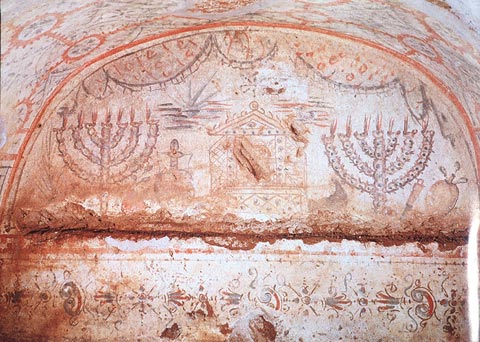
Rome plans to open the 2,000-year-old Villa Randanini Jewish catacombs to the public for the first time between May 1 and June 5 as part of a cultural initiative as one of the several initiatives taken by the Italian Cultural Ministry to promote the scope of the “Jubilee Year of Mercy” declared by the pope.

The Jewish catacombs were discovered beneath the vineyard of Villa Randanini in 1859. The maze of tunnels covers nearly 18,500 square meters (about 199,000 square feet) and has a depth of five to 16 meters (about 16 to 52 feet). The walls have inscriptions in Greek, Latin, and Hebrew providing information about people buried there. The catacombs have been vandalized over time, but still contain many colorful frescoes and tablets with Jewish candelabra depicted. The walls are covered with paintings of birds, dancing maidens, flourishes and grapevines. The catacombs also contain kokhim, a type of Jewish burial chamber.

Wooden Synagogue in Pakruojas, Lithuania

psp

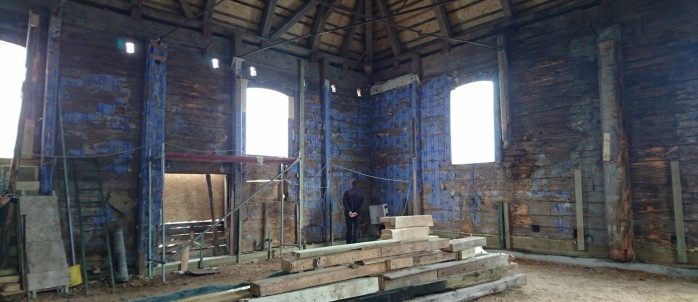
EEA and Lithuanian state support as well as from the Pakruojas regional administration has been allocated for fixing the wooden synagogue in Pakruojas, Lithuania.

The plan is to house a children’s literature section of the Juozas Paukštelis Public Library in the synagogue and to use it for educational activities and cultural events. The synagogue has no heat and will have to be outfitted with a heating system for year-round use.

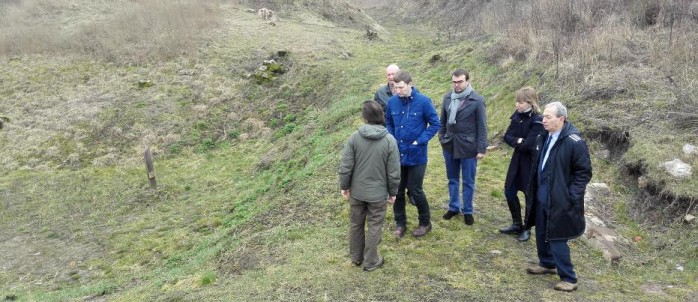
A team of architectural experts, cultural heritage protection specialists, restorers and engineers visited Lithuania’s oldest wooden synagogue April 27. This mission organized by Lithuania’s Ministry of Culture was intended to come up jointly with experts the best solution to the heating problem and other outstanding issues at the site. Participants said the meeting was highly productive and hoped similar heritage issues would see the same sort of good practices applied in the future.

From EEA Grants for Culture in Lithuania

Photos from the trip here.

Jewish Cultural Legacy Presented in Ukmergė

The Big Stone Hotel in Ukmergė Friday evening was the venue for Jewish music and the audience had the opportunity to try some traditional Jewish cuisine items recently included on the hotel restaurant’s menu. The Ukmergė regional administration, the Ukmergė Tourism and Business Information Center and Big Stone Hotel owners Tajana and Filionis August held a symbolic Passover seder to mark the Jewish holiday on April 23, with the requisite four glasses of wine (kosher, by the way).

The celebrants including members of the Ukmergė Jewish Community discussed the next steps in the life of the recently created Jewish Cultural Heritage Association and its Jewish Cultural Heritage Tourist Route, Lithuania’s largest newspaper, Lietuvos rytas, reported.

Full story in Lithuanian here.

Litvaks Didn’t Suffer Enough to Deserve Lithuanian Citizenship?

Grant profile pic

by Grant Gochin

Lithuanian officials state that Jews were not oppressed in Lithuania:

In an astonishing display regarding the ignorance of rampant anti-Semitism in inter-war Lithuania, Lithuanian Foreign Minister Linas Linkevicius stated that there was “no violence, repressions or anything like that at the time”, against Jews in Lithuania during the period 1918 – 1939. Based on this assumption, Lithuania intends to deny citizenship applications for descendants of Lithuanian Jews. The belief that Jews did not suffer enough, in Interwar Lithuania, to warrant citizenship is simply preposterous.

http://www.baltictimes.com/litvaks_continually_rejected_restoration_of_lithuanian_citizenship/

At the beginning of the 20th Century, Jews represented about 14% of Lithuania’s population. In May 1915, the Czarist regime deported and exiled approximately 100,000 Lithuanian Jews to the Russian interior. After the war ended, Lithuanian Jews, who had lived in Lithuania for centuries and often constituted half of the population of many towns, were promised that the new independent Lithuanian state would be tolerant to minorities. Jews provided considerable political support for Lithuania in international forums and enlisted into the Lithuanian army to defend their country’s independence. A great many war medals were awarded to these soldiers for their extraordinary bravery and many lost their lives fighting for Lithuanian independence. In return for their contributions, the government granted full autonomy to the Jewish community and created a Cabinet-level Ministry for Jewish Affairs. Unfortunately, these promises were not kept; in 1923 funding for this Ministry was withdrawn, and in 1924 the Ministry was abolished. Sadly, the Ministry had served little purpose, because in 1923 the Lithuanian Government reportedly rounded up and expelled Jews whom they considered to be “alien”.

ISIS Destroy Ancient Gate to Biblical City of Nineveh

gog

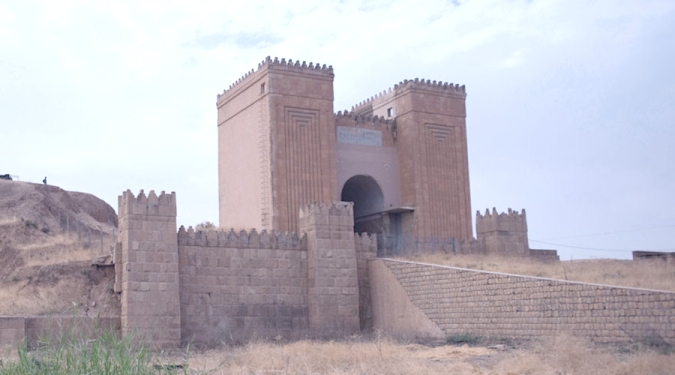
The Gate of God, also known as the Mashqi Gate, was one of a number of grand gates which guarded the ancient Assyrian city of Nineveh. Referenced in the Bible (Genesis 10:10, 2 Kings 19:36, Isaiah 37:37-38, Nahum, Zephaniah 2:13-15, Book of Jonah, as well as in the Christian Book of Tobit and the Gospels of Matthew and Luke in the New Testament), the settlement of the site which eventually became Nineveh dates back to about 6000 BC and in the 6th century BC it was the largest city in the world. Nineveh was central to the first book of the prophets, namely, Jonah, who was sent by God to make the Ninevites repent. The Book of Jonah describes the city as an “exceedingly great city of three days journey in breadth” whose population at that time was “more than 120,000.” On July 24, 2014, ISIS destroyed the tomb of Jonah in Ninveeh as part of a campaign to destroy idolatry, although Jonah has an entire chapter named after him in the Koran.

A source at the British Institute for the Study of Iraq confirmed the gate had been attacked.

The Antiquities Department in Baghdad didn’t deny the attack had happened, according to a source who also said there were unconfirmed reports the group was dismantling part of the walls of Nineveh to sell the stone blocks to antiquities collectors. There were also unconfirmed reports the Gate of God was being dismantled for sale rather than being completely destroyed.

Kaunas Jewish Community Working with City Maintenance Department

Kaunas laidoj.

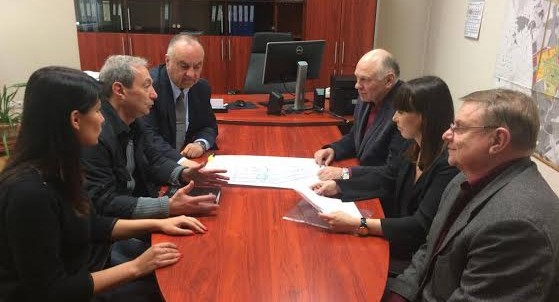
Gercas Žakas, chairman of the Kaunas Jewish Community and deputy chairman of the Lithuanian Jewish Religious Community, has met with the directors of the Cemetery Maintenance agency of the Kaunas municipality and the heads of the city’s maintenance department, during which they discussed Jewish cemeteries in Kaunas and maintenance and burial issues. The Jewish cemetery on H. ir O. Minkovskių street is at capacity and they confirmed the location for a new cemetery site. Žakas said he was satisfied by the productive meeting and was glad there had been such timely solutions to Jewish heritage and Jewish cemetery issues recently.

About Taverns, the Vilna Gaon and the Shared History of Lithuanians and Jews

by Nijolė Bulotaitė

American academic Glenn Dynner is teaching a module at the History Faculty of Vilnius University called “Socio-cultural History of Ethnic Minorities in the Central and Eastern European Context.” The professor specializes in the history of Eastern European Jews and has written several books, including “Men of Silk: The Hasidic Conquest of Polish Jewish Society” (Oxford University Press, 2008) and “Yankel’s Tavern: Jews, Liquor and Life in the Kingdom of Poland” (Oxford University Press, 2014). What prompted the professor to take an interest in taverns and Lithuanian and Polish Jews, and what has he discovered? We asked him those questions in Vilnius recently.

Q. Why Poland and Lithuania exactly? Was Jewish life here somehow special?

A. When I was a naïve American student, as soon as I started professor Antony Polonsky’s class at Brandeis University I learned the majority of the world’s Jews lived in Poland and Lithuania before the Holocaust. The professor was my doctoral dissertation supervisor later. I learned three quarters of the world’s Jews in the 19th century lived in Eastern and Central Europe. My problem was I didn’t know any languages. At first I had to learn Hebrew, then Polish, Yiddish and several more. Only then did all the rich sources become available to me. Not many Americans are able to do research in this area because the languages are rather difficult, and it’s difficult for us Americans to learn languages.

Full interview in Lithuanian here.

Litvaks Told No on Lithuanian Citizenship

VILNIUS, Apr 11, BNS–Jews and their descendants living in Israel and South Africa who left Lithuania in the interwar period have been receiving negative answers about restoration of Lithuanian citizenship for some time now.

Since November of 2015 the Lithuanian Migration Department has rejected the majority of applications for restoration of citizenship for people who left Lithuania in the 1920-1939 period and their descendants.

Under Lithuanian citizenship law, people who left Lithuania before March 11 of 1990 and acquired citizenship in a different country can be citizens of Lithuania, as can their descendants. About 1,000 Jews living in South Africa have taken advantage of the legal provision, but the process of citizenship restoration was suspended for some people in mid-2015.

Joint Visits Panevėžys

JointPan
JOINT atstovai lankosi Panevėžyje

AN event was held at the Panevėžys Jewish Community April 6 to welcome honored guests during their brief visit. One of them, Lee Seidler, arrived with his family. American Joint Distribution Committee director Diana Fiedotin and JDC representative in the Baltic states Moni Beniosev also came and took an interest in the history of the Jews of Panevėžys, visited Jewish sites and viewed the stele on Zikaro street, which was named Joint Street in 1923 in honor of the Joint Distribution Committee.

Remembering Jewish Vilna in Painting

Vilnius topografija

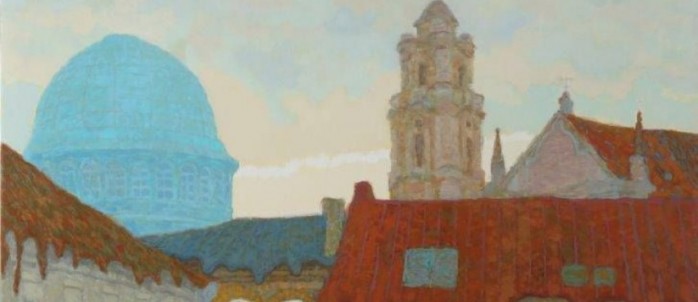
The catalog of the exhibit of Lithuanian painting and photographs called “Zakhor. Remember. Topography of Images of Jewish Vilnius” will be launched at the Lithuanian Jewish Community at 7:00 P.M. on Thursday, April 14. The catalog and exhibit are the work of curators Linas Liandzbergis, Elke-Vera Kotowski and Gabrielė Žaidytė. The exhibit has been at show at the Old Town Hall in Vilnius and at the Konrad Adenauer Foundation in Berlin.

From May to August the exhibit will grace the halls of the Cape Town Jewish Museum and the Johannesburg Holocaust Museum in South Africa, then travelling on to Israel, Argentina and other destinations where sizeable populations of Litvaks live. The presentation, to be attended by Dr. Julius Schoeps, director of the Moses Mendelssohn Center and the Center for Jewish Studies Berlin-Brandenburg, is also to include a short film documenting earlier showings of the exhibit. Improvisational jazz is to be performed at the presentation by Lithuanian musician Kęstutis Vaiginis.

New Book on Litvak Art in Private Hands

TMP000_470

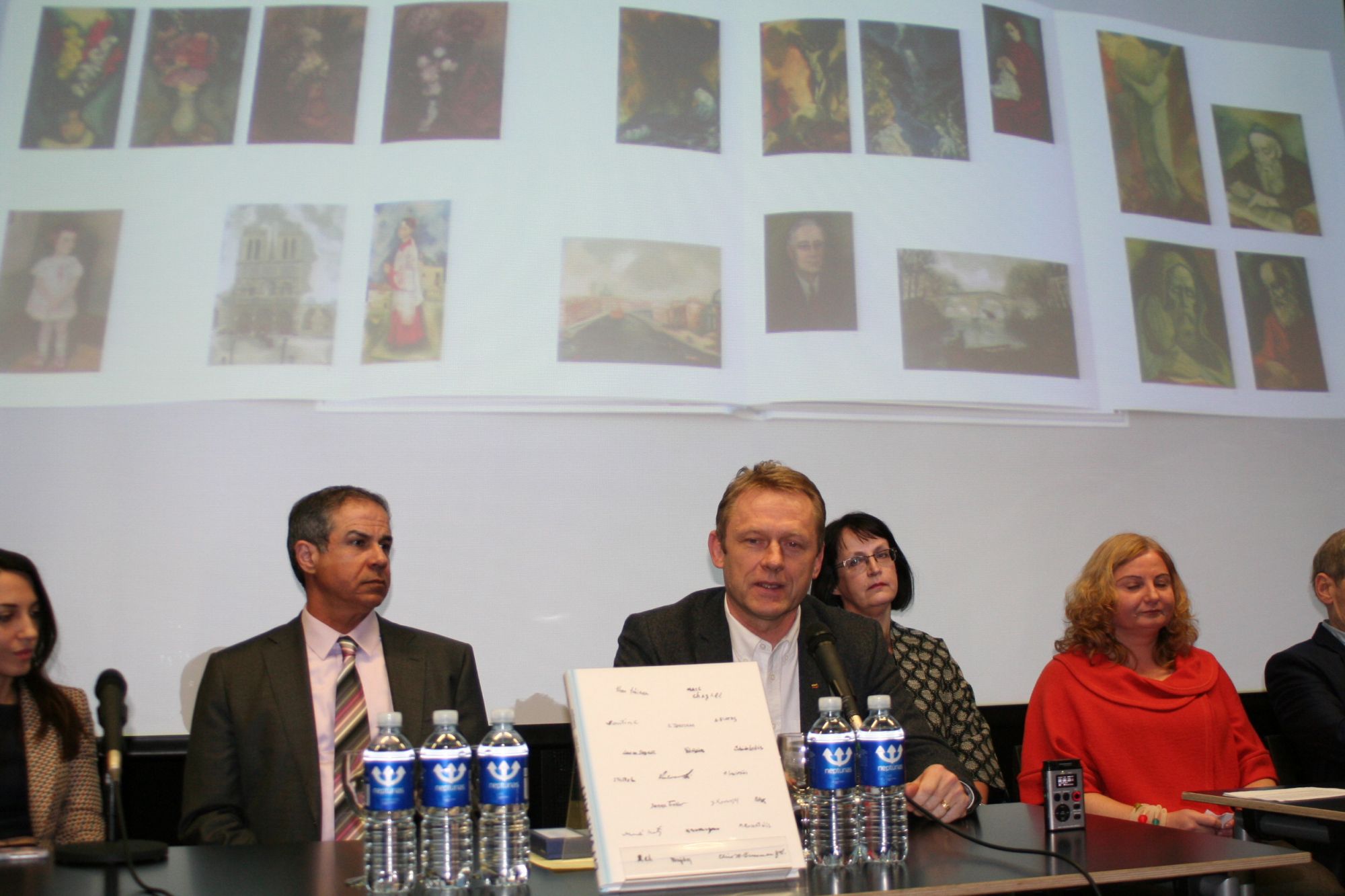
A new book/catalogue called “Litvakų dailė privačiose Lietuvos kolekcijose” [Litvak Art in Private Lithuanian Collections] was presented at the National Art Gallery on April 5. The book is bilingual in Lithuanian and English, and contains about 250 works by 44 Litvak artists, including paintings, water colors and sculpture, many of which have never been seen by the public before. The publication is the fruit of exhaustive research by Dr. Vilma Gradinskaitė, an historian at the Vilna Gaon State Jewish Museum’s History Department.

Lithuanian minister of culture Šarūnas Birutis spoke at the book launch and said: “This serious album spans more than 150 years from the mid-1800s to current artists working within the Litvak artistic tradition. I hope this publication will interest the broader public as well as professionals, hooking the reader and reminding us of the names and works of little-known and forgotten artists.” He said it was the only book in Lithuania which so broadly and comprehensively surveys Litvak ark, graphics and sculpture held in private collections.

litvak art

International Meeting of Young Rabbis at Panevėžys Jewish Community

rabinaiP

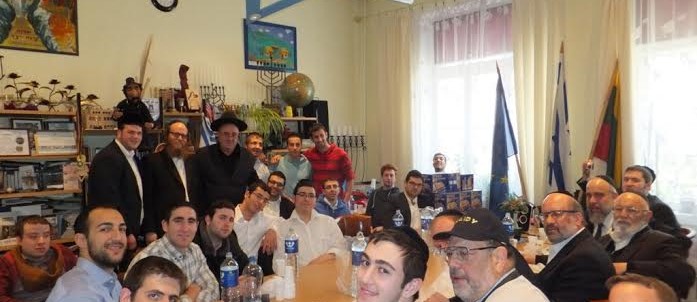
Two groups of young rabbis from Canada, England, France, Israel, Japan and the United States came to the Panevėžys Jewish Community April 7, interested in Jewish life before World War II and now. The first group was led by Rabbi Meir Wunder, who leads trips by high school students to Panevėžys annually. The young people were interested in the life of Rabbi Yosef Shlomo Kahaneman.

Kahaneman was born in the village of Kuliai in 1886 and studied at the yehsivas in Plungė and Telšiai before going on to the yeshiva in Novogrudok, now in Belarus. He became yeshiva director. He lived with his family in Panevėžys from 1919 to 1940. In 1923 he became a Lithuanian MP. In Panevėžys he set up a poorhouse, an orphanage and the Yavne Jewish religious school for girls, and headed the yeshiva. Later he and his son moved to Israel where he continued to maintain Litvak religious traditions. On the wall of an orphanage he founded are the names of the yeshivas of Lithuania. The Panevėžys yeshiva was also restored in 1919 due to his efforts.

rabinaiP1

The second group was led by Rabbi Tuvia Konn and Rabbi Nesivos Tours. They spoke about how they had heard of the Bokhrim yeshiva and became interested in the city of Panevėžys, and when there was opportunity to visit, they gladly came in search of their roots. They visited Jewish sites in Panevėžys and viewed a film about the history of the Jews of Panevėžys which they said opened a window onto the past.

Documentary Filmmaker Visits Panevėžys Jewish Communtiy

filmavimas

A documentary film crew shot footage at the Panevėžys Jewish Community April 8 for a new film about Panevėžys Jewish architecture before World War II. Panevėžys Jewish Community chairman Gennady Kofman spoke about the history of Panevėžys Jews to an audience of the director and guests from the Margarita Rimkevičaitė Technical School.

Slobodka Cemetery and Seventh Fort Mass Murder Site in Kaunas to be Cleaned Up

Viljam1

Following a meeting between the Israeli ambassador and the mayor and city council of Kaunas in early March, on the first Friday in April the Kaunas deputy mayors, municipal staff and the chairman of the Kaunas Jewish Community visited the Jewish cemetery in the Slobodka neighborhood [Vilijampolė] and the mass grave at the Seventh Fort. During this meeting in the field, it was resolved that the municipal body Kapinių priežiūra [Cemetery Maintenance] would set up an information stand at the entrance to the Slobodka cemetery and would post signs forbidding cars, smoking, walking dogs and lighting fires there.

Another resolution was adopted for the Seventh Fort mass murder site: the city maintenance department (represented by Jolanta Miliauskienė) is to clean up the site (clean flagstones and collect garbage) around the monument to the Jews murdered there. The environmental department (represented by Radeta Savickienė) is to cut down trees and bushes according to a request drafted by cultural heritage department head Saulius Rimas which includes a photograph showing what is to be cut down and with the consent of Gercas Žakas, chairman of the Kaunas Jewish Community.

Old Prescriptions from the Interwar Period Recall the Kukliansky Pharmacy in Veisiejai

Receptas2

Danutė Selčinskaja, director of the Rescuers and Commemoration Department of the Vilna Gaon State Jewish Museum, has sent us an image of a new item worthy of display at a museum: prescriptions from the Kukliansky Pharmacy which operated in the period between the wars. This pharmacy, the only one in Veisiejai, Lithuania, operated right up until the Holocaust. The pharmacists managed to escape and were rescued by people from Sventijanskas. At the present time there is a Veisiejai Regional History Museum operating in Veisiejai. Museum director Regina Kaveckienė scanned two new items, prescriptions, which were brought to the museum by a relative of an elderly female pharmacist from the town who is no longer alive.

Danutė Selčinskaja sent the regional history museum the Vilna Gaon museum’s mobile exhibit “The Rescued Child Tells the Story…” which she created. This includes a film about the rescue of the Kukliansky family. The regional history museum shows the film to students every year. A young woman from the Kapčiamiestis School Museum who lives with her parents in Sventijanskas said everyone there had already seen the film, which is being passed around as a DVD from person to person, and it has caused a great deal of excitement there. The people understand what happened and recognize the people and places portrayed in the film.

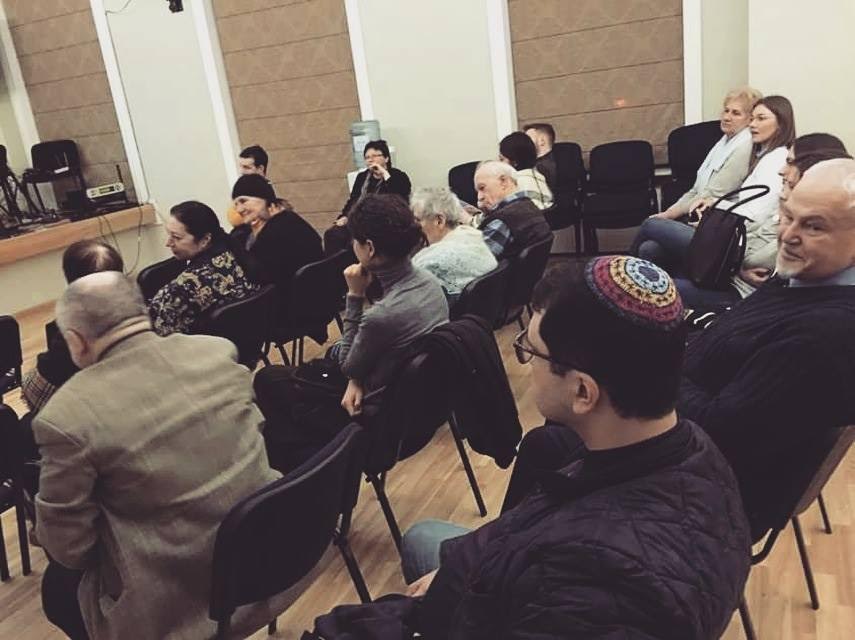
Rabbi Isaacson Speaks at Screening of Film “Kaddish”

filmas3

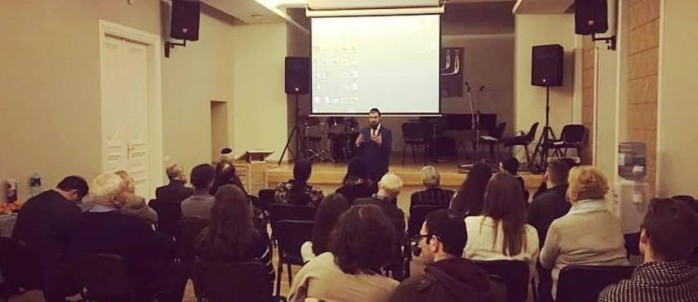
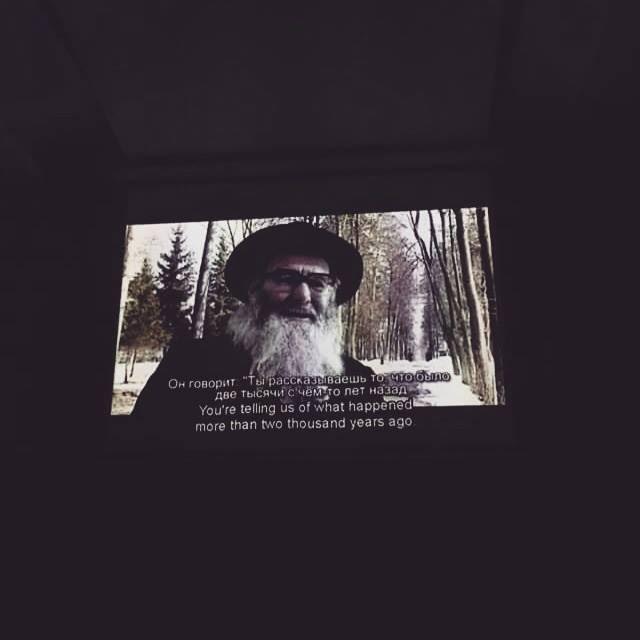
The film club of the Lithuanian Jewish Student Union screened the film “Kaddish” on March 10, an event during which the public was able to meet one of Lithuania’s newest rabbis, Rabbi Samson Daniel Isaacson. Before the film started, Rabbi Isaacson gave a short talk welcoming the audience and telling about the film made by a friend of his. Kaddish is the story of Rabbi Yitzhak Yosef Zilber, born in Russia in 1917 (died 2003, a Russian, later Israeli Haredi rabbi and a leader of the Russian baal teshuva movement, author of several books, Russian Israeli religious authority). Zilber studied Judaism privately, at home, because his father Ben-Tzion Haim Zilber (originally Tsiyuni) refused to allow him to attend ant-religious Soviet schools.
rabinas zilberis

At the age of 15 he began to teach Judaism in his hometown of Kazan, although it was illegal under Soviet law to do so. After a life filled with hardship, oppression by the Soviets and incarceration in the gulag, he and his family were finally allowed to leave the USSR for Israel in 1972, where he continued to teach, practice traditions and attract a large group of young people.

Discussion followed the screening of the film as audience members asked the rabbi questions and he responded. The several dozen members of the audience and the rabbi were treated to snacks and tea after the discussion, allowing people to get to know the rabbi better in a somewhat informal setting.

filmas2

Lithuania to Investigate Jewish Treasures Stolen by Nazis

March 23, BNS–Investigation into cultural treasures the Nazis stole from Jews in Lithuania has begun, the newspaper Lietuvos žinios reports.

Last week a meeting of the International Commission for Assessing the Crimes of the Nazi and Soviet Occupational Regimes in Lithuania reached agreement on conducting several large studies, commission chairman Emanuelis Zingeris confirmed. He said the Rosenberg task force drew up lists of rare and valuable items held by Jewish organizations, libraries and museums before the war even started. “So we’re asking for additional research, which is being performed by researchers in Lithuania and abroad. I believe we will approach the German Government on with a request for clarification, because there shouldn’t be any lingering doubts regarding this,” Zingeris said.

He also spoke about the items listed in the book “Lietuvos inkunabulai” [Incunabula of Lithuania] by Nojus Feigelmanas from the Strashun library in Vilnius. “There are clear indications there were four incunabula in this library in Hebrew which the Germans took. The incunabula were printed in an Italian city in 1475. They are priceless,” Zingeris commented. His commission’s work was resumed by presidential decree in the fall of 2012. After a break of eight years, the renewed commission met again in 2013. As reported at that time, the commission only discussed technical and financial issues at that meeting. The chairman said the subcommittee investigating crimes of the Soviet occupational regime would meet in early summer this year.

BNS_logotipas