
Heritage

Headstone Fragments Returned to Jewish Cemetery

Paminkliniai akmenys pagarbiai sugrįžta į senąsias Žydų kapines Olandų gatvėje

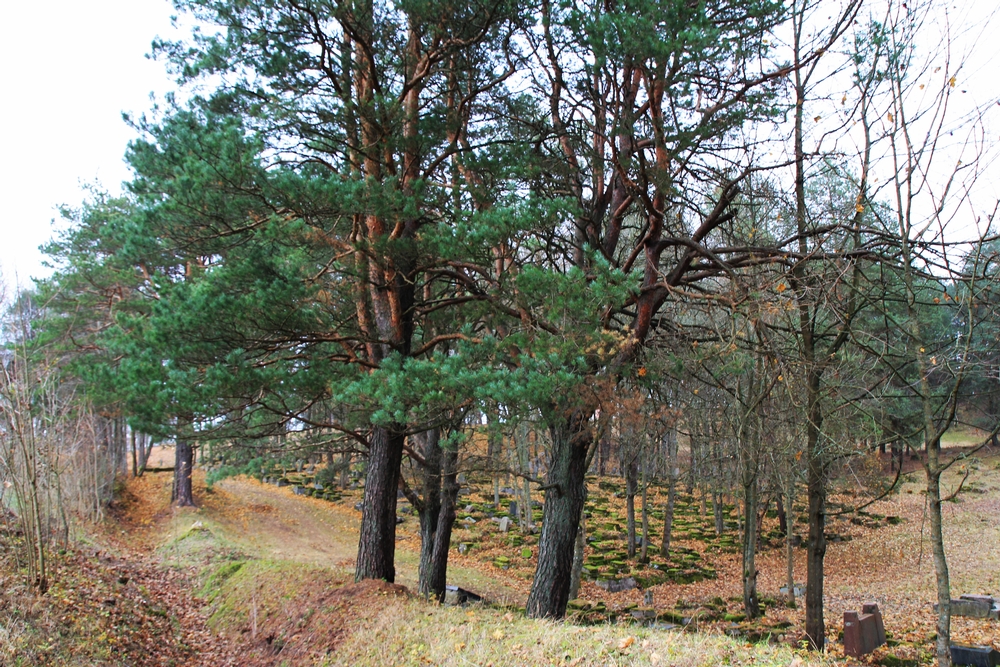
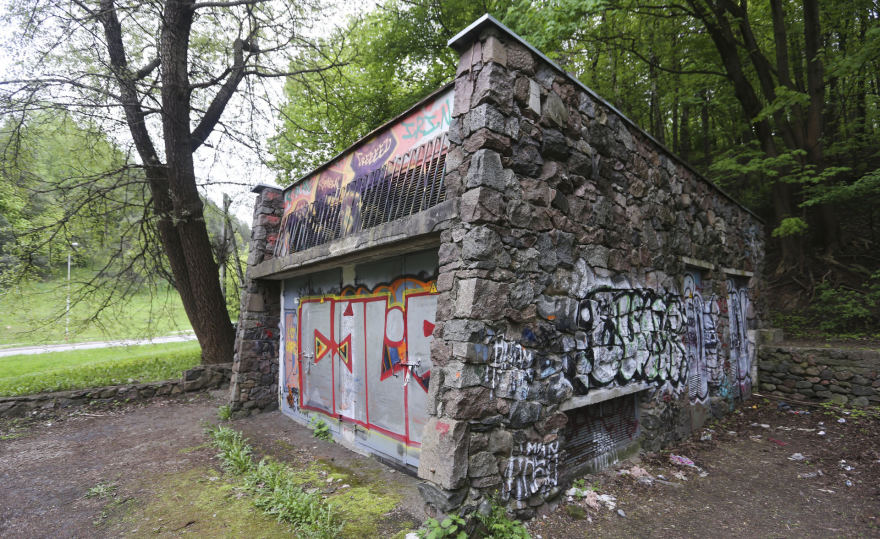
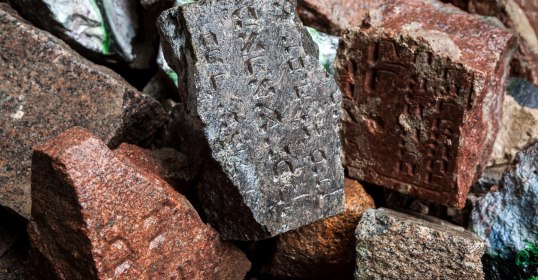
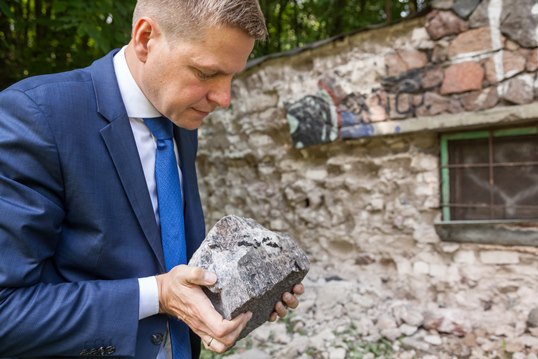
Fragments of Jewish headstones, removed from a transformer substation and other locations in Vilnius where they were used as construction material by the Soviets, have been returned to a Jewish cemetery in the Lithuanian capital. The city municipality this week ordered all fragments, both with legible fragments of inscriptions and without, to be removed to a clearing at the former Jewish cemetery on Olandų street. The move begun today was supervised by architects and representatives of the municipality, the Cultural Heritage Department, the Lithuanian Jewish Community and the Verkiai and Pavilniai Regional Park administration.

Photos by Martynas Užpelkis, heritage protection expert, Lithuanian Jewish Community

“It’s clear that it was time long ago to make sure Jewish gravestones be returned with dignity to the old Jewish cemetery and that such examples of the barbarism of the Soviet regime no longer remain in the city. Today I am glad that these thoughts have turned into concrete deeds: the city has renovated a vast territory of the old cemetery, and slowly alleys and paths have emerged there, and now the commemorative stones are being returned with dignity to the renovated territory. There has been exemplary and very constructive cooperation with the Jewish community and different institutions, and even though we haven’t had great resources, we’ve managed to find solutions which allow us to show due respect to the memory of the dead and testify to our values and culture,” Vilnius mayor Remigijus Šimašius said.
Šimašius Akmenys


Full story in Lithuanian here.

March to Commemorate Murdered Jews of Molėtai, Lithuania on August 29

A march to commemorate the 75th anniversary of the mass murder of the Jews of Molėtai is scheduled for August 29 in Molėtai, Lithuania.

There will be a conference and exhibit at the Molėtai Art Gallery at 3:00 P.M.

A procession will then walk down Vilniaus street in Molėtai at 4:00 P.M.

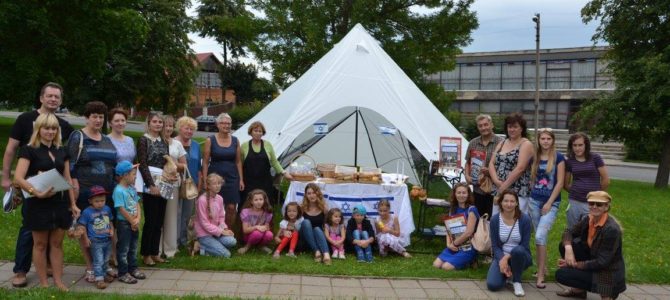
Unveiling of a monument by Davidas Zundelovičius follows at 5:00 P.M. at the mass murder site and mass grave of the Jews of Molėtai. Teachers Ela Pavinskienė and Roza Bieliauskienė of the Sholem Aleichem Gymnasium in Vilnius have organized an exhibit about cleaning up the old Jewish cemetery in Molėtai with photographs by Yehuda Vagner and Maceva volunteer Marius Lukoševičius.

Keeping the Faith in Vilnius

VilnaFaina
photo © Delfi/K. Cachovskis

Ellen Cassedy, author of We Are Here: Memories of the Lithuanian Holocaust (ellencassedy.com), has written about the Lithuanian Jewish Community and the Bagel Shop initiative.

Amit Belaite adores the long ode to the city of Vilna that was penned by writer and poet Moyshe Kulbak 90 years ago. Lines from the poem about Vilna’s stones and streets were running through her head on a warm summer afternoon as she led a walking tour through the narrow, winding streets of the city now known as Vilnius, the capital of the small Baltic nation of Lithuania.

Belaite, 23, heads the Lithuanian Union of Jewish Students. When she posted the announcement for the group’s tour of Jewish Vilnius, she expected a couple of dozen people to be interested. To her amazement, 400 signed up, many of them non-Jews.

“People know the city is rich in Jewish history,” she said. “They feel a big need to learn about it.”

En Plein Air Outdoor Painting Workshop at Įlanka Farm in Šaukšteliškiai Village

Plenerassu R.Savick2

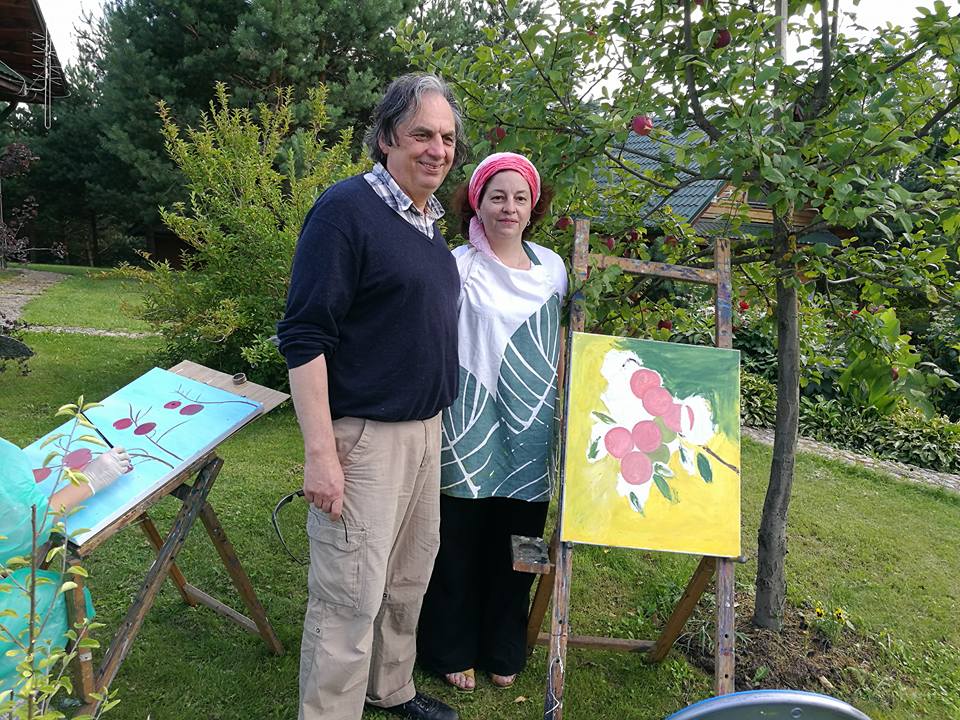
Another outdoor painting workshop, or “plein air,” took place from August 8 to 14 at the Įlanka farmstead in Šaukšteliškiai village in the Molėtai region of Lithuania, organized by the Lithuanian Jewish Community. Participants stayed in and painted a scenic natural location where the surrounding lake, skies and fresh air inspired creativity. The program included ceramics as well as painting and featured professional teachers and lecturers and a significant recreational component. Participants included two recognized Lithuanian folk artists.

Lithuanian and Japanese Cities Join in Commemorating Righteous Gentile

Pasaulio tautų teisuolio atminimas sujungė Japonijos ir Lietuvos miestus ir žmones

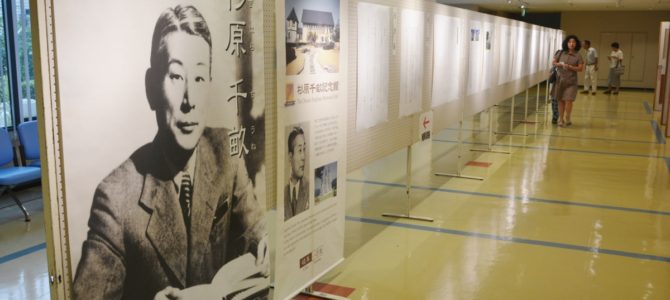
Events to commemorate Chiune Sugihara, Japanese WWII-era consul in Kaunas and a Lithuanian festival were held in Sugihara’s hometown of Yaotsu, Japan, from July 31 to August 7.

Sugihara rescued thousands of Lithuanian Jews from the Holocaust and has been recognized as a Righteous Gentile and awarded the status of Righteous among the Nations by the Yad Vashem Holocaust memorial authority in Israel.

The week of commemorations was opened by the signing of a memorandum of cooperation by Yaotsu mayor Masanori Kaneko and Kaunas municipality representative Inga Pukelytė.

Acting Lithuanian ambassador to Japan Violeta Gaižauskaitė noted the events came on the 25th anniversary of the restoration of diplomatic ties between Japan and Lithuania and characterized ties between the people of Japan and Lithuania as sincere, and relations btween the two nations friendly. She also said both countries were dedicated to preserving the memory of the noble Japanese diplomat for future generations.

Commemoration of the Holocaust in Šeduva, Lithuania

UPDATE: Event organizers are providing transport from Vilnius and several free seats are left! Please register for a place before August 23 by sending an email to info@lostshtetl.com

You are invited to an event to commemorate the Šeduva Jewish community murdered in the Holocaust. The event is on on August 30 and will be a kaddish at the 3 mass murder sites and the old Šeduva Jewish cemetery.

Commemorative program

9:00–9:30 Kaddish at the Jewish mass murder site in Pakuteniai forest
https://goo.gl/maps/tdN5Y3mrWJw

9:45–10:15 Kaddish at Liaudiškiai Jewish mass murder site I
https://goo.gl/maps/fhjnq5ubSfk

10:30–11:00 Kaddish at Liaudiškiai Jewish mass murder site II
https://goo.gl/maps/mYLnGLUmVuK2

11:15–11:45 Kaddish at the Šeduva Jewish cemetery
https://goo.gl/maps/ZuHGdK9EHvF2

12:00–12:30 Coffee break at the Šeduva Culture and Crafts Center

12:45-1:30 Mass at the Holy Apparition of the Cross Church in Šeduva

1:30–2:15 Yiddish song concert by Rafailas Karpis and Darius Mažintas at the church in Šeduva

Download PDF format event program

More here.

Lithuanian Debut at the Olympics: The Isaac Anolik Story

by D. Baranauskaitė
manoteises.lt

“All riders have reached the finish line and the injured have been brought by automobile, but we haven’t seen Mr. Anolik and he isn’t found among the injured. Everyone has left. The stadium is empty, but he’s still not here. Asked by telephone, all the checkpoints reported they didn’t know and that there was not a single cyclist left on the route. He only came back at 11 at night, cold and hungry.”

This is how the newspaper Sportas reported the debut of the Lithuanian state at the Olympic Games in 1924. The subject of the report, Isaac Anolik, was a Lithuanian athlete of Jewish origins and the country’s cycling champion many times over. His accomplishments didn’t matter during the Holocaust. The leading Lithuanian cyclist was shot at the Ninth Fort.

isakas-anolikas-395x480

Full story in Lithuanian here.
Clarification

To whom it may concern,

In light of Mr. Gary Eisenberg’s recent article about Lithuanian citizenship for Litvaks published in Israel and South Africa, the Lithuanian Jewish Community states for the record:

1. There is no special legislation or program for recruiting Litvaks for Lithuanian citizenship. This is disinformation. The existing legislation on applications for Lithuanian citizenship by prewar citizens of Lithuania and their offspring was only reworded slightly to prevent misinterpretations of the intent of legislators by public servants to the detriment of Jewish applicants and applicants of other ethnicities. As far as we are aware, there is no “Lithuanian Citizenship Programme” for Litvaks in Lithuania or anywhere else, despite what was written in Mr. Eisenberg’s article.

2. The Lithuanian Jewish Community and the Choral Synagogue in Vilnius with the Vilnius Religious Jewish Community are firm followers of the traditions of the Vilna Gaon and have nothing to do with Chabad Lubavitch or their rabbi. We have a rabbinate of two rabbis who are firmly within the mitnagedic tradition. Mr. Eisenberg’s statements he celebrated Sabbath with Chabad Lubavitch Rabbi Krinsky, followed by the statement he visited the Choral Synagogue, could mislead some readers into thinking the Choral Synagogue in Vilnius is a Chabad Lubavitch center, which it is not.

Sincerely,

Faina Kuklianskay, attorney,
chairwoman,
Lithuanian Jewish Community

Summer Camp in Švenčionys

IMG_4003

This summer in August, a two-week international camp is being organised in Švenčionys. Our goal is to clean the old Jewish Švenčionys cemetery, remove trash, document gravestones and discover what we are able about Švenčionys Jewish history. We will be teaching our volunteers about Litvak culture, history and Jewish burial traditions in general.

The old Jewish Švenčionys cemetery is one of the oldest Jewish burial places in Lithuania, dating back to the 17th century. The cemetery covers approximately 39,670 sq. meters (47,445 square yards) with existing gravestones estimated to number in the thousands. The number was higher prior to the Holocaust when gravestones were stolen for use in local construction, including for the construction of a horse stable. Much of the remaining cemetery was desecrated. In 1993, the stables were taken apart and many stones returned to the cemetery, and a remembrance monument was built.

Many ornate gravestones survive from the period 1900- 1930, and their condition varies. Many, if not most, are in fragile condition and need urgent repair and restoration.
We do not have data defining dates for the cemetery, we hope to discover that during our work.

The camp is organised in partnership with Action Reconciliation Service for Peace

http://www.actionreconciliation.org/

and will be our second joint project in consecutive years. We expect between 10-15 youngsters will visit Lithuania from Germany and other countries, to volunteer in this effort. More information can be found at https://www.asf-ev.de/en/summer-camps/activities/lithuania.html

If you are interested in the project and/or have any questions, please contact us via info@litvak-cemetery.info or sandra@litvak-cemetery.info

From http://www.litvak-cemetery.info/events/summer-camp-in-svencionys

Note: although the camp started today, there are still free spaces for interested volunteers, with housing and three meals per day provided. Please contact the email addresses above for more information.

Event in Dieveniškės to Commemorate Regional Jewish History

Dieveniškėse vyko renginiai, skirti regiono žydų istorijai

On August 4 Lithuanian Jewish Community representatives sold traditional Litvak bagels and sweets and spoke about Jewish tradition under the aegis of the LJC Bagel Shop Café at the Dieveniškės town square. The bagels quickly disappeared but local residents stuck around for the events to commemorate regional Jewish history.

The Dieveniškės Technological and Business School hosted the lectures “Jewish Funeral and Cemetery Traditions” and “Synagogues: How They’re Built, What Happens in Them and Why.” Participants manufactured models of synagogues from cardboard and other materials, and bricks made of clay to mark the locations of former Jewish buildings.

Lithuanian Citizenship for Litvaks

According to various reports in the Israeli media, there has been a sharp increase in South African Litvak applications for Lithuanian citizenship.

Some authors have even mentioned some sort of “Lithuanian Citizenship Programme,” whose existence is unknown to the Lithuanian Jewish Community.

Because of the seemingly increased interest, we are placing some of our earlier reporting back at the top of page one of the English version of the webpage.

We would like to take this opportunity to remind readers the amendment to the Lithuanian law on citizenship, the initiative of both the Lithuanian Jewish Community and the Lithuanian parliament, only removed and changed language which might have led to discrimination against Jews and Litvaks by individual public servants. There is no language about welcoming Litvaks with open arms, unfortunately. The amended law only levels the playing field to make sure Litvaks are treated equally with ethnic Lithuanians and others in the application process.

While the law doesn’t express welcoming Litvaks with open arms, the Lithuanian Jewish Community does welcome Litvaks from around the world, including South Africa, to become members, and does support Litvaks’ bids for Lithuanian citizenship. It has been our honor to have played a part in the amended legislation signed into law by the president of Lithuania last month.

Maya Pennington at the Lithuanian Jewish Community Thursday

mayapenn

Maya Pennington and the Hive!

Come… Hear… Fall in Love!

At 6:00 P.M. this Thursday, August 4, at the Lithuanian Jewish Community (Pylimo street no. 4, Vilnius)

About Maya

Singer, actress, composer.

Born in Jerusalem, Maya began learning music when she was 5. She graduated from the Ruben Academy for music and dance High School (majoring in Baroque flute), later studyied jazz voice and multi-disciplinary composition at the Academy of Music and Rimon. In order to supplement her acting training, she took part in courses held by Sadna’ot Habama with teachers from the Royal Academy of Music and Guildford and with teachers specializing in various acting methods. She toured internationally with the a cappella group Voca People (2009-2013), and performed as a soloist with a wide variety of performances, ranging from several performances with the Be’er Sheva sinfonietta to the international Red Sea Jazz Festival 2008, the Jerusalem Jazz Festival 2006, etc. and as a recording artist on several albums, including Ittai Rosenbaum’s “Between Waters and Waters” (2009).

Polish Constitutional Court Upholds Restrictive Restitution Law

Dear Friend,

Today we received disappointing news from the Polish Constitutional Tribunal. The Court affirmed the constitutionality of a law passed by the Polish Parliament that limits the rights of claimants to restitution for private property in Warsaw.

Please see the below article from today’s New York Times describing the law and its implications. This article, as well as other media stories, have highlighted our position. Hebrew speakers may also read this article on Ynet.

The World Jewish Restitution Organization wrote to then-President Bronisław Komorowski last year asking him not to sign the legislation. President Komorowski agreed, and sent the law to the Constitutional Tribunal. WJRO submitted a “friend of court” brief urging the Court to declare the law unconstitutional for violating former owners’ rights.

Sulamita Lermanaitė-Gelpernienė Would Be 90 Tomorrow

Antanas Sutkus
photo: Antanas Sutkus

Sulamita Lermanaitė-Gelpernienė would have celebrated her 90th birthday tomorrow, July 28. People who knew her remember her.

§§§

…After being graduated from the Vilnius Conservatory, she became a pianist, a concert performer and a concert master at the Lithuanian Conservatory.

Lithuanian Music Academy professor and cathedral head Leonidas Melnikas told [the magazine] Muzikos Barai about Sulamita Lermanaitė-Gelpernienė whom he met when he went to work at the Music Academy as a young man. The professor spoke with the reporter Asta Linkevičiūtė. An excerpt is provided below.

What sort of person, colleague, fellow worker was she?

This was a person to whom you could always go to ask for help of a professional nature, whom you could ask about something, who always sincerely offered advice. She gave advice on how to come up with a repertoire, what material to teach during the school year, how to educate students. Professional communication with her was important human communication and also very pleasant. She was an active member of the cathedral, a real patriot of the collective, she was a fan of the cathedral and the students. The people around Gelpernienė always felt her attentiveness, interest and support.

LJC Statement about the Seventh Fort in Kaunas

Statement by the Lithuanian Jewish Community concerning Cnaan Liphshiz’s article “This Lithuanian Concentration Camp Is Now a Wedding Venue” published at http://www.jta.org/2016/07/24/news-opinion/world/lithuanian-concentration-camp-is-now-a-wedding-venue

The Lithuanian Jewish Community thanks the author of the article and the news agency who have again brought attention to the problematic situation at the Seventh Fort in Kaunas. We also feel it is our duty to explain and add to some of the facts and circumstances brought up in the article.

In June and July of 1941 a concentration camp was set up at the Seventh Fort where up to 5,000 people were murdered, mainly Jews resident in Kaunas. During the Soviet era the fort was used for military purposes and the exact location of the mass grave was unknown and inaccessible to the wider public. In 2009 the Lithuanian State Property Fund, which had ownership of the complex, allowed it to be privatized. The Lithuanian Jewish Community never approved of this decision and numerous times wee expressed our position that this was a huge mistake which couldn’t be allowed to happen at similar sites. In any event, after the fort buildings were privatized, the new owner, Karo paveldo centras [Military Heritage Center], received the right to lease the land around the buildings, which belongs to the state. The mass grave site, whose exact location was not known then, thus fell within territory controlled by a private corporate entity.

Work Continues to Remove Jewish Headstones from Power Station

transformatorine-olandu-gatveje-5550721510382
The transformer substation before removal work began. Photo by Lukas Balandis, courtesy 15min.lt

More than a year after a Vilnius resident reported his discovery an electric substation on Olandų street was constructed using Jewish gravestones, and following the announcement this June removal work had begun, the site is now littered with bits of headstones partially surrounded by a simple wire fence and some plastic tape. Most of the fragments are marked with graffiti on at least one surface, and several piles of larger pieces contain partial inscriptions in Hebrew characters, see pictures below.

Israeli Media Report on Parties at Seventh Fort in Kaunas

7thfort

Vilnius, July 25, BNS—Parties held at the Seventh Fort in Kaunas have received attention by the media in Israel following efforts last year to resolve conflicts between the fort’s owners and Jews concerned about the Jewish mass grave discovered there several years ago.

Cultural heritage protection specialists say there haven’t been any complaints recently about unethical activities at the Seventh Fort, and Lithuanian Jewish Community chairwoman Faina Kukliansky said the Israeli press was just bringing up “old stories.”

Discussion of entertainment events at the Seventh Fort came up last year when the Cultural Heritage Department sent the fort’s owners a letter calling upon them not to hold celebrations, games or similar events there.

An article in the Jerusalem Post Monday told the story of the fort’s privatization, the fee charged visitors to the museum territory there and parties held there despite the discovery there in 2011 of a Jewish mass grave.

The article said the Seventh Fort is a popular venue for graduation parties and wedding receptions and the space is available to be used for parties, for cooking on campfires and to host summer camps for children.

This Lithuanian Concentration Camp is Now a Wedding Venue

CROP2-1
A film crew preparing to record at the former concentration camp known as the Seventh Fort in Kaunas, Lithuania, on July 12, 2016. (JTA/Cnaan Liphshiz)

KAUNAS, Lithuania (JTA) — In this drab city 55 miles west of Vilnius, there are few heritage sites as mysterious and lovely looking as the Seventh Fort.

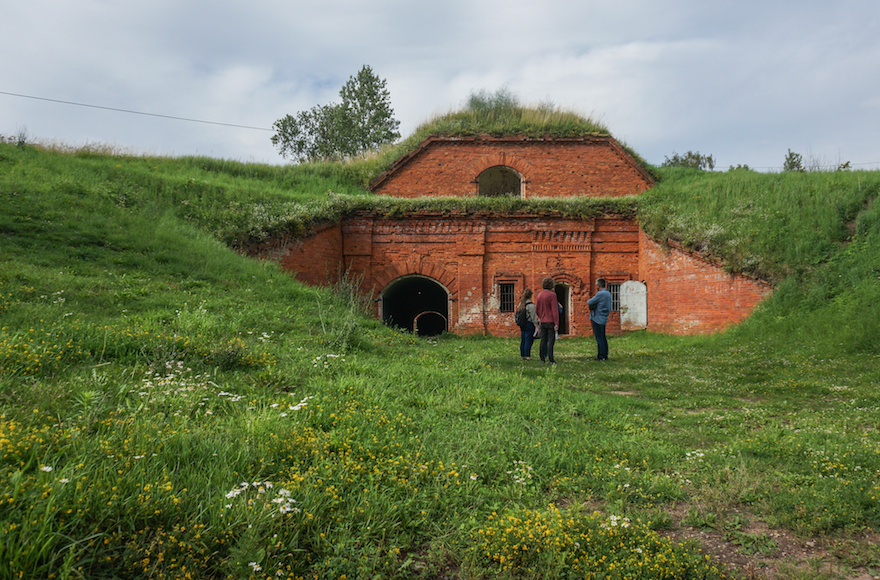
This 18-acre red-brick bunker complex, which dates to 1882, features massive underground passages that connect its halls and chambers. Above ground, the hilltop fortress is carpeted with lush grass and flowers whose yellow blooms attract bees and songbirds along with families who come here to frolic in the brief Baltic summer.

It’s also a popular venue for graduation parties and wedding receptions, complete with buffets and barbecues, as well as summer camps for children who enjoy the elaborate treasure hunts around the premises.

Most of the visitors are unaware that they are playing, dining and celebrating at a former concentration camp.