

Heritage

Wooden Synagogues: Lithuania’s Unique Ethnic Architectural Legacy

Medinės sinagogos – unikalus etninės Lietuvos architektūros paveldas

The relicts of the Jewish cultural landscape created over more than 600 years in cities, towns and villages throughout Lithuania can be placed in four categories: mass murder sites; cemeteries; synagogues and other heritage buildings; monuments and other commemorative markers. Martynas Užpelkis, Lithuanian Jewish Community heritage protection expert delivering a lecture at an event dedicated to the European Day of Jewish Culture, said: “The Lithuanian Jewish Community, almost exterminated during the Holocaust, is not able to maintain and protect heritage sites throughout Lithuania alone today. The role of the Lithuanian state and municipal institutions, NGOs and citizens is crucial. Many challenges are arising, but great results have been achieved in cooperation with the Cultural Heritage Department and the municipalities.”

To what use should the synagogue buildings be put?

About 80 synagogues survive in Lithuania today, and 43 of them are listed on the register of cultural treasures. There are only two working synagogues and all other buildings are being put to other uses or are not being used at all. The LJC owns 13 synagogues and synagogue complexes. Most of the buildings are not in use and are in serious disrepair.
Gefilte Fish: Stuffed Fish, or Fish Ball? Secrets of the Litvak Kitchen Revealed

gefilte

by Dovilė Rūkaitė

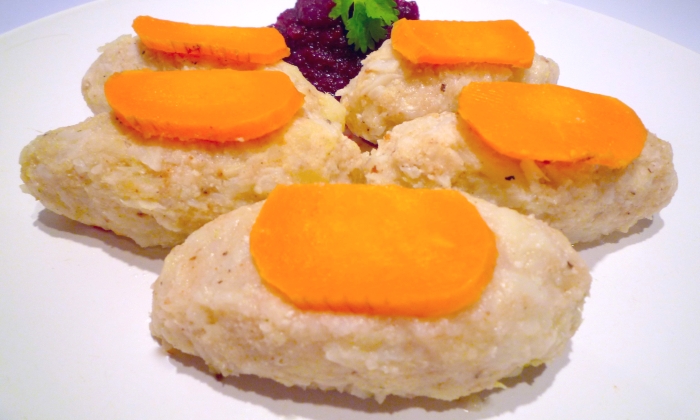
The issue of survival is an urgent one in the history of cuisine just as much as it is in the history of humanity. Do the fittest and most delicious survive? So what are we to make of the apparent success of this boiled ball, a brownish gray mass with a slice of carrot atop, either sweet or salty, framed by a pink jelly, or just as often with a sauce of indeterminate color? Gefilte fish is an established dish in world cuisine; in the kosher food section you can find several different types and it is an essential food during the holidays at European Jewish homes.

Gefilte fish is an Ashkenazi Jewish dish of epic proportions which has survived the challenges of the centuries remaining almost unchanged to the present time. Litvaks make this stuffed fish in the following way: the carp or trout is gutted, the bones are removed from, the fish fillet is combined with spices and the mixture is placed back within the skin of the fish or strips of it and boiled in a pot with carrots. The stuffed fish cools in the fish broth which gels into a jelly, is decorated with lateral slices of carrot and served with horseradish. Jewish housewives in Vilnius used to put bits of beet in the pot so the jelly would take on a pink color and a more interesting taste.

European Day of Jewish Culture 2016

European Day of Jewish Culture 2016
Vilnius speaks Yiddish again!

Sunday, September 4, 2016
Lithuanian Jewish Community, Pylimo street No. 4, Vilnius, September 4

Program:

10:00 Bagel breakfast Boker Tov-בוקר טוב – A guten morgn – Labas rytas!
Location: Bagel Shop Café, Pylimo street No. 4, Vilnius

11:00-11:45 Hebrew lessons for kids and parents with Ruth Reches, author of the Illustrated Dictionary of Hebrew and Lithuanian for Beginners, registration required
Meet at the Bagel Shop Café, Pylimo street No. 4, Vilnius

12:00-12:45 Rakija Klezmer Orkestar performance
Location: White Hall, LJC

Learning about Jewish Heritage through Languages

Pažintis su žydų kultūros paveldu šiemet vyks pasitelkiant kalbas

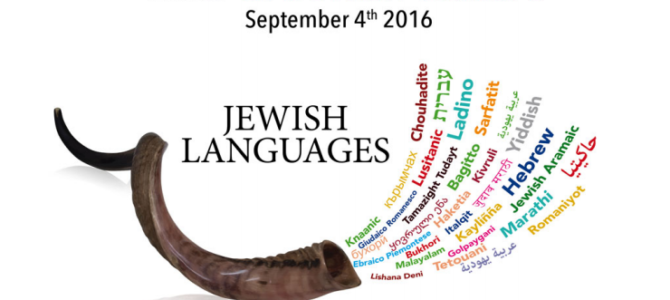
We invite you to participate in events scheduled throughout Lithuania for September 2 to 5 to celebrate the European Day of Jewish Culture. This year the theme is Jewish languages. Events will include the now almost traditional excursions and tours of Jewish heritage buildings with a focus this time on Hebrew language and calligraphy lessons, discussions, exhibits, concerts, educational games and even bagel breakfasts!

Diana Varnaitė, director of the Cultural Heritage Department under the Lithuanian Ministry of Culture, said: “We still have a significant amount of architectural heritage in Lithuania despite the intense destruction of Jewish material and intangible culture carried out during the Soviet era. Most of it, especially in Vilnius and the other larger cities of Lithuania, as a consequence of Sovietization, is still undiscovered, unrecognized and ‘unread.’ We invite you to take a look at our Jewish cultural heritage, to take it in and to understand that it is not just our past, but also an opportunity for the future. By educating the public and developing cultural tourism, we can slowly impart new vitality to our cities and towns.”

Full story in Lithuanian here.

Jewish Languages in Lithuania

by Akvilė Grigoravičiūtė, Germanic studies doctoral candidate, Sorbonne

We invite those interested in Lithuanian Jewish culture and heritage to participate in walking tours, attend exhibitions, meetings and concerts and take part in other cultural activities scheduled for Sunday, September 4. The point is to regain a portion of our own historical memory, to disrobe it from a mantle of suppression and to add color beyond black and white to a rather amicable and good-willed former life together.

Full story in Lithuanian here.

Vilnius Sholem Aleichem ORT Gymnasium Principal on New School Year

Vilniaus Šolomo Aleichemo ORT gimnazijos direktorius Miša Jakobas sveikina su naujaisiais mokslo metais

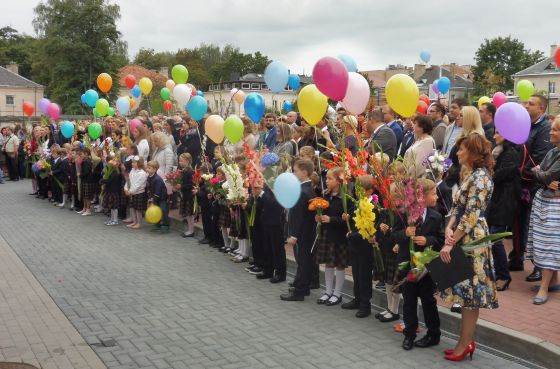
The first day of school, September 1, is a real holiday event for children, their parents and their teachers at the Sholem Aleichem school in Vilnius. This is the school’s second year in new premises renovated and built to the latest construction standards, located in the Žvėrynas neighborhood of Vilnius. This year there are 390 students. Principal Miša Jakobas says the large student body shows the school is an attractive one for city residents, and that people are talking about the school.

“In ratings of Lithuanian gymnasia, we take 17th place, and 5th in Vilnius. That’s a good indicator. We will work and strive, and competition is growing. The last school year was successful. Our graduates entered higher education and chose different subjects, including microbiology, chemistry, philology, engineering and technological fields,” he said.
ŠAmokykla

Kaunas Jewish Community Commemorates Holocaust Victims in Kėdainiai

Kauno žydų bendruomenė pagerbė Holokausto aukas Kėdainiuose

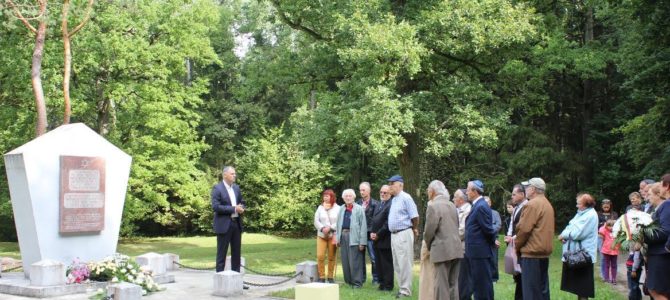
Members of the Kaunas Jewish Community commemorated Holocaust victims at a ceremony held in Kėdainiai, Lithuania. Some come from Kaunas every year to commemorate the dead in Kėdainiai. The families and relatives of Aleksandras Meškauskas and Israelis Kaganas lie buried in the mass grave.

Kedainiai

Kaunas community members walked through the historic old town section of Kėdainiai where there are many reminders of the large Jewish community who lived here before the Holocaust. They met Kėdainiai Tolerance Center representative Giedrė Kurovienė and thanked her for preserving memory and for taking such good care of the memorial site.

The Life of Jacques Lipchitz in Sculpture

Žako Lipšico gyvenimas skulptūroje

by Ieva Šadzevičienė

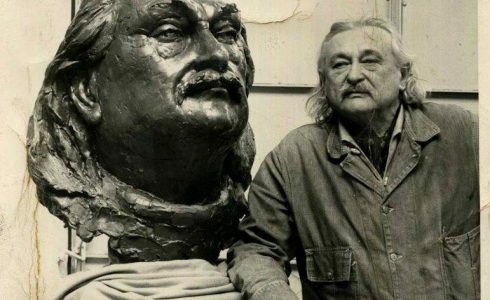
Jacques Lipchitz, a sculptor whose name became synonymous with cubism and who later invented his own baroque cubist style is without dispute one of the most famous artists to have lived in Lithuania. He was born in Druskininkai to a Litvak family in 1891 and has always been more famous outside Lithuania than at home, where Soviet art scholarship ignored him as a decadent modernist whose work lay outside the bounds of canonical artistic norms. Lipchitz stayed in contact with Lithuania and his correspondence with Vytautas Landsbergis and the sculptor Vladas Vildžiūnas has been preserved.

Currently the Vilna Gaon State Jewish Museum’s Tolerance Center is hosting an exhibition of his work called “Life in Sculpture: Jacques Lipchitz at 125” which follows his creative path from childhood in his native Druskininkai to his student period in Paris surrounded by creative people, to his later life in the United States.

Full article in Lithuanian here.

Discover Jewish Lithuania Mobile App

Artūras Taicas, chairman of the Ukmergė Jewish Community, reports there will be a public launch of a new mobile telephone application called Discover Jewish Lithuania on September 4 during a commemoration of Holocaust victims in Ukmergė. The app uses what’s called augmented reality to overlay graphics, text and information on mobile phone and tablet screens displaying live camera views. The app will aid in finding sites and then offers additional information about the location in one of five languages, Lithuanian, English, Hebrew, Polish and Russian. So far it works in Ukmergė, Vilnius, Kėdainiai, Joniškis, Žagarė, Valkininkai and the village of Degsniai.

Lithuanian Prime Minister Commemorates Holocaust Victims in Šeduva

Premjeras pagerbė Holokausto aukas Šeduvoje

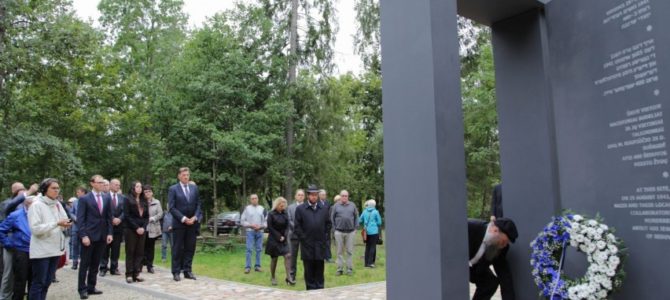
Vilnius, August 30, BNS–Lithuanian prime minister Algirdas Butkevičius Tuesday commemorated Lithuanian Holocaust victims at the Pakuteniai and Liaudiškiai mass murder sites and at the old Jewish cemetery in Šeduva, where kaddish was said for the dead.

“The Holocaust is our shared agony, our tragedy. It is our obligation that in the future never again would our human nature face such danger,” the prime minister was quoted in a Government press release. The PM said unfading memory is a duty to the dead and those who suffered.

The prime minister thanked the organizer, the Šeduva Jewish Memorial Foundation, and its representatives, who are conducting the Lost Shtetl project to commemorate Jewish life in Šeduva and the mass murder of that community in the forests near the town.

The Government’s internet site features photographs from the commemoration:
http://ministraspirmininkas.lrv.lt/lt/naujienos/premjeras-seduvoje-pagerbe-holokausto-auku-atminima

Holocaust Mass Grave in Vilnius Region Hidden by Bushes

masine kapaviete
15min.lt

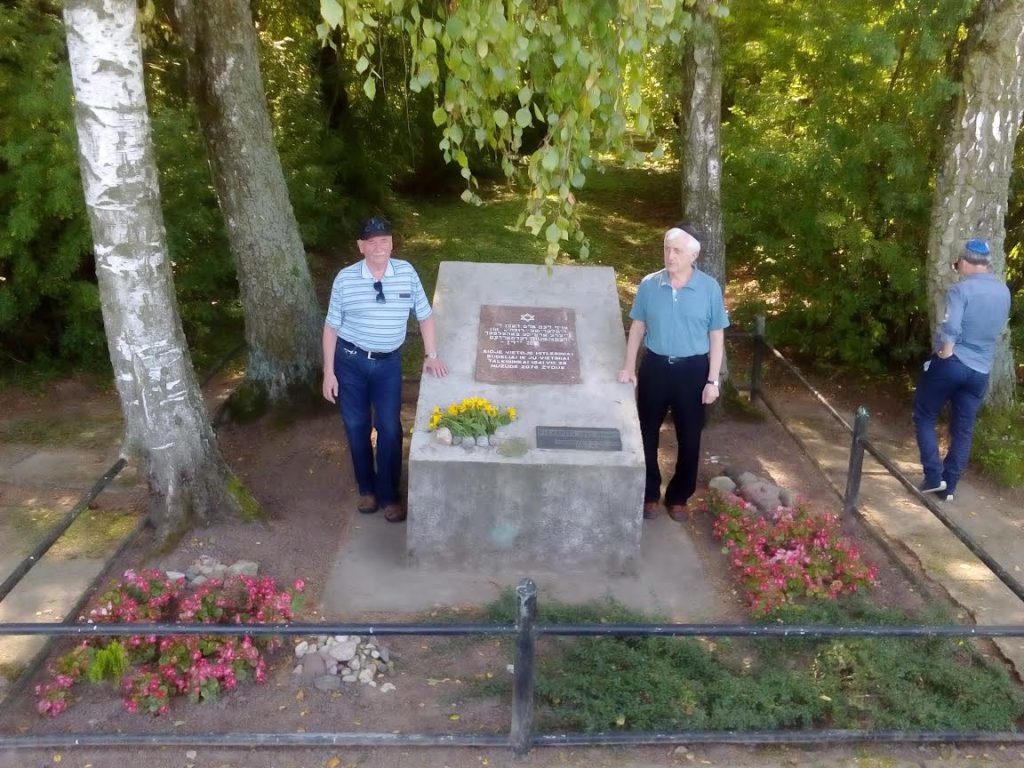
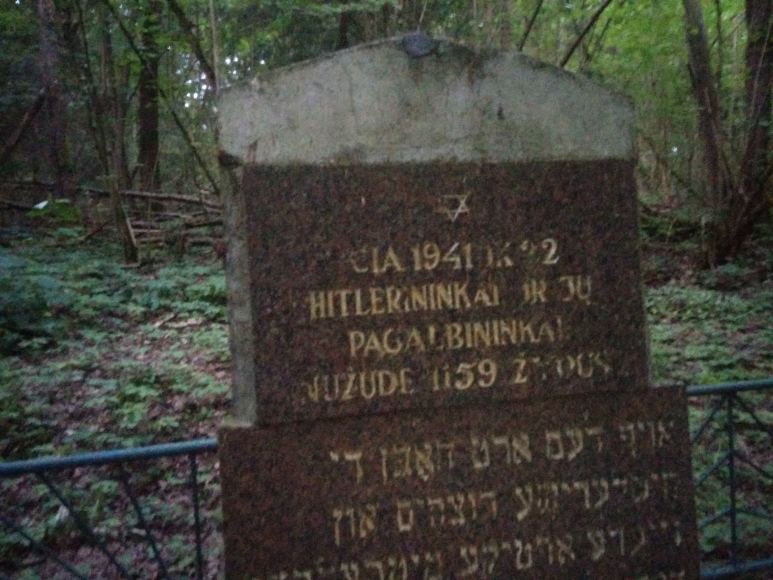
One thousand, one hundred and fifty-nine. Historians say that many Jews from Shumsk, Kena, Naujoji Vilnia and other towns in the area were murdered by the Special Unit in Vėliučioniai Forest just a few kilometers from Vilnius on September 22, 1941. Although the number of victims is truly terrifying, it’s very difficult to find the mass murder site itself. The Vilnius regional administration responsible for maintaining the site doesn’t think this is a real problem.

Full story in Lithuanian here.

LJC Greetings on First Day of School

LŽB sveikina su Rugsėjo 1-ąja
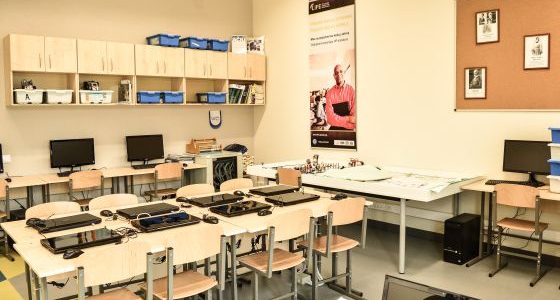
A classroom at Sholem Aleichem Gymnasium

Lithuanian Jewish Community chairwoman Faina Kukliansky sends greetings to all the children of our members in school, from first grade to university students, and to all their parents on September 1, the official start of the school year throughout Lithuania. Whatever your age, we all get nervous on this day, we remember our childhoods, we smile and we grimace and we wish one another success in our studies.

I especially congratulate all the students of the Vilnius Sholem Aleichem ORT Gymnasium and their parents, because you have selected to study at one of the best schools in Vilnius, the Jewish gymnasium run by principal Miša Jakobas, who has brought most highly-qualified teachers who love their profession and children together to staff the school. The school is doing well in its new building with modern classrooms and an atmosphere conducive to learning.

Another piece of good news for the school is that negotiations are under way with the Vilnius municipality for improvements there. Mayor Remigijus Šimašius responded quickly to a request by the school principal and me to improve athletics for students by covering the square used for sports there, since the school doesn’t have an indoors gym.

Today I am also happy about a new law which allows students to get credit for public service. High school students will receive extra points for volunteer activity on their university entrance exams. I am hoping this will encourage you, dear students, to do volunteer work at the Lithuanian Jewish Community. Those entering institutions of higher education in 2018 will receive additional credit for graduation work and volunteering.

I wish all of you to experience the joy of learning which imparts an appetite for knowledge, and not to be discouraged by failures along the way.

I wish you an interesting school year!

Holocaust Commemoration in Ukmergė

HOLOKAUSTO AUKŲ MINĖJIMO RENGINYS UKMERGĖJE

Gathering in the Pivonija grove in Ukmergė on Sunday, September 4, 2016

Program

12:00-12:45 Commemoration of Holocaust Victims: minute of silence, introductory speech by Ukmergė Jewish Community chairman Artūras Taicas, presentation of Tolerance Center by director Vida Pulkauninkienė, statements by participants;

12:45 Meeting of participants at Big Stone Restaurant, Kauno street no. 5, Ukmergė: snacks and coffee or tea, presentation of mobile app Discover Jewish Lithuania;

2:00-2:20 Short tour of Old Town, end of event.

Tzvi Kritzer: I Was Horrified No One Would Remember the Mass Murder of Molėtai

Kritzerby Karolis Kaupinis, Lithuanian Radio and Television show Savaitė, from 15min.lt
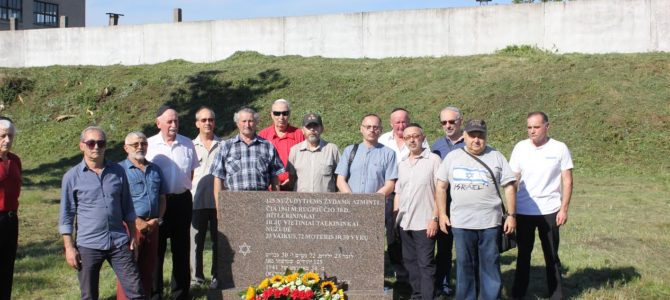
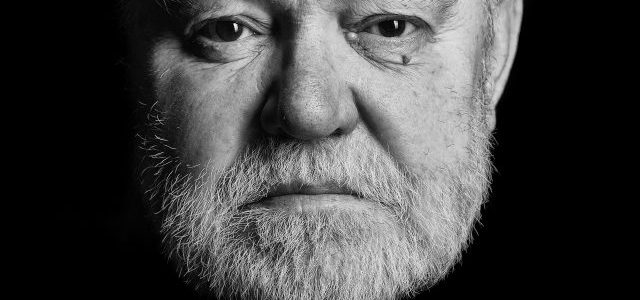
There’s a street in Molėtai along which 2,000 unarmed people, the town’s Jews, were led to their deaths 75 years ago. The mass grave now lies on the edge of town, although it’s difficult to call the location a grave site. Relatives of the murdered flocked to Molėtai Monday from around the world to join a procession along the route to the mass murder site.

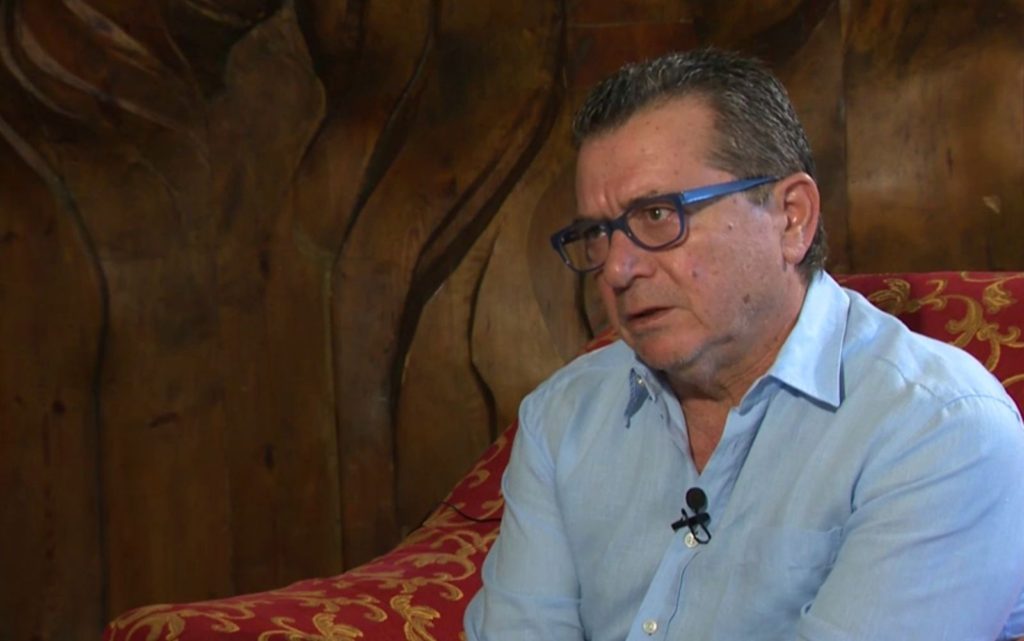
Writer and director Marius Ivaškevičius invited Lithuanians to join the march. “You don’t have to do anything, just walk several kilometers through the town of Molėtai together with our Jews. To be silent, together, to look one another in the eyes. I have almost no doubts someone will cry, because such scenes are moving. Someone among them, someone from our side. And that’s enough. Just that, to show them and ourselves we are no longer enemies,” Ivaškevičius wrote. The LRT TV program Savaitė interviewed Tzvi Kritzer, an organizer of the march who was born in Vilnius in 1973 and moved to his Israel with his parents at the age of 17, about the event in Molėtai on August 29.

Could you tell us briefly the story of your family who lived in Molėtai?

My father lived in Molėtai with his parents and two brothers. We had more relatives there, aunts, uncles. They owned a bakery where they made bagels. Even today when we were filming a film in Molėtai and talking with many of the old-time residents of Molėtai, many of them remembered there was this very famous bakery which made especially delicious bagels, but which is now gone.

Full interview in Lithuanian here.

Kaunas Jewish Community Marks 75th Anniversary of Petrašiūnai Mass Murder and Intellectuals Aktion

Kauno žydų bendruomenė minėjo Petrašiūnų žydų žudynių ir Inteligentų akcijos IV forte 75-ąsias metines

The Kaunas Jewish Community marked the 75th anniversary of the mass murder of the Jews of Petrašiūnai and the Intellectuals Aktion at the Fourth Fort in Kaunas. Lithuanian ambassador for special assignments Dainius Junevičius, his wife, representatives from the Kaunas municipality, residents of Petrašiūnai who witnessed the mass murder and members of the Kaunas Jewish Community honored the Holocaust victims. Community chairman Gercas Žakas and Junevičius both spoke of the Holocaust as a shared tragedy for all citizens of Lithuania. Iseris Šreibergas, the chairman of the Kaunas Hassidic Religious Community and a member of the Kaunas Jewish Community board of directors, honored the memory of the dead with a prayer.

Antanas Sutkus and His Photographs of Holocaust Survivors

Geto gyventojus įamžinęs A. Sutkus: prisiminti Holokaustą tikrai ne per vėlu
Antanas Sutkus, 2014. Photo by Jurga Graf

A little more than a month from now renowned Lithuanian photographer Antanas Sutkus will exhibit his photos of Holocaust survivors at the White Space Gallery in London. Most of the works come from his series of two decades ago called “Pro memoria: gyviesiems Kauno geto kankiniams” [In Memoriam: Living Martyrs of the Kaunas Ghetto]. The photographer says we must not forget the Holocaust and discussion of it is needed today more than ever.

Izabelė Švaraitė conducted an interview with the artist.

Your grandparents told you about the Holocaust. What did they say?

Village people didn’t talk much. But they very severely condemned and felt deep disgust for those Lithuanians who shot, transported and guarded Jewish prisoners.

In the catalog for your exhibit “Pro memoria: gyviesiems Kauno geto kankiniams,” the writer Alfonas Bukontas wrote you feel shameful about what happened in the Kaunas ghetto and Ninth Fort. Why do you feel ashamed?

The Holocaust isn’t some sort of ordinary crime. It was the highest metastasis of Naziism. Consider, for example, I live at home and a family of guests comes to me. At night bandits come threatening to murder me, and take them out in the yard and shoot them. Among the murderers is maybe a neighbor of mine. Although I didn’t shoot these people, and I didn’t have an association with those bandits, the scene would be burned into my eyes for the rest of my life.

I would say I feel sorrow and contrition that some many people died in Lithuania. Practically all the Jews in the country were shot… If Lithuania had come to the aid of Herkus Mantas [during the Prussian uprising of 1260 to 1274) or if Lithuania had saved its Jews, we would have progressed very far as a state.

Full interview in Lithuanian here.

GlassJazz International Symposium in Panevėžys

Panevėžyje vyko tarptautinis simpoziumas – projektas ,,GlassJazz“

The GlassJazz project/symposium was held in Panevėžys August 23. It is the only place in Lithuania, and perhaps all of Europe, where artistic glass meets jazz music. “Glass is unique, it can be improvised just like jazz. Improvising in the medium you can get indescribable forms. Jazz is like a meditation which stimulates artists to liberate themselves, to dive into creative thought, to experiment and look for unexpected forms,” GlassJazz initiator and glass artist Remigijus Kriukas said. He’s the director of the Glasremis artistic glass studio.

Participants from 16 countries attended the event at the Kupiškis Ethnographic Museum. The exhibit included 30 glass works of art.

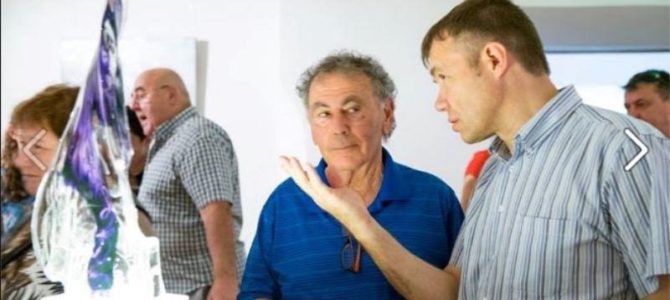
The event was kicked off by Israeli artist Louis Sakalovsky’s exhibit of glass works and paintings called Return, named in honor of his parents and all his relatives who lived in Panevėžys and Kupiškis before the Holocaust. His mother and her relatives made aliyah to Israel before the war and all his father’s relatives were murdered in Panevėžys and Kupiškis.

Book about Ona Šimaitė, Righteous Gentile

Bernardinai logo

Epistolofilija by Julija Šukys. Biography of Ona Šimaitė. Translated from English by Marius Burokas. Lietuvos rašytojų sąjungos leidykla, Vilnius 2016. 256 pages

From 1941 to 1944 she visited the Jewish ghetto and work camps of German-occupied Vilnius and brought food, clothes medicine, money and forged papers to the people imprisoned there. She saved those who had lost hope, listening to their fears and replying to their letters, often the last letters ever written by these people. It is unknown how many lives she saved. It would have seemed strange to the librarian to count, and by intentionally forgetting the names and addresses of those she helped, she protected both herself and them. Instead of hard statistics, we have the personal stories, anecdotes and recollections of those who survived.

Full story in Lithuanian here

Kaunas Jewish Community Volunteers Clean Up Seventh Fort

Kauno žydų bendruomenės narių talka VII forte

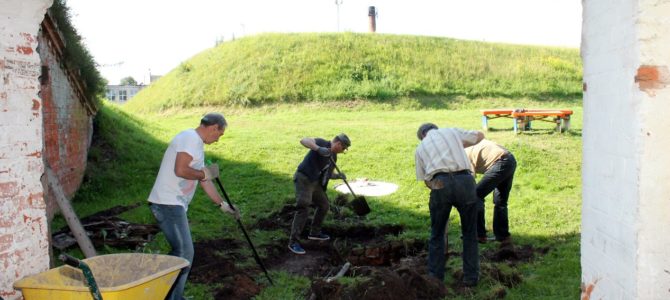
A group of Kaunas Jewish Community members responded again to a call from the Seventh Fort for volunteers to clean up the area around the Kaunas military fortification. They collected trash littering the Holocaust mass grave site where a commemorative monument is scheduled to be set up in September in memory of the Jews murdered at the Seventh Fort.

The Road to Death (75th Anniversary of the Murder of the Jews of Molėtai)

Attorney Kazys Rakauskas sent the following to the Lithuanian Jewish Community webpage.

On central Vilniaus street in Molėtai the flowers bloom and the brightly-painted kindergarten greets the eye of passers-by. The bridge next to the statue of St. Nepomuk is also festooned with garlands of flowers. Small fish flash in the sun in the pure lake water flowing into the river. Cars quietly pass and young people flex their muscles on bicycles. The people of Molėtai hurry to work on foot.

They are a different generation of people. Even their parents only heard vaguely of the terror, tears and suffering which once overtook this street. Seventy-five years ago hundreds of Jews of Molėtai realized where they were being taken at this bridge. They threw their things they had taken with them when they were removed from the synagogues under armed guard into the Siesartis river. This street leading from the three synagogues on Kauno street became the road to death for two thousand people. They had been held prisoner there [in the synagogues] for days without food or water.