
Heritage

International Meeting of Young Rabbis at Panevėžys Jewish Community

rabinaiP

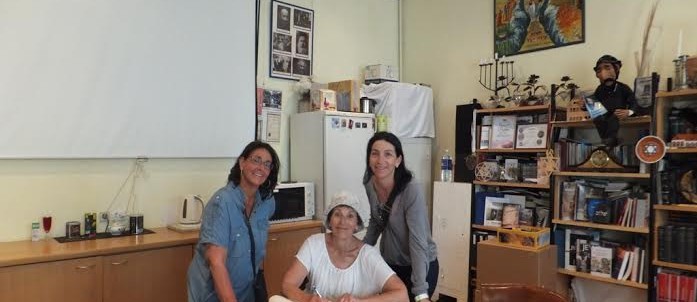
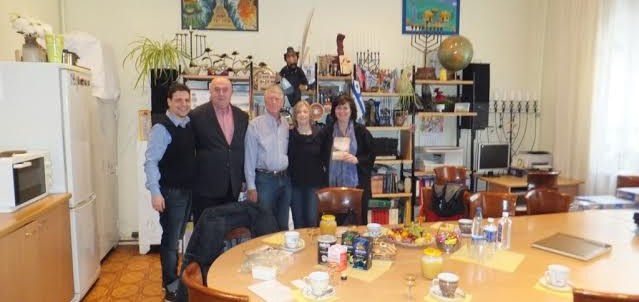
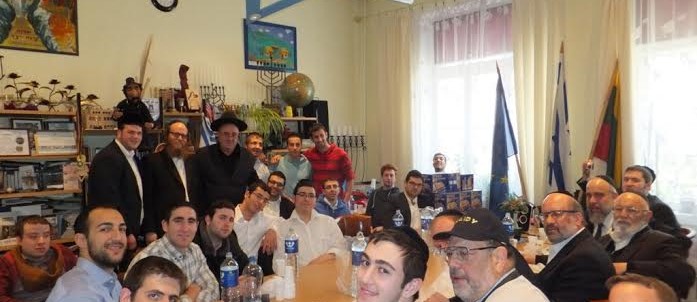
Two groups of young rabbis from Canada, England, France, Israel, Japan and the United States came to the Panevėžys Jewish Community April 7, interested in Jewish life before World War II and now. The first group was led by Rabbi Meir Wunder, who leads trips by high school students to Panevėžys annually. The young people were interested in the life of Rabbi Yosef Shlomo Kahaneman.

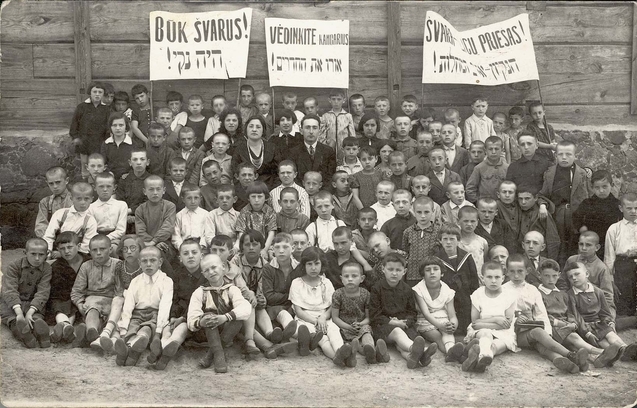
Kahaneman was born in the village of Kuliai in 1886 and studied at the yehsivas in Plungė and Telšiai before going on to the yeshiva in Novogrudok, now in Belarus. He became yeshiva director. He lived with his family in Panevėžys from 1919 to 1940. In 1923 he became a Lithuanian MP. In Panevėžys he set up a poorhouse, an orphanage and the Yavne Jewish religious school for girls, and headed the yeshiva. Later he and his son moved to Israel where he continued to maintain Litvak religious traditions. On the wall of an orphanage he founded are the names of the yeshivas of Lithuania. The Panevėžys yeshiva was also restored in 1919 due to his efforts.

rabinaiP1

The second group was led by Rabbi Tuvia Konn and Rabbi Nesivos Tours. They spoke about how they had heard of the Bokhrim yeshiva and became interested in the city of Panevėžys, and when there was opportunity to visit, they gladly came in search of their roots. They visited Jewish sites in Panevėžys and viewed a film about the history of the Jews of Panevėžys which they said opened a window onto the past.

Documentary Filmmaker Visits Panevėžys Jewish Communtiy

filmavimas

A documentary film crew shot footage at the Panevėžys Jewish Community April 8 for a new film about Panevėžys Jewish architecture before World War II. Panevėžys Jewish Community chairman Gennady Kofman spoke about the history of Panevėžys Jews to an audience of the director and guests from the Margarita Rimkevičaitė Technical School.

Slobodka Cemetery and Seventh Fort Mass Murder Site in Kaunas to be Cleaned Up

Viljam1

Following a meeting between the Israeli ambassador and the mayor and city council of Kaunas in early March, on the first Friday in April the Kaunas deputy mayors, municipal staff and the chairman of the Kaunas Jewish Community visited the Jewish cemetery in the Slobodka neighborhood [Vilijampolė] and the mass grave at the Seventh Fort. During this meeting in the field, it was resolved that the municipal body Kapinių priežiūra [Cemetery Maintenance] would set up an information stand at the entrance to the Slobodka cemetery and would post signs forbidding cars, smoking, walking dogs and lighting fires there.

Another resolution was adopted for the Seventh Fort mass murder site: the city maintenance department (represented by Jolanta Miliauskienė) is to clean up the site (clean flagstones and collect garbage) around the monument to the Jews murdered there. The environmental department (represented by Radeta Savickienė) is to cut down trees and bushes according to a request drafted by cultural heritage department head Saulius Rimas which includes a photograph showing what is to be cut down and with the consent of Gercas Žakas, chairman of the Kaunas Jewish Community.

Old Prescriptions from the Interwar Period Recall the Kukliansky Pharmacy in Veisiejai

Receptas2

Danutė Selčinskaja, director of the Rescuers and Commemoration Department of the Vilna Gaon State Jewish Museum, has sent us an image of a new item worthy of display at a museum: prescriptions from the Kukliansky Pharmacy which operated in the period between the wars. This pharmacy, the only one in Veisiejai, Lithuania, operated right up until the Holocaust. The pharmacists managed to escape and were rescued by people from Sventijanskas. At the present time there is a Veisiejai Regional History Museum operating in Veisiejai. Museum director Regina Kaveckienė scanned two new items, prescriptions, which were brought to the museum by a relative of an elderly female pharmacist from the town who is no longer alive.

Danutė Selčinskaja sent the regional history museum the Vilna Gaon museum’s mobile exhibit “The Rescued Child Tells the Story…” which she created. This includes a film about the rescue of the Kukliansky family. The regional history museum shows the film to students every year. A young woman from the Kapčiamiestis School Museum who lives with her parents in Sventijanskas said everyone there had already seen the film, which is being passed around as a DVD from person to person, and it has caused a great deal of excitement there. The people understand what happened and recognize the people and places portrayed in the film.

Rabbi Isaacson Speaks at Screening of Film “Kaddish”

filmas3

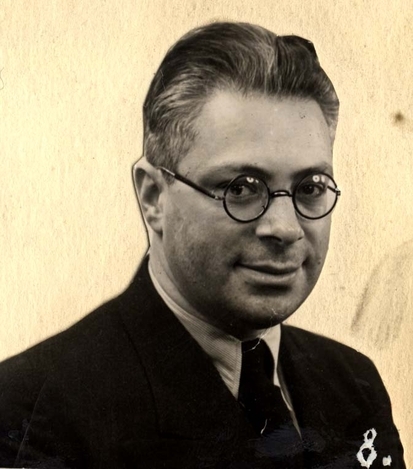
The film club of the Lithuanian Jewish Student Union screened the film “Kaddish” on March 10, an event during which the public was able to meet one of Lithuania’s newest rabbis, Rabbi Samson Daniel Isaacson. Before the film started, Rabbi Isaacson gave a short talk welcoming the audience and telling about the film made by a friend of his. Kaddish is the story of Rabbi Yitzhak Yosef Zilber, born in Russia in 1917 (died 2003, a Russian, later Israeli Haredi rabbi and a leader of the Russian baal teshuva movement, author of several books, Russian Israeli religious authority). Zilber studied Judaism privately, at home, because his father Ben-Tzion Haim Zilber (originally Tsiyuni) refused to allow him to attend ant-religious Soviet schools.

rabinas zilberis

At the age of 15 he began to teach Judaism in his hometown of Kazan, although it was illegal under Soviet law to do so. After a life filled with hardship, oppression by the Soviets and incarceration in the gulag, he and his family were finally allowed to leave the USSR for Israel in 1972, where he continued to teach, practice traditions and attract a large group of young people.

Discussion followed the screening of the film as audience members asked the rabbi questions and he responded. The several dozen members of the audience and the rabbi were treated to snacks and tea after the discussion, allowing people to get to know the rabbi better in a somewhat informal setting.

filmas2

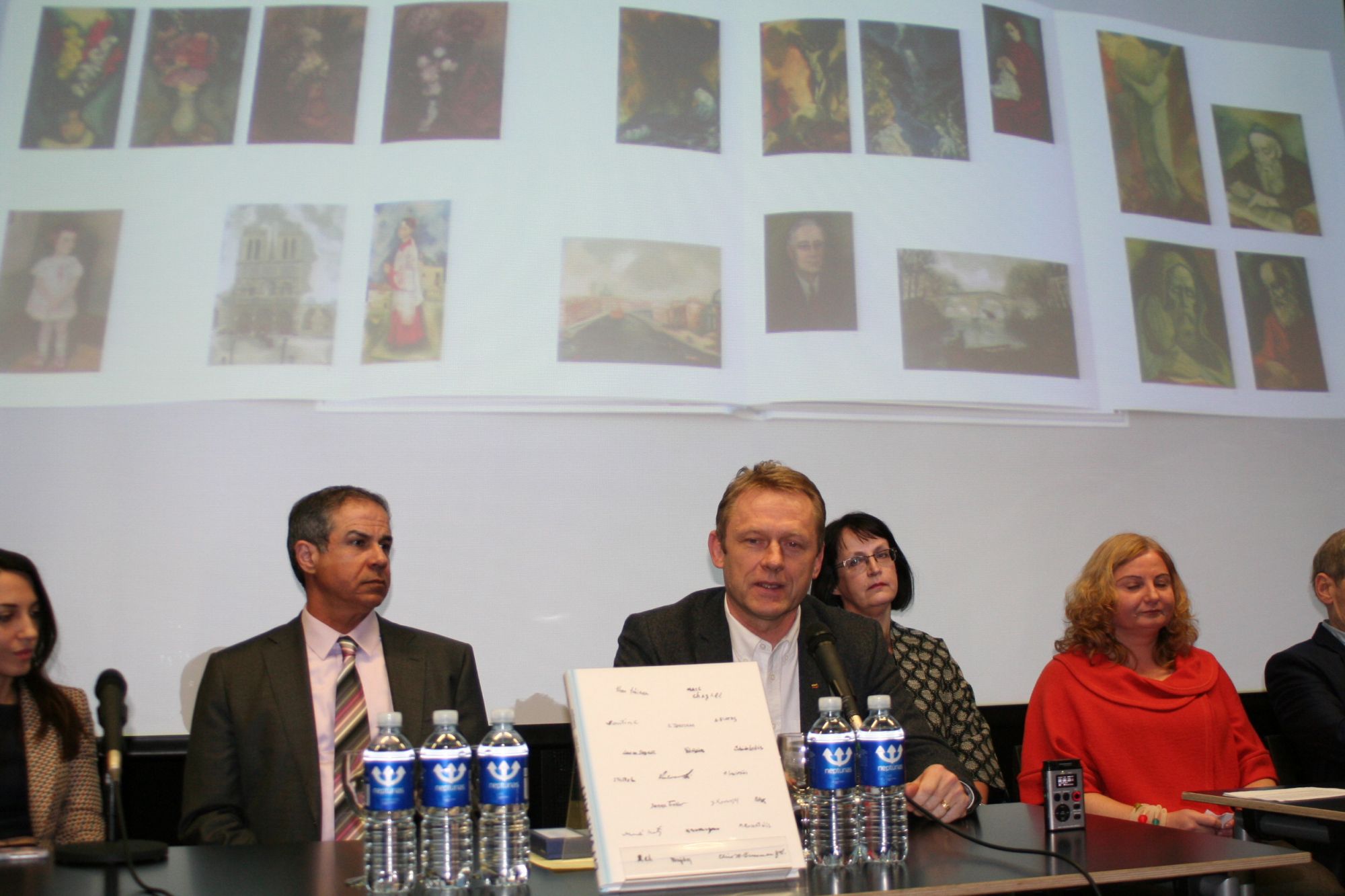
Lithuania to Investigate Jewish Treasures Stolen by Nazis

March 23, BNS–Investigation into cultural treasures the Nazis stole from Jews in Lithuania has begun, the newspaper Lietuvos žinios reports.

Last week a meeting of the International Commission for Assessing the Crimes of the Nazi and Soviet Occupational Regimes in Lithuania reached agreement on conducting several large studies, commission chairman Emanuelis Zingeris confirmed. He said the Rosenberg task force drew up lists of rare and valuable items held by Jewish organizations, libraries and museums before the war even started. “So we’re asking for additional research, which is being performed by researchers in Lithuania and abroad. I believe we will approach the German Government on with a request for clarification, because there shouldn’t be any lingering doubts regarding this,” Zingeris said.

He also spoke about the items listed in the book “Lietuvos inkunabulai” [Incunabula of Lithuania] by Nojus Feigelmanas from the Strashun library in Vilnius. “There are clear indications there were four incunabula in this library in Hebrew which the Germans took. The incunabula were printed in an Italian city in 1475. They are priceless,” Zingeris commented. His commission’s work was resumed by presidential decree in the fall of 2012. After a break of eight years, the renewed commission met again in 2013. As reported at that time, the commission only discussed technical and financial issues at that meeting. The chairman said the subcommittee investigating crimes of the Soviet occupational regime would meet in early summer this year.

BNS_logotipas

What Would Queen Esther Eat Today?

Esther, the star of the Purim story, is one of the bravest heroines for so many reasons–she not only strategized to save the Persian Jews from certain death (breaking social norms in doing so), but she also maintained a kosher diet as an undercover Jew in the Persian palace. Wait, what?

Legend has it that like many Jews today, Esther kept kosher by avoiding things like non-kosher meat, and instead enjoyed a plant-based diet full of fresh produce, grains, legumes, nuts, and seeds. For those of you with eating restrictions, you know how hard it is to turn down foods that everyone else is noshing!

In the story of Purim, food and celebration are central to her strategic success. In order to earn the favor of her husband, King Ahasuerus, she hosted two impressive (and probably extremely delicious!) banquets that set the stage for her requests of the King to save the Jews of Persia.

After all these years, delicious food and drink–like hamantaschen, Haman’s fingers, and plenty of wine–are essential parts of the celebration of Queen Esther and Purim.

If you’d like to party like Esther this Purim, click here for recipes.

Stories about Rabbis: Exhibit of Pastel Work

The Jewish Culture and Information Center’s Shofar Gallery (Mėsinių street no. 3, Vilnius) presented an exhibit of pastel works by Kęstutis Milkevičius called “Stories about Rabbis” March 17.

pAroda-rabinai

The collection on exhibit was formed at the initiative of the leader of the Kaunas Jewish religious community, Maushe Bairak. Artist Raimundas Majauskas commented on Milkevičius’s artworks:

“The old portraits of wise Jewish rabbis are suffused with time and come down to us from a modified Rembrandtesque chromatic environment. The artist is a master of line and composition. The individualized, artistically realistic works betraying a deep aesthetic foundation are part of the cultural and communal life of Kaunas and Lithuania.”

Litvak cultural heritage scholar Asia Gutermanaitė opened the exhibit. The opening including stories and interesting tales about rabbis. The exhibit will run until April 12.

Goodwill Fund Granted Greater Freedom to Spend

March 17, BNS–The Lithuanian parliament Thursday adopted fast-track amendments to allow the Goodwill Fund administering compensation for Jewish religious community property to allocate funds more freely. The vote was 81 MPs for, 1 against and 5 abstentions. Under the new amendment, the Goodwill Fund will be allowed to cover its administrative costs using monies from the state. It suggests fixing administration costs so they never exceed 10 percent of the annual amount of compensation paid out by the treasury according to the annual state budget.

Last year the fund spent 125,942 euros on expenses, but the Office of State Comptroller warned the law didn’t allow the fund to use state allocation for administrative costs. The amendments also allow the fund to invest monies paid into the fund but not used. Such a move would require careful consideration of investment security, liquidity, annual profits and other factors.

Old Jewish Cemetery in Klaipėda Added to Registry of Cultural Treasures

klaipeda cemetery 2

The old Jewish cemetery in on Sinagogų street in Klaipėda has been given legal protection, the Culture Heritage Department under the Ministry of Culture reports.

Although there used to be several dozen cemeteries in Klaipėda, only a few survive. “The only Jewish cemetery in the city is the one from the early 19th to mid-20th century period. It used to be bigger than what has survived and listed on the registry of cultural treasures. It’s now about 13,000 square meters. But what has survived obviously enriches the history of the city of Klaipėda and is an important part of the city,” Audronė Puzonienienė, director of the Klaipėda office of the Cultural Heritage Department, said.

Puzonienienė cited Jonas Tatoris’s book “Senoji Klaipėda. Urbanistinė raida ir architektūra iki 1939 m.” [“Old Klaipėda. Urban Development and Architecture till 1939”] as the richest source of information about the old Jewish cemetery in the Lithuanian port town formerly known as Memel. The author of that book says there were 22 cemeteries in Memel/Klaipėda in the period from the 16th century to the early 20th century. At the beginning of the 19th century a ravelin—part of the earthen fortification for the defense of the port city— was allocated for the Jewish cemetery. The Jewish cemetery first appears on the city map in 1840, as a still rather small area surrounded by hedgerows. It was enlarged in the early 20th century. “The layout of the Jewish cemetery was different from the Lutheran cemetery: it didn’t have a central square and intersecting paths, and the territory was divided up into rectangular blocks,” Tatoris says.

Argentine Director Returns to Jewish Roots with “The Tenth Man”

In his new movie, filmmaker Daniel Burman explores the Buenos Aires of his youth and the people who live there
by Igal Avidan

Daniel-BURMAN_Credito_Marcos_Lopez-e1457359753841

BERLIN–Usher, who heads a Jewish welfare foundation in Buenos Aires, is an unlikely movie star. But the middle-aged Argentinean Jew, whose real name is Oscar Barilka, is the central figure in Jewish-Argentinian director Daniel Burman’s new feature film, “El Rey del Once” (The Tenth Man).

Usher, playing himself, is almost always off-camera, but he is often heard as he works to bring his son Ariel (played by actor Alan Sabbagh) back to his roots.

“Usher is a real tzadik [righteous person] who doesn’t even know he is one,” says award-winning writer-director Burman, who won the Grand Jury Prize in 2004 for his film “El Abrazo Partido” (Lost Embrace), a comedy-drama about the grandson of Polish Holocaust refugees.

Israeli Ambassador Praises Kaunas’s Concern for Jewish Heritage

KM3

Israel’s ambassador to Lithuania Amir Maimon met with Kaunas mayor Visvaldas Matijošaitis and other city council members last week. Kaunas Jewish Community chairman Gercas Žakas attended the meeting as well. The ambassador praised cooperation with the city of Kaunas in culture and business. Kaunas businesspeople involved in the food sector were invited to meet investors from Israel in Vilnius at the beginning of April, and the mayor was invited to attend a meeting of European city mayors in Jerusalem.

Serious Work Planned at Old Jewish Cemetery in Žaliakalnis District of Kaunas

Posėdis kaune

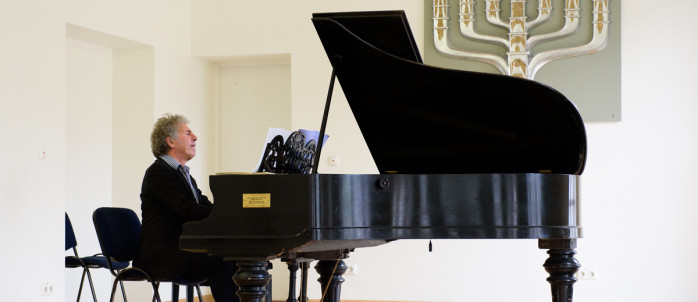
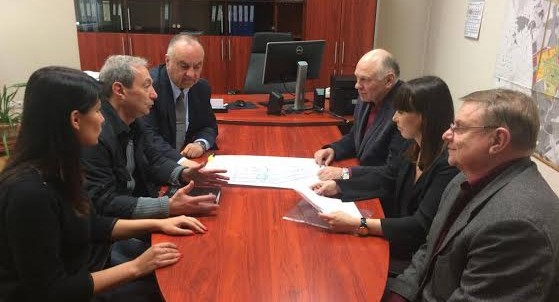
A working group for refurbishing the old Jewish cemetery in Žaliakalnis neighborhood of Kaunas met March 3. Under an agreement with the municipal administration, experts from the public agency Registrų centras [Registry Center] performed a survey and inventory of the Žaliakalnis Jewish cemetery. All gravestones were counted (5,808) and every grave was assigned a number and its exact location determined. This work took about 2 months and cost 8,000 euros. It was financed by the city of Kaunas. The work performed so far will allow the next steps to be taken: to photograph each grave, to read and translate headstone inscriptions, to identify the graves (to determine the identity of the people buried) and to create a virtual database. After that’s done, drafting and implementing a technical plan for refurbishing the cemetery will be possible. So far there is no funding for these tasks, so the plan is to approach different foundations, and the idea of recruiting volunteers for grave identification is also being considered.

The municipality is preparing a territorial planning document (designating the plot of land) for the cemetery and is planning to set up surveillance cameras at cemeteries this spring. The cemetery is always mowed and maintained.

Lithuanian Jewish Community Statement on the March 11 Holiday and Neo-Nazi Chants

0311

March 4, 2016, No. 197

To:

the honorable Algirdas Butkevičius
Government of the Republic of Lithuania
Gedimino prospect 11
Vilnius 01103

the honorable Remigijus Šimašius
Konstitucijos prospect 3
LT-09601 Vilnius

the honorable Visvaldas Matijošaitis
Laisves alley 96
LT-44251 Kaunas

cc:

Chancellory of the President of the Republic of Lithuania
S. Daukanto square 3
LT-01122 Vilnius

Statement
March 4, 2016
Vilnius

The Lithuanian Jewish Community proposes the Government of the Republic of Lithuania and the municipal governments of the cities of Vilnius and Kaunas take all possible measures to ensure the holiday to mark the 26th anniversary of the restoration of the Lithuanian state does not include neo-Nazi chants, marches and symbols and events of a similar nature.

We would like to underline the importance of this holiday for all of Lithuania’s citizens, including the Litvak community in Lithuania with its unique and long-standing traditions, and the importance of fostering in the international arena an image of Lithuania as a modern state based on democratic principles and celebrating a tradition of multiculturalism over many centuries.

We would like to remind you of the march held by the Union of Patriotic Youth and the Lithuanian National center on March 11, 2015 with permission from the Vilnius municipality. This march featured fascist and racist symbols and chants and slogans promoting ideas of segregation.

The Government and the municipal institutions should continue to make efforts so that neo-Nazi ideas do not become acceptable in Lithuanian society and especially that they shouldn’t be propagated under cover of state holidays and through manipulation of the concept of patriotism.

Sincerely,

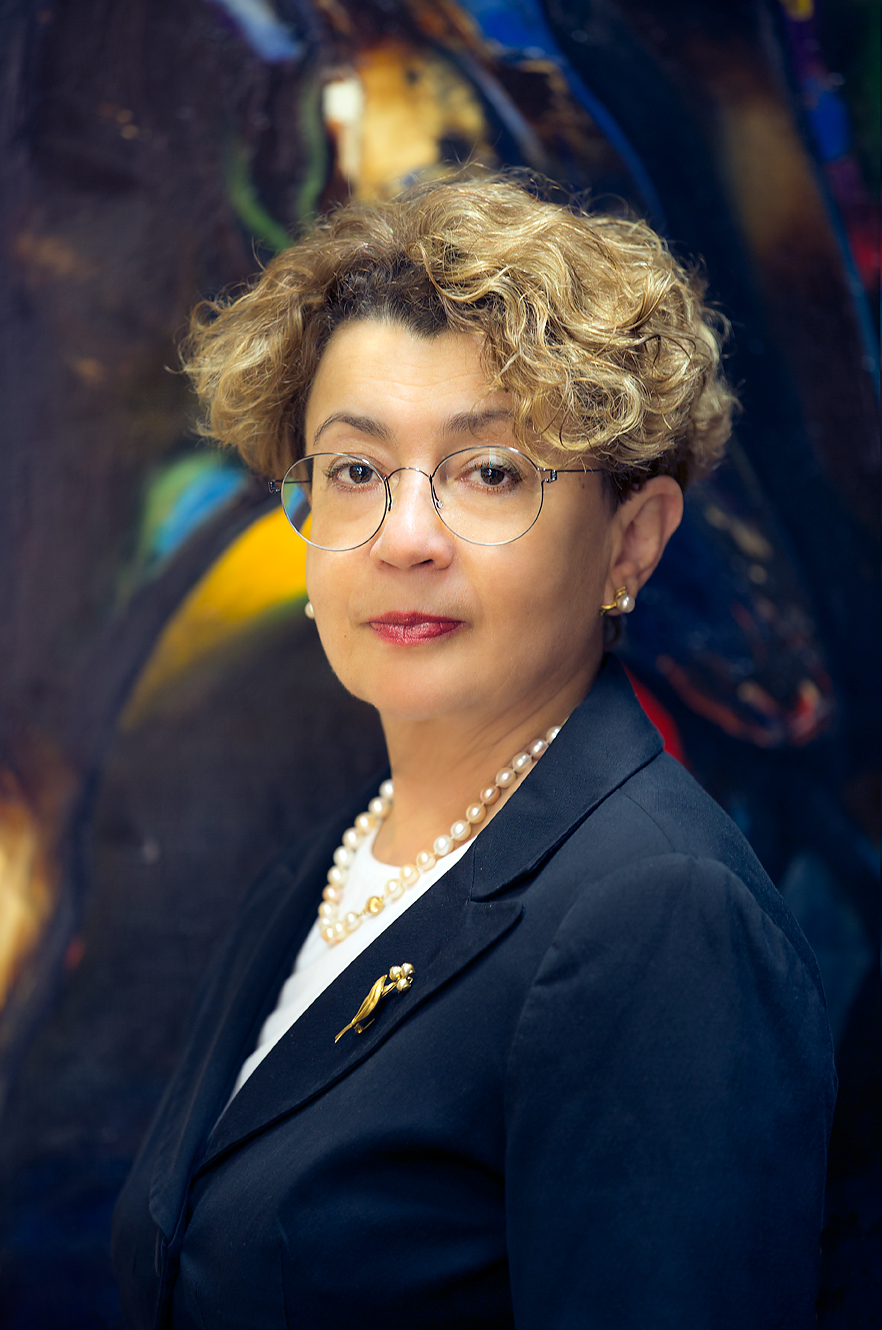
Faina Kukliansky
chairwoman
Lithuanian Jewish Community

Užupis Jewish Cemetery to Be Declared National Protected Site

Užupio kapinės

February 26, BNS–An old Jewish cemetery in Vilnius is being put forward to become a state-protected cultural heritage site. Cultural Heritage Department director Diana Varnaitė initiated the process.

“There are surviving headstones there and there should be a certain amount of state protection. The cemetery is already on the registry, it is already a cultural heritage treasure. The registry is so construed that significance determines whether the state or a local government is the party to make a decision and declare sites protected,” Cultural Heritage Department deputy director Algimantas Degutis told BNS. He said state-protected cultural treasures have stricter protection, financing and maintenance requirements.

The move to change the status of the Užupis Jewish cemetery is unconnected with plans by the adjacent funeral home to build a crematorium, Degutis said. The Vilnius municipality is against the crematorium plan.

Vilnius Mayor Calls Crematorium in Jewish Cemetery Inappropriate

Šimašius

Vilnius, February 20, BNS–A plot of land next to the old Jewish cemetery on Olandų street is inappropriate for a crematorium and Vilnius residents will be asked their opinion on the need and location for such an operation, Vilnius mayor Remigijus Šimašius said.

“It has to be acknowledged that this is the territory of a Jewish cemetery and it’s obvious that in Vilnius, where 40,000 Jews lived before World War II, because of the association, a crematorium in the Jewish cemetery is simply inappropriate. For that reason alone there should be no crematorium at that location,” the mayor told BNS. He confirmed the council would be presented with the decision not to approve a crematorium on Olandų street in the Lithuanian capital. The mayor also said results of a poll of public opinion on the issue of the need for and location of a crematorium in Vilnius would be presented soon. “I think there is a need among some residents of Vilnius. We ordered a poll of residents of Vilnius to identify what sort of locations are most likely, where residents would like to see a crematorium,” mayor Šimašius said. He said a final decision would be made following the public opinion poll on “where to encourage investments” in the city.

Jewish Organization Proposal Increases Cost to Refurbish Palace of Sports

Sporto rumai

Vilnius, February 21, BNS–Proposals by a Jewish heritage organization for refurbishing the Palace of Sports located on top of an old Jewish cemetery in Vilnius without moving any soil would bring the cost of the project up by 2 million euros, Lithuanian Government vice chancellor Rimantas Vaitkus said.

“When there was analysis of whether it would be possible to set up an underground entrance, in their opinion that would enter into what is called the A section which can’t be touched, where earth cannot be moved. That would make the project 2 million euros more expensive. And we don’t know what’s going to happen now because Turto bankas, which is doing the construction, doesn’t have enough money to bring the project to completion. Either additional funding must be sought, or the whole project has to be reconsidered, but there no decision has been made yet,” the vice chancellor told BNS.

Delegation from Argentine Rabbinate Visits Panevėžys Jewish Community

Panevez vasaris

Rabbi Shmuel Arieh Levin from Argentina visited the Panevėžys Jewish Community on February 15. He arrived with eight members of his religious community. The purpose of the visit was for the delegation to observe with their own eyes the state of the Jewish community in Panevėžys, to learn more about their history, to learn about the world-renowned yeshiva and to find out more about the founder of the Ponevezh yeshiva, Rabbi Yosef Shlomo Kahaneman, the Ponovezher Rov and chief rabbi and former member of the Lithuanian parliament who founded in 1919 the yeshiva where 500 students from Europe studied. Rabbi Kahaneman and his eldest son, who had diplomatic status, left for America in 1940, and during World War II moved the Ponevezh yeshiva to, or reëstablished it in Bene Berak (Bnei Brak, with a sister institution in Ashdod), Israel. Rabbi Levin was graduated from the Ponevezh yeshiva in Israel and personally knew Rabbi Kahaneman and his son Elias Kahaneman. Today the world-famous yeshiva where more than 1,000 students study is led by his grandson, Rabbi Eliezer Kahaneman (Cohenman).

Lithuanian Jewish Community Chairwoman Faina Kukliansky on the Holocaust Discussions of Recent Days

C

Several days after commemorating International Holocaust Remembrance Day, discussions on the topic of the Holocaust have again come up in Lithuania. In my childhood I heard everything in my family–during conversation memories of the ghetto often came to the fore, being locked in the ghetto, taken to concentration camps, about the hole where people hid. But the experience of the Holocaust was as it were one of many things which separated Jews from non-Jews. They murdered us, while others at the same time went on with their lives, went to movie theaters, went to school and studied. Over just a few months almost the entire Lithuanian Jewish community, more than 200,000 people, were exterminated. For all of my life, for the entire Soviet period, many people treated us differently. We always knew our opportunities were limited and that we were different.

Wooden Synagogue Discovered under Brick Walls in Kulautuva, Lithuania

Kulautuva sinagoga

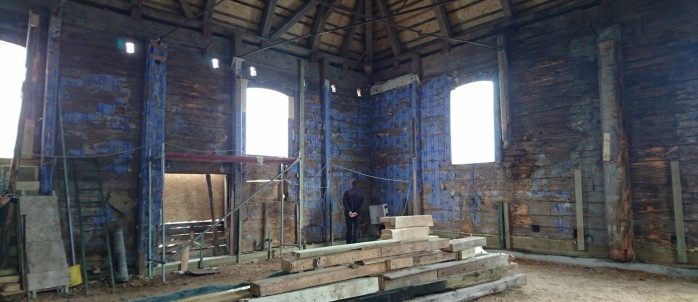
BNS–A wooden synagogue built between the two world wars was discovered as the brick walls of a building were torn down in Kulautuva, Lithuania.

The Kaunas section of the Cultural Heritage Department halted work at the site as consideration is given to what to do with the discovery, the newspaper Kauno Diena reported. Department employees said they learned of the demolition of the building over the weekend after photos were posted to facebook. Cultural heritage protection experts are mulling over the idea of making the synagogue a candidate for entry on the list of protected cultural treasures and even of moving the entire structure to the Lithuanian Folk-Life Museum in Rumšiškės outside Kaunas.

The synagogue was built in 1935 and its windows were boarded up and it was turned into storage space for the town after World War II. Major reconstruction work was performed on the building in 1967 and 1968.

BNS_logotipas