Heritage

Lithuanian National Radio and Television Hosts Exhibit on Righteous Gentiles

LRT atidaroma paroda, skirta Pasaulio Teisuoliams

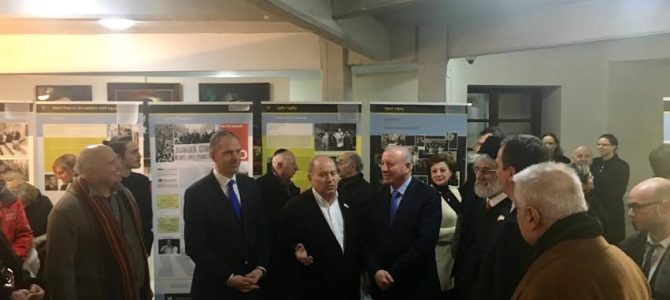
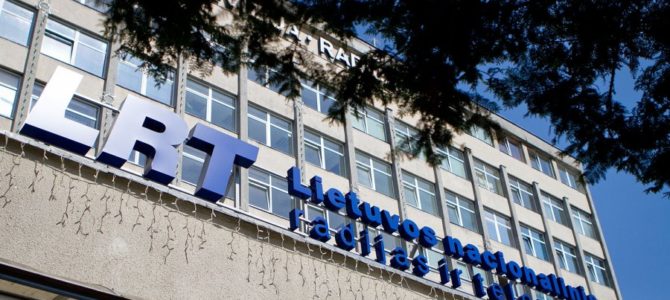
An exhibit of photographs of upstanding and courageous Lithuanian Righteous Gentiles who rescued Jews from the Nazis, performing the highest service to their nation, will open at the Lithuanian National Radio and Television Gallery at Konarskio street no. 49 in Vilnius at 3:00 P.M. on Thursday, January 19. The Yad Vashem Holocaust memorial authority and museum in Israel bestows the title Righteous among the Nations, or Righteous Gentile, on citizens of other countries who rescued Holocaust victims. This exhibition was shown earlier at the Lithuanian parliament. As readers will recall, the Lithuanian Jewish Community’s annual calendar features Lithuanian Righteous Gentiles this year as well, with a photograph of Lithuanian president Kazys Grinius and wife Kristina on the cover.

Writer Icchokas Meras, the winner of the Lithuanian National Prize for Art and Culture who was saved from the Holocaust by Lithuanians, wrote about the rescuers: “They were the blooms of the morality of the nation, the spiritual giants of the nation, no matter whether they were educated or simple people, whether they were illiterate, clergy who carried with them the true love of one’s neighbor or simple peasants broadcasting seed to the ground by hand. They, intentionally or unintentionally, opposed the destroying power of the Nazis and its tool: those who murdered. We should remember and honor their heroism based on conscience, goodness, love of one’s neighbor and simply human pity.”

Panevėžys Jewish Community to Mark International Holocaust Remembrance Day

Dovydo žvaigždė

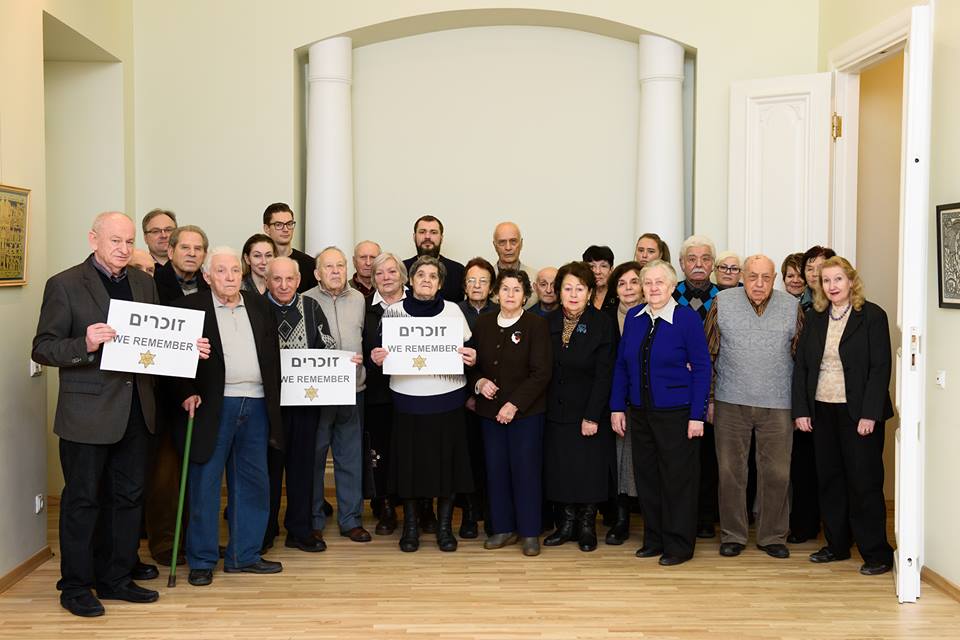
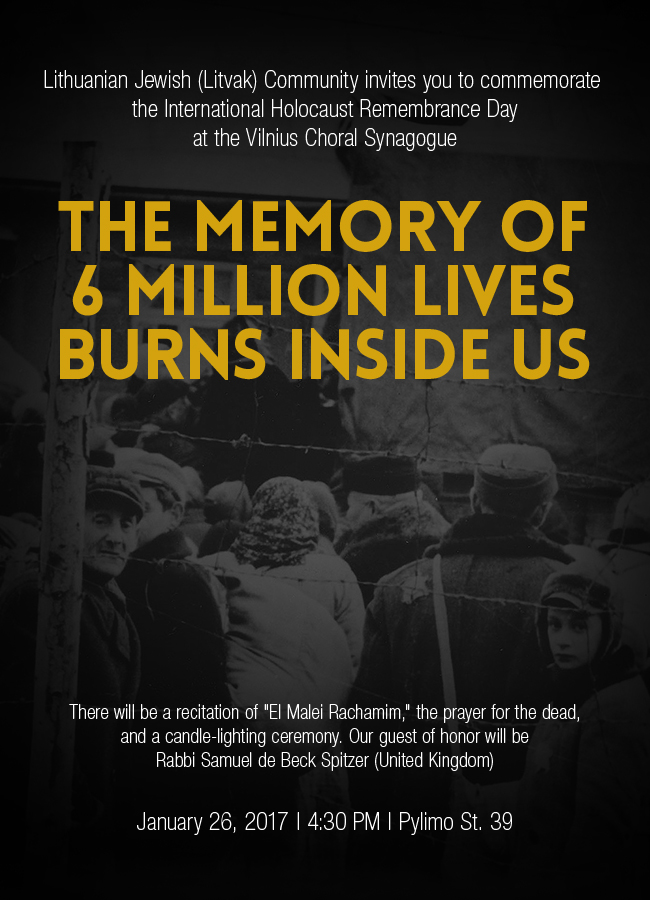
January 27 marks the day in 1945 when the victims of the Auschwitz death camp were liberated. Auschwitz was the largest concentration camp set up by Nazi Germany where about 1.5 million people were murdered, including children, and approximately 1 million of the victims were Jews, according to the best estimates.

The Panevėžys Jewish Community will observe International Holocaust Remembrance Day on January 26 at the “Sad Jewish Mother” statue on Memory Square at Vasario 16 street next to the Vyturis Pre-Gymnasium.

Program:

2:00 P.M. Assembly, wreath-laying ceremony, speeches;

2:45 P.M. Wreath-laying ceremony at the statue “Ghetto Gate” (at the intersection of Klaipėdos and Krekenavos streets);

3:00 P.M. Forum dedicated to International Holocaust Remembrance Day at the Panevėžys Jewish Community (Ramygalos street no. 18). Documentary film about the Holocaust.

Let’s remember the heroic rescuers.

Event supporters:

LZB _LOGO2GVF_logo-01

Lithuanian Jewish Community Position on Reconstruction of the Vilnius Palace of Concerts and Sports and Its Use as a Conference Center

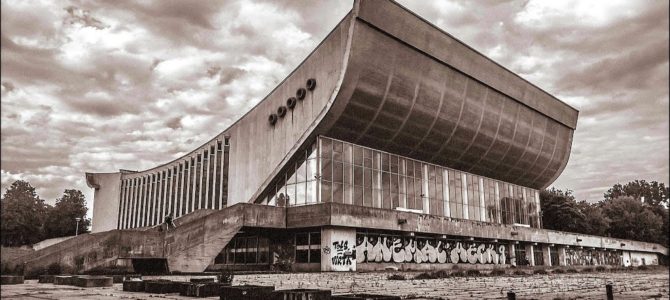
In light of the recent intensification of statements in the media on the alleged danger now threatening the conservation of the Šnipiškės Jewish graveyard in Vilnius (hereinafter Cemetery), the Lithuanian Jewish (Litvak) Community (hereinafter LJC) feel it our duty yet again to present the main facts in the case and the LJC’s well-founded position based on those facts regarding the issue of the reconstruction of the Vilnius Palace of Concerts and Sports (hereinafter Sports Palace) and its adaptation as a conference center.

1. To date no work for the reconstruction of the Sports Palace has been carried out, and therefore no possibly negative impact on the graveyard which was destroyed in the 1950s is being effected at the current time. The remains of the Vilna Gaon were removed to the Vilnius Jewish cemetery located on Sudervės street long ago and his headstone is located there.

False statements and rumors have been circulating for some time, so again it is necessary to explain the headstones in the Cemetery were destroyed long ago and the Sports Palace was constructed there back in the Soviet era. At the current time only pre-planning proposals have been drawn up, which could serve later as the basis for a detailed technical project for the renovation and adaptation of the Sports Palace which will be carefully examined and assessed by competent institutions.

2. The Cemetery is entered on the Registry of Cultural Treasures and has been declared a state-protected site, meaning any construction or reconstruction work in the area of the graves or in the buffer zone around it, and any plans for this sort of work, are carefully assessed and strictly controlled under the provisions of the law of the Republic of Lithuania on protection of real estate heritage and the specific requirements of a special protection plan for this Cemetery.

3. This special protection plan for the Cemetery was prepared under the requirements and principles contained in a protocol agreement signed on August 26, 2009, by the leaders of the LJC, the Committee for the Preservation of Jewish Cemeteries in Europe and the Cultural Heritage Department under the Lithuanian Ministry of Culture. All these institutions share responsibility for keeping the agreement and ensuring sufficient authority for doing so.

4. The protocol agreement of August 26, 2009, resolves that:

4.1. Earth-moving work is forbidden in the Cemetery;

4.2. Three additional possible buffer-function zones are defined; the Sports Palace falls into zone A where earth-moving work is proscribed except in cases involving engineering construction (utility pipeline, transportation and communication infrastructure) and/or work to maintain the Vilnius Sports Palace. Jobs involving the movement of earth require consent by the LJC and must be accomplished in the smallest scope possible. All work involving the movement of ground must be done under the supervision of an archaeologist and an authorized LJC delegate. To insure adherence to this requirement, the LJC makes all decisions regarding the conservation of the Cemetery and plans for the reconstruction of Sports Palace only with the knowledge and consent of the Committee for the Preservation of Jewish Cemeteries in Europe.

5. The Vilnius Sports Palace was constructed in 1973. The building and the Cemetery upon which it was built have been listed on the Registry and are protected as a cultural treasure since 2006.

6. According to the original construction documents presented to the LJC, the foundation of the Sports Palace extends 7.37 meters underground, so most likely all burials there were destroyed during building construction. Therefore pre-planning proposals for reconstruction of the Sports Palace are based on the assumption burials do not remain under the building. Despite the low likelihood there are still graves under the building, in the event of actual reconstruction of the Sports Palace the LJC will demand earth-moving work be of minimal scope and conducted under the supervision of representatives of the Committee for the Preservation of Jewish Cemeteries in Europe.

Therefore, bearing in mind that:

1) existing burials were destroyed during construction of the Vilnius Sports Palace;

2) currently not a single headstone remains at the Cemetery (the last monuments were torn down back in 1955), the Cemetery territory is in disrepair, and there are no signs in the huge territory of the Cemetery testifying to its history except for a symbolic statue and an information plaque set up a few years ago;

3) the Sports Palace building along with the Cemetery surrounding it are listed on the Registry of Cultural Treasures and it cannot be torn down, but in its current state cannot either be used and requires renovation;

4) the abandoned Vilnius Sports Palace is in a state of ruin and is unbefitting the city center and the Cemetery, and stands as a horrid symbol recalling the Soviet era when the headstones of the Cemetery were destroyed and the human remains there disturbed;

The Government of the Republic of Lithuania have the right to do as they please with the property in their possession, and certainly the right to merely consider the reconstruction of the Vilnius Sports Palace, adapting it for one or another use, and the LJC has no legal foundation or rational arguments for quelling these activities. Instead of engaging in unconstructive criticism, the LJC is undertaking all measures to insure these plans and their possible realization do not violate Jewish law and tradition, and believes the Government of Lithuania, as a responsible institution with a vested interest in maintaining its reputation, will also exhaust all efforts so that the project is carried out to the highest standards of transparency, quality and respect for heritage. If the project is carried out appropriately, the LJC would achieve our goal of preserving the Cemetery:

1) establishing in city planning and physically demarcating the limits of the Cemetery;

2) renovating the territory of the Cemetery and setting up walking paths there in line with Jewish law and tradition;

3) erecting a commemorative composition including the names of the people buried in the Cemetery;

4) installing necessary educational and information material on site.

Lithuanian Political Illusions: The “Policy” of the Lithuanian Provisional Government and the Beginning of the Holocaust in Lithuania in 1941

The Lithuanian Jewish Community is publishing a series of articles by the historian Algimantas Kasparavičius, a senior researcher at the Lithuanian History Institute.

kasparavicius

Part 2

In the 20th century Lithuania without intermission lived through two bloody world wars and the psychological Cold War tensely lasting more than 40 years. The realities and outcomes of World War I corresponded with the political aspirations of the Lithuanians and set the groundwork for restoration of Lithuanian statehood. The confused ideology and daily horrors of World War II resulted in the loss of the Lithuanians’ nation-state, the de facto destruction of the first Republic of Lithuania. Hundreds of thousands of Red Army troops occupied Lithuania on June 15, 1940, And less than two months later, using the policy of total state terror and the services of local collaborators, the Stalinist Soviet Union annexed Lithuania along with her two northern neighbors.

Without going into all the factual trivia or fine details, or worse the political circumstances of alternate plans, looking at events in Lithuania generally and in the context of the entire political-ideological and geopolitical of Europe, we can say the Soviet occupation of the Republic of Lithuania and the forced, actual destruction of Lithuanian statehood in the summer of 1940 had two essential features.

Ona Šimaitė: Quiet Warrior for Life

Ona Šimaitė
Ona Šimaitė in Israel. Courtesy Vilnius University Library

lzinios.lt

One hundred and twenty-three years have passed since the birth of Ona Šimaitė, who rescued dozens of Jews of Vilnius from death during World War II. Let’s recall the quiet heroism of this Righteous Gentile. Her name isn’t uttered often in Lithuania. Her commemoration consists of a plaque at Vilnius University and a small and narrow street named after her, winding from Kūdrų park at the edge of the Užupis district up, ending in steep steps leading to the Old Town. To the place which became the symbol of suffering and death to thousands of our fellow citizens 70 years ago who were fated to be born Jewish. To the Vilnius ghetto, where at the will of the Nazi occupier those condemned to die spent their final days. To the place whence the humble librarian Ona Šimaitė, without fear of death, rescued many who had lost hope.

Full story in Lithuanian here.

On the Position of Director General Siaurusevičius and Lithuanian National Radio and Television

lzb.lt

Lithuanian Jewish Community chairwoman Faina Kukliansky believes, as does the entire Lithuanian Jewish community, the position taken by Lithuanian Radio and Television director general Audrius Siaurusevičius and by the national broadcaster LRT in response to gestures depicting Hitler made by actress Asta Baukutė on the LRT television program “Atspėk dainą” is the right one and expresses the state’s position regarding its Jewish citizens. “I have to say Lithuanian National Radio and Television have demonstrated consistently and professionally their view on the centuries-long history of the Jews of Lithuania and have raised ‘uncomfortable’ Holocaust issues, something which even officials responsible for education haven’t done for many years. Also, LRT radio journalists are currently doing programs about painful historical events which to the present time influence life in the small towns after the destruction of the shtetls. I give them my gratitude for the work they’re doing and ask them to continue the radio series. No one should be afraid to say the word ‘Jew,’ but it’s important to understand and never forget what happened and how their Lithuanian fellow countrymen acted during the Holocaust, and why the Litvak community is so small today, and sensitive to all signs of anti-Semitism and Naziism,” chairwoman Kukliansky stated.

Lithuanian National Radio: Slobodka

lrtradijas

The Lithuanian National Radio and Television radio program Radijo dokumentika [Radio Documentary] for Sunday, January 8, rebroadcast Tuesday, January 10 after the morning news program at 9:00 A.M. The small area at the confluence of the Neris and Nemunas Rivers created by the Radziwiłłs in the 17th century, Slabada, a “serfdom-free zone,” was originally smaller and is called a village in the documentation, but by the second half of the 18th century the shtetl was a competitor in arts and crafts and trade with the city of Kaunas across the rivers. Industry developed quickly in the 20th century. Slobodka, as it came to be called, was the home to the world-famous Slobodka Yeshiva. Known in Lithuanian as Vilijampolė, the city on the Viliya River [a synonym for the Neris], the district became part of the city of Kaunas before World War II.

This is the eighth episode in a series dedicated to the Jewish shtetls of Lithuania in Lithuanian National Radio and Television’s retrospective on the forgotten past of the Jews of Lithuania.

Presidents of Lithuania and Israel on Holocaust and Business

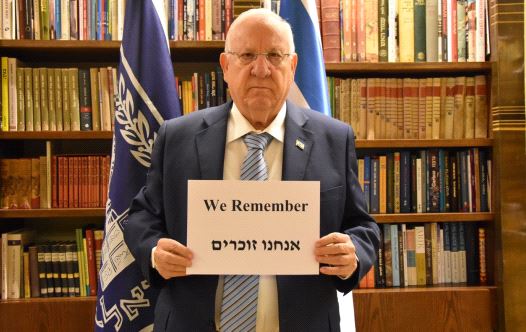
VILNIUS, January 8, BNS–The presidents of Lithuania and Israel on Sunday underlined the importance of preserving the heritage of Lithuanian Jews and of expanding business ties as they marked 25 years since the establishment of diplomatic relations between the two countries.

“Everywhere you look, the ties between our two nations get deeper and stronger, the olive and oak, growing as one,” Dalia Grybauskaite and Reuven Rivlin said in a joint statement.

The two presidents underscored the need to ensure the Holocaust never happens again through remembrance and education.

“We have to commemorate the past by honoring the innocent victims and the righteous, by studying the perpetrators and collaborators as well as by building bilateral relations based on friendship and mutual respect,” they said.

Grybauskaite and Rivlin said: “There are numerous areas in which the relations between Lithuania and Israel are already quite strong and many more spheres in which the partnership could and will be expanded.”

Lithuanian Political Illusions: The “Policy” of the Lithuanian Provisional Government and the Beginning of the Holocaust in Lithuania in 1941

The Lithuanian Jewish Community is publishing a series of articles by the historian Algimantas Kasparavičius, a senior researcher at the Lithuanian History Institute.

kasparavicius

Part 1

In Lithuanian historiography and in the public socio-cultural discourse, Lithuania’s greatest tragedy is often considered the Soviet occupation of 1940, which quickly turned into annexation and the loss of statehood. While not denying the historical significance of this catastrophe for modern Lithuanian statehood, considering the wider and deeper historical view, this is not entirely fair or moral historically. The greatest 20th century tragedy really came upon Lithuania not in June of 1940, when freedom and statehood was lost, but a year later when the Holocaust began in Nazi-occupied Lithuania. The greatest 20th-century tragedy for Lithuania is the destruction of the Jewish community which had lived for half of a millennium and had created a civic Lithuanian identity. Even the loss of national statehood is not an irreversible process, as shown by the experience of many peoples. When a nation loses statehood during critical historical circumstances, after the geopolitical situation changes for the better it is possible to restore it. That’s what Lithuania did as well on March 11, 1990. But the former Lithuanian Jewish Litvak community, rich in all senses, will never be restored, unfortunately. And that can only mean one thing, that our Lithuania, which for many Lithuanians still represents, as Dr. Jonas Basanavičius said, “the home of the people,” will remain diminished, darker, emptier, weaker and more fragile. In terms of civilization. Emotionally. Culturally. Demographically. Geopolitically.

What We Lost in WWII

by Marius Debesis
15min.lt

You could characterize Vilnius today as a city emerging from post-traumatic stress syndrome, covered with the wounds of war still visible to the naked eye, or sometimes only visible under profound examination, scars testifying to the city’s losses, slicing through the street plan but every year receding into the distance, into oblivion. To really understand Vilnius, one must consider the totality of losses, summing up what the capital lost during the war.

vilnius-1944-58653a4296640

Walking through the city looking for the “heritage” of the war, it’s useful to define several categories for what the Lithuanian capital lost during the war. The one to begin with is not cultural, but rather personal losses, from the loss of people who were an indivisible part of the city of Vilnius. Consider the most painful loss—the Holocaust of Vilnius Jews, which deprived the city of one of its greatest portions of identity, so significant that in Jewish culture Vilnius was bestowed the title of Jerusalem of the North. Although this text talks mainly about Jews, death hovered above everyone in Vilnius without regard to social status or religious or political conviction.

mazasis-getas-vilnius-po-58653a4459f50

Full story in Lithuanian here.

Call for Information about Jews Murdered near Švenčionėliai, Lithuania, in 1941

svencionys1

Please contact Moshe Shapiro at moisa50@mail.ru if you have any information.

No one who witnessed or lost relatives to the tragic events in the Švenčionys region in October of 1941 will ever forget.

All Jews living in the Švenčionys region, including doctors, bankers, rabbis and any number of other professionals, were locked up in a ghetto and then shot that fall after the Nazis occupied New Švenčionys (that’s what it was officially called in the Lithuanian Soviet Socialist Republic) in October, 1941.

A site for the mass murder of Jews in the Švenčionys region was selected in a pine forest in the village of Platumai near the town of Švenčionėliai across the Žeimena River. The remains of military barracks still stood there. Local police received secret orders in August of 1941 for sending all Jews to Švenčionėliai and stealing their property. Jews held in the barracks for a week suffered hunger and cold besides the looming uncertainty over their future. The barracks were surrounded by a fence and the area around that had land mines.

In October the local district police chief delivered the order by the German regime to shoot all the Jews of Švenčionys and the 22 surrounding towns and villages. About 8,000 Jews were murdered in cold blood at the execution site in October. Locals were shocked.

A memorial first erected in 1961 to the murdered Jews hasn’t been repaired in more than a decade. After standing there for two decades it needed repairs in 1984 and was reconstructed by the architect Astutė Bučinskaitė then. It was again reconstructed in 1993. The centerpiece is a granite slab with the names of the shtetls. The last major refurbishment was in 2002 when benches were installed and gravel brought in.

The Švenčionys Regional Jewish Community wants to fix up the memorial and better commemorate the victims.

The project will cost about 6,200 euros. The Ethnic Minorities Department under the Lithuanian Government will provide partial funding, and the Švenčionys regional administration will also make a financial contribution, totaling 20 percent of total costs or 1,200 euros.

The project will learn the names of victims and compile a comprehensive list, and the new memorial will include an information board. Although some names are known from the Lithuanian archives and from the book in Hebrew and Yiddish called the Book of Memory of the Twenty-Three Jewish Communities of Švenčionys Region published in Tel Aviv in 1965, there are still real difficulties in learning the specific identities of those who were murdered and buried across the river from Švenčionėliai.

Švenčionys Regional Jewish Community chairman Moshe Shapiro is highly cognizant and appreciative of the grave responsibility posed by this important project, and is asking those who survived the Holocaust from the smaller towns in the Švenčionys region, their children, grand-children and relatives, wherever they might live now, to share any information they might have, including stories and the names and surnames of the victims.

Please contact Moshe Shapiro at moisa50@mail.ru if you have any information.

svencionys3

Vilnius Metropolitan Gintaras Grušas’s Hanukkah Greetings

grusas

December 21, 2016

To Faina Kukliansky, chairwoman
Lithuanian Jewish Community

I sincerely congratulate you and the entire Lithuanian Jewish (Litvak) Community on the holiday of Hanukkah.

Together with you I take joy in the miracles of the Creator, which He has done for your people and is now effecting in the life of every human being.

May the light of the Hanukkah candles, enjoining us to give thanks to our Creator, fill your community to overflowing with peace and joy, and encourage all of us to spread the goodness and hope of God to all people.

[signed]
+ Gintaras Grušas
Vilnius metropolitan archbishop

Shalom (from Birzh)

birzu-ugniag-768x478
Executive board of Association of Biržai Firefighters, 1936. First person sitting on left: Boruch Michelson. Third seated from left: G. Belickas. First standing from left: S. Chaitas. Fifth from left standing: I. Masas. Photo courtesy Sėla Museum.

by Borisas Januševičius

This is a greeting among Jews. It is the wish for peace, spiritual peace and security. Lithuanian “sveikas” corresponds to “shalom aleichem,” peace to you [sic]. I heard these types of greetings often in my childhood. Parents—neighbors, Jews—of my friends (in Jewish jargon khebra: meydal and bakhur) used to use them. We also used this jargon, Kučinskų Aliukas, Kėkštų Zenka, Karpuškų Liolė and others, including me. Our chebra, our friends of darker extraction have been lying in the ground in Pakamponys for 75 years now. Their memory is fading fast into the past.

Conflicted Thoughts against the Backdrop of Noble Action

For some time now I have been watching the burgeoning interest in the Jews who lived so numerously in Biržai between the wars. Their mysterious codes are deciphered, projects are planned and carried out and the attempt is made to provide a background of international significance to this activity. The Israeli ambassador, the deputy US ambassador, Lithuania’s chief rabbi [sic], the chairwoman of the Lithuanian Jewish Community, the president of the Brooklyn Synagogue, Lithuanian members of parliament, Kaunas archbishop Lionginas Virbalas, representatives of the Jewish communities of certain cities and many others all rushed to Biržai. The men of Biržai donned Jewish “yarmulkes.” The sorrowful hymn of the cantor rang out across the Jewish cemetery. Some of the guests only then learned that there is a place called Biržai in this world with its unique Jewish and Karaite cemetery.

Unfortunately, Sheftel Melamed was not among those who turned, who used to call himself the only surviving Jew in Biržai. Melamed died more than a year ago. Sheftel and his brother went to Russia in June of 1941 and that’s how they survived. When he came to his hometown in 1945 he didn’t find his parents’ home on Vytauto street, it had burned down. Neither did he find the relatives he had left here four years earlieir. His mother Paya, his father Peisach and his brother Hirsh were shot in Pakamponys.

Full story in Lithuanian here.

Challenges of History after the Hanukkah Miracle

ausra-pozeraite

Dr. Aušra Pažėraitė

The discussion rages on on the social networks about the wisdom or folly of lighting large menorah displays in non-Jewish cities, whether or not to say the blessing, and how much authentically Jewish is really left in the holiday of Christmukkah, as images of square and overturned Christmas trees with branches forming menorahs are exchanged. In respect to all this, we could turn back again to the historical opposition between Greek and Jew and the Jewish victory. The more salient aspect today, though, having in mind the different possible interactions of a religious or ethnic minority with the dominant host culture, is the history of what happened “Post-Hanukkah.”

It’s ironic that, as researcher Erich Gruen points out, after the Hasmoneans won the independence of the state of Judea and established a royal dynasty, and after they established the Torah as the law of the land (or constitution), the Hellenization of the country only increased, and accelerated throughout the period of the kingdom. Martin Hengel also believes the Judaism of Judea in the period was highly Hellenized, although he tries to frame it within “the conflict between the Judaism of Palestine and the spirit of the age of Hellenism” and is forced to explain the crisis of the Maccabee era did lead to a reaction in Judea which put a halt to syncretism, channeled intellectual activities to Torah study and blocked any criticism of the cult and the law. As many authors note, the influence of Hellenism in Judea is obvious, while literature written in the Land of Israel clearly differs from that written in the Diaspora. There Hellenistic literature was neither completely assimilated, nor was it entirely rejected. (As an analogue one might think about contemporary Israel which includes a completely modern secularism differing in none of its essentials from that of the West, and also extremely segregated religious communities.)

Historian Louis H. Feldman presents different artifacts discovered by archaeologists in the Land of Israel from Hellenistic times. Among them are representations of different Greek gods and figures in synagogues, private homes and other locations. Feldman says, based on Rab Gamaliel (first century CE) in the mishnah tractate Avoda Zara, the rabbis of the period weren’t frightened of the pagan deities and didn’t believe they could somehow engage Jews in the pagan cults. Gamaliel says the bath h went to was not the ornament of Aphrodite, but on the contrary, Aphrodite was the ornament of the bath, a mere decoration. This view might have been the one prevailing among the sages of Judea at the time, namely, that the use of Greek gods and other Greek elements in daily life was a degradation of these gods, in modern terms perhaps their “commodification,” and in no way their worship. Feldman shows third-century rabbi Yohan was likewise unopposed to mosaics portraying Aphrodite.

Remembering Osip Mandelstam, Litvak Poet, 125 Years after His Birth

Šiemet minimos 125-osios garsaus poeto, litvako Osipo Mandelštamo gimimo metinės

This year marks the 125th anniversary of the birth of famous Litvak poet Osip Mandelshtam. At the LJC’s Mini Limmud conference held in November, one of the lectures was dedicated to the work of the famous poet. The lecture was by Ellena Suodienė, who is the author of 16 books of poetry and defended her doctoral thesis on the Russian poetry of Marina Tsvetaeva. Suodienė was awarded the Golden Quill diploma of the European Arts and Literature Institute and taught at the Kaunas Liberal Arts Faculty of Vilnius University until the year 2000. She published three books of poetry while she was teaching. She is the currently the hostess of the Nadezhda Russian Meeting Club in Kaunas. Suodienė has dedicated much of her time and research to the life and work of Osip Mandelstam and even wrote a poem about him.

On the 125th anniversary of his birth we are again reminded Osip Mandelstam is one of the most famous Litvaks on the world stage. Many remember him as a brilliant poet who suffered under the persecution of the Stalin regime. Suodienė calls him a martyr to poetry.

Holiday Greetings from Gediminas Kirkilas

kirkilas-page-0-1

Deputy speaker of parliament and former prime minister Gediminas Kirkilas sends holiday greetings to the Lithuanian Jewish Community. Unofficial translation:

Dear ladies and gentlemen,

I greet you on the occasion of the coming holiday, the most beautiful holiday of the year and the coming New Year, 2017. This is a special time to remember all of you, to take joy in our having spoken, shared, sympathized and learned from one another. This is a time for sincere and heartfelt greetings. May harmony prevail in your home, may your hearts be filled with warmth and may success follow upon your new endeavors.

Yours,

[signed]
Gediminas Kirkilas,
deputy speaker,
chairman of the European Affairs Committee
Lithuanian Parliament

Discover, Recognize, Accept

One beautiful December afternoon director Vida Pulkauninkienė and members of the Dukstyna Tolerance Education Center travelled to Vilnius to meet with Jewish Community member Geršonas Taicas. The knowledgeable Taicas took them on a tour of the Vilnius Old Town and told them about famous Jewish personalities.

During the walking tour Taicas took them to the remnants of the old city wall where in the early 17th century the Bastillion was built at the Subocz Gate. This is a defensive fortification consisting of a tower, an artillery section and a tunnel connecting them. From there they walked to a location where the city and its surrounding areas are clearly visible and took in the view.

On Strazdelio street they saw the building where the Romm publishing house operated.

They also saw the building where Jascha Heifetz, the famous 20th century violinist, studied.

New York Times: Ponar Top Science Story in 2016

17yearend-ponar-jumbo
Jewish forced laborers dug a tunnel from this holding pit near Vilnius, Lithuania, into the surrounding forest. Photo: Ezra Wolfinger for NOVA

In a look back at the top science stories of 2016, the New York Times science desk included non-invasive archaeology last summer at Ponar outside Vilnius. In “Evidence of a Great Escape” (not to be confused with The Great Escape at Stalag Luft III in Poland), New York Times science writer Nicholas St. Fleur talks about the discoveries made there.

§§§

In 1943, the Nazis forced 80 Lithuanian Jews to dig up the rotting bodies of their murdered neighbors, pile them on top of wood and burn them.

They were then ordered to mix the ashes with sand and bury the remains so no one would know of the atrocities committed at Ponar, an extermination site where the Nazis executed more than 100,000 people.

Hanukkah and the Light of the Torah

ausra-pozeraite

Dr. Aušra Pažėraitė

The Talmud (Shabbat 21b) speaks rather laconically of the origins of this holiday:

“Kislev 25, the days of Hanukkah which are eight, there is no mourning, there is no fasting during these days. When the Greeks came into the Temple, they polluted all the oil in the Temple, and when the Hasmonean dynasty overcame and defeated them, they checked [the Temple] and found just one jug of oil, which was in its place, and was sealed with the seal of the High Priest. But in it there was oil [only sufficient] for burning for just one day. A miracle occurred in connection with it: it burned for eight days. The next year they established them [these days] as holy days for giving glory (hallel) and thanks.”

The retelling isn’t as comprehensive as found in the Christian Bible where the two Books of the Maccabees written in Greek are found. They tell a longer story of Jewish persecution during the reign of the Hellenistic king of Syria Antiochus Epiphanes, the Jewish revolt under the brothers Maccabee and their victory. The Greek telling is full of rhetorical details speaking to how widespread Greek culture had taken root throughout the nation, even among the priesthood of the Temple in Jerusalem: “Now such was the height of Greek fashions, and increase of heathenish manners, through the exceeding profaneness of Jason, that ungodly wretch, and no high priest; That the priests had no courage to serve any more at the altar, but despising the temple, and neglecting the sacrifices, hastened to be partakers of the unlawful allowance in the place of exercise, after the game of Discus called them forth; Not setting by the honors of their fathers, but liking the glory of the Grecians best of all” (2 Maccabees 4:13-15). Athletics were practiced in the nude, and so displayed the evidence of circumcision, which caused shame, since it didn’t fit with the Greek ideal of manly virtue, kalokagathia. It tells how the Temple was looted and desecrated, and renamed Jupiter Olympus. Demands by the “Greek” regime to violate the Torah are also enumerated, and the story of the martyrs who refused to do so is provided. Many of the details of the stories are unclear to historians, but a general picture of the times is more or less provided. And this includes not just the brutal actions of the Hellenistic regime, but also the attraction and endless temptation Hellenistic thought and the Hellenistic lifestyle exerted.

Respect for Ethnic Community Heritage Successful Element of Integration

montvydaite

The Ethnic Minorities Department under the Lithuanian Government held a discussion called “Respect for Ethnic Community Heritage a Successful Element of Integration” just before Christmas where heritage specialists, representatives of Lithuania’s ethnic minorities and members of the press discussed ethnic heritage.

Ethnic Minorities Department director Dr. Vida Montvydaitė opened the discussion noting the topic of heritage unites all of the country’s communities and associations.

varnaite

Diana Varnaitė, director of the Cultural Heritage Department under the Lithuanian Ministry of Culture, said Lithuania’s cultural heritage is reflected in the country’s ethnic associations and their stories in the context of the development of the Lithuanian state. “Our state is very rich in associations who have created symbols. The most easily and most frequently recognized ones are sacred sites,” she said, noting many associations hold dear their historical cemeteries. She said there is often a lack of knowledge preventing recognition of this diversity, so that the ethnic communities are often the best partners in heritage protection work, and that her organization has great expectations of the Ethnic Minorities Department. Varnaitė said recognition of heritage is the key to its preservation. “What we recognize, what we hold dear, becomes part of us, our communities, the ethnic associations themselves and the local communities.”