Heritage

New LJC Project to Make Recommendations on Anti-Semitism at EU Level

Remembrance. Responsibility. The Future. These are the sequential steps leading to real changes in society. The future of democracy and tolerance depends on memory and responsibility assumed, allowing for moving forward. A step towards the future–after surveying, judging and adopting expertise from the best initiatives aimed at fighting discrimination–this is the goal of this new start-up project.

The new project is called Development and Publication of Recommendations for Actions to Fight Anti-Semitism and Romophobia in Lithuania.

The project is supported by the Erinnerung, Verantwortung und Zukunft foundation or EVZ in Germany. This foundation supports systematic and long-term studies of discrimination against and marginalization of Jews and Roma in Europe.

The Lithuanian Jewish Community has brought together a group of leading experts from among Lithuanian human rights organizations, community activists, academics and specialists from abroad. This group is undertaking to come up with effective and valuable recommendations on actions for fighting anti-Semitism and Romophobia in Lithuania.

Former Vilnius Ghetto Library Receives Protected Status

bns_logo_v2

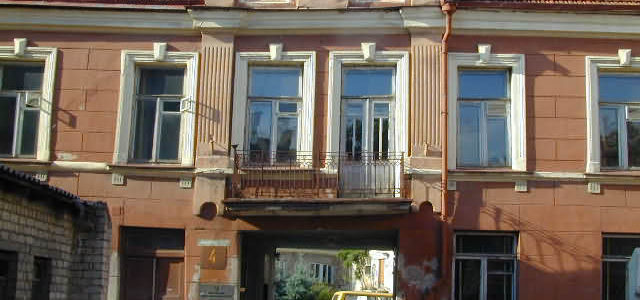
Vilnius, March 22, BNS–The building of a former Jewish library in Vilnius has been entered on the registry of cultural treasures and there are plans to house a Vilnius ghetto museum there.

The Cultural Heritage Department announced the building with a commemorative plaque at Žemaitijos street no. 4 is being provided legal protection for its valuable archaeological, architectural and historical characteristics. The first council for assessing real estate cultural heritage at the department made the decision.

Cultural Heritage Department director Diana Varnaitė the surviving building which was part of the Vilnius ghetto and where the Mefitsei Haskalah library operated and later the Vilnius ghetto library is not currently being used and belongs to the Vilna Gaon State Jewish Museum.

“At [the museum’s] initiative there are plants to set up a museum commemorating the Holocaust in Lithuania and the Vilnius ghetto which will exhibit the vast Jewish cultural heritage and the history of the Holocaust in Lithuania. The names of Holocaust victims are read out there annually to mark the day of Jewish genocide,” director Diana Varnaitė said.

Žemaitijos 4 250px-Vilna1

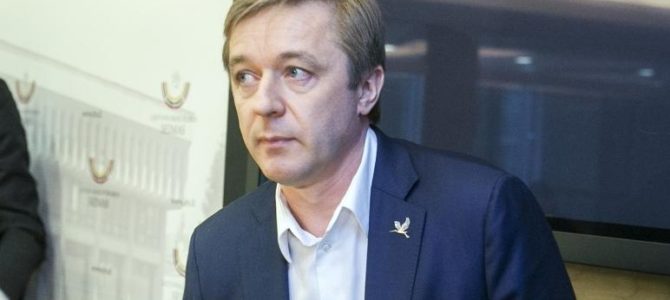
Insults to Jews under the Sponsorship of Ramūnas Karbauskis

Lzinios.lt

The newspaper Ūkininko patarėjas [Farmer’s Helper], 30% of whose stock is owned by Union of Peasants and Greens [ruling] party leader Ramūnas Karbauskis, is printing articles raising doubt and uncertainty concerning the conferring of a state award to former ghetto inmate and Soviet partisan Fania Brancovskaja, articles which are insulting to the Lithuanian Jewish community. Historian and MP Arvydas Anušauskas says he thinks these sorts of publications bring to mind Nazi propaganda and contribute to the sowing of ethnic discord.

“The Lithuanian Jewish Community strives to base its words on facts, documents checked a hundred times before making a statement. These sort of accusations and this kind of rhetoric being published by Ūkininko patarėjas is, in my understanding, at the very least unethical,” Lithuanian Jewish Community chairwoman Faina Kukliansky told [the newspaper] Lietuvos žinios.

She was talking about publications in Ūkininko patarėjas which raise doubts concerning the actions during World War II of Fania Brancovskaja. Brancovskaja was conferred the Order of the Cross of the Knight “For Merit to Lithuania” on February 16 this year. Some publications have claimed Brancovskaja, who fled the Vilnius ghetto and joined the Soviet partisans, is complicit in the mass murder of residents of the village of Kaniūkai [Lithuania] carried out in January of 1944, although research by experts from the Center for the Study of the Genocide and Resistance of Residents of Lithuania found she had not taken part in that operation.

Going on Speculation

The March 14 issue of Ūkininko patarėjas contained an article stating: “On February 21 Ūkininko patarėjas was the first media organ in Lithuania to report to the public the President’s Office on the occasion of February 16 [Lithuanian Independence Day], by awarding the ‘knightess’s’ cross to a Soviet agent of diversion, to member of the Jewish gang which exterminated the village of Kaniūkai in Eastern Lithuania Fania Brancovskaja, in truth awarded and rehabilitated all the perpetrators of the genocide of the Lithuanian nation.”

Full story in Lithuanian here.

Department of Ethnic Minorities Presents Virtual Tour of Heritage Sites

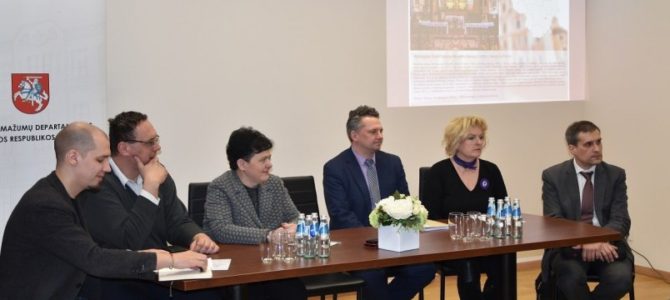
The Department of Ethnic Minorities under the Government of the Republic of Lithuania invited those interested in cultural heritage to the launch of their multimedia DVD March 16. The DVD presents moveable and non-moveable heritage objects and sites of ethnic minorities living in Lithuania. The disc contains panoramic photographs of Lithuanian ethnic minority heritage sites by photographer Kostas Šukevičius. This section of the disc includes heritage associated with the Polish and Jewish communities in Lithuania.

Speakers and participants at the event included Cultural Heritage Department director Diana Varnaitė, senior archivist of Lithuania Ramojus Kraujelis, acting director of the State Tourism Department Indrė Trakimaitė-Šeškuvienė, journalist and author Aurelija Arlauskienė who has written a number of books about Lithuanian cultural sites including about the Paulava Republic, and Lithuanian Jewish Community heritage specialist Martynas Užpelkis. Donatas Puslys, editor-in-chief of the website bernardinai.lt, was moderator.

Full story in Lithuanian here.

Holocaust Researchers Meeting in Vilnius

Vilniuje susitinka Holokausto tyrėjai

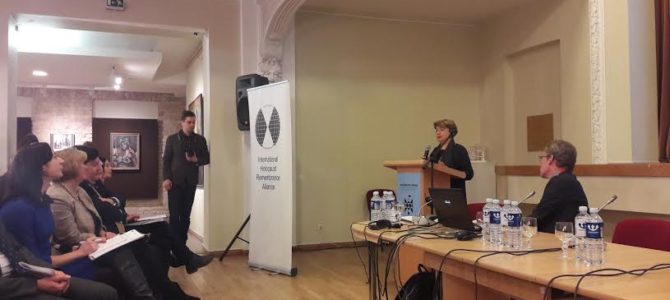
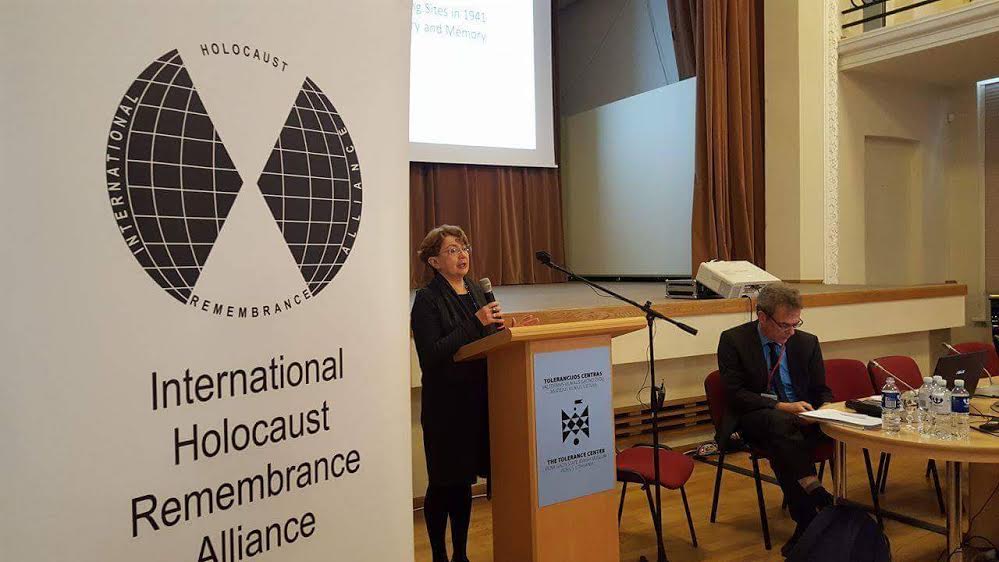
Vilnius, March 22, BNS–The two-day conference “The Beginning of Mass Murder: Identification and Remembrance of Mass Murder Sites from Summer and Fall of 1941” began at the Vilna Gaon State Jewish Museum in Vilnius Wednesday. Lithuanian Jewish Community chairwoman Faina Kukliansky was a speaker.

IHRA3

The International Holocaust Remembrance Alliance with 31 member-states and a number of historians, educators, museum specialists and other Holocaust researchers from around the world organized the conference. Lithuania acceded to IHRA membership in 2003 but this is the first time an international IHRA conference has been held in Vilnius, a museum representative said.

The two-day conference is being hosted by the Tolerance Center of the museum and is dedicated to identifying, marking and commemorating mass murder sites in the Baltic states, Romania, Ukraine and Belarus.

South African Visitor at Panevėžys Jewish Community

Psychiatrist Danella Eliasov from the Republic of South Africa visited the Panevėžys Jewish Community March 16. Her grandparents, great-parents and relatives lived in Kupiškis where there was a large Jewish population before the Holocaust. Danella talked about her family and wanted to learn more about the fate of the Jews in Lithuania during the Holocaust. After a fruitful discussion she thanked Panevėžys Jewish Community chairman Gennady Kofman for the warm reception.

Special Celebrations at the Šiauliai Jewish Community

Last weekend was special for the Šiauliai Jewish Community. Friday many members of the community gathered to celebrate the Sabbath conducted properly by Rabbi Kalev Krelin. The men went for prayer to the synagogue and the women lit the candles to the kiddush and challa. We had a special guest: Israeli ambassador to Lithuania Amir Maimon paid an unofficial visit.

At the culmination of the evening the entire community enjoyed kosher floimen-tzimmes.

Early Saturday morning the men gathered again for prayer at synagogue with the rabbi.

In the evening all members of the community dressed up in carnival costumes and masks and gathered to celebrate Purim. Rabbi Kalev Krelin read from the Book of Esther and all of us, together and loudly, wiped the name of Haman from history.

This year the holiday coincided with the 27th anniversary of modern Lithuanian independence and the community didn’t neglect that holiday either, singing the Lithuanian national anthem (and Hatikvah).

With our feasting and fun we celebrated Purim according to all the Jewish traditions.

Department of Ethnic Minorities to Launch DVD on Polish, Jewish Minorities in Lithuania

The Department of Ethnic Minorities to the Government of the Republic of Lithuania invites the public to attend the launch of a multimedia DVD on Polish and Jewish heritage in Lithuania.

The event is scheduled for 2:00 P.M. March 16, 2017, at the Department of Ethnic Minorities building at Raugyklos no. 25 in Vilnius.

For more information and the register, please email informacija@tmde.lt

Purim at the Kaunas Jewish Community

Kauno žydų bendruomenės Purimo šventė

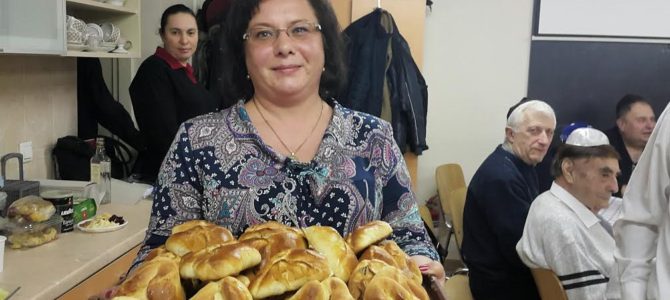
Members of the Kaunas Jewish Community celebrated Purim wishing one another good fortune, joy, success and inner and world peace. As in earlier years specially-baked homentashen added to the festivities. The Lithuanian Jewish Community’s social programs department and the Goodwill Foundation helped make the celebration possible.

Purim: Shame, Power and Dumb Luck


Andres-Spokoiny-medium

by Andrés Spokoiny

What if we are wrong about Purim? What if Purim is not the joyful holiday that we think it is, but a mordant exercise in self-criticism, a painful look at the mirror, a scathing self-deprecation designed to inspire shame rather than glee?

Let’s go back to the basics of the story: King Ahasuerus of Persia tries to publicly humiliate Queen Vashti. The Queen refuses and Ahasuerus sends her away. He replaces her with Esther, a Jewish woman who is the cousin of Mordechai, a Jew of some renown. Mordechai subsequently uncovers a plot to kill the king, but does not immediately receive any reward. A showdown takes place between Mordechai and the evil viceroy Haman, who demands that all subjects bow to him. Mordechai refuses and Haman convinces the king to exterminate all the Jews, because they are a people “scattered among the peoples of all the countries of your empire, whose laws differ from every other people, and they don’t obey the laws of the king” (Esther 3:8). Haman draws lots and determines that the 14th of Adar will be the day of the massacre. (Purim means “luck” or “lots”). Esther plans a convoluted plot to expose Haman in front of the king by revealing her own true identity and accuse the viceroy of disloyalty. Haman gets hanged on the same tree on which Mordechai was supposed to be executed, and the Jews go on a rampage to kill those who sought to harm them. Since then, and for some 2,500 years and counting, we party and get drunk. In the famous epigram: they tried to kill us, they failed, let’s eat and drink.

Purim at the Panevėžys Jewish Community

Purim is the spring holiday when we celebrate the rescue of the Jews from death in Babylon. On March 12 the Panevėžys Jewish Community began the celebration with chairman Gennady Kofman reading the Purim story out loud, the Book of Esther from the Bible which tells of the destruction facing the Jews living in Babylon and the miracle of their rescue due to the efforts of queen Esther, the Jewish wife of the Persian king. Not only were the Jews saved, they defeated the king’s evil vizier Haman who chose the day for the destruction of the Jews by casting lots, but who was himself punished. Many children attended the Panevėžys Jewish Community’s Purim celebration. There was a dining table for children, the children put on plays and watched films and concerts in connection with Jewish history. Purim is the happiest Jewish holiday and there was much song and much laughter. Everyone received a small gift as well.

Lithuanian Jewish Community Chairwoman Faina Kukliansky’s Greetings on March 11, Day of Restoration of Lithuanian Independence.

I wish all members of the community a happy holiday!

For Litvaks Lithuania is the land of our ancestors, and March 11, the day 27 years ago when Lithuanian independence was restored, is an important holiday for us, marking as well the beginning of the rebirth of the surviving Jewish community. March 11 is for each of us an exceptional and dear day, and we cannot allow ourselves to forget how important the state where we live and where our children grow is to us. In 1918 as the first Republic of Lithuania was being born her Jewish citizens volunteered to fight for Lithuanian freedom, and went on to foster the economic and social welfare of this state.

In the run-up to March 11, significant activity by the Lithuanian Jewish initiative group took place in 1988 dedicated to the rebirth of Jewish culture. After the Lithuanian independence movement Sąjūdis was established, Lithuanian Jews were faced with the dilemma of how Jewish relations with the Lithuanian national movement would develop as the wounds of the Holocaust remained painful, recalling the tragedy which took place in this country.

Along side the rebirth of Lithuanian independence, first came the rebirth of Jewish cultural activity, and the Jewish Cultural Association was the first to hold a congress, beginning the conversation about the destruction of the Jewish community during the Holocaust in 1989, for the first time since the decline of the Soviet era in Lithuania. I have to say Jewish-Lithuanian relations in the historical context, their evaluation and research began exactly with the rebirth of independence when there had to be an assessment of the Holocaust and the active role played by Lithuanians in it had to be admitted. There were also efforts made to help Jews restore their Jewish identity.

The Jewish communities in the shtetls were exterminated in the Holocaust, the shtetls are gone and Yiddish is no longer spoken in Lithuania. Currently the Jewish communities in Vilnius, Kaunas, Klaipėda, Šiauliai, Panevėžys and Švenčionys have been re-formed. We still dream of a revival of the Yiddish language.

In the recent past we have sensed the emergence of a new generation in Lithuanian society who are interested in Jewish history and the life of the Jews in Lithuania, and slowly but surely stereotypical thinking is fading away.

When we speak of the values of March 11, we underline human rights and freedoms and their necessary consolidation and growth. We hope for the generation who understand their importance and who cherish and protect these rights and freedoms, and who connect love for their native land with self-respect and respect for all of its citizens.

Bagel Shop Café Wishes You a Happy Purim and Offers Traditional Holiday Foods

Hag Purim sameakh!

The Bagel Shop this week offers vegetarian bebelakh. During the Purim holiday period we are also making a variety of delicious treats including hamentashen and serving wine. We are making vegetarian dishes in honor of Queen Esther, who was a vegetarian. The Bagel Shop is located at Pylimo street no. 4 at street level in Vilnius.

Bean bebelakh, a recipe from Riva Portnaja’s mother Sara Berienė

Sara always made this dish for the Purim holiday where all dishes were vegetarian in honor of Queen Esther.

Soak a liter of large beans overnight, boil in salted water for a long time until they go soft. Served cold sprinkled with salt. Simple and delicious!

Separate Program for Jewish Heritage Proposed


Diana Varnaitė. Photo courtesy Lithuanian Parliament

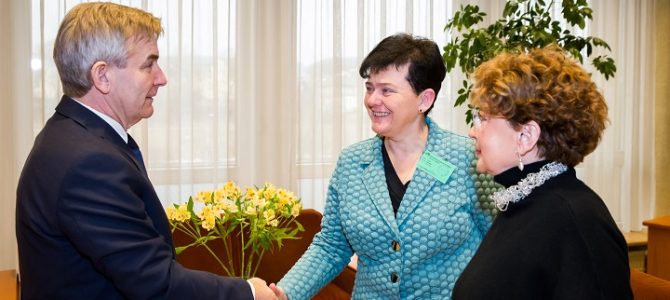
BNS–Director of Lithuania’s Cultural Heritage Department Diana Varnaitė is proposing separate financing for preservation of Jewish heritage. Lithuanian parliamentary speaker Viktoras Pranckietis approves the idea.

“We would think it would be appropriate to increase financing, and I told the speaker of parliament about our hope that it would be worthwhile for all of us together, with the leadership of the Ministry of Culture, to discuss … a separate line for Jewish heritage, not just for synagogues, because we have some [other] unique monuments, for example, the former religious school, the yeshiva building in Telšiai. These are sites in which we should take pride, as our own heritage, and which would make our [rural] regions more attractive and draws for tourists,” Varnaitė told BNS Wednesday after a meeting with the parliamentary chairman.

Parliamentary speaker press representative Dalia Vencevičienė said speaker Pranckietis expressed approval for the idea. “We have a policy direction on heritage and its preservation. The chairman would welcome the idea if the Ministry of Culture adopted a decision on a separate line in the budget,” she told BNS.

LJC Youth Clubs Celebrate Purim

Dear Community members,

The Lithuanian Jewish Community and the Vilnius Religious Jewish Community greet you on the upcoming holiday of Purim and invite you holiday celebrations on March 12.

The LJC youth clubs Ilan, Dubi and Dubi Mishpaha will hold a Purim celebration at 1:00 P.M. on March 12 on the third floor of the Lithuanian Jewish Community. Entrance is free but only those in costume and/or masks will be allowed in!

For more information contact Jelizaveta Šapiro at +370 65527411 or Pavel Guliakov at +370 68542463.

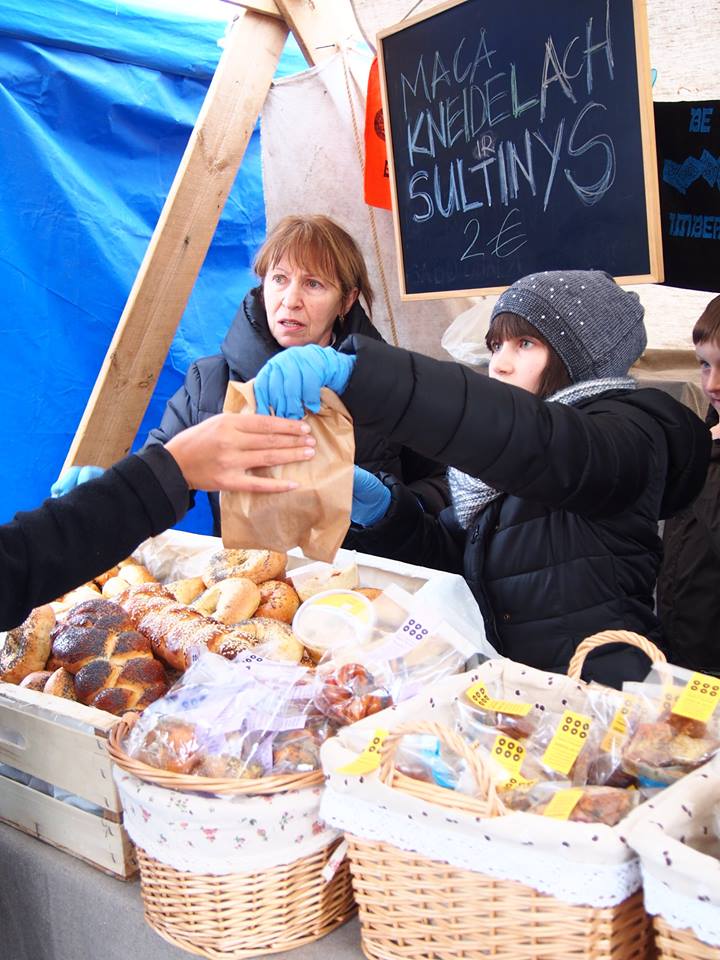
A Big Thank-You for Making Kaziukas Fair Such a Success

17098700_1437182829647139_7414218332616588683_nRiva ir Estera

Lithuanian Jewish Community chairwoman Faina Kukliansky thanks everyone who helped make the Bagel Shop stand such a success at the annual Vilnius event this year, the Kaziukas Fair which began way back in the 17th century.

For their help, a big thank-you goes to Dovilė Rūkaitė, Rokas Dobrovolskisi, Riva Portnaja, Valentina Kot-Osipian, Gražina Pečkuvienė, Michailas Tarasovas and all the volunteers, including Simona Glazkova, Neta and Naomi Alon, Estera Reches, Vincentas Dobrovolskis, Asta Rainytė and her daughter, Elzė Rasimavičiūtė, Justė Čeičytė, Elena Grašytė, Daniela Mendelevič, Akvilė Ferguson and Geoff.

Bravery of a Japanese Diplomat on Exhibit in Cape Town

moirashanghairefugees
“Sugihara didn’t only save my grandfather, he also saved me. Because if not for Sugihara I may very well not be standing here today.” These were the words of Rebbetzen Sarah Feldman of the Gardens Synagogue in Cape Town, speaking on Monday at the opening of the Jewish Refugees in Shanghai exhibition at the South African Jewish Museum. Her grandfather, Rabbi Shimon Goldman, hailed from the city of Shedlitz in Poland.

by MOIRA SCHNEIDER | Feb 02, 2017

When Hitler invaded Poland, signalling the start of the Second World War, Rabbi Goldman, then a teenager, escaped to Lithuania and was fortunate to have been issued a visa by the Japanese consul there, Chiune Sugihara, acting contrary to his government’s express instructions.

“Sugihara was faced with a huge moral dilemma,” Rebbetzen Feldman related.

“His humanity won. Together with his brave wife Yukiko, this righteous couple worked non-stop issuing 300 visas a day – the amount that would usually take a month to issue.” In so doing, the couple saved 6,000 Jewish lives.

Full story here.

About Jews and a Dream

[Note: The proposal Mr. Ivaškevičius makes in the following opinion piece in no way reflects the position of the Lithuanian Jewish Community. In fact, on several points it contradicts the positions of the LJC stated publicly in the past, namely, regarding the rebuilding of the Great Synagogue in Vilnius. Also, at least three Litvak museums, much like the one he proposes, are currently in the planning stage, two in Vilnius, and one scheduled to open in the shtetl of Šeduva in late 2017 or early 2018. The following translation is presented to our readers merely for the sake of information and the interest of our readers.]

by Marius Ivaškevičius
www.DELFI.lt

Yes, again, about Jews. Although, not really, this is perhaps more about us. About Vilnius, really, of which they were a part, and now we are. And this time not about repentance, guilt or about what we’ve lost, on the contrary, about what we can still get back. I want to propose a plan for how our dead Jews could still serve us.

About Vilnius

I love this city and I always tell my foreign friends it is a hidden pearl. When you need peace, it is peaceful. When you want noise and excitement, it has something to offer. The beauty here is obvious, brick-and-mortar and alive, the old architecture, the beautiful men and women, in a word, something to look at. For a long time my stories hit a polite wall of promises: “yes, of course, we will have to go there someday.” Someday, never. But suddenly it began to work. As if my foreign friends had made an agreement among themselves, they began to flood into Vilnius, asking what they should see first in this city.

So I got the opportunity to look at Vilnius not through the eyes of an insider living here, but through the eyes of someone who had just arrived. And I realized Vilnius doesn’t have anything to offer them. The Old Town, sure, it’s charming. But that charm wears off after a half day. You can spend the evening and night on the weekends in the bars. Then what? Then they want museums, but here these, it turns out, are each more boring than the last. Old armor, weapons and glazed tiles they have already seen, the picture galleries are only of local significance, there are no masterpieces and it takes a real fanatic, a tourist dedicated to art, to “consume” what is on offer.

The only thing which is truly not disappointing is the theater. The theaters of Vilnius are world-class and many drama enthusiasts come just for this, to see Nekrošius, Tuminas and Koršunovas in their hometown. Perhaps sometimes they murmur after the show about a lack of subtitles or translation, but essentially they’re satisfied. The plays fill their evenings, and during the day, seeking new experiences, they visit the Museum of Lithuanian Theater and Cinema, certain that it will be of the same high caliber as our theater which it represents. But they find that same museum boredom instead. A stoppage of time and museum women knitting.


Military History: The Career of a Flight Engineer from Zhitomir from the USSR to Afghanistan, to Independent Lithuania

Gena K

by Nataliya Zverko
ru.DELFI.lt

We met Gennady Kofman at a former girls’ school which now serves as the headquarters of the Panevėžys Jewish Community. Reporters were seated and served tea and cookies in a friendly atmosphere, with only the silent photographs on the walls before us to remind us 95% of the Jews resident in the Lithuanian city were murdered in the Holocaust.

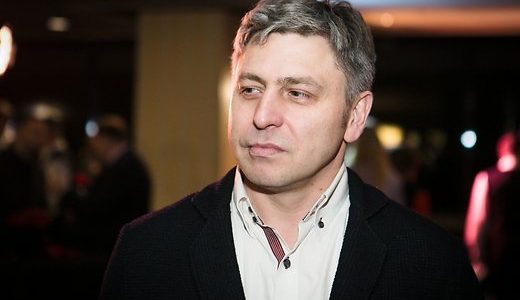
Gennady Kofman, a native of Zhitomir, Ukraine, has been chairman of the Panevėžys Jewish Community since 2001, having returned to the city in 1972 after being graduated from the Kaliningrad Military Aviation School. For a long time he served in the post of software engineer for the Panevėžys military airfield’s radar system, and later flew transport missions in Afghanistan and Armenia. When Lithuania regained independence in 1991, he stayed here, and found himself in a new reality.

Full story in Russian here.