YIVO information

Unique Jewish Archive Emerges in Vilnius

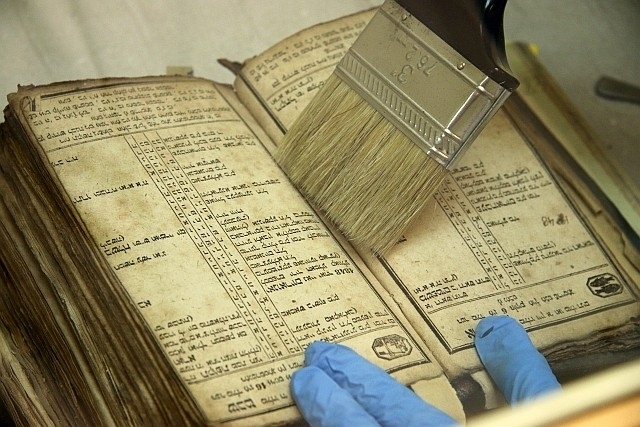
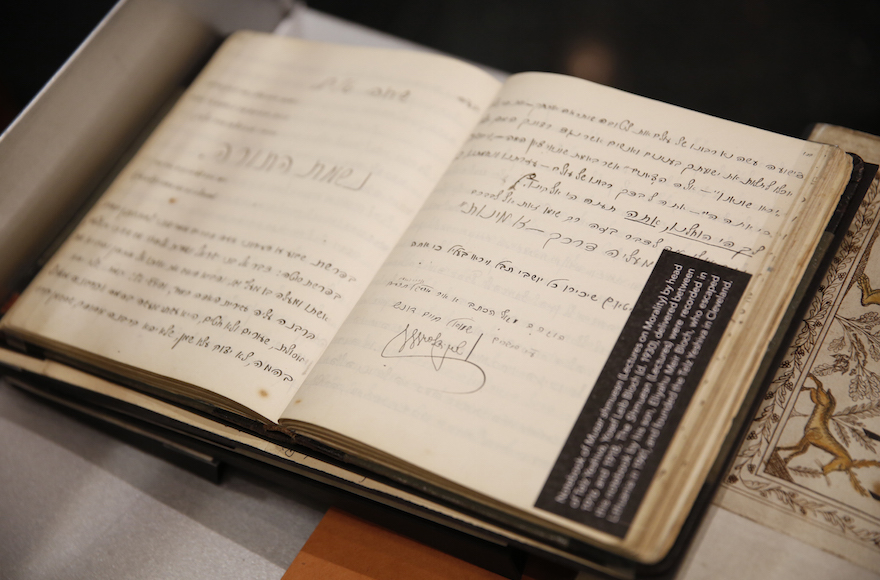
Vilnius, November 3, BNS–As Judaica studies intensify in Vilnius, scholars have identified thousands of important Jewish manuscripts this year which had laid forgotten in a church basement during the Soviet years and were scattered to separate archives for two decades following Lithuanian independence.

Some of the newly identified documents are currently on display in New York City and there are plans to exhibit some of the collection in Lithuania in the near future as well.

Lithuanian National Martynas Mažvydas Library director Renaldas Gudauskas said the identification of ever more documents makes him confident the library currently conserves one of the most significant collections of Judaica in the world.

Hidden at a Church

Vilnius had hundreds of Jewish communal, religious, cultural and education organizations before World War II. YIVO, the Jewish research institute founded in 1925, was an important member of that group. YIVO did work on Jewish life throughout Eastern Europe, from Germany to Russia and from the Baltic to the Balkans, collecting Jewish folklore, memoirs, books, publications and local Jewish community documents, and published dictionaries, brochures and monographs.

Inter-Institutional Cooperation for the Preservation of Lithuanian Jewish Heritage

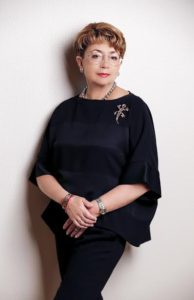
A paper delivered by Lithuanian Jewish Community chairwoman Faina Kukliansky at the conference “Diaspora and Heritage: The Shtetl” held to mark the European Day of Jewish Culture and the Lithuanian Day of Remembrance of Jewish Victims of Genocide at the Lithuanian parliament on September 25, 2017.

The Lithuanian Jewish Community and the Jewish Heritage Today

According to the census of 2011, there are 3,050 Jews living in Lithuania. Other sources say the number is up to 5,000 Jews, of whom 2,000 live in the city of Vilnius. For comparison, in the mid-19th century there were 250,000 Jews living in what is now the territory of Lithuania. Lithuania lost more than 90% of her Jewish community in the Holocaust.

Today Lithuanian Jews are united in 28 non-governmental organizations which are in turn united in the association the Lithuanian Jewish Community. Heritage, although it is very important, is only one of the Lithuanian Jewish Community’s areas of endeavor. The Lithuanian Jewish Community is actively working in providing constant social support to Community members in seven regions of Lithuania, organizes educational programs, keeps alive the memory of Holocaust victims, is carrying out various project activities and is engaged in human rights advocacy.

Returning to the topic of heritage, Litvak heritage means relics of the cultural landscape created over more than 600 years by the community which once reached a quarter million people, spread throughout almost all the cities and towns in Lithuania today. This includes almost 200 cemeteries, more than 200 mass murder/mass grave sites and more than 40 synagogues which have been declared cultural treasures.

The Need for and Experience in Cooperation

The current, post-Holocaust Lithuanian Jewish Community would never be able to guard and conserve that which has been created over centuries throughout the country without the help of governmental and municipal institutions, NGOs and active citizens.

Litvaks in Love

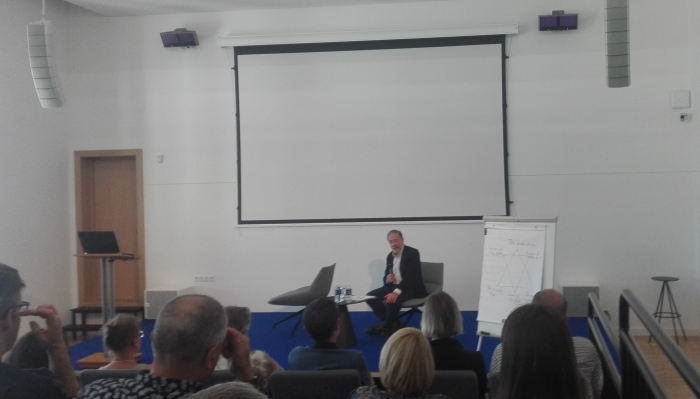
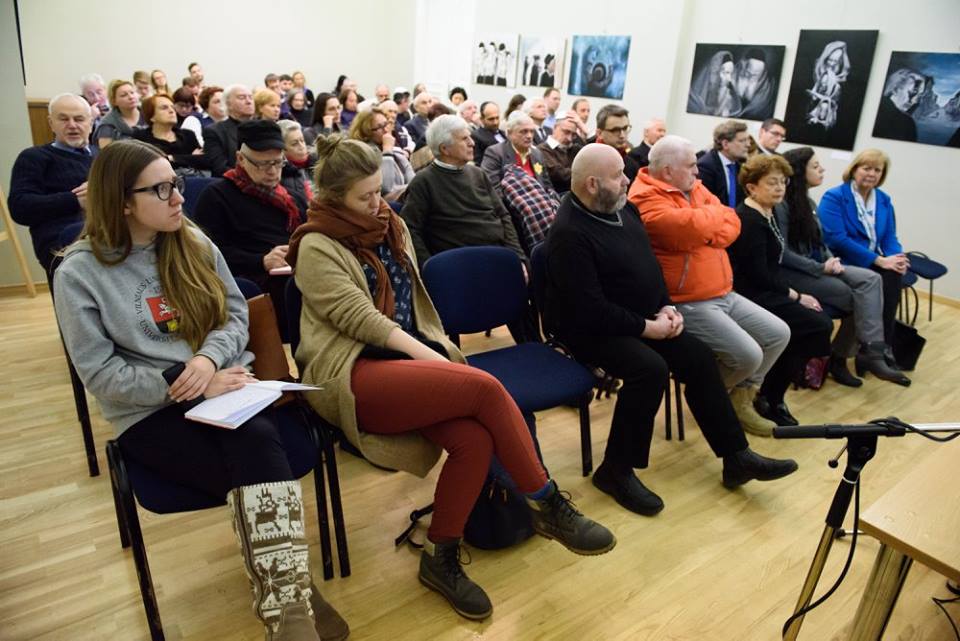
Professor David Roskies delivered an interesting lecture to a medium-sized audience at the new Judaica Center at the Lithuanian National Library Thursday evening.

“Using the tools of a cultural historian, drawing upon my Litvak identity and turning feminism into a source of knowledge, I think I have successfully cracked the DNA of Jewish collective memory. I know what it is, and I know how it works. Jewish collective memory is organized around saints, sanctuaries and sacred times. In this way, each generation of Jews shape a model life, the model community and the model time. You don’t have to be a Litvak to unlock the DNA of Jewish collective memory, but it certainly helps, because Lite [Lithuania] is where this triple axis, this three-pronged model, emerged in bold relief. The model was so stable that it remained in place even when the world began to change. In Lite things really began to change with the rise of religious revival movement called Hassidism at the end of the 18th century. So long as the hassidim were limited to Podolia and Volhynia which, after all, are located south of the gefilte fish line, and where people spoke a different Yiddish, there wasn’t much to worry about. So there was talk about a new cultural hero named Yisroel Ba’al Shem-Tov, better known as Besht. He was a faith healer, a tzadik or saintly person, a righteous person, who engaged in all manner of non-Litvak behavior. He was an effective preacher and teacher, but he came into conflict with renowned Torah scholars, who were the elite of traditional society. Worse yet, he popularized the study of Kabbalah–Jewish mysticism–, he claimed to have paid periodic visits to Heaven and he encouraged mystical prayer performed with bizarre and ecstatic song and dance at all hours. Then, before you knew it, hassidic prayer houses were beginning to appear in Lite, too. The time had come for the rabbinic establishment to take action,” Rosskies said in a lecture which ranged seamlessly from the drier facts of cultural history to his own personal experiences and thoughts, employing moving Yiddish lullabies to make certain points.

People and Books of the Strashun Library Exhibit to Close July 28

Paroda „Strašuno bibliotekos žmonės ir knygos“ veiks iki liepos 28

For those who haven’t seen the exhibition at the Lithuanian National Martynas Mažvydas Library, People and Books of the Strashun Library will close July 28. Judaica Center director Dr. Lara Lempertienė is planning to lead a tour July 28 for those interesting in learning why the Strashun Library looms so large on the Litvak cultural horizon, to be followed by a discussion. She is inviting interested parties to gather in the exhibition hall on the third floor at the library at 3:00 P.M., July 28.

Jewish Deportations Just as Painful as Lithuanian Deportations, Forgotten by Lithuanians

Žydo tremtinio sąvoka Lietuvos visuomenėje šiandien yra beveik užmirštama. Ji tokia pat skausminga kaip lietuvių tremtis

About 1.3% of members of the Lithuanian Jewish community were deported to the Soviet Union in 1941. This percentage of deportations is the highest for any ethnic group in Lithuania. The deportations failed, however, to extinguish Jewish nationalism, and Zionist groups operated underground, organizing Hebrew education and exerting all efforts to allow Jews to leave for Palestine. According to Jewish historiography, in June of 1941 alone about 3,000 Jewish activists from the right and the left and Jewish owners of large industrial concerns and factories were deported. It is a great shame Lithuanian society today has almost no understanding of these deportations, or has chosen to ignore them, designating deportation an exclusively ethnic Lithuanian tragedy.

Historian Solomon Atamuk found there were 16 Jewish daily newspapers, 30 weeklies and 13 intermittent periodicals along with about 20 collections of literature published in Lithuania before World War II. After the June 14, 1940, ultimatum by the Soviet Union to Lithuania and the occupation which quickly followed, the Jewish community bore the brunt of social and cultural repressions. All leftist and rightist Jewish newspapers were shut down. Even Folksblat, popular among Communists and the organ of the Jewish People’s Party, was banned. Beyond the ban on the Jewish newspapers, editors of Jewish publications were fired and the new regime undertook a complete reorganization and shutting down of existing academic institutions. YIVO was made to heel, employees were fired, various books, newspapers and collections were seized. Opportunities to read in Hebrew were systematically lessened and Jewish libraries were shut down.

Four Days with the Lithuanian Jewish Community, Now with Subtitles

Welcome to the Lithuanian Jewish Community, welcome to Vilnius.

You will soon experience it for yourself. This isn’t a promotional film, it’s the reality, slightly beautified. Beautified, because you won’t see all the hard work that goes on every day and the people who do it.

I thank them. We work, we make mistakes, we fall down and we get back up and work harder. But we’re here. There are not so many of us, of course, and we are all different, and sometimes we argue, sometimes we embrace, but we are all here together and we are beautiful, able, talented, loving and dedicated. We’re the Lithuanian Jewish Community, the family of Lithuanian Jews, a part of our country. We have been here for six centuries now. We have experienced the greatest afflictions and disasters but we never gave up and we have remained.

We have to pass something on to our children and grandchildren. I personally want to pass on to them our Jewish identity, my story and deeds and those of my ancestors. I am trying to do this together with the community because I know that I alone will not succeed. I believe it is better to act and to make mistakes than to do nothing.

I wish everyone the greatest success. Let’s take pride in our Lithuanian Jewish Community.

Sincerely yours,

Faina Kukliansky, chairwoman
Lithuanian Jewish Community

§§§

The activities of the Lithuanian Jewish Community are broad-ranging and interesting, and the makers of the following film decided to include footage from just four days in the life of the LJC. To show more would require a series of films.

One of the most important goals of the Community is listening to and taking care of our members, children, adolescents and senior citizens. Care and aid from the Community’s Social Programs Department is allocated to Holocaust survivors, the ill, disabled and socially marginalized.

An important benchmark in our work recently was the restoration and protection of our country’s wooden synagogues, unique in Europe. The opening ceremony for the restored and reconsecrated synagogue in Pakrojis, Lithuania, is included in the film. Work was conducted with the Lithuanian Cultural Heritage Department under the Ministry of Culture and with local municipal and regional administrations.

If the film were continued, we would have included more young people, students, the young Jewish parents clubs, of course our regional Jewish communities and lots of fun moments from the different events and holidays put on by the Lithuanian Jewish Community.

Enjoy.

© 2017 Lithuanian Jewish Community

Launch of Judaic Studies Center

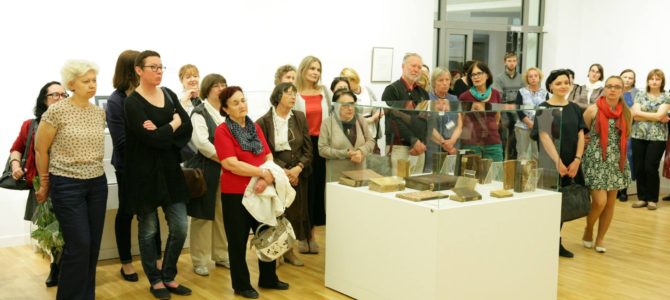
The exhibition “People and Books of the Strashun [Mefitse Haskalah] Library” opened May 22 to mark the public launch of the Judaic Studies Center at the Lithuanian National Martynas Mažvydas Library. Dr. Lara Lempertienė, director of the new center, is the curator of the exhibition and the designer was Center researcher Miglė Anušauskaitė.

The exhibit documents the Mefitse Haskalah Jewish Public Library located on what was then Strashun Street from 1902 to 1940 (and which became the Vilna ghetto library under Herman Kruk until 1943), but also pays homage to Mattityahu Strashun (1817-1885), the bibliophile whose collection was housed at the Strashun Library proper, next to the Great Synagogue, but large portions of which passed through the Strashun street library during the Holocaust. The exhibit includes items from the collections of the Lithuanian national library as well as documents on load from YIVO, the Lithuanian Central State Archive, the History of the Lithuanian State Archive and the Lithuanian Art Museum.

National library general director Dr. Renaldas Gudauskas opened the exhibit at the ceremony Monday. YIVO director Jonathan Brent and Frida Shor, the author of an article about the Strashun Library, were also there.

Attend Opening Ceremonies for New Judaica Studies Center

The Judaica Studies Center of the Lithuanian National Martynas Mažvydas Library was officially established May 3, 2017, but will only open to the public May 22 and May 23 with several events and exhibitions.

The Center’s main function is to further research on the Jewish documentary heritage, carrying out educational and informational projects and publicizing the results. The Center is an open enterprise and aimed at educational cooperation. According to its mission statement, the Center actively publicizes information about the Jewish textual heritage at its events, in the national and international media and on the internet, and also conserves collections of modern Judaica publications.

Program:

May 22

1:00 P.M. Opening ceremony (foyer, fifth floor)
2:00 P.M. Launch of exhibit People and Books of the Strashun Library (exhibit hall, third floor)

May 23

1:00 P.M. Samuel Kassow (USA) lecture Uniqueness of Jewish Vilna (conference hall, fifth floor)
2:30 P.M. Presentation The Vilnius YIVO Project (conference hall, fifth floor)

Full announcement in Lithuanian at the Lithuanian National Martynas Mažvydas Library web page here.

Vilna Gaon Museum on New Jewish Museum Proposal

The Vilna Gaon State Jewish Museum has issued a statement via press release about a recent proposal by Lithuanian officials to set up a Holocaust-free new Jewish museum in the Palace of Sports or next to it on land which contains the centuries-old historic Jewish graveyard of Vilnius.

Let’s Create a Strategic Strategy for Jewish Heritage, Not Disneyland

The Vilna Gaon State Jewish Museum was disappointed by information appearing in the press last week about plans by government institutions to establish another Jewish museum in the Lithuanian capital instead of assuring support for existing projects.

The Vilna Gaon State Jewish Museum, whose sections are housed in authentic buildings closely connected with the Jewish history of Vilnius, has recently been undergoing an intense and productive period. We host international events at the highest level, for example, the International Holocaust Remembrance Alliance conference held on March 22 and 23, and the number of visitors is constantly growing. New permanent exhibitions are being created for installation in our historic buildings, including the opening this fall of a new Samuel Bak Museum, showcasing the Litvak painter’s life and works, and in the near future we also intend to open the Museum of Lithuanian Jewish Culture, aka the Litvak Center and a dedicated Lithuanian Holocaust and Vilnius ghetto memorial museum, which has attracted the attention of international museum organizations including ICOM.

The latter museum is to be housed in the historical building on Žemaitijos street (former Strashun street) which was listed as a cultural treasure last month. This is the building which housed the Mefitsei Haskalah library before World War II and the Vilnius ghetto library during the war. which organized cultural events inside the ghetto and served as a secret meeting place for members of the ghetto resistance organization. In 1945 Holocaust survivors established the short-lived Jewish Museum in the building, quickly shut down by the Soviet government. The Vilna Gaon State Jewish Museum intends to reutilize the building for Holocaust education. After the museum has these additional sections, a unique route will be created for the visitor to explore Jewish Vilna.

Former Vilnius Ghetto Library Receives Protected Status

bns_logo_v2

Vilnius, March 22, BNS–The building of a former Jewish library in Vilnius has been entered on the registry of cultural treasures and there are plans to house a Vilnius ghetto museum there.

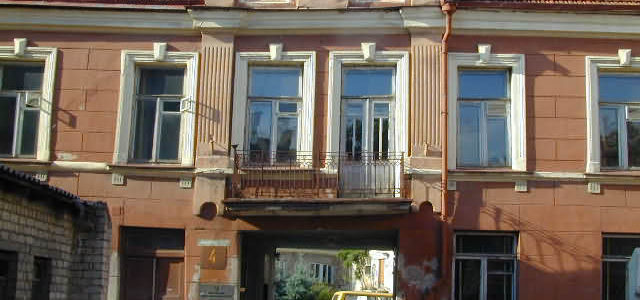
The Cultural Heritage Department announced the building with a commemorative plaque at Žemaitijos street no. 4 is being provided legal protection for its valuable archaeological, architectural and historical characteristics. The first council for assessing real estate cultural heritage at the department made the decision.

Cultural Heritage Department director Diana Varnaitė the surviving building which was part of the Vilnius ghetto and where the Mefitsei Haskalah library operated and later the Vilnius ghetto library is not currently being used and belongs to the Vilna Gaon State Jewish Museum.

“At [the museum’s] initiative there are plants to set up a museum commemorating the Holocaust in Lithuania and the Vilnius ghetto which will exhibit the vast Jewish cultural heritage and the history of the Holocaust in Lithuania. The names of Holocaust victims are read out there annually to mark the day of Jewish genocide,” director Diana Varnaitė said.

Žemaitijos 4 250px-Vilna1

Meeting with Dr. Antony Polonsky

Polonskis bendr

LJC members and members of the public attended a meeting with professor Antony Polonsky, whose book on Jewish history in Lithuania, Poland and Russia has been translated to Lithuania. Professor Šarūnas Liekis moderated the discussion.

The Brandeis professor is one of the most authoritative scholars of Eastern European Jewish history. His new book Jews in Poland and Russia provides an exhaustive view of the historical, political and cultural evolution of Jewish communities in these countries. Litvaks haven’t been left out, of course, and form a major part of the book.

In the 18th century the Polish-Lithuanian Jewish community was the largest in the world. The author elected not to look at Jewish history through the prisms of conflict and suffering, but instead to seek out the different principles by which the communities organized Jewish life and life with other communities.

Sale

Kaunas Jewish Community Celebrates 120th Birthday of Yudl Mark

Kaune paminėtos Judelio Marko 120-osios gimimo metinės
Yudel_mark_001

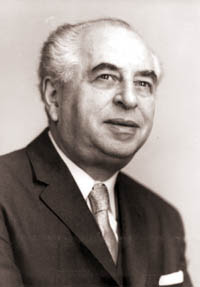
The Yiddish Club of the Kaunas Jewish Community is celebrating the 120th birthday of Litvak-American Yiddish philologist, educator and author Yudl Mark (1897-1975). Mark taught at the Vilkomir Jewish Gymnasium and was one of the founders of YIVO. He moved to the United States in 1936, and to Israel in 1970. Among his many great works stands the 12-volume Groyser verterbukh fun der yidisher shprakh (Great Dictionary of the Yiddish Language), which caused dispute with YIVO over the use of non-YIVO orthography.

Judel3

Vilnius: In Search of the Jerusalem of Lithuania

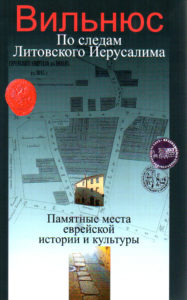
The Lithuanian Jewish Community this week hosted the launch of the second corrected and expanded edition of Irina Guzenberg and Genrikh Agranovsky’s book in Russian about Jewish Vilna.

The new edition has been reorganized with a new structure and better indices of names and sites.

Author Irina Guzenberg has done exhaustive research to provide authentic street names from the period and the book is graced with attractive period photographs. Much of the history is unknown to modern residents of the Lithuanian capital, which was not very Lithuanian before the 1950s. Before the war one heard Yiddish, Polish and Russian spoken on the street.

World Litvak Museum, Return of YIVO Proposed for Vilnius

Vilnius, September 25, BNS–A proposal has been made to establish a World Litvak Museum and reopen the Jewish research institute YIVO in Vilnius, and to commemorate Jews who contributed to the restoration of Lithuanian statehood at the Government, to pay homage to Jewish heritage.

The proposal was made at a conference at the Lithuanian parliament Sunday by the historian Alvydas Nikžentaitis. He said it would make sense to put the museum presenting the history of the Jews of Lithuania at the site of the former Great Synagogue in the center of Vilnius. “The most important goal of all would be to restore the Great Synagogue, the place where Jews, without regard to viewpoints, all gathered, where the most import things were deliberated. This is the place, I think, where the World Litvak Museum should be built,” the professor said at parliament.

Litvak Wit in Yiddish Sayings

Dita Sperling2 2016

It’s important for people to hear the sound of Yiddish. There are many interesting sayings. My grandma used to say “one butt can’t be at two fairs at once.” Takhrikhim is a linen cloth used as a burial shroud. I remember I had this rich uncle who was stingy. Something needed to be purchased for the bathtub, but he’s not buying it. I said to him: “Uncle, takhrikhim have no pockets. And what do we keep in our pockets? Money. When they are burying you, you can’t take your money with you.” After I said that, uncle went and bought everything right away. Incidentally, pockets in Yiddish are “keshenes,” almost the same as Lithuanian “kišenės.”

Aphorisms, sayings and etc.

On Sunday I thought I’d go on Monday, but I put it off, and I didn’t go on Tuesday, either, because there was market on Wednesday. And why should I go on Thursday, since Friday is the start of Sabbath?

When the mouse is full, the flour is bitter.

No man scratches his head without reason: either he has worries, or lice.

A Jewish Culinary Legend Reborn: Fania Lewando’s Vilnius

Lewando Fania2
by Jūratė Važgauskaitė Šaltinis, manoteises.lt

If you happened to be walking on Vokiečių street in Vilnius eighty years ago, you would surely have noticed the sign for the Dieto-Yarska Yadlodaynia restaurant, and if you stepped inside you would probably have bumped into Marc Chagall, the famous artist, as well as discovering good food. The vegetarian restaurant beloved of connoisseurs belonged to Faina Lewando-Fiszelewicz aand her husband Lazar Lewando. These members of the Vilnius Jewish community established their Dieto-Yarska Yadlodaynia (“Dietary/Vegetarian Cafeteria”) in the building that was marked no. 14 on Vokiečių street then and created a food revolution in Vilnius at that time, then called Wilno.

A vegetarian restaurant in the 1930s was a big sensation. Although vegetarian dishes were nothing new in the Jewish culinary traditions of Eastern Europe, they were often eaten by solitary diners or if no other kosher food choice was available. A vegetarian restaurant was extraordinary.

Ashkenazi food traditions, named after the word for Jews living in Eastern and Northern Europe, dominated the city and entire region when Faina Lewando opened her vegetarian restaurant and a culinary school right next to it in Vilnius. These traditions made much use of meat products and fat and heart meat dishes for holidays and to warm up during winter, without which the Jewish dinner table was inconceivable. It was to be expected that a luxury vegetarian restaurant in interwar Vilnius would create so much wonder and interest among the public.

Full story in Lithuanian here.

Chairwoman Faina Kukliansky’s Speech at the Lithuanian Parliament at Commemoration of the Day of Mourning and Hope and the Day of Occupation and Genocide

LŽB pirmininkės Fainos Kukliansky kalba Lietuvos Respublikos Seime, minėjime, skirtame Gedulo ir vilties bei Okupacijos ir genocido dienoms atminti

Over the entirety of Lithuania’s 25 years of independence the Lithuanian Jewish Community hasn’t had the opportunity to share our thoughts publicly during the marking of the Day of Mourning and Hope at the Parliament of the Republic of Lithuania. Seventy-five years have passed since the beginning of the mass deportations of Lithuanian citizens. For the Jewish people, who suffered prophetic exile from the times of the Assyrians, Babylonians and Romans, the experience of exile could be considered part of our historical identity. Seventy-five years ago about one precent of the Lithuanian Jewish community at that time were deported, and as a percentage represent the largest group to be deported from Lithuania. State repression did not put an end to Jewish identity: Zionist organizations operated underground, there was a Hebrew educational system, and all sorts of measures were employed to enable members of the Jewish community to leave for Palestine.

According to Jewish historiography, during the deportations of June, 1941, alone about 3,000 Jews were deported, including Jewish activists from the left and right side of the political spectrum and owners of large industrial enterprises and factories, with about 7,000 people being deported in total during the first year of Soviet rule. On the eve of the first Soviet occupation the majority of Lithuanian Jews were involved in different cultural, social and political organizations and associations. The tradition of Zionism, however, has always been especially strong in the Lithuanian Jewish community; in Lithuania between the two world wars members of the Jewish conservative cultural orientation were the most active and influential, and spoke out for the creation of an independent Jewish nation-state in Palestine. In this regard the confrontation with the Soviet system was especially vivid.

Solomon Atamuk reports there 16 Jewish daily newspapers, 30 weeklies and 13 non-periodical publications as well as 20 collections of literature being published in Lithuania before World War II. After the June 14, 1940 ultimatum to Lithuania and the consequent occupation the Jewish community soon experienced social and cultural repression. All newspapers, belong both to organizations on the Jewish political left and the right, were shut down. Even the Folksblat newspaper, popular with Communists and issued by the Jewish People’s Party, was closed.

YIVO Awarded $260,000 by NEH

YIVO Receives $260,000 Grant from the National Endowment for the Humanities
May 16, 2016

New York, NY – The YIVO Institute for Jewish Research (YIVO) is pleased to announce that is a recipient of a major grant from the National Endowment for the Humanities (NEH) for the Vilna Collections Project, a seven-year initiative to preserve, digitize and virtually reunite YIVO’s prewar archives and library located in New York City and Vilnius, Lithuania, through a dedicated web portal.

The NEH’s Division of Preservation and Access has awarded $260,000 over two years for the processing, conservation and digitization of rare archival documents rescued from the destruction of the Holocaust. The materials, looted by the Nazis and recovered with the help of the U.S. Army, were brought to New York in the late 1940s. They are a diverse resource on Jewish life, community and culture in Europe. They span the range from handwritten autobiographies by Jewish youth and humble folktales and folk songs to the archives of scholars, such as that of Simon Dubnow, known as the father of Russian Jewish history. They include photographs, Yiddish theater and political posters and the administrative records of Yiddish and Hebrew schools and yeshivas.

As City University of New York historian Jack Jacobs noted in a letter of support for YIVO’s application to the NEH, “It is simply impossible to write a dissertation or do any serious research project related to Eastern European Jewry without consulting the YIVO materials.”

Full story here.

Lithuania to Grant 30,000 Euros to Vilnius YIVO Project in 2017

maxw

The Lithuanian Ministry of Culture plans to allocate 30,000 euros in 2017 for the Vilnius YIVO project.

The Vilnius YIVO project is a seven-year endeavor to preserve, digitize and join together virtually two pre-war YIVO collections in New York and Vilnius. The project will also attempt to recreate digitally the Strashun library, one of the largest collections of judaica in pre-war Europe. YIVO, the Lithuanian Central State Archives and the Lithuanian Martynas Mažvydas National Library are partners in the project.

The project covers approximately 10,000 rare and unique books and publications and around 1.5 million documents. Material includes literary works, correspondence, memoirs, theater posters, photography, rare books, brochures, newspapers, political pamphlets and documentation of religious and communal activities.

lrkm.lrv.lt