Religion

Three Braids, Three Challas, Three Generations

fa-chala-project

The Lithuanian Jewish Community invites you to participate in the international Shabbos project!

We’re inviting all Community members to come bake challa and celebrate the Sabbath together on November 10 in Vilnius!

Jewish communities around the world will be baking traditional challa bread on November 10. This fun project has been going on for three years and includes Jewish communities in 65 countries. This is the first time the Lithuanian Jewish Community is participating. We’re inviting all regional communities, families, mothers and daughters to gather together and bake challa together in their own communities. Grandmothers, mothers, granddaughters, we’re hoping you will all come knead challa together at one table!

Registration is required because space is limited. goo.gl/fEmzp4

Program:

6:00 P.M. We activate the yeast and knead the dough

6:30 P.M. The story of the Sabbath

7:00 P.M. We braid the challa

7:30 P.M. We bake the challa

More information available here.

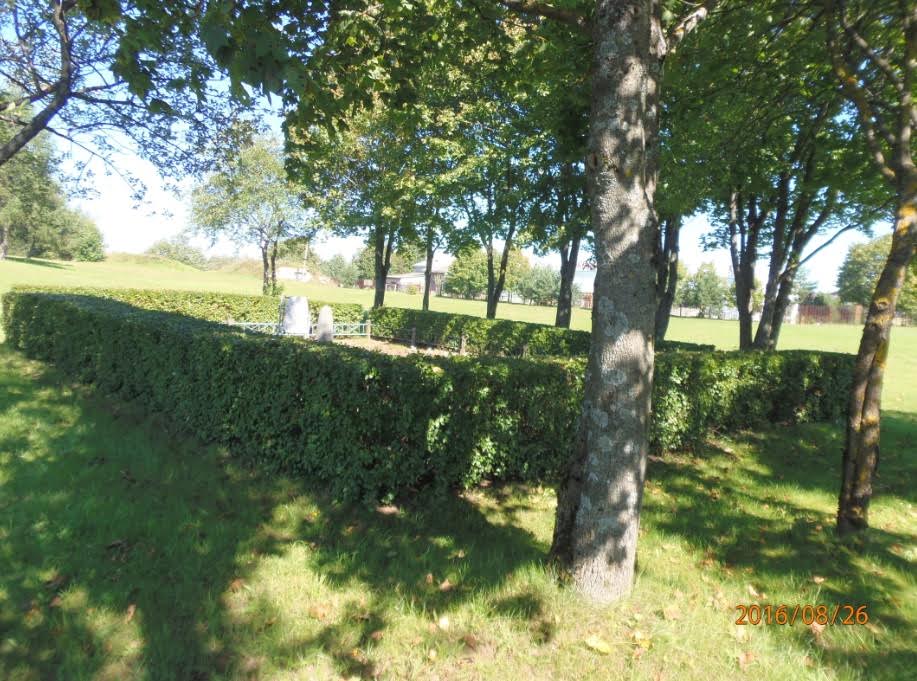
Jewish Headstones Removed from Vilnius Hospital Steps


photos: Saulius Žiūra

Information from the Vilnius municipality

Fewer and fewer examples of the barbarousness of the Soviet government remain in Vilnius. Locations where fragments of Jewish headstones are found are being put in order. Recently one such site was found in Antakalnis, where pieces of Jewish grave monuments were discovered in the stairs to the main entrance of the Vilnius Clinical Hospital. This week the Jewish headstones used as steps are being removed and taken to a location dedicated to honoring them, the old Jewish cemetery on Olandų street.

ismontuoja

Full story in Lithuanian here.

Talking about the Holocaust

by Jūratė Juškaitė
manoteises.lt

The figure of the Jew remained even after the Holocaust in Lithuania, at Užgavėnės [Shrovetide carnival figure] and in libels concerning the blood of Christian children and matzo bread. These sorts of stories not only remind us how much daily anti-Semitism exists and is even enjoyed among us, but also forces us to think about an uncomfortable matter: who are these people whom we cannot forget, and where are they?

One of them is Amit Belaitė, the director of the Union of Lithuanian Jewish Students. It seems if not for the Holocaust our conversation might have been very simple, without long pauses and deep feelings of guilt. But after decades of silence, questions such as what happened to ‘your’ people, how did they survive, how did the Holocaust inform your experience, seem to erupt from within like a torrent.

Full interview in Lithuanian here.

Lithuanian Radio and Television Continues Shtetl Series with Trip to Šeduva

LRT

lrtradijas

Following the 9:00 A.M. news Tuesday, November 8, Lithuanian National Radio and Television continued their series about Lithuanian shtetls with a trip to Šeduva, which had a thriving and colorful multicultural, multi-linguistic life before the Holocaust, which wiped the town clean of its Jews and left very few material monuments to their former existence there.

How should we commemorate the Jews of Šeduva today? What were their lives like? How did they contribute to the foundation of an independent Lithuanian state? Vita Ličytė attempts to answer these and other questions in the fourth episode in the on-going series.

Klaidas Navickas Paper Cutout Exhibition

Klaido Navicko karpinių paroda

An event to open an exhibition of Klaidas Navickas’s paper cutout works will be held at the LJC on the third floor at 6:00 P.M. on November 17.

Klaidas Navickas was born in Raseiniai, Lithuania, on November 30, 1962. He currently lives in Grigiškės and is an attorney and public servant. He began cutting paper into art in 1988. He has been a member of the Union of Lithuanian Folk Artists since 1991. In 2005 he was recognized as a working artist and in 2009 as a master of traditional arts and crafts. He has held personal exhibits of his paper cutouts at Expo 2005 in Japan; Linz, Austria; Expo 2010 in China; Gdansk and Warsaw; Philadelphia; Mogilev Podolsky, Ukraine; Moscow and St. Petersburg and Minsk. He has done over ten exhibitions of his work in Lithuania. A permanent exhibit has been on display in his workshop in Vilnius since 2003. He has published two catalogs of his cutouts.

karp-300x296

New Holocaust Memorial at Seventh Fort in Kaunas

Kaune atidengtas ženklas Holokausto aukoms

Kauno.diena.lt

A new Holocaust memorial was unveiled a the Seventh Fort in Kaunas. About 3,000 people were murdered at the Seventh Fort in July, 1941. Human remains were discovered at the largely abandoned site several years ago. The remains were turned over to the Kaunas municipality but have now been reburied at the mass grave site.

The Star of David stone monument appears to be springing up from the earth. It was made by Alfonsas Vaura. The sculpture is accompanied by three lights which come on at night. The project was financed by the Kaunas municipality.

Full story in Lithuanian here.

Beata Nicholson and Rafailas Karpis Talk about Jewish Lithuania

B. Nicholson ir R. Karpis atskleis, kokia yra žydiškoji Lietuva

“Empty, boarded up, gone, pulled up the roots,” these are the words opera soloist Rafailas Karpis used to describe extant Jewish synagogues in Lithuania following a trip he made through northern Lithuania with Beata Nicholson, a noted Lithuanian journalist and television personality who produces a cooking show called “Keliauk ir ragauk. Lietuva” [Travel and Taste: Lithuania]. Karpis said the wooden synagogues of Lithuania used as store houses or sports gyms during the Soviet era are still being used as such in many locations. But not at the synagogue complex in Joniškis, rebuilt at the initiative of the local communities, where Beata and Rafailas will spend most of their time during the upcoming episode.

Full article in Lithuanian here.

Alytus Synagogue under Renovation

Tvarkoma XIX a. siekianti Alytaus sinagoga

Currently the roof and internal support skeleton of the synagogue located at Kauno street no. 9 in Alytus are being repaired. When repairs are complete a lightning rod is to be installed as well.

“We’re so glad to have the opportunity to renovate this brick-and-mortar synagogue still standing from the end of the 19th century, testifying to the high cultural and economic achievement of the Alytus community. Let’s not forget the synagogue after it was rebuilt in the early 20th century following a fire became one of the dominant features on the Alytus skyline. Its rich interior decoration also survives, including authentic multicolor decorations in the main prayer hall. The most important task now is to stabilize the building, to fix up the roof which had holes. After emergency repairs are made, water will no longer erode the bricks and mortar and the synagogue will be safe, and later more work will be done,” Cultural Heritage Department director Diana Varnaitė said.

Full story in Lithuanian here.

Happy 70th!

Happy birthday, Davidas Kocas!

Happy 70th birthday to Davidas Kocas! On November 6 he’ll turn 70.

Davidas is an important part of the team and as a member of the executive board of the Vilnius Religious Community he monitors Jewish cemeteries and organizes clean-up activities. A hearty HAPPY BIRTHDAY from the entire Lithuanian Jewish Community!

We wish you great health and that everything you undertake would be successful! That the people you love would be happy! That your home would always be open to friends! That you would never lack strength! That you will always be happy in all things!

Mazl tov!

Book about Kupiškis Jewish Community

Author Aušra Jonušytė with Israeli ambassador Amir Maimon. Photo: Rasa Pakalkienė (LŽ)

Most of the Jewish communities in Lithuanian towns and villages were annihilated during World War II. The town of Kupiškis was no different. People of this ethnicity were murdered, but not removed from memory. This is demonstrated in the book “Kupiškio žydų bendruomenė. Praeities ir dabarties sąsajos” [The Kupiškis Jewish Community: Connections between Past and Present] presented at the Vilnius Jewish Public Library. The event by the Vilnius Jewish Public Library and the Kupiškis Ethnographic Museum launched the book by Aušra Jonušytė. She told the audience she considered with how to combine regional history work and student-teacher activities, and how to present the material in a way appropriate for children when she compiled the book.

Full story in Lithuanian here.

Great Aktion Remembered in Kaunas

The 75th anniversary of the Great Aktion, the day on which almost 10,000 Jews were murdered at the Ninth Fort, was marked in Kaunas on October 30.

In 1941 more than 9,200 Jews in the Kaunas ghetto were murdered at the Ninth Fort, including 4,273 children.

The remembrance ceremony was held at the field at the Ninth Fort where the mass murder was perpetrated.

Holocaust Victims Remembered on All Saints’ Day

img_510sm

For most of the year, the Ponar Memorial Complex in the hills south of Vilnius lies empty. Outside of official commemoration ceremonies, few people make it to this somewhat inaccessible mass murder site located to one side of the railroad tracks in a village with few amenities. If you happened to walk through the complex on the dismal and gray first day of November this year, you might have been surprised. The first day of November is All Saints’ Day on the Catholic calendar, traditionally the day when the souls of the departed are honored, and in Lithuania the tradition has merged with older pagan practices to become the holiday of Vėlinės. Lithuanians usually visit the graves of departed relatives and ancestors and solemnly place candles beside their final resting places. Whole hillsides are lit by flickering candles in cemeteries around the country. This year the Ponar mass murder site wasn’t forgotten, either, in yet another sign Lithuanians are embracing the Holocaust and Holocaust victims as their own. In past years candles have been lit at the Polish memorial at Ponar, and occasionally at the Soviet monument there which famously ignores the Holocaust with the non-committal inscription: “To the victims of fascism.” This year all the major Jewish monuments at Ponar also had candles burning in little glass and plastic holders at their base in addition to candles left burning at the Polish, Soviet and Lithuanian commemorative markers.

Why Does Rabbi Krinsky Seek to Divide the Lithuanian Jewish Community and Our Believers?

LJC chairwoman Faina Kukliansky

As announced earlier, the Choral Synagogue in Vilnius has been closed for repair work to be carried out, and in the meantime temporary measures have been put in place for the Lithuanian Jewish Community’s congregation of the faithful to pray at the Lithuanian Jewish Community (no special measures are needed by mitnagdim). As Community chairwoman I am surprised that regular repair to the Vilnius synagogue has caused a furor in the global media and on social networks. Entry to Jewish communities around the world entail restrictions, and it is hardly surprising that someone who is constantly disturbing the peace and bothering others is not allowed entry on tyhe grounds that person is intentionally creating conflict situations. The Community’s rabbis have asked that people who disturb religious services not be given entry. The tension caused in recent days by the inappropriate actions of Chabad Lubaviych Rabbi Sholom Ber Krinsky is not accidental. This rabbi has his own center on Bokšto street in Vilnius and he receives support from different Jewish organizations. We know about them and their intentions to divide the LJC are also known. It goes without saying that a community of a different orientation may receive support, but we have information it is being supported for an ulterior purpose. When to repair the synagogue is our business and our decision. I would ask the world Jewish community to let the Lithuanian Jewish Community live in peace and tranquility and to allow us the right to repair our synagogue when we see fit, not according to what Rabbi Krinsky wants, and if we need help, we’ll ask. The Lithuanian Jewish Community employs two rabbis who are actively involved with the community of believers, among whom there prevails a spirit of peace. A rebirth of Judaism is taking place in Lithuania right now.

Choral Synagogue Closed for Repairs

The Choral Synagogue at Pylimo street no. 39 in Vilnius is closed until further notice for repairs to the heating system. Prayer services will be held temporarily at the Lithuanian Jewish Community at Pylimo street no. 4 in Vilnius.

Rabbi Kalev Krelin Invites Public to Teaching on Kosher Rules and Business in Judaism

This Saturday you are invited to an after-lunch tea and Judaism lesson/discussion with Rabbi Kalev Krelin.

From 2:00 to 2:30 P.M. will be the ABCs of Judaism for Beginners, a half hour of intense learning about the rules of kosher food, an explanation of prayers before different kinds of food and more. It’s important not to be late to this part of the teaching.

From 2:30 to 4:00 P.M. we’ll have a discussion and teaching about business in Judaism. You’re invited to ask questions, learn interesting facts and take one step closer to becoming a real expert on Judaism.

Languages: English and/or Russian, depending on audience.

Registration is not necessary but would be appreciated. It will help us decide which language to use. You can register here:

http://apklausa.lt/f/business-in-judaism-verslas-judaizme-qwvqala/answers/new.fullpage

For more information, contact infolujs@gmail.com

https://www.facebook.com/events/1248023268604192/
https://www.facebook.com/groups/296000767119214/

On Construction Planned Next to the Old Jewish Cemetery in Kretinga

logo-lzb

LITHUANIAN JEWISH COMMUNITY

October 27, 2016

To: Juozas Mažeika, mayor, Kretinga

Diana Varnaitė, director
Cultural Heritage Department to the Lithuanian Ministry of Culture, Vilnius

ON CONSTRUCTION NEXT TO THE OLD JEWISH CEMETERY AND MASS GRAVE IN KRETINGA AND EARTHWORK IN THE COMPLEX OF THAT LOCATION (CULTURAL REGISTRY UNIQUE SITE CODE 34983)

In our letter of August 9 of this year we brought your attention to a series of indications showing that the Old Jewish Cemetery of Kretinga and the Holocaust site located within it are not being protected and maintained adequately. Of special concern is the lack of a complete fence surrounding the cemetery and that the sections of the cemetery along the perimeter not fenced in are not marked in any way. Since these parts of the cemetery lie on the boundaries of private plots of land, there is the threat that economic activities could be carried out within the territory of the cemetery. This problem has been exacerbated, as we have learned from media reports, with the beginning of construction of a complex of individual residential homes right along the border with the cemetery.

Please assess quickly whether this above-mentioned construction does or does not pose a danger to the preservation of the site of the cultural treasure, and whether during construction or later as the buildings are being put to use and in the execution of commercial activities the eternal rest of the dead interred there will not be disturbed, whether access to the cemetery will be degraded and, if there is a foundation for this, whether or not to halt construction work until all necessary measures are taken to protect the cemetery and insure the integrity of the dead and access to the cemetery is insured.

Faina Kukliansky, chairwoman
Lithuanian Jewish Community

Housing Development Next to Old Jewish Cemetery

Kuriasi senųjų žydų kapinių kaimynystėje

Surveying and infrastructure construction are already going on next to the old Jewish cemetery. A residential and recreational complex is to be built here.

by Viktorija Vaškytė, Pajūrio naujienos

When you see the stakes being driven in and the infrastructure being built in the meadow next to the old Jewish cemetery, residents of Kretinga, Lithuania are concerned that business activity is taking place right next to the place of eternal rest. Chief and senior architect of the Architectural and Territorial Development Department of the Kretinga regional administration Reda Kasnauskė says the regional administration has ordered land surveys of the old Jewish cemetery, so locals have probably seen surveyors measuring the site. She says the territory of the old Jewish cemetery is surrounded by legal plots of land and each one them may be measured and marked.

statinys-planuojamas-kretingoje
This is how the residential and recreational complex to be built next to the old Jewish cemetery will look. To the right: the topography of the future neighborhood.

Full story in Lithuanian here.

French Jews Protest French Decision to Abstain in UNESCO Vote on Jerusalem

France’s Jewish umbrella bodies on Thursday rallied opposite the French Foreign Ministry in Paris to protest France’s failure to vote against UNESCO resolutions that ignore Jewish ties to Jerusalem.

CRIF, the political lobby group representing French Jewish communities, and the Consistoire, French Jewry’s organ responsible for religious services, called for joining a protest rally on Thursday at the Quai d’Orsay. The gathering came in reaction to the passing of two resolutions on Jerusalem this month by UNESCO committees.

France was among 26 countries which abstained from voting during the first resolution at the UNESCO Executive Board last week. It refers to the Western Wall and the Temple Mount only by their Arabic-language names. Similar language was used in a decision adopted this Wednesday by the World Heritage Committee, a UNESCO body.

In an article, CRIF President Francis Kalifat, who is also a vice-president of the World Jewish Congress, wrote: “France decided to abstain. But to abstain when the choice is between truth and a lie, between honoring history and the infamy of revisionism is not worthy of France and its values.”

Pope Francis: “God promised the land to the people of Israel”

Israeli deputy minister for regional cooperation Ayoub Kara felt the pontiff was sending a direct message to UNESCO.

God promised the Holy Land to the people of Israel, Pope Francis said during a public address at the Vatican in Rome on Wednesday in a speech about migration.

“The people of Israel, who from Egypt, where they were enslaved, walked through the desert for forty years until they reached the land promised by God…” he said.

Ethical Will of Leonidas Donskis: Kaddish for Butrimonys

img_17_105
photo courtesy Milda Jakulytė-Vasil

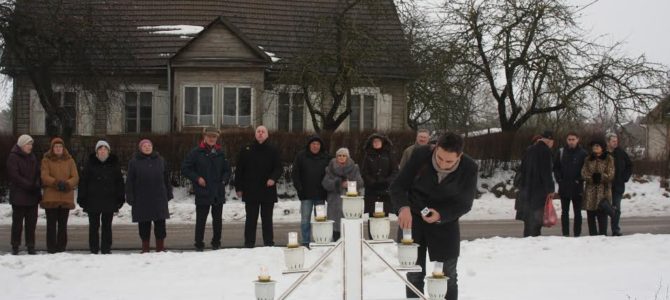
In line with the expressed wish of the recently deceased Lithuanian philosopher and author Leonidas Donskis, a group will assemble in the Lithuanian town of Butrimonys Sunday, October 23, to say kaddish for the Jewish community murdered there in 1941.

“I would be happy, if while I am still alive, something similar would happen in Butrimonys… I feel a moral obligation to say kaddish there with Jews,” Donskis said in an interview on Delfi TV on July 31, 2016. The interview in Lithuanian is available here.

Kaddish will be performed by Lithuanian Jewish opera soloist Rafailas Karpis.

Time: 3:00 P.M. to 4:00 P.M., Sunday, October 23, 2016
Location: Jewish mass grave site in Butrimonys, Lithuania