Religion

International Project Connects New York and Vilnius YIVO Archives

International Project Connects New York and Vilnius YIVO Archives

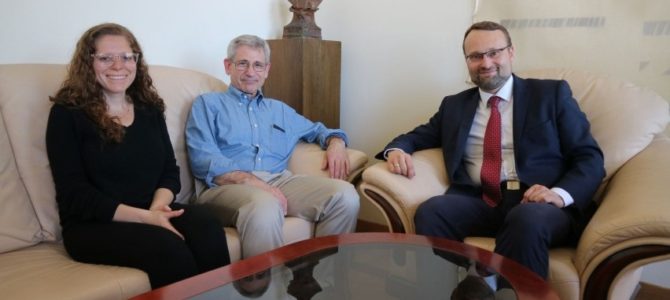
Lithuanian culture minister Dr. Mindaugas Kvietkauskas has met with YIVO director Jonathan Brent and YIVO head of archives Dr. Stefanie Halpern. In the meeting they discussed the implementation of YIVO’s Vilna project, a seven-year-long international effort to preserve, digitize and connect the pre-war YIVO archives in New York and Vilnius. The project aims at recreating the Strashun Library, one of the largest Jewish collections in Europe before the Holocaust.

The Lithuanian side expressed the hope that next year, when the Baltic country marks the Year of the Vilna Gaon and Litvak History, YIVO would loan the pinkas of the Vilna Gaon shul, a book of statistics kept by the Jewish community which is considered one of the most important documents testifying to the life and history of the Vilnius Jewish community.

Full story in Lithuanian on the Lithuanian Culture Ministry webpage here.

First Modern Litvak Scouting Summer Camp Starts July 28

First Modern Litvak Scouting Summer Camp Starts July 28

Registration is underway for the first modern Litvak scouting summer camp called “History Continues”

When? July 28-August 2
Where? Kernavė forest (coordinates 54.857231, 24.868243)
Who? renginiai@lzb.lt, telephone 867216114

Lithuanian Jewish scouts will have their own sub-camp at the summer camp of the Kernavė group of Lithuanian scouts.

Cost:

First stage of registration (by July 7):

Lithuania Marks Day of Mourning and Hope June 14

Lithuania Marks Day of Mourning and Hope June 14

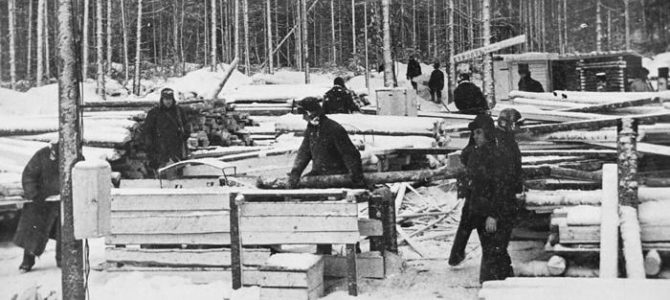
Mass deportations to Stalin’s camps began on this day in 1941.

About 17,500 people were deported from Lithuania between June 14 and 18, 1941, (the fates of 16,246 have been determined so far), a number derived from the 4,663 arrested and 12, 832 people officially deported. The deportations were a huge loss and tragedy for Lithuania. Not all those deported were ethnic Lithuanians: about 3,000 Jews, according to various sources, were also deported and about 375 Jews died at the camps and in exile.

Jews deported to Siberia resisted the brutality and terror of the oppressive Soviet organs with a deep spirituality and faith. In 1941 about 1.3 percent of the total Lithuanian Jewish population were deported, and as a percentage constitute the largest group by ethnicity deported from Lithuania.

Santariškės Children’s Hospital doctor Rozalija Černakova tells the story of what happened to her grandfather and family. Her grandparents were deported with their families. Rozalija’s parents were still children when they were deported: her mother 11 and her mother’s brother 8. They were sent to the Altai region. That’s where Rozalija was born.

Commemorative Plaque to Mark Site of Former YIVO HQ in Vilnius

Commemorative Plaque to Mark Site of Former YIVO HQ in Vilnius

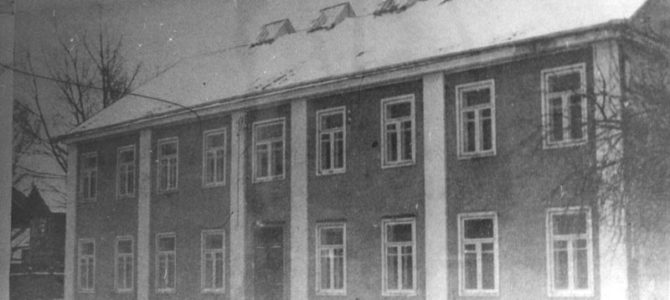
The Lithuanian Foreign Ministry and the Lithuanian Jewish Community invite the public to attend an unveiling ceremony of a plaque to commemorate the site of the former headquarters of YIVO in Vilnius at 3:00 P.M. on June 20 at the building now located at Vivulskio street no. 18 in Vilnius. YIVO, the most significant center for the study of Jewish culture, history and languages in Eastern Europe, was located near this site from 1925 to 1941. Its founder moved its activities to New York which became world headquarters following the German invasion in 1941.

Participants at the ceremony are to include YIVO director Jonathan Brent and YIVO board of directors deputy chairwoman Irene Pletka.

Vilna Gaon Texts Placed on Lithuanian Memory of the World Registry

Vilna Gaon Texts Placed on Lithuanian Memory of the World Registry

Lithuania’s Memory of the World registry now contains the manuscripts of the Vilna Gaon and a manuscript fragment by Simonas Daukantas, the Lithuanian National Martynas Mažvydas Library reported.

The 18th century manuscripts of Elijah ben Solomon Zalman, the Vilna Gaon, are a collection of works published in different cities and countries of Europe between 1799 and 1940. They include several very rare publications and almost all of them exist as a single copy in Lithuania.

The library said the Vilna Gaon never published any of his texts, but his teaching was scrupulously written down and compiled by his students, sons and sons-in-law and were edited and published after his death.

Sabbath with Designer Agnė Kuzmickatė

Sabbath with Designer Agnė Kuzmickatė

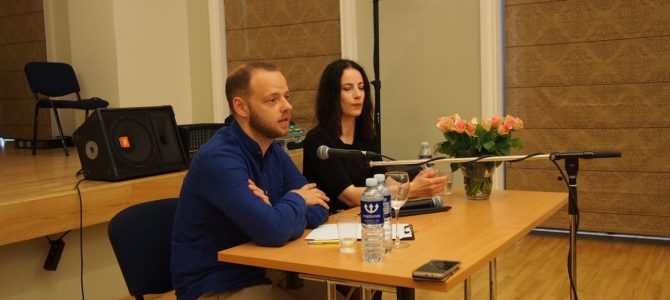
For a number of years now the Lithuanian Jewish Community has been inviting artists and special guests to celebrate Sabbath with the community. Last Friday LJC executive director Renaldas Vaisbrodas presented Lithuanian designer Agnė Kuzmickatė to members. She holds a doctorate and is sometimes called butterfly queen because of her use of her butterflies in her designs.

Renaldas led the discussion and tendered questions to the famous young designer, starting with questions about her family. Her father is the philosopher Bronislovas Kuzmickas, PhD, who was a founding member of Sąjūdis, the Lithuanian independence movement, who went on to become a member of parliament, a signatory to the Lithuanian declaration of the restoration of independence and served as deputy to parliamentary speaker Vytautas Landsbergis.

Agnė Kuzmickatė’s grandmother Gita Jekentienė was at a children’s summer camp in Palanga, Lithuania, when World War II arrived. She and some of the other children were evacuated to safer locations in the Soviet Union. When she spoke of her family, Agnė Kuzmickatė repeatedly returned to her grandmother Gita’s experience and said she only know understood how her grandmother’s environment shaped her. She said she and her grandmother often spoke about Jewish identity, about the Yiddish language and the tragic loss of family, all of whom, except for her grandmother’s brother, were murdered at the Ninth Fort in Kaunas. Returning to Lithuania after the war, her grandmother experienced all sorts of bullying and name-calling because she was Jewish. Agnė Kuzmickatė said she had never experienced this and everyone at school respected her because of her father’s activities on behalf of independent Lithuania.

New Litvak History Exhibit in Cape Town

New Litvak History Exhibit in Cape Town

URM.lt

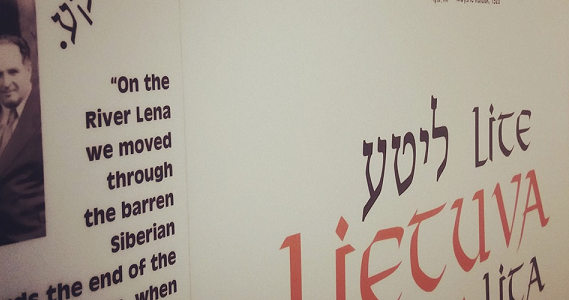
The Lithuanian Embassy to South Africa presented a mobile exhibit at the South African Jewish Museum in Cape Town June 6 called “One Century Out of Seven. Lithuania, Lite, Lita.” The installation informs viewers of different aspects of Jewish history in Lithuania from the time of the Grand Duchy to the present. The exhibit travelled to South Africa’s second-largest city from the Holocaust and Genocide Center in Johannesburg.

Lithuanian ambassador Sigutė Jakštonytė welcomed the large audience including members of the Cape Town Jewish community and members of the parliament of the Republic of South Africa. She told them the Lithuanian parliament had named 2020 the Year of the Vilna Gaon and Litvak History in appreciation of the Litvak contribution to the Lithuanian state and to preserve the memory of Holocaust victims. The ambassador also thanked the museum in Cape Town for four years of close cooperation.

The exhibit at the South African Jewish Museum in Cape Town runs till the end of June.

Milk and Cheese Treats on Shavuot

Milk and Cheese Treats on Shavuot

We celebrate the holiday of Shavuot on June 9 and 10. June 8 is the eve before the holiday, and the entire night is dedicated to studying the Oral and Written Torah. The Torah is read out on this night.

Shavuot is an old holiday of pilgrimage and its rituals add cohesion to the community. During the holiday, a series of milk and cheese dishes are prepared and sampled. The king among them is the classic cheese pie. In Lithuania as in other European Jewish communities pancakes with cheese are popular. During the holiday in Israel, smaller cheese makers open their doors to visitors. Shavuot tourists are also invited to attend the Northern Cheese Pie Festival held now for its third year and children are taught how to milk cows and how to make butter from fresh milk.

This Sunday the Choral Synagogue in Vilnius will celebrate with treats made by Shoshana, a mashgiach who came especially from Israel to cook for the Bagel Shop Café this year.

The Bagel Shop Café recommends making Shavuot breakfast from the best challa with cream cheese and berries.

Shavuot on Sunday

Shavuot on Sunday

Shavuot or Shavuos is the holiday marking the giving of the Torah. The Vilnius Jewish Religious Community and Chabad Lithuania invite you to come celebrate together at 11:30 A.M. on Sunday, June 9, at the Choral Synagogue in Vilnius. We will read the Ten Commandments and everyone will have the opportunity to sample delicious traditional Shavuot milk-product dishes. Children will receive small gifts. Because Shavuot is a time when studying the Torah is especially apt, traditional and successful, you are invited to an extended Sabbath dinner at Bokšto street no. 9 in Vilnius at 8:30 on June 8 where we will learn more about the Shavuot holiday.

Jewish Community Remembered in Kalvarija

Jewish Community Remembered in Kalvarija

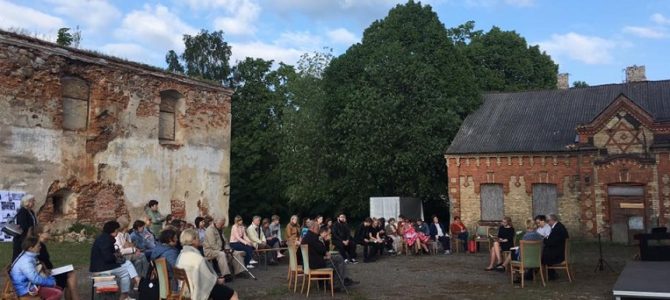
In the period between the two world wars, the Jewish population was the majority population in Kalvarija, Lithuania. The architecture of the old town, a unique synagogue complex (with a winter and summer synagogue and the Talmud school) and the only surviving Jew, Moishe Segalis–all of this stands as a testimony to that time. For four Saturdays in a row now, as spring blossoms forth, there have been readings from Icchokas Meras’s novel “Lygiosios trunka akimirką” held near the synagogues in Kalvarija and in their courtyards. Lithuanian Jewish Community executive director Renaldas Vaisbrodas attended the final reading on May 24.

Students and soloists from the Sonantem choir in Kalvarija read from the work about the life of the Vilnius ghetto and about life which can be decided by the movement of a single piece on the game board.

A youth initiative invited the local community to an informal meeting with the relatives of those who once lived in Kalvarija, with our ancestors and neighbors.

Thank You

The Kaunas Jewish Community thanks Rabbi Sholom Ber Krinsky for a fun and wonderfully-organized Lag B’Omer celebration.

Lag B’Omer Celebration in Vilnius Region a Big Success

Lag B’Omer Celebration in Vilnius Region a Big Success

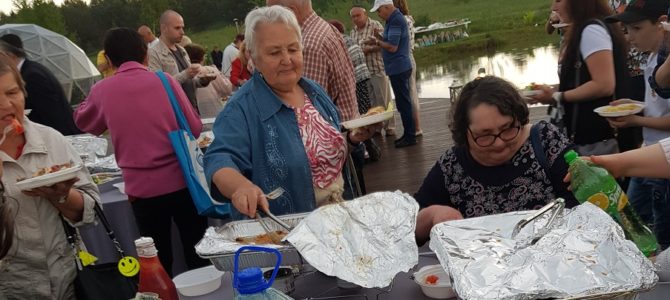
This holiday occurs on the 33rd day of the Counting of the Omer, which occurs on the 18th day of the Hebrew month of Iyar. Families usually celebrate with picnics and sometimes archery practice is held for the children. Lag B’Omer is a festive holiday with bonfires, barbecues and fun activities. It also marks the beginning of the wedding season for many.

Small but Significant Features of Jewish History in Vilnius

Small but Significant Features of Jewish History in Vilnius


bernardinai.lt

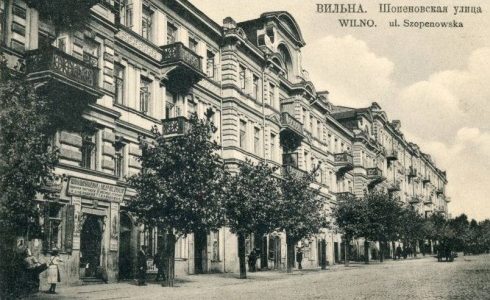
Before World War II a large Jewish community lived in Vilnius whose cultural, religious and social traces are only recalled today in statues and commemorative plaques. It’s a rare resident of the city who knows why Vilnius was called the Jerusalem of Lithuania, who knows what an active community life bustled on the narrow streets of the Old Town and how the tragic events of World War II changed forever the face of the Lithuanian capital.

For many years Vilnius was a Jewish spiritual and academic center. Besides some faded inscriptions in Hebrew characters on buildings which were part of the Vilnius ghetto, there are more surviving traces of the history of this people. Before World War II Jews accounted for more than a third of all city residents.

Today we invite you to discover with us some small details of this history, small but important to our city.

Full text in Lithuanian here.

Markas Petuchauskas on the Presentation of His Book in Germany

Markas Petuchauskas on the Presentation of His Book in Germany

I’d like to expand on the information about the book presentations in Germany by talking about the topics which were discussed at the Leipzig International Book Fair and the presentation held at the Lithuanian embassy where, besides Grigorij H. von Leitis, Lithuanian honorary consul professor Wolfgang von Stetten and Michael Lahr, the executive director of the Lahr von Leitis Academy and Archive, also took part.

I talked about the presentations of the Vilnius ghetto theater which have lodged themselves so colorfully in my memory, about the people who started that theater, the remarkable artists of the Jerusalem of Lithuania. Their figures loom large among the ranks of the great Litvaks of the world: Chaim Soutine, Jacques Lipchitz, Neemija Arbit Blatas, Ben Shahn, Emmanuel Levinas, Jascha Heifetz, Romain Gary and others.

Much space in the book is devoted to the branch of the Petuchovski (Petuchowski, Petuchauskai) family who in the second half of the 19th century moved to Germany and attained world-renown as active rabbis and philosophers of the Litvak persuasion.

The first of those to speak about the Vilnius ghetto theater, I demonstrated how that cramped stage was able to contain a vast cultural continent, a unique theater now widely recognized as such. Thanks to the theater, the ghetto became a symbol of spiritual resistance to the Nazis. The ideas of patience, tolerance and unity came to the fore in the spiritual resistance of the Vilnius ghetto. These ideas called out with the entire experience of the European Holocaust, urging unity against Naziism, giving form to the goal of nations recognizing the principles of Western democracy to come and join together.

Markas Petuchauskas
Author of Der Preis der Eintracht [German translation of The Price of Concord]
May 21, 2019


Lag B’Omer Celebration

Lag B’Omer Celebration

A celebration of the Jewish holiday of unity Lag B’Omer will be held in Galgiai in the Vilnius region at 6:00 P.M. on May 23. The event includes music, a barbecue, activities for kids, a trampoline, face painting and archery.

Those who register before 12 noon on May 23 will be provided transportation. Please call 8 68508550 or write rabbi@jewishlita.com to register or for directions.

The bus will leave from the back of the Choral Synagogue in Vilnius, the side facing Plačioji street.

Sholem Aleichem ORT Gymnasium Holds Bar/Bat Mitzva Cermemonies

Sholem Aleichem ORT Gymnasium Holds Bar/Bat Mitzva Cermemonies

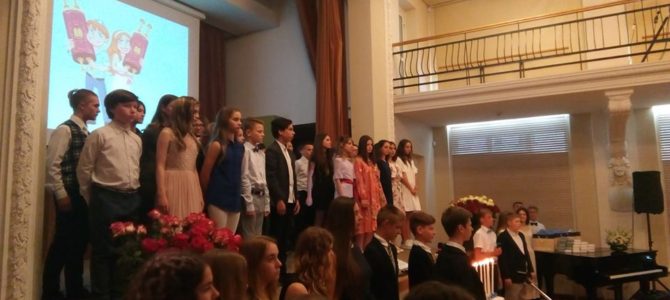
Fifty-six seventh graders from the Sholem Aleichem ORT Gymnasium in Vilnius celebrated their bar and bat mitzvas Monday. This coming-of-age ceremony is extremely important in Judaism. Following the ceremony a boy or girl is considered an adult. Whereas before his or her parents are responsible for the child following the traditions and laws of Judaism, after the ceremony the individual is himself or herself responsible and has the right to study Torah, follow its laws and is considered responsible for his or her actions.

Leron Blank celebrated his bar mitzva at the Choral Synagogue in Vilnius. Before the ceremony Rabbi Sholom Ber Krinsky spoke about how significant this ceremony is for every Jewish boy, his family and his friends.

“This is a great joy–publicly, following all the rules–to celebrate bar mitzva! My bar mitzva was at home with the curtains closed… We were, after all, afraid… It was dangerous… So we really appreciate what we have,” Sholem Aleichem Gymnasium principal Miša Jakobas said at the ceremony. Leron read a passage from the Torah out in public, an essential part of the ceremony. His parents, teachers, relatives and friends watched with obvious emotion.

Irish Litvaks Celebrate Sabbath at Choral Synagogue

A delegation of 26 Jews from the Republic of Ireland visited Lithuania last week and attended a special Sabbath celebration held Friday for them at the Choral Synagogue in Vilnius.

The tour was organized by the Irish Jewish Community with help from Irish ambassador to Lithuania David Noonan and his Lithuanian counterpart in Dublin, ambassador Egidijus Meilūnas. Most Irish Jews are descended from Litvaks with the major wave of immigration before World War I. Since then there has been little contact between Litvaks and Ireland and Litvaks in Lithuania. The Irish delegation is re-establishing contact while exploring their own roots, visiting their ancestral shtetls. Not all members of the delegation belong to the Irish Jewish Community, but all do share a connection with it.

Ambassador Noonan said: “I am very happy to see the visit taking place–the connection between the Jewish communities is one of the earliest connections between Ireland and Lithuania and deserves greater exploration. I was honoured to join the group on Friday for dinner and the Sabbath service; it was not my first time in the Synagogue but it was the first time I attended a service there. To attend with my fellow Irishmen and women made it a very special occasion indeed.”

Vilnius Jewish Religious Community chairman Simas Levinas said the Irish party had Sabbath dinner on the second floor of the synagogue and everyone was very satisfied with the event. Lithuanian Jewish Community chairwoman Faina Kukliansky said the Irish Jewish delegation were very religiously devout and did all the proper things to mark Sabbath. Israeli ambassador to Lithuania Amir Maimon also attended the Sabbath celebration.

Heritas: Special Focus on Litvak Heritage

Heritas: Special Focus on Litvak Heritage

The second Heritas International Exhibit on Heritage Recognition, Maintenance and Technologies held May 3 and 4 focused on Lithuanian Jewish or Litvak heritage.

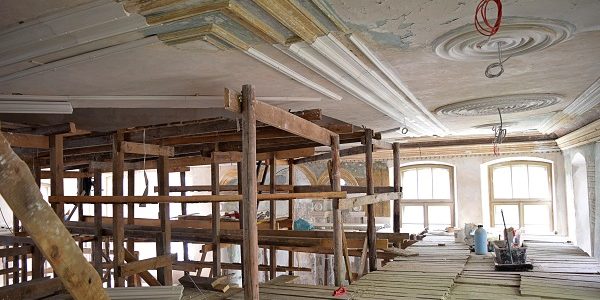
In cooperation with the Lithuanian Jewish Community attendees had the unique opportunity to visit the Zavl synagogue currently undergoing restoration at Gėlių street no. 6 in Vilnius.

The seminar portion of the exhibit discussed a topic proposed by LJC heritage protection specialist Martynas Užpelkis, “Litvak Heritage: A Matter for the Jewish Community and/or Local Communities?”

Ceremony to Commemorate Ghetto Fighters and Murdered Ghetto Children

Ceremony to Commemorate Ghetto Fighters and Murdered Ghetto Children

Lithuanian Jewish Community members gathered at the Jewish cemetery on Sudervės road in Vilnius May 8 to commemorate those who fell fighting the Nazis and the victims of fascism.

They assembled at a monument to Vilnius ghetto FPO (Fareinikte partizaner organizatsye) leader Yitzhak Vitenberg and partisan Sheyna Madeisker.

LJC chairwoman Faina Kukliansky recalled the number of Jews living in Lithuania before the Nazi occupation and the horror and tragedy of the majority who were murdered. Jewish partisan Fania Brancovskaja spoke in Yiddish about the painful experience of the war and the loss of family. “Do not forget those who were murdered, they fought for your freedom,” she said.