Religion

Matzo to be Given to Members

Dear members of the Vilnius Jewish Community,

Greetings on the upcoming holiday of Passover!

We are distributing matzo to VJC members again this year free of charge. Please pick up your matzo package from 10:00 A.M. to 7:00 P.M. on workdays from April 4 to April 11 at room no. 201 at the Lithuanian Jewish Community.

Each member is to receive one 1 kilogram package. You must provide identification or a VJC member’s card to receive the package.

Members of the Social Club are receiving matzo separately from 11:00 A.M. to 3:00 P.M. in the computer room on the first floor from April 4 to 15.

This is also a good time for those who need to pay their membership dues to do so, from 9:00 A.M. to 6:00 P.M. in room 209, or by transferring funds to the Vilnius Jewish Community, institutional code 291199610, bank account LT137044060000908075, bank code 70440. Please indicate for whom the membership fees are being paid.

Purim at the Gesher Club

Pur6

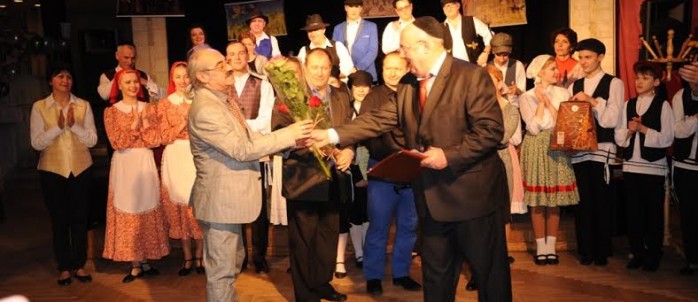
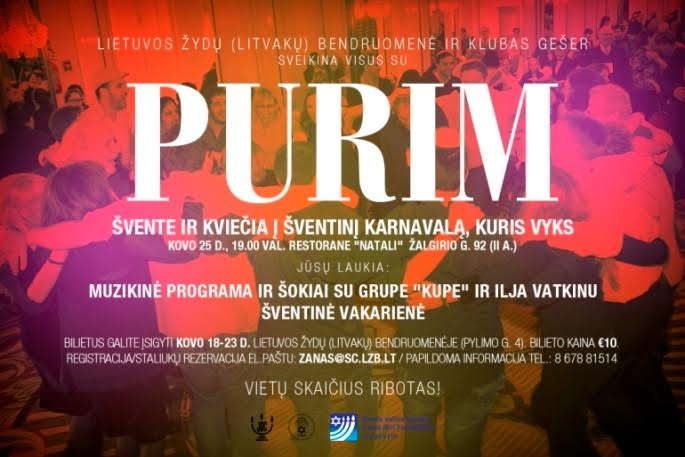
The Gesher Club of the Lithuanian Jewish Community celebrated Purim March 25 at the Natali Restaurant in Vilnius. Since carnival costumes are a usual part of Purim, all participants were required to come in costume or at least partially dressed in costumes. LJC program coordinator Žana Skudovičienė took care of those who for one or another reason were unable or did not have time to get ready for the holiday. She let them chose a mask or costume accessory provided by Fayerlakh ensemble director Larisa Vyšniauskienė for the occasion.

LJC Children’s Purim Was the Most Fun

Vaiku Purimas

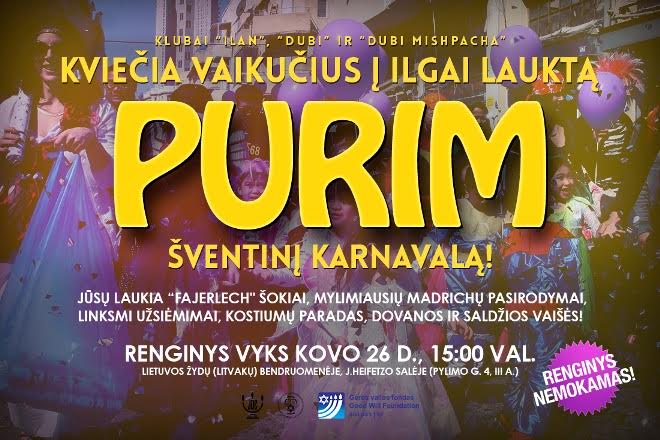
This isn’t the first time LJC Youth Programs coordinator Pavelas Guliakovas has organized a holiday celebration. This year he decided there should be costume play based on excerpts from the Book of Esther with all the heroes and villains: the Persian king, Haman, Esther and all the others. But there were also samurai, cowboys, doctors and princesses. The entire play was performed in rhyme. During the breaks between acts, the children rushed off to change masks, apply glitter and use it as coloring, then came back to the performance space. Dancers from the Fayerlakh ensemble danced. All of the children and several of the parents as well had grown up attending the small children’s club Dubi, and Dubi, Dubi Mishpakha and Ilan Club children aged 2 to 12 took part in the Purim celebration. Samuel Gar, a professional teacher of Jewish dance, taught dances to the children. Their performance was amazing and the celebration lasted for about two hours.

Thank You

Thank you to Žana Skudovičienė, Julija Lipšic, Ninelė Skudovičiūtė, Monika Antanaitytė and Olga Masarskaja for the wonderful organization and preparation of the Purim celebration at the Vilnius Choral Synagogue.

S. Levin, chairman
Vilnius Jewish Religious Community

Lithuanian Jewish Students Union Purim Festival

The Lithuanian Jewish Students Union held a festive Purim celebration Saturday, March 26 in Vilnius.

Purim-goers were asked to dress as their favorite movie star or film character and a contest was held to pick the winning female and male roles. Attendees dressed as the Uma Thurman character from Pulp Fiction, Audrey Hepburn and Superman received prizes donated by Lux Figura.

There was also a quiz involving some brain-teasers, but most of the night was spent in conversation, eating and drinking. Rabbi Samson Isaacson attended the event as well. It was supported by the Embassy of Israel, the Goodwill Fund and the Mirameda medical clinic.

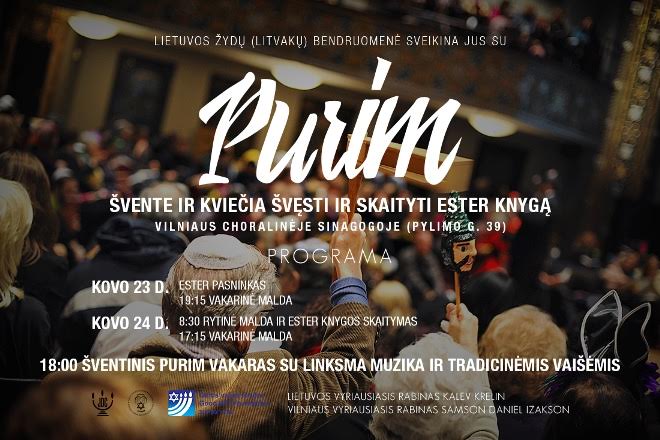
Purim at the Choral Synagogue in Vilnius

sin6

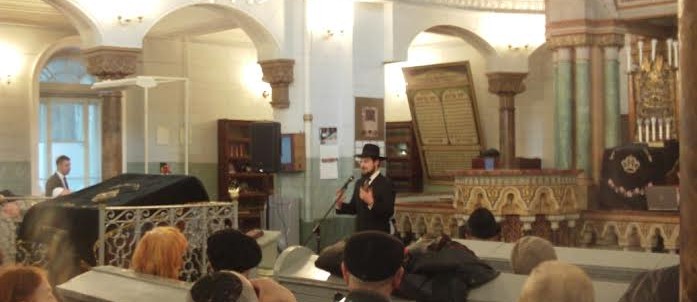
There was a celebration of the Purim holiday at the Choral Synagogue in Vilnius March 24, which was also proclaimed a day of mourning in Lithuania to pay honors to the dead in the bombings in Brussels. Everyone observed a moment of silence for the victims at the synagogue.

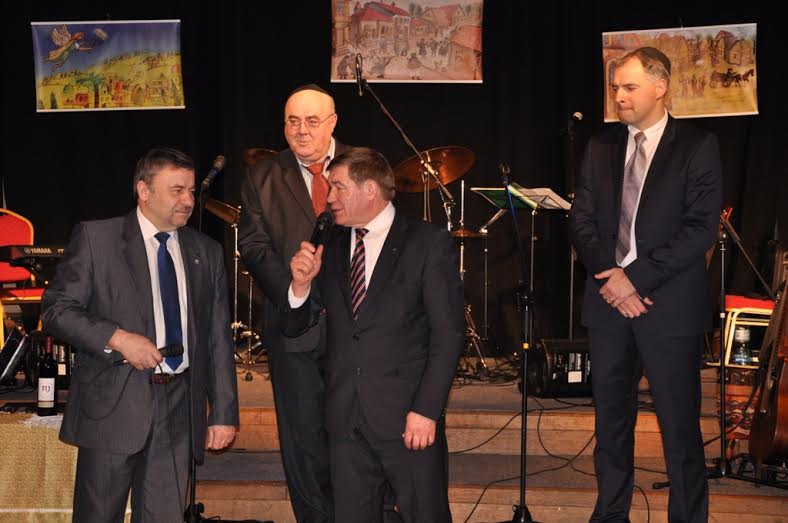
Lithuanian Jewish Religious Community chairman Simas Levinas presented holiday greetings to the assembled and spoke about the meaning of Purim: Haman’s attempt to kill all the Jews. “History has seen more than one Haman, who sought to destroy the Jewish people. Stalin, Hitler and now ISIS, but no one has succeeded,” Levinas said.

Rabbi Samson Daniel Isaacson also gave holiday greetings and said Purim is a unique holiday which is about getting drunk, which seems strange, since this is considered a bad thing among Jews. “Only during Purim is it remembered that salvation comes from affliction. After all, getting drunk was suggested so that no one would be able to tell the difference between Haman and Mordecai. And it so happens that way often in life, when you think one thing, but it happens another way. Purim sameach!”

Fayerlakh ensemble musicians Miša Filipov Jablonskis and Leonardas Zinkevič performed a rousing set of Purim songs for young and old.

LJC deputy chairwoman Maša Grodnik said she was glad that things were finally getting back to normal at the synagogue and that the holiday was being celebrated with a rabbi, which for a long time was missing from the community. “Today the tragic events in Brussels remind us that Israel is setting an example for Europe on how to protect society,” Grodnik commented.

Israeli ambassador Amir Maimon recalled how he looked forward to Purim as a child, and that it always began to rain when Purim came around. “Today in Vilnius on Purim the sun was shining, and we are celebrating the liberation of the Jews. The victory of the Jews of Lithuania that they can celebrate in their own synagogue,” the Israeli ambassador remarked.

More snapshots from the event here.

Purim in Panevėžys

pan1purim

The Panevėžys Jewish Community kicked off their Purim celebrations in the events hall of the Panevėžys Community Center March 20. Panevėžys Jewish Community chairman Gennady Kofman greeted a large party of guests from Vilnius, Ukmergė, Šiauliai and Panevežys and read an excerpt from Magilat Ester.

Artūras Taicas, deputy chairman of the Lithuanian Jewish Community and chairman of the Ukmergė Jewish Community, greeted guests as well and passed on the good wishes of LJC chairwoman Faina Kukliansky. Panevėžys city deputy mayor Petras Luomanas and city council member Alfonsas Petrauskas also gave wonderful addresses.

pan6purim

Rabbi Isaacson Speaks at Screening of Film “Kaddish”

filmas3

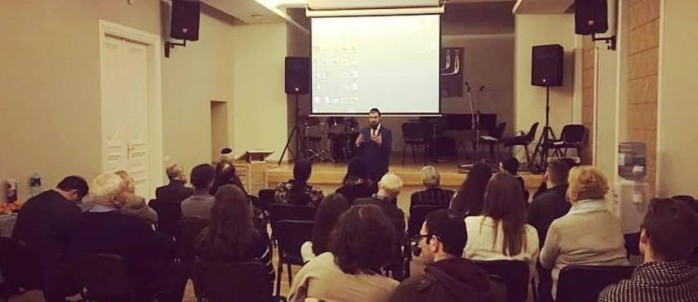
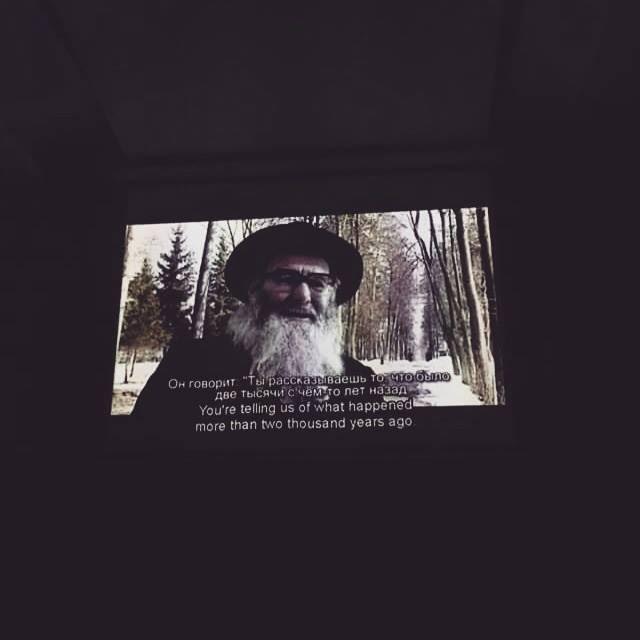
The film club of the Lithuanian Jewish Student Union screened the film “Kaddish” on March 10, an event during which the public was able to meet one of Lithuania’s newest rabbis, Rabbi Samson Daniel Isaacson. Before the film started, Rabbi Isaacson gave a short talk welcoming the audience and telling about the film made by a friend of his. Kaddish is the story of Rabbi Yitzhak Yosef Zilber, born in Russia in 1917 (died 2003, a Russian, later Israeli Haredi rabbi and a leader of the Russian baal teshuva movement, author of several books, Russian Israeli religious authority). Zilber studied Judaism privately, at home, because his father Ben-Tzion Haim Zilber (originally Tsiyuni) refused to allow him to attend ant-religious Soviet schools.

rabinas zilberis

At the age of 15 he began to teach Judaism in his hometown of Kazan, although it was illegal under Soviet law to do so. After a life filled with hardship, oppression by the Soviets and incarceration in the gulag, he and his family were finally allowed to leave the USSR for Israel in 1972, where he continued to teach, practice traditions and attract a large group of young people.

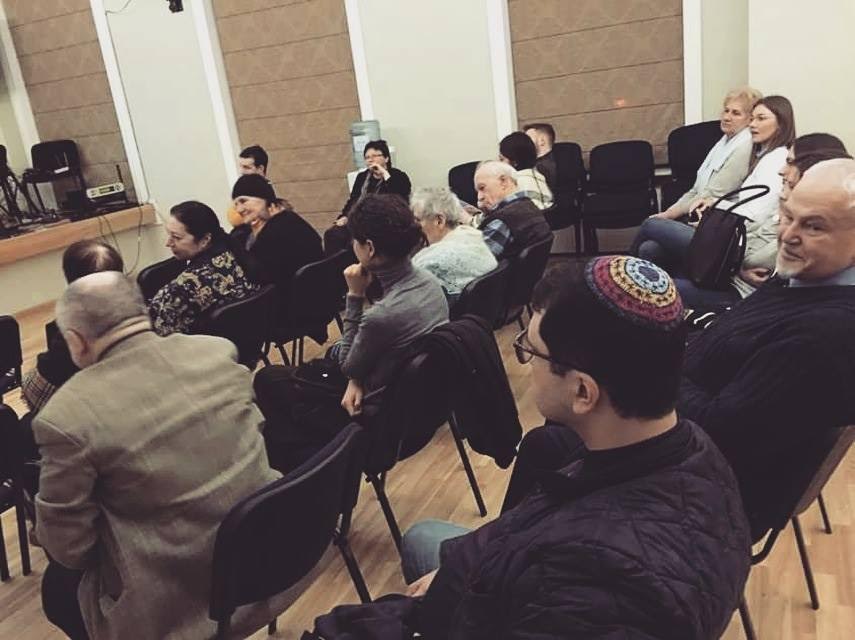
Discussion followed the screening of the film as audience members asked the rabbi questions and he responded. The several dozen members of the audience and the rabbi were treated to snacks and tea after the discussion, allowing people to get to know the rabbi better in a somewhat informal setting.

filmas2

Bagel Shop Café Purim Holiday Schedule

purim3

The kosher Bagel Shop Café of the Lithuanian Jewish Community is in full gear getting ready for the Purim holiday. There are several new pastry items the chefs there have cooked up, including the “red velvet” pastry taking the Jewish culinary internet by storm. Their special hamantashen recipe passed down through the generations uses yeast as well.

Senior chef Riva Portnaja says her family calls hamantashen “omentashen,” and that her mother always put yeast in the dough. According to her, Litvak hamantashen only contain poppy-seed fillings, and the triangular pastry is made so that is almost closed.

Extra Day Off

LJC staff will get an additional day off on Thursday, March 24 for the Purim holiday. The community building will remain open as usual so if you need to come in to work for organizing events or other matters, you will be able to do so. Staff are also invited to attend the Purim celebration at the synagogue beginning at 6:00 P.M. Thursday.

What Would Queen Esther Eat Today?

Esther, the star of the Purim story, is one of the bravest heroines for so many reasons–she not only strategized to save the Persian Jews from certain death (breaking social norms in doing so), but she also maintained a kosher diet as an undercover Jew in the Persian palace. Wait, what?

Legend has it that like many Jews today, Esther kept kosher by avoiding things like non-kosher meat, and instead enjoyed a plant-based diet full of fresh produce, grains, legumes, nuts, and seeds. For those of you with eating restrictions, you know how hard it is to turn down foods that everyone else is noshing!

In the story of Purim, food and celebration are central to her strategic success. In order to earn the favor of her husband, King Ahasuerus, she hosted two impressive (and probably extremely delicious!) banquets that set the stage for her requests of the King to save the Jews of Persia.

After all these years, delicious food and drink–like hamantaschen, Haman’s fingers, and plenty of wine–are essential parts of the celebration of Queen Esther and Purim.

If you’d like to party like Esther this Purim, click here for recipes.

Stories about Rabbis: Exhibit of Pastel Work

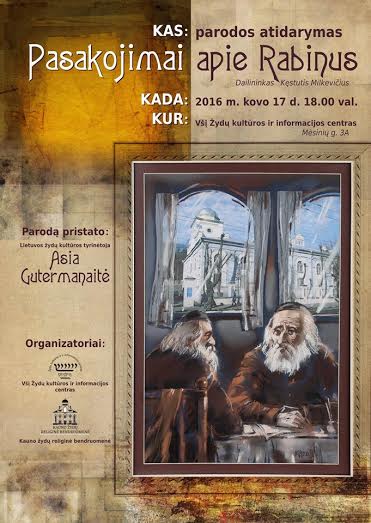
The Jewish Culture and Information Center’s Shofar Gallery (Mėsinių street no. 3, Vilnius) presented an exhibit of pastel works by Kęstutis Milkevičius called “Stories about Rabbis” March 17.

pAroda-rabinai

The collection on exhibit was formed at the initiative of the leader of the Kaunas Jewish religious community, Maushe Bairak. Artist Raimundas Majauskas commented on Milkevičius’s artworks:

“The old portraits of wise Jewish rabbis are suffused with time and come down to us from a modified Rembrandtesque chromatic environment. The artist is a master of line and composition. The individualized, artistically realistic works betraying a deep aesthetic foundation are part of the cultural and communal life of Kaunas and Lithuania.”

Litvak cultural heritage scholar Asia Gutermanaitė opened the exhibit. The opening including stories and interesting tales about rabbis. The exhibit will run until April 12.

Lecture Series

judaism

The Sunday lectures continue at 12:00 noon on March 20:

Subject: Sacred Text
by Rabbi Shimshon Daniel Isaacson

Third floor, Lithuanian Jewish Community, Pylimo street no. 4

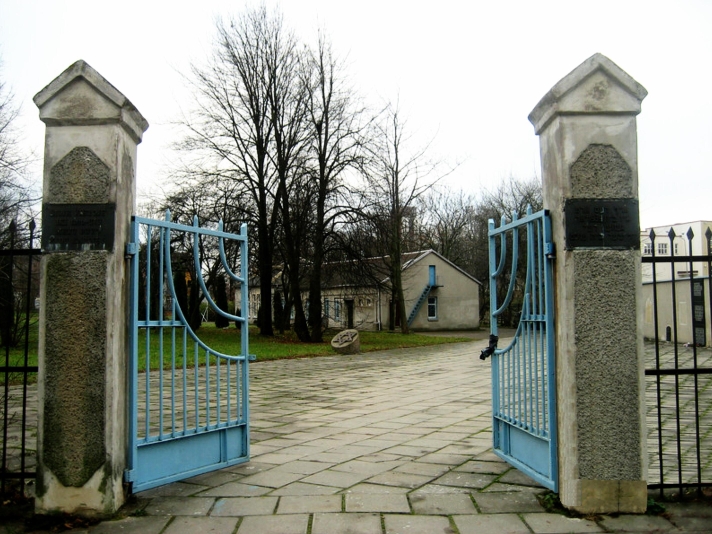
Old Jewish Cemetery in Klaipėda Added to Registry of Cultural Treasures

klaipeda cemetery 2

The old Jewish cemetery in on Sinagogų street in Klaipėda has been given legal protection, the Culture Heritage Department under the Ministry of Culture reports.

Although there used to be several dozen cemeteries in Klaipėda, only a few survive. “The only Jewish cemetery in the city is the one from the early 19th to mid-20th century period. It used to be bigger than what has survived and listed on the registry of cultural treasures. It’s now about 13,000 square meters. But what has survived obviously enriches the history of the city of Klaipėda and is an important part of the city,” Audronė Puzonienienė, director of the Klaipėda office of the Cultural Heritage Department, said.

Puzonienienė cited Jonas Tatoris’s book “Senoji Klaipėda. Urbanistinė raida ir architektūra iki 1939 m.” [“Old Klaipėda. Urban Development and Architecture till 1939”] as the richest source of information about the old Jewish cemetery in the Lithuanian port town formerly known as Memel. The author of that book says there were 22 cemeteries in Memel/Klaipėda in the period from the 16th century to the early 20th century. At the beginning of the 19th century a ravelin—part of the earthen fortification for the defense of the port city— was allocated for the Jewish cemetery. The Jewish cemetery first appears on the city map in 1840, as a still rather small area surrounded by hedgerows. It was enlarged in the early 20th century. “The layout of the Jewish cemetery was different from the Lutheran cemetery: it didn’t have a central square and intersecting paths, and the territory was divided up into rectangular blocks,” Tatoris says.

Argentine Director Returns to Jewish Roots with “The Tenth Man”

In his new movie, filmmaker Daniel Burman explores the Buenos Aires of his youth and the people who live there
by Igal Avidan

Daniel-BURMAN_Credito_Marcos_Lopez-e1457359753841

BERLIN–Usher, who heads a Jewish welfare foundation in Buenos Aires, is an unlikely movie star. But the middle-aged Argentinean Jew, whose real name is Oscar Barilka, is the central figure in Jewish-Argentinian director Daniel Burman’s new feature film, “El Rey del Once” (The Tenth Man).

Usher, playing himself, is almost always off-camera, but he is often heard as he works to bring his son Ariel (played by actor Alan Sabbagh) back to his roots.

“Usher is a real tzadik [righteous person] who doesn’t even know he is one,” says award-winning writer-director Burman, who won the Grand Jury Prize in 2004 for his film “El Abrazo Partido” (Lost Embrace), a comedy-drama about the grandson of Polish Holocaust refugees.

Major American Jewish Leader Changes His Mind about Israel

An Amazing Turn for a Major Leader of the American Jewish Mainstream: David Gordis Rethinking Israel

David Gordis has served as vice president of the Jewish Theological Seminary of America and of the University of Judaism in Los Angeles (now American Jewish University). He also served as executive vice president of the American Jewish Committee and was the founding director of the Foundation for Masorti Judaism in Israel. He founded and directed the Wilstein Institute for Jewish Policy Studies which became the National Center for Jewish Policy Studies.

David Gordis is president emeritus of Hebrew College where he served as president and professor of Rabbinics for fifteen years. He is currently visiting senior scholar at the University at Albany of the State University of New York. Here is the article he submitted to Tikkun. We publish it with the same sadness that Gordis expresses at the end of this article, because many of us at Tikkun magazine shared the same hopes he expresses below for an Israel that would make Jews proud by becoming an embodiment of what is best in Jewish tradition, history, and ethics, rather than a manifestation of all the psychological and spiritual damage that has been done to our people, which now acts as an oppressor to the Palestinian people. For those of us who continue to love Judaism and the wisdom of our Jewish culture and traditions, pointing out Israel’s current distortions gives us no pleasure, but only saddens us deeply.
–Rabbi Michael Lerner

Reflections on Israel 2016
David M. Gordis

While reading Ethan Bronner’s review of a new biography of Abba Eban, I was reminded of a time when in a rare moment I had the better of a verbal encounter with Eban. It happened about thirty years ago at a meeting of the Conference of Presidents of Major American Jewish Organizations, which brought together leaders of American Jewish organizations, sometimes to hear from a visiting dignitary, in this case Eban, Israel’s eloquent voice for many years. I was attending as Executive Vice President of the American Jewish Committee. Eban had a sharp wit as well as a sharp tongue. He began his remarks with a mildly cynical remark: “I’m pleased, as always, to meet with the Conference of Presidents of Major American Jewish Organizations, though I wonder where the presidents of minor American Jewish organizations might be.” I piped up from the audience: “They are busy meeting with minor Israeli government officials.” A mild amused reaction followed and Eban proceeded with his remarks.

Serious Work Planned at Old Jewish Cemetery in Žaliakalnis District of Kaunas

Posėdis kaune

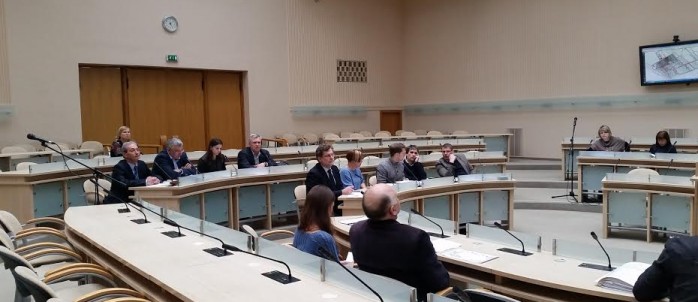
A working group for refurbishing the old Jewish cemetery in Žaliakalnis neighborhood of Kaunas met March 3. Under an agreement with the municipal administration, experts from the public agency Registrų centras [Registry Center] performed a survey and inventory of the Žaliakalnis Jewish cemetery. All gravestones were counted (5,808) and every grave was assigned a number and its exact location determined. This work took about 2 months and cost 8,000 euros. It was financed by the city of Kaunas. The work performed so far will allow the next steps to be taken: to photograph each grave, to read and translate headstone inscriptions, to identify the graves (to determine the identity of the people buried) and to create a virtual database. After that’s done, drafting and implementing a technical plan for refurbishing the cemetery will be possible. So far there is no funding for these tasks, so the plan is to approach different foundations, and the idea of recruiting volunteers for grave identification is also being considered.

The municipality is preparing a territorial planning document (designating the plot of land) for the cemetery and is planning to set up surveillance cameras at cemeteries this spring. The cemetery is always mowed and maintained.

Bagel Shop Café on Television

bern

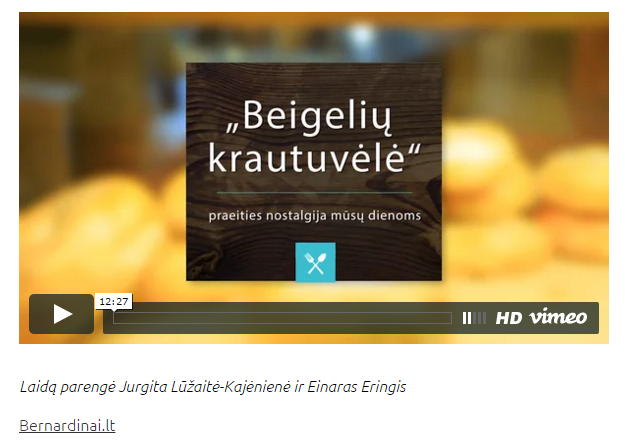
The Catholic newspaper and website bernardai.lt now has a video outlet as well and has presented a feature on the new Bagel Shop Café located at the Lithuanian Jewish Community in Vilnius. The video presentation in Lithuanian, Hebrew and English features short conversations with Lithuania’s two new rabbis on the meaning of kosher food and cooking, as well as a brief interview with Smhuel Levin, the chairman of the Lithuanian Jewish Religious Community, among others.

To view the interview, please direct your browser here.

bbb