Religion

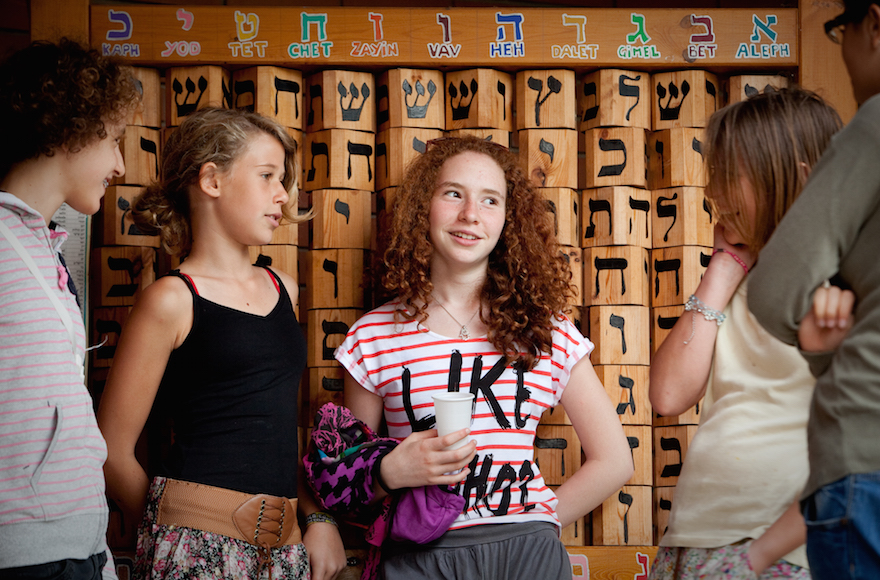
Jewish Summer Camp in Hungary Fosters Next Generation of Leaders–and Romance


Photo courtesy JDC

by Cnaan Liphshiz

SZARVAS, Hungary (JTA)–Escaping a sudden downpour in the summer of 2012, Andras Paszternak and Barbi Szendy ran to find cover inside an empty cabin at their Jewish summer camp, Szarvas, 100 miles east of Budapest.

The two senior counselors, then 31 and 36 respectively, chatted as rain drenched the sprawling compound where they had passed every summer since their early teens.

“I suddenly noticed I was holding Barbi’s hand,” Paszternak, a Hungarian Jew from Slovakia, said in recalling the day when he began his romantic relationship with his Hungarian Jewish wife.

Lithuanian Government Publishes 2016 Funding to Religious Communities

BNS reports the Lithuanian Government is planning to allocate 697,000 euros this year to traditional Lithuanian religious communities for refurbishing houses of prayer and other needs. The lion’s share–626,500 euros–will go to the Lithuanian Bishops’ Conference of the Catholic Church, according to the Government’s draft plan.

The Metropolitan of the Orthodox Church of Lithuania is to get 36,100 euros, the supreme council of the Old Believers of Lithuania will come away with 8,300 euros, the Lithuanian Lutherans take 7,800 euros, and the Synod of the Lithuania Evangelical Reform Church will take 4,700 euros.

The Muftiate of the Lithuanian Islamic Sunnis is to receive 3,600 euros, the Basilian Monastery of St. Yosaphat take 3,000 euros, the Lithuanian Karaïte Religious Community also gets 3,000 while the Lithuanian Jewish Community is to get 2,000 euros, the Eastern Old Believers Church and the Vilnius Old Believers Religious Community will come away with 800 euros, the Kaunas Jewish Community is to get 600 euros and the Panevėžys Jewish Community gets the same amount as the Chabad Lubavitch Hassidic group in Vilnius, 300 euros each, according to BNS. Last year the Lithuanian Government allocated 637,164 euros to traditional religious communities.

Rabbi Heschel’s “Sabbath” Issued in Lithuanian by Catholic Publisher

A new Lithuanian edition of “Sabbath” by Abraham Heschel (1951), translated by Asta Leskauskaitė and published by Katalikų pasaulio leidiniai [Catholic World Publications] was launched at the Vilnius Book Fair last week.

Rabbi Heschel became a rabbi at age 16 and was graduated from the Vilna Mathematics and Natural Science Gymnasium in Vilnius before going on to study under some of the greatest Jewish teachers in Germany. He was arrested by the Gestapo and deported to Poland in October of 1938. He fled to Britain weeks before the Nazi invasion of Poland, and then went on to the United States in early 1940, where he became one of the most important and respected Jewish thinkers of the mid-20th century. His first book, apparently, “Der Shem Hamefoyrosh: Mentsch,” was written when he was a member of the Jung-Vilne group of writers in Vilnius, a book of poems in Yiddish published in Warsaw in 1933. Heschel’s poems attracted attention, including a letter of praise Chaim Nachman Bialik sent to the author from Israel.

Meeting the New Rabbis

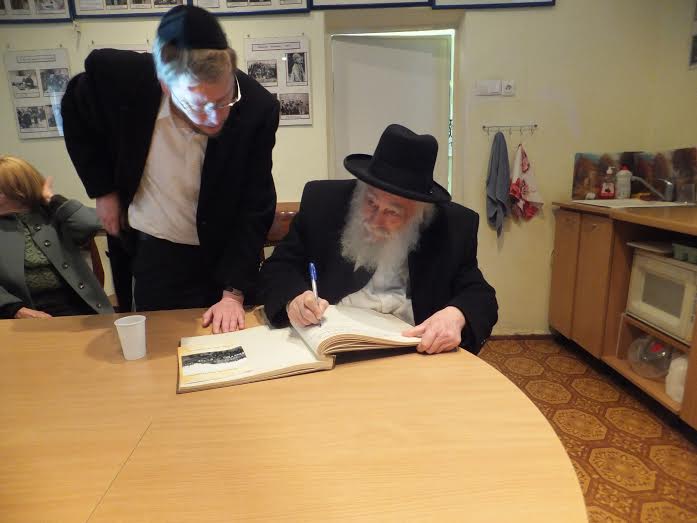
Rebbe3

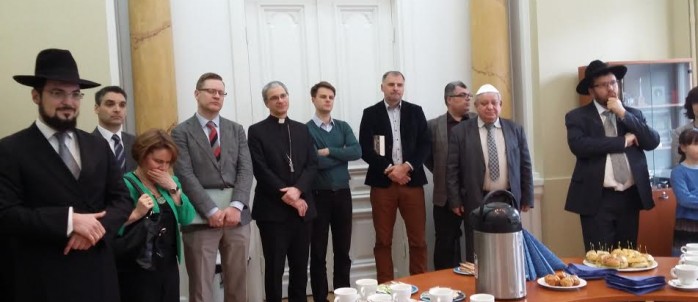
A meeting of the newly appointed rabbis Kalev Krelin and Shimshon Daniel Izakson (Isaacson) was held at the Lithuanian Jewish Community February 29. Participants included representatives of foreign embassies in Vilnius, the Lithuanian Foreign Ministry, Parliament, the Catholic Church, the Lithuanian Ministry of Culture and the regional Jewish communities in Lithuania. Also attending was Vilnius auxiliary bishop Arūnas Poniškaitis.

Shmuel Levin, director of the Lithuanian Jewish Religious Community, spoke at the meeting and said: “The physical genocide by the Nazis and the spiritual genocide by the Soviet regime destroyed the Jewish communities in Europe and especially in Lithuania. Today Judaism is an exotic religion, not just for the other religions, but for us ourselves. We hope Rabbi Izakson and Rabbi Krelin will be successful in reviving and preserving the Litvak tradition, Jewish spiritual life.”

Lithuanian Jewish Community chairwoman Faina Kukliansky welcomed the new rabbis to the community and wished them every success in their work.

Jewish Mysticism

Throne or chariot of God - Kether

Dear friends,

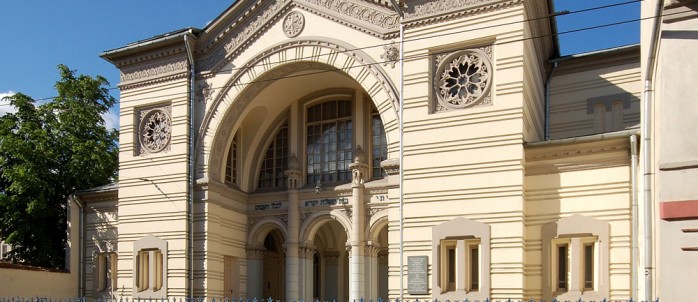
We invite you to attend the lecture “Mysticism in Judaism” this Sunday, February 28, at 6:00 P.M. at the Choral Synagogue in Vilnius.

Shimson D. Izakson
Rabbi of Vilnius

Rabbinate Now Working in Lithuania

Dear Community member,

A rabbinate supported by the Conference of European Rabbis has begun work in Lithuania. It will provide solutions to urgent questions and problems ranging from birth to death:

-circumcision
-weddings (with the Ministry of Justice)
-certification of Jewish origins
-training for conversion
-registration of vital statistics and civil ceremonies (with the Ministry of Justice)
-others

Appointments and consultations will be conducted either at the LJC or the Choral Synagogue at a time agreed upon with Rabbis Kalev Krelin and Shimson Izakson. Telephone numbers, contacts and additional information will be provided at a later time.

Shuel (Simas) Levin, chairman
Vilnius Jewish Religious Community

On Jewish Motifs, Historical Facts and Lithuanian Identity in Kristina Sabaliauskaitė’s Work

Kristina Sabaliauskaitė

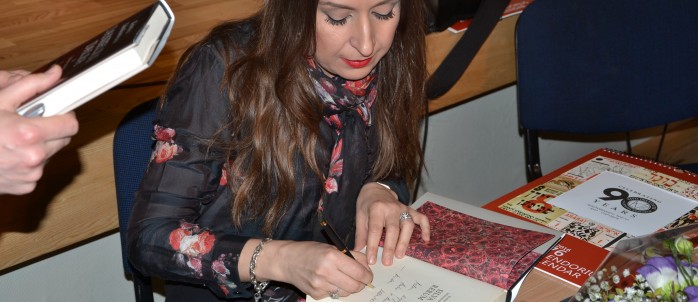
The 24th meeting in the Destinies series of seminars and lectures took place at the Lithuanian Jewish Community on February 17, called “Jewish Motifs in the Works of Writer and Art Historian Dr. Kristina Sabaliauskaitė. Teacher and essayist Vytautas Toleikis moderated the meeting and LJC deputy chairwoman Maša Grodnikienė, the organizer, served as MC and introduced Sabaliauskaitė in person to the audience, noting she was very popular outside of Lithuania as well in Poland and Latvia.

Moderator Toleikis addressed the full hall saying “Kristina has returned Lithuania’s historical memory. She brought back 200 years of history which, due to [historian] Šapoka’s paradigm were lost to Lithuanian consciousness. ‘Silva Rerum’ [‘Forest of Things’ trilogy by Kristina Sabaliauskaitė, 2008, 2011 and 2014] is for us an unexpected historical good fortune, as if the nation had won the lottery. We are lucky Kristina has brought back centuries of history. The author’s memory is not selective, she writes about everything in the past, about Poles and Jews as if they were her own people. This is the attitude of a 21st-century person, it could not be otherwise.”

The conversation during the Destinies meeting revolved around Jewish characters and how the figure of the Jew came to be included in Kristina Sabaliauskaitė’s works in a way very different from the more common portrayal found in Lithuanian literature. Sabaliauskaitė chose the elite person of the doctor Aaron Gordon.

Rabbi Kalev Krelin Visits Klaipėda Jewish Community

Klaipeda

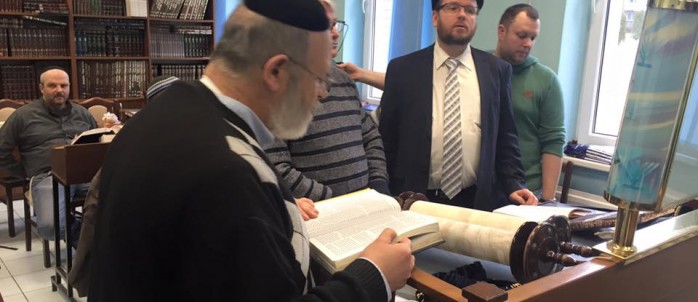
Rabbi Kalev Krelin, appointed the Gaon’s successor by the Lithuanian Jewish Community and himself a rabbi of the Litvak Mitnagdim persuasion, began his acquaintance with the regional Lithuanian Jewish communities with a trip to Klaipėda. Klaipėda Jewish Community chairman Feliks Puzemskij presented the rabbi to the audience and called for a continuation of work begun in Lithuania. The rabbi told them about himself and learned of the aspirations and problems in the small Jewish community. Rabbi Krelin shared his insights and later prayed with the congregation. The rabbi left a good impression upon the entire community with the clear explanations of his thinking he provided and his patent goodwill.

Vilnius Mayor Calls Crematorium in Jewish Cemetery Inappropriate

Šimašius

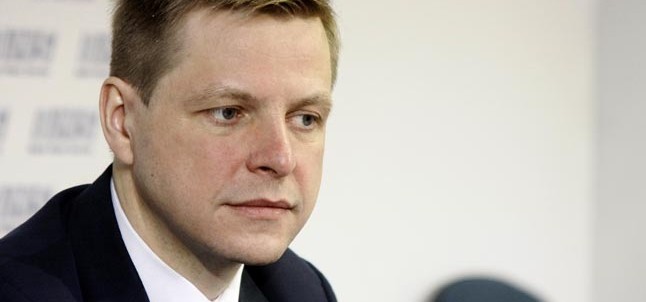
Vilnius, February 20, BNS–A plot of land next to the old Jewish cemetery on Olandų street is inappropriate for a crematorium and Vilnius residents will be asked their opinion on the need and location for such an operation, Vilnius mayor Remigijus Šimašius said.

“It has to be acknowledged that this is the territory of a Jewish cemetery and it’s obvious that in Vilnius, where 40,000 Jews lived before World War II, because of the association, a crematorium in the Jewish cemetery is simply inappropriate. For that reason alone there should be no crematorium at that location,” the mayor told BNS. He confirmed the council would be presented with the decision not to approve a crematorium on Olandų street in the Lithuanian capital. The mayor also said results of a poll of public opinion on the issue of the need for and location of a crematorium in Vilnius would be presented soon. “I think there is a need among some residents of Vilnius. We ordered a poll of residents of Vilnius to identify what sort of locations are most likely, where residents would like to see a crematorium,” mayor Šimašius said. He said a final decision would be made following the public opinion poll on “where to encourage investments” in the city.

Jewish Organization Proposal Increases Cost to Refurbish Palace of Sports

Sporto rumai

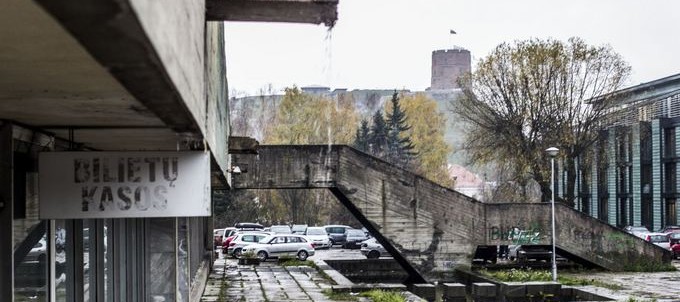
Vilnius, February 21, BNS–Proposals by a Jewish heritage organization for refurbishing the Palace of Sports located on top of an old Jewish cemetery in Vilnius without moving any soil would bring the cost of the project up by 2 million euros, Lithuanian Government vice chancellor Rimantas Vaitkus said.

“When there was analysis of whether it would be possible to set up an underground entrance, in their opinion that would enter into what is called the A section which can’t be touched, where earth cannot be moved. That would make the project 2 million euros more expensive. And we don’t know what’s going to happen now because Turto bankas, which is doing the construction, doesn’t have enough money to bring the project to completion. Either additional funding must be sought, or the whole project has to be reconsidered, but there no decision has been made yet,” the vice chancellor told BNS.

Delegation from Argentine Rabbinate Visits Panevėžys Jewish Community

Panevez vasaris

Rabbi Shmuel Arieh Levin from Argentina visited the Panevėžys Jewish Community on February 15. He arrived with eight members of his religious community. The purpose of the visit was for the delegation to observe with their own eyes the state of the Jewish community in Panevėžys, to learn more about their history, to learn about the world-renowned yeshiva and to find out more about the founder of the Ponevezh yeshiva, Rabbi Yosef Shlomo Kahaneman, the Ponovezher Rov and chief rabbi and former member of the Lithuanian parliament who founded in 1919 the yeshiva where 500 students from Europe studied. Rabbi Kahaneman and his eldest son, who had diplomatic status, left for America in 1940, and during World War II moved the Ponevezh yeshiva to, or reëstablished it in Bene Berak (Bnei Brak, with a sister institution in Ashdod), Israel. Rabbi Levin was graduated from the Ponevezh yeshiva in Israel and personally knew Rabbi Kahaneman and his son Elias Kahaneman. Today the world-famous yeshiva where more than 1,000 students study is led by his grandson, Rabbi Eliezer Kahaneman (Cohenman).

LJC Gesher Club Meets for Havadalah

IMG_0016

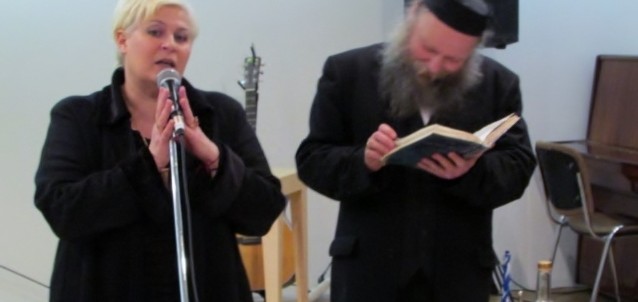
The Gesher Club of the Lithuanian Jewish Community invited members and friends to a ceremony to end the Sabbath, havdalah, on Saturday, February 13. Many community members attended a Gesher evening for the first time. The decorations, beautifully set tables and pleasant music set the mood for celebration. Organizer of the event and LJC program coordinator Žana Skudovičienė greeted each guest individually with a smile. Skudovičienė, who took over administration of the Gesher Club to fill the gap left by Junona Berznitski’s departure as administrator, has many years of experience doing organizational work.

Vilnius Choral Synagogue cantor Shmuel Yatom led the havdalah ceremony. He spoke about the significance of the ceremony and of maintaining tradition. “The word havdalah, it’s verbatim translation from Hebrew means to separate or usher out. This is the meaning of this brief but beautiful symbolic ritual of Judaism which ends the Sabbath, because havdalah separates the Sabbath from other days, in other words, it separates the holy day from daily life. The ceremony is not mandatory according to the Torah. According to the Talmud, Sabbath celebration began in the fourth or fifth century before the Common Era. The havdalah ceremony evolved as the conclusion of the Sabbath to prepare the individual for the coming work week, and the havdalah ceremonies are for our soul, to provide another opportunity to become focused together before the beginning of the week, to gather strength and to ask for G_d’s blessing. According to Judaic tradition, havdalah begins at dusk when you can see at least three stars in the sky. After darkness falls, the havdalah candle is lit.”

Vampires in Medieval Jewish Texts: What Are They Doing There?

Vampires in Medieval Jewish Texts: What Are They Doing There?

Haaretz reports on an unexpected find in old Hebrew texts and commentaries from Europe.

Secure in their monotheism, Jews may scoff, but some of the earliest texts on vampires were written in Hebrew by their coreligionists.

by Elon Gilad

The vampires which abound in popular culture today are, for the most part, a literary embellishment of an old Slavic belief that under certain circumstances, the dead can rise from their graves at night and kill their neighbors, friends and family.

Modern Jews might scoff at vampire culture, secure their monotheism rules out belief in such nonsense. But they should hold their tongues. Some of the earliest texts on vampires were written in Hebrew by their coreligionists, albeit after learning about the plague of the undead from their neighbors.

Chief Rabbi of Israel Welcomes New Rabbi in Lithuania

rabbi david lau

Dear Rabbi K. Krenlin,

I send the lines of this letter in the desire to bless you upon your having begun work as rabbi in Lithuania.

Lithuania is a historic location famous for Torah studies and the influence of that activity is significant in the Jewish world even now.

The Holocaust destroyed the major portion of the community, but thanks to G_d the community exists, and so the story of the Jews in Lithuania has not ended.

I understand the challenges which await you. You must solve them honorably.

May G_d help you.

I would gladly, as much as I am able, help with spreading the Light of the Torah.

Sincerely,

Rabbi David Lau,
Chief Rabbi, Israel

Two Rabbis Coming in February to Work in Vilnius

Vilniaus_sinagoga

For just over a half year now the Vilnius Jewish community hasn’t had an official rabbi.

The Lithuanian Jewish Community and the Lithuanian Jewish Religious Community announced a public tender to find a new rabbi and received responses from over thirty honored rabbis from the USA, Germany, Great Britain, Israel, Belarus, Latvia, Russia and elsewhere.

The Lithuanian Jewish Community and the Lithuanian Jewish Religious Community are grateful for the response by all the rabbis, and for the concern and respect shown Lithuanian Jewish believers and their venerable past.

Wooden Synagogue Discovered under Brick Walls in Kulautuva, Lithuania

Kulautuva sinagoga

BNS–A wooden synagogue built between the two world wars was discovered as the brick walls of a building were torn down in Kulautuva, Lithuania.

The Kaunas section of the Cultural Heritage Department halted work at the site as consideration is given to what to do with the discovery, the newspaper Kauno Diena reported. Department employees said they learned of the demolition of the building over the weekend after photos were posted to facebook. Cultural heritage protection experts are mulling over the idea of making the synagogue a candidate for entry on the list of protected cultural treasures and even of moving the entire structure to the Lithuanian Folk-Life Museum in Rumšiškės outside Kaunas.

The synagogue was built in 1935 and its windows were boarded up and it was turned into storage space for the town after World War II. Major reconstruction work was performed on the building in 1967 and 1968.

BNS_logotipas

What Pope Francis Synagogue Visit Says about Catholic-Jewish Relations

by Ruth Ellen Gruber

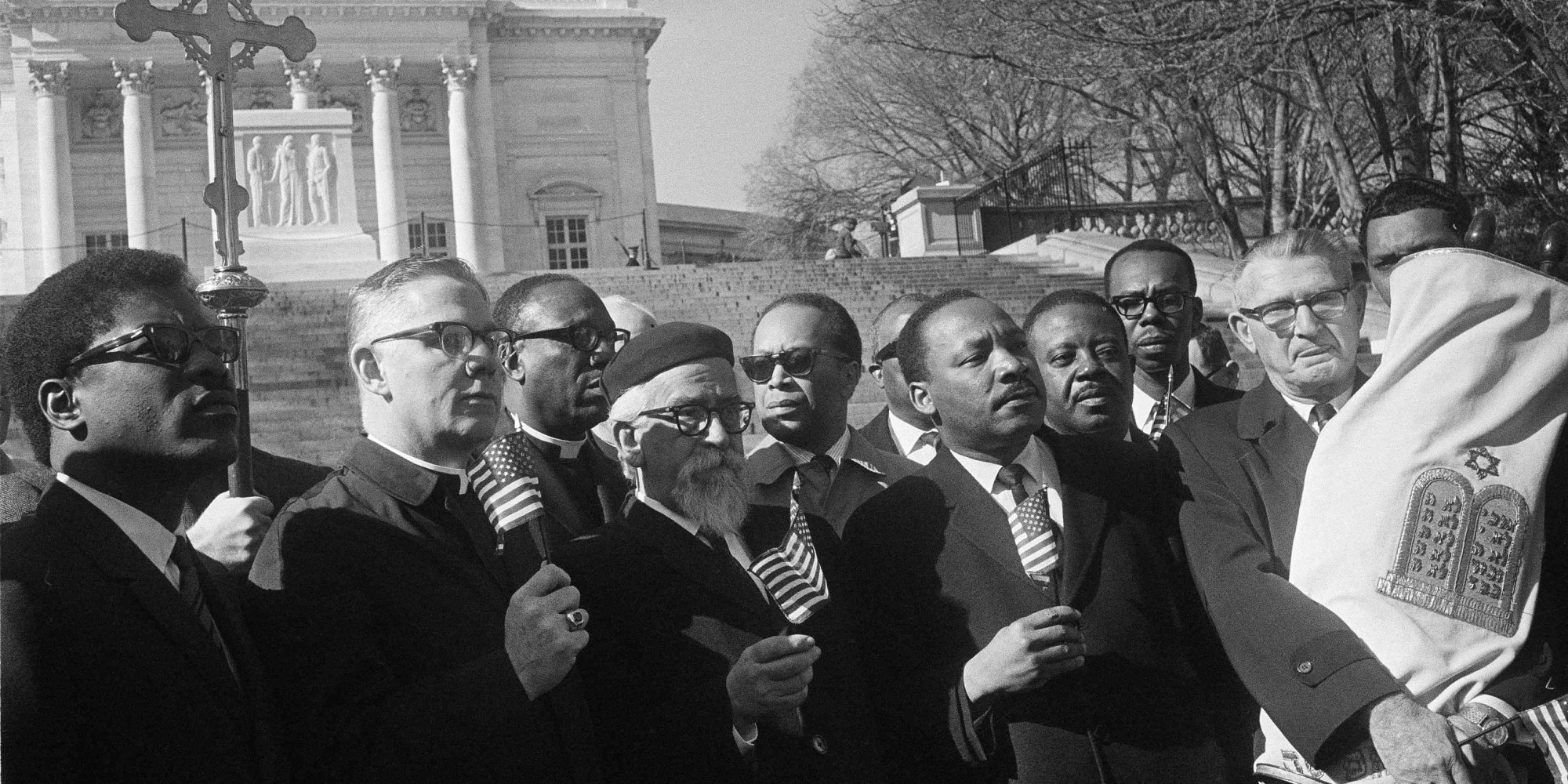
(JTA) – When Pope Francis crosses the Tiber River to visit to Rome’s Great Synagogue on Sunday, he’ll become the third pontiff in history to do so. But his 1.5-mile journey to the towering Tempio Maggiore shows that what was once unthinkable is now the norm.

“Our meeting,” Rome Chief Rabbi Riccardo Di Segni told the Catholic newspaper L’Avvenire, “aims to convey a very topical, important and urgent message — that belonging to a faith, a religion, should not be a cause of hostility, hatred and violence, but that it is possible to build a peaceful coexistence, based on respect and cooperation.”

John Paul II’s visit 30 years ago marked a dramatic watershed in Catholic-Jewish relations. By crossing the threshold of the Tempio Maggiore, warmly embracing Rome’s then-chief rabbi, Elio Toaff, and famously referring to Jews as Christianity’s “older brothers,” the Polish-born pontiff broke down barriers that stretched back nearly 2000 years.

Full story here.
jta

Pioneering US Orthodox Female Rabbi to Take Up Congregational Position

www.lesliebarbaro.com

Lila Kagedan, who received her ordination from New York’s Yeshivat Maharat in June, was the first to take on the moniker usually reserved for her male counterparts.

The first Orthodox woman ordained in the United States to take on the title of rabbi, rather than the more commonly used rabbah or maharat, will soon take on a pulpit position at an unnamed synagogue, London’s Jewish Chronicle reported on Tuesday.

While women affiliated with the nascent Open Orthodox movement have been granted ordination for several years now, Lila Kagedan, who received her ordination from New York’s Yeshivat Maharat in June, was the first to take on the moniker usually reserved for her male counterparts.

Speaking at a Limmud conference, she stated that she decided to call herself rabbi because she “wanted to take a title in a position of serving the community, so that people would know exactly what it is,” adding that “change is difficult and frightening. We are very much used to a certain aesthetic when we say ‘rabbi.’” The issue of female ordination has been extremely divisive within the Orthodox community, with the ultra-Orthodox Agudath Israel of America and the more moderate Modern Orthodox Rabbinical Council of America issuing statements condemning the practice.

Review of Mini Limmud Conference 2015

2. sestadienis (340)
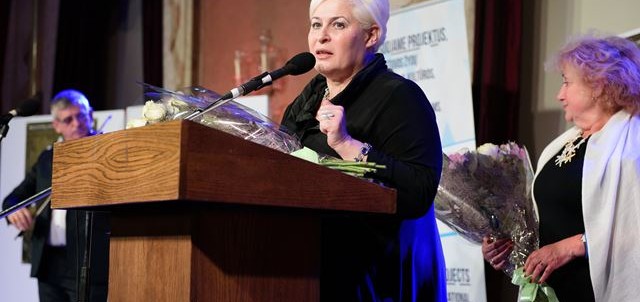
Organizer Žana Skudovičienė at the podium at Mini Limmud 2015.

The Mini Limmud conference is a large educational and entertainment event for Jewish families. The three-day program with overnight stays and entertainment at a hotel was instituted so that everyone might find something of interest and importance in learning about Jewish history, traditions, religion, Yiddish culture and current events. This year the organizer was Žana Skudovičienė. Responses by participants were positive and they expressed their thanks as well as a preference for more interesting speakers next year. Organizer Skudovičienė said they hadn’t been able to invite all the speakers they wanted this year.

“It’s hard for me to evaluate my success because this was the first year I was the organizer,” Skudovičienė said. “Junona Berznitski organized all the earlier Limmuds and I just participated as an MC, and I just had to worry about my clothes and appearance, create some scenes and write a text. But now it was a great challenge for me. I met all the potential speakers and selected only the most interesting people. These all agreed to participate, but there were others who wanted to participate but couldn’t because of plans made earlier. People requested we get reporter Viktor Topaller but everything was limited by funding. We were in touch with Viktoras Šenderovičius who wanted to come but couldn’t, but plans to next time. I wanted to find more Judaism and Jewish history experts, not necessarily from outside the country. Giedrius Jakubauskis delivered an extremely interesting presentation. Attendees were happy with the presentation of Saulius Šaltenis’s new book “Žydų Karalaitės dienoraštis” [“Diary of a Jewish Princess”]. They bought up all the copies of the book brought to Limmud, and we might have brought more from the publisher.”

Conference participants enjoyed meeting Israel’s ambassador to Lithuania Amir Maimon and were eager to learn about Israeli current events. There was a real discussion and people were concerned with why Israel always seems to be at the losing end of the propaganda war in the media. There wasn’t enough time for a comprehensive answer from the ambassador, but we hope to continue this discussion at the Community.

Lithuanian Jewish Community Chairwoman Takes Stock of Accomplishments over Past Year

MILDAR-0138web

Lithuanian Jewish Community chairwoman Faina Kukliansky said 2015 was an important year for the Community and that she is hoping for changes in school curricula in 2016 to take into account the Jewish contributions to Lithuanian history, Jewish culture and the Holocaust.

The year 2015 was an important one for us, the community. Important changes in Lithuanian-Israeli relations were seen. An Israeli embassy was opened in Lithuania and ambassador Amir Maimon began work here. Ambassador Maimon has dedicated a lot of time to the Jewish community and has proven a reliable partner in solving various problems. Lithuanian president Dalia Grybauskaitė and prime minister Algirdas Butkevičius paid serious attention to the Jewish community and both visited Israel in 2015 and met with top leaders of the Jewish state. It was said Israeli-Lithuanian relations have never been so good and efforts to expand economic and cultural ties continue.

The Lithuanian state began to pay more attention to preserving Jewish heritage and cemeteries. Old synagogues left in small towns without any Jews were the subject of utilization agreements with local municipalities to be used for cultural uses by the public. The Lithuanian National Martynas Mažvydas Library began a significant project to digitize the archive of YIVO, which operated in Vilnius until World War II, together with the YIVO institute now located in the USA.

The Lithuanian Jewish Community appreciates that representatives of our Community are included in state visits by top leaders. This is very important to us. I took part in almost all meetings, and this fact testifies not only to the respect shown the Community, but also to the opportunity to present information first-hand, which is important to the leader as well as the Community. We are taking a successful part at all international organizations and continue our many years of cooperation with the Joint Distribution Committee, and appreciate this global organization’s support for our Community. We also thank the ORT, EJC, WJC, AJC, the Goodwill Fund, the Lithuanian Human Rights Monitoring Institute, EEA Grants and the Howard Margolis Foundation for their help. Thank you all.

Currently I am seriously reviewing the operating rules of the Community’s Social Center. We have established a steering committee for the Social Center and are seeking to expand the circle of people eligible to receive social benefits, which should go not only to support the elderly, but more to children as well. Jews are also concerned that people evacuated during the war do not enjoy equal status with deportees. After all, they didn’t leave their homes voluntarily, but receive no pensions from the state.

We should not forget that last year saw the establishment of three governmental commissions. The first was the Commission for Teaching and Holocaust Education. The goal of this commission is to place greater emphasis in the schools on Jewish history and Jewish contributions to Lithuanian history. The second is the Heritage Commission which is tasked with taking care of cemeteries and mass murder sites as well as all surviving Jewish heritage sites in Lithuania. The third commission is for the restoration of property rights to private individuals who did not have Lithuanian citizenship during the period when the law for such restitution was in force. This issue will require negotiations with the Government. Another issue is a decision on non-inherited property which will never be inherited because it belonged to people murdered in the Holocaust. The program approved by the Government back in 2011 to rename the streets of Lithuanian cities and towns in honor of rescuers of Jews and famous Jewish figures, unfortunately, still hasn’t been implemented.

After the brutal terrorist attacks in Europe last year which shook the entire continent, we also hope the issue of the safety and security of members of the Lithuanian Jewish Community will receive more attention from state institutions.

The Šnipiškės cemetery and the cemetery on Olandų street were the subject of much discussion, but I’d like to say that all issues connected with the Šnipiškės cemetery are being and will be solved under supervision by rabbis, and an agreement was signed with the rabbis in 2009. We thank mayor of Vilnius Remigijus Šimašius and director of the Pavilniai Regional Park Vida Petiukonienė, among others, for their concern with and care of the Olandų street cemetery.

We consider ourselves Europeans but to make our Jewish identity real we still have to renew our knowledge of Judaism. This year we bade farewell to our rabbi whose employment contract ended. We intensively conducted a search for a new rabbi from among many candidates, the successors to the Gaon, who wanted to begin working in Vilnius and Lithuania, to continue the Judaic Mitnaged tradition in this country, to work not just at the Choral Synagogue in Vilnius, but also in the community.

I am pleased that the number of Vilnius residents joining the Community is quickly growing. Although we have always said that all Jews living in Vilnius are members of the Community, today we see them becoming true members and paying membership fees, which have been greatly reduced. And non-Jews are also taking part in the Community’s work, and just as we ask for tolerance for others, we strive to be tolerant people ourselves.

The Community is hoping for more participation by the youth because we are not just elderly people. Taking a more active part means each individual may contribute according to their desire, talent and ability. If an individual wants to preserve his or her Jewish identity and those of his or her children and grandchildren, we welcome any and all such initiatives.