
Religion

Jewish Street in Vilnius to Get Trilingual Street Sign

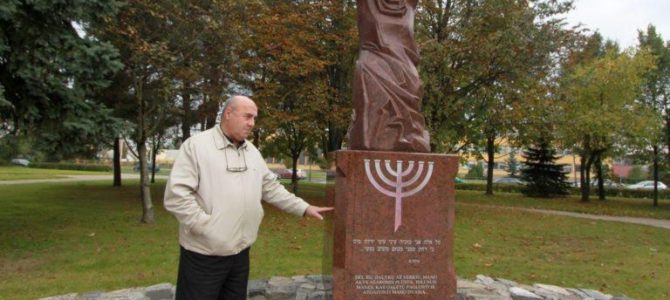
Žydų gatvė (Jewish street, aka Yidishe gas, aka ulica Żydowska), where the traditional Jewish quarter and the Great Synagogue of Vilnius was located, is about to get signs in Yiddish and Hebrew.

The special event to unveil the new sign is scheduled for 11:30 A.M., Tuesday, September 20 at Žydų street no. 2.

The program includes a performance of a piece by the Jewish song and dance ensemble Fayerlakh, followed by Vytautas Mitalas, chairman of the Vilnius municipal council’s culture, education and sports committee, presenting Vilnius mayor Remigijus Šimašius. Šimašius is to present a small speech. Mitalas will then introduce Lithuanian Jewish Community chairwoman Faina Kukliansky, who will also deliver a small speech. The mayor and the chairwoman will then unveil the new street sign. Fayerlakh is then scheduled to perform another song.

The historic street and a neighboring street were cleared of their mainly Jewish residents in 1941 when the Nazis and Nazi collaborators set up the Vilnius ghetto. The residents were murdered and a large population of Jews from other parts of the city were forced into the cramped quarters there. It was part of the so-called Small Ghetto in Vilnius, liquidated in October of 1942. Žydų gatvė was the site of the Shulhof, the collection of buildings built around the location of the residence and study of the Vilna Gaon and the Great Synagogue.
Lithuanian Jewish Community Demands Halt to Construction Work

Lithuanian Jewish Community


September 7, 2016 No. 319
September 6, 2016 No. 1-/6/P-007

To:

Tomas Pauliukonys, director
Vestata
V. Kudirkos street no. 18, Vilnius 03105

Arvydas Avulis, chairman of board of directors,
Hanner
Konstitucijos prospect no. 7, Vilnius 09308

cc:

Diana Varnaitė, director
Cultural Heritage Department under the Ministry of Culture
Šnipiškių street no. 3, Vilnius 09309

REGARDING WORK AT RINKTINĖS STREET NO. 3, VILNIUS


It has come to our attention that by order of companies under your direction during the last days of August of this year there was earth dug without permission during demolition and construction at the site of the former Žaligiris Stadium within the protected zone of the old Vilnius Jewish cemetery in Šnipiškės (cultural heritage register number KVR 31812, henceforth “Cemetery”). This is a gross violation of the signed agreement on the terms of the cultural heritage protection of the protective buffer zone of the Cemetery (henceforth “Terms”) adopted on August 26, 2009, as well as the agreement between the Lithuanian Jewish Community and the Vesata company and the Archeoligijos centras public organization (henceforth “Agreement”).

We demand an immediate halt to all work within the territory of the Cemetery and its protected zone until representatives of the Committee for the Preservation of Jewish Cemeteries in Europe (henceforth “Committee”) are able to assess the situation and decide appropriately regarding further work at the site.

According to our information, the earliest date a Committee representative could arrive is from September 12 to 15 of this year. Please respond quickly as to whether this date is appropriate for a visit, and as to whether you are willing to pay all costs associated with it.

[signed]
Faina Kukliansky, chairwoman

Same Problem Every Year at Jewish Mass Murder Sites

Kiekvienais metais ta pati problema prie žydų žudymo vietų

Every year the Panevėžys Jewish Community writes the municipal and regional administrations regarding the most tragic sites in Jewish history, sites which need continual upkeep and maintenance, the Jewish mass murder sties in the city, district and region of Panevėžys. And also in other towns such as Kupiškis, Pasvalys, Biržai, and smaller towns such as Krekenava, Pumpėnai, Raguva, Obeliai, Ramygala, Vabalninkas and others.

A large number of municipal and regional administrations consider all our requests in a spirit of goodwill and are engaged in solving the problem of maintenance at these places of tragedy, but, unfortunately, there are also a number of administrations who discover all sorts of reasons not to fulfill our requests. We believe there needs to be a common stance by government so that every year, especially in summer, cemeteries and the mass murder and mass grave sites are mowed and cleaned up. The municipal bodies of the towns of Kupiškis and Rokiškis are paying attention to the problem, while we have to beg and cajole the Pasvalys administration constantly to maintain and clean up the mass murder site in the Žadeikiai Forest there. The Jewish cemeteries in Krekenava and Raguva are in extremely bad repair.

Support the Lithuanian Jewish Community

Even your small donation today can help the Lithuanian Jewish Community achieve great things tomorrow.

The Lithuanian Jewish community has roots going back 700 years. Only a remnant survived the Holocaust. Although the current community is small, we are extremely active and are working hard to foster Jewish identity, maintain traditions and culture, commemorate Holocaust victims, provide social services to our members and promote tolerance in society.

We invite you to contribute to reviving at least a small portion of the legendary Jerusalem of Lithuania. Perform your mitzvah (good deed) today!

I’m Not Jewish

marius-ivaskevicius
by Marius Ivaškevičius

That’s what I want to tell everyone who the last three months have tactfully asked this of my friends and relatives. I am not Jewish at all, I don’t have a drop of Jewish blood. So why is he casting his lot with those Jews, what wild insect bit him? That’s another question heard often.

I can answer it almost by rote: I was bitten by a tick. Three years ago I filmed one scene at the old Jewish cemetery in Warsaw and it sucked my blood there. Furthermore, I got Lyme disease. And it so happened, or perhaps it was decided beforehand by that treacherous Jewish tick, that when I was taking antibiotics I became interested in the Jews in my town, their fate in my native Molėtai. And my hair stood on end and I got goose-bumps when I realized I had been living for 40 years in complete ignorance, on the margins of a gigantic tragedy without even sensing it existed. I knew there had been Jews, they had lived here, because their old cemetery still exists in Molėtai, as does their old “red bricks,” a long building, the oldest in the town, of connected shops, a sort of shopping mall of the period. I knew some unknown number of them had been killed, since, as I thought, some of them had been involved in Communist activities.

New Bagel Shop Menu

The Community’s kosher café the Bagel Shop invites you to come in and try some of new menu items for fall, including new bagels, Israeli salads and fresh-squeezed juice. Our new menu is displayed below and you can download it as well, or just stop by at Pylimo no.4 in Vilnius during regular business hours and see if you don’t find something which makes your mouth water. Oh, and we’re baking fresh challa bread every Friday.

Molėtai Holocaust Procession Draws Record Crowd

eisena-skirta-iszudytiems-moletu-krasto-zydams-pagerbti-faina

More than 2,600 and perhaps as many as 4,000 people attended a rally and walked the route along which 2,000 Jews were marched to their deaths 75 years ago in the sleepy Lithuanian town of Molėtai Monday. The population of Molėtai was roughly 6,400 when last counted in 2011.

The town center and surrounding streets were filled with local residents and people from around the world, including Holocaust survivors and their descendants. Many Lithuanians brought their children and there were people from Estonia and a number of Lithuanian officials in the crowd. One group of young people waved Polish flags–the Polish Armia Krajowa operated in the area in 1944. A small group of Lithuanian boy and girl scouts attended, while another small group carried a Lithuanian flag, and others sported Israeli flags. A monk in black robes stood by the stage, on the other side of which there was a long line of people holding posters with names, faces and descriptions. A central area contained about twenty folding chairs for elderly and distinguished guests, including Vytautas Landsbergis and Holocaust survivor Irena Veisaitė. Lithuanian MP Emanuelis Zingeris, a Litvak, also attended. The priest Tomas Šernas was also there, as was Lithuanian Jewish partisan Fania Brancovskaja. Other distinguished guests included Conservative Party and parliamentary opposition leader Andrius Kubilius, Lithuanian defense minister Juozas Olekas and deputy foreign minister Mantvydas Bekešius.

Record Turnout for Biržai Holocaust Commemoration

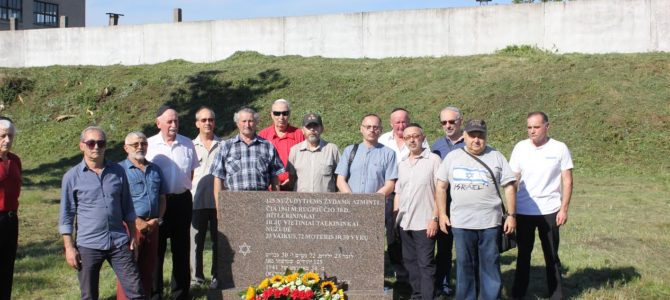
Around 200 people attended an annual commemoration of the Holocaust victims of Biržai, Lithuania Sunday, August 28, 2016. In prior years those travelling to the rural town near the Latvian border numbered in the dozens. Only members of four families survived the Holocaust in Biržai. Their descendants now live in other locations in Lithuania and Israel and have been making the pilgrimage back to honor their murdered relatives since the end of World War II.

A Holocaust historian who attended said larger interest this year was likely the result of publicity for the Molėtai Holocaust commemoration on August 29.

Ten speakers spoke at the commemoration, including a moving speech by Lionginas Virbalas, the Catholic archbishop of Kaunas who was born and grew up in Biržai. Lithuanian Jewish Community chairwoman Faina Kukliansky also spoke eloquently about the past and the future. Israeli ambassador Amir Maimon spoke and a representative from the US embassy whose Jewish family roots are in Biržai also participated.

There wasn’t a formal march to the killing site. Instead there was a walking tour of Jewish sites in Biržai, including the former synagogue, Jewish houses and buildings and the old Jewish cemetery, where a portion of the Jews of Biržai were murdered. The group then moved to the killing site about 2 kilometers outside town where prayers were said by representatives of different religious communities.

Israeli Embassy Invites You to an Exhibit of Children’s Drawings

ldj

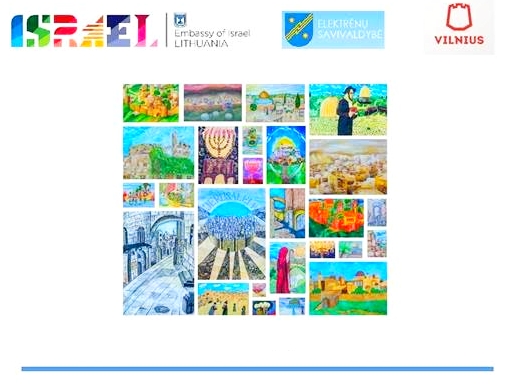
Children’s Art Exhibit Let’s Draw Jerusalem

The Israeli embassy and municipalities of Vilnius and Elektrėnai have the pleasure of inviting you to attend the opening of the Let’s Draw Jerusalem exhibition of drawings by children in the second-floor foyer of the Vilnius Municipality building at Konstitucijos prospect no. 3, Vilnius at 2:00 P.M. on September 12.

The artwork is the result of a student contest the Israeli embassy and the municipality of Elektrėnai sponsored in April of 2016 called “Let’s Draw Jerusalem.” The idea was to combine symbolically the past and the future and the children were instructed to draw anything they associate with Jerusalem and Vilnius, Israel and Lithuania and the history and legacy of Litvaks. Come take a look at the wonderful pictures they came up with!

The exhibit will run till September 23.

Wooden Synagogues: Lithuania’s Unique Ethnic Architectural Legacy

Medinės sinagogos – unikalus etninės Lietuvos architektūros paveldas

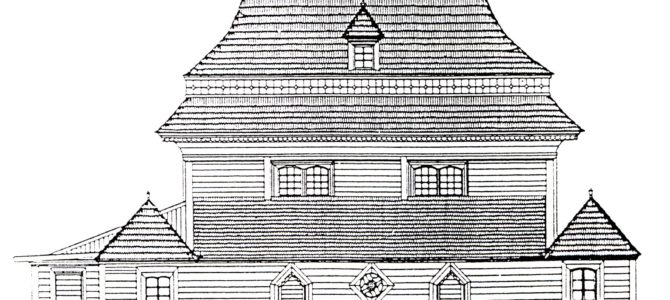
The relicts of the Jewish cultural landscape created over more than 600 years in cities, towns and villages throughout Lithuania can be placed in four categories: mass murder sites; cemeteries; synagogues and other heritage buildings; monuments and other commemorative markers. Martynas Užpelkis, Lithuanian Jewish Community heritage protection expert delivering a lecture at an event dedicated to the European Day of Jewish Culture, said: “The Lithuanian Jewish Community, almost exterminated during the Holocaust, is not able to maintain and protect heritage sites throughout Lithuania alone today. The role of the Lithuanian state and municipal institutions, NGOs and citizens is crucial. Many challenges are arising, but great results have been achieved in cooperation with the Cultural Heritage Department and the municipalities.”

To what use should the synagogue buildings be put?

About 80 synagogues survive in Lithuania today, and 43 of them are listed on the register of cultural treasures. There are only two working synagogues and all other buildings are being put to other uses or are not being used at all. The LJC owns 13 synagogues and synagogue complexes. Most of the buildings are not in use and are in serious disrepair.

European Day of Jewish Culture 2016

European Day of Jewish Culture 2016
Vilnius speaks Yiddish again!

Sunday, September 4, 2016
Lithuanian Jewish Community, Pylimo street No. 4, Vilnius, September 4

Program:

10:00 Bagel breakfast Boker Tov-בוקר טוב – A guten morgn – Labas rytas!
Location: Bagel Shop Café, Pylimo street No. 4, Vilnius

11:00-11:45 Hebrew lessons for kids and parents with Ruth Reches, author of the Illustrated Dictionary of Hebrew and Lithuanian for Beginners, registration required
Meet at the Bagel Shop Café, Pylimo street No. 4, Vilnius

12:00-12:45 Rakija Klezmer Orkestar performance
Location: White Hall, LJC

Learning about Jewish Heritage through Languages

Pažintis su žydų kultūros paveldu šiemet vyks pasitelkiant kalbas

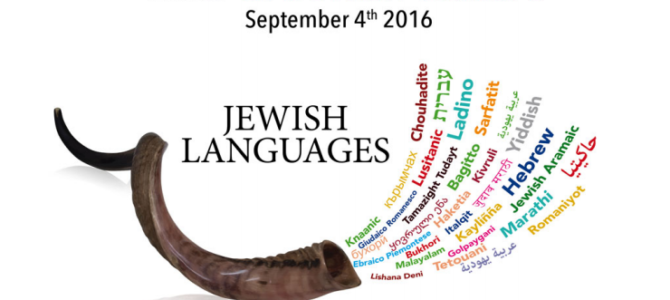
We invite you to participate in events scheduled throughout Lithuania for September 2 to 5 to celebrate the European Day of Jewish Culture. This year the theme is Jewish languages. Events will include the now almost traditional excursions and tours of Jewish heritage buildings with a focus this time on Hebrew language and calligraphy lessons, discussions, exhibits, concerts, educational games and even bagel breakfasts!

Diana Varnaitė, director of the Cultural Heritage Department under the Lithuanian Ministry of Culture, said: “We still have a significant amount of architectural heritage in Lithuania despite the intense destruction of Jewish material and intangible culture carried out during the Soviet era. Most of it, especially in Vilnius and the other larger cities of Lithuania, as a consequence of Sovietization, is still undiscovered, unrecognized and ‘unread.’ We invite you to take a look at our Jewish cultural heritage, to take it in and to understand that it is not just our past, but also an opportunity for the future. By educating the public and developing cultural tourism, we can slowly impart new vitality to our cities and towns.”

Full story in Lithuanian here.

Jewish Languages in Lithuania

by Akvilė Grigoravičiūtė, Germanic studies doctoral candidate, Sorbonne

We invite those interested in Lithuanian Jewish culture and heritage to participate in walking tours, attend exhibitions, meetings and concerts and take part in other cultural activities scheduled for Sunday, September 4. The point is to regain a portion of our own historical memory, to disrobe it from a mantle of suppression and to add color beyond black and white to a rather amicable and good-willed former life together.

Full story in Lithuanian here.

Thank You

Speaking on behalf of the Committee of Jews from Zarasai Living in Israel, Grisha Deitz deeply thanks Lithuanian Jewish Community chairwoman Faina Kukliansky for her concern and help in organizing a commemoration of the 75th anniversary of the destruction of the Jewish community of Zarasai, Lithuania, and for the presence of the rabbi at the ceremony in Krakynė Forest, where 8,000 Jews from the Zarasai region were murdered in 1941.

Discover Jewish Lithuania Mobile App

Artūras Taicas, chairman of the Ukmergė Jewish Community, reports there will be a public launch of a new mobile telephone application called Discover Jewish Lithuania on September 4 during a commemoration of Holocaust victims in Ukmergė. The app uses what’s called augmented reality to overlay graphics, text and information on mobile phone and tablet screens displaying live camera views. The app will aid in finding sites and then offers additional information about the location in one of five languages, Lithuanian, English, Hebrew, Polish and Russian. So far it works in Ukmergė, Vilnius, Kėdainiai, Joniškis, Žagarė, Valkininkai and the village of Degsniai.

Lithuanian Prime Minister Commemorates Holocaust Victims in Šeduva

Premjeras pagerbė Holokausto aukas Šeduvoje

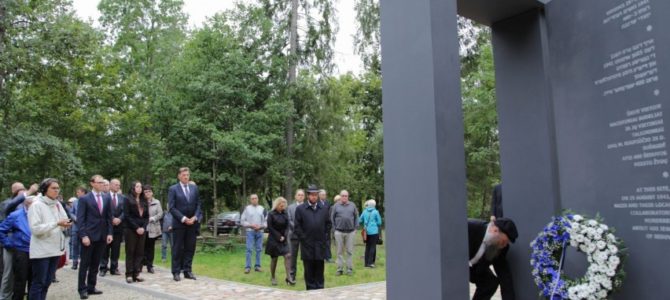
Vilnius, August 30, BNS–Lithuanian prime minister Algirdas Butkevičius Tuesday commemorated Lithuanian Holocaust victims at the Pakuteniai and Liaudiškiai mass murder sites and at the old Jewish cemetery in Šeduva, where kaddish was said for the dead.

“The Holocaust is our shared agony, our tragedy. It is our obligation that in the future never again would our human nature face such danger,” the prime minister was quoted in a Government press release. The PM said unfading memory is a duty to the dead and those who suffered.

The prime minister thanked the organizer, the Šeduva Jewish Memorial Foundation, and its representatives, who are conducting the Lost Shtetl project to commemorate Jewish life in Šeduva and the mass murder of that community in the forests near the town.

The Government’s internet site features photographs from the commemoration:
http://ministraspirmininkas.lrv.lt/lt/naujienos/premjeras-seduvoje-pagerbe-holokausto-auku-atminima

Kaunas Jewish Community Marks 75th Anniversary of Petrašiūnai Mass Murder and Intellectuals Aktion

Kauno žydų bendruomenė minėjo Petrašiūnų žydų žudynių ir Inteligentų akcijos IV forte 75-ąsias metines

The Kaunas Jewish Community marked the 75th anniversary of the mass murder of the Jews of Petrašiūnai and the Intellectuals Aktion at the Fourth Fort in Kaunas. Lithuanian ambassador for special assignments Dainius Junevičius, his wife, representatives from the Kaunas municipality, residents of Petrašiūnai who witnessed the mass murder and members of the Kaunas Jewish Community honored the Holocaust victims. Community chairman Gercas Žakas and Junevičius both spoke of the Holocaust as a shared tragedy for all citizens of Lithuania. Iseris Šreibergas, the chairman of the Kaunas Hassidic Religious Community and a member of the Kaunas Jewish Community board of directors, honored the memory of the dead with a prayer.

Secrets of Kosher Food at the Frenkel Villa in Šiauliai

Frenkelio vila

A large stuffed dumpling floats in chicken broth. But what’s inside? Pork? No way. Jews don’t eat it. Chicken? It’s taste is impossible to identify. It will remain a mystery for a long time. At least, until the guide at the Chaim Frenkel villa in Šiauliai helps me solve the riddle. “The Secrets of Kosher Food” is one of those educational programs which attracts tourists to the villa like flies to butter. The price is 10 euros for adults and 9 for primary and high school students. The price includes not just a feast at the villa, but an explanation of what appears to our eyes as the strange foods Jews have eaten for millennia, and continue to eat. “I have worked here for a long time, but over the course of my job I have never seen Jews attend this sort of educational program. And that’s understandable. After all, it’s impossible to surprise Jews by foods they eat often. But this does surprise Lithuanians,” the guide said. Kosher food. What is it?

Full article here.

LJC Chairwoman Faina Kukliansky on the Annihilation of Jewish Communities in the Lithuanian Shtetls

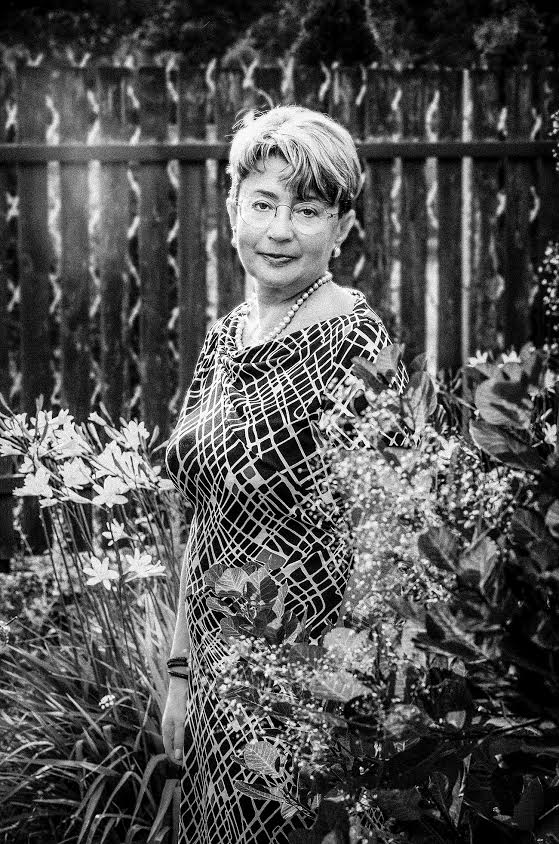
In the final days of August we mark the 75th anniversary of the extermination of the large Jewish communities who once lived in the Lithuanian shtetls (small towns). Neither the shtetls nor the Jews survived the brutal mass murder. For 75 years no one has spoken Yiddish any longer in those small towns. No one celebrates Sabbath, the synagogues are boarded up or are now storehouses or workshops. What does this anniversary mean to the Jews and the shtetls of Lithuania?

Fainos portretaa

We mark the anniversaries because the people are no longer with us. Those who still remember the Holocaust must mark the anniversaries of the mass murders, otherwise the small towns will forget entirely the murder of their Jewish neighbors, including men, women and children. Lithuanian society as a whole–and not without a lot of effort by the Jewish community–twenty-five years after Lithuanian independence has all of a sudden remembered that there were Jews here, and their contribution to everything we have in Lithuania today is huge. Jews created and built the centers of these small towns. They are no longer, or they are very few, and what will the old-timers in these towns tell their children and grandchildren?

After World War II Jews maintained the keyver oves tradition (from Yiddish keyver, “grave,” + oves “parents, ancestors”) where Jews would visit the mass murder sites where their relatives were buried, to remember them. They used to do it on exactly the anniversary of the day when the Jews of that shtetl were exterminated. I remember from my childhood how we used to go visit our murdered grandparents, and how others went to visit their murdered sisters, brothers and parents. No one marched in a procession, there were no marching bands playing. Keyver oves was a sad occasion. People were repentant, they cried and they prayed, hoping it such atrocities would never happen again. They went to the mass murder sites, of which there are 240 in Lithuania, not to give speeches. What else can be said after all these years? They gathered not to talk, but so that the town community would think about where they lived and with whom they lived, and so that they wouldn’t be ashamed to look their children and grandchildren in the eye. You cannot hide the truth, after all. You don’t need popular novels, and large print-runs cannot replace open communication about what happened. Everything was known long ago. It’s not the Jews who need public commemorations, we already know it all, for us it is sufficient to stand and to pray. Telling the truth and talking sincerely and openly is needed in every small town where Jews lived before the war.

The Road to Death (75th Anniversary of the Murder of the Jews of Molėtai)

Attorney Kazys Rakauskas sent the following to the Lithuanian Jewish Community webpage.

On central Vilniaus street in Molėtai the flowers bloom and the brightly-painted kindergarten greets the eye of passers-by. The bridge next to the statue of St. Nepomuk is also festooned with garlands of flowers. Small fish flash in the sun in the pure lake water flowing into the river. Cars quietly pass and young people flex their muscles on bicycles. The people of Molėtai hurry to work on foot.

They are a different generation of people. Even their parents only heard vaguely of the terror, tears and suffering which once overtook this street. Seventy-five years ago hundreds of Jews of Molėtai realized where they were being taken at this bridge. They threw their things they had taken with them when they were removed from the synagogues under armed guard into the Siesartis river. This street leading from the three synagogues on Kauno street became the road to death for two thousand people. They had been held prisoner there [in the synagogues] for days without food or water.