History of the Jews in Lithuania

Lithuanian Jews Send Congratulations on 100th Anniversary of Lithuanian Military

Lithuanian Jews Send Congratulations on 100th Anniversary of Lithuanian Military

Lithuanian Jews send their congratulations on the 100th anniversary of the restoration of the Lithuanian military. This is also a holiday for Jews. We remember and are proud of the Lithuanian Jewish volunteer soldiers, the participants in the battles for Lithuanian freedom in 1919 and 1920. We honor the civic-mindedness and patriotism of the Jewish soldiers and their devotion and service to Lithuania. Through their blood and at the cost of their lives they proved the Jewish community had decided resolutely with Lithuanians to established the democratic Republic of Lithuania and to defend bravely their country.

Happy 100th anniversary!

Kaunas Jewish Community Meets Students

Kaunas Jewish Community Meets Students

Kaunas as the cultural capital of Europe for 2022 is preparing an educational program for high school students aged 15 to 18 called “The Challenge of Kaunas.”

The Bureau of Memory program is striving to interest high school students in the multi-ethnic and multicultural history of Kaunas. The students have an assignment: to draft a project for the younger and older generation, including KJC senior citizens, to work together. The students are being encouraged to learn about the city’s history from living eye-witnesses and to come up with proposals for what they themselves have to offer the elder generation; what manner of cooperation might work is left up to them.

The students had the opportunity at the meeting at the KJC to communicate directly with members of the Community and to learn about their biographies. The young participants reported that they were very interested and moved by the warmth of Community members.

The KJC said this meeting was the start of a new and beautiful friendship.

Visit the Lost Shtetlakh, the Jewish Towns in Lithuania

Visit the Lost Shtetlakh, the Jewish Towns in Lithuania

The popular Lithuanian travel page www.lietuvon.lt has been updated and now includes a new group of sites, the shtetlakh, towns which had a large Jewish population before the Holocaust.

The Lithuanian-language internet site is promising to continuously update local and regional Jewish heritage tourist routes (at https://www.lietuvon.lt/stetlai) which are being developed and advertised by local municipalities. tourism information centers, museums, libraries and individual travel enthusiasts.

This project is the fruit of a joint-venture between the Lithuanian Jewish Community and www.lietuvon.lt author Karolis Žukauskas.

The project receives support from the Lithuanian Cultural Heritage Department and the Goodwill Foundation.

Simon Karczmar Exhibit at Vilna Gaon Museum

Simon Karczmar Exhibit at Vilna Gaon Museum

The Tolerance Center of the Vilna Gaon State Jewish Museum at Naugarduko street no. 10/2 in Vilnius will open an exhibit of paintings and prints by Simon Karczmar at 5:30 P.M. on November 22. The exhibit will run till January 21, 2019.

Karczmar was born in 1903 and died in 1982. His most productive period came later in life. He studied art in Paris as a young man but worked in the fur industry rather than as a professional artist. At the age of 57 he developed an allergy to fur and his wife encouraged him to return to making art. As a member of an artists’ colony in Safed, Israel, to which he moved in 1962, Karzcmar painted daily life in the Dieveniškės (Diveishok, Jevenishok) shtetl. His work has been exhibited in the USA, Canada, Israel and Mexico but never before in Lithuania. A month ago the School of Business and Technology in Dieveniškės hosted the exhibit. Karczmar’s son Natan came from Israel to attend and said the exhibit in Vilnius fulfills an old family dream.

Street Named in Honor of Frankel Family in Šiauliai

Street Named in Honor of Frankel Family in Šiauliai

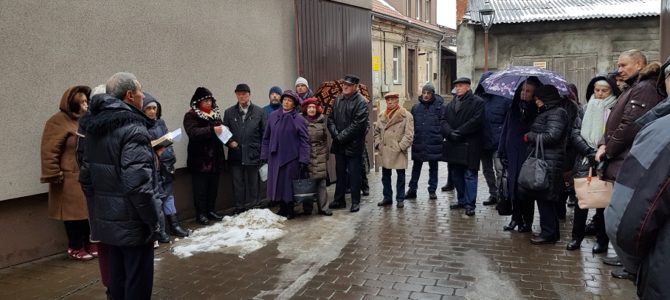
The city of Šiauliai turned out November 19 to unveil the first street sign commemorating the Frankel family. These Jewish industrialists contributed significantly to the development and history of Šiauliai. The family name now graces what was Elnis [Deer] street. A large audience including members of the Jewish community, municipal representatives, staff at the Aušra Museum and guests from Kaunas and Klaipėda attended the ceremony at what is now Frenkelių street no. 23.

Israeli ambassador to Lithuania Amir Maimon was also there, presenting warm congratulations and speaking about the need to remember and honor shared Lithuanian and Jewish history. Lithuanian MP Stasys Tumėnas and Lithuanian Jewish Community executive director Renaldas Vaisbrodas, among others, also spoke about that. Historian Andrius Kvedaras led an excursion and provided details from the biographies of Chaim and Jakob Frenkel.

Deputy mayor Domas Griškevičius was a supporter of renaming the street and said “the municipality still has to seek cooperation from businesses here so they change their signs” to the new street name, according to the newspaper Šiaulų kraštas. Griškevičius said the regional Jewish community had paid for the manufacture of the new street signs and said he hoped the city budget would soon include funding for maps for tourists of the Chaim Frenkel leather factory in the past and present.

Jewish Veterans Commemoration

Jewish Veterans Commemoration

A ceremony to commemorate Lithuanian Jewish veterans is to be held at the Jewish Cemetery in Kaunas at 4:30 P.M. on November 23. Organizers include the Kaunas Jewish Community, the Sugihara Foundation/Diplomats for Life and the Kovo 11-osios Gatvė Association. For more information send an email to kaminskas.raimundas@gmail.com or call +370 680 53 495

Parliamentary Cultural Committee Considers Jewish Heritage Issues

Parliamentary Cultural Committee Considers Jewish Heritage Issues

A sitting of the Lithuanian parliament’s Cultural Committee November 14 addressed Litvak heritage. The meeting was held at the Tolerance Center of the Vilna Gaon State Jewish Musum in Vilnius with committee chairman Ramūnas Karbauskis attending.

Three main issues were discussed:

1. Further expansion and financing of the Vilna Gaon Museum
2. Jewish heritage issues
3. Restoration of the Great Synagogue in Vilnius

MP Emanuelis Zingeris proposed a resolution for the restoration of the Great Synagogue at the meeting. The Lithuanian Jewish Community expressed a different position. LJC chairwoman Faina Kukliansky said Lithuanian Jews are not asking and never had asked for the rebuilding of the Great Synagogue using state funds. She further noted that currently the LJC is engaged in studying other methods and problems in commemoration and preservation, having been tasked with drafting a study on Jewish heritage by the Lithuanian Government.

Special Focus on Ethnic Communities at Tolerance Day Celebration

Special Focus on Ethnic Communities at Tolerance Day Celebration

The celebration of Tolerance Day supported by the Lithuanian prime minister demonstrated sincere and exceptional attention to representatives of the ethnic communities in Lithuania.

International Tolerance Day was marked for the fifth time in Lithuanian November 16 with an event at the Lithuanian Academy of Sciences supported by the Lithuanian prime minister and organized by the Department of Ethnic Minorities under the Government of the Republic of Lithuania. During the event prime minister Saulius Skvernelis and department director Vida Montvydaitė honored and awarded those who had contributed most to the establishment of civil society, celebration of ethnic cultures and the fostering of intercultural dialogue in Lithuania.

From the Vilnius Ghetto: Sutzkever’s Memoirs in Lithuanian

From the Vilnius Ghetto: Sutzkever’s Memoirs in Lithuanian

by Danielė Ūselytė

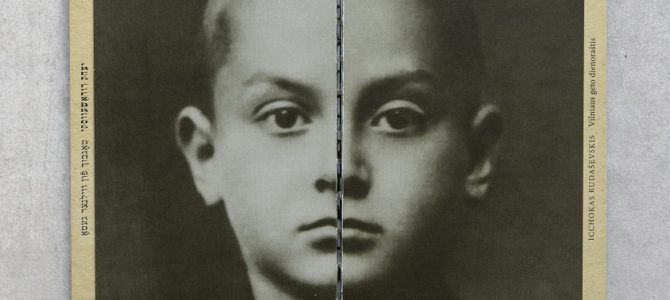
Abraham Sutzkever (1913-2010) was one of the most remarkable Yiddish poets in the 20th century, a Holocaust survivor, one of the leaders of the cultural resistance and in his memoirs “From the Vilnius Ghetto” provides a testimony of his authentic experience.

These texts were written immediately following the tragic events of World War II and were published in Moscow in 1946. These memoirs contain the living memories in the author’s mind and thus are a testimony of history. Feelings and states of mind are presented, indirectly, through specific situations, sometimes with irony, feelings of hopelessness, fear, debasement, but always the infinite desire to survive, to fight to the last breath. Resistance is supported by intense creativity in an extreme situation, in the belief its power will fortify human existence, and the historical narrative is based on this, demonstrating the possibility to write poetry in the tragic moment.

Full text in Lithuanian here.

Kaunas Jewish Community News for October

Kaunas Jewish Community News for October

In October the Kaunas Jewish Community experienced moments of celebration and painful losses, and commemorated the past.

The most momentous event in October was the celebration of the Community’s 30th birthday with a concert. The Kaunas State Philharmonic hosted the Klaipėda Chamber Orchestra accompanied by harpist Gabrielė Ašmontaitė, baritone Stein Skjervold and VilhelmasČepinskis on violin. Orchestra art director Mindaugas Bačkus presented a rich program of well-known and lesser-known works by Jewish and Litvak composers of different times and in different genres. He both played cello and presented the event.

The historian Linas Venclauskas told the audience about the history of the Jewish community and current events. He spoke about the Litvak contribution to Lithuania and together with KJC chairman Gercas Žakas presented thank-you letters from the Kaunas mayor and municipal culture department to long-standing and outstanding members of the Community, including Fruma Kučinskienė, Judita Mackevičienė, Motelius Rozenbergas, Basia Šragiene, Julijana Zarchi, Simonas Dovidavičius and Gercas Žakas himself.

Reflections in a Broken Mirror Exhibit Opens

Reflections in a Broken Mirror Exhibit Opens

The exhibit Reflections in a Broken Mirror detailing Litvak life in the period between the two world wars opened at the Lithuanian National Martynas Mažvydas Library November 12. Judaica Research Center director Dr. Lara Lempert presented the exhibit, talking about Jewish social life, modern art, literature, books, reading culture, publishing and medicine in the interwar period. The rich collection of multimedia exhibits presents Lithuanian and Vilnius Jewish life including the social welfare and medical system, education, art, learning and literature. It also demonstrates the importance of the Lithuanian and Vilnius Jewish communities in the context of world Jewry.

Commission for Preservation of America’s Heritage Abroad Chairman Visits Lithuania

Commission for Preservation of America’s Heritage Abroad Chairman Visits Lithuania

United States Commission for the Preservation of America’s Heritage Abroad chairman Paul Packer has visited the Lithuanian Jewish Community during his trip to Lithuania from November 6 to 8 to discuss Jewish heritage issues in Lithuania and participated in a prayer service at the Choral Synagogue in Vilnius where he discussed the need for a mikvah with members of the Community. Chairman Packer also visited the Zavl shul on Gėlių street in Vilnius, currently undergoing renovation.

It was due to Packer’s initiative and concern that an information stand was erected to mark the old Jewish cemetery in the Šnipiškės neighborhood of Vilnius. He and members of the Vilnius municipality discussed future commemoration of the Jewish cemetery during his most recent trip to Lithuania. Packer visited the Jewish cemetery on Olandų street in Vilnius and said it, too, needs more information for visitors. He also visited the only working Jewish cemetery in Vilnius on Sudervės road.

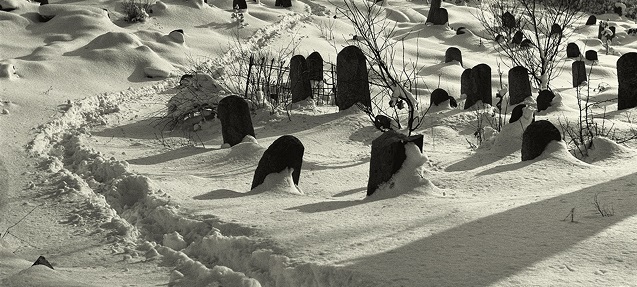
In Kaunas Packer visited the Hassidic synagogue building which, if restored, could serve the needs of Lithuania’s second largest Jewish community and Israeli exchange students living in Kaunas. The chairman expressed unpleasant surprise at the state of the old Jewish cemetery in the Žaliakalnis neighborhood of Kaunas where a number of notable Jewish religious and cultural figures are buried. Many of the headstones are broken and overturned in the cemetery near the city’s center, and Packer said this didn’t serve to demonstrate the city’s pride in its rich Jewish history. LJC representatives also contacted the appropriate institutions regarding technical problems with video surveillance at the cemetery.

Retrospective of Photography by Antanas Sutkus

Retrospective of Photography by Antanas Sutkus

The National Art Gallery Friday opened a retrospective called Cosmos on the work of photographer Antanas Sutkus. It is a comprehensive presentation of the 79-year-old artist’s work and the first exhibit of his work to appear in over a decade. It includes more than 300 items.

Photographer Gintaras Česonis, one of the curators of the Cosmos exhibit, said Sutkus is an exceptional figure in Lithuanian photography.

“Sutkus is extraordinarily important for all time. More than one generation has grown up with his work. It’s not a simple matter to take a fresh look at it. When people delve into Sutkus’s archives many come to the conclusion his creative work cannot be comprehended, it is the entire universe. And this is probably where the name Cosmos came from for the exhibit, the totality of unbounded things and time,” Česonis commented.

Curator Thomas Schirmböck said Sutkus is one of the greatest photographers of the 20th century.

An album of Sutkus’s photos of Vilnius and Kaunas ghetto inmates called In Memoriam with the text in English was published two years ago.

The exhibit will run till January 13.

Evening to Remember Pianist Nadežda Dukstulskaitė

Evening to Remember Pianist Nadežda Dukstulskaitė

The Lithuanian Jewish Community will host an evening to remember the pianist and teacher Nadežda Dukstulskaitė at 6:00 P.M. on Thursday, November 15. The evening will feature memories and performances by Rafailas Karpis, Robertas Bekionis, Dmitri Bulybanko and the Ąžuolai men’s choir. Dr. Leonidas Melnikas will moderate.

Nadežda Dukstulskaitė (1912-1978) was born into the family of a musician. In 1918 the family moved to Kaunas where from the age of 7 Nadežda attended private lessons in piano under Herbeck-Hansen. She was graduated from the Stern Conservatory in Berlin in 1926 and from 1926 to 1929 studied at the High Musical School in Berlin.

She was a concert master and soloist on Kaunas and Vilnius radio from 1929 to 1953. She toured Latvia, Estonia, Finland and Sweden in 1934, 1937 and 1938 and performed works by M. K. Čiurlionis, Juozas Naujalis, Stasys Šimkus, Juozas Tallat-Kelpša, Juozas Gruodis and Juozas Karosas.

She escaped the Kaunas ghetto towards the end of World War II with help from the writer Kazys Binkis and his wife Sofija. She hid in different locations around Kaunas for several days and then walked to Vilnius. From 1953 to 1959 she was the concert master of the Lithuanian Soviet Socialist Republic’s philharmonic, and from 1959 to 1978 concert master and piano teacher for the Ąžuoliukas choir.

Her students included the opera singer Vladimiras Prudnikovas and the pianists Robertas Bekionis, Dmitri Bulybenko and Leonidas Melnikas.

Demagogue Tango with the Conscience

Demagogue Tango with the Conscience

Valiušaitis’s article “Melo voratinklyje – antinacistinė ir antisovietinė rezistencija” [“In the Web of Lies: The Anti-Nazi and Anti-Soviet Resistance”] examines the art of Soviet disinformation. A truly necessary topic. But again, “including” captain Jonas Noreika, and again arguing as if there are no documents demonstrating Noreika’s Nazi collaboration, his violation of his oath as a military officer and his close cooperation with the murderers of Jews.

Unfortunately such proof exists, whether Valiušaitis likes it or not. So, in denying the established facts, trampling upon the principles of morality and ethics and human values, he seeks to push the worship of a tainted hero onto democratic society. Whether this is intentional or not, he is demanding the justification of fascist and Nazi ideology. But glorification and justification of these ideologies is forbidden by Lithuanian law.

A half-lie isn’t the truth. Using one historian as a source is not an indication of objectivity. Besides the Soviet sources, there are a plethora of others, just as there are many works by historians unaffected by Soviet disinformation. The rejection of the International Criminal Court’s definition of genocide doesn’t vindicate the crime. Proponents of Nazi ideology cannot claim to be anti-Nazis. During World War II, the “anti-Nazi underground” of the fascist Lithuanian nationalist parties, the LAF and LNP, was so unremarkable in Lithuania that they failed to rescue even a single Jew and failed to kill even a single Nazi. And attempting to whiten the mantle of an officer by presenting, for example, Pope Pius XII’s “silent” policy of rescuing Jews, does a disservice to the Pope. Not only did Noreika fail to rescue a single Lithuanian Jew, but he was responsible for one and a half years for the looting of the property of the Jews murdered and shook hands daily with the murderers of the Jews.

Eightieth Anniversary of Kristallnacht, November 9, 1938

Eightieth Anniversary of Kristallnacht, November 9, 1938

Today marks 80 years since Kristallnacht, the Night of Broken Glass when Nazis in Germany, Austria and the Sudetenland went on an organized rampage murdering Jews and looting, burning and destroying Jewish businesses and synagogues. The pogrom of unprecedented scale was supposed to leave shattered glass in streets around the Third Reich, like crystals, and the staged event even had an official name, Reichskristallnacht. For many Jews and Germans it marked the beginning of the Holocaust, with hundreds murdered, thousands wounded and many women raped by the brownshirts. In leadership circles the Nazis actually called it the Week of Broken Glass. Nazi propaganda minister Josef Goebbels issued an order on the evening of November 9, 1938, calling for “spontaneous demonstrations” to be “organized and executed” that night. Reinhard Heydrich, second in command in the SS after Himmler, was in charge of operations at the street level. The Nazis overplayed their hand and forced themselves into a corner: following Kristallnacht, insurance claims threatened to bankrupt a large number of German insurers, leading the Nazis to seek desperately for an early, financial Final Solution.

Nazi Germany’s “break-the-glass moment” led to the seizure of Jewish property and Jews who were sent to concentration camps. In just over two years the Holocaust began in Lithuania as well, where between 140,000 and 150,000 people were murdered in just three months.

Celebrating Vidmantė Jasukaitytė’s 70th Birthday

Celebrating Vidmantė Jasukaitytė’s 70th Birthday

The Lithuanian Writers Union is holding a birthday party for the late writer Vidmantė Jasukaitytė from 5:30 P.M. to 7:00 P.M. on Thursday, November 8, 2018. The event will be held at the Writers Club located at K. Sirvydo street no. 6 in Vilnius and is open and free to the public. The program includes a reading of Jasukaitytė’s “The Sixth Commandmant: Thou Shalt Not Kill. Subačiaus Street. The Ghetto” based on her experience living at the former HKP Nazi labor camp in Vilnius, set to music and performed by Arkadijus Gotesmanas on percussion and Dimitrijus Golovanovas on piano. Jasukaitytė’s daughter Kunigunda, an artist in her own right, and a number of notable Lithuanian writers and poets are to attend and speak.

Renaissance Photo Exhibit at Pakruojis Wooden Synagogue

Renaissance Photo Exhibit at Pakruojis Wooden Synagogue

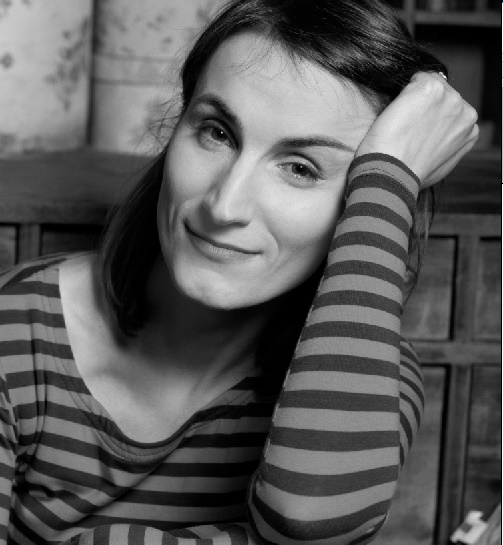
by Vilijus Žagrakalys (pictured above)

Renaissance, an exhibition of photographs at the Pakruojis synagogue from November 10 to 30, 2018, with the opening at 5:00 P.M. on November 9.

Everything that’s old comes back around. The 19th century was the period when photography began and flourished. The application of various techniques for forming an image on a plate progressed from wet-plate collodion to silver compound gelatin which dominated until the advent of digital cameras. The silver process gave rise to a surge in photography studios which captured portraits of their time in single and group portraiture. All sorts of visual photo albums were made. Silver gelatin emulsion was relatively easy to get and made this possible.

At around the same time the platinum method was discovered, dated at 1873 in the history of photography. William Willis patented the method in 1881. He received official awards for this in Great Britain in 1885. The method was popular until World War I, when platinum acquired greater value, and the technique gradually dropped out of use.

Around 1970 the technique was revived in the USA. It is now known as the king of the printing process.

When I began to get interested in photography techniques, I attempted to print several photographs. After much experimentation I seized upon the platinum/palladium method. The fragments of photographs in this exhibition were printed using this method.