History of the Jews in Lithuania

Lithuanian Jewish Community Concerned by Vidmantas Valiušaitis’s Appointment as Senior Advisor of Genocide Center

Lithuanian Jewish Community Concerned by Vidmantas Valiušaitis’s Appointment as Senior Advisor of Genocide Center

According to the official website of the Center for the Study of the Genocide and Resistance of Residents of Lithuanian (Genocide Center), the person occupying the post of senior advisor to the general director of the Genocide Center performs the following functions:

“…provides consultation on the physical and spiritual genocide of residents of Lithuania carried out by the occupational regimes between 1939 and 1990 as well as resistance to these regimes, and issues surrounding the processes of resistance to and the policies carried out by the occupational regime in the Vilnius district between 1920 and 1938, and consults on issues involving the direction of the Genocide Center’s research and programs regarding the genocide of residents of Lithuania and their resistance to the occupational regimes from 1939 to 1990” (source: http://genocid.lt/UserFiles/File/Pareiginiai/Direkcija/Vidmantas_Valiusaitis.pdf).

We would like to point out that in several recent publications Vidmantas Valiušaitis intentionally distorted the facts and publicized these falsehoods concerning the anti-Semitic activities of the Lithuanian Activist Front and the Lithuanian Provisional Government of 1941. Moreover, Vidmantas Valiušaitis basically denied the conclusions arrived at by the International Commission for Assessing the Crimes of the Nazi and Soviet Regimes in Lithuania regarding the clearly anti-Semitic views and actions of these organizations and their leadership directed against the Jews of Lithuania.

Tomas Venclova: Conscience is Greater Than Independence

Tomas Venclova: Conscience is Greater Than Independence

by Gabija Strumylaitė, 15min.lt

After spending forty years in exile, the professor returned to Vilnius in 2018; here he actively participates in Lithuanian cultural life and courageously expresses his opinion on topics important to the country and the world. The website 15min.lt spoke with Tomas Venclova about the meaning of independence, principles of liberalism, historical memory, ethnic minorities and other issues.

This year has also been named the Year of the Vilna Gaon and of Litvak History. What do you think, do Lithuanians understand and appreciate sufficiently the Jewish legacy? What should we be doing to honor these people? Do we need, for example, to rebuild the Great Synagogue, or establish a modern museum of Jewish history?

In this regard I think we are doing better compared to the situation over ten years ago, never mind earlier periods. I’m not just thinking about Jewish affairs, but those of other ethnic minorities as well: Poles, Russians, Belarussians, Karaïtes, Tartars.

There is a large amount of latent distrust of minorities in Lithuania overall. I will mention another minority about which there has been a lot of concern lately: the Roma. The great majority of the Lithuanian public are prejudiced against them, and this is senseless and unnecessary, and needs to be corrected.

Evening of Poetry and Music with Sergei Kanovich and Boris Kizner

Evening of Poetry and Music with Sergei Kanovich and Boris Kizner

The Lithuanian Jewish Community invite you to a attend an evening of poetry and music with writer Sergei Kanovich and violinist Boris Kizner at the Choral Synagogue in Vilnius. Sergei Kanovich will read passages from his poems and prose and Boris Kizner will perform works from his repertoire on violin. It begins at 6:00 P.M. on Tuesday, August 11, at the Choral Synagogue located at Pylimo street no. 39 in Vilnius. Entry is free to the public and no RSVP is required. Visitors will be required to wear face masks and the event will be filmed.

LJC Member Leonidas Melnikas Interviewed

LJC Member Leonidas Melnikas Interviewed

The Catholic newspaper and website Bernardinai has published an interview with long-time Lithuanian Jewish Community member and pinaist professor Leonidas Melnikas as part of a series of articles and interview about ethnic minorities in Lithuania partially financed by Lithuania’s Department of Ethnic Minorities.

“In childhood when we used to visit homes as guests and we didn’t find a piano in a home, that was strange to me, how people could live without a musical instrument. In general at the time the profession of musician was highly esteemed, and musicians were a bit freer than people in other professions. If you’re playing Bach, Mozart and Beethoven all the time, no one can complain about your politics, only about your music.

“From the very first grade I attended the Mikalojus Konstantinas Čiurlionis School of Art in Vilnius. It was my parents’ joy I did music, and their encouragement helped me overcome the initial barriers, but later some inertia came up, it came up in the 8th grade which was competitive, and they had to chose who stayed and who would pursue something else. I stayed. There weren’t many people in my class, we graduated, it seems, eleven of us, so the relationship between student and teacher was very familiar and friendly, there was a lot of attention. We studied a somewhat different curriculum than they did at other schools, we studied musical things from the first grade and they kept increasing, and in the 10th grade we completed general education disciplines–chemistry, physics, mathematics–and in the 11th grade we only had social and humanitarian topics left, and music of course.”

Full story in Lithuanian here.

Indian-Lithuanian Friendship Celebrated in Rusnė

Indian-Lithuanian Friendship Celebrated in Rusnė

An awards ceremony to present the award “For Contributions to Friendship between India and Lithuania” was held in Rusnė, Lithuania, recently. The recipient this year was Vytautas Toleikis who researched and published the story of the friendship between the father of modern India Mohandas Gandhi and Rusnė-resident Litvak Hermann Kallenbach.

Gandhi and Kallenbach’s friendship was commemorated in a sculpture by the late Romas Kvintas which was placed on the bank of the Atmata River in Rusnė in 2015. The Lithuanian embassy to India contributed to erecting the statue.

On July 25 Toleikis was presented a miniature of this statue at the awards ceremony attended by Lithuanian Jewish Community chairwoman Faina Kukliansky, Indian ambassador Tsewang Namgyal, Israeli ambassador Yossi Levy, US ambassador Robert Gilchrist, German ambassador Matthias P. Sonn, Lithuanian ambassador to India Julius Pranevičius, Indian honorary consul Rajinder Chaudhary, Šilutė regional mayor Vytautas Laurinaitis and Rusnė alderwoman Dalia Drobnienė. Chairwoman Kukliansky congratulated Toleikis on winning the award.

Members of Panevėžys Union of the Blind and Visually Impaired Interested in Jewish History

Members of Panevėžys Union of the Blind and Visually Impaired Interested in Jewish History

The Panevėžys Jewish Community continues its educational outreach efforts despite difficult times. This time an elderly group from the Union of the Blind and Visually Impaired visited the Panevėžys Jewish Community. They have been following the weekly installments in the newspaper Panevėžio balsas dedicated to Jewish life, and requested a face-to-face meeting to learn firsthand about Jewish history before the Holocaust. In late July Panevėžys Jewish Community chairman Gennady Kofman spoke to them about the prewar history, but also what happened during the war and after. The guests said they realized the idea of Jews as money-lenders was a stereotype and that many important and famous Jews had lived in Panevėžys. They expressed surprise when they were told about the Joint Distribution Committee. THey also learned of the famous rabbi Josef Kaufman who restored the Ponevezh yeshiva which still operates today in Israel.

The guests asked different questions and heard about Jewish businesspeople, teachers and doctors, including famous Panevėžys doctor Abraham Mer and others. Plans were made for a next meeting, and guests and hosts exchanged gifts. The guests left entries in the guest book.

Šolom, Akmenė! Project a Big Success

Šolom, Akmenė! Project a Big Success

Four-and-a-half-days and the results was, according to the local Akmenė newspaper Vienybė, “a great success.”

Participants and guests from Šiauliai and Vilnius said the same thing about the “Šolom, Akmenė” activities and events last week. There was the same positive reaction towards the Friday evening conference dedicated the remembering the shtetl, lessons on Sabbath traditions with treats and the concert.

There was a creative workshop for youth held before, with visiting and cleaning-up Jewish cemeteries in Vegeriai, Klykoliai, Viekšniai and Tryškiai, in a grand plan to digitize the grave epitaphs there.

Vilna Gaon Statue Vandalized Again

Vilna Gaon Statue Vandalized Again

For the second time in two months, the stone statue commemorating the Vilna Gaon located at what is thought to have been his residence in Vilnius was vandalized by application of an unknown liquid.

Police reported they received a report of the newest act of vandalism at 5:20 P.M. local time on Sunday. Vilnius district police department representative Julija Samorokovskaja told Baltic News Service a tourist guide reported an unknown liquid, possibly some acid, had been poured over the monument.

“A report was received that sometime during a two-day time period acid possibly had been poured on the Vilna Gaon statue. A tourist guide made the report,” she said. She also said an criminal investigation had been launched for incitement to hatred, and that the physical damage done would be calculated more accurately later.

Lithuanian Governments Sells Great Synagogue Ruins to Goodwill Foundation

Lithuanian Governments Sells Great Synagogue Ruins to Goodwill Foundation

The Lithuanian Government has sold the remains of the Great Synagogue of Vilnius to the Goodwill Foundation which administers compensation from the Lithuanian state for Jewish property seized in the Holocaust.

Lithuanian culture minister Dr. Mindaugas Kvietkauskas reported the remains of the building were sold to the Goodwill Foundation by reducing compensation paid to that organization by 1,244 euros. “These are the ruins, the foundation, uncovered during archaeological digs. The buildings were damaged during World War II and razed during the Soviet era,” Kvietkauskas said. The minister reported the Goodwill Foundation requested the sale indicating the ruins would be used to commemorate the former Great Synagogue, “to fulfill Jewish cultural and religious goals.” In 2017 the ruins were listed on the registry of cultural treasures. Annual archaeological digs at the site have uncovered spectacular and unique finds.

Last spring the Government transferred administration of the site to the Cultural Heritage Protection Department.

Archaeological digs have been taking place regularly at the Great Synagogue complex since 2011, with partial financing from the Goodwill Foundation. In July last year two rooms were discovered containing old books, and exploration of the mikvot or ritual baths continued. There has been discussion on how best to commemorate the site for many years. Vilnius mayor Remigijus Šimašius said the former synagogue complex will be commemorated in 2023 when Vilnius marks its 700th birthday. The brick-and-mortar synagogue was built in the 17th century, replacing an earlier wooden one. It has been said the Great Synagogue of Vilnius was the largest and most decorative synagogue in the Polish-Lithuanian Commonwealth.

Full story in Lithuanian here.

Group of Vilnius Jewish Community Members Tell National Leaders: This Isn’t the First Time Kukliansky Is Acting Like This

Group of Vilnius Jewish Community Members Tell National Leaders: This Isn’t the First Time Kukliansky Is Acting Like This

Photo: © 2020 DELFI/Šarūnas Mažeika

After questions by Goodwill Foundation chairpeople Faina Kukliansky and rabbi Andrew Baker on the decision by the Lithuanian parliament to name the year 2021 as the Year of Juozas Lukša-Daumantas, four members of the Vilnius Jewish Community have sent a letter to president Gitanas Nausėda, the parliament, the Government and Lithuanian foreign minister Linas Linkevičius.

Chona Leibovičius, Vitalijus Karakorskis, Dovydas Bluvšteinas and Leo Levas Milneris called on the president to review the composition of Lithuania’s International Commission to Assess the Crimes of the Nazi and Soviet Occupational Regimes in Lithuania.

These members of the Jewish community called on the parliament and Government to find a way to halt temporarily the financing of the Goodwill Foundation until its leadership is replaced.

Faina Kukliansky: We Need to Take a Chill-Pill When Discussing Lithuanian Partisans

Faina Kukliansky: We Need to Take a Chill-Pill When Discussing Lithuanian Partisans

Elections are a time when made-up pseudo-patriotic stories eclipse important social problems. By distorting, for example, my joint letter with American Jewish Committee representative Rabbi Andrew Baker on the Lithuanian parliament’s decision to name next year after the partisan Juozas Lukša-Daumantas. In order to avoid any “indirect” doubts, on July 18 I emphasized on LNK television that “We have no complaints on Juozas Lukša-Daumantas’s past.”

What does worry us is that the fascist anti-Semitic Lithuanian Activist Front might be honored along with him. The LAF formed the Tautos darbo apsaugos batalionas, or TDA, which was responsible for the mass murder of thousands of Jews at the Seventh Fort in Kaunas and elsewhere. The website of the Center for the Study of the Genocide and Resistance of Residents of Lithuania states: “during the first Soviet occupation in 1940 and 1941, Juozas Lukša-Daumantas belonged to the Lithuanian Activist Front. For this he was arrested and imprisoned at the Kaunas hard labor prison. On June 22, 1941, when the war between the USSR and Germany began, he escaped.”

I am being accused of “indirectly” belittling Juozas Lukša-Daumantas. I remember the time when people were sent to mental hospitals and prison for indirectly criticizing the Communist regime. Maybe someone would like to lock me up now and give me some re-education on what can and cannot be said. But that’s not the main thing. The main thing is that my words about the LAF have been applied to the entire partisan movement and equated with it, even though that’s like accusing all of Lithuania of anti-Semitism because of the statements of one or another irresponsible radical.

Tisha B’Av

Tisha B’Av

Tisha B’Av, the ninth day of the month of Av which begins this evening, July 29, is the Jewish day for mourning the loss of both Temples in Jerusalem, the first in 586 BC and the second in AD 70, and other tragedies which have befallen the Jewish people through history. Jews mourn, fast and read from Eicha (Lamentations) and the Kinnot (dirges from the Bible and later) during Tisha B’Av.

Jews mark Tisha B’Av today as the world is undergoing rapid changes: a global pandemic with no clear end in sight and closed national borders, economic crises and civil unrest. We know the Second Temple fell because of disagreements between Jews. Tisha B’Av today resonates deep sadness for the Temple and for the reality in which find ourselves now. Not just the pandemic, but the deep, incomprehensible division of society.

This new kind of physical and moral division of the people compels us to mourn even more the loss of unity and common goals.

Year of Vilna Gaon and Litvak History Becomes City-Wide Celebration in Kaunas

Year of Vilna Gaon and Litvak History Becomes City-Wide Celebration in Kaunas

The year 2020 has provided the Kaunas Jewish Community with new friends and partners. The Lithuanian parliament passed a resolution last year naming 2020 the Year of the Vilna Gaon and the Year of Litvak History. Until now this has largely been a celebration on paper, but the city of Kaunas turned it into a real celebration with projects and events.

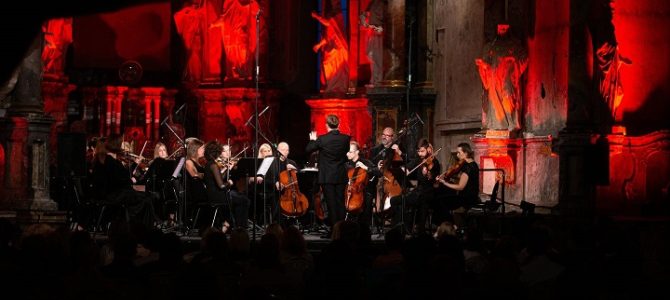
One such was called the Kaunas Musical Guide to Jewish History by the Kauno Santaika group. Most people in the large group of Kaunas residents who took an interest were probably participating in these kinds of unconventional tours for the first time, accompanied by a live orchestra throughout their excursion. The first tour route was accompanied by a guest from Vilnius, the Trimitas national woodwind orchestra. The second was accompanied by Ąžuolynas from Kaunas. The highly knowledgeable Dr. Marija Oniščik told the story of the many former Jewish buildings and sites visited. The tenor Edgaras Davidovičius joined the second tour at the renovated fountain on Freedom Alley in Kaunas and performed the legendary songs of the crooner Daniel Dolski.

Others included the wonderful young team Kaunas Piano Fest who held a competition of works by Litvak composers withing the frame of the festival, and the final concert of the festival, with a very limited audience because of indoor restrictions on gatherings, dedicated not just to the celebratory year of 2020 declared by the Lithuanian parliament, but also to the anniversary of the liquidation of the Kovna [Kaunas] ghetto.

Robertas Lozinskis and Anna Szałucka performed this concert live, while Nathan Cheung performed as if live from a recording. It was very pleasing the organizers invited members of the Kaunas Jewish Community to this concert. Those interested can listen to the performances on the youtube channel of the Kaunas Piano Fest group.

It is our sincere hope these new friends and partners will continue their cooperation with the Kaunas Jewish Community next year as well.

More photos below.

Šiauliai Regional Jewish Community Invites You to “Sholom, Akmenė” Events July 24

Šiauliai Regional Jewish Community Invites You to “Sholom, Akmenė” Events July 24

The Šiauliai Regional Jewish Community invites everyone to participate in “Sholom, Akmenė” events at the Akmenė Cultural Center (Sodo street no. 1, Akmenė, Lithuania) on July 24.

12:00 Conference “Memories of the Shtetl in Our Hearts”

Šiauliai Regional Jewish Community members Frida Šteinienė and Josifas Buršteinas will share their childhood memories, young participants at a creative workshop will speak about digitization efforts to record and preserve the Jewish cemeteries in the Akmenė region and Daumantas Todesas will share the secrets of making Sabbath treats. Also, Rita Ringienė will read excerpts from Indrė Daščioraitė’s work in 2001 recording the memories of Augustina Rušinaitė (1922-2007).

2:00 Jewish market (outside the Cultural Center)

The conference will be followed by a Jewish market set up by the Šiauliai Regional Jewish Community showcasing traditional Litvak treats on offer, with haggling required. The organizers are promising a lot of fun at the market.

6:00 Sabbath concert

The Jewish music concert, already a tradition at the Akmenė Days celebrations, will be performed by students from the music schools in the Akmenė region and from the Sholem Aleichem Gymnasium in Vilnius. The concert will teach traditions of the Sabbath evening in artistic form.

All events are free and open to the public. Organizers are asking participants to adhere to the authorities’ current recommendations for preventing corona virus infection. The events will be filmed and photographed.

Public Still Knows Little about 2021 as Year of  Lukša-Daumantas

Public Still Knows Little about 2021 as Year of Lukša-Daumantas

The Lithuanian parliament’s draft resolution naming 2021 the Year of Juozas Lukša-Daumantas is largely unknown to the public, as is the man Juozas Lukša-Daumantas. The Lithuanian parliament has made a tradition out of naming years after people and events, but this time it isn’t clear what is being celebrated, and perhaps only Lithuanian MPs know the answer.

So far we only have official explanations on the Lithuanian Activist Front and Juozas Lukša-Daumantas’s membership in this organization, including on the official website of Lithuania’s Orwellian Center for the Study of the Genocide and Resistance of Residents of Lithuania, where Juozas Lukša-Daumantas is listed as an LAF member.

We are presenting additional information from Chaim Bargman, amateur historian and tourist guide from Kaunas, to try to elucidate the nature of the historical figure. We would very much welcome additional information from scholars and academic works.

Down the Memory Hole: Orwellian Genocide Center Contradicts Itself Again

Down the Memory Hole: Orwellian Genocide Center Contradicts Itself Again

A week ago the Lithuanian news channel Info TV aired a program featuring a discussion between Mission to Siberia television program participant and Center for the Study of the Genocide and Resistance of Residents of Lithuania historian Mingailė Jurgaitė, and Lithuanian Jewish Community chairwoman Faina Kukliansky. They discussed the decision by the Lithuanian parliament to declare 2021 the year of Juozas Lukša-Daumantas, who was a member of the Lithuanian Activist Front in 1940 and 1941. The LAF was a pro-Nazi underground militia responsible for most of the atrocities against Lithuanian Jews in the early months of the German occupation in the summer of 1941, when the LAF declared an independent national government with Kaunas as its capital, the so-called Provisional Government.

LAF propaganda took aim mainly at Jews. In Kaunas in 1941 the LAF kidnapped several thousand Lithuanian Jews and their Provisional Government issued orders they be held at a concentration camp to be located at the Seventh Fort in Kaunas.

Large Jewish Community Lived in Švenčionys Region Before Holocaust

Large Jewish Community Lived in Švenčionys Region Before Holocaust

The Švenčionys region of Lithuania is a multicultural place where Lithuanians live alongside Poles, Russians, Belarussians, Jews and people of other ethnicities.

The Švenčionys Jewish Community was reconstituted in 2013. It is now headed by the energetic Švenčionys native Moshe Shapiro (aka Moisiejus Šapiro).

There was a large Jewish community living in the Švenčionys region in the period between the two world wars. In fact there were five synagogues operating there.

Jews there set up an herbal pharmaceuticals factory and different workshops in the center of the town of Švenčionys. Jewish effort, initiative and expertise were involved in all fields of production and business.

Litvak Heritage in Lithuania: Where to Find the Most Interesting Stories and Sites

Litvak Heritage in Lithuania: Where to Find the Most Interesting Stories and Sites

by Raimonda Mikalčiūtė-Urbonė, 15min.lt

The year 2020 has been named the Year of the Vilna Gaon and Litvak History, so this year is a good opportunity to discover the interesting and unique Jewish heritage sites we have right here in our own country.

So far this is niche tourism. Although there is an abundance of Jewish heritage sites in Vilnius, Kaunas and the regions, many tourists still don’t know, for example, when they’re vacationing in Palanga or Druskininkai, the Jewish histories of these resort towns. How can we get ethnic Lithuanians interested in the long and interesting history of the Litvaks and the sites which stand witness to this history? We discussed this with interlocutors in this article.

Faina Kukliansky: There Needs to Be a Common Litvak Heritage Policy

Kaunas Jewish Community Honors Our True National Heroes, Rescuers of Jews

Kaunas Jewish Community Honors Our True National Heroes, Rescuers of Jews

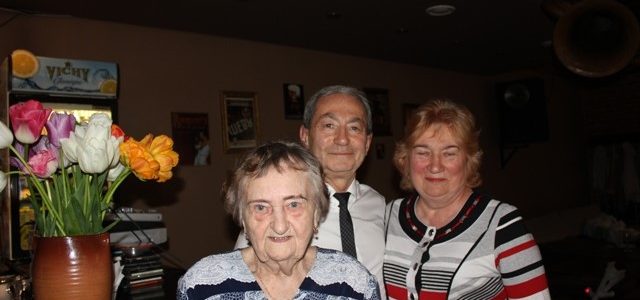
On June 25 the Kaunas Jewish Community paid honor to those who risked their own lives and those of their families to give the gift of life to those condemned to death. The people who rescued Jews were mainly quiet, everyday heroes, the Righteous Gentiles who are the real and unquestioned heroes of our country, heroes and heroines. On Thursday, June 25, the Kaunas Jewish Community was finally able to hold its annual evening to pay tribute to our Righteous Gentiles. Usually the event is held in spring just after Passover.

Kaunas Jewish Community members always look forward to the event, a meeting of friends. Time is merciless, however, and the ranks of rescuers and rescued grow thinner each year. Fortunately we have their children and grandchildren standing in for them, who are just as dear to us.