
History of the Jews in Lithuania

Litvaks Didn’t Suffer Enough to Deserve Lithuanian Citizenship?

Grant profile pic

by Grant Gochin

Lithuanian officials state that Jews were not oppressed in Lithuania:

In an astonishing display regarding the ignorance of rampant anti-Semitism in inter-war Lithuania, Lithuanian Foreign Minister Linas Linkevicius stated that there was “no violence, repressions or anything like that at the time”, against Jews in Lithuania during the period 1918 – 1939. Based on this assumption, Lithuania intends to deny citizenship applications for descendants of Lithuanian Jews. The belief that Jews did not suffer enough, in Interwar Lithuania, to warrant citizenship is simply preposterous.

http://www.baltictimes.com/litvaks_continually_rejected_restoration_of_lithuanian_citizenship/

At the beginning of the 20th Century, Jews represented about 14% of Lithuania’s population. In May 1915, the Czarist regime deported and exiled approximately 100,000 Lithuanian Jews to the Russian interior. After the war ended, Lithuanian Jews, who had lived in Lithuania for centuries and often constituted half of the population of many towns, were promised that the new independent Lithuanian state would be tolerant to minorities. Jews provided considerable political support for Lithuania in international forums and enlisted into the Lithuanian army to defend their country’s independence. A great many war medals were awarded to these soldiers for their extraordinary bravery and many lost their lives fighting for Lithuanian independence. In return for their contributions, the government granted full autonomy to the Jewish community and created a Cabinet-level Ministry for Jewish Affairs. Unfortunately, these promises were not kept; in 1923 funding for this Ministry was withdrawn, and in 1924 the Ministry was abolished. Sadly, the Ministry had served little purpose, because in 1923 the Lithuanian Government reportedly rounded up and expelled Jews whom they considered to be “alien”.
About Taverns, the Vilna Gaon and the Shared History of Lithuanians and Jews

by Nijolė Bulotaitė

American academic Glenn Dynner is teaching a module at the History Faculty of Vilnius University called “Socio-cultural History of Ethnic Minorities in the Central and Eastern European Context.” The professor specializes in the history of Eastern European Jews and has written several books, including “Men of Silk: The Hasidic Conquest of Polish Jewish Society” (Oxford University Press, 2008) and “Yankel’s Tavern: Jews, Liquor and Life in the Kingdom of Poland” (Oxford University Press, 2014). What prompted the professor to take an interest in taverns and Lithuanian and Polish Jews, and what has he discovered? We asked him those questions in Vilnius recently.

Q. Why Poland and Lithuania exactly? Was Jewish life here somehow special?

A. When I was a naïve American student, as soon as I started professor Antony Polonsky’s class at Brandeis University I learned the majority of the world’s Jews lived in Poland and Lithuania before the Holocaust. The professor was my doctoral dissertation supervisor later. I learned three quarters of the world’s Jews in the 19th century lived in Eastern and Central Europe. My problem was I didn’t know any languages. At first I had to learn Hebrew, then Polish, Yiddish and several more. Only then did all the rich sources become available to me. Not many Americans are able to do research in this area because the languages are rather difficult, and it’s difficult for us Americans to learn languages.

Full interview in Lithuanian here.

Inventor of Israeli Flag Remembered in Klaipėda

l

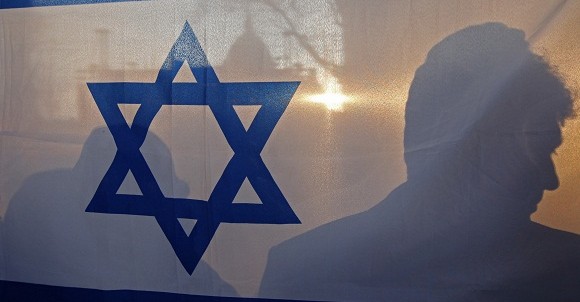
A memorial plaque commemorating David Wolffsohn, a Zionist activist who created the Israeli flag, has been unveiled in Klaipėda, Lithuania. Earlier a plaque was placed in the same city to honor Wolffsohn’s teacher, Isaac Rülf. The new plaque has been placed next to that one.

“David Wolffsohn was born in Darbėnai. To avoid serving in the Tsar’s army his father sent him to Klaipėda to study. This is where he met Isaac Rülf,” Klaipėda Jewish Community leader Feliksas Puzemskis explained.

Wolffsohn attended the Israelite Religious School then located on Grįžgatvio street. He was born in 1856 and arrived in Klaipėda, then the German city of Memel, just after turning 16. Rabbi Rülf got him involved in Zionist activities. At the First Zionist Congress in Basel, Switzerland, Wolffsohn ordered made a flag to his specifications which was hung at the congress hall. It was accepted as the official Zionist flag at the Second Zionist Congress held in Switzerland in 1898, and the State of Israel later adopted the design as the official flag, upon declaration of Israel as an independent state in 1948.

Joint Visits Panevėžys

JointPan
JOINT atstovai lankosi Panevėžyje

AN event was held at the Panevėžys Jewish Community April 6 to welcome honored guests during their brief visit. One of them, Lee Seidler, arrived with his family. American Joint Distribution Committee director Diana Fiedotin and JDC representative in the Baltic states Moni Beniosev also came and took an interest in the history of the Jews of Panevėžys, visited Jewish sites and viewed the stele on Zikaro street, which was named Joint Street in 1923 in honor of the Joint Distribution Committee.

Remembering Jewish Vilna in Painting

Vilnius topografija

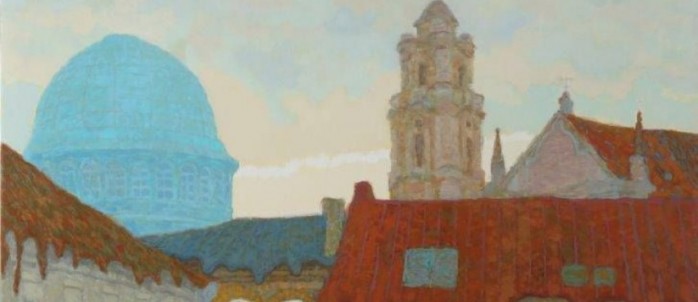
The catalog of the exhibit of Lithuanian painting and photographs called “Zakhor. Remember. Topography of Images of Jewish Vilnius” will be launched at the Lithuanian Jewish Community at 7:00 P.M. on Thursday, April 14. The catalog and exhibit are the work of curators Linas Liandzbergis, Elke-Vera Kotowski and Gabrielė Žaidytė. The exhibit has been at show at the Old Town Hall in Vilnius and at the Konrad Adenauer Foundation in Berlin.

From May to August the exhibit will grace the halls of the Cape Town Jewish Museum and the Johannesburg Holocaust Museum in South Africa, then travelling on to Israel, Argentina and other destinations where sizeable populations of Litvaks live. The presentation, to be attended by Dr. Julius Schoeps, director of the Moses Mendelssohn Center and the Center for Jewish Studies Berlin-Brandenburg, is also to include a short film documenting earlier showings of the exhibit. Improvisational jazz is to be performed at the presentation by Lithuanian musician Kęstutis Vaiginis.

Rakija Klezmer Orkestar

Rakija klezmer1

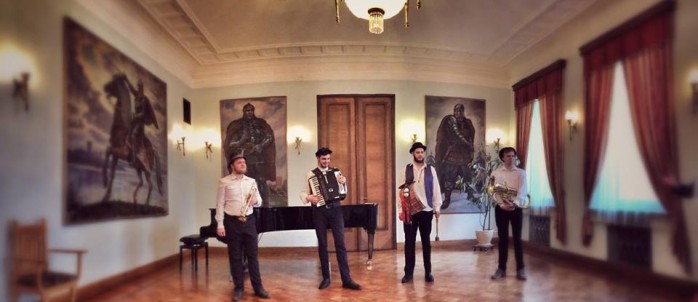
Rakija Klezmer Orkestar is a klezmer group which formed three years ago in Kaunas, Lithuania. They have performed Hanukkah concerts at the Lithuanian Jewish Community.

Rakija Klezmer2

The group say they want to revive Litvak klezmer traditions. The four-set will soon become five with addition of Mantas Ostreika on saxophone. The other members are Darius Bagdonavičius, Mikas Kurtinaitis, Skirmantas Rumševičius and Povilas Jurkša.

International Meeting of Young Rabbis at Panevėžys Jewish Community

rabinaiP

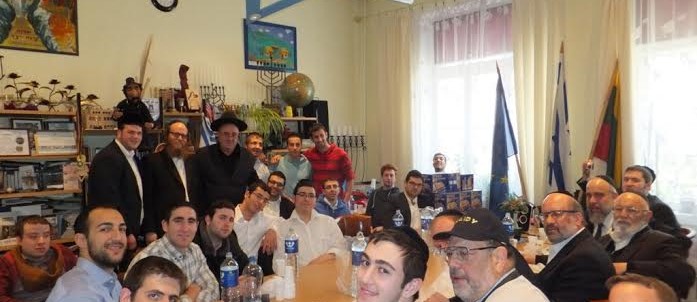
Two groups of young rabbis from Canada, England, France, Israel, Japan and the United States came to the Panevėžys Jewish Community April 7, interested in Jewish life before World War II and now. The first group was led by Rabbi Meir Wunder, who leads trips by high school students to Panevėžys annually. The young people were interested in the life of Rabbi Yosef Shlomo Kahaneman.

Kahaneman was born in the village of Kuliai in 1886 and studied at the yehsivas in Plungė and Telšiai before going on to the yeshiva in Novogrudok, now in Belarus. He became yeshiva director. He lived with his family in Panevėžys from 1919 to 1940. In 1923 he became a Lithuanian MP. In Panevėžys he set up a poorhouse, an orphanage and the Yavne Jewish religious school for girls, and headed the yeshiva. Later he and his son moved to Israel where he continued to maintain Litvak religious traditions. On the wall of an orphanage he founded are the names of the yeshivas of Lithuania. The Panevėžys yeshiva was also restored in 1919 due to his efforts.

rabinaiP1

The second group was led by Rabbi Tuvia Konn and Rabbi Nesivos Tours. They spoke about how they had heard of the Bokhrim yeshiva and became interested in the city of Panevėžys, and when there was opportunity to visit, they gladly came in search of their roots. They visited Jewish sites in Panevėžys and viewed a film about the history of the Jews of Panevėžys which they said opened a window onto the past.

Documentary Filmmaker Visits Panevėžys Jewish Communtiy

filmavimas

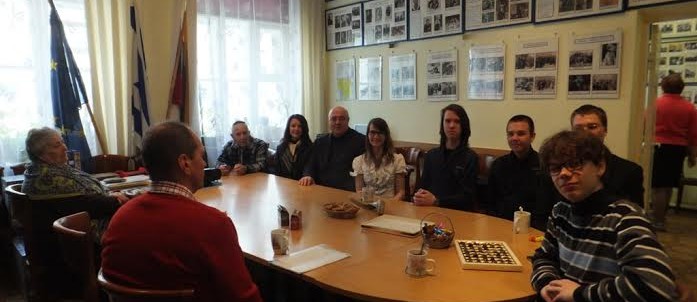
A documentary film crew shot footage at the Panevėžys Jewish Community April 8 for a new film about Panevėžys Jewish architecture before World War II. Panevėžys Jewish Community chairman Gennady Kofman spoke about the history of Panevėžys Jews to an audience of the director and guests from the Margarita Rimkevičaitė Technical School.

Order of Malta to Aid Lithuania’s Righteous Gentiles

April 6, 2016–Lithuanian president Dalia Grybauskaitė met Wednesday with Righteous Gentiles, or people who rescued Jews during World War II in Lithuania. The ambassadors of the Order of Malta, Germany and Israel and the leaders of the Order of Malta Relief Organization and the Lithuanian Jewish Community attended the meeting.

During friendly conversation over tea, the outstanding achievements of these brave Lithuanians were remembered and thoughts were shared on their problems, concerns and the help they need. The Order of Malta project to aid Righteous Gentiles in Lithuania was presented. All Righteous Gentiles still living in Lithuania are quite elderly and many of them live in isolation and need help.

A benefit concert was held in Munich to raise money for the Righteous Gentiles in Lithuania. More than 123,000 euros were raised for this purpose from that concert.

Baron Christian von Bechtolsheim, the ambassador of the Order of Malta to Lithuania, said: “The Maltese in Lithuania take care of many ill, elderly and isolated people. But Righteous Gentiles are special. These noble and courageous people were not afraid and risked their own lives to rescue their neighbors and countrymen from death. Now it’s our turn to help them.”

Lithuanian Psychologist: Three Years Ago I Believed the Double Genocide Theory

rb
Rasa Bieliauskaitė, photo: Ugnius Babinskas

Three Years Ago I Believed the Double Genocide Theory
by Geoff Vasil

So said Rasa Bieliauskaitė, a psychologist specializing in trauma therapy, at what was, for Lithuania, a remarkable meeting of the minds recently.

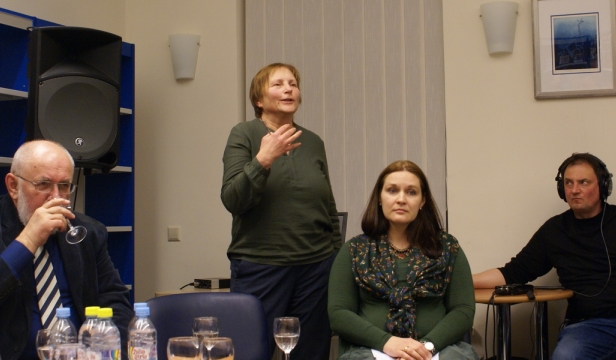
The Vilnius Jewish Public Library hosted a panel discussion featuring historians and psychologists on the topic of the Holocaust and collective memory.

In their introductory statements several of the speakers, including Bieliauskaitė, mentioned Rūta Vanagaitė’s new book about the Lithuanian Holocaust, and the unexpected popularity of that book became the backdrop for much of the conversation which lasted several hours and which became a much larger discussion when distinguished members of the audience chimed in towards the end.

Lithuanian Prime Minister Thanks Fayerlakh Ensemble

To the Vilnius Cultural Center Jewish song and dance ensemble

Fayerlakh

Dear guardians of ethnic tradition,

There is no doubt the identity of a people resides in the depths of their folklore where a unique world of music beckons to us and symbolic meanings cavort. For many a year now the Fayerlakh ensemble in their concerts have brought lovers of folklore together and have popularized Yiddish culture wonderfully.

Inventive musicians, great singers and expressive dancers have come together nicely under the Fayerlakh flag. And so your concerts are dominated by a sense of beauty and cohesion. Your playful appearances are eagerly awaited by many admirers around the world.

You are probably the only ensemble in Europe who so creatively, cleverly and tightly present your own musical sources and roots.

I sincerely congratulate the entire Fayerlakh collective on the beautiful 45th anniversary of your establishment.

Let your music ring out widely across the nations for many centuries. Celebrate and preserve your foundational values. I wish you great success, creative talent and many happy meetings with the real lovers of folklore on all continents.

Algirdas Butkevičius
March 22, 2016
Vilnius

Old Prescriptions from the Interwar Period Recall the Kukliansky Pharmacy in Veisiejai

Receptas2

Danutė Selčinskaja, director of the Rescuers and Commemoration Department of the Vilna Gaon State Jewish Museum, has sent us an image of a new item worthy of display at a museum: prescriptions from the Kukliansky Pharmacy which operated in the period between the wars. This pharmacy, the only one in Veisiejai, Lithuania, operated right up until the Holocaust. The pharmacists managed to escape and were rescued by people from Sventijanskas. At the present time there is a Veisiejai Regional History Museum operating in Veisiejai. Museum director Regina Kaveckienė scanned two new items, prescriptions, which were brought to the museum by a relative of an elderly female pharmacist from the town who is no longer alive.

Danutė Selčinskaja sent the regional history museum the Vilna Gaon museum’s mobile exhibit “The Rescued Child Tells the Story…” which she created. This includes a film about the rescue of the Kukliansky family. The regional history museum shows the film to students every year. A young woman from the Kapčiamiestis School Museum who lives with her parents in Sventijanskas said everyone there had already seen the film, which is being passed around as a DVD from person to person, and it has caused a great deal of excitement there. The people understand what happened and recognize the people and places portrayed in the film.

Businessman with Litvak Roots Has Successful Chain of Restaurants

Brozinas PA

The first time South African Litvak Robert Brozin came to Lithuania, he was most surprised by the fact it was in color. It sounds funny, one of the creators of the large restaurant chain Nando’s says, but that his first impression of the land of all four of his grandparents because he’d only seen Lithuania in black and white photographs before. When he cam back again for the fifth time in late March, he already had a number of interests going here, both business and representing the Litvak community in South Africa.

“Most Jews in South Africa have roots in Lithuania. There is a total of about 80,000 Jews here and I think about 95 percent have Lithuanian roots. It’s an interesting fact that the Jewish community in South Africa is very tight-knit, and the majority of Jews who have remained living in South Africa marry Jews from the community. My son is also married to a Litvak girl. We still maintain many Litvak traditions in the family and even have dishes from Lithuania…”

Read more in Lithuanian here.

Lithuania to Investigate Jewish Treasures Stolen by Nazis

March 23, BNS–Investigation into cultural treasures the Nazis stole from Jews in Lithuania has begun, the newspaper Lietuvos žinios reports.

Last week a meeting of the International Commission for Assessing the Crimes of the Nazi and Soviet Occupational Regimes in Lithuania reached agreement on conducting several large studies, commission chairman Emanuelis Zingeris confirmed. He said the Rosenberg task force drew up lists of rare and valuable items held by Jewish organizations, libraries and museums before the war even started. “So we’re asking for additional research, which is being performed by researchers in Lithuania and abroad. I believe we will approach the German Government on with a request for clarification, because there shouldn’t be any lingering doubts regarding this,” Zingeris said.

He also spoke about the items listed in the book “Lietuvos inkunabulai” [Incunabula of Lithuania] by Nojus Feigelmanas from the Strashun library in Vilnius. “There are clear indications there were four incunabula in this library in Hebrew which the Germans took. The incunabula were printed in an Italian city in 1475. They are priceless,” Zingeris commented. His commission’s work was resumed by presidential decree in the fall of 2012. After a break of eight years, the renewed commission met again in 2013. As reported at that time, the commission only discussed technical and financial issues at that meeting. The chairman said the subcommittee investigating crimes of the Soviet occupational regime would meet in early summer this year.

BNS_logotipas

Post-War Vilnius: Legless Beggars, Bread Lines and Accusations of Murdering Christ

SamYosman

Mažoji leidykla publishing house, 2016

I am a post-war child. I was born in Vilnius October 8, 1946. I remember my life from about the age of four. Lithuanians, Jews (including Jews from the ghetto), Poles and Russians, we lived in an old building at the intersection of K. Giedrio and J. Garelio streets (now Šv. Ignoto and Dominikonų streets). Above us there lived Mr. Valteris, a former translator for the Gestapo. No one spoke to him about that, but everyone knew he had collaborated with the Germans.

For those living behind the iron curtain, for BBC radio listeners, Sam Yossman, who did the popular program Babushkin Sunduk (Grandmother’s Chest) and Perekati Pole (Tumbleweed), was better known by the pseudonym Sam Jones. Born and raised in Soviet Lithuania, Yossman decided after many years to record his memories in the book “Šaltojo karo samdinys” (Cold War Hired Hand).

Read more in Lithuanian here.

Stories about Rabbis: Exhibit of Pastel Work

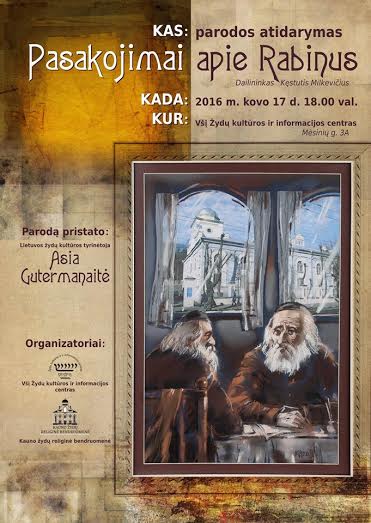
The Jewish Culture and Information Center’s Shofar Gallery (Mėsinių street no. 3, Vilnius) presented an exhibit of pastel works by Kęstutis Milkevičius called “Stories about Rabbis” March 17.

pAroda-rabinai

The collection on exhibit was formed at the initiative of the leader of the Kaunas Jewish religious community, Maushe Bairak. Artist Raimundas Majauskas commented on Milkevičius’s artworks:

“The old portraits of wise Jewish rabbis are suffused with time and come down to us from a modified Rembrandtesque chromatic environment. The artist is a master of line and composition. The individualized, artistically realistic works betraying a deep aesthetic foundation are part of the cultural and communal life of Kaunas and Lithuania.”

Litvak cultural heritage scholar Asia Gutermanaitė opened the exhibit. The opening including stories and interesting tales about rabbis. The exhibit will run until April 12.

Goodwill Fund Granted Greater Freedom to Spend

March 17, BNS–The Lithuanian parliament Thursday adopted fast-track amendments to allow the Goodwill Fund administering compensation for Jewish religious community property to allocate funds more freely. The vote was 81 MPs for, 1 against and 5 abstentions. Under the new amendment, the Goodwill Fund will be allowed to cover its administrative costs using monies from the state. It suggests fixing administration costs so they never exceed 10 percent of the annual amount of compensation paid out by the treasury according to the annual state budget.

Last year the fund spent 125,942 euros on expenses, but the Office of State Comptroller warned the law didn’t allow the fund to use state allocation for administrative costs. The amendments also allow the fund to invest monies paid into the fund but not used. Such a move would require careful consideration of investment security, liquidity, annual profits and other factors.

Kaunas Jewish Community Honors Most Active Members

Kau7

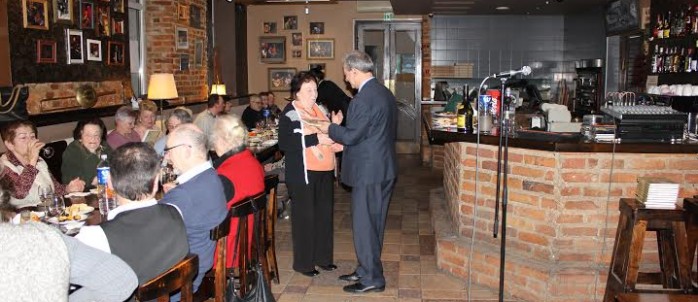
Continuing a long-standing tradition, the Kaunas Jewish Community invited its most active members to a party to thank them. Participants in various clubs, students of Yiddish, people seeking a deeper knowledge of Jewish history and traditions and volunteers in different campaigns, events and cultural activities gathered for a dinner, live music and lively conversation. Kaunas Jewish Community chairman Gercas Žakas thanked everyone and said since Jews are known as the People of the Book, he was passing out books as well, about Jewish history and other Jewish topics.

Old Jewish Cemetery in Klaipėda Added to Registry of Cultural Treasures

klaipeda cemetery 2

The old Jewish cemetery in on Sinagogų street in Klaipėda has been given legal protection, the Culture Heritage Department under the Ministry of Culture reports.

Although there used to be several dozen cemeteries in Klaipėda, only a few survive. “The only Jewish cemetery in the city is the one from the early 19th to mid-20th century period. It used to be bigger than what has survived and listed on the registry of cultural treasures. It’s now about 13,000 square meters. But what has survived obviously enriches the history of the city of Klaipėda and is an important part of the city,” Audronė Puzonienienė, director of the Klaipėda office of the Cultural Heritage Department, said.

Puzonienienė cited Jonas Tatoris’s book “Senoji Klaipėda. Urbanistinė raida ir architektūra iki 1939 m.” [“Old Klaipėda. Urban Development and Architecture till 1939”] as the richest source of information about the old Jewish cemetery in the Lithuanian port town formerly known as Memel. The author of that book says there were 22 cemeteries in Memel/Klaipėda in the period from the 16th century to the early 20th century. At the beginning of the 19th century a ravelin—part of the earthen fortification for the defense of the port city— was allocated for the Jewish cemetery. The Jewish cemetery first appears on the city map in 1840, as a still rather small area surrounded by hedgerows. It was enlarged in the early 20th century. “The layout of the Jewish cemetery was different from the Lutheran cemetery: it didn’t have a central square and intersecting paths, and the territory was divided up into rectangular blocks,” Tatoris says.

Rina Zak: “Markas Petuchauskas: Theater in the Shadow of Death”

Publisher, translator and editor Rina Zak [Zhak, Žak, Рина Жак], one of the iconic figures in Russian-speaking Israel, is also well known outside of the biggest linguistic community in the country. Rina also engages in educational activities, in the everyday activities of the Geographical Society of Israel and in the periodical press, writing in Isrageo magazine, as well as on facebook, where she posts little-known passages from Jewish and Israeli history. Rina Zak was born in Kaunas and was graduated from the Journalism Faculty of Vilnius University.

We are pleased to offer for your consideration a passage by Rina Zak:

Markas Petuchauskas: Theater in the Shadow of Death

In 2015 he published a book of memoirs of his time as a young prisoner of the Vilnius ghetto called “Price of Concord.”

Strange as it might seem to some, the ghetto was a venue for musical performances and festivals, literary competitions and art exhibitions. There clinics and hospitals, schools and kindergartens, a youth club and a café. There were plans for a museum, a publishing operation… but these ideas were not destined to happen. The Vilnius ghetto lasted only two years, and its population of about 40 thousand people was almost completely exterminated.