Learning

Thank You for Ten Productive Years Together, Madam President

Thank You for Ten Productive Years Together, Madam President

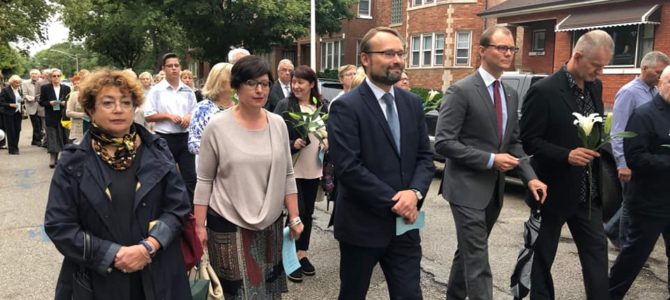
Photo: Lithuanian president Dalia Grybauskaitė, right, at photo exhibit on rescuers of Jews

Your excellency, madam president Dalia Grybauskaitė,

The Lithuanian Jewish Community send you our sincerest thanks for the ten years you have devoted to Lithuania and the people of Lithuania. We are grateful for the firm political position you’ve taken in complicated situations and your resolute decisions.

Israeli president and Litvak Shimon Peres visited Lithuania in 2013 and we witnessed the birth of a new era of close cooperation between Lithuania and Israel. The year 2013 was also the year restitution began, when Lithuania, first among the countries of the region, undertook a firm legal obligation to make compensation for Jewish communal property seized during the Holocaust and to make symbolic restitution to Holocaust victims for the losses they experienced. In 2017 you decorated Fania Brancovskaja, a member of the underground resistance in the Vilnius ghetto and one of the liberators of the ghetto, recognizing her actions as worthy of merit to Lithuania. This was another important sign of respect for the memory of the Holocaust in Lithuania. In 2018 Israeli prime minister Binyamin Netanyahu visited Lithuania, demonstrating the highest respect to the country and to the Lithuanian Jewish Community. In September of 2018 we prayed with Pope Francis, Catholics and Jews together, in memory of the victims of the Vilnius ghetto. This year, in the run-up to 2020 as the Year of the Vilna Gaon and Litvak History, we visited the archive of the YIVO institute in New York City, where a portion of the statistics on the Jewish population once kept by the Great Synagogue in Vilnius are conserved, again recalling the memory of the lost Jerusalem of Lithuania.

Thank you for the important step we have taken together on the road to mutual understanding between Jews and Lithuanians.

With respect and gratitude,

Faina Kukliansky, chairwoman
Lithuanian Jewish Community

Grandson of Famous Rabbi Dovid Shapiro Visits Panevėžys

Grandson of Famous Rabbi Dovid Shapiro Visits Panevėžys

After a half-year of correspondence, Dovid Shapiro’s family helped fly grandson Ernest Milton (Shapiro) Hurwich with his daughters Anna Rut and Liba to Panevėžys from the USA. Ernest is the grandson of famous rabbi Dovid Shapiro and the family came to research their roots.

Rabbi Shapiro and his relatives lived the city of Panevėžys and in small towns in the region, according to documents discovered in the Panevėžys Jewish Community’s archives. More than 30 members of the Shapiro clan lived around the Jewish hospital on Ramygalos street in Panevėžys. The visitors were able to view original photographs and buildings and houses where Rabbi Dovid Shapiro and his brother Moshe were born and raised. The tumult of historical events and wars disrupted Jewish life and Panevėžys Jews entered a new phase of life after World War I when many migrated to South Africa, South America, the USA and Palestine. Dovid Shapiro’s family settled in the United States. His brother Moshe remained in Lithuania and was murdered in the Holocaust.

Anna Rut Hurwich is the genealogist in the family and is carefully investigating the family’s history.

Teaching the History of Ethnic Communities Is a Problem

Teaching the History of Ethnic Communities Is a Problem

Dr. Akvilė Naudžiūnienė. Photo: Evgenia Levin/Bernardinai.lt

by Rosita Garškaitė
Bernardinai.lt

Historian Akvilė Naudžiūnienė who defended her dissertation “Ethnic Minorities in the Educational Narrative of Lithuanian History, 1918-2018” at Vilnius University last month says: “There is an attempt to integrate ethnic minorities in the teaching of history, but there is avoidance when they don’t fit the image of Lithuanian history being created.”

She interviewed teachers and found they tend to consider ethnic minorities a problem and a problematic issue, not a simple fact of life. This is especially true when it comes to the Polish and Russian communities. On the other hand, there are no problems regarding the Karaïtes and Tartars because they are exotic and teachers are able to talk about their ethnic foods. Jews are seen as a problem in the context of the Holocaust but become very interesting in discussions of cultural legacy and cooking.

How does the understanding of the ethnic minorities as a problem express itself?

Some teachers come out and say it is a problem and say it is difficult to teach the Holocaust and in Vilnius schools it’s hard to discuss Polish and Lithuanian relations in the interwar period. Teachers say disputes still arise between Lithuanian and Polish students. Of course this isn’t easy for teachers. Teachers also reported a negative reaction from students when they begin to talk about Russians in Lithuania. So the discussion is avoided, teachers close up and don’t want to do anything about it. This supports the idea there is an attempt to integrate ethnic minorities in the teaching of history when they are not perceived as problems and that there is avoidance of the topic when they are not in keeping with the vision of Lithuanian history being created.

You conducted 14 interviews with teachers. What else of significance emerged?

I observed efforts by separate teachers to, as it were, redeem the guilt of the Lithuanian people regarding the Holocaust. It was constantly noted in the interviews that there truly is discussion of Jews during lessons and the need to talk about the Holocaust. When this topic came up, the tone and even the manner of speech of the teachers changed. It seems to be this attitude is a learned response. I often felt some teachers were just saying what they thought they were supposed to say. The myth of multiculturalism is current in the schools, but almost none of the teachers were able to say how to apply this educational approach. The teachers didn’t get engaged is such things “from the top.” Although they frequently renew and enhance their own knowledge, it didn’t appear as if their understanding of how to teach has changed.

Full interview in Lithuanian here.

Is It OK to Commit Crimes for a “Big Idea?” A Reply to Kamilė Šeraitė

Is It OK to Commit Crimes for a “Big Idea?” A Reply to Kamilė Šeraitė

by Arkadijus Vinokuras
Delfi.lt

In the opinion of Vilnius City Council councilor Kamilė Šeraitė, it’s OK to throw out a portion of the nation’s population for a “big idea” and it’s OK to name an entire street after the man who deported them.

Based on Nazi race ideology–out of love for Lithuania–Kazys Škirpa decided the Jews needed to be driven out. Those who sought bring the sun from Moscow and who adopted the Bolshevik ideology also did so out of love for Lithuania. So let’s name streets after them, too. They didn’t murder people, either.

After learning Šeraitė’s opinion I was left unpleasantly surprised. The young female Lithuanian politician raised in democratic Lithuania was not able to grasp the crux of the problem of whether Škirpa and Noreika “are worthy of heroization” or not.

Intentionally or not, the author, as with her ideological coach Vidmantas Valiušaitis, is promoting the ideology of dictatorships which claims that any crimes against humanity can be committed if they are done so for the sake of great ideas.

Fifty-Fifth Esperanto Days Events Held in Panevėžys, Lithuania

Fifty-Fifth Esperanto Days Events Held in Panevėžys, Lithuania

Esperanto is a synthetic international language with speakers around the world. This year Panevėžys hosted representatives from over 30 countries, more than 400 people from Japan, China, the EU, the Baltic states and elsewhere. Lithuanian Esperanto Union director Povilas Jegerovas praised the warm welcome Esperanto enthusiasts received in the northern Lithuanian city and noted the Esperanto congress was being held to mark Esperanto Days in the Baltic region.

A number of Lithuanian politicians and public figures sent statements to be read at the event, including EU commissioner Vytenis Andriukaitis, Lithuanian parliamentary speaker Viktoras Pranckietis, foreign minister Linas Linkevičius and minister of culture Dr. Mindaugas Kvietkauskas. Lithuanian MP Povilas Urbšys personally attended and welcomed participants, noting the 160th birthday of Esperanto inventor Ludvik Zamenhof was coming up this December 15. Urbšys said the idea of a universal language is worthy of attention and Esperanto unites people and facilitates understanding around the world. As the world currently undergoes polarization with various new conflicts arising, Esperanto is needed more than ever, he said, calling it a language of peace and saying the audience were people of peace.

Esperanto Days are being marked from July 5 to 14. The Panevėžys Jewish Community will hold meetings with and receptions for participants during the Esperanto congress.

Šiauliai Regional Jewish Community: Ona Šimaitė Commemoration in Akmenė

Šiauliai Regional Jewish Community: Ona Šimaitė Commemoration in Akmenė

A day-long commemoration of Righteous Gentile Ona Šimaitė lasting into the evening will be held in Akmenė, Lithuania, July 22. “Šimaitė Invites You to Speak” is a project dedicated to honoring the local Jewish community and Ona Šimaitė and Righteous Gentiles in general. It was initiated by the Marijus and Diana Lopaitis family with the Akmenė regional public library and with support from the Akmenė town community, the Lithuanian Cultural Council, the Jakovas Bunka support fund, the Šiauliai Regional Jewish Community and the Akmenė regional administration to be held on the birthday of the town of Akmenė.

Events will take place at the Akmenė Regional History Museum at Kasakausko street no. 17 and the Akmenė House of Culture at Sodo street no. 1 in Akmenė.

Program:

11:00 Conference “Šimaitė Invites You to Speak” (Akmenė Regional History Museum)

part 1: The history and fate of the Akmenė regional Jewish community
part 2: Ona Šimaitė: The Story of a Righteous Gentile
part 3: Official openings of exhibits including of manuscripts by Šimaitė, a photo exhibit called “Kaddish for the Wooden Synagogues of Lithuania” and carvings and the exhibit “The Litvak Literary Legacy” by the Akmenė regional public library.

Anna Halberstadt: There Must Be a Different World in Texts

Anna Halberstadt: There Must Be a Different World in Texts

Photo: Poetess Anna Halberstadt, by Dainius Dirgėla

When I come back here again
This city seems half real, half hallucination

Anna Halberstadt writes in her poem Vilnius Diary. She was born and raised in Vilnius, studied in Moscow and for almost 40 years now has lived in New York City. In 2017 her book Vilnius Diary (Turtle Press, NY 2014) appeared in Lithuanian, translated by Marius Burokas, the winner of the 2019 Marionis prize at the Poezijos pavasaris [Poetry Spring] event, published by the Lithuanian Writers Union. Besides being a poetess, Halberstadt is a psychologist and psychotherapist. Her grandfather on her mother’s side was a doctor–a plastic surgeon and dentist–in Vilnius. Her grandfather on her father’s side was I. Levin who was a judge in Švenčionėliai, Lithuania, before the 1917 Russian Revolution. Halberstadt’s father Simonas Galberštatas taught at the Natural Sciences and Medicine Faculty of Vilnius University. Her great-grandfather’s home built in 1905 still stands on Naugarduko street in Vilnius.

You often mention you had a wonderful literature teacher, Roza Glintershchik. Could you tell us more about her and her group of literati?

Roza came to teach us Russian literature when I was a seventh-grader at the Salomėja Nėris high school in Vilnius. Now I understand she was a young woman, 36, but at the time she seemed very serious to me with her dark suit jackets and white blouses, with glasses adorning her nice face and clever eyes. She immediately raised our level of education. She spoke with us as if we were adults and wouldn’t tolerate any mediocrity.

Full interview in Lithuanian here.

Locating the Lost Shtetl of Rumšiškės: Targum Shlishi Supports Team from University of Hartford

Locating the Lost Shtetl of Rumšiškės: Targum Shlishi Supports Team from University of Hartford

(Miami, July 7, 2019)—This summer a team from the University of Hartford is working to locate the lost shtetl of Rumšiškės (Rumsheshok) in Lithuania, which is now located under Lake Kaunas. Home to approximately fifty Jewish families who were massacred in 1941, the village was abandoned and the Soviets later created a dam, resulting in the village’s remains now being under water. Filming throughout the process will document the work, which will result in a documentary film, museum exhibitions, and presentations in Lithuania and the U.S. Targum Shlishi’s grant is helping to support the five-person student team, which is led by archaeologist Richard A. Freund, a professor at the University of Hartford who has headed the university’s Vilna Excavation Projects for the past four years.

Project Background and Scope

“This is a unique program for students to work on. The students will document our summer excavations and create a documentary film that will show our underwater search for the lost village of Rumshishok,” Freund explains. “We will be working with high-tech, robotically-operated vehicles and professional divers to find the village and we will work with our ground penetrating radar equipment to identify the location of the mass grave of the Jews of Rumshishok which will ensure that no future development can take place at that site.”

Grigory Kanovich: I Tried to Create a Written Monument to the Lithuanian Jews

He is the last Lithuanian Jewish author with first-hand experience of the shtetls, the small Jewish towns which vanished from the face of the earth in 1941.

”I have tried to create a written monument to the Lithuanian Jews”, says Grigory Kanovich in an interview with Baltic Worlds.

Kanovich turns 90 this summer. At 85 he stopped writing when he published his last book, Shtetl Love Song. The book Devilspel, from which an extract is published in this issue of Baltic Worlds, was written back in 2002 but not translated into English until now.

Kanovich has lived in Israel since 1993, and his son Sergey has helped in translating our questions into Russian and then translating the answers into English. First his father only answered three of the questions, and he was too tired to continue, but the following day came the rest of the answers.

Full text here.

LJC Chairwoman Faina Kukliansky Awarded Star of Lithuanian Diplomacy

LJC Chairwoman Faina Kukliansky Awarded Star of Lithuanian Diplomacy

URM.lt

Lithuanian foreign minister Linas Linkevičius awarded a Foreign Ministry award called the Star of Lithuanian Diplomacy to Lithuanian Jewish Community chairwoman Faina Kukliansky July 5.

The Lithuanian Foreign Ministry’s highest award was bestowed on chairwoman Kukliansky in recognition of her active involvement in organizing international dialogue and important agreements, cooperation between the LJC and Foreign Ministry, her contribution to making the Goodwill Law a reality and the active involvement of the LJC under her leadership in projects at Lithuanian diplomatic offices.

“I am proud of our friendship and cooperation. This is vital to the interests of our state. Your work goes beyond just leading the Jewish community, and your work for the good of Lithuania is very visible,” Lithuanian foreign minister Linkevičius said.

European Days of Jewish Culture

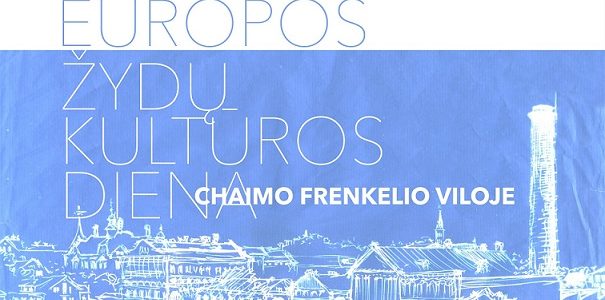
The European Days of Jewish Culture celebrations are scheduled to kick off September 1 and around that date. This year marks the 20th anniversary of the Days. As in previous years, Lithuania is participating, although the theme for this year’s events in Lithuania is yet to be announced. The provisional theme announced by the main organizers is “innovation.”

More information here.

Archaeological Dig Resumes at Great Synagogue Site in Vilnius

Archaeological Dig Resumes at Great Synagogue Site in Vilnius

The summer archaeological dig at the site of the former Great Synagogue in Vilnius is set to resume this year starting July 1 and running to July 19. The team includes archaeologists from Lithuania, the USA and Israel. The continuing exploration of the site is being supported by the Goodwill Foundation in partnership with the Israeli Antiquities Authority and the Lithuanian Jewish Community.

In 2011 the team discovered the exact boundaries and fragments of the former building. In 2016, 2017 and 2018 they explored the former mikvot, or bathhouses used for ritual purification and located the central bimah of the synagogue.

This year they hope to continue exploring the remains of the building and to locate the aron kodesh, the ark used to house the Torah scroll in synagogues. Within the first three days of digging the team had already uncovered the rear entrance to the main hall of the subterranean synagogue, a set of descending steps located near the mikvot.

Events to Mark 75th Anniversary of Destruction of Kaunas Ghetto

Events to Mark 75th Anniversary of Destruction of Kaunas Ghetto

Events have begun in Kaunas to mark the 75th anniversary of the liquidation of the ghetto there. On June 15 the Kaunas Drama Theater staged Getas [Ghetto] directed by G. Varnas and on June 29 the Kaunas City Museum invited the public to a free guided tour called Voice of Hope where museum specialist Aušra Strazdaitė-Ziberkienė told of the Jewish musicians who worked at the Kaunas State Drama Theater and the music school, the conservatory and other venues, and their contribution to establishing and enriching Lithuanian music and popularizing Lithuanian composers. She also spoke about the tragic mass murder of the Jews in the Holocaust. The tour was followed by a screening of Seserys [Sisters] by L. Kopač and D. Selčinskaja telling the story of the rescue of Danutė Pomerancaitė, the accomplished violinist.

Those who missed the event can attend repeat performances at 5:00 P.M. on July 12 and 12 noon on July 13. Please register either by calling (8 37) 731 184 or by sending an email to mkp.kasa@kaunomuziejus.lt

More information about the tour is available in Lithuanian here.

Lietūkis Garage Victims Remembered in Kaunas

Lietūkis Garage Victims Remembered in Kaunas

The anniversary of the Lietūkis Garage massacre was commemorated on June 28, 2019. On June 27, 1941, during the first days of the Nazi invasion, the horrific torture and murder of Jewish men was carried out at the Lietūkis agricultural cooperative’s garage, now Miško street no. 3 in Kaunas.

Kaunas Jewish Community chairman Gercas Žakas led the commemoration and recalled the events. Rokas Makštutis on clarinet and vocalist Vitalij Neugasimov performed a musical rendition of the horror which moved many in the audience to tears.

The commemoration was followed by other commemorations at other mass murder sites including the Jewish cemetery in Slobodka, the Seventh Fort and the Jewish cemetery in Žaliakalnis. Kaunas Hassidic Synagogue Religious Community chairman Iser Shreiberg said a prayer in memory of the Holocaust victims.

Seventy-Fifth Anniversary of the Liquidation of the Kaunas Ghetto

The Kaunas Jewish Community, the city of Kaunas and the Lithuanian Jewish Community invite you to attend events to mark the 75th anniversary of the destruction of the Kaunas ghetto.

July 14

12:00 Commemoration at the stone marking the site of the ghetto gate at Kriščiukaičio street no. 12/Linkuvos street no. 2, Kaunas

1:00 Guided tour through Kaunas ghetto territory and unveiling of new commemorative steles (Kaunas ghetto gate to Democracy Square)

5:00 Concert at the Kaunas State Philharmonic with performances by the Kuryat Ono youth orchestra from Israel, the St. Christopher Chamber orchestra and Lithuanian Jewish tenor Rafailas Karpis

All events are free and open to the public. Come join us.

Lithuania Faces Challenges Celebrating 2020 as Year of Vilna Gaon and Litvak History

Lithuania Faces Challenges Celebrating 2020 as Year of Vilna Gaon and Litvak History

Several months of silence have ensued since the publication of a shocking “explanation” with the features of gross Holocaust denial issued by a Lithuanian state institution, the Center for the Study of the Genocide and Resistance of Residents of Lithuania, published with no author attributed.

The “explanation” from this Lithuanian national historical research institution claims “the inhabitants of occupied Lithuania did not understand ghettos as part of the Holocaust” in attempting to vindicate Jonas Noreika’s culpability in establishing the Šiauliai (Shavel) ghetto, isolating Jews and seizing their property.

The Lithuanian Jewish Community not only believes these statements violate article 170-2 of the Lithuanian criminal code, but also desensitize the public to the Holocaust, and possibly intentionally and calculatedly encourage conflict in society and belittle and debase the memory of brave Lithuanians who rescued Jews from the Holocaust.

Just after marking the anniversary of the horrific Lietūkiis garage massacre and as we mark the 75th anniversaries of the destruction of the Kaunas and Šiauliai ghettos in coming days, we feel it is important to recall the roots and origins of the Holocaust in Lithuania.

Honorary Member of the Panevėžys Jewish Community

Honorary Member of the Panevėžys Jewish Community

World War II began in 1939. Jews didn’t know this was the onset of hell for the entire world and especially for the Jews themselves. More than 60 million people died, and 6 million of them were Jews. Jews were shot and tortured to death in the concentration camps and ghettos.

Today the world community is grateful to those who saved Jews during the Holocaust.

Teresė Giedrikaitė is a frequent visitor to the Panevėžys Jewish Community. She is the daughter of Emilija and Juozas Giedrikas, who were awarded posthumously the Lithuanian order of the Life-Saver’s Cross. She is an honorable member of the Community. She was invited to attend the unveiling of the new Holocaust memorial in Biržai, Lithuania, but was unable to attend due to poor health. She spoke in an informal setting at the Community, telling the story of her parents who rescued Jews during the war.

She recalled painful memories lodged deep from childhood with tears in her eyes. She was four at the time. Neither time nor Soviet deportation has erased the painful recollections. Her parents hid a Jewish newlywed couple from Kaunas in their home in the small town of Vabalninkas.

European Commission Considers Security of European Jewish Communities

European Commission Considers Security of European Jewish Communities

A meeting convened by the European Commission to discuss challenges facing Jewish communities in Europe was held on June 20 in Brussels.

Lithuanian Jewish Community chairwoman Faina Kukliansky spoke at the meeting, thanking Lithuanian law enforcement institutions for long and productive cooperation, but stressed Lithuania is one of only a few European countries without a systematic policy for safeguarding Jewish sites and institutions.

The LJC has adopted all security measures meeting European standards by itself and with help from the Security and Crisis Center under the European Jewish Congress.

Outdoor Painting Workshop

Outdoor Painting Workshop

The Lithuanian Jewish Community invites you to a plein air outdoor painting workshop over five days and four nights with famous artist Raimondas Savickas. Lodging will be double rooms at the Karvys manor on Karvys Lake in Paežeriai village, Maišiagala aldermanship, Vilnius region (http://www.karviodvaras.lt/kontaktai/) with three meals per day, activities and personal consulations with teachers, running from July 27 to August 2. Cost per person is 180 euros. Registration is open till July 12. For more information, contact Žana Skudovičienė by email at zanas@sc.lzb.lt or by telephone at +370 67881514.

Bank transfers can be made to the Lithuanian Jewish Community, corporate code 190722117, VAT code LT100010504214, bank account number LT09 7044 0600 0090 7953 at SEB Bank. Please indicate the payment is for Educational Plein Air 2019 and the name and surname of the person for whom the payment is being made.

The True State of the Jewish Cemeteries in Vilnius

The True State of the Jewish Cemeteries in Vilnius

The True State of the Jewish Cemeteries in Vilnius. Part of a Proud Past Which Must Be Protected

In the international sphere there has been no respite regarding preservation of the old Jewish cemetery in Vilnius (in the historical neighborhood of Piromont, now known as Šnipiškės): petitions are being circulated, the issue has even been raised in the United States Senate and there is the attempt being made to put a halt to plans to renovate the Palace of Sports building there. But are these disputes over the now-destroyed cemetery sufficiently well-founded?

The Soviet Era Destroyed the Šnipiškės Jewish Cemetery and Buried Its Memory

It’s important to look at the history of the Šnipiškės cemetery. The old Jewish cemetery in Vilnius established in 1592 or 1593 (although other sources say 1487) was for all intents and purposes closed in 1830, after which part of the cemetery was destroyed, with another part surviving to the end of World War II.

The Executive Committee of the Lithuanian Soviet Socialist Republic adopted a resolution on October 15, 1948, to close the old Jewish cemetery. At that time it had an area of just over three hectares, a quarter of the size of the Užupis Jewish cemetery on Olandų street in Vilnius.