Learning

In the Spotlight: William Stern

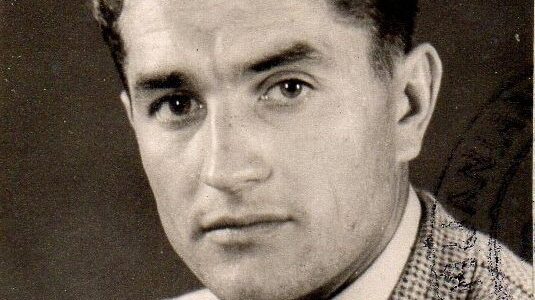
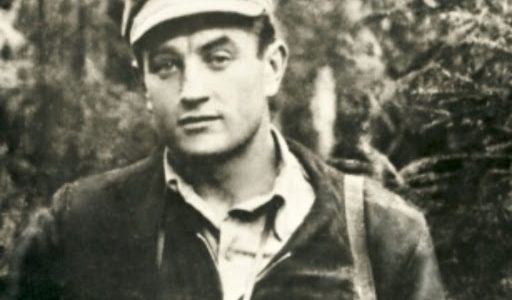
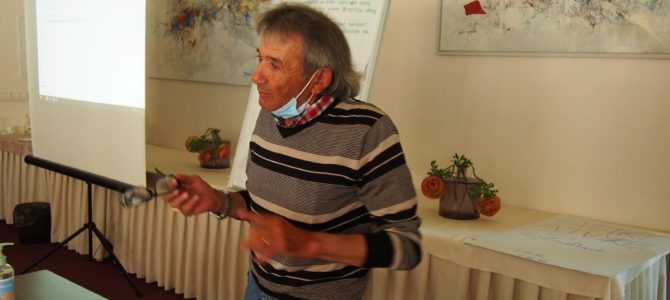
Mr. William Stern was born in Budapest in 1935; after the Nazi occupation of Hungary in March 1944, he and his family were taken to the Bergen-Belsen concentration camp. They survived the War and emigrated to New York in 1952 where Mr Stern pursued studies first at Yeshiva University and subsequently at Harvard Law School.

It was during his stint at Harvard Law School that Mr Stern discovered the many risks and temptations which face a student when he leaves his home environment and suddenly becomes enmeshed in a totally new and different culture. He was shocked at seeing some of his friends shed their tradition and previous way of life in just a matter of months. Having married a young lady resident in London, Mr Stern moved to England in 1960. Early in his career, he established in London in 1971 a kosher canteen which welcomed students of Imperial College, located opposite his offices at Albert Court. This canteen has been going strong for the past 45 years and is presently catering to 30-35 Imperial College students every day of the academic year.

When he expanded his business to Lithuania, Mr Stern discovered the presence in Kaunas of approximately 100 Israeli medical students. He felt that during the 6-year period which medical studies require, many of these students might lose not only their Israeli but also their Jewish identity. In 2010, he established the Jewish Club which grew and developed over the years into the Jewish Centre Kaunas. Its aim is to provide the Jewish students in Kaunas a home away from home and prevent the loss of Jewish identity which otherwise might occur.

Prosecutor Drops Pre-Trial Investigation of Anti-Semitism Yet Again

Prosecutor Drops Pre-Trial Investigation of Anti-Semitism Yet Again

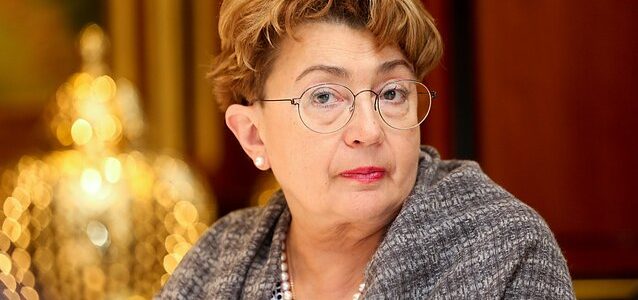
This time the Vilnius district attorney’s office reported they dropped an investigation into an article containing anti-Semitism and sowing ethnic discord on the internet page of the weekly newspaper Laisvas Laikraštis. The pre-trial investigation was begun at the request of Lithuanian Jewish Community chairwoman Faina Kukliansky.

“I can’t even count anymore how many times both the Community and I have sent these requests in. Dozens. So far all investigations have been halted because investigators never seem to find any evidence of a crime,” Kukliansky commented.

She said the Community will continue to publicize each and every complaint and each and every rejection, even if the spreaders of hate receive extra publicity for their articles and comments because of it.

Hundredth Anniversary of Jewish Faction in Lithuanian Constituent Parliament

Hundredth Anniversary of Jewish Faction in Lithuanian Constituent Parliament

Photo: One of the first sittings of the new Lithuanian parliament took place at the City Theater. In front is the presidium, to the left, sitting, are Naftalis Fridmanas, Petras Radzevičius, Ladas (Vladas) Natkevičius, first deputy speaker Jonas Staugaitis, Sspeaker Aleksandras Stulginskis, second deputy speaker Justinas Staugaitis. Right, seated: Zigmas Starkus. Kaunas, 1920. Courtesy Vytautas the Great Military Museum.

The Jewish Faction in Lithuania’s Constituent Parliament

The first parliament elected after Lithuanian independence in the early 20th century caused a global sensation.

This year comes 100 years after the first universal democratic elections for a Lithuanian parliament. One feature of what Lithuania calls its Constituent Assembly was the Jewish faction of parliamentarians, something almost impossible to imagine today following the extermination of upwards of 95% of all Lithuanian Jews in the Holocaust.

to be continued

On Vytautas Bruveris’s Series of Articles “Lithuania and the Holocaust: Endless Seizures Instead of Healing Wounds”: Comments by Lithuanian Readers Contain Indications of Crime

On Vytautas Bruveris’s Series of Articles “Lithuania and the Holocaust: Endless Seizures Instead of Healing Wounds”: Comments by Lithuanian Readers Contain Indications of Crime

by professor Dr habil. Pinchos Fridberg

Information

In the first week of way the internet site of the Lietuvos Rytas newspaper featured a series of articles in Lithuanian by Vytautas Bruveris called “Lithuania and the Holocaust: Endless Seizures Instead of Healing Wounds.”

Part One, May 1, 2020: https://www.lrytas.lt/lietuvosdiena/aktualijos/2020/05/01/news/lietuva-ir-holokaustas-vietoj-zaizdu-gydymo-nesibaigiantys-traukuliai-i-dalis–14716722/

Part Two, May 2, 2020: https://www.lrytas.lt/lietuvosdiena/aktualijos/2020/05/02/news/lietuva-ir-holokaustas-vietoj-zaizdu-gydymo-nesibaigiantys-traukuliai-ii-dalis–14716738/

Part Three, May 3, 2020: https://www.lrytas.lt/lietuvosdiena/aktualijos/2020/05/03/news/lietuva-ir-holokaustas-vietoj-zaizdu-gydymo-nesibaigiantys-traukuliai-iii-dalis–14716742/

Lithuanian Jewish Community Statement on May 9 Incident

Lithuanian Jewish Community Statement on May 9 Incident

The Lithuanian Jewish Community has asked the Lithuanian Office of Prosecutor General and the commissar general of the Lithuanian Police Department to investigate a so-called action held by motorcyclists in Vilnius on May 9, 2020, during which Nazi symbols and other attributes were used.

The media report the bikers dressed in Wehrmacht uniforms rode through the Vilnius OId Town playing march music from the Third Reich and rode in circles around the embassy of the Russian Federation on Latvių street.

“As you know, the distribution and demonstration of Nazi and Soviet symbols are banned by law in Lithuania and involve criminal accountability. We would like to emphasize the marches mentioned have painful associations for Jews because it was this sort of music which was played during selections at concentration camps during World War II,” the statement from the LJC reads.

Although the participants in the action did wear Nazi uniforms, it appears the police took no actions and didn’t stop the ride.

The LJC has received a report an LJC member who saw the motorcyclists near the Old Town Hall in Vilnius reported it to a police patrol nearby. The officers gave assurances the bikers would be punished, but Lithuanian Police Department representative Ramūnas Matonis told reporters there were no arrests for sowing ethnic discord anywhere in Lithuania on May 9.

The LJC therefore is now requesting:

1. an internal investigation and determination of the identities of the officers who were on duty in the police patrol at the Old Town Hall and an explanation on why the bikers were not cited.

2. determination of the identities of the people who rode around Vilnius dressed in Nazi uniforms and played Third Reich march music loudly.

3. an explanation on what instructions police street patrol officers receive and whether they are trained to recognize hate crimes and expressions of anti-Semitism.

4. to tell us whether the May 9 incident will be addressed in a future meeting of the special working group formed by the Lithuanian interior minister for fighting hate crimes and hate speech in Lithuania.

Visual material presented by the media shows this public violation was known at the time of its commission (URL: https://www.delfi.lt/news/daily/lithuania/pergales-diena-vilniuje-aplink-rusijos-ambasada-vazinejo-i-nacistines-vokietijos-karius-panasus-motociklininkai.d?id=84241879 )

Watch Litvak Cantor Melavonis in This Video

The Genesis Prize Fund has posted a video clip called Jews in Music to do honor to exceptional achievements by Jews in music. The Fund presents the prize annually and Jews in Music debuted in 2016. The prize ceremony is held in honor of violin virtuoso Yitzhak Perlman. Among the musicians included in the video below are Yosef Melovanis, Leonard Cohen, Carole King, Vladimir Vysotksky, Idan Raichel, Martha Argerich, Paul Simon, Yevgeniy Kissin, Billy Joel, Adam Levine, Drake and many others.

Resident Ambassadors Mark VE Day at Jewish Cemetery in Vilnius

The Lithuanian Jewish Community and resident foreign ambassadors to Lithuania marked Victory in Europe day with a small, solemn gathering at the Jewish cemetery on Sudervės road in Vilnius on the morning of May 8. German ambassador Matthias Sonn, Israeli ambassador Jossy Avni-Levy and US ambassador Robert Gilchrist gave short addresses stressing the need to remember the past while looking to a better future.

Remembering the Victims of World War II

Remembering the Victims of World War II

On the day marking the end of World War II in Europe, Victory Day, May 8, a small group gathered at the Jewish cemetery on Sudervės road in Vilnius to honor the victims of WWII, including Holocaust victims. Lithuanian Jewish Community chairwoman Faina Kukliansky was there with German ambassador Matthias Sonn, U.S. ambassador Robert Gilchrist, Israeli ambassador Yossy Avni-Levy, deputy Lithuanian foreign minister Dalius Čekuolis and Vilnius municipal administration director Povilas Poderskis.

Video Highlights of the Fifth World Holocaust Forum in 2020 in Jerusalem

Video Highlights of the Fifth World Holocaust Forum in 2020 in Jerusalem

Dear Presidents,
Dear Friends,

We are very happy and proud to share with you a video featuring highlights of the EJC event last January – The Fifth World Holocaust Forum – initiated by our President Moshe Kantor and hosted by the President of the State of Israel, Reuven Rivlin, at Yad Vashem.

Nearly 50 heads of state and royalty from across the world, as well as the three leaders of the European Union institutions, gathered in Jerusalem to reaffirm their unity against the upsurge of antisemitism globally and to honour the memory of the victims of the Holocaust.

Although it is difficult to encapsulate such a historic event in a few minutes, the video contains the most beautiful images, and the strongest and most touching excerpts of speeches and musical performances.

We hope this film will bring back precious memories of these emotional two days and allow those who could not be with us to grasp the intensity of the commitment expressed by world leaders for such a noble cause.

Stay safe and best regards,
Raya and the EJC Team

Video: https://eurojewcong.org/media/video-gallery/highlights-of-the-fifth-world-holocaust-forum-jerusalem-22-23-january-2020/

Lithuanian MPs Defend Noreika

Lithuanian MPs Defend Noreika

The following open letter appeared on the delfi.lt website. It is called “Reacting to Linkevičius’s Reply on Request to Review Positions on Jonas Noreika, aka General Storm.” Linas Linkevičius is the Lithuanian foreign minister. The two authors of the open letter were Audronius Ažubalis and Laurynas Kasčiūnas, members of parliament in the Homeland Union/Conservatives-Lithuanian Christian Democrats faction. Ažubalis was also a foreign minister in a previous government.

§§§

On April 6 we contacted foreign minister Linas Linkevičius and Vilnius mayor Remigijus Šimašius asking them to review their earlier positions regarding Jonas Noreika, aka General Storm, in light of the final and unappealable decision of the Lithuanian Supreme Administrative Court on April 1. We got an answer from the minister, and thank you for following the law, but from the mayor there was the usual silence, but we’ll talk about the lack of political culture [sic] another time…

Replying to the minister by open letter, we want to raise again respect for decisions by the Lithuanian courts and recall a few essential details which have been forgotten in this discussion of history policy.

It seems as if it’s clear to everyone that officials of a state under the rule of law should not ignore court decisions and laws in their activities. Especially not the fact the Lithuanian Supreme Court rehabilitated Jonas Noreika of the full extent of the Soviet accusation, that is, for cooperating with the Germans.

Lithuania and the Holocaust: Endless Seizures Instead of Healing Wounds (Part III)

Lithuania and the Holocaust: Endless Seizures Instead of Healing Wounds (Part III)

part three

by Vytautas Bruveris

What are the methods for Lithuania as a country and society to demonstrate by deeds rather than words true solidarity with the country’s Jewish community, almost completely exterminated in the Holocaust, with the victims and with their descendants?

Long-Awaited Victory Celebrated

A third problematic bloc in modern Lithuania’s relationship towards the Holocaust is the definition, including legal, of Soviet crimes and oppression.

Should the mass murders and oppressions the Soviets carried out in Lithuania not just be called but legally recognized as genocide? Should they also be recognized as genocide outside Lithuania in the international arena?

Lithuania and the Holocaust: Endless Seizures Instead of Healing Wounds  (Part II)

Lithuania and the Holocaust: Endless Seizures Instead of Healing Wounds (Part II)

part two

by Vytautas Bruveris

What are the methods for Lithuania as a country and society to demonstrate by deeds rather than words true solidarity with the country’s Jewish community, almost completely exterminated in the Holocaust, with the victims and with their descendants?

Why Is There No Basic Number?

So if there’s no national agreement on what should be considered contributing to the Holocaust and what criteria might define this, then does the determination of direct participation in the mass murder of Jews not raise any conceptual misunderstandings?

Lithuania and the Holocaust: Endless Seizures Instead of Healing Wounds (Part I)

Lithuania and the Holocaust: Endless Seizures Instead of Healing Wounds (Part I)

part one

by Vytautas Bruveris

What are the methods for Lithuania as a country and society to demonstrate by deeds rather than words true solidarity with the country’s Jewish community, almost completely exterminated in the Holocaust, with the victims and with their descendants?

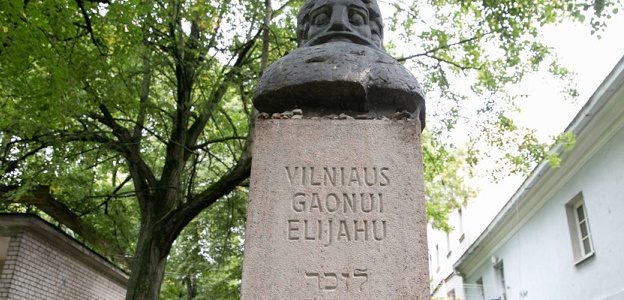
After all, this year has been declared not only the Year of the Vilna Gaon but also the Year of Litvak History at the highest level of state.

Moreover, this year Lithuania and the world mark the round anniversary of a date connected with World War II, Nazi crimes and the Holocaust.

At least two such methods have long been clear.

Big Thank You to Svetlana Who Found a Jewish Headstone in Her Garden

Big Thank You to Svetlana Who Found a Jewish Headstone in Her Garden

Vilnius resident Svetlana Šitelienė contacted the Lithuanian Jewish Community to report her discovery of what appears to be a Jewish headstone, or matzeva, on her farm.

Thank you, Svetlana.

We’ve reached Svetlana and thanked her, and sent her a box of matzo and the Vilnius ghetto diary of Yitzhak Rudasheviski translated into Lithuanian.

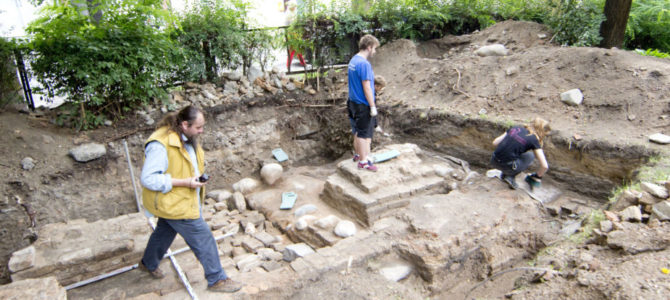
Studying the photographs she provided, it appears this might be an unfinished headstone made for someone named Esther, with the surname partially completed. Mrs. Šitelienė said the grave stone might have ended up in her yard 47 or more years ago, and according to relatives it came from the Jewish cemetery near the Palace of Marriage in Vilnius.

Musical Happy Birthday from the Kaunas Jewish Community

Musical Happy Birthday from the Kaunas Jewish Community

As spring finally arrives, the Kaunas Jewish Community sends birthday greetings to our beloved member Liuba Stulgaitienė.

Liuba is very active in Community events, a member of the Yiddish Club, a member of the Union of Former Ghetto and Concentration Camp Prisoners and a woman who always radiates positivity, optimism and joy. She smiles at the whole world despite all injuries experienced and the world answers her the same way.

Dear Liuba, keep being so young at heart, so energetic, so thirsty for knowledge and someone who is able to say the years are not a burden, but a rich experience.

Mazl tov! May you live to 120!

Condolences

South African Litvak Denis Goldberg died of lung cancer just before midnight on April 29 at his home at Hout Bay in Cape Town. He was born April 11,1933. An anti-apartheid activist, Goldberg was tried with Neslon Mandela at the Rivonia trial and sentenced to 22 years in prison. Our deepest condolences to his many friends and family.

Faina Kukliansky Interviewed by Lithuanian Media on Yom haAtzma’ut

Lithuanian Jewish Community chairwoman Faina Kukliansky was interviewed by Lithuanian publicist Donatas Puslys on Yom haAtzma’ut, Israeli independence day, and spoke about what the holiday means to Jews in Lithuania, to her personally and to Jews around the world. She also spoke about the Holocaust, Litvaks living in Israel, the promise Eretz Israel held out to Soviet Jews and the country’s progress over the last 72 years. The interview was conducted in Lithuanian but concludes with warm wishes in Yiddish.

WJC President’s Letter to Israeli President on Yom haAtzma’ut

WJC President’s Letter to Israeli President on Yom haAtzma’ut

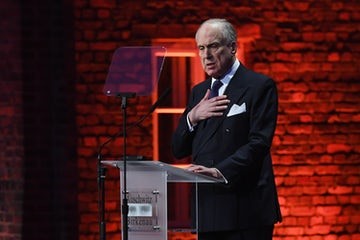
From: Ronald S. Lauder
Subject: My Letter to President Rivlin on Yom Ha’atzmaut
Date: 29 April 2020 at 17:09:53 EEST

To: WJC Affiliated Communities & Organizations, members of the WJC Executive Committee

From: Ronald S. Lauder, WJC president

Dear Friends,

I hope this message finds you all well and safe during this difficult time.

At no other time of the year is the dichotomy between joy and sadness, mourning and celebration more clear for Israelis and Jewish people around the world than the two days that we pause to observe Yom HaZikaron and Yom Ha’atzmaut. During this period we honor those who laid down their lives for the establishment and protection of the Jewish State and revel in the achievement that is its independence.

Although this year’s public commemorations and gatherings have been severely limited due to the COVID-19 pandemic, I would like to share with you a letter I wrote on the eve of Yom Ha’atzmaut to Israeli president Reuven Rivlin on behalf of Jewish communities worldwide. I hope it will be of interest.

Please keep well and stay safe, and do not hesitate to let us know if there is anything at all that we can do to be of assistance to you or your community.

Best wishes,

Ronald

Yom haAtzma’ut, Israeli Independence Day

Yom haAtzma’ut, Israeli Independence Day

Israelis began celebrating 72 years of statehood this year by greeting medical personnel. A torch-lighting ceremony began without an audience in honor of Israel’s doctors, nurses, care-givers, hospital staff and volunteers who have been fighting the Wuhan virus, with many fireworks displays and hospital fly-overs by the Israeli Air Force canceled.

Most Israelis marked Independence Day at home.

Prime minister Binyamin Netanyahu addressed the nation in a video saying “We’ve never celebrated this kind of Independence Day. We are in a physical sense far from one another, but we’ve never been closer.” Praising hospital workers Netanyahu added “The day will come when embraces return… But we still can’t do this because the pandemic is still here.”

Knesset speaker Benny Gantz lit a torch on the eve of Independence Day and spoke of national unity, saying Israelis must prepare for even more difficult days, and called for creating “a new moral face of the country.”