Learning

Rabbi Isaacson Speaks at Screening of Film “Kaddish”

filmas3

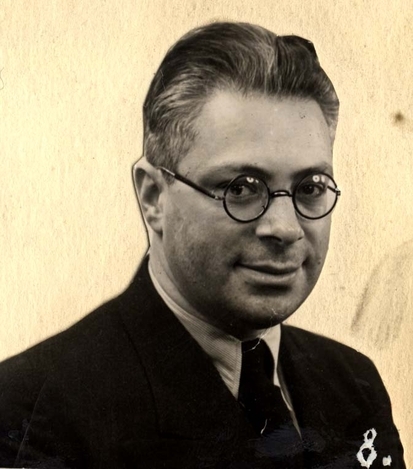
The film club of the Lithuanian Jewish Student Union screened the film “Kaddish” on March 10, an event during which the public was able to meet one of Lithuania’s newest rabbis, Rabbi Samson Daniel Isaacson. Before the film started, Rabbi Isaacson gave a short talk welcoming the audience and telling about the film made by a friend of his. Kaddish is the story of Rabbi Yitzhak Yosef Zilber, born in Russia in 1917 (died 2003, a Russian, later Israeli Haredi rabbi and a leader of the Russian baal teshuva movement, author of several books, Russian Israeli religious authority). Zilber studied Judaism privately, at home, because his father Ben-Tzion Haim Zilber (originally Tsiyuni) refused to allow him to attend ant-religious Soviet schools.

rabinas zilberis

At the age of 15 he began to teach Judaism in his hometown of Kazan, although it was illegal under Soviet law to do so. After a life filled with hardship, oppression by the Soviets and incarceration in the gulag, he and his family were finally allowed to leave the USSR for Israel in 1972, where he continued to teach, practice traditions and attract a large group of young people.

Discussion followed the screening of the film as audience members asked the rabbi questions and he responded. The several dozen members of the audience and the rabbi were treated to snacks and tea after the discussion, allowing people to get to know the rabbi better in a somewhat informal setting.

filmas2

Lithuania to Investigate Jewish Treasures Stolen by Nazis

March 23, BNS–Investigation into cultural treasures the Nazis stole from Jews in Lithuania has begun, the newspaper Lietuvos žinios reports.

Last week a meeting of the International Commission for Assessing the Crimes of the Nazi and Soviet Occupational Regimes in Lithuania reached agreement on conducting several large studies, commission chairman Emanuelis Zingeris confirmed. He said the Rosenberg task force drew up lists of rare and valuable items held by Jewish organizations, libraries and museums before the war even started. “So we’re asking for additional research, which is being performed by researchers in Lithuania and abroad. I believe we will approach the German Government on with a request for clarification, because there shouldn’t be any lingering doubts regarding this,” Zingeris said.

He also spoke about the items listed in the book “Lietuvos inkunabulai” [Incunabula of Lithuania] by Nojus Feigelmanas from the Strashun library in Vilnius. “There are clear indications there were four incunabula in this library in Hebrew which the Germans took. The incunabula were printed in an Italian city in 1475. They are priceless,” Zingeris commented. His commission’s work was resumed by presidential decree in the fall of 2012. After a break of eight years, the renewed commission met again in 2013. As reported at that time, the commission only discussed technical and financial issues at that meeting. The chairman said the subcommittee investigating crimes of the Soviet occupational regime would meet in early summer this year.

BNS_logotipas

Lecture Series

judaism

The Sunday lectures continue at 12:00 noon on March 20:

Subject: Sacred Text
by Rabbi Shimshon Daniel Isaacson

Third floor, Lithuanian Jewish Community, Pylimo street no. 4

Kaunas Jewish Community Honors Most Active Members

Kau7

Continuing a long-standing tradition, the Kaunas Jewish Community invited its most active members to a party to thank them. Participants in various clubs, students of Yiddish, people seeking a deeper knowledge of Jewish history and traditions and volunteers in different campaigns, events and cultural activities gathered for a dinner, live music and lively conversation. Kaunas Jewish Community chairman Gercas Žakas thanked everyone and said since Jews are known as the People of the Book, he was passing out books as well, about Jewish history and other Jewish topics.

Vytautas Mikuličius, Journalist and Son of Righteous Gentiles, Has Died

With deep sadness we note the passing of journalist Vytautas Mikuličius who with his parents Petras and Ona rescued Julija Remigolskytė-Flier, now a Canadian violinist, during World War II.

Petras and Ona lived with their three children at Minkovskių street no. 110 in Kaunas. Jews from the Kaunas ghetto were used as forced labor near their home, including Klara Gelman. During the winter of 1942-1943 Klara asked Ona and Petras to save her two-year-old daughter Julija. Petras and Ona took her in and raised her as their won. The little girl quickly learned to speak Lithuanian, and her foster parents told the neighbors she was the daughter of Ona’s dead sister.

From Vytautas Mikuličius’s recollections:

Our family had many friends and acquaintances. Our mother was very involved with the women in the area especially. Russians, Jews, Poles… When the Nazis put their regime in place, mother didn’t drop her girl friends, but visits became brief and secret.

Jewish Students Deliver Donations to Developmentally Disabled Infant Center

ŠA

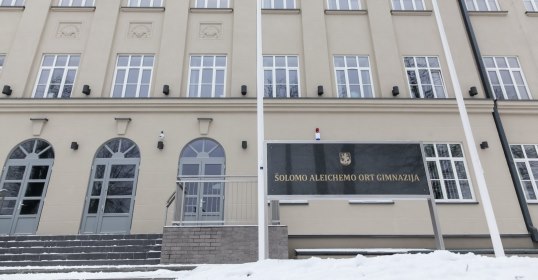
Representatives of the Vilnius Sholem Aleichem ORT Gymnasium visited the Vilnius Developmentally Disabled Infant Center March 8 and were warmly received by director Viktorija Grežėnienė. The students delivered donations and visited some of the small wards of the center. The donations included a sofa-bed, musical mobiles and educational games which the students purchased with funds raised by a food and crafts fair held on the Tu b’Shvat holiday. Students made their own dishes and snacks as well as art works and sold them to other students during the fair.

ŠA1

Major American Jewish Leader Changes His Mind about Israel

An Amazing Turn for a Major Leader of the American Jewish Mainstream: David Gordis Rethinking Israel

David Gordis has served as vice president of the Jewish Theological Seminary of America and of the University of Judaism in Los Angeles (now American Jewish University). He also served as executive vice president of the American Jewish Committee and was the founding director of the Foundation for Masorti Judaism in Israel. He founded and directed the Wilstein Institute for Jewish Policy Studies which became the National Center for Jewish Policy Studies.

David Gordis is president emeritus of Hebrew College where he served as president and professor of Rabbinics for fifteen years. He is currently visiting senior scholar at the University at Albany of the State University of New York. Here is the article he submitted to Tikkun. We publish it with the same sadness that Gordis expresses at the end of this article, because many of us at Tikkun magazine shared the same hopes he expresses below for an Israel that would make Jews proud by becoming an embodiment of what is best in Jewish tradition, history, and ethics, rather than a manifestation of all the psychological and spiritual damage that has been done to our people, which now acts as an oppressor to the Palestinian people. For those of us who continue to love Judaism and the wisdom of our Jewish culture and traditions, pointing out Israel’s current distortions gives us no pleasure, but only saddens us deeply.
–Rabbi Michael Lerner

Reflections on Israel 2016
David M. Gordis

While reading Ethan Bronner’s review of a new biography of Abba Eban, I was reminded of a time when in a rare moment I had the better of a verbal encounter with Eban. It happened about thirty years ago at a meeting of the Conference of Presidents of Major American Jewish Organizations, which brought together leaders of American Jewish organizations, sometimes to hear from a visiting dignitary, in this case Eban, Israel’s eloquent voice for many years. I was attending as Executive Vice President of the American Jewish Committee. Eban had a sharp wit as well as a sharp tongue. He began his remarks with a mildly cynical remark: “I’m pleased, as always, to meet with the Conference of Presidents of Major American Jewish Organizations, though I wonder where the presidents of minor American Jewish organizations might be.” I piped up from the audience: “They are busy meeting with minor Israeli government officials.” A mild amused reaction followed and Eban proceeded with his remarks.

Rina Zak: “Markas Petuchauskas: Theater in the Shadow of Death”

Publisher, translator and editor Rina Zak [Zhak, Žak, Рина Жак], one of the iconic figures in Russian-speaking Israel, is also well known outside of the biggest linguistic community in the country. Rina also engages in educational activities, in the everyday activities of the Geographical Society of Israel and in the periodical press, writing in Isrageo magazine, as well as on facebook, where she posts little-known passages from Jewish and Israeli history. Rina Zak was born in Kaunas and was graduated from the Journalism Faculty of Vilnius University.

We are pleased to offer for your consideration a passage by Rina Zak:

Markas Petuchauskas: Theater in the Shadow of Death

In 2015 he published a book of memoirs of his time as a young prisoner of the Vilnius ghetto called “Price of Concord.”

Strange as it might seem to some, the ghetto was a venue for musical performances and festivals, literary competitions and art exhibitions. There clinics and hospitals, schools and kindergartens, a youth club and a café. There were plans for a museum, a publishing operation… but these ideas were not destined to happen. The Vilnius ghetto lasted only two years, and its population of about 40 thousand people was almost completely exterminated.

Jewish Summer Camp in Hungary Fosters Next Generation of Leaders–and Romance


Photo courtesy JDC

by Cnaan Liphshiz

SZARVAS, Hungary (JTA)–Escaping a sudden downpour in the summer of 2012, Andras Paszternak and Barbi Szendy ran to find cover inside an empty cabin at their Jewish summer camp, Szarvas, 100 miles east of Budapest.

The two senior counselors, then 31 and 36 respectively, chatted as rain drenched the sprawling compound where they had passed every summer since their early teens.

“I suddenly noticed I was holding Barbi’s hand,” Paszternak, a Hungarian Jew from Slovakia, said in recalling the day when he began his romantic relationship with his Hungarian Jewish wife.

Makabi Club Book Launch

Makabi knyga

A large group turned out for the launch of the new book “Lietuvos sporto klubas ‘Makabi’ 1916-2016” [The Lithuanian Athletics Club Makabi, 1916-2016] at the Lithuanian Jewish Community on the last day of February, 2016. The appearance of the book is a milestone not just for the Lithuanian Jewish Community, but for Lithuanian sport as a whole, because Makabi is the oldest athletics club in Lithuania. The book tells the story of the origins of Makabi a century ago, activities in the first Lithuanian Republic, how the club was reconstituted after Lithuanian independence from the Soviet Union and its activities since then over the last 25 years. It includes information on Makabi’s participation at European and World Maccabiah Games and other sporting events, and showcases athletes. The book is richly illustrated with photographs depicting the history of Makabi.

This year is the 100th anniversary of the club, which began in German-occupied Vilnius. On October 23, 1916, the Makabi Jewish Sports and Gymnastics Association was established in the ancient Lithuanian capital. Kaunas Makabi was established in 1919. The entire Maccabee athletics movement took place as part of the early spread of Zionism.

Rabbi Heschel’s “Sabbath” Issued in Lithuanian by Catholic Publisher

A new Lithuanian edition of “Sabbath” by Abraham Heschel (1951), translated by Asta Leskauskaitė and published by Katalikų pasaulio leidiniai [Catholic World Publications] was launched at the Vilnius Book Fair last week.

Rabbi Heschel became a rabbi at age 16 and was graduated from the Vilna Mathematics and Natural Science Gymnasium in Vilnius before going on to study under some of the greatest Jewish teachers in Germany. He was arrested by the Gestapo and deported to Poland in October of 1938. He fled to Britain weeks before the Nazi invasion of Poland, and then went on to the United States in early 1940, where he became one of the most important and respected Jewish thinkers of the mid-20th century. His first book, apparently, “Der Shem Hamefoyrosh: Mentsch,” was written when he was a member of the Jung-Vilne group of writers in Vilnius, a book of poems in Yiddish published in Warsaw in 1933. Heschel’s poems attracted attention, including a letter of praise Chaim Nachman Bialik sent to the author from Israel.

Meeting the New Rabbis

Rebbe3

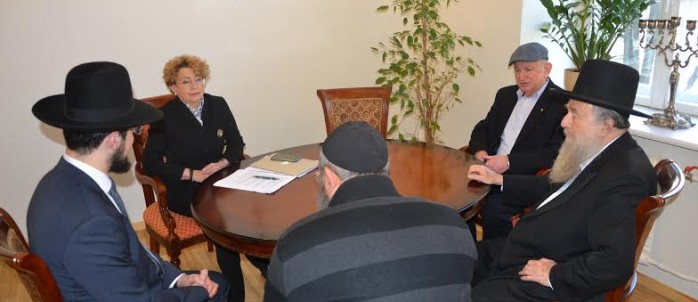
A meeting of the newly appointed rabbis Kalev Krelin and Shimshon Daniel Izakson (Isaacson) was held at the Lithuanian Jewish Community February 29. Participants included representatives of foreign embassies in Vilnius, the Lithuanian Foreign Ministry, Parliament, the Catholic Church, the Lithuanian Ministry of Culture and the regional Jewish communities in Lithuania. Also attending was Vilnius auxiliary bishop Arūnas Poniškaitis.

Shmuel Levin, director of the Lithuanian Jewish Religious Community, spoke at the meeting and said: “The physical genocide by the Nazis and the spiritual genocide by the Soviet regime destroyed the Jewish communities in Europe and especially in Lithuania. Today Judaism is an exotic religion, not just for the other religions, but for us ourselves. We hope Rabbi Izakson and Rabbi Krelin will be successful in reviving and preserving the Litvak tradition, Jewish spiritual life.”

Lithuanian Jewish Community chairwoman Faina Kukliansky welcomed the new rabbis to the community and wished them every success in their work.

International Studies Days

The exhibition International Studies Days will be held from 10:00 A.M. to 6:00 P.M. on March 3 in the conference center at the Radisson Blu Hotel located at Konstitucijos prospect no. 20 in Vilnius. This will be the first time the cultural center of the embassy of Israel participates. Anna Keinan, first secretary of the Israeli embassy in Vilnius, and Ray Keinan, director of the Israeli cultural center, will greet participants.

The exhibition will also be held on March 5 in Riga, Latvia, and on March 6 in Tallinn, Estonia.

For more information contact lietuva@balticcouncil.org or see www.balticcouncil.org

Documentary Film about Osip Mandelshtam

The Vilnius Jewish Public Library is to host the premiere of a film about the life of the poet Osip Mandelshtam called Sokhani Moyu Rech Navsegda [Save My Speech Forever]. The film was completed in 2015 by director Roman Liberov of Moscow. Its running time is 84 minutes. It is in Russian but the premiere will make Lithuanian subtitles available. This year is the 125th anniversary of the birth famous poet and essayist who worked in the Russian language but who is often described as a Polish Jew. In fact his father, grandfather and great-grandfather allegedly all hailed from Žagarė, Lithuania. Director Liberov is to attend the premiere to be held at the Vilnius Jewish Public Library located at Gedimino prospect no. 24 in Vilnius at 5:30 P.M. on Monday, February 29.

“I’m a BBC Patriot”

Gorbaciovas

That’s how Sam Yossman described his love for the Beeb at an event to introduce his new autobiography, “Šaltojo Karo Samdinys” [Cold War Hired Hand], co-authored with Inga Liutkevičienė.

Trying to sum up his book, itself only a brief summary of a very rich life, Yossman spoke about his Litvak roots in Vilnius, the post-war period, Jews in the Soviet Union and the eventual success he and his friend Yefim Kybarskis, whose family includes a well-known Litvak doctor, and others had in exiting the USSR for Israel. Kybarskis traveled to Lithuania for several presentations of the new book of which the first was hosted by Lithuania’s Department of Minorities as part of a series called “Litvakai sugrįšta” or “Litvaks return.” Also accompanying Yossman was a team of children and grandchildren and assorted friends from Lithuania and elsewhere. The audience included Department personnel, reporters, interested parties from other Lithuanian institutions and a representative from the embassy of Azerbaijan in Vilnius. A representative expected from the Turkish embassy did not appear. Algis Gurevičius, director of the Jewish Cultural and Information Center in Vilnius, also attended.

Holding up the new book, a much younger Yossman gazed out from the cover, a corporal in the Israeli army in khaki fatigues, binoculars half raised, rifle at the ready. The dashing figure of the young corporal was almost immediately contradicted by Yossman’s own account of his time in Israel: he didn’t like it much. It wasn’t what and his friends had expected, it was too hot for a son of the north and he felt he might as well have gone to Uzbekistan or some Arab country. He stayed long enough to fight for Israel in the Yom Kippur war in 1973, but soon repatriated, to England.

On Jewish Motifs, Historical Facts and Lithuanian Identity in Kristina Sabaliauskaitė’s Work

Kristina Sabaliauskaitė

The 24th meeting in the Destinies series of seminars and lectures took place at the Lithuanian Jewish Community on February 17, called “Jewish Motifs in the Works of Writer and Art Historian Dr. Kristina Sabaliauskaitė. Teacher and essayist Vytautas Toleikis moderated the meeting and LJC deputy chairwoman Maša Grodnikienė, the organizer, served as MC and introduced Sabaliauskaitė in person to the audience, noting she was very popular outside of Lithuania as well in Poland and Latvia.

Moderator Toleikis addressed the full hall saying “Kristina has returned Lithuania’s historical memory. She brought back 200 years of history which, due to [historian] Šapoka’s paradigm were lost to Lithuanian consciousness. ‘Silva Rerum’ [‘Forest of Things’ trilogy by Kristina Sabaliauskaitė, 2008, 2011 and 2014] is for us an unexpected historical good fortune, as if the nation had won the lottery. We are lucky Kristina has brought back centuries of history. The author’s memory is not selective, she writes about everything in the past, about Poles and Jews as if they were her own people. This is the attitude of a 21st-century person, it could not be otherwise.”

The conversation during the Destinies meeting revolved around Jewish characters and how the figure of the Jew came to be included in Kristina Sabaliauskaitė’s works in a way very different from the more common portrayal found in Lithuanian literature. Sabaliauskaitė chose the elite person of the doctor Aaron Gordon.

A Great Loss

Kaganas

The Lithuanian Jewish Community is sad to report the death of Isaak Kagan (b. March 13, 1929 in Kaunas), Lithuanian attorney and public figure.

From 1947 to 1952 Kagan studied at and graduated from the Law Faculty of Vilnius University. He worked as a teacher and as legal consultant for different organizations, serving as a consultant on the judicial commission as well. He was a consultant for the Justice Ministry from 1971 to 1973 and worked as a lawyer at the 2nd Office of Lawyers of the City of Vilnius from 1974 to January of 2009.

Kagan wrote and had published a number of monographs and about 50 articles on law, some appearing in the books called “Selected Speeches by Lawyers in Court” and “On the Status of the Defendant in Criminal Proceedings.” He also delivered a presentation called “Communist Regimes: Perpetrators of Ethnic Genocide” as a member of the Lithuanian independence movement Sąjūdis, which he joined in 1988. He was a member of the executive committee of the Lithuanian parliament from 1992 to 1994, a member of the Lithuanian Sąjūdis Commission for Drafting a Constitution for the Republic of Lithuania in 1992, a member of the Public Constitutional Protection Commission, the Lithuanian Council of Attorneys, the Lithuanian Citizens Charter, the Supreme Election Commission and the vice president of the Lithuanian UN Association, among other organizations.

The Lithuanian Jewish Community sends all of our deepest condolences to his wife and family.

Marijus Jacovskis: “Every New Creations Begins in Existential Terror”

M.Jacovskis
Bernardinai.lt Austėja Mikuckytė

Scenographer Marijus Jacovskis’s worktable is covered with designs and drawing implements. He says the fall is a very productive time for him. The atmosphere of creative ferment is palpable in the artist’s studio. Jacovskis talks about his taste for drama, memorable works, relationships with directors and about authorities in the field, and gives an assessment of his own artistic tendencies.

How did you decide to study scenography?

It’s connected with family, of course. My father and aunt graduated from the Art Academy. It was almost a given I would study there, too. There was a moment, though, when I was thinking I would study painting, but I changed my mind at the last moment.

On the one hand, I realized painting is not a profession, but something intangible, something impossible to learn formally. On the other hand, painting is a very complex and complicated activity. I realized painting was too serious for me. I thought, well, I can paint without a studio just as well, but I didn’t become a painter. I only work in the theater.

Full interview in Lithuanian here.
bbb

Presentation of New Issue of Brasta, an Almanac of Jewish History and Culture

You’re invited to attend a presentation of issue number 4 of Brasta, an almanac of Jewish history and culture, at the Vilnius Jewish Library at Gedimino prospect no. 24, Vilnius, at 4:00 P.M. on Friday, February 19. This issue is in English and Lithuania and is arranged on the theme of the origins of Jewish humanitarian medicine and Vilnius doctors.

Brasta

“This issue of Brasta is not just about showcasing famous or not-so-famous names from the world of medicine, but to make explicit the foundational principles of Jewish medicine and the loyalty of doctors to a centuries-old tradition. The publication attempts to bring into focus the core of Jewish medicine and its foundations enriching the practice and science of healing world-wide, to publicize the traditions Lithuania’s doctors held dear and which are still alive today,” editor-in-chief Dalia Epšteinaitė said.

Attending the event: MEP Petras Auštrevičius; chemist, biotechnologist, businessman and scholar professor Vladas A. Bumelis; historian Arūnas Bubnys; editor-in-chief, author and translator Dalia Epšteinaitė; and project director and director of the Vilnius Jewish Library Žilvinas Beliauskas.

Brasta is a publication published by the Vilnius Jewish Library’s Charity and Welfare Foundation. It describes itself as an almanac of Jewish culture and history which publishes popular, literary and theoretical pieces. The annual publication presents readers interesting positions and insights by Lithuanian and foreign authors, studies and ongoing research on Jewish cultural phenomena and insight and analysis of same.

Bernardinai.lt
bbb

Delegation from Argentine Rabbinate Visits Panevėžys Jewish Community

Panevez vasaris

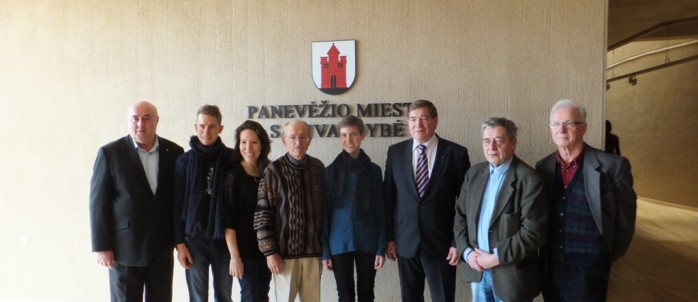
Rabbi Shmuel Arieh Levin from Argentina visited the Panevėžys Jewish Community on February 15. He arrived with eight members of his religious community. The purpose of the visit was for the delegation to observe with their own eyes the state of the Jewish community in Panevėžys, to learn more about their history, to learn about the world-renowned yeshiva and to find out more about the founder of the Ponevezh yeshiva, Rabbi Yosef Shlomo Kahaneman, the Ponovezher Rov and chief rabbi and former member of the Lithuanian parliament who founded in 1919 the yeshiva where 500 students from Europe studied. Rabbi Kahaneman and his eldest son, who had diplomatic status, left for America in 1940, and during World War II moved the Ponevezh yeshiva to, or reëstablished it in Bene Berak (Bnei Brak, with a sister institution in Ashdod), Israel. Rabbi Levin was graduated from the Ponevezh yeshiva in Israel and personally knew Rabbi Kahaneman and his son Elias Kahaneman. Today the world-famous yeshiva where more than 1,000 students study is led by his grandson, Rabbi Eliezer Kahaneman (Cohenman).