
Learning

Latvian Consul Speaks Frankly about Holocaust

At a commemoration of the 75th anniversary of the beginning of the Soviet mass deportations of citizens of the Baltic states held in Los Angeles June 12, Latvian consul in California Dr. Juris Bunkis spoke out strongly for remembering the Jews in the Baltics who were murdered during the Holocaust.

“We are here to commemorate evil–evil like the mass shootings that took place earlier today in Orlando,” Dr. Bunkis said. “We gather today to commemorate a brutal event in our histories, the mass deportations of Estonians, Latvians and Lithuanians from their illegally and forcefully occupied countries to Siberia by the Soviet Union that began on June 14, 1941. Unfortunately, this was just the first in a series of mass Soviet deportations of tens of thousands of victims from the Baltics, occupied Poland, Belarus, Ukraine and Moldova,” he continued.

Chairwoman Faina Kukliansky’s Speech at the Lithuanian Parliament at Commemoration of the Day of Mourning and Hope and the Day of Occupation and Genocide

LŽB pirmininkės Fainos Kukliansky kalba Lietuvos Respublikos Seime, minėjime, skirtame Gedulo ir vilties bei Okupacijos ir genocido dienoms atminti

Over the entirety of Lithuania’s 25 years of independence the Lithuanian Jewish Community hasn’t had the opportunity to share our thoughts publicly during the marking of the Day of Mourning and Hope at the Parliament of the Republic of Lithuania. Seventy-five years have passed since the beginning of the mass deportations of Lithuanian citizens. For the Jewish people, who suffered prophetic exile from the times of the Assyrians, Babylonians and Romans, the experience of exile could be considered part of our historical identity. Seventy-five years ago about one precent of the Lithuanian Jewish community at that time were deported, and as a percentage represent the largest group to be deported from Lithuania. State repression did not put an end to Jewish identity: Zionist organizations operated underground, there was a Hebrew educational system, and all sorts of measures were employed to enable members of the Jewish community to leave for Palestine.

According to Jewish historiography, during the deportations of June, 1941, alone about 3,000 Jews were deported, including Jewish activists from the left and right side of the political spectrum and owners of large industrial enterprises and factories, with about 7,000 people being deported in total during the first year of Soviet rule. On the eve of the first Soviet occupation the majority of Lithuanian Jews were involved in different cultural, social and political organizations and associations. The tradition of Zionism, however, has always been especially strong in the Lithuanian Jewish community; in Lithuania between the two world wars members of the Jewish conservative cultural orientation were the most active and influential, and spoke out for the creation of an independent Jewish nation-state in Palestine. In this regard the confrontation with the Soviet system was especially vivid.

Solomon Atamuk reports there 16 Jewish daily newspapers, 30 weeklies and 13 non-periodical publications as well as 20 collections of literature being published in Lithuania before World War II. After the June 14, 1940 ultimatum to Lithuania and the consequent occupation the Jewish community soon experienced social and cultural repression. All newspapers, belong both to organizations on the Jewish political left and the right, were shut down. Even the Folksblat newspaper, popular with Communists and issued by the Jewish People’s Party, was closed.

Jakovas Mendelevskij: Childhood and Life of a Jewish Deportee

Jakovas Mendelevskij – žydo tremtinio vaiko gyvenimas ir tolesnis likimas

This year marks the 75th anniversary of the mass deportations of Lithuanian citizens which began on June 14, 1941. The Russian regime then began by rounding up intellectuals, members of the educated elite, wealthy businessmen and well-to-do farmers, sending them deep into the interior of Russia. In total about 132,000 people were deported, and 28,000 people died in exile.

Jakovas Mendelevskij lived as a child in Ukmergė in an affluent and happy family. He was 9 that early morning of June 14, 1941, when the knock came at the door and the family was ordered to get ready to be deported. Many Jews were deported in Ukmergė that morning. They were taken by truck to Jonava, summarily separated from his father, and he, his mother and brother were loaded onto train cars like livestock and carried off. His father was arrested and tried, and received a sentence of 10 years in one of Stalin’s camps under article 58 of Soviet law. He was taken to a camp in the Krasnoyarsk region.

Fira Bramson-Alpernienė Has Died

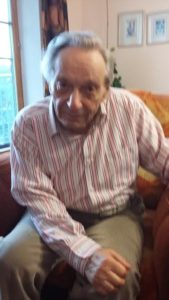
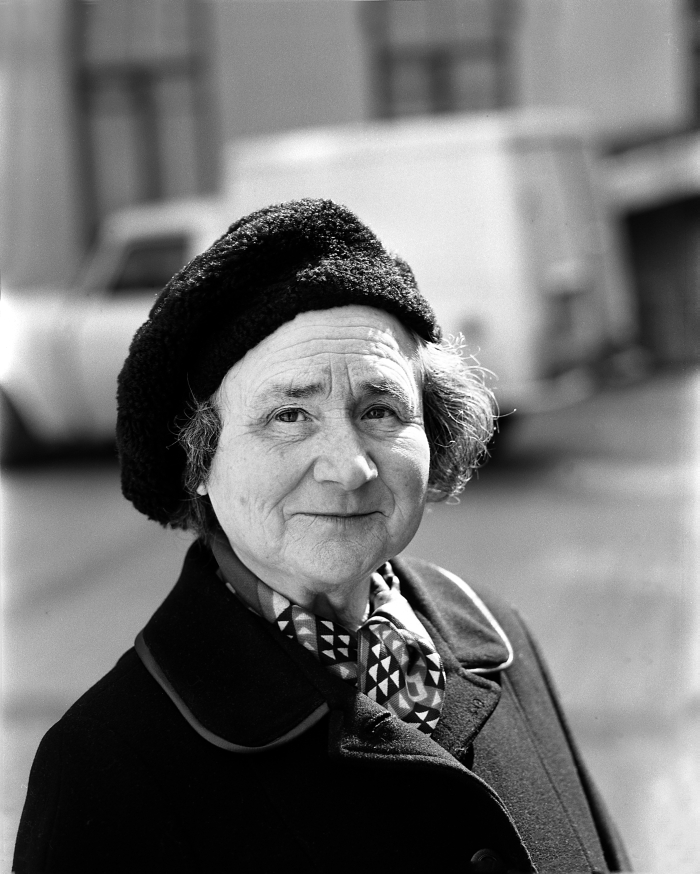
FIRA Bramson
Fira Bramson-Alpernienė
December 18,1924-June 12, 2016

Estera Bramson-Alpernienė, whom everyone knew as Fira, has died. With her dies a bit of Litvak history. She belonged to a world of 20th century Jewish personalities, looming figures such as that of Shimon Dubnov, Max Weinreich and Tsemakh Shabad. She came from the famous Bramson family whose members have played a key role in Lithuanian Jewish and European Jewish life. The Bramsons were a center of gravity to Jewish intellectuals in Kaunas before the war. Fira was educated at the Sholem Aleichem Gymnasium with Yiddish as the language of instruction. For Fira family and school were holy, although her school life didn’t last long.

In 1941, before she could graduate from high school, the war forced her to bid a hasty farewell to family, to leave her only sister, to flee from the Nazi terror. Fira didn’t come back to Kaunas after the war because there was no one waiting for her there. Her entire family was at the Ninth Fort. She started a new life in Vilnius. In the late 1980s there was a movement in Vilnius to revive the Lithuanian Jewish Community. Fira was among the founders of that movement. Finally she could come back to her Yiddish roots and cultural hearth so important and crucial to her spiritual life. Some of her most important work since that time has been with Jewish books at the former Palace of Books, and with that collection now removed to the Lithuanian National Library. Her pride and joy became these surviving books, along with a small number of books from the private collections and libraries from before the war belonging to survivors of the Holocaust. Fira was one of the first conservators of this heritage and presented the legacy she protected to the Jewish community, but also to the wider audience in Lithuania and the world. She held exhibits and lectures, facilitated cooperation with academics and students and helped make use of this priceless inheritance. She wrote about what she achieved in her work of many years in the book “Prie judaikos lobių” [“Next to the Treasures of Judaica”].

Fira Bramson could be called the white knight of Yiddish culture. This woman, slight of build, fragile, driven and principled, fought for the protection and preservation of cultural treasures. Not only did she fight, she won. Even in difficult circumstances she never relented because she saw her life as a mission to safeguard that Yiddish culture so dear to her parents and ancestors, and to pass on memories of that culture to future generations. When she spoke at conferences and seminars, when she was part of educational programs in Lithuania, Europe and the USA, Fira would first speak not of herself, but about the founders of Yiddish culture. The grief of losing Fira Bramson is somewhat mitigated by the realization she lived a long, interesting and productive life and generously shared with others her love of Jewish culture. She was of keen intellect, a person with a warm heart whom, if you ever met her, you will never be able to forget. Let our vivid memory of her live on.

A wake will be held at the Nutrūkusi Styga funeral home Tuesday from 10:00 A.M. The coffin will be carried out at 3:45 P.M.

History of the Vilnius Jewish Community: Learn (Not) to Forget

francois-guesnet-5759438c61c31

Professor François Guesnet, a reader at the Hebrew and Jewish Studies Faculty at University College London currently visiting at the History Faculty of Vilnius University, granted Nijolė Bulotaitė, a writer for VU’s news page, a long interview. Dr. Guesnet is also the secretary of the European Association for Jewish Studies. Excerpts translated from Lithuanian appear below.

What is the most interesting or most inspiring thing to you?

That’s a good question. We were just talking with a doctoral student about how some topics become very boring as the years go by and become stale. Partisan politics, let’s say, isn’t very sexy. Right now I’m most interested in the human body and the history of medicine, because it’s very interesting to explore who people understand themselves and their bodies. I also research the functioning of the Jewish communities in Eastern Europe. I was born in Germany, my mother is German, my father French; I grew up in a very European family and studied the history of Eastern Europe. I know Polish and Russian. Both languages were very important for me and Russian helped especially in researching archival material. I know Hebrew and Yiddish, otherwise it would be impossible to study the history of Eastern European Jews, at least a basic knowledge is required. My dissertation concerns the 19th century when the majority of official documents were in Russian.

Youth Activities in May at the LJC

Lithuanian Jewish Community youth activities coordinator Pavel Guliakov has provided a report on youth activities for the month of May as most children in Lithuania have finished school and are busy enjoying the first weeks of summer vacation.

The Ilan Club is closing for summer and getting ready for summer camps, but had three activities in May. On the 15th children and parents visited a fire station, got to try out firefighting equipment, learned about how firefighters live and had an informative outing. On May 22 the kids learned about the Israeli military and the life of Israeli soldiers at the Lithuanian Jewish Community. On May 29 the club had an end-of-season closing event called Jewish social networks where counselors presented an interesting activity involving social media and mobile telephones, which most of the children already use regularly and enthusiastically.

World Jewish Congress Israel Delegation Visits LJC

WJC IZ7

A delegation from World Jewish Congress Israel visited the Lithuanian Jewish Community. The delegation included WJC Israel chairman Shai Hermesh (former MK), member of the board of directors J. Moshe Leshem, foreign relations council director Dr. Laurence Weinbaum, Knesset Christian Allies Caucus chairman MK Robert Ilatov, MK Yakov Margi, KCAC director Josh Reinstein and WJC Israel director general Sam Grundwerg. WJC Israel visits national capitals annually to meet with members of national parliaments and Christian community leaders to establish contacts and discuss shared problems, set up Israeli support groups and increase understanding of Jewish problems. This sort of support is especially sought by Israel now, when the Jewish state is increasingly facing isolation in the international arena and especially in the EU. Last year delegations visited Russia, Poland, Latvia and Estonia.

On June 1 the delegation visited the Lithuanian Jewish Community, met LJC chairwoman Faina Kukliansky and were greeted with a musical welcome of Jewish song and dance provided by the Fayerlakh ensemble, which warmed everyone’s hearts and facilitated better communication. Former MK, current vice president of the WJC and leader of WJC Israel Shai Hermesh shared with everyone heartwarming news he received on the trip to Lithuania.

List of Lithuanian Holocaust Perpetrators Could Run to 6,000

by Mindaugas Jackevičius, www.DELFI.lt

Avoiding the subject of the Holocaust and research in this field, Lithuania is in danger of becoming a nation of Jew-killers in the eyes of the world. Statements like that were aired at a conference held at the Lithuanian parliament Monday, where participants reiterated we still don’t know the true number of Jews murdered, or of the people who rescued Jews in Lithuania. MP Arvydas Anušauskas said at the conference people tend be very conservative in talking about the number of Lithuanian Holocaust perpetrators. He said it was difficult to calculate who took part in mass murder operations, for example, some people’s names are duplicated because they participated at different locations. There was also discussion of who should be included as perpetrators: should they only include people who fired weapons, or also those who transported the victims to the mass murder sites or otherwise aided the process.

Full story in Lithuanian here.
ejcdelfi

The Floodgates Within: Video Art from Israel

iz

Where: NGA Auditorium, Konstitucijos prospect no. 22, Vilnius
When: 6:00 P.M., Tuesday, June 7, 2016

On June 7-8 National Gallery of Arts presents the program of contemporary Isreali video art ‘The Floodgates Within: Video Art from Israel’ curated by Chen Tamir, curator at the Center for Contemporary Art in Tel Aviv. Chen Tamir will present two evenings of video from Israel. Designed to complement one another, these two events will situate Israeli contemporary art within historic, social, and political contexts, and offer a wide overview of experimental video-based art from this unique country.

First Auction of Children’s Art in Vilnius!

The Vilnius Art School for Children and Youth, the first independent private art educational institution in Lithuania, was created by Jūratė Stauskaitė in 1991.

Over its 25 years of history, the school has turned become a versatile and innovative artistic education resource where everyone gets a chance to express their individuality through freedom of expression and creativity, which are important in all professions.

Since 1991 several thousand pupils have attended and completed school programs. School staff have published various teaching aids and textbooks for other schools. The school has taken part in numerous artistic educational initiatives and charity events held by the Vilnius municipality and state authorities, and remains true to its main objective: to raise creative members of society.

You’re Invited to a Chess Tournament

The Lithuanian Jewish Community and the elite chess and checkers club Rositsan and Maccabi invite you to a chess tournament at the Lithuanian Jewish Community at Pylimo street no. 4 in Vilnius at 11:00 A.M. on Sunday, June 19.

The event is dedicated to the memory of interwar Lithuania’s third president and Righteous Gentile Kazys Grinius.

Tournament director: FIDE master Boris Rositsan
For more information and to register, contact: info@metbor.lt, telephone +3706 5543556

Israelis Visit Panevėžys Jewish Community

Pan1

A large group of students and teachers from Jerusalem visited the Panevėžys Jewish Community May 26. Panevėžys Jewish Community chairman Gennady Kofman told the guests about the community’s activities in the Lithuanian city, including social welfare programs, and educational programs conducted with local schools. He also told them about the history of the city and of the Jews there. The guests appeared keenly interested and wanted to know what Jews there thought about Israel. A nun from the sisters of the Love of God was also at the meeting and showed guests pictures of Righteous Gentiles students had made at Marija Rusteikaitė Gymnasium.

Concert of Lithuanian Ethnic Minority Music and Lesson with Dr. Marija Kuprove-Berg

mk

Marija Kuprove-Berg will perform at the Tolerance Center, Naugarduko street no. 10/2, at 6:00 P.M. on Thursday, June 2, 2016. Violinist Vytautas Mikeliūnas will also perform. A lecture will be held in English as well. The event is being held by the Lithuanian Literature and Folklore Institute and the Tolerance Center of the Vilna Gaon State Jewish Museum. Entrance is free to the public.

Dr. Marija Kuprove-Berg’s repertoire includes songs in all the minority languages of Lithuania, including Yiddish, Ashkenazic Hebrew, Romany, Tartar and others, and embraces Karaïte musical traditions as well.

On Citizenship for Descendants of Litvaks

bbb
by Sergejus Kanovičius

First, the Litvaks died. Almost all of them.

Then began the first division of property stolen from them (with the “honorable” role played by general Vėtra in this).

After World War II, the Soviets legalized this theft, and no one was supposed to mention it, or even hint of it.

After March 11, 1990, that theft was legalized once again, by limiting dual citizenship and introducing into law the statement that “rights to surviving real estate are restored only to citizens of the Republic of Lithuania.” When I made an application for restoration of citizenship, I was told in a friendly way to include in the application the demeaning statement: “I don’t have any inherited property in the Republic of Lithuania.” And how could I inherit those pits on the margins of forests and villages? How could I inherit those two hundred graves where parents and grandparents lie buried? I don’t have any “property” except for this. Although others might. The fathers of independence have done everything to “protect” us from the completely legitimate property claims of Lithuanian Jews and Vilnius Poles–such an innocent desire that this time everything really would belong exclusively to, sorry, our people.

Exhibit of Works by Litvak Sculptor Victor Brenner in Šiauliai

brener

Victor David Brenner was born Viktoras Baranauskas April 12, 1871 in Šiauliai, Lithuania. His father was a jeweler and stamp maker. As an adolescent he helped his father complete easy orders. With his father’s help he set up an engraving shop in Šiauliai in 1887 and began to work on his own. In 1889 Victor and his parents moved to Kaunas where he achieved renown as a talented master engraver. He emigrated to the United States in 1890 and lived in New York. He took night classes at the Cooper Union college and worked at a New York metal ornament and medallion workshop.

Eight years later Brenner was in Paris, studying with the great French medalist, Oscar Roty at the Académie Julian. There he exhibited his work and obtained awards at the Paris Exposition of 1900. He returned to the United States, and from that time on his career prospered. He appeared to be on his way to the fulfillment of the splendid predictions made for his future by Rodin.

In Memoriam

rrr

Sad news has reached the Panevėžys Jewish Community and the public that famous former Panevėžys doctor Mira Rozova has died in Israel after suffering from chronic illness. For half her life she was the senior doctor at the Panevėžys Infectious Hospital. In 1954 she was graduated from the Krasnodar Institute of Medicine. She performed a three-year residence in Kaliningrad and then moved to Panevėžys in 1957. She worked as a therapist at what was the Republic Hospital and Clinic. The infectious disease division was small at that time. The decision was made to open a separate infectious disease hospital and young and energetic Rozova was appointed the director of the new hospital. The Infectious Disease Hospital was established in the Panevėžys Jewish Hospital on Ramygalos street, which needed repair following the war. The hospital operated for 20 years in the unrenovated premises.

Start-Work Ceremony at Wooden Synagogue in Žiežmariai

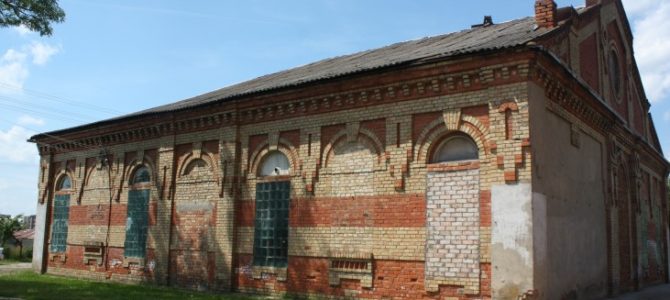
The Lithuanian Jewish Community’s heritage protection expert Martynas Užpelkis travelled to attend a ceremony in Žiežmariai, Lithuania to mark the beginning of work to renovate the unique wooden synagogue there, one of only a handful of wooden synagogues still standing in Lithuania. He took some snapshots which you can find below.

In related news, the board of supervisors of the Kaišiadorys regional administration, where Žiežmariai is located, approved the region’s membership in what is known as the Association of the Itinerary of Jewish Cultural Heritage, a new tourism network which includes the Kėdainiai, Ukmergė and Joniškis regional administrations now.

On July 30, 2015, the Kaišiadorys regional administration agreed to a 99-year lease agreement for the synagogue, the property of the Lithuanian Jewish Community, to be used by the regional administration without fee. In August an agreement was concluded between the LJC and regional administration on the uses to which the former synagogue could be put and for its restoration. Currently work has begun on the roof and façade and archaeological work is on-going. The regional administration has allocated 24,840 euros for restoration work. Further financing is being sought and the regional administration believes membership in the Association of the Itinerary of Jewish Cultural Heritage could open doors for new partners in Belarus and Poland under the Interreg program.

What Should Be Done with the Law on Dual Citizenship of Several Years Standing

fa

Dear members of the Lithuanian Jewish Community and Litvaks living abroad,

I would like to explain in an understandable way what the current situation is regarding the Lithuanian law on citizenship and its provisions affecting those who seek to restore Lithuanian citizenship without renouncing their current citizenship, whether that be of the Republic of South Africa, Israel, the United States, Great Britain or another country.

To begin, we are not at war, although it almost seems like a war for the Jews in South Africa, and the great majority of Jews in other countries enjoy a higher standard of living than we do. It is also clear the Lithuanian law on restoration of citizenship was not written especially for Jews. We, the Lithuanian Jewish Community, care about the Jews of the world and their legitimate aspirations to restore Lithuanian citizenship. The first question which undoubtedly comes up is, when exactly did Jews lose that citizenship?

Jews who left Lithuania with Lithuanian passports before the war, and those who were deported from Lithuania to concentration camps, and those who were deported to Siberia did not renounce Lithuanian citizenship voluntarily. In fact they formally lost it when Lithuania became independent again as people of non-Lithuanian ethnic origin (it turns out Jews who come from Lithuania are not considered people of Lithuanian origin, and are not members of Lithuanian émigré organizations abroad), and moreover, some of them have “repatriated” from Lithuania.

A School Bar/Bat Mitzvah

barbatcake

The ORT Vilnius Sholem Aleichem Gymnasium held a Jewish rite of passage Monday as a small group of Jewish boys and girls were ushered into adulthood at a public Bar and Bat Mitzvah on the third floor of the Lithuanian Jewish Community.

School principal Miša Jakobas greeted an overflow audience of parents, pupils, friends and Community members, and singled out the children undergoing the ritual, saying if he could wish them one thing, it would be patience.

Lithuanian Jewish Community deputy chairwoman Maša Grodnikienė congratulated the youngsters and spoke with evident joy about a new generation of Lithuanian Jews reaching maturity. She noted it was the 100th anniversary of the birth of the famous Yiddish writer Solomon Naumovich Rabinovich whose pseudonym was Sholem Aleichem, and wished everyone peace and health.