Learning

Kaunas Jewish Community Celebrates Inventor of Esperanto

Zamenhof’s grave in Warsaw, visited by members of the Kaunas Jewish Community

The Kaunas Jewish Community marked the 100th anniversary of the death of Ludwik Lejzer Zamenhof, the inventor of the artificial international language Esperanto who sought to bring the races and linguistic groups of the world closer. Dr. Zamenhof sought to make Esperanto the world’s second language. The residents of Kaunas are proud L. L. Zamenhof called the city home for a time and proud of the legacy he left the world in the form of Esperanto.

According to wikipedia: “By 1878, his project Lingwe uniwersala was almost finished. However, Zamenhof was too young then to publish his work. Soon after graduation from school he began to study medicine, first in Moscow, and later in Warsaw. In 1885, Zamenhof graduated from a university and began his practice as a doctor in Veisiejai and after 1886 as an ophthalmologist in Płock and Vienna. While healing people there he continued to work on his project of an international language.”

More about Zamenhof and the language he created is available in the Lithuanian language:

Zamenhof and Kaunas
http://mokslolietuva.lt/2014/01/zamenhofas-ir-kaunas/

What happened to Esperanto?
http://www.bernardinai.lt/straipsnis/2015-10-23-kas-nutiko-esperanto-kalbai/136454

Website for learning Esperanto and learning about the history of the language.
https://lernu.net/lt

How is Lithuania connected to Esperanto?
http://www.yrasalis.lt/naujienos/kas-sieja-lietuva-ir-esperanto/

Fun Passover Celebration at Šiauliai Jewish Community

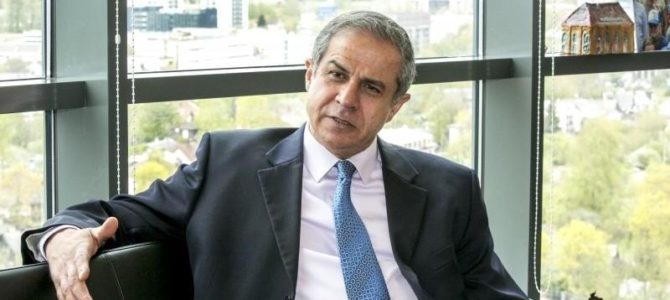
On April 15 the Šiauliai Jewish Community celebrated Passover. Community chairman Josif Burštein welcomed participants and Israeli ambassador Amir Maimon and wife were the guests of honor, speaking about the story of Passover and the meaning behind eating matzo.

Lithuanian art critique, theater expert, writer and doctor of liberal arts Markas Petuchauskas also attended with his wife. The evening included performance of Jewish song and dance, provided by the benefactor Vadim Kamrazer.

Thanks go to the Lithuanian Jewish Community’s Social Programs Department and the Goodwill Foundation for making the wonderful holiday possible.

Silenced Shtetl of Divenishok Speaks Again

by Ieva Elenbergienė

A conversation with Dieveniškės Technological and Business School director Ilona Šedienė

Ilona, tell me about “your” Jews.

Today there are none left alive in Dieveniškės [Divenishok]. The amount of history we revive, that’s the amount we’ll have. The surviving historical material isn’t generous. We only know the center of Dieveniškės was one of many Lithuanian shtetls. In Jewish history a shtetl doesn’t mean just any town, the term is applied to towns where the Jewish population was truly large and was part of the life of the entire town. Most of ours were craftsmen. They also had their own synagogue, but the think was it was at the bottom of the hill so it didn’t stand above the Catholic church.

A significantly lesser amount of information remains about Dieveniškės than, say, Eišiškės [Eyshishok]. For those seeking information, the internet page Jews in Lithuania, zydai.lt, explains all shtetls in Lithuania were more or less similar. There was a customary order to life, a specific rhythm, and they were to a greater or lesser extent the same. Read about other ones and you’ll find they are similar to yours. But authenticity is always wanted… We’ve discovered material from local collectors, we’ve translated a portion of memoirs by Jews, and when we had a bit better picture put together, we staged an exhibit about the life, history and present situation of the Jews of Dieveniškės.

Full story in Lithuanian here.

#AtmintisAtsakomybeAteitis

Project supported by:
evz

Levita Returns to Stage in Kaunas

The group Levita returned to the stage in Kaunas Thursday with a concert at the Punto Jazz venue. Many who came remembered the group’s initial concert in Kaunas in September, 2016. The Kaunas Jewish Community sponsored the free concert then in the run-up to Rosh Hashanah and the lead singer, Vita Levina, is a member of the Kaunas Jewish Community. The group performs songs by her and others in a combined pop-jazz-folk style.

Mark Zingeris’s New Novel “I Sat in Stalin’s Lap”

The most important circumstance in the writing of “I Sat in Stalin’s Lap” was that I had a close encounter with death at the hospital and it illuminated the drama of life happening outside my hospital window in a more significant light. I began to think constantly about history and the fate of man. I can’t say how many telephones, umbrellas and bank cards I misplaced. I was closed up in myself then and probably barely sufferable to my family. These attacks of individualism and egocentricity continued for perhaps six years. If my wife had found herself a lover during that time, I would find it justifiable psychologically.

Full story in Lithuanian here.

Zog Nit Keynmol: The Partisan Song Project

Imagine a high school student in 2017, singing a Yiddish song with confidence and understanding. It may seem like an impossible dream, but Eli Rabinowitz is making it a reality.

Rabinowitz, who is ex-South African and resides in Perth, is passionate about Jewish education, genealogy and history. On a recent trip to South Africa, he was asked by Rabbi Craig Kacev (Head of Jewish Life at King David Schools) to address over 1000 students on the meaning of ‘Zog Nit Keynmol’ (‘Never say this is the final road …’) – known as the Partisan Song or the Holocaust Survivors Anthem or Hymn.

The words may be familiar to an older generation as they are often recited at Yom Hashoah ceremonies, but Rabbi Kacev felt that young Jewish students had no understanding of the meaning or inspiration of the song. By teaching them the words and their meaning, a legacy and a link could be created between young Jews and Holocaust survivors.

Indeed, when Eli Rabinowitz presented this to a group of Holocaust survivors in Johannesburg, they were thrilled and very moved. Inspired by their enthusiasm, he decided to encourage organisations and schools around the world to teach the song to students, in the hope that they will perform it at Yom Hashoah ceremonies across the globe on 23/24 April.

Rabinowitz took the initiative one step further in Cape Town, where he hosted a live ‘online classroom’ with six schools. These included Herzlia High School and a range of schools in Lithuania, Moldova and the Ukraine. This technological feat was achieved using ‘Google Hangouts’ and YouTube, with the expertise of Steve Sherman of Living Maths.

Holocaust Denial Materials Posted at Australian Universities

By Jordan Hayne
Updated April 24, 2017 11:47:02

Posters questioning the historical accuracy of the Holocaust have sparked concerns among students at the Australian National University (ANU) and at least two other universities where they were distributed.

On Friday students found flyers and posters at the ANU campus that give support to the views of controversial British writer David Irving, who has questioned the overwhelming body of evidence supporting the existence of the Holocaust.

The materials point to a website that includes questions about whether gas chambers existed at concentration camps.

Full story here.

Yom haShoah, Holocaust Remembrance Day

Yom Hashoah: Holokausto atminimo diena
Photo: Yom haShoah ceremony at Kiryat Gat, Israel, 1963. Courtesy www.myjewishlearning.com

The full title of this day for the commemoration of Holocaust victims is Yom haShoah ve-laGevurah, or Day of the Holocaust and Heroism. It falls on the 27th day of Nissan on the Jewish calendar, a week after Passover and a week before Yom haZikaron, Israeli soldiers’ memorial day. If Nasan 27 falls on a day next to the Sabbath (it never falls on the Sabbath), then Yom haShoah is shifted a day away from the Sabbath.

In 2017 Yom haShoah is marked on April 24.

The Knesset, or Israeli parliament, chose this day to remember the Holocaust on April 12, 1951, but it is observed by individuals and Jewish communities world-wide.

In the 1950s Holocaust education focused on the suffering and murder of millions of Jews at the hands of the Nazis, but public opinion polls showed the younger generation of Israeli citizens found it hard to identify with the victims because they believed the Jews of Europe had behaved like “lambs led to the slaughter.” Israeli curricula began to shift to emphasize cases where Jews resisted the Nazis, differentiating “passive resistance,” the ability to preserve human dignity under the most insufferable conditions, and “active resistance,” armed struggle against the Nazis in the ghettos and partisan underground activities.

Siren

Beginning in the 1960s air-raid sirens across the state of Israel were sounded for two minutes to stop traffic for a moment of reflection on the victims. The sirens blast at sunset and again at 11 o’clock in the morning of the same day on the Jewish calendar (the day begins at sunset in the Jewish reckoning of time). All radio and television shows that day are connected in one way or another with the topic of the fate of the Jews in World War II, with many interviews of Holocaust survivors. Even music stations adapt their programming for the mood appropriate to Yom haShoah. Entertainment, drama theaters, movie theaters, bars and other public venues are closed across Israel on this day.

Nechama Lifšicaitė Has Died

The Lithuanian Jewish Community is sad to announce the death of Nechama Lifšicaitė (Nekhama Lifshits, נחמה ליפשיץ) and we send our condolences to her daughter Roza. The older Litvak generation remembers well Nechama’s enchanting voice and her lyrical-coloratura soprano song. As we express our condolences, we say: let the ground be soft for her, and recordings of her songs will remind us all of the wonderful songstress and her interesting personality for a very long time to come.

Nechama was born in Kaunas in 1927 and grew up in a traditional Jewish family. She attended a Jewish school where her father Yehuda Tzvi was principal from 1921 to 1928. He later became a doctor. During World War II Nechama and her family found shelter in the Soviet Union and lived in Uzbekistan. They returned to Kaunas after the war. From 1946 to 1951 she studied at and was graduated from the Vilnius Music Conservatory. She performed concerts of her songs in Yiddish beginning in 1956. According to Solomon Atamuk, “Both in Lithuania and throughout the [Soviet] Union, Lifšicaitė provided refreshing national and spiritual sustenance to the Jews thirsting for their culture. Nechama’s songs expressed the deepest experiences and aspirations of the Jews of the Soviet Union; they were moving and spiritualizing.”

Overcoming limitations on doing her repertoire was not a simple matter during the Soviet era, but Nechama Lifšicaitė was able to turn her concert tour across many Soviet cities into a wake-up call for cultural and ethnic identity. Despite the negative view taken by government agencies towards the ethno-cultural activities in which Nechama Lifšicaitė was engaged, she was recognized in 1958 for her exceptional artistic expression and vocal abilities with first prize in the Soviet music maestro competition, and was granted permission to tour abroad. She performed in Austria, Belgium and France. Her songs were released on two records in 1960 and 1961, which were reissued several times in later years.

Nechama Lifšicaitė and her family made aliyah to Israel in 1969 where two more records of her songs were released that same year. She performed in cities and villages, on the radio and on television. Her appearances were great successes. In the period from 1969 to 1972 she did concert tours of the United Kingdom, Canada, the USA, Mexico, Venezuela, Brasil and Australia. In 1976, without retiring from her musical career, she completed library science studies at Bar-Ilan University and became director of the historical archive of the Tel Aviv Municipal Music Library.

Unique Interior Design of Pakruojas Wooden Synagogue Restored

The administrators of the EEE and Norwegian Grants program and the Optus Optimum restoration group invite you take a look at the interior of the oldest wooden synagogue still standing in Lithuania in Pakruojas. The original paintings from the 19th century on the synagogue ceiling were restored according to surviving photographs and the original wallpaper was restored and recreated as well. Work on the interior is coming to a conclusion and the synagogue will be opened to the public again soon. EEE Grants and the Lithuanian state budget through the Lithuanian Ministry of Culture are carrying out the restoration program.

For more about the project see the Pakruojas Regional Administration webpage here.

More photographs of the restored interior are available here.

The Silenced Muses

Event: performance of the play Nutildytos Mūzos [The Silenced Muses]
Time: 5:30 P.M., April 21
Location: Juozas Miltinas Gymnasium, Aukštaičių street no. 1, Panevėžys, Lithuania

The Panevėžys Jewish Community invites you to a play by the Rokiškio teatras association called the Silenced Muses. The play was written based on real events recorded in the diary of the young Jewish girl Matilda Olkinaitė and the memories of her contemporaries.

Entrance is free upon presentation of an invitation (you may print this announcement and present it at the door).

Seven Lights

Event: Screening of the film Seven Lights
Time: 5:30 P.M., Thursday, April 20
Location: Tolerance Center, Naugarduko street no. 10/2, Vilnius

Seven Lights is a film about the stories of women who survived the Holocaust. Six Jewish women who were unbroken by the war, ghettoization, concentration camps and death marches. Women whose inner strength triumphed over the Nazi death machine. These are the heroines of Seven Lights, being screened for the first time in Lithuania. The Embassy of the Czech Republic and the Vilna Gaon State Jewish Museum invite you to come, watch the film and meet the director. This event is dedicated to Yom haShoah, Holocaust Day, coming up on April 24.

Meet the Actors from the Vakhtangov Theater in Moscow


Scene from the Vakhtangov Theater’s performance of “Nusišypsok mums, Viešpatie” [Smile upon Us, O Lord”]

Dear Community members and friends,

You have an exceptional opportunity to meet the actors from the Y. Vakhtangov Theater in Moscow at the Lithuanian Jewish Community in Vilnius at 11 A.M. on April 20, 2017.

These performers are the cast in Rimas Tuminas’s play Nusišypsok mums, Viešpatie” [Smile upon Us, O Lord”] based on the novels of Grigoriy Kannovitch.

For more about the play, see:
http://kultura.lrytas.lt/scena/j-vachtangovo-teatro-gastroles-lietuvoje-vytauto-sapranausko-atminimui.htm?utm_source=lrExtraLinks&utm_campaign=Copy&utm_medium=Copy

Tickets: http://www.bilietai.lt/lit/renginiai/teatras/jvachtangovo-teatras-nusisypsok-mumsviespatie-205800/

Never Give Up

There’s a song sung in Israel, and when the first bars ring out, most people stand. It’s called by several names–Zog Nit Keynmol, Don’t Say Never, We’re Still Here, the Partisan Hymn or Anthem–but the title isn’t important. The content is. And the content comes from the Vilna ghetto, a poem in Yiddish by the young Hirsh Glik, put to music by his friend Rachel Margolis, a young blonde, blue-eyed Jewish girl who joined the underground, survived, and spent much of the rest of her life engaged in Holocaust education.

Glik died during the Holocaust; Margolis passed away only a few years ago. According to Margolis, Glik read the poem to her on a cold winter day on a corner in the Vilnius ghetto where Rudninkų square is now located. She said there were buildings there then. As Glik read the poem, she began to hear music between the lines, from a Russian film she had seen. Both young people went to the FPO, the underground partisan organization in the ghetto, and asked permission to make the words and music the official anthem of the FPO youth section. The leadership agreed.

Now there’s a project for Jewish day schools around the world to teach the song to a new generation of young people. Eli Rabinowitz of Perth, Australia, is teaching children in Australia, Israel and South Africa and there are plans for new performances around Yom haShoah, Holocaust Day commemorated in Israel, this year on April 23.

The Jewish press in South Africa and Australia has done extensive coverage of the Partisan Hymn Project and the Vilnius ORT Sholem Aleichem Gymnasium in Vilnius is a pioneer in making the project happen. The World ORT organization is supporting the project and plans to post some video performances before Yom haShoah.

For more information, see here.

Holocaust Escape Tunnel

At ground zero for the final solution, scientists uncover a story of hope and bravery.
Airing April 19, 2017, at 9 P.M. on PBS

Program Description

For centuries, the Lithuanian city of Vilna was one of the most important Jewish centers in the world, earning the title “Jerusalem of the North” until World War II, when the Nazis murdered about 95% of its Jewish population and reduced its synagogues and cultural institutions to ruins. The Soviets finished the job, paving over the remnants of Vilna’s famous Great Synagogue so thoroughly that few today know it ever existed. Now, an international team of archaeologists is trying to rediscover this forgotten world, excavating the remains of its Great Synagogue and searching for proof of one of Vilna’s greatest secrets: a lost escape tunnel dug by Jewish prisoners inside a horrific Nazi execution site.

PBS program announcement here.

For more, see:
http://www.lzb.lt/en/2016/07/01/picking-up-the-pieces/
http://www.lzb.lt/en/2016/07/24/israeli-antiquities-authority-reports-major-finds-in-lithuania/
http://www.lzb.lt/en/2017/01/02/new-york-times-ponar-top-science-story-in-2016/

Shlisl Challa

Schlissel challah

There is an interesting tradition still followed in some Ashkenaz Jewish communities of baking challa in the shape of a key for the first Sabbath after Passover. The challa may be shaped as a key, the dough be impressed by actual keys or it may contain a real key inside. It is called shlisl challa, from the Yiddish word for key. The tradition is still followed in Lithuania, Poland and Germany.

According to one version, shlisl challa is connected with a Passover prayer. The key recalls the door to Heaven or Paradise. It is said the upper gates of Heaven open during Passover, and after they close again. To open them, Jews place a key inside the challa loaf. Other Jews object to the entire practice as misguided, superstitious or even idolatrous.

Great Attendance at LJC Seder

About 200 people gathered for the Lithuanian Jewish Community Passover Seder at the Radisson Blu Hotel Lietuva in Vilnius Saturday. LJC chairwoman Faina Kukliansky gave a short welcome speech, large flower bouquets were passed out to a number of Community members whose volunteer work has been outstanding and Rabbi Shimshon Isaacson led the assembly in the Passover rituals, without a microphone since Sabbath hadn’t ended yet. Žana Skudovičienė and Julija Lipšic really gave their all as organizers and made sure everyone felt welcome and got what they needed. Žana Skudovičienė also helped the rabbi with the ritual. Jewish song and dance ensemble Fayerlakh performed as well. There were no new faces, just regular attendees from past years, although former acting LJC executive director Simonas Gurevičius unexpectedly attended with his wife. Gurevičius is contesting the post of chairman in upcoming elections within the Community, but the evening wasn’t about politics of the current day and everyone seemed to get along great. There were fewer children this year than at previous LJC Seders but a sufficient number to conduct the treasure hunt.

More photos here.

AJC Delegation Tours Žiežmarai Wooden Synagogue


LJC chairwoman Fainia Kukliansky and Kaišiadorys mayor Tomkus, Žiežmarai, April, 2017

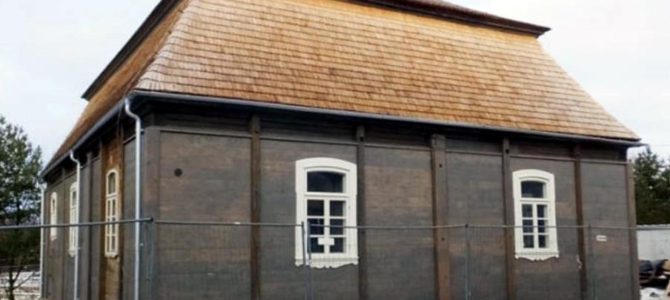
The ruined wooden synagogue in Žiežmarai, Lithuania, is being reborn for a new life. During the Holocaust it was used as a concentration point for imprisoning Jews awaiting execution. A large number of Jewish houses still stand near the synagogue, whose owners were murdered. The wooden synagogue is still an important heritage site, even if there is no one left to pray there. The Lithuanian Jewish Community contacted the mayor and council of Kaišiadorys about reconstructing the synagogue. Initially that request was denied, the council objected, and it took much effort to convince the local government the old synagogue really is a heritage site which besides holding interest to Jews around the world would also attract tourism and could be put to public use by the local population.

The Kaišiadorys city council approved the idea of adapting the building for public use in 2015 and applied for EU structural funds for renovation. A technical plan for renovating the Žiežmarai synagogue using funds from the Lithuanian state budget and the Goodwill Foundation was prepared and necessary studies conducted. After renovation the synagogue will serve as a monument to the murdered Jewish communities in Kaišiadorys and surrounding areas, and will be maintained to serve cultural functions for the local population.


An AJC delegation visiting Lithuania toured the synagogue site.

According to the Architecture and Urban Studies Center of Kaunas Technical University, the first synagogue in Žiežmariai might have appeared in 1690 following the granting of a charter of rights to the Jewish community there. This synagogue is mentioned in 1738. A 1782 description of the local church district and town says the synagogue was built under the grant of rights by Jan Casimir (noting it had to have been obtained before 1668) and that were two Jewish cemeteries. In 1868 Žiežmariai had a population of 1,190, of whom 604 were Jews, the majority. In 1897 there were 2,795 residents in Žiežmariai, of whom 1,628 were Jews. It is mentioned that all three synagogues in Žiežmariai suffered from the fire in 1918.

Vilnius Seniors Visit Panevėžys

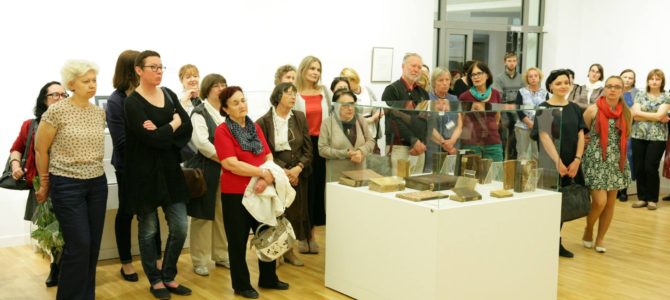
A group of members of the Vilnius Jewish Community’s Seniors Club, directed by Žana Skudovičienė, visited the Panevėžys Jewish Community. Panevėžys Jewish Community chairman Gennady Kofman spoke about the history and life of the Panevėžys Jewish Community in a pleasant setting, sipping tea around a table with fresh bagels brought from the Bagel Shop Café in Vilnius. Several of the Vilnius members’ parents had lived and worked in Panevėžys and were greatly interested in the Panevėžys Jewish Community’s Museum of History. Mutual interest led some of the seniors to tell about the life and fate of their parents in greater detail.

Guests visited the site of the Panevėžys Jewish cemetery and heard about its tragic destruction in 1966, and how headstones were used as decoration for the wall of the Juozas Miltinis Theater.

Žana Skudovičienė in the name of all club members expresses their gratitude for the warm reception.