Learning, History, Culture

Dita Shperling: Germans Did Not Distinguish Lithuanians from Jews

“During the first days of the war the Germans who came to Kaunas couldn’t tell the difference between Jews and Lithuanians, but Lithuanians helped them to do,” Kaunas ghetto prisoner Dita Shperling recalled, citing the words of the German soldiers themselves.

09223

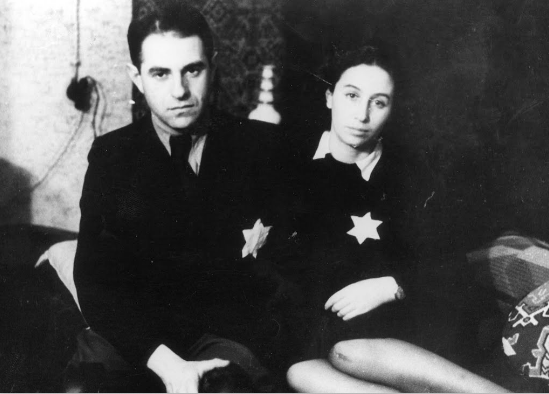
Dita (Yehudit) Schperling and her husband Yuda Zupowitch

Dita Schperling tries to travel every summer to Vilnius from Israel where she lives. She agreed to discuss her experience in the ghetto with staff from the LJC webpage.

Dr. Yusuf Hamied – Indian Real Life Hero Who Saved Million Lives

Many basic, life-saving medications remain unaffordable in low- and middle-income countries. Spurred on by that fact, Yusuf Hamied, chairman and managing director of Cipla Pharmaceuticals, has steered his enterprise (Cipla Ltd) to the forefront of global pharmaceutical development by manufacturing low-cost drugs, thus making drugs affordable for the poor people of the developing world and saving the lives . In an interview with India Knowledge@Wharton, Hamied describes his company’s skirmishes with multinationals looking to protect their patents on particular medications and explains why rules governing intellectual property rights in industrialized nations should not apply to poorer countries. The patent regime in India should be so devised that utmost priority is given to secure the people’s right to access affordable, quality health care.

Read more

Children raised in Nazi period carried forward anti-Semitism, study says

Children raised in Nazi period carried forward anti-Semitism, study says

The 12 years of Nazism (1933-1945) inculcated young Germans with anti-Jewish ideas that continued after the defeat of Hitler, according to a new study on anti-Semitism.

The study, which American and Swiss researchers released Monday, found that Germans who grew up during the 1930s were far more likely than their younger countrymen to have negative attitudes about Jews. It reported that anti-Semitic views were particularly strong among Germans raised in regions of the country that were known for anti-Semitism even before Hitler came to power.

According to the researchers, who analyzed surveys conducted in 1996 and 2006, the findings indicated that Nazi propaganda was highly effective, especially when it confirmed existing beliefs.

Read more

They Come Back

Geoff Vasil

Over the years they come back. Just a handful, to be sure, but they come. They come to find the site of the most confused chapter in the Lithuanian Holocaust. The Church of the Missionaries in Vilnius, where the Final Selection took place.

For the children and grandchildren of the few survivors, the very small group of witnesses who saw what happened there and lived to tell anyone, the site is Rosa. The name has been lost to modern residents of the city, many decades ago. The city itself has changed, not just the names. Once there was a courtyard behind the gate of the Church of the Missionaries on Subačius street just a block or two out of the Old Town. There was a railroad spur right there which connected with the central Vilnius train station, somewhat more distant than the Old Town and in a different direction. The square was called Rosa. There was a nunnery adjacent, and apparently a small jail called the Rosa Street Jail which the Nazis used, implying there was also a Rosa street. If you continue down Subačius or Subocz street past the church, you reach the two large apartment complexes where the Jews enslaved to the HKP, essentially the local automobile workshop for the Wehrmacht, were kept, just a hop, skip and a jump away from Rosa Square.

Shavuot – the Festival of Weeks

Shavuot – the Festival of Weeks

The Torah was given by G-d to the Jewish people on Mount Sinai more than 3300 years ago. Every year on the holiday ofShavuot we renew our acceptance of G‑d’s gift, and G‑d “re-gives” the Torah. The word Shavuot means “weeks.” It marks the completion of the seven-week counting period between Passover and Shavuot.

You shall count for yourselves — from the day after the Shabbat, from the day when you bring the Omer of the waving — seven Shabbats, they shall be complete. Until the day after the seventh sabbath you shall count, fifty days… You shall convoke on this very day — there shall be a holy convocation for yourselves — you shall do no laborious work; it is an eternal decree in your dwelling places for your generations. -Leviticus 21:15-16, 21

The Expulsion of Jews from Lithuania and Courland 1915: One Century Later

The Expulsion of Jews from Lithuania and Courland 1915: One Century Later

It was a time of trial and tribulation for World Jewry. Shavuot 1915 was one of the largest single expulsions of Jews since Roman times. Over 200,000 Jews in Lithuania and Courland would be abruptly forced from their homes into dire circumstances.

With the advance of the German army on the Eastern front in the spring of 1915, retreating Russian forces vented their fury against the Jews and blamed them for their losses. They leveled spurious accusations of treason and spying for the enemy and sought to keep a distance between Jews and German forces to prevent contact by expelling Jews near the war front. From province to province throughout Poland, multitudes of Jews were expelled. Many also fled from their homes as German forces moved eastward.

By March, German forces approached Lithuania as Russian forces continued their retreat. The first expulsion in Lithuanian took place in a small town of Botki. In April, at the town of Kuzhi, the local Jews were accused of hiding German troops in their homes. Although proofs were brought by members of the Duma debunking the charges as fiction, the accusations had already spread throughout Russia via newspaper reports and became another pretext to persecute Russian Jewry. Soon after, the mass expulsion from Lithuania commenced.

While preparing for the upcoming Shavuot holiday, notices appeared calling for the Jews living in areas closer to the war front to vacate their homes over the next day or two days. Most of the notices gave 24 hours or even less time.

In just a few days, Lithuanian Jewry, which had a legacy of hundreds of years made a hasty exit, ordered to move eastward. Even the sick and the infirmed were included in the decree. Those who did not comply faced execution.

Read more

From Holocaust envy to Holocaust theft

From Holocaust envy to Holocaust theft

VILNIUS — This month, on the seventieth anniversary of the defeat of Hitler’s Nazi regime and the end of World War II — ipso facto the end of the Holocaust — Western leaders have been faced with a symbological conundrum. How might they square honest commemoration of this major anniversary with Russian president Vladimir Putin’s record of progressively more arrogant dictatorship at home and cynical mischief in his near abroad?

Once Moscow made clear that the May 9th parade in the Russian capital would feature his latest tanks and planes, it became certain that most Western leaders would not feel comfortable being there. They do not want to become props for Putin’s attempts to use (as it happens, accurate) World War II history as cover for his indefensible policies and ethos. But in statecraft as in life, there is always an alternative danger that lurks: Do they want to become props for Nazi-apologists’ far-right elements in today’s anti-Russia East European states’ attempts to use (as it happens, inaccurate) World War II history as cover for denial of massive, lethal wartime collaboration, denial of the Soviet peoples’ role in defeating Hitler, and, along the same road, extreme nationalism, racism and a frenzy against Russian-speakers everywhere. Then, add into the unstable mix the American neocon obsession with stoking trouble far and wide to project American power and weapon systems, even where that means violating core American and Western values.

When Zalmen Reyzen’s Vilna Yiddish Newspaper Headlined an Evening for the Yiddish Writer A.I. Grodzenski

When Zalmen Reyzen’s Vilna Yiddish Newspaper Headlined an Evening for the Yiddish Writer A.I. Grodzenski

by Dovid Katz
 

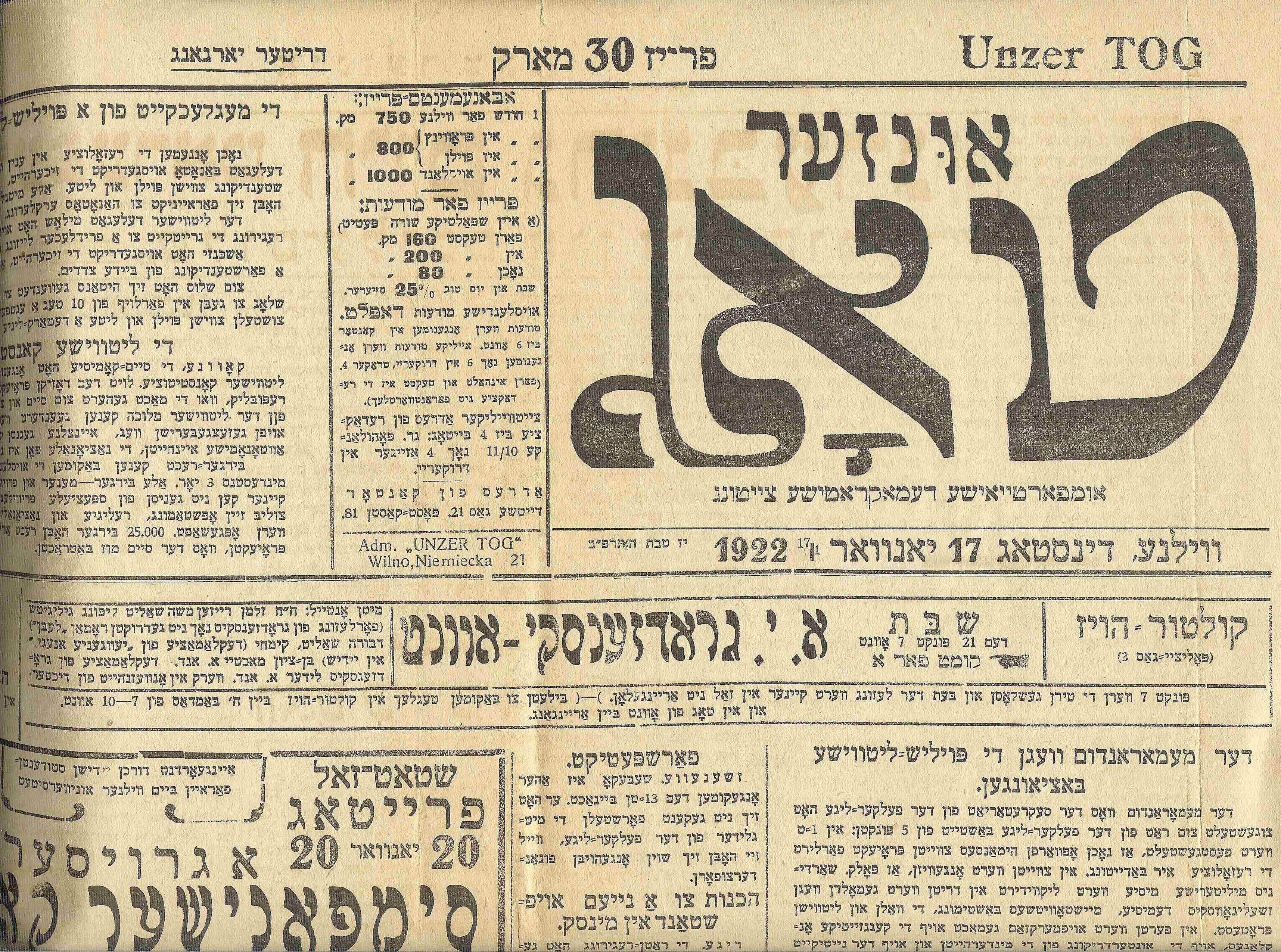
A 1922 headline in Zalmen Reyzen’s daily newspaper, the Vilna “Tog” (“Day” —  issue of 17 Jan. 1922) announced a Saturday night event dedicated to the remarkable Vilna Yiddish writer Aaron Isaac (Arn-Yitskhok) Grodzenski (1891-1941), a secular Yiddish writer who was the nephew of the world famous rabbi Chaim-Oyzer Grodzenski (whose onetime home on Pylimo [Yiddish: Zaválne gas] still attracts visitors from around the world). Zalmen Reyzen, a famous Yiddish philologist, literary historian and editor, a co-founder of the Vilna Yivo in 1925, himself lived on Greys Pohulánke (now Basanavičiaus, where a bilingual Yiddish-Lithuanian plaque marks the site at no. 17).

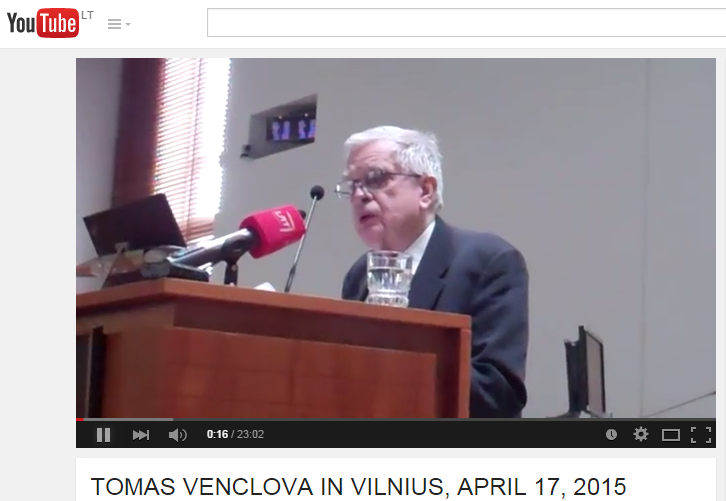
Jerusalem of the North is Already Lithuania’s “Brand,” Tomas Venclova Says

A day-long conference April 17 capped efforts in Lithuania’s capital city this year to mark Yom haShoah, Holocaust Day, appropriately, and featured speakers as diverse as Vilnius’s mayor, esteemed writer and thinker Tomas Venclova and Efraim Zuroff, director of the Simon Wiesenthal Center in Jerusalem and now director for Eastern Europe as well, who is often referred to as “the last Nazi hunter.”

The Lithuanian Jewish Community was also amply represented there, with a keynote speech by LJC chair Faina Kukliansky and outgoing LJC executive director Simonas Gurevičius acting as moderator.

Other speakers included Pavel Tychtl from the European Commission, Dovid Katz of DefendingHistory.com, Piotr Kowalik of the Polish Jewish Museum in Warsaw, the historian and writer Saulius Sužiedelis and others. 

LJC Chair Faina Kukliansky addresses March of the Living at Ponar

The annual March of the Living procession assembled in Ponar (Paneriai) outside Vilnius last Thursday to walk the final mile many Jews walked from the railroad station to the killing pits from 1941 to 1944. Lithuanian Jewish Community chair Faina Kukliansky spoke to those who gathered at the main memorial there. Her speech is available here, in Lithuanian with synchronous translation to English:

fk

March of the Living honours Holocaust victims in Paneriai, Lithuania

Hundreds of people attended the traditional March of the Living on the Holocaust Memorial Day from a railway station to the memorial where 70,000 Jews were massacred during World War Two.

Under flying Lithuanian and Israeli flags, the rally included Jews living in Lithuania, people from Israel and a few hundred young people who formed a human David’s Star in front of the Vilnius Town Hall before the march.

“If we’re talking about Paneriai, it is a factory of death. The only word I can think of is horrible. I am here at this rally because I owe my family – I need to preserve their memory,” Fania Brancovskaja, 93-year-old survivor of the Holocaust in Vilnius, told BNS.

The article

Origins of the Holocaust in Lithuania

Discussion published by Andrius Kulikauskas on Monday, April 13, 2015 0 Replies
Greetings from Lithuania!

I share an article which I published at Dovid Katz’s website DefendingHistory.com, “How Did Lithuanians Wrong Litvaks?”
http://defendinghistory.com/how-did-lithuanians-wrong-litvaks-by-andrius…

It’s my English translation of an extended version of a talk that I gave in Lithuanian at the conference “Litvak Culture in Lithuania and Beyond” on December 11, 2014 at the Lithuanian Culture Research Institute in Vilnius.

I investigate the extent of Lithuanian responsibility for the Holocaust, but especially, the indiscriminate murder of roughly 80,000 Jews in Kaunas and the shtetls of Lithuania in 1941 as documented by the Jaeger report. The murder of women, children and the elderly was well under way even before September 1941, when Hitler made his decision to annihilate the Jews in his dominion, according to Christopher Browning.

Keepsakes of Old Jewish Vilna (16)

Dovid Katz’s new article (in Yiddish) on the differing Jewish names for the city Vilnius, and the cultural origin and background of each, has just appeared in connection with an old bookbinder’s ‘spine stuffing card’ made from title pages containing all three Jewish traditional names. The article points out that Vilna Jewish books started using a fourth name for the city in the final pre-Holocaust years.

The article, whose Yiddish title translates “Vilno, Vilne, Vilna — the three together in a Vilna bookbinder’s hands: three (factually four) names for the city used by its own Jewish residents”
is at:

Keepsakes of Old Jewish Vilna (16)

Yiddish Reading Circle Returns

Yiddish Reading Circle Returns

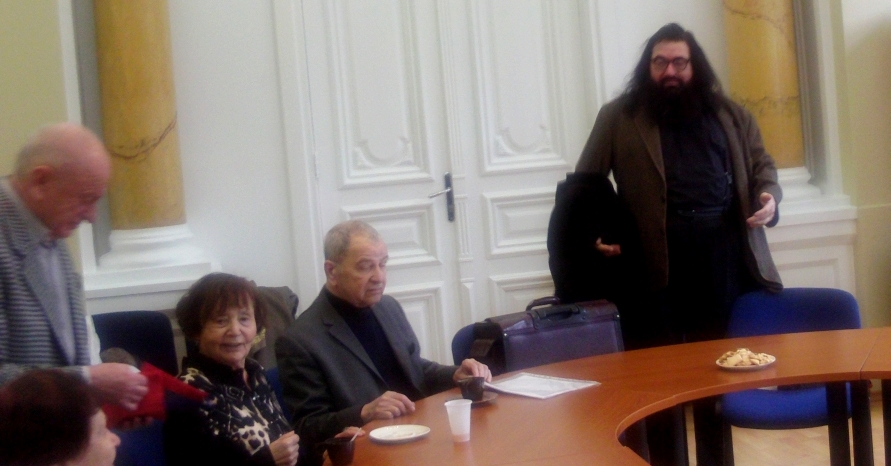
On March 12, 2015 the Yiddish Reading Circle conducted by world-renowned Yiddishist Dovid Katz returned to the large hall on the second floor of the Lithuanian Jewish Community building in Vilnius.

 Dovid Katz, who was a professor of Yiddish at Vilnius University for 11 years, has been conducting the informal circle off and on for lovers and native speakers of Yiddish for several years now, as his schedule allows.

The first class in the current round of readings began in the traditional manner with those in attendance giving their names and place of origin in Yiddish to the best of their ability.

This was followed by the also-traditional reading of a short text in Yiddish by volunteers around the table. Dr. Katz offered help when needed and punctuated the reading with explanations of general and more obscure aspects of the language.

YIDDISH LANGUAGE PROGRAM RESUMING AT THE JEWISH COMMUNITY!

YIDDISH LANGUAGE PROGRAM RESUMING AT THE JEWISH COMMUNITY!

THURSDAYS 3 PM (1500), STARTING 12 MARCH 2015
The 16th annual cycle of the Vilna Yiddish Reading Circle (which doubles as an intermediate-level class) starts next Thursday March 12th 3 PM sharp (1500) at the Jewish Community of Lithuania, Pylimo 4, Vilnius, upstairs seminar room.
Everyone welcome, admission free. Only Yiddish is spoken, but non-speakers are always invited to come and listen (hearing Yiddish is good for your health!). The project is carried forward in memory of three of its stalwarts of the first decade and a half: Dr. Sheine Sideraite, Dr. Izraelis Lempertas (Yisroel Lempert) and Mr. Meilach Stalevich.
The program is led by Dr. Dovid Katz, who founded it at the Jewish Community in September 1999, and was professor at Vilnius University from 1999 to 2010, after many years of teaching at Oxford and a stint at Yale (information on his works in Yiddish studies at: www.dovidkatz.net).
Additional classes and seminars may be added in due course.
EVERYBODY WELCOME!
Yiddish mini-museum of old Jewish Vilna

Yiddish mini-museum of old Jewish Vilna

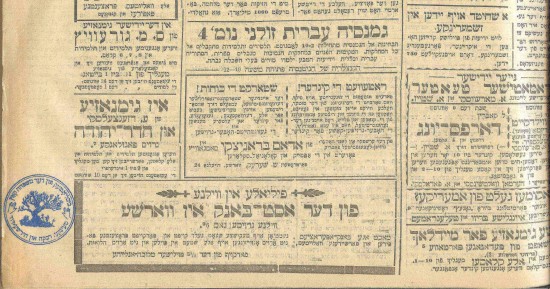
Latest addition to our Yiddish mini-museum of old Jewish Vilna (50th artefact): an advertisement from 8 August 1919 inviting parents to enroll their children in the Hebrew high school at Zaválne 4 (the gymnasium founded by Dr. L. Epstein in 1915). That is the building we all know here today as Pylimo 4, headquarters of the Jewish Community of Lithuania Lietuvos žydų bendruomenė). At that particular stage of the Hebrew movement in Vilna, the street name retained its final Yiddish shewa vowel (later to be hebraicized to -a).

More at defendinghistory.com

After the Ceremony to Commemorate International Holocaust Day at Auschwitz

After the Ceremony to Commemorate International Holocaust Day at Auschwitz

Commentary by Faina Kukliansky, chair of the Lithuanian Jewish Community

Auschwitz in the winter, during International Holocaust Day, was as moving as the Holocaust survivors who met here. My thoughts swirled around the people who are still alive. In Lithuania the only still living survivor is Meyshe Preis, who through some sort of miracle survived the Auschwitz, Stutthoff and Dachau concentration camps. His poor health didn’t allow him to attend the commemoration of Auschwitz victims on January 27. Kings, queens and heads of state did attend. I want the people of Lithuania, her politicians and high-ranking civil servants, and especially her decision makers, to understood that a trip to Auschwitz is not the same thing as travelling to Brussels for the usual meeting.

Seventy years ago the Jew were liberated, but they were persecuted en masse from 1939. Lithuanian president Dalia Grybauskaitė, foreign minister Linas Linkevičius and the chair of the Lithuanian Jewish Community travelled to the ceremony and were deeply affected by it. I believe their attitude is that of the state regarding Holocaust survivors, whose children and grandchildren now form the basis of our community. I will interject here that representing the community doesn’t mean that some high institutions choose a certain Jew for the post according to merit. That’s how it was for many years. If there’s a Jewish community which elects its chairperson democratically, then the chairperson must represent the community and Lithuania as well, if the community is loyal to the state and sees itself as a part of the country.

70th Anniversary Commemoration of the Liberation of Auschwitz

70th Anniversary Commemoration of the Liberation of Auschwitz

Dear Friends,

I have just arrived in Israel from Krakow where we commemorated the 70th Anniversary of the Liberation of Auschwitz.

As I am sure many of you will have seen this historic event was extremely symbolic and significant and it received unprecedented media coverage worldwide. The eyes of the world, this week, were on Auschwitz.

WJC, in partnership with the USC Shoah Foundation, brought 101 survivors of Auschwitz, from 21 countries, together with members of their families, to participate in this auspicious event. Their presence — surely the last time such a large number will be able to gather there — made this commemoration particularly meaningful.

Litvak Victim Marks 70 Year Anniversary of Liberation of Auschwitz by Red Army and of Dachau by American Army

Picture 012

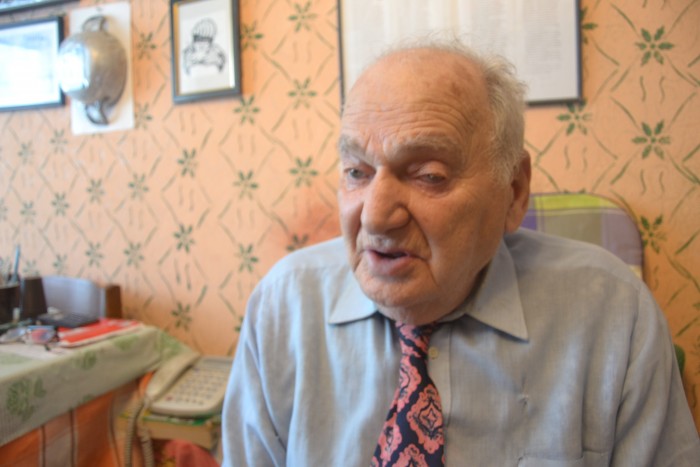
Meyshe Preis, prisoner of three concentration camps

Lithuanian Jewish Community member Meyshe Preis (or Moisiejus Preisas, as his Lithuanian passport calls him) was imprisoned at three concentration camps: sent from the Kovna ghetto to Stuffhof, then to Auschwitz, then to Dachau. He’s alive and living in Sventsyan (Švenčionys), Lithuania, and still speaks about the horrors he survived in the ghetto and at the concentration and death camps. His apartment, where he now lives alone since the death of his beloved wife, has a wall dedicated to memorabilia from hell, including photographs and a small bowl he took with him to all the camps until his liberation by American troops from a forced march of prisoners from Dachau into the neighboring mountains in May of 1945. His wall museum, collected over many years, includes newspaper articles and written memoirs as well as photos. Currently the LJC Social Center is helping Meyshe Preis out around the house and with the simple chores of life.