Learning, History, Culture

Lithuanian envoy at UNESCO certain Sugihara’s work will be listed as Memory of the World

Lithuanian envoy at UNESCO certain Sugihara’s work will be listed as Memory of the World

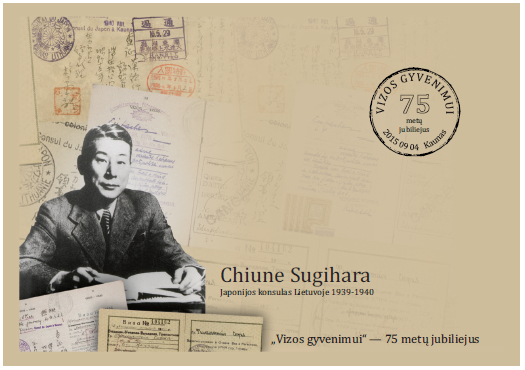
VILNIUS, Oct 05, BNS – As Japan readies to propose the United Nations Educational, Scientific and Cultural Organization (UNESCO) to include the work of World War II-era Japanese diplomat Chiune Sugihara who rescued Jews from the Holocaust in Lithuania into its Memory of the World Register, Lithuania’s Ambassador to UNESCO Arunas Gelunas believes in success of the initiative.

“I believe the chances are high, I think over 80 percent that Sugihara will be included in the Memory of the World Register, as his work is in line with all the humanist ideas defended by UNESCO,” Gelunas told BNS.The Lithuanian ambassador said he had suggested that Lithuania and Japan submit the application together.”Speaking specifically about the support, I have proposed the Japanese mission at UNESCO to submit the application together, an inquiry has been made. The ambassador is currently talking to her ministry and authors of the applications about whether this is possible or whether they want to submit it alone with our support,” said Gelunas.In his words, Sugihara’s inclusion into the register would bring more tourists to Kaunas, the Lithuanian city the diplomat worked in.

While residing in Kaunas during World War II, Sugihara managed to save nearly 6,000 Litvaks, i.e., Jews originating in Lithuania. Putting his career and lives of his family at stake, the Japanese diplomat issued visas that made it possible for persecuted Litvaks to safely travel to Japan. In 1985, the diplomat was awarded the medal of Righteous Among Nations, which the Israeli government confers upon prominent personalities who helped victims of the Holocaust

Lith Formin: Lithuanians Discovering Rich Jewish Legacy

VILNIUS, Oct 2, BNS–The people of Lithuania keep discovering more of the rich legacy of the Lithuanian Jews, Lithuanian foreign minister Linas Linkevičius said in New York Friday at a meeting with representatives of American Jewish organizations.

“The people of Lithuania keep discovering more of the rich Lithuanian Jewish heritage, understand the need to preserve it and take pride in the remarkable contributions Lithuanian Jews have made to world culture,” the foreign minister said in a press release Friday evening.

The Lithuanian Foreign Ministry reported the meeting at the Lithuanian consulate in New York discussed anti-Semitism, Iran policy, the Middle East peace process and news about preserving Litvak culture.

THE TRAGIC FATE OF A SINGER

New book entitled Price of Concord/Memoirs;Portraits of Artists; Interactions of Cultures by prof. Markas Petuchauskas („Versus aureus“ Publishers, 2015; www.versus.lt; info@versus.lt) is available to the readers.

Please find the extracts about prominent Litvak artists from the book.

THE TRAGIC FATE OF A SINGER

When we speak about the main creators of the Ghetto theatre, such as writers, playwrights, and artistic directors, the name of famous singer Liuba Lewicka unwittingly springs to mind. Without her presence, it would be impossible to imagine the artistic Vilnius which had belonged both to the pre-war epoch as well as to the Vilnius ghetto time.
When I started preparing an evening dedicated to the singer, the most difficult task was the making clear of her repertoire. The restoring of her portrait was not an easy exercise either. Without the unfolding of the above-mentioned aspects, I could not even start the conversation about the wonderful coloratura soprano of Vilnius of those days. What followed were long searches in archives, the pages of the old press, the playbills of the Ghetto theatre as well as the memories of its participants. All of the above served the reconstruction of the creative portrait of the singer.

BETWEEN THE HAMMER AND THE SICKLE

New book entitled Price of Concord/Memoirs;Portraits of Artists; Interactions of Cultures by prof. Markas Petuchauskas („Versus aureus“ Publishers, 2015; www.versus.lt; info@versus.lt) is available to the readers.

Please find the extracts about prominent Litvak artists from the book.

BETWEEN THE HAMMER AND THE SICKLE

Understandably, there had to emerge on the stage a programme dedicated to the closest friend of Sutzkever. In his early young days, Sutzkever became friends with Szmerl Kaczerginski. The young men took an oath never to betray each other and to remain friends till death. Both knights of conscience had remained true to that oath all through their lives, marked by dramatic fights and by the bitterness of losses. “That union,” Sutzkever remembered later on, “was based on their friendship which had lasted for 15 years and which had been strengthened by blood in the Ghetto.”
Szmerl Kaczerginski is a very peculiar figure representing the Jerusalem of Lithuania.

The Ghetto on Subačiaus Street

Vidmantė Jasukaitytė, an award-winning Lithuanian poet, prose and theatrical writer, as well as a signatory to the Lithuanian Act of the Restoration of Lithuanian Independence in 1990 when she was a member of the first free Lithuanian parliament, was the initiator of a multimedia artistic performance at the site of the Holocaust-era HKP slave labor camp on Subačiaus street in Vilnius. The performance took place on the evening of September 24, 2015, and was called simply “Subačiaus street. Ghetto,” also the name of one of Jasukaitytė’s collections of poetry published in 2003 which earned her the Lithuanian Television Literary Prize loosely based on her own experiences and impressions living in the former Nazi camp, two brick apartment blocks which still serve as housing for an entire Vilnius neighborhood just outside the Old Town.

The construction of the buildings as cheap housing for Jews was funded in 1900 by Baron Maurice de Hirsch (aka Moritz Hirsch, freeman from Gereuth), who established in 1891 the Jewish Colonization Association to help Russian and Eastern European Jews emigrate to Argentina:

“Large tracts of land were purchased in Buenos Ayres, Sante Fé, and Entre-Rios. The Russian government, which had rejected the baron’s offer for the amelioration of the condition of the Jews in the empire, cooperated with him in the organization of a system of emigration. A central committee, selected by the baron, was formed in St. Petersburg, at the head of which were Barons Horace and David Günzburg, together with S. Poliakoff, M. Sack, Passower, and Raffalovich, the latter three being distinguished members of the St. Petersburg bar. The baron also formed a governing body in Argentina; and the personal direction of the colonies was entrusted to Col. Albert Goldsmid, who obtained temporary leave of absence from the English War Office for the purpose.”

from http://www.jewishencyclopedia.com/articles/7739-hirsch-baron-maurice-de-moritz-hirsch-freiherr-auf-gereuth

One of the baron’s main concerns was overcrowding among Jews, whether in their new colonies in South America or Palestine, or in their European home lands, and his philanthropical activities included supporting Jewish communities where the lived in the Diaspora, with special emphasis on providing Russian Jews with trades and an industrious attitude. In 1898 the Jewish Colonization Association allocated funds for “the construction of cheap housing for the impoverished Jews of the city of Vilna.” A Healthy Homes Association was established in Vilnius and had the two buildings with 216 apartments built in the year 1900. The architect was Eduard Goldberg. Poor Jews, students, and young Halutzim who were planning to go to Palestine to practice agriculture there. The land around the “cheap housing” was turned into gardens.

Later the Healthy Homes Association transferred the buildings to the Vilnius Jewish Community. In 1940 the Soviet government nationalized the buildings and the plot of land there.

In the fall of 1941 the residents of the buildings were murdered at Ponar along with many other Vilnius Jews during the initial extermination operations. The Germans used these emptied buildings to house the wives and children of Soviet officers, so creating a “Russian ghetto.” Later some of these women were shot at Ponar and the children placed in orphanages. Some of the women were sent to forced labor camps in Germany. Thus by 1943 the buildings had been emptied of people a second time.

As August turned to September in 1943, just before the liquidation of the Vilnius ghetto, several Jewish labor camps were established in Vilnius. One of them was at the two buildings on Subačiaus street, whose address at that time was No. 37, but is now Nos. 47 and 49. Several hundred qualified workers with their families were taken from the ghetto and housed here. The majority were mechanics, metal workers, glass workers and so on, i.e., those who had worked before the establishment of the new camp at the German military equipment repair workshops called HKP (an abbreviation of the German “Heereskraftfahrpark Ost 562”) while living in the ghetto.

These auto repair workshops where ghetto prisoners worked were scattered all over the city, at the barracks and garages in the Verkių street neighborhood (some of the workers, mainly single men, lived there, and were taken back to the camp on Subačiaus street by truck on their days off), and at the bus park garage at Savanorių street No. 2 where, as at the barracks, automobile engines were outfitted and hardened for military duty. The main headquarters and workshop for HKP Ost 562 was the technical school building at Olandų street No. 12 (now No. 16) and across the street from it.

Workshops were also housed on the first floors of both buildings on Subačiaus street and in surrounding buildings, including the one-floor building to the left of Block I (there’s a sauna there now). Vehicles brought to the camp were also repaired or disassembled into parts at the repair pit to the left of Block II (in the 1960s a five-storey building was erected there). The perimeter of the camp was surrounded by barbed wire and guarded. SS officer Richter was in charge of this camp as well as the Kailis labor camp in Vilnius. Entry to the camp was from Subačiaus street between the two apartment blocks. After the war this entrance was blocked by a new four-storey building. Entering from Subačiaus street, Block I was on the left and Block II on the right. There was also a sauna in Block II.

There is information indicating Wehrmacht officer Karl Plagge came up with the idea of creating a separate Jewish camp for the HKP. He was in charge of the camp and was responsible for the automobile repair workshops in general. Was he trying to save “his” Jews from certain death as preparations were being made to liquidate the Vilnius ghetto? Was it because he was responsible for automobile repairs, and more qualified workers were needed? Whatever the case, many of those who survived say major Plagge saved them.

In September of 1943 workers were sought directly on the streets of the ghetto. Plagge compiled the first lists of those to be moved to the new camp in August. During August’s deportations of ghetto inmates to Estonia, however, many mechanics experts were lost. So additional lists of those to be sent to the HKP camp were drawn up, and many people, not just specialists, tried to get on those lists. People listed their fathers, relatives and spouses and others offered bribes to the people making the lists. It was a hope to survive and everyone sought that at any cost.

These lists have not come down to us (or at least haven’t been found yet but exist in some archives somewhere). We don’t know the exact number of camp inmates when it began. Documents published earlier show the number of camp inmates a the beginning November, 1943. According to those documents, the total number of inmates on November 6, 1943, was 1,218 people. This number grew somewhat to stand at 1,257 on March 26, 1944. It seems this was due to some people legalizing themselves after entering the camp without being specialists, or as family members of non-specialists. Others sought shelter and work there and Vilnius ghetto prisoners who survived the liquidation by hiding in malinas there found a way to get into the two apartment blocks on Subačiaus street. Some of these found haven outside the camps and there were escapes. Perhaps some remained as “illegals” there as much as conditions at the HKP camp allowed for that; there were constant roll calls and scrupulous counts of workers.

There were many women and children at the camp besides men. Initially only a few women worked in the vehicle repair shops. One supposed Plagge knew that the train carrying Vilnius ghetto prisoners supposedly to Kaunas, where “there was a lack of labor,” at the beginning of April, 1943, actually stopped at Ponar where all 4,000 or so prisoners were shot. Perhaps this explains Plagge’s strenuous justifications that the presence of women and children in the camp ensured high-quality work by the men, and that sending unemployed women to Kaunas was not a good idea. Plagge initiated workplaces for almost all women at the camp in the winter of 1944, sewing and repairing military uniforms to order for the E. Reitz Uniformwerke and Meier Herbert companies. The sewing sections located on the top floor of Block I and in a specially constructed barracks to the left of the entrance to the camp were outfitted by the local construction team and the Reitz and Meier companies later supplied sewing and weaving machines.

On March 27, 1944, “Children’s Operations” were carried out at both HKP and the Kailis camp. Only a few children found suitable hiding places and became illegals whom no one should ever see in public again. These mass murder operations also targeted non-working and mainly elderly women. All of them were shot at Ponar. The camp population lost 246 women and children (1,257 people on March 25 dropped to 1,011 on April 13). There were work disruptions, and some people made use of the fact that no one was sure of the exact number of prisoners at that point to make their escape.

In mid-May the number of prisoners dropped again, this time because of the loss of 67 people, mostly men. Some accounts say some of them were sent to mine peat in Kazlų Rūda and others were sent to exhume and burn corpses at Ponar.

The camp existed until the summer of 1944.

As the front drew closer on July 1, 1944, Plegge warned the workers the camp was to be evacuated and would come under the jurisdiction of the SS. Other accounts have it that Josef “Sep” Gramer mentioned the coming liquidation to several of the workers under him. Understanding the true meaning of “liquidation” in the Nazi lexicon, some prisoners escaped with their families that very day as soon as it was slightly dark. Others went to their malinas, hiding places whose existence they kept even from fellow slave laborers.

During the last roll-call on July 2, many were missing. The next day everyone was brought to trucks which were to carry them away. These people were shot at Ponar along with the surviving Jews from other slave labor camps in the city. Those found hiding were shot the same day right beside the two residential blocks. Some managed to flee.

The Germans quit the camp on July 4, 1944.

Some of the malinas in the eaves, basements and behind brick walls went undiscovered and nearly 100 Jews half-dying of thirst lived to see liberation. The Soviet Red Army was already on the outskirts of Vilnius and on July 7 broke through the German defensive lines. By July 9 Nazi forces were surrounded and on July 13 soldiers of the 3rd Byelorussian Front entered the city proper.

for more information on the history of the HKP camp, see:

http://www.jmuseum.lt/index.aspx?TopicID=405

Shot: A Decade of Yahad-In Unum Holcaust Studies

Picture for flyer

Exhibit opening ceremony 5:00 P.M., Thursday, October 1, at the Tolerance Center of the Vilna Gaon State Jewish Museum (Naugarduko street No. 10/2, Vilnius)

The Tolerance Center will host a mobile exhibition from the French-based Yahad-In Unum organization called “Shot: A Decade of Yahad-In Unum Studies” from October 1 to November 22, 2015. The exhibit presents material from comprehensive historical research based on testimony by eye-witnesses, photographs and maps to reveal the lesser-known side of the Holocaust in the East, “The Holocaust by Shooting.” This refers to the systematic extermination of Jews and Roma in the Soviet Union starting with the establishment of ghettos and camps and culminating in the end of the war.

Yahad-In Unum, Hebrew and Latin for “together,” is a humanitarian organization founded by French Catholic priest Patrick Desbois in 2004 whose goal is to identify, document and systematize information about sites in Eastern Europe where the Nazi einsatzgruppen carried out the mass murder of Jews during World War II.

The ten-year study by the organization uncovered the Nazis’ main plan for extermination. Over 79 field studies researchers discovered 1,700 mass murder sites and collected testimony from over 4,000 non-Jewish locals in Belarus, Ukraine, Russia, Moldova, Romania, Makedonia and Poland. In 2013 the organization began studies in Lithuania. Over 2 years Yahad-In Unum recorded testimony from 243 witnesses who identified 131 mass murder sites.

Unlike at the concentration camps, many victims of the “Shooting Holocaust” survived to tell the world what happened. It is believed that five years from now very few of those who witnessed but didn’t personally experience the crimes committed will be left among the living. Researchers at the organization say they want to investigate the evidence for every mass shooting in order to present undisputable proof to Holocaust deniers, to commemorate the victims and to protect the mass grave sites, and also to prevent genocide and mass violence in the future.

Marco Gonzalez, the director of Yahad-In Unum in Paris, said: “The Nazis used a special method of killing Jews in Eastern Europe, leaving their corpses in mass graves dug deep in the forest. Each murderer saw his victim, and each victim saw his murderer.” The exhibit presents a five-tier plan used for almost all the mass murder operations in Eastern Europe: collecting the victims, marching them to their deaths, disrobing, mass shooting and then expropriations of property following the murders.

Father Desbois said the massacres which the Nazis and their collaborators carried out village by village in Eastern Europe have become the archetypal model for mass murder in the present time in countries such as Cambodia, Rwanda, the Balkan states and Syria. “As a wave of anti-Semitism and hate rises, Yahad-In Unum’s work is more important than ever before. … This exhibit was first shown at UNESCO headquarters in Paris in January of 2015, and this will be its second showing in Europe, in Lithuania, where more than ninety percent of Jews were murdered during the Holocaust,’ Father Desbois said.

The Vilna Gaon State Jewish Museum and the International Commission for the Assessment of the Crimes of the Nazi and Soviet Occupational Regimes in Lithuania together with the exhibit organizers will hold a seminar for teachers the same day the new exhibit is unveiled to the public.

Entry is free of charge.

Those wanting to attend the seminar are asked to register by September 28 by sending an email to: rasa.ziburyte@leu.lt

For more information, please see:
www.jmuseum.lt
http://www.yahadinunum.org/

Press contacts:
Julijanas Galisanskis, Yahad-In Unum representative
telephone: +32 25137713
email: j.galisanskis@yahadinunum.org

Ieva Šadzevičienė, director of Tolerance Center, Vilna Gaon State Jewish Museum
telephone: (8 5) 262 9666
email: ieva.sadzeviciene@jmuseum.lt

Israeli Scholar and Relative to Attend Gandhi-Kallenbach Event in Vilnius

The Jerusalem Post reports Israeli researcher Shimon Lev is planning to attend a ceremony to unveil a two-person statue of Mahatma Gandhi and Hermann Kallenbach.

According to Jpost, Lev is completing his doctorate at the Hebrew University of Jerusalem on perceptions of India in the Jewish world, and is the author of a book about the special relationship between the two men called “Soulmates: The Story of Mahatma Gandhi and Hermann Kallenbach.”

Published in 2012, the book is based on documents and letters contained in the Kallenbach archive in Haifa, then under the possession of his great-niece, Dr. Isa Sarid, who co-authored a 1997 biography of her uncle with Christian Bartolf, Jerusalem Post reports. After Sarid’s death in 2012, they were sold to the Indian government. While Kallenbach never married or had children, Lev tracked down his great-nephew Eli Sarid, who lives in Tel Aviv and will also attend the ceremony, according to Jpost.

full article here:
http://www.jpost.com/Diaspora/Israeli-researcher-to-attend-opening-of-Gandhi-Kallenbach-monument-of-friendship-in-Lithuania-419080

THE NAMES. A person is not a number.

THE NAMES. A person is not a number.

Names of Holocaust Victims to be Read for Fifth Time in Lithuania

The names of Holocaust victims will be read publicly in several Lithuanian cities and towns on Tuesday, September 22, on the eve of the Lithuanian Holocaust Remembrance Day. The Names initiative is being held in Vilnius for the fifth time now and this will be the first time when lists of Vilnius ghetto prisoners will be read at two locations: in the courtyard of the ghetto library and at the Skalvija movie theater. Residents of Jonava, Molėtai, Švėkšna and Jurbarkas will take turns reading the names of Jews murdered in their towns.

Book PRICE of CONCORD

Book PRICE of CONCORD

MEMOIRS

PORTRAITS OF ARTISTS

INTERACTIONS OF CULTURES

Author: habil.dr. prof. Markas Petuchauskas

The life of Markas Petuchauskas, a former Vilnius Ghetto prisoner, famous theatre historian and critic, is marked by twists of fate rarely seen other than in dramatic theatrical portrayals. His survival could well be seen as a miracle as he joined the rare few who managed to escape the death that accompanied the Nazi ghettos.

Markas Petuchauskas

 ABOUT THE AUTHOR

Markas Petuchauskas was born in 1931 in Šiauliai, Lithuania. His distinguished father, Samuelis Petuchauskas, was a holder of the Order of the Lithuanian Grand Duke Gediminas, and for two decades of the inter-war period was Vice-Burgomaster of Šiauliai. In 1940, the family moved to Vilnius. At the beginning of the Nazi occupation, the author’s father was executed by shooting in Paneriai.

Jews Seek Their Roots in Žagarė

Jewish Culture Days are taking place in Žagarė, Lithuania, which was selected the Lithuanian capital of culture this year. Jews with roots in Žagarė have arrived from all over the world and are visiting Jewish architectural heritage sites, attending concerts and watching films.

The first Jewish community was established in Žagarė in the early 18th century and mainly Jewish craftsmen and merchants lived in the town. Many Jews were shot during World War II at the Žagarė park. The last Jewish resident of Žagarė died several years ago.

Leonora Vasiliauskienė, a former Žagarė resident, said: “Žagarė is my childhood, my youth, and there were sad chapters, such as when I learned my grandmother, two aunts and uncle were murdered here. They were transported from Tryškiai and shot.”

European Jewish Culture Day in Rokiškis, Lithuania

European Jewish Culture Day in Rokiškis, Lithuania

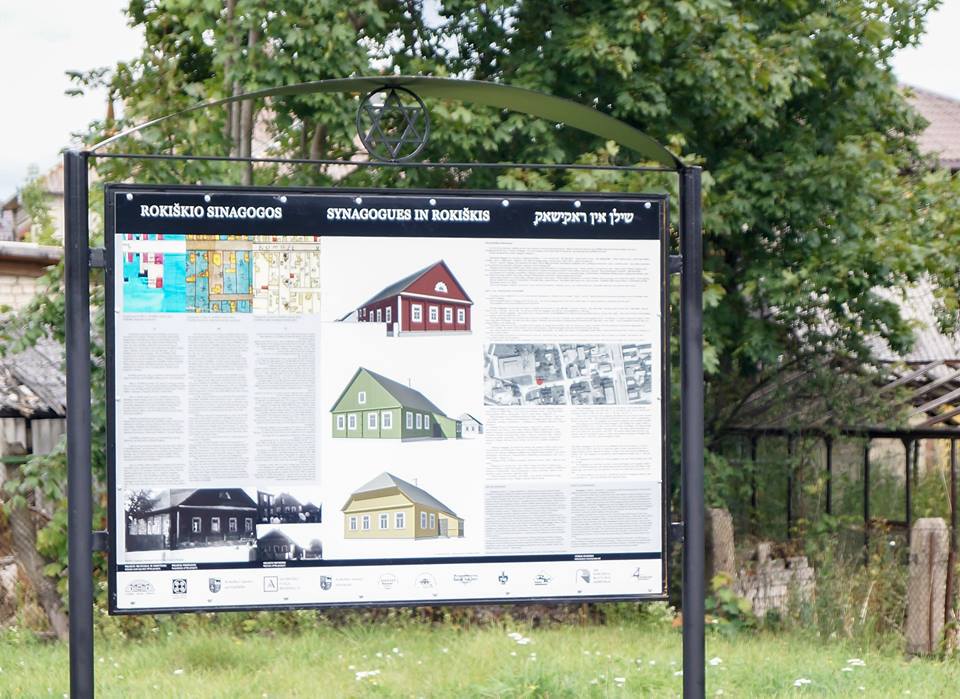
On September 6 an information sign was unveiled on Sinagogų street in Rokiškis, Lithuania to mark European Jewish Culture Day. The sign provides information on the Rokiškis Litvak community and the 3 synagogues which once stood here.

A significant gathering of locals interested in the history of their hometown attended the event.

Rokiškis regional administration mayor Antanas Vagonis and Rokiškis Local History Museum director Nijolė Šniokienė unveiled the sign.

The informational sign was prepared as part of the project “Commemoration of the Site of the Rokiškis Synagogues” financed by the Cultural Heritage Protection Department under the Lithuanian Ministry of Culture.

More pictures on Facebook

2015 Vilnius Yiddish Institute Summer Course Graduation Ceremony

2015 Vilnius Yiddish Institute Summer Course Graduation Ceremony

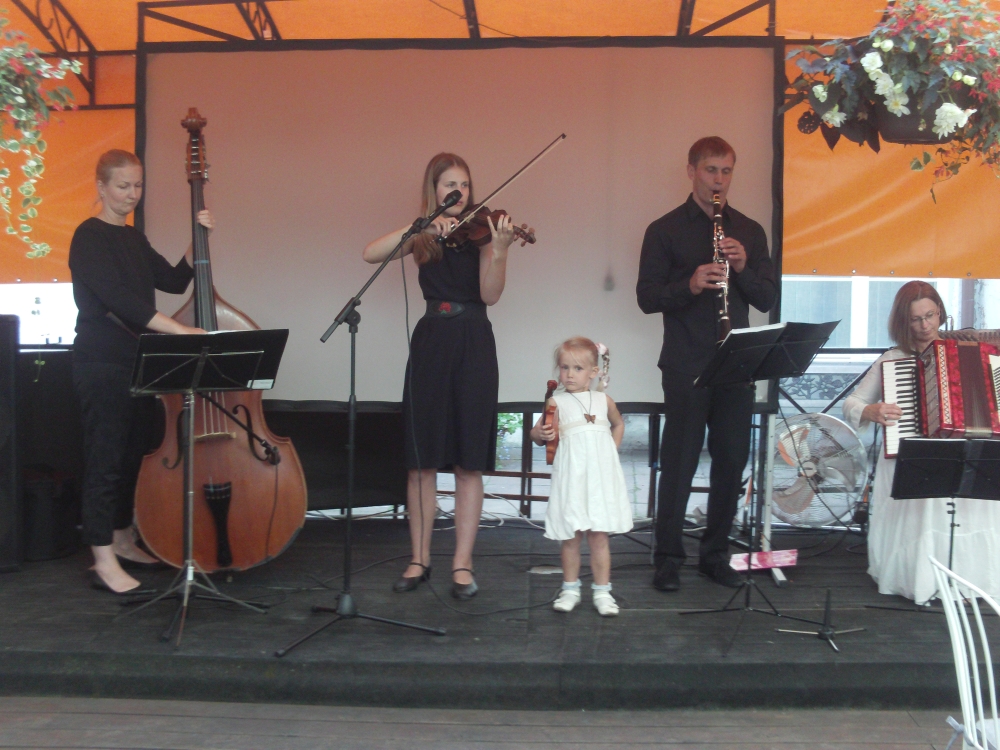
The 2015 Yiddish summer course at the Vilnius Yiddish Institute of Vilnius University concluded at the usual location, the courtyard of a restaurant adjacent to the university in the Old Town, with music, a theatrical presentation, the issuance of diplomas and plenty of food to go around. An addition this year was a sort of daycare center-corner for small children with toys and books.

Šarūnas Liekis, the head of the institute, served as MC and addressed the audience in Yiddish.

This summer’s crop of students included a Japanese individual, an American contingent, a Polish contingent, ethnic Lithuanians and people hailing from other parts of the world.

Arkady Vinokur presented a preview of the New Yiddish Theater project he is working on.

The audience included all the faculty and staff of the summer course, former students, Lithuanian Jewish Community chairwoman Faina Kukliansky and LJC deputy chairwoman Maša Grodnikienė, local Jewish and Jewish-friendly residents and what seemed like an unusal number of primary-school-age children who left before the event was over.

Pictures:

Vilnius Yiddish Institute Summer Course Students Celebrate Sabbath at Lithuanian Jewish Community

Vilnius Yiddish Institute Summer Course Students Celebrate Sabbath at Lithuanian Jewish Community

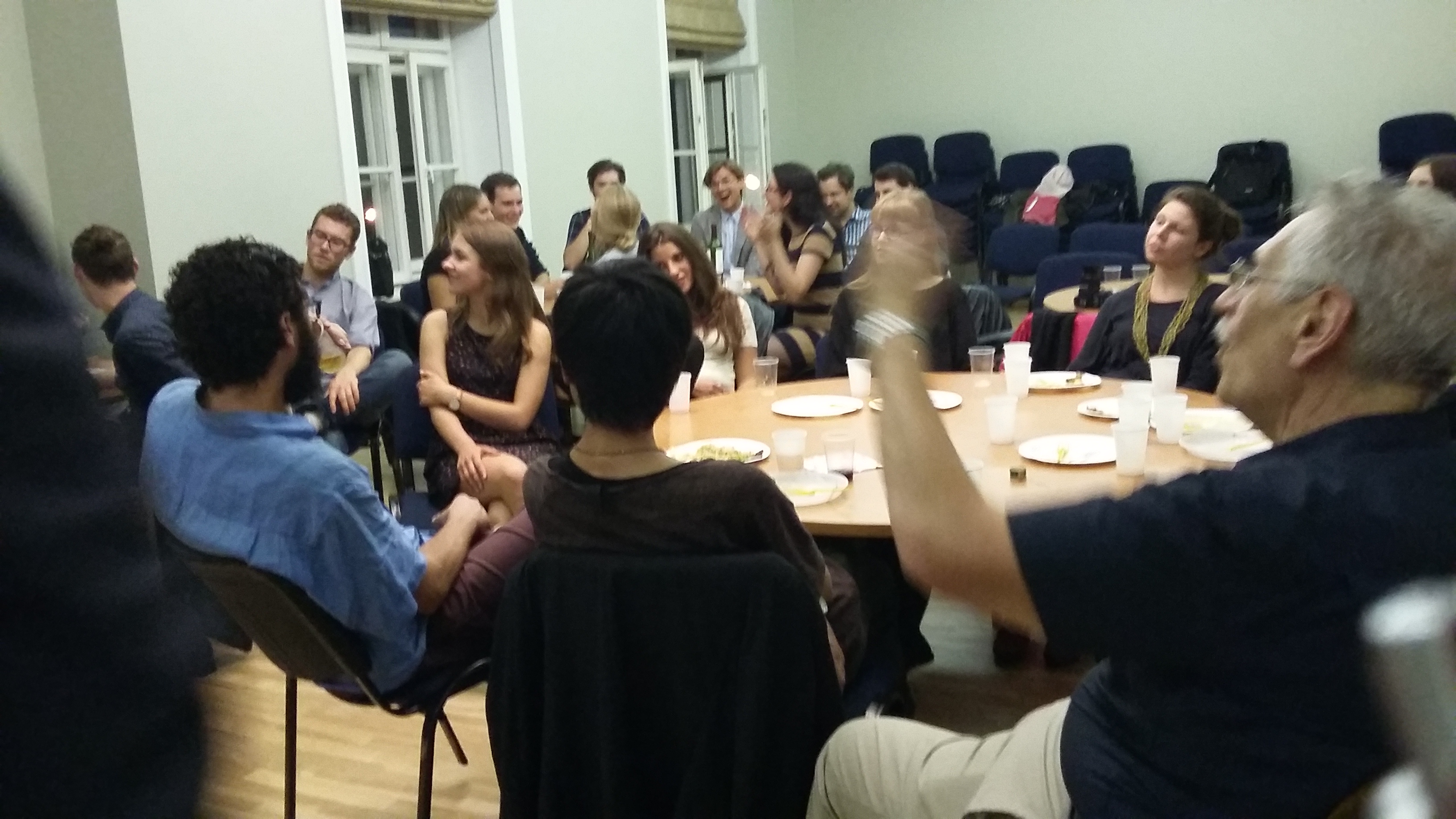
As in earlier years, this year’s crop of Yiddish summer course students were invited to celebrate Sabbath at the Lithuanian Jewish Community. The event scheduled for the Friday of July 31 was joined by the Union of Lithuanian Jewish Students and became a potluck rather than a hosted dinner.

A Lithuanian girl named Aistė served as greeter and hostess, directing people with dishes, tupperware and bottles of wine to the tables in front of the stage in the White Hall on the third floor of the Community building. Aistė said she was taking the summer course even though she had no Jewish heritage at all in her family, but is simply fascinated with the language and culture of Yiddish. There was some confusion as to the scheduled start of the evening, either 8:30 P.M. or 9, but in the end that lent to the informality of the evening.

The traditional Sabbath blessing was given by VYI summer course teacher professor Abraham  Lichtenbaum from Argentina with program head professor Dov-Ber Kerler lending assistance, after which the traditional challa bread was broken and passed around.

Lithuania’s Great Synagogue, demolished by Russians, draws archeological attention  Read more: The Jewish Chronicle – Lithuania s Great Synagogue demolished by Russians draws archeological attention

Lithuania’s Great Synagogue, demolished by Russians, draws archeological attention Read more: The Jewish Chronicle – Lithuania s Great Synagogue demolished by Russians draws archeological attention

The Great Synagogue in Vilnius, Lithuania was demolished by Russian troops just 55 years ago, but a local researcher from Duquesne University is already working on preserving its legacy.

Despite the synagogue’s relatively recent destruction, it is nonetheless the subject of an archeological project headed by a worldwide team of experts, including Philip Reeder, dean and professor of the Bayer School of Natural and Environmental Sciences at Duquesne.

Archaeological work undertaken to preserve or reconstruct history does not necessarily have to focus on ancient structures dating back thousands or even hundreds of years, according to Reeder. Rather, he said, archaeology is about “uncovering any history that is potentially lost, even if it 55 years old.”

Žiežmariai Synagogue: A Holocaust Site as Well as an Important Architectural Monument

Žiežmariai Synagogue: A Holocaust Site as Well as an Important Architectural Monument

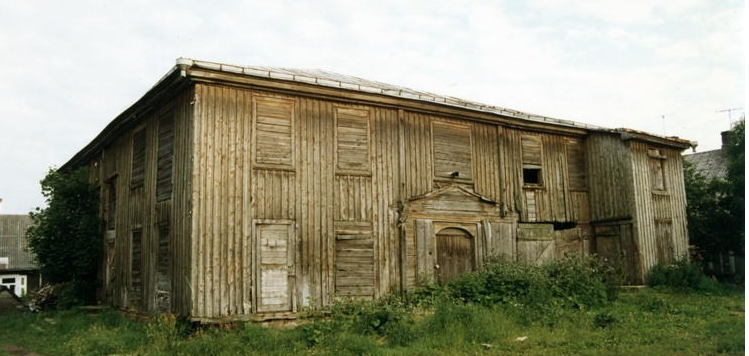
The city council and mayor of Kaišiadorys, Vytenis Tomkus, are scheduled to meet with Lithuanian Jewish Community chairperson Faina Kukliansky and the community’s heritage protection specialist Martynas Užpelkis July 30 to discuss the conservation and exploitation of the Žiežmariai (Zhezhmer or Zezmer in Yiddish) Synagogue.

The Lithuanian Jewish Community in cooperation with the Cultural Protection Department has been working on how to preserve the town’s only surviving synagogue, one of the few surviving wooden synagogues in Europe, for several years now. A series of tests, studies and research including engineering and geological, archaeological, historical, building construction, timber, chemical and painting/decoration investigations, and the drafting of a detailed plan for renovation work are planned for completion this year. Restoration work beyond that, and most importantly the positive social and economic effect accruing from that, will be part of the town’s general plan for the conservation and use of heritage sites.

Double Genocide

Double Genocide

I met Yitzhak Arad in the cafeteria of his upscale retirement home outside Tel Aviv. To his enemies, this short man, softened by age and bundled in long sleeves against the facility’s overzealous air conditioning, is a kind of Jewish Kurt Waldheim: a brutal war criminal who deftly covered his tracks and went on to run one of the world’s leading human rights institutions. Waldheim, a former Nazi officer, famously became secretary-general of the United Nations before the truth came out. Arad allegedly committed atrocities against Lithuanian anti-Communists on behalf of Stalin’s secret police, the NKVD, before moving to Israel and becoming the director of Yad Vashem, the nation’s holocaust museum.

Read more

Tisha b’Av

Tisha b’Av

The Tisha b’Av fast this year falls on Saturday, July 25, beginning at 9:17 P.M. local time in Lithuania and ending at 10:26 P.M. on July 26.

Services will be held at the Vilnius Choral Synagogue at 9:00 A.M. and at 7:30 P.M. on July 26.

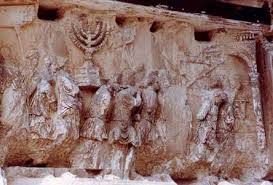
Tisha b’Av, literally “the ninth day of the month of Av,” commemorates the destruction of the First Temple of Solomon ca. 587 BCE and the Second Temple in 70 CE in Jerusalem and is traditionally a day of fasting and mourning. Observance includes five prohibitions, the main one being a 25-hour fast. The Book of Lamentations is read in the synagogue followed by the recitation of kinnos, liturgical dirges for the Temple and Jerusalem. Since the day has become associated with other major Jewish tragedies, some kinnos recall other events, including the murder of the Ten Martyrs in ancient Rome, pogroms against medieval Jewish communities and the Holocaust.

According to tradition, the sin of the Ten Spies is the real origin of Tisha B’Av. In the Book of Numbers, 13:1-33 when the Israelites accepted their false report of the Promised Land, they wept, thinking God could no help them. The night the people wept and wailed was the ninth day of Av, which then became a day of weeping and misfortune for all time, according to tradition, following which the Jews were made to wander the desert for 40 years.

Work to Restore Zavel Synagogue in Vilnius Begins

Work to Restore Zavel Synagogue in Vilnius Begins

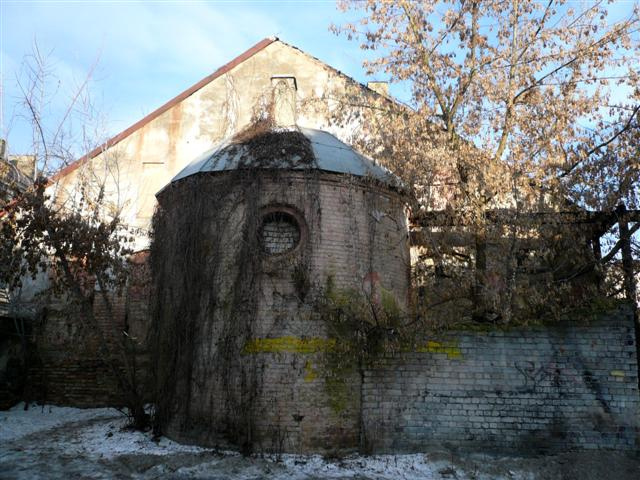
The newspaper and news website Lietuvos žinios [News of Lithuania] reports work to restore the historic Zavel Synagogue on what is now called Gėlių street (former Sadova/Sadowa street, now a continuation of Sodų street) near the Vilnius train station has begun. The restoration plan includes repairs to the entry stairs, floors, windows, doors, roof and cupola as well as a façade-lift, according to the newspaper. The synagogue, traditionally known as Zavl shul, was once a venue for the preaching of Rabbi Nathan Mileikowsky, the grandfather of current Israeli prime minister Binyamin Netanyahu. The synagogue kept extraordinary hours to cater to travelling Jewish merchants who passed through the Vilnius
station regularly.

>>Complete article in Lithuanian

75th Yórtsayt of the famous Vilner Rov:  Rabbi Chaim-Ozer Grodzenski (1863-1940)

75th Yórtsayt of the famous Vilner Rov:  Rabbi Chaim-Ozer Grodzenski (1863-1940)

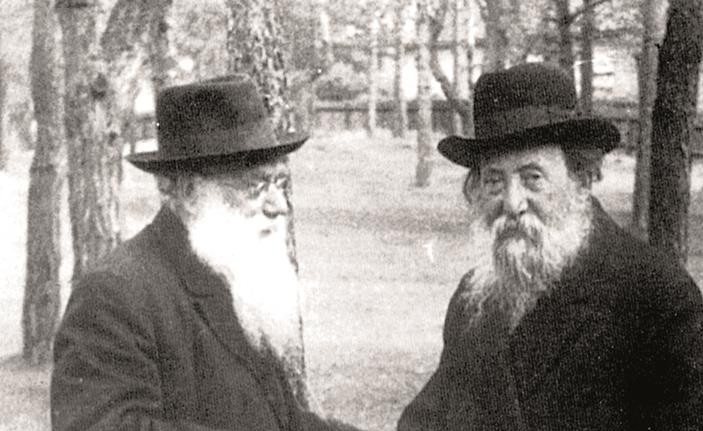
This week, the entire Ashkenazic Orthodox world, spread over many parts of the world, marked the 75th yórtsayt (anniversary of the death) of the beloved pre-Holocaust “last rabbi of Vilna,” Rabbi Chaim Ozer Grodzenski, forever known in Litvak Yiddish as Reb Chaim-Eyzer. To this day, Jewish visitors from around the world come to look at the legendary balcony on the corner of Zaválne (today’s Pylimo St.) and Greys-Pohulánke (Basanavičiaus).

One of the many tributes came in >>Hamodia