Learning, History, Culture

Holocaust Distortion


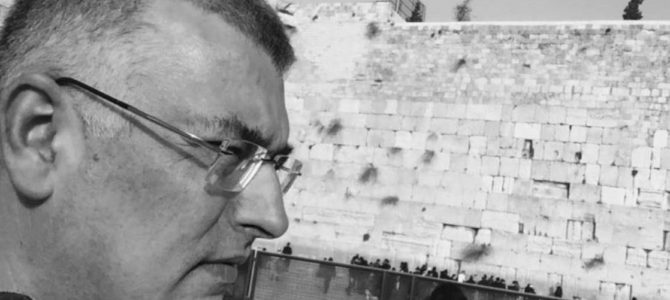
by Efraim Zuroff

The situation regarding Holocaust commemoration and education in Lithuania is likewise extremely problematic.

It was only slightly more than a year ago that Holocaust distortion, which has been going on undisturbed for the past almost 30 years, and is currently rampant throughout post-Communist Eastern Europe, suddenly became an issue in Israel. The reason was the uproar over the by now infamous Polish Holocaust bill, which made use of the term “Polish death camps” or the attribution of any Holocaust crimes to the Polish state, a criminal offense punishable by two years in prison. Prime Minister Benjamin Netanyahu responded that “Israel would not tolerate Holocaust distortion,” the first public denunciation by an Israeli leader of the systematic efforts being made for decades by many of the new democracies of Eastern Europe to whitewash the crimes of their nationals during the Shoah.

Limmud 2019 in Druskininkai

Limmud 2019 in Druskininkai

The Limmud tradition is about Jewishness and identity. Once per year the LJC organizes the traditional Limmud conference so members can come together, celebrate Sabbath together, take in many interesting lectures. Limmud comes from the Hebrew word “to learn.”

LJC programs director Žana Skudovičienė, veteran Limmud organizer, says this tradition demands a lot of work, energy and ingenuity.

This year our Lithuanian Limmud was held at the Europe Royal Hotel in the southern Lithuanian spa town Druskininkai with heavy attendance by LJC members and guests and young families with toddlers. Skudovičienė said some of the parents had themselves attended Limmud as children decades ago.

This year’s Limmud seemed more intimate than in former years, according to attendees, with Jews gathering from all over Lithuania, less formal speeches and more music, dance and fun–with a real spirit of yidishkayt.

List of Speakers and Performers for Limmud 2019

List of Speakers and Performers for Limmud 2019

Speakers and performers to include:

Ilya Kalmanovskiy, journalist, teacher, educational program enthusiast and moderator (Moscow)

Boruch Gorin, journalist, writer, editor of Lekhaim magazine (Moscow)

Juriy Tabak, religious studies expert, translator, author (Moscow)

Aleksandr Dukhovny, senior rabbi of progressive Jewish congregations (Kiev)

Sasha Galitsky, artist, author (Israel)

Regina Pats, cinema expert, to speak on new program of Israeli films (Tallinn)

Dr. Lara Lempertienė, scholar, director of Lithuanian National Library’s Judaica Studies Center

Bar/Bat Mitzva Ceremony at Choral Synagogue in Vilnius

A bar and bat mitzva ceremony was held at the Choral Synagogue Monday, March 11, conducted by Rabbi Sholom Ber Krinsky. Five young people sat at the set table and listened intently to the rabbi’s talk and congratulations on their rite of passage from youth to adulthood.

Parents and children gathered for this important religious ritual. Boys aged 13 and girls aged 12 are considered adults according to Jewish tradition. Bar mitzva literally means “son of the law” and bat mitzva “daughter of the law” because this is the age at which people become responsible for following all the laws of the Torah.

The young adults received symbolic gifts and the celebration continued with a feast at the table.

Bar and bat mitzvas are more than just a family celebration, they’re celebrated by the entire Jewish community. Congratulations to all the participants!

Monument to Icchokas Meras Unveiled in Kelmė

Monument to Icchokas Meras Unveiled in Kelmė

A statue was unveiled to commemorate the fifth anniversary of the death of Icchokas Meras. The ceremony and monument were the work of the Lithuanian Jewish Community, the Lithuanian Jerusalem Vilnius Jewish Community, the Jakovas Bunka support fund and the Kelmė regional administration. It took place on March 13 at Icchokas Meras Square in Kelmė. Students and teachers from the neighboring Jonas Graičiūnas Gymnasium, Kelmė municipal representatives, fans of Meras’s work and visitors from Vilnius, Kaunas, Šiauliai and Panevėžys and members of those Jewish communities attended.

Feliks Dektor arrived from Israel for the ceremony. He translated to Russian Meras’s novels “Ant ko laikosi pasaulis” and “Lygiosios trunka akimirką” as well as a collection of short stories called “Geltonas lopas,” some of the first literary works about the Holocaust to be published in the Soviet Union.

MP Emanuelis ZIngeris was unable to attend but sent a message which was read out loud:

“Icchokas Meras his entire life spoke for the silenced ghettos of Kelmė, Vilnius, Kaunas and Šiauliai. In his work he didn’t stand for the isolation of the ghetto, rather he scaled to the heights and plumbed the extraordinary depths of humanity. In Soviet times everyone looked forward to the appearance of his novels and stories in the magazines Pergalė and Nemunas. This was a protest hurled against the Soviet reality. Because Icchokas Meras was and remained a Lithuanian writer who modernized the language of Lithuanian prose and invented new ways to express himself.

Jonas Noreika? Let’s Talk about Cucumbers Instead

Jonas Noreika? Let’s Talk about Cucumbers Instead

by Arkadijus Vinokuras

In reply to the Genocide Center

I read the reply from the Center for the Study of the Genocide and Resistance of Residents of Lithuania to my article “Why Is Genocide Center Defending a Lie?” The Genocide Center’s reply was unpleasantly surprising. The position of the person quoted was confused with my own personal position. Instead of polite discussion it turned quickly to ad hominem. Therefore to the honorable director of this institution I say: do not allow scribblers to reply to articles by professional journalists and writers.

Because this [reply], fallen into Communist hysteria, as if it weren’t 2019 at the present time but gloomy Stalinism instead, written in the KGB style with anti-Semitic glee, places all critics and opponents of the Genocide Center into one “anti-Geno-Centro-underground organization.” This does shame to the institution itself. Take a pill, calm down and remember that the Genocide Center is not some private headquarters of extremist nationalists but an institution of a democratic state. The parliament has tasked this institution with discovering the truth, not engaging in politics.

Full text in Lithuanian here.

Lithuanian President Visits YIVO

Lithuanian President Visits YIVO

Lithuanian president Dalia Grybauskaitė visited YIVO in New York City March 13.

The YIVO institute was founded in Vilnius in 1925, collecting a large library of books and documents, Yiddish literature and material on Jews in Central and Eastern Europe. It moved to New York in 1939 when founder Max Weinreich was caught in Denmark as Nazi Germany invaded Poland on September 1 of that year. The New York branch became the headquarters as the Nazis looted YIVO archives in Vilnius.

YIVO director Jonathan Brent met the Lithuanian leader and spoke to her about the Strashun collection and important documents YIVO conserves.

The Lithuanian president said she was impressed by the collections demonstrating the priceless Litvak heritage and also by the courage and nobility of the people–Lithuanians and Jews–who saved the important documents.

Full press release in Lithuanian here.

Work Continues on the Žemaičių Naumiestis Synagogue

Work Continues on the Žemaičių Naumiestis Synagogue

Work to restore the synagogue in Žemaičių Naumiestis, Lithuania, began in 2018 and on March 6, 2019, the work to date was surveyed.

The Šilutė regional administration allocated almost 100,000 euros for the renovation work.


Photos from before work began

The town had a large Jewish population before the Holocaust who built this brick synagogue in 1816. In the Soviet era the synagogue was used as a Palace of Culture.

American Zionist Movement Biennial Assembly Held in New York

American Zionist Movement Biennial Assembly Held in New York

The American Zionist Movement held their once-every-two-years assembly in New York on March 10 and 11, 2019. This assembly’s theme was Unity and Community: Bringing Together the Many Voices of Zionism.”

Lithuanian Jewish Community chairwoman Faina Kukliansky was invited to speak about the Zionist movement in Lithuania.
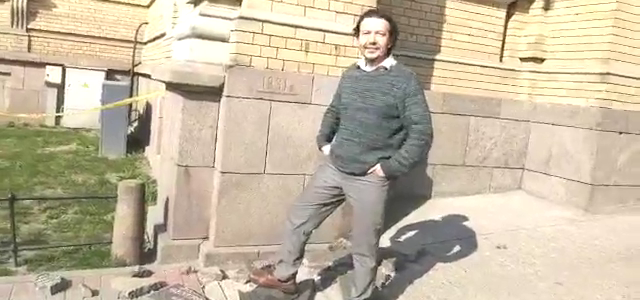

LJC chairwoman Kukliansky with AZM executive director Herbert Block

Success Story: Bakery Making Forgotten Treats Has Special Aura

Success Story: Bakery Making Forgotten Treats Has Special Aura

by S.Viltrakytė-Varkalienė, Lietuvos rytas

“The cult of food is very useful for us, but that doesn’t mean that when we opened everyone came to buy bagels,” Bagel Shop projects director Dovilė Rūkaitė said at the café’s third birthday party.

Although the café depends on support from the Lithuanian Jewish Community, Rūkaitė said she has no doubts that the kosher food outlet is very much a success story. Interest in traditional Jewish cuisine has raised the idea of a restaurant as well. Although no opening date has been announced, preparations are taking place behind the scenes.

For now you can try kosher find in the humble café inside the Lithuanian Jewish Community. You won’t find a filling lunch here, the kitchen is too small for the five-person collective to make such things. But you can sample shakshuka, soup, salads, bagels and cakes.

Full story in Lithuanian here.

Celebrating Lithuanian Freedom

Celebrating Lithuanian Freedom

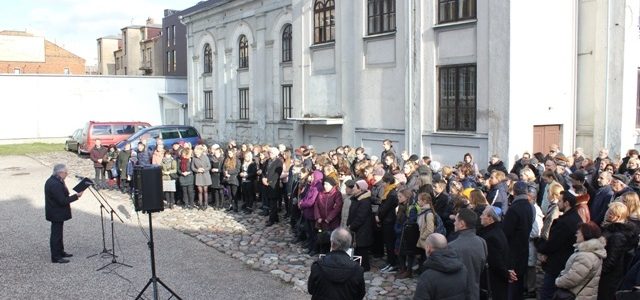
On March 11, 1990, many Lithuanian Jews became witnesses to an important and unforgettable event when the Supreme Soviet of the Lithuanian Soviet Socialist Republic almost unanimously (of 130 delegates 6 abstained, none voted against) the act for the restoration of Lithuanian independence. The Republic of Lithuania submerged by foreign powers in 1940 had resurfaced. This allowed for the restoration and work of the Lithuanian Jewish Community as well. Happy Independence Day!
News from the Noreika Trial

News from the Noreika Trial

The Vilnius District Administrative Court began deliberation of a case Grant Gochin filed against the Center for the Study of the Genocide and Resistance of Residents of Lithuania Tuesday, March 5. Gochin, a Lithuanian citizen and member of the Lithuanian Jewish Community, is seeking remedy for the Genocide Center’s “historical finding” exonerating Lithuanian Holocaust perpetrator Jonas Noreika. Gochin wants the Center to reconsider its exoneration in light of newly discovered documents which he says the Center has ignored.

Active LJC member Geršonas Taicas attended the trial and shared his impressions, translated below.

§§§

“The plaintiff’s attorney read quickly a 25-page document presented which lists new historical facts about Noreika’s crimes. …

Prosecutor Drops Charges against Ivaškevičius, Opens Case against His Persecutors

The Lithuanian Prosecutor’s Office announced Wednesday it had opened a case on the possible harassment of the playwright Marius Ivaškevičius.

It also announced law enforcement will investigate the illicit collection of private information about Ivaškevičius and the illicit sharing of such information.

The state prosecutor demanded an investigation be conducted after law enforcement agencies received information about an article on a webpage entitled “Death to Marius Ivaškevičius!”

The article indicated a database of “enemies of the homeland” was being prepared and asked readers to supply as much information as possible regarding the private life of the Lithuanian writer.

The internet posting said the information was needed to kill Ivaškevičius, the prosecutor reported.

The report said these facts amount to the “terrorizing” of the writer “because of his literary works which annoyed a portion of the public and for his public position, and thus constitute an illegal attempt to limit his creative and self-expression.”

Arkadijus Vinokuras: Why Is Genocide Center Defending a Lie?

Arkadijus Vinokuras: Why Is Genocide Center Defending a Lie?

by Arkadijus Vinokuras

At 10:00 A.M. on Tuesday, March 5, at Žygimantų street no. 2 in Vilnius, the Vilnius District Administrative Court undertook a special case. Lithuanian citizen Grant Gochin petitioned the Vilnius District Administrative Court to render a decision on whether the Center for the Study of the Genocide and Resistance of Residents of Lithuania is, in the plaintiff’s words, “blindly defending Jonas Noreika who has the blood of his fellow Lithuanian citizens, Jews, on his hands.”

The Genocide Center stands accused of lying, falsifications and down-playing obvious facts in its refusal to review newly-discovered documents showing Noreika participated in crimes of genocide against Lithuanian citizens.

How does Genocide Center director Teresė Birutė Burauskaitė respond to these accusations made againt her institution? On November 16, 2015, she posted a statement on the Genocide Center’s facebook page: “Neighbors from the East are organizing the desecration of Lithuania’s patriots. They are being aided not just by certain Jews, but a sufficiently large number of Lithuanians as well; their surnames are signed under requests to revoke medals and take down plaques and are the by-lines in libelous articles in the press… Some of them do this intentionally, others out of foolishness…”

Leaders, Ambassador Send Condolences on Death of Tobijas Jafetas

lzinios.lt, BNS

Lithuanian Jewish Community chairwoman Faina Kukliansky told BNS Tobijas Jafetas was “a highly respected, active and refined person of the community” who had met her father when World War II began. “As I recall his father had a business in England and came to Kaunas just before the war started. It so happened that Jafetas and my father were at a [children’s summer] camp in Palanga when the war broke out. Neither was able to flee and they were taken to an orphanage in Kaunas,” Kukliansky said.
Israeli ambassador to Lithuania Amir Maimon expressed condolences over Jafetas’s loss on facebook.

Jafetas and his mother were imprisoned in the Slobodka ghetto in Kaunas in World War II. He told the story of how he escaped the ghetto in 1944 after hiding in an attic. The Katinskai family in Vilnius rescued him.

LJC chairwoman Kukliansky said Jafetas spoke German and English and maintained close contacts with survivors of ghettos in Europe.

Monument to Icchokas Meras to be Unveiled in Kelmė

Monument to Icchokas Meras to be Unveiled in Kelmė

A monument to Litvak writer Icchokas Meras (October 8, 1934 – March 13, 2014) is to be unveiled on the fifth anniversary of his death on Icchokas Meras Square in his hometown of Kelmė, Lithuania, at 1:00 P.M. on March 13, 2019. Meras, a Holocaust survivor, wrote in Lithuanian and won numerous awards in Israel and Lithuania. His work has been translated into over 25 languages including Yiddish and Hebrew. He moved to Israel in 1972 and passed away in Tel Aviv in 2014 at the age of 79.

The monument is the fruit of cooperation between the Lithuanian Jewish Community, the Jakovas Bunka welfare and support fund, the Lithuanian Jerusalem Vilnius Jewish Community and the Kelmė regional administration.

Those wishing to attend are invited to send notice of their intention to renginiai@lzb.lt because the LJC plans to provide free transportation to and from the event if there is sufficient interest. Please send an email by March 11 or call 8 673 77257 for more information.

Limmud 2019 March 15-17 in Druskininkai, Lithuania

Limmud 2019 March 15-17 in Druskininkai, Lithuania

The educational and entertaining conference on Judaism Limmud 2019 will be held in Druskininkai, Lithuania, from March 15 to 17. The program includes the weekend in the scenic Lithuanian spa town, activities, valuable lectures, seminars on academic excellence, screenings of films, excursions, a special Sabbath and much more.

The three-day conference will be held at the Europa Royale hotel at Vilniaus alley no. 7 in Druskininkai.

For more information, call +370 67881514 or send an email to zanas@sc.lzb.lt

Registration is now closed.

Speakers to include:

Granddaughter Silvia Foti Talks about General Storm, Lithuanian Partisan, Nazi

Granddaughter Silvia Foti Talks about General Storm, Lithuanian Partisan, Nazi

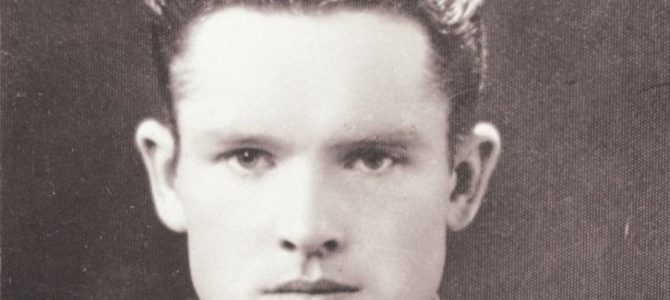
Growing up in the United States, Silvia Foti couldn’t have been more proud of her Lithuanian heritage, in particular her grandfather. Silvia’s family had crossed the Atlantic after the Second World War but she always knew that, back in Lithuania, her grandfather was seen as a war hero. She’d been told that he’d been executed at the age of 37 for standing up to the Soviet regime and trying to lead a rebellion against their occupation of Lithuania. Silvia tells Emily Webb how a chance conversation on a trip to Lithuania made her question everything she’d learnt about her past.

Image: Jonas Noreika Credit: Courtesy of Silvia Foti

Silvia Foti and Grant Gochin speak on BBC Outlook:

https://www.bbc.co.uk/sounds/play/w3cswl6b

Tobijas Jafetas, Chairman of Union of Ghetto and Concentration Camp Prisoners, Dies

Tobijas Jafetas, Chairman of Union of Ghetto and Concentration Camp Prisoners, Dies

The Lithuanian Jewish Community has learned with great sadness of the loss of chairman of the Union of Former Ghetto and Concentration Camp Inmates Tobijas Jafetas. Born in 1930, he was still a child when World War II came to Lithuania. He often said he only survived because of help from Righteous Gentiles.
Although he was from Vilnius, he was with his mother Berta and uncle Lazeris in Kaunas when the Nazis arrived. Other relatives were imprisoned in Latvia. All of this family was murdered and he was the only survivor.

He, his mother and the other Jews of Kaunas were forced into the Slobodka ghetto.

“Life in the ghetto was very hard and one of the biggest problems was figuring out how to get enough to eat,” Jafetas said one year ago. “Tradition and the necessity of maintaining Jewish identity were very important to us under such conditions. In April of 1944 ghetto prisoners sensed danger and the ghetto was surrounded and the guard increased. I managed to escape death by hiding in an attic under hay for rabbits being raised there. The soldiers didn’t find me. In April of 1944 my mother told me to flee the ghetto as quickly as possible.

“I was 14 when I escaped. My aunt and uncle, from Kaunas, had moved to Vilnius at that time. My aunt’s father was a military officer from the time of Smetona and asked his sister living in Druskininkai, Kotryna Katinskaitė, to take me to Vilnius. The Katinskai family saved me. When the front approached my uncle travelled to Šilalė where my cousin was working and my aunt and I stayed in Vilnius. The front arrived and we hid from the bombardment in the St. James Church in Vilnius. That’s how we survived. After the war I lived with the Katinskai family until I finished high school.”

His experience of the Holocaust didn’t break Tobijas. Wise, sincere and always with a warm and beautiful smile–that’s how the Jewish community will remember Tobijas Jafetas as we express our shock and condolences over his loss to his daughter Judita, all his grandchildren and everyone who had the honor to encounter this sensitive and extraordinary person.