Learning, History, Culture

Holocaust Remembrance Day at the Choral Synagogue

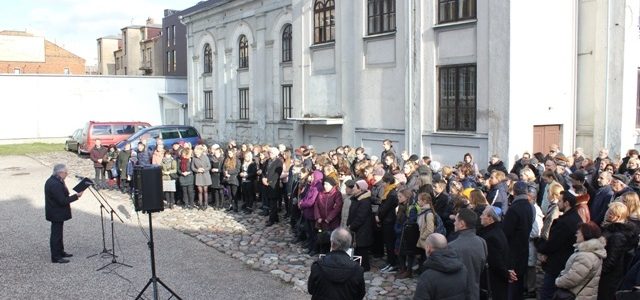
The Vilnius Jewish Religious Community invite you to commemorate International Holocaust Remembrance Day at the Choral Synagogue in Vilnius at 3:30 P.M. on Monday, January 28. The following survivors will talk about their Holocaust experiences: Mejer Zelcer, Jakov Mendelevsky, Chaim Nimirovsky, Isaak Markus and Roman Švarc.

Even if you can’t attend, you can take a selfie with a sign reading #WeRemember or #MesPrisimename and post it to social media.

Maushe Segal, the Last Jew of Lithuanian Kalvarija

Maushe Segal, the Last Jew of Lithuanian Kalvarija

Since 2005 we have marked International Holocaust Remembrance Day (officially “International Day of Commemoration in Memory of the Victims of the Holocaust” as designated by the United Nations) and have remembered the once-large Lithuanian Jewish community 78 years ago. There have been no Jews left in the shtetlakh for a long time now, although the Jewish legacy endures in the form of the old towns and synagogues they built, and the cemeteries and mass grave sites. We spoke with Maushe Segal (Maušius Segalis), the last Jew of the town of Kalvarija in western Lithuania, about his life and what Holocaust Remembrance Day means to him.


Maushe with grandson at the Kalvarija synagogue. Photo: Milda Rūkaitė

Segal: It’s important to me to remember, because this is a day commemorating the once-large community now dead. For many years we Jews gathered at the cemetery on September 1, since that’s the day all of the Jews of Marijampolė [Staropol] were murdered. That was before, now there are no Jews left in Kalvarija or Marijampolė.

What do you remember seeing as a child, or did your mother tell you?

They took my father and me to be shot on September 1, 1941. They shot him, but my mother grabbed me, I was small, from the pit in Marijampolė after the shooting.

Testament

Testament

The Pasaka movie theater in Vilnius and the Israeli embassy to Lithuania invite the public to a free screening of the film Testament at the movie theater located at Šv. Ignoto street no. 4 at 2:00 P.M. on Sunday, January 27 Entrance free. The film is in Hebrew, English, German and Yiddish (Lithuanian subtitles will be provided).

The Testament is a film about Holocaust historian Yoel Halberstam, who becomes involved in a legal battle over the brutal mass murder of Jews in the fictional town of Lensdorf, Austria, at the end of World War II. An influential industrialist family on whose land the massacre took place are planning a large real estate development at the mass murder site. Yoel suspects the goal of the construction is bury all memory of the event forever, but he needs proof to stop it from going forward.

Event supporters: Lithuanian embassy to Israel, Israeli embassy to Lithuania

Multicultural Festival in Kalvarija, Lithuania

The public is invited to a Multicultural Festival in Kalvarija in western Lithuania on January 25. The festival kicks off with the launch of the Kalvarija Regional History Museum at 1:30 P.M. followed by a concert at 5:00 P.M. at the Titnagas theater, including songs in Lithuanian, Polish, German and Yiddish.

Remember Raoul Wallenberg

Swedish ambassador to Lithuania Maria Lundqvist and the Lithuanian National Martynas Mažvydas Library’s Judaica Center invite you to attend the opening of the Swedish Institute exhibit Raoul Wallenberg: I Don’t Have Another Choice, at the library in Vilnius at 5:00 P.M. on January 30. The exhibit will run till February 10.

LJC Board Members: #WeRemember #MesPrisimename

LJC Board Members: #WeRemember #MesPrisimename

The agony of the Holocaust is known all to well to some members of the board of directors of the Lithuanian Jewish Community, it having affected them and their families deeply.

Preserve the memory of the past, don’t be apathetic, photograph yourself with a sign reading #WeRemember or #MesPrisimename.

We will spread the knowledge of memory together.

Murdered Multicultural Mayor Had Roots in Vilnius

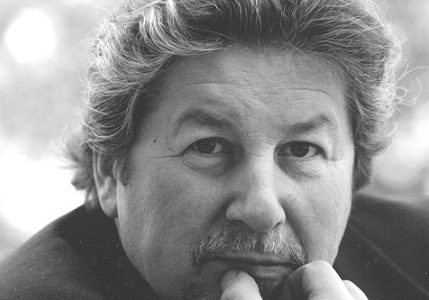
Paweł Adamowicz, the mayor of Gdańsk (Danzig), Poland, who died on January 14 following a stabbing the day before, stood for openness and bucked the tide of xenophobia sweeping that country, according to Britain’s Guardian newspaper. The American Jewish Committee called him “a longtime friend of the Jewish community” and Admowicz was a staunch critic of Poland’s new law limiting public statements of blame for Holocaust crimes to non-Polish actors and institutions. The late mayor called the law “idiotic and evil.”

Part of the explanation for the mayor’s renowned multiculturalism, according to the Guardian, was the fact his parents were Poles from Vilnius (Wilno) who repatriated to Poland proper following World War II:

“Those who knew and worked with him say his worldview was profoundly shaped by the experiences of his parents, who moved to Gdańsk in the 1940s from Vilnius, now the capital of Lithuania, as part of a wave of Polish people expelled from territory seized by the Soviet Union in the aftermath of the Second World War. As Adamowicz would later recount, they brought with them an outlook rooted in the multicultural traditions of Poland’s eastern borderlands, which fitted perfectly with Gdańsk’s own history as a coastal trading city.

Events to Mark International Holocaust Remembrance Day

Events to Mark International Holocaust Remembrance Day

January 25 FRIDAY 10:30 A.M.-2:30 P.M, Artis Hotel, Totorių street no. 23, Vilnius
Holocaust Day conference on fighting discrimination

Presentation of exhibit “Lithuania. Lite. Lita. One Century our of Seven”
Registration: www.lzb.lt, info@lzb.lt [in Lithuanian and English with translation]

Organizers: Lithuanian Jewish Community, Department of Ethnic Minorities under the Government of the Republic of Lithuania

January 27 SUNDAY 2:00 P.M., Pasaka Cinema, Šv. Ignoto street no. 4
Screening of the film Testament aka haEdut (2017). Entrance free. Film is in Hebrew, English, German and Yiddish (Lithuanian subtitles will be provided).

The Testament is a film about Holocaust historian Yoel Halberstam, who becomes involved in a legal battle over the brutal mass murder of Jews in the fictional town of Lensdorf, Austria, at the end of World War II. An influential industrialist family on whose land the massacre took place are planning a large real estate development at the mass murder site. Yoel suspects the goal of the construction is bury all memory of the event forever, but he needs proof to stop it from going forward.

Jewish Headstones Desecrated by Soviets to Return to Cemetery

Jewish Headstones Desecrated by Soviets to Return to Cemetery

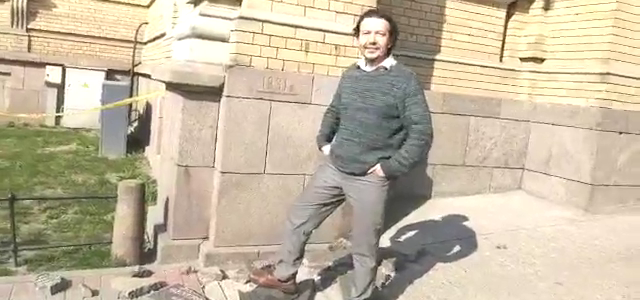
By early Friday, January 18, the Protestant Evangelical Church in central Vilnius (during Soviet times the Kronika movie theater) had completed the removal of stone stairs leading up to the entrance which were in fact Jewish headstones placed there by Soviet authorities.

This represents a victory in the Lithuanian Jewish Community’s long-term efforts to insure respect for the dead and the Jewish legacy in Lithuania.

Since 2013 the LJC has been cooperating actively with the Lithuanian Cultural Heritage Department and the Vilnius Protestant Evangelical consistory (session, or governing council) to determine whether the stairs were in fact taken from Jewish cemeteries. It was determined Jewish headstones were used in the construction of the stairs, headstones taken from the old Jewish cemetery in the Užupis neighborhood of Vilnius. Since that determination, the LJC has been appealing constantly to the institutions involved for the stairs to be removed. A number of LJC members have been involved actively in making this happen, as have some Lithuanian public figures, including late professor and MEP Leonidas Donskis.

Tu BiSh’vat is Arbor Day

Tu BiSh’vat is Arbor Day

Tu BiShv’at is the 15th day of the Jewish month of Sh’vat. It usually falls in the month of January or February on the Julian calendar. It is “the New Year of trees” or the “birthday” of fruit-bearing trees, a Jewish Arbor Day which coincides with modern notions of ecological conservation. According to the Midrash, G_d lead Adam around the Garden of Eden and told him to look at His works and to see how wonderful they were. G_d told the first man He had created all of it for him. The Most High also warned Adam not to defile the Garden, saying if he did, no one would come after him to repair the damage.

Tu BiSh’vat was an agricultural holiday in olden times, helping Jewish farmers to plan the harvest more accurately. In the late 19th century Zionists began to return to the Land of Israel and Tu BiSh’vat became a celebration of tree-planting in an effort to make the ancient land bloom again.

When You Save a Life, You Save a World

The exhibit When You Save a Life, You Save a World and the accompanying catalog will be presented at the Tolerance Center of the Vilna Gaon State Jewish Museum in Vilnius at 3:30 P.M. on January 24 to mark Holocaust Remembrance Day.

Litvaks, Jews in Lithuania and Anti-Semitism: Lithuania’s Jews Persevere

Litvaks, Jews in Lithuania and Anti-Semitism: Lithuania’s Jews Persevere

You don’t have to be born in Lithuania to call yourself a Litvak. There were many years in which Lithuania’s borders kept changing, so that many Jews born in any of Lithuania’s neighboring countries or in any of the countries that had ruled or occupied Lithuania, consider themselves to be Litvaks – especially if they can also speak Yiddish.

At meetings in Vilnius this past November, the first question put to the journalist from Jerusalem Post by both Faina Kukliansky, the chairwoman of the Lithuanian Jewish Community, and Fania Brancovskaja, Vilna’s last Holocaust survivor [sic], was “Do you speak Yiddish?” The interview with Brancovskaja, 96, was entirely in Yiddish, even though she is fluent in a half-dozen languages, including English. Kukliansky is also multilingual and even though the interview with her was conducted in English, every now and again, when she wanted to emphasize a point, she reverted to Yiddish.

Full story here.

Our Jewish Musicians: A Documentary Film by Saulius Sondeckis

Our Jewish Musicians: A Documentary Film by Saulius Sondeckis

The film “Mūsiškiai žydai muzikai” ([Our Jewish Musicians], 2017) by Saulius Sondeckis, Jr., documents the late world-famous conductor Saulius Sondeckis. It will be shown on Lithuanian public television’s LRT PLIUS channel at 9:45 P.M. on January 24.

In the film professor Sondeckis talks about Litvak musicians who contributed so much to the education of Lithuanian musicians, the maturity of the artistic community and the global music history. The film includes interviews with Sondeckis’s colleagues and students.

The 115-minute documentary employs documentary and visual material from archives, museums and private collections in Israel, the USA, Russia and Lithuania. It features 26 Litvak musicians from the first half of the 20th century to the present and contains 882 photographs and excerpts from 50 works by 33 composers.

Motke Chabad’s Best Joke

Motke Chabad’s Best Joke

Motke Chabad and His Best Joke* (Jewish humor)

by Pinchos Fridberg,
[an old Jew who was born and raised in Vilnius]

<Rebe>, will there ever come a time when the words <Vilne un Yidish> [Vilne and Yiddish] will be inseparable again?”
“<Saydn nor mit Meshiekh’n in eynem> [Not unless it comes with the Messiah].”

§§§

Would you like to know what an old Jew does after a delicious and satisfying lunch?
I’ll tell you: he lies <af a sofke> [<a sofke> – diminutive of sofa] <un khapt a dreml> [and grabs a nap].

And then what?

And then he dreams that …

A few days ago I received an e-mail from motke.chabad@xxxxx.com containing an incredible proposal: the author asked me to prove to him that I really am an old Vilna Jew <an alter vilner Yid>. I wouldn’t tell you these <bobe-maise> [old wives’ tales] if not for the way he suggested proving this.

Panevėžys Jewish Community Invites Public to Commemorate Holocaust

Panevėžys Jewish Community Invites Public to Commemorate Holocaust

The Panevėžys Jewish Community invites all people of good will to attend a Holocaust commemoration on January 27. Event program:

12 noon: Gathering at the Sad Jewish Mother statue, Atminties square, Vasario 16-osios street.

12:30 P.M. Gathering continues at the Ghetto Gate statue, corner of Klaipėdos and Krekenavos streets.

1:30 P.M. Discussion about Holocaust history, causes and perpetrators at the Panevėžys Jewish Community, Ramygalos street no. 18). Screening of film on Auschwitz-Birkenau concentration camp complex, the largest camp during the Holocaust where 1.5 million people were murdered.

Event supported by:

Conference Dedicated to International Holocaust Remembrance Day and Combating Discrimination

Conference Dedicated to International Holocaust Remembrance Day and Combating Discrimination


CONFERENCE DEDICATED TO INTERNATIONAL HOLOCAUST REMEMBRANCE DAY AND COMBATING DISCRIMINATION

Artis hotel, Vilnius, Totorių street no. 23, Vilnius, Lithuania
January 25

[10:30 – 11:00 A.M. registration]

11 A.M.

Welcome speeches:
Lithuanian Minister of Foreign Affairs, H.E. Mr.  Linas Linkevičius
Faina Kukliansky, President, Lithuanian Jewish Community
Vida Montvydaitė, DIrector, National Ethnic Minorities Department
Julius Meinl, World Jewish Congress Commissioner for Combating Antisemitism

11:15 A.M. – 12:15 P.M. PART I:

Jews, Lithuanians and the Greatest Tragedy of the 20th Century. Lessons for Future Generations.

Snowball Rolled South: A Documentary on Litvaks in South Africa

Snowball Rolled South: A Documentary on Litvaks in South Africa

Ieva Balsiūnaitė, one of the producers of the film The Snowball Rolled South about Litvaks in South Africa, gave an interview to Lithuanian public television on the eve of its Lithuanian premiere on Lithuanian TV. The film will be screened at the Tolerance Center of the Vilna Gaon State Jewish Museum, Naugarduko street no. 10/2, Vilnius, at 6:00 P.M. on January 17, 2019, to be followed by a discussion. The film contains Lithuanian and English passages and Lithuanian subtitles will be provided at this screening. The running time is 52 minutes. Entrance is free.

§§§

The majority of Jews living in South Africa come from Lithuania, and many of them are celebrated artists, businesspeople, public figures. A few have been Nobel prize winners and famous actors, even an Oscar nominee. Journalist, documentary maker and one of the makers of the film The Snowball Rolled South Ieva Balsiūnaitė told Lithuanian public television about this. Some of the film’s heroes were born in Lithuania, others in South Africa, so their connections with Lithuania are varied. The older generation still finds it hard to believe how all the warm and nice stories became the Holocaust, and the main characters speak about this excitedly, emotionally and frankly, Balsiūnaitė said.

You’d probably agree that few people in Lithuania know there are so many Litvaks in South Africa. How did this topic attract you and your colleagues and what made you make a documentary film about it?

We made the film as a team with Jonas Jakūnas and Sofija Korf, and we developed the concept with two journalists and documentarians, Viktorija Mickutė and Lukas Keraitis.

This topic first grabbed my interest a long time ago when I read an article about how almost all Jews living in South Africa have Lithuanian origins. That immediately raised a great many questions: why did so many people come from Lithuania specifically, and not from neighboring countries? What is the Litvak experience in the Republic of South Africa, and is there still some connection with Lithuania?