Litvaks

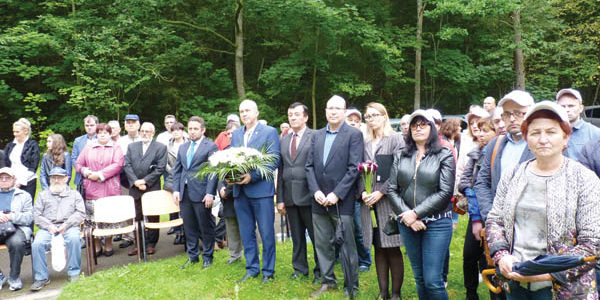
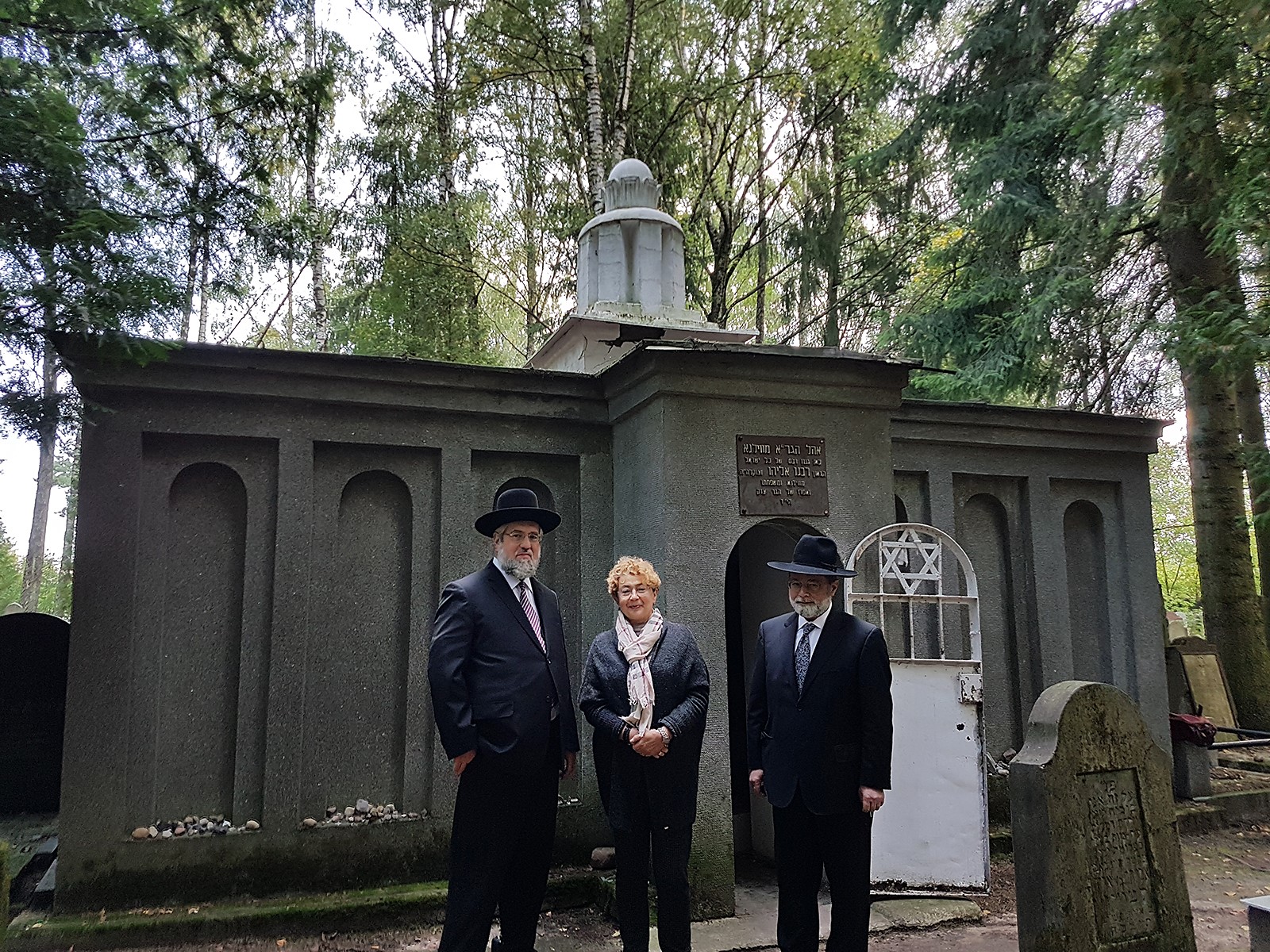
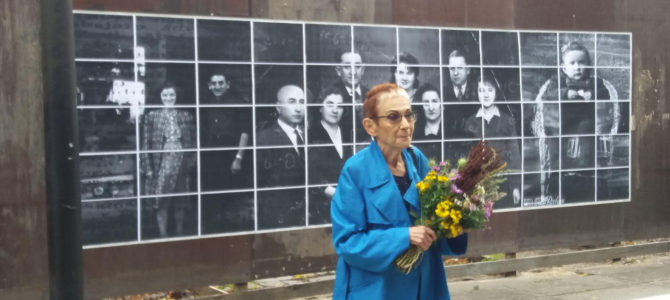
Knesset Speaker Yuli-Yoel Edelstein’s Visit to Ponar, LJC Chairwoman Faina Kukliansky’s Speech

“On Sunday at three o’clock the streets of the ghetto were closed. A group of three hundred Jews from Salos and Smurgainys left for Kaunas with a large crowd of Jews from the countryside at the railroad station. Standing at the gate I saw how they packed their things. Happy and in a good mood, they got on the train. Today terrible news reached us.

“Eighty-five cars with Jews, almost 5,000 people, were not taken to Kaunas as promised; instead the train took them to Ponar where they were shot. Five-thousand new victims of brutality. The entire ghetto is upset as if struck by lightning. People are consumed by the sense of butchery… Everything is so horrible.”

These are the thoughts fifteen-year-old Yitskhok Rudashevski wrote down in Yiddish in his school notebook. The thoughts of someone mature beyond his age, or perhaps thoughts made old through violence, suffering and waiting for death… Yitskhok’s life ended here, as did those of many Vilnius ghetto inmates, in one of the pits of Ponar turned into human sacrifice sites.

Lithuanian school children and young adults have not had the opportunity so far to read Yitskhok’s diary, and the several pages included in history textbooks do not reflect the horror of the Holocaust, or the 700 years of Lithuanian Jewish history, or my people’s contribution to fortifying Lithuanian statehood. Little is said of Lithuanian collaboration in the Holocaust, and heads are bowed and statues raised not always to the true heroes of Lithuania. The Holocaust is passed on as a crippling tragedy of from one generation to the next, and from a different generation to the next as horrible guilt, at the subconscious level. The time has come to recognize the common historical memory of Jews and Lithuanians. Lithuanians and Litvaks have one shared history in which Lithuanians and Jews intertwine, and the paths of Israel and Lithuania crisscross. Zionism, or Jewish patriotism, a very strong tradition in Litvak history, saved many Jewish families from death. Am Yisrael khai. Mir zainen do!

For perhaps the first time at this event in Ponar, Jewish partisan Fania Brancovskaja will not speak. The entire Community says, Get well soon, Fania!

This reminds us of the passage of time, the worth of a human life, its fragility and transitory nature, and it encourages us to act, while we can, to keep memory alive. Only historical memory and truth will help the older generation to know, give the younger generation the chance to learn, and help build the bridge of memory between peoples and countries.
Don’t Give Up Hope: The Partisan Poem and Song Project


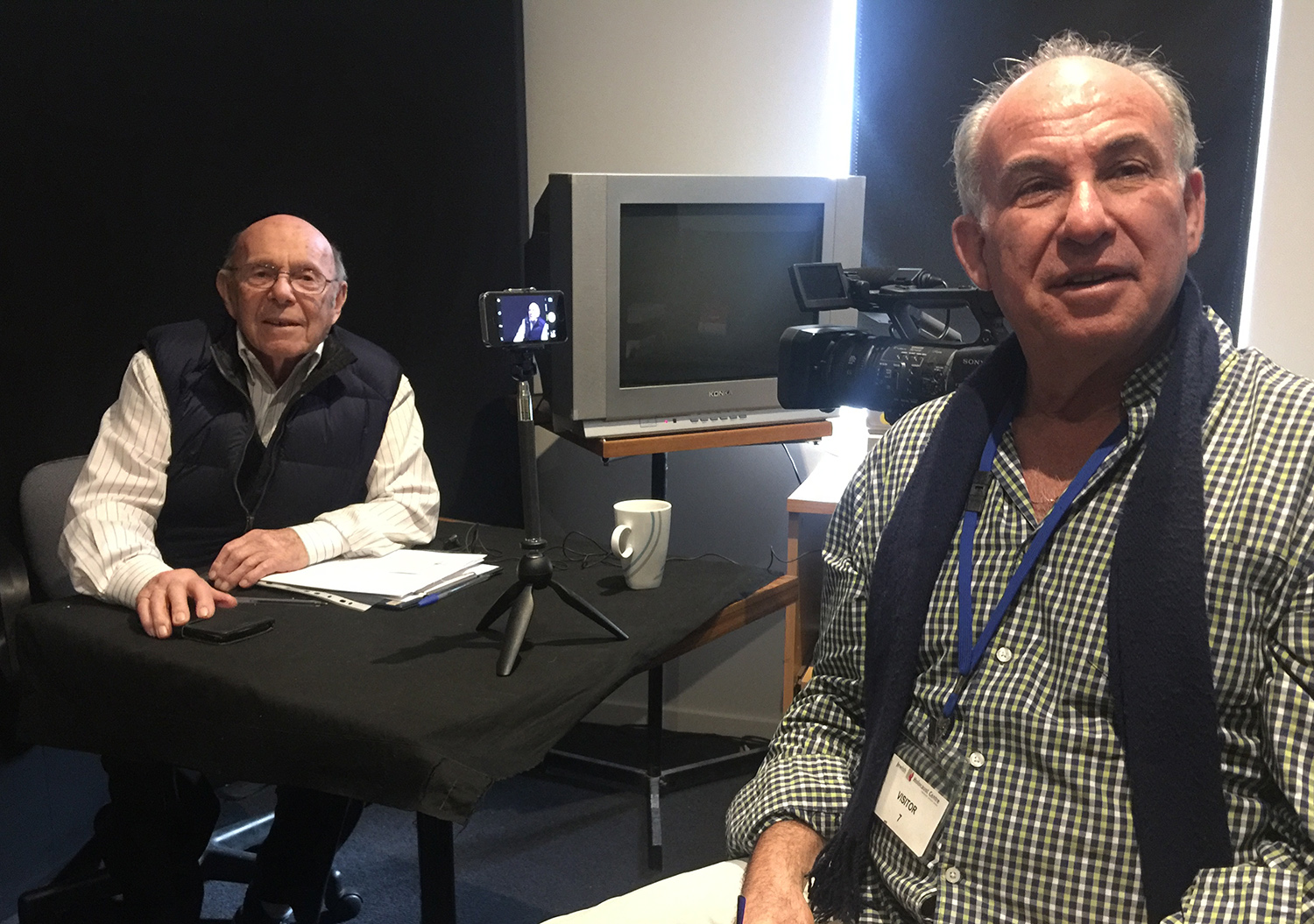
Eli Rabinowitz interviews Phillip Maisel, 95, Survivor of the Vilna Ghetto, and friend of Hirsh Glik in Melbourne, Australia. August 22, 2017

Hirsh Glik, 20, wrote the poem, Zog Nit Keynmol, in Yiddish in the Vilna Ghetto in 1943. Its powerful words are about hope, heroes and resistance. It became immediately popular and spread quickly. Hirsh was killed in Estonia the following year.

Two Jewish Russian brothers, Dmitri and Daniel Pokrass, had composed a march for a movie in 1938. This was later matched with the poem. After the Holocaust, this song became the anthem of the Survivors and has been sung ever since at annual Yom Hashoah commemorations, mostly in Yiddish, and in Hebrew in Israel.

Many school children now sing Zog Nit Keynmol at commemorations in Yiddish, the lingua franca in 1943, but hardly spoken today. Most do not understand the meaning, inspiration and context of the words. This was brought to my attention in January by Rabbi Craig Kacev, the Head of Jewish Studies at South Africa’s largest Jewish Day School, King David. Three weeks later, 1000 of his high school students attended my audiovisual presentation consisting of short YouTube clips. It was a resounding success and the start of my remarkable journey taking me to South Africa, the UK, Lithuania, Poland, Israel, the US, Canada and back home to Australia in six months!

Life and Diaspora in the Shtetl of the Jews of Jurbarkas

Jurbarko žydų gyvenimas ir diaspora štetle

The Kaunas Jewish Community accepted an invitation from Viktoras Klepikovas, monument specialist for the Jurbarkas (Yurburg, Georgenburg) regional administration’s infrastructure and property department, to attend the seminar Klepikovas organized called “Life and Diaspora in the Shtetl of the Jews of Jurbarkas” held at the regional public library. A large, overflow audience listened to deputy director of the Vilnius Yiddish Institute Rūta Puišytė who spoke about the Jewish history of Jurbarkas, daily life for Jews there and good neighborly relations between Jews and Lithuanians. She said Jews constituted 42 percent of the population before the Holocaust.

Viktoras Klepikovas presented the second speaker, Rita Vaiva Begenat, who finally grew weary of the apathy of local officials and all the bureaucratic obstacles, and so in 2003 began cleaning up the old Jewish cemetery in Jurbarkas herself. She cleaned up the grounds, cleaned headstones and renewed inscriptions. She said she needs help reading the inscriptions now.

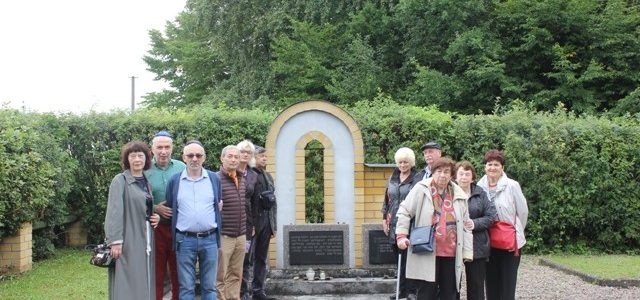
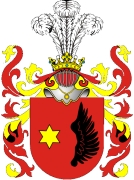
KJC chairman Gercas Žakas spoke at the seminar and thanked the organizers for the meaningful event. Also attending were KJC members Judita Mackevičienė and Dobrė Rozenbergienė, both originally from Jurbarkas. KJC members toured the old Jewish cemetery and a mass murder site. The KJC delegation stopped at nearby Panemunė castle on the way home and were intrigued by the yellow star on the coat of arms of its former rulers, the Gelgaudas (Giełgud) family.

More on Sugihara Week in Kaunas

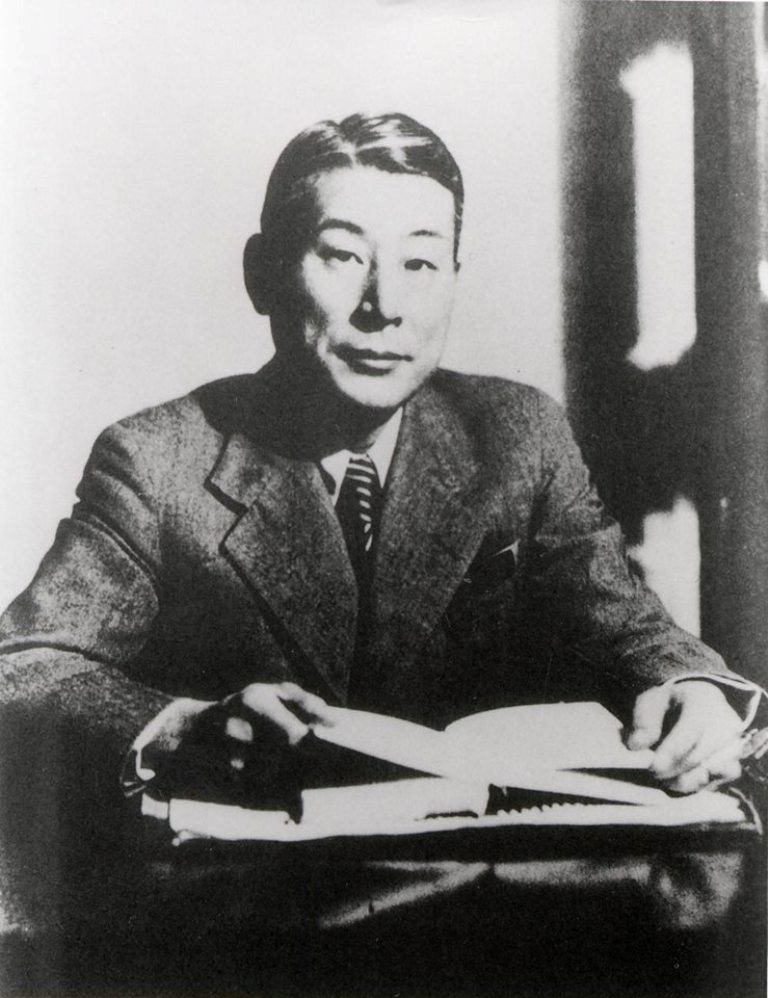
Sugihara Week celebrations in Kaunas drew a large number of guests from Japan, including his eldest son Hiroki’s widow Michi Sugihara and the only surviving son Nobuki Sugihara.

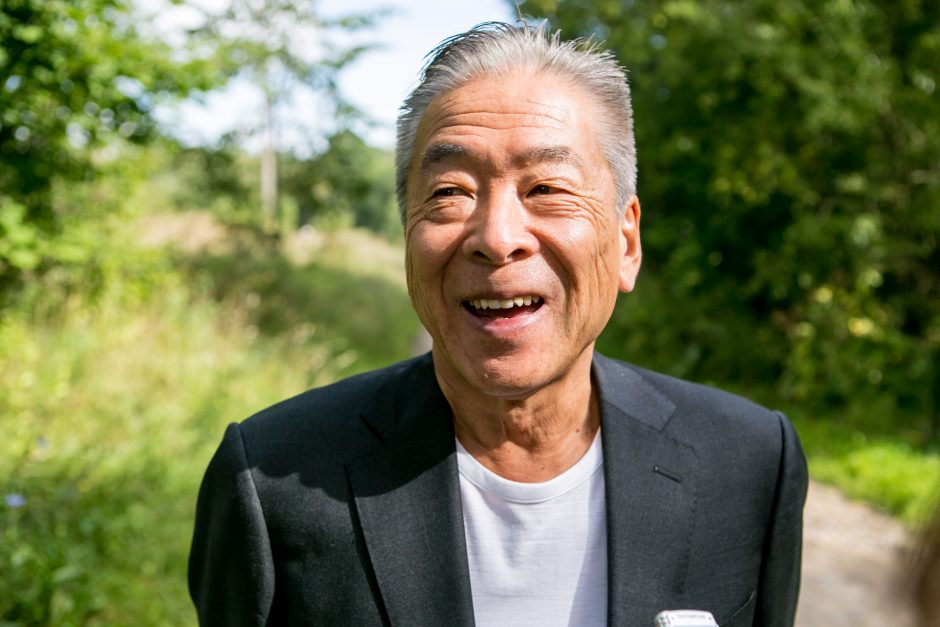
Mr. Sugihara laid a wreath and observed a minute of silence for the Jews murdered in Garliava, a suburb of Kaunas. The scion of the Sugihara legacy said his father inculcated in him an interest in history and taught him respect for those who didn’t escape.

The Holocaust Remembered


by Loreta Ežerskytė, Gimtoji žemė, the newspaper of the Ukmergė region

For more than 60 years now the mass murder of 12,000 Jews has been marked on the first Sunday in September in the Pivonija forest near Ukmergė [Vilkomir]. The commemoration happens at noon at the mass grave. Those who cannot attend, whose family members or other loved ones are buried here, mark the tragedy by lighting candles and praying at home. On Sunday many candles burned in Israel, the United States, South Africa and other countries whither fate sent Jews from Ukmergė.

The commemoration of the third-largest Holocaust mass murder site in Lithuania was attended by members of the Ukmergė Jewish Community and a large contingent of Jews from the Panevėžys, Šiauliai, Vilnius and Kaunas Jewish Communities as well as from other cities and countries. Regional administration head Rolandas Janickas and municipal administration director Stasys Jackūnas attended, and US embassy Vilnius deputy chief of mission Howard Solomon attended for the second year in a row.

A group from the Dukstyna primary school and local residents also attended the commemoration. Ukmergė Jewish Community chairman Artūras Taicas told those in attendance about how Jews were brought in groups there 76 years ago: “They were brought by the Nazis and local collaborators. No one had any mercy for the women or children, never mind the men. They all suffered the same fate. They were murdered because they were Jews. Only a few individuals survived, those who were deported. In the Taicas family only my grandfather survived, and that’s why I am standing here…”

Chiune Sugihara a True Humanitarian Who Lived in Kaunas

Dr. Aurelijus Zykas, the director of the Asian Studies Center of Vytautas Magnus University which formerly occupied the second floor of the Sugihara House museum in Kaunas, characterized Japanese diplomat and Righteous Gentile Chiune Sugihara this way in an interview granted to the “What’s Happening in Kaunas” webpage. Dr. Zykas was one of the organizers of the Sugihara Week celebration in Kaunas from September 2 to 9.

Full interview in Lithuanian here.

Time for Remembrance in Rokiškis and Panemunėlis

Residents of Rokiškis, guests and representatives of the Panevėžys Jewish Community gathered in the hall of the Rokiškis Regional History Museum on the afternoon of September 8. They gathered for an event to celebrate the European Day of Jewish Culture. Event organizer Neringa Danienė presented the program, the first part of which honored Molėtai Regional History Museum director and Lithuanian linguist Viktorija Kazlienė. Visitor from the USA F. Shapiro presented her the Ruvin volunteer award and thanked her for promoting Jewish heritage and for her contribution to the march of memory in Molėtai.

Volunteers Clean Up Sudervės Road Jewish Cemetery in Vilnius

Lithuanian Jewish Community members and staff gathered to clean up the Jewish cemetery on Sudervės road in Vilnius on Sunday, September 10.

Israeli ambassador Amir Maimon pitched in, as did LJC chairwoman Faina Kukliansky with her grandchildren. Community members, administrative staff and rabbis all came out to perform a small mitzvah in the run-up to Rosh Hashanah and Yom Kippur. They raked up leaves, gathered garbage and sorted it for recycling, tended abandoned graves and cleaned and beautified the only working Jewish cemetery in Vilnius.

Thank you to all the volunteers for your good work!

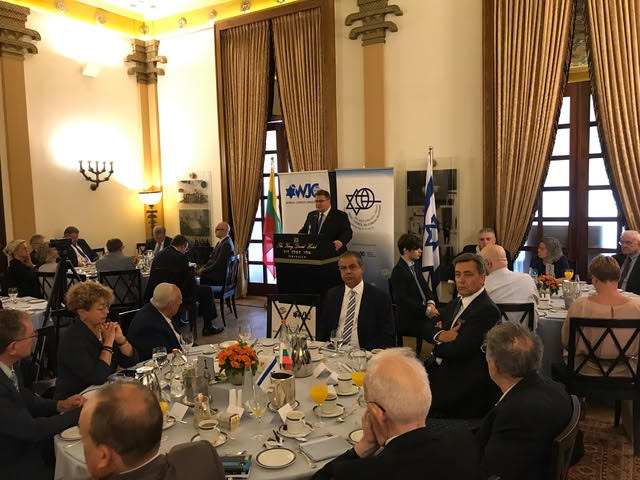
World Jewish Congress Hosts Meeting of Lithuanian Foreign Minister and Ambassadors in Jerusalem

“This year Lithuania and Israel mark the 35th anniversary of diplomatic relations. We value what our countries have in common and seek to become even closer,” Lithuanian foreign minister Linas Linkevičius said at the function.

Lithuanian Jewish Community chairwoman Faina Kukliansky traveled with the Lithuanian delegation to Israel and met with Litvaks living there, who congratulated her on her re-election as chairwoman and wished her the highest success. The meeting was warm and hospitable with home-made dishes made by Litvaks. They agreed in discussions to work together with the Jews of Lithuania and in the near future to discuss broad possibilities and goals in that cooperation.

The Lithuanian Foreign Ministry reported meetings with Israeli leaders included positive assessments of growing bilateral economic cooperation, growth in trade, increases in tourism and successful cooperation in research and development. They also discussed security threats in their respective regions and agreed to push for more cooperation in the fields of energy, defense and cyber-security.

Most Important Event in Sugihara Week: Discussion of Sugihara’s Lessons, Applicable Today

Svarbiausiame „Sugiharos savaitės“ renginyje – pokalbiai apie Č.Sugiharos pamokas, pritaikomas ir šiandien

15min.lt

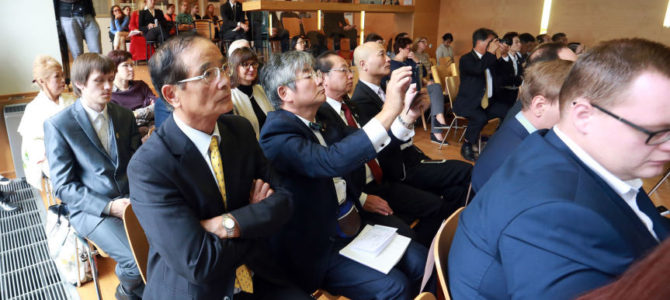
For Japanese people he is a hero, known to all, from the youngest child to the oldest person. The diplomat Chiune Sugihara is also well known in Lithuania. Even so, greater attention to his life and deeds is only know being paid. A group of scholars, public figures, politicians and diplomats from Lithuania and Japanese discussed Sugihara’s extraordinarily heroic deed at a conference in Kaunas September 6.

Full story in Lithuanian here.

Sugihara Week Continues in Kaunas

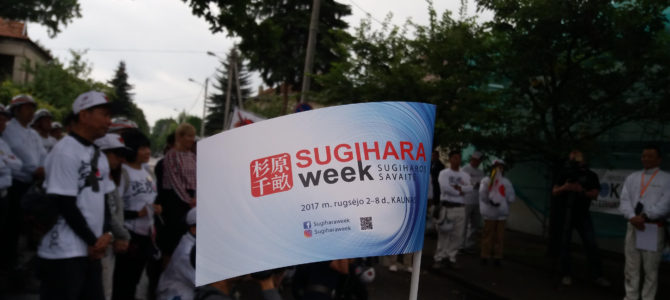
Events for the Sugihara Week being celebrated in Kaunas are scheduled from September 2 to 8.

Sugihara Week is a series of events to commemorate Japanese diplomat and Righteous Gentile Chiune Sugihara’s life and deed. From 1939 to 1940 Sugihara and Dutch consul Jan Zwartendijk saved over 6,000 Jewish lives from the Holocaust by issuing so-called visas for life.

“Consul Sugihara has become ever more known in the world and I am happy ever new ways to commemorate his heroism are appearing. It is significant that this wonderful initiative for a Sugihara Week came from Kaunas, which is the epicenter of the entire Sugihara story,” Toyoei Shigeeda, Japan’s ambassador to Lithuania, said.

Japanese Restorers of Sugihara House Arrive

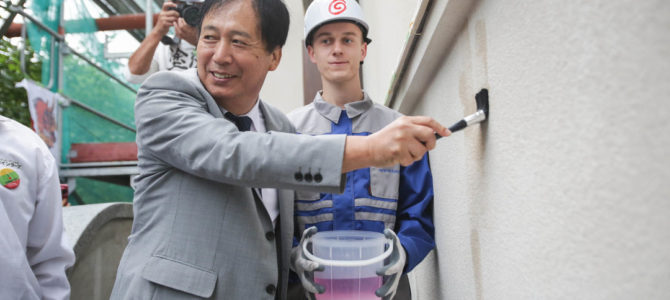
Kaunas, September 4, BNS–A group of painters dressed in white just arrived from Japan gathered at the residence and now museum of famous interwar Japanese diplomat and Righteous Gentile Chiune Sugihara Monday to help in the renovation of the building.

Tokon International chairman Keiichi Yasuda, whose company sent the painters, told BNS the painters wanted to help and make people happy.

“There are many companies which do everything for money, but money doesn’t bring happiness, the meaning of life is not money, but happiness, and we wanted to do something to help make people happy,” Mr. Yasuda said.

Chiune Sugihara Week in Kaunas

Saturday a week-long celebration of Japanese diplomat and Righteous Gentile Chiune Sugihara began in Kaunas, Lithuania. The audience learned of Sugihara’s life-saving mission in concert with Dutch consul Jan Zwartendijk which resulted in over 6,000 Jews being saved from the Holocaust. The events included creative workshops, lectures, screenings of films, concerts and exhibits for young and old.

Lithuanians and Jews during the Nazi Occupation

by Ona Šimaitė
translated by Gloria Berkenstat Freund

At the time of the Second World War, Lithuanian-Jewish relations took on a sharply tragic form that could not have been imagined in earlier times. As a Lithuanian woman, it is bitter for me to assert that during the years of the worst torture of the Jews by the Germans, not all of the people in my country showed an elementary, humane sympathy to their Jewish neighbors of many generations and the worst of the Lithuanians–to my great pain!– even had their hand in the extermination.

The Lithuanian Special Squad (Ypatingasis Bûrys) together with the Nazis murdered Jews in a series of places. Such scoundrels as Babialis, Piragius and others will remain accursed not only by Jews, but also by Lithuanians.

Lithuanian police divisions not only carried out Hitler’s orders to kill Jews, but in many localities they themselves asked to do the mitzvah [commandment, usually translated as “good deed”) of murdering Jews or they randomly initiated various persecutions. I had more than one occasion to watch how Lithuanian policemen fined Jews for trifles and how hard-hearted and malicious they were during the deportations of Jews in the ghetto. Even leading the Jews to death, deeply degenerate Lithuanian policemen did not have the elementary tact not to show–during the last tragic hours of thousands of lives–their animal-like fury.

LJC Chairwoman Meets Israeli Defense Minister

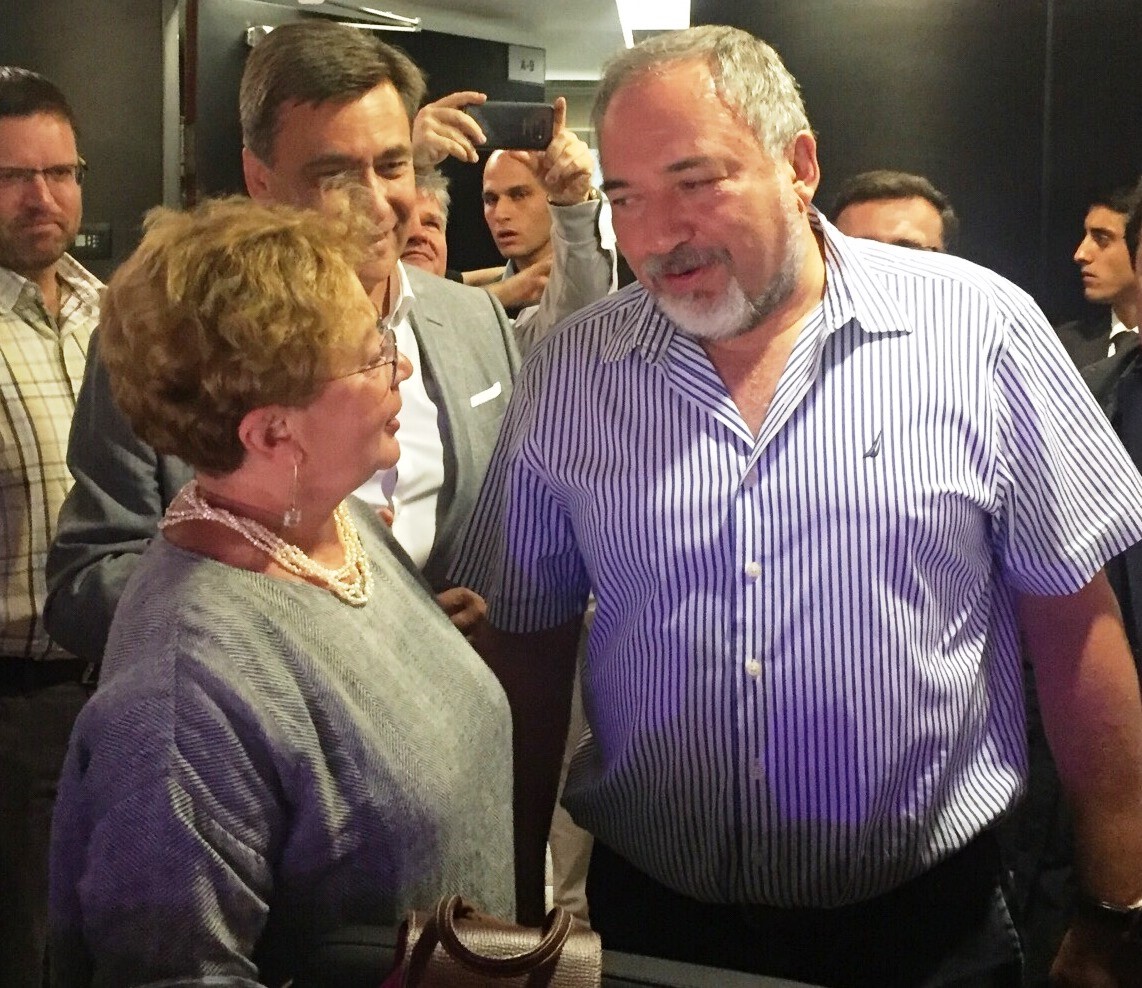
On August 2 a Lithuanian Foreign Ministry delegation led by foreign minister Linas Linkevičius and which included Lithuanian Jewish Community chairwoman Faina Kukliansky watched a Lithuanian-Israeli basketball game in Tel Aviv. After the game Kukliansky met an old acquaintance, Israeli defense minister Avigdor Lieberman, and they discussed current events in the Lithuanian Jewish Community and security issues at the Community.

Panevėžys Jewish Community Invites Public to Attend Events to Commemorate Olkin Family

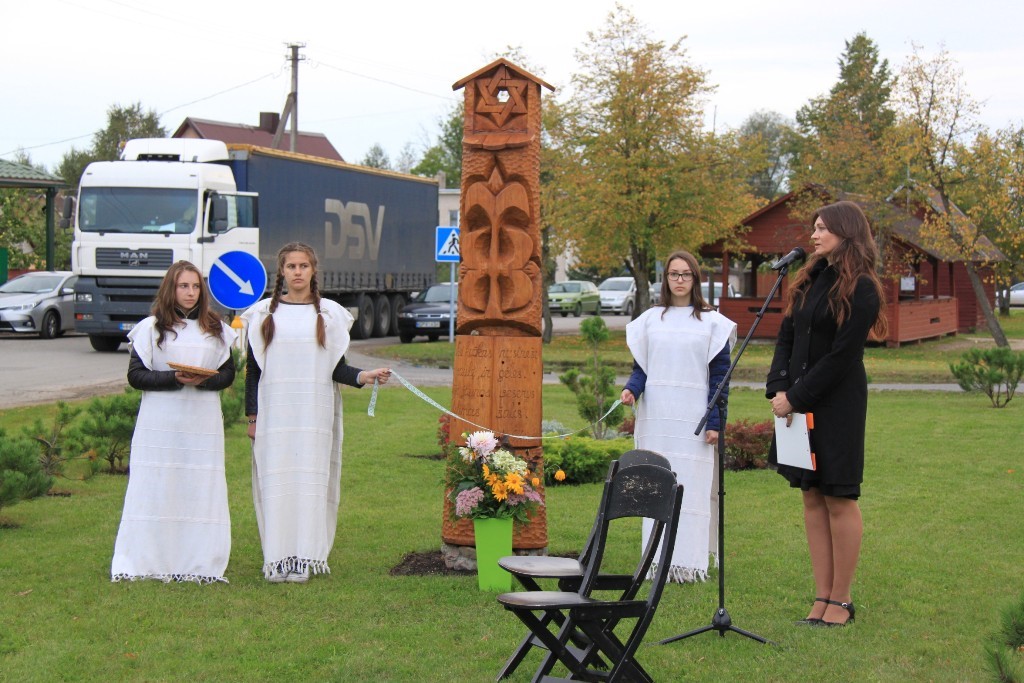
The Rokiškio teatras association is carrying out a project to commemorate the Olkin family from Panemunėlis, Lithuania. The family was murdered in the Holocaust. The Panevėžys Jewish Community is a partner in the project. The play Nutildytos Mūzos [Silenced Muses] based on real events will be performed at 4:30 P.M. at the Rokiškis Regional History Museum on September 8 as part of the project. At 6:30 P.M. a statue commemorating the poetess Matilda Olkin will be unveiled at the Panemunėlis railroad station. A monument to commemorate the murdered Olkin and Yoffe families will be unveiled at Šeduikiškės village at 7:30 P.M. All events are open to the public.

Condolences

Moisejus Benderskis has died. He was born April 8, 1937, and passed away on August 11, 2017. He won many chess championships and prizes over the years. The Lithuanian Jewish Community mourns his passing with the Kaunas Jewish Community, where he was a member.

Great Synagogue Listed on Cultural Treasures Registry


information from the Cultural Heritage Department under the Ministry of Culture of the Republic of Lithuania and other sources

A commission for assessing cultural heritage real estate from the Cultural Heritage Department has provided legal protection to the remains of the Great Synagogue in Vilnius. The Great Synagogue of Vilnius was one of the largest religious institutions in Eastern Europe. It was renowned as an important Jewish spiritual and educational center and put Vilnius on the map as a center of Jewish scholarship. The Cultural Treasures Registry lists the construction (fragments of brick wall dating from the 18th century and entrance to the synagogue, southwest wall fragment with niche for the aron kodesh and eastern wall fragment), architectural features, remains of the former building complex including mikvehs dating from the late 19th century, a utility trench on Žydų street and cultural strata as valuable and protected features of the synagogue complex.

Originally the site hosted a wooden synagogue, believed to have been built around 1573. It burned down and was replaced at least once. In 1630 and 1633 royal grant was issued to allow a brick and mortar synagogue to be built there.

Congratulations to Feliksas Puzemskis!

Klaipėda Jewish Community chairman Feliksas Puzemskis has been appointed chairman of the Ethnic Minorities Council of the city of Klaipėda. The Lithuanian Jewish Community congratulates Feliksas on the important appointment and wishes him the highest success in this new post!

Monument Commemorates Jewish Community of Žagarė, Lithuania

Paminklas Žagarės žydų bendruomenės atminimui

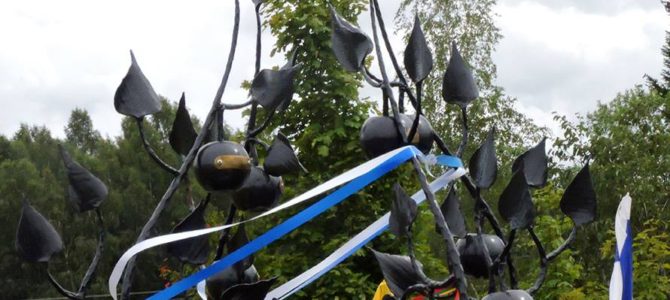
A metal apple tree was “planted” at the Litvak Commemorative Garden in the Žemaitija National Park by the Jakovas Bunka Charity and Sponsorship Fund to commemorate the former Jewish community of Žagarė, Lithuania. The metal sculpture was made by Artūras Platakis. Rabbi Kalev Krelin, Jewish rescuer family member Leonas Levinskas and Israeli ambassador to Lithuania Amir Maimon attended the ceremony in mid-August in Medsėdžiai village near Plungė, Lithuania.