Litvaks

New Book Remembers Litvaks of Greater Kaunas Area

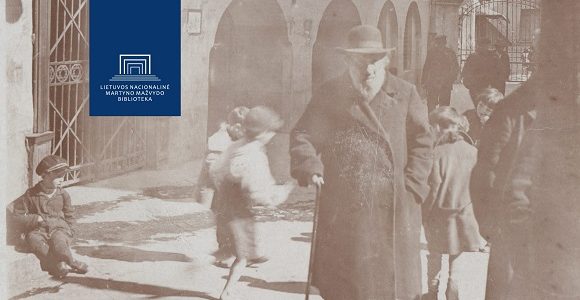
The Kaunas Regional Public Library Monday presented a new book written by multiple authors called “Žydai Pakaunėje” [Jews in the Area around Kaunas]. The collected writings were compiled by Dr. Inga Stepukonienė, a teacher at the Garliavos Jonučiai Gymnasium and associate professor at the Kaunas branch of Vilnius University.

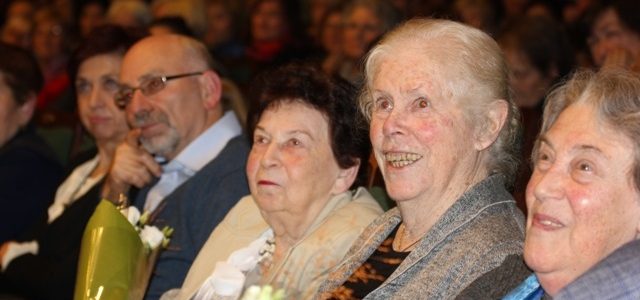
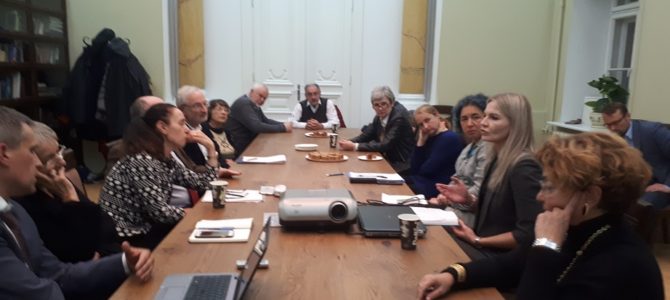
Book authors, historians and members of the Jewish community attended the book launch.

Historical documents show Jews settled in the Grand Duchy of Lithuania in the 14th century and numbered over a quarter million people by the 18th century.

Litvaks were considered hard-working, talented and creative. Many fought in Lithuania’s volunteer army and participated actively in national life. Interwar Lithuanian and Jewish politicians, scholars and writers forged a common vision for the new nation.

The book features many recollections. Most of the authors tackling the subject of Jewish life in the villages around Kaunas are local residents. Regional historian Antanas Vaičius is from Čekiškė, Algirdas Marazas of Kulautuva writes about Jewish life there and Garliava residents Inga Stepukonienė, Robertas Keturakis and Ovidijus Jurkša pay tribute to the history of the Jews of Garliava.

Some Litvaks from the area around Kaunas even achieved world renown: Leiba and Estera Tile moved to America and became the adoptive parents of Louis Armstrong, aka the jazzman Satchmo.

Who Are Lithuania’s Heroes Today? Škirpa, Noreika or the Righteous Gentiles?

Former ghetto prisoners, members of the Lithuanian Jewish Community, members of international Jewish organizations, ambassadors from Israel and other countries, Government ministers, parliamentary speaker Viktoras Pranckietis and Vilnius mayor Remigijus Šimašius were among those attending a commemorative ceremony at Ponar September 23, 2018, the 75th anniversary of the final destruction of the Vilnius ghetto.

“Nine hundred Righteous Gentiles testify that 75 years ago people had the choice not to commit murder. The only ones without a choice were those selected for death. Even after 25 years of independence, Lithuania continues to bear the burden of that choice. I would like to ask one question: who is a Lithuanian hero today? Is it Škirpa, Noreika or the citizens who rescued Jews in Lithuania, who fought for their independence, worked for the benefit of their country, who risked their lives and saved their fellow citizens from death?” Lithuanian Jewish Community chairwoman Faina Kukliansky asked the audience.

Arie Ben-Ari Grodzensky, chairman of the Association of Jews from Lithuania in Israel, said: “It’s impossible to forget the tragedy of the Holocaust, and we must exert all efforts to make sure the Shoah never happens again. I want to add that our organization, made up of more than 1,500 Litvaks around the world, has officially joined the Lithuanian Jewish Community this year. We are very happy and very supportive of LJC chairwoman Faina Kukliansky.”

Mickey Kantor, president of the Beit Vilna Association of Vilnius and Vilnius Region Jews in Israel, remembered her relatives murdered at Ponar with great emotion, and told the story of her mother who was rescued.

The Murdered Don’t Vote

Nužudytieji nebalsuoja

by Sergejus Kanovičius

They no longer have a voice. Although, as my father says, they speak to us without stop. From the pits on the forest’s edge. Marked and unmarked. From both those somewhat maintained and those littered with trash. They speak to us and our conscience. The handful who possess a conscience respond, some with respectful silence, some, as in the forests of Šeduva and a few other places, quietly carrying and lighting a candle at that dismal site, some uttering something not very popular about the state of our memory which has become oblivion.

Those who are offended by this constant remembrance of two hundred thousand lives laid down in the pits also respond: after all, how much can you continue to appeal to our conscience, how much can you blame us for being apathetic about what happened, how much can you remind us that you still lie and will lie eternally there where the garbage of our memory swirls? Then there will appear those who express their annoyance with intellectual cynicism, who will remind us of the Jewish ghetto police, of Jacob Gens, who will argue that so many of you died because you didn’t know how to run away (yes, there are those, too). These people, calling themselves journalists or some sort of PhDs or even attorneys will speak cynically about the victims’ responsibility in their becoming victims. They’re the guilty ones. Do you hear that, you who lie under layers of garbage and moss? You’re the guilty ones.

LJC Chairwoman Faina Kukliansky on Commemorating Rescuers of Jews

On September 23, the Day of Remembrance of Lithuanian Jewish Victims of Genocide, we will again walk the path of the condemned in Ponar. Everyone we lost has a name, each one of them is important, those whose lives were extinguished during the mass murder of the Jews. Seventy-five years having passed since the destruction of the Vilnius ghetto, which has become the symbol of the Holocaust in Lithuania, we have come to the conclusion that now everyone who can witness to the story of the Holocaust is just as important.

Even now, under democratic conditions, it still takes courage, wisdom, will and fundamental human understanding to witness to historical truth. We can only imagine and wonder at what set of values was held by those people who found in themselves the courage and resolution to rescue those condemned to death, Jewish men, women and the children who were completely helpless in the face of war.

We, the Jewish people, are marked by the agony of the Shoah, and are obligated by it as well: we would trample upon the memory of our forefathers if we forgave those who intentionally became the executors of Nazi policies who are now still often presented as Lithuanian heroes. But we have inherited the experience of the Holocaust, and the fundamental understanding of what a priceless gift life is. While we are not able to forget those who deprived us of this gift, we also will always remember those who, like second parents, granted it to us anew.

About 900 Lithuanians made the fateful decision during World War II to oppose officially sanctioned hate. Their only weapon was their conscience, whose decision to remain human led them, non-Jews, to become an eternal, spiritual part of our people. Our gratitude cannot be expressed in words, it cannot be measured, it is impossible to comprehend and immeasurable and it is as if it has become the light of God’s being in the corrupt grey of the ghetto or the daily life in a forest hideout. These are people thanks to whom we were reborn to new life, thanks to whom our energies were restored for the old faith.

These brave Lithuanians built eternal bridges between nations and generations, they became true goodwill ambassadors representing hope, humanity and faith. The time has come for Lithuania to remember the names of the nation’s heroes, their names and stories should be recorded in textbooks, their names should adorn streets and schools and statues should be erected in their honor.

Today, twenty-eight years after independence, celebrating the centennial of statehood, a commemorative marker to the Righteous Gentiles will adorn the courtyard of the Church of the Missionaries in Vilnius, reminding the state of its duty to remember its heroes. I bow my head to all the known and unknown people who rescued Jews, to all those here today and to all those whom time has taken. Thank you, all of you. You were there for us, the Jewish people, you are there and you will always will be.

Stele Unveiled for Jewish Rescuers at Monastery of the Missionaries in Vilnius

A stele was unveiled to commemorate those who rescued Jews from the Holocaust in the Tymas neighborhood of Vilnius September 21. The stone marks the future site of a larger monument to rescuers.

This milestone event was achieved only after many years of requests by the Lithuanian Jewish Community to the city of Vilnius for a site for such a statue, without response. Discussions on a monument commemorating Righteous Gentiles continued for several years with the institutions responsible criticizing one another.

The LJC asked for a commemoration site near Ona Šimaitė street, named after the Righteous Gentile Ona Šimaitė, at the intersection of Misionierių and Maironio streets in Vilnius. The courtyard of the Missionaries Monastery was the site of the final selection on the last day of the liquidation of the Vilnius ghetto, September 23, 1943. Thousands of Jews from Vilnius were forced to undergo the selection and several members of the ghetto resistance were hung in the courtyard.

LJC chairwoman Faina Kukliansky, who initiated the idea for a statue to the rescuers, spoke at the ceremony and personally thanked the Žukauskas, Matukevičius, Daugevičius and Lukaševičius families for rescuing her relatives from death.

WJC and Lithuanian Jewish Community Mark 75 Years Since Liquidation of Vilnius Ghetto

WJC and Lithuanian Jewish community mark 75 years since liquidation of Vilnius Ghetto: “We must continue to strengthen Jewish life in Lithuania”

WJC President Lauder praises Pope’s participation in commemoration: “Pope Francis is a true friend of the Jewish people”

NEW YORK–The World Jewish Congress and its affiliated community in Lithuania marked the 75th anniversary of the liquidation of the Vilnius Ghetto, alongside Pope Francis and other notable personalities.

“Seventy-five years ago, the Germans and local Lithuanian accessories nearly obliterated one of the most vibrant Jewish communities in Europe, a hub of cultural and intellectual Jewish life for thousands of years,” WJC President Ronald S. Lauder said. “But they did not succeed entirely. From the ashes of the Holocaust, the broken community is slowly rebuilding itself and working to ensure the future of Jewish life in Lithuania.”

Pope Francis Commemorates Holocaust Victims in Vilnius Ghetto

Popiežiaus Pranciškaus tyli malda prie paminklo Vilniaus geto aukoms
Photos: Robertas Dačkus

Pope Francis has returned from Kaunas to Vilnius and prayed silently at a monument to victims of the Vilnius ghetto in the Lithuania capital’s Old Town.

According to representatives, the silent prayer meant it was impossible to say anything of significance in the face of the Shoah. The Pontiff stood before a small monument at the edge of Rūdininkų square in the former ghetto, knelt and prayed. Vatican watchers note the Pope always pays his respects to the Jewish communities in countries he visits.

The Vilnius ghetto was established originally in two parts in the Vilnius Old Town on September 6, 1941. The small ghetto was liquidated almost immediately.

Star of David Composed of Stones in Former Vilnius Ghetto


Photo: Saulius Žiūra

by Vytautas Budzinauskas, BNS

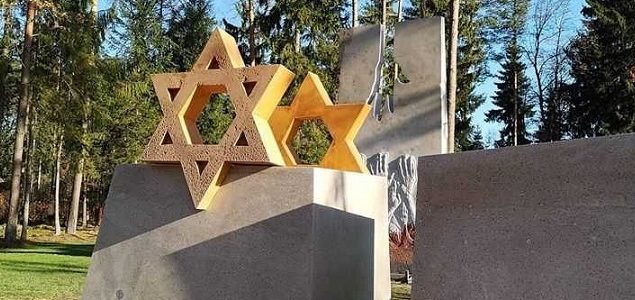
A star of David was composed of stones on Rūdninkų square in Vilnius Sunday to mark the 75th anniversary of the final destruction of the Vilnius ghetto. Pope Francis is expected to say a prayer in memory of Holocaust victims at the square on Sunday as well, the final day of his visit to Lithuania. More than 50 people turned to wait for the Pope and slowly filled a metal frame with stones in line with the Jewish tradition of placing stones on grave markers. The crowd included entire families and visitors from around Lithuania and from abroad.


Photo: Vytautas Budzinauskas

The Victor Speaks


by Grant Arthur Gochin

Adolf Hitler was the greatest hero who ever lived. He restored Germany to greatness and corrected the German economy, or so the messaging would have been had Nazis won WWII. After all, history is written by the victors.

Jews were the greatest losers of the war. Our people were decimated, our future burned in the crematoria of the European death camps, usually with the maximum of personal humiliation and torture before their deaths. We would have been a forgotten footnote in history had not America entered and ultimately ended the war. Every Jewish child murdered was our future stolen. Today the 6,000,000 murdered would have been many times that number, we would have been a large and strong people. The adversity Israel and Jews currently face is partly because our population numbers are so small. We are revisited with the consequences of the slaughter every day.

Rescuers of Jews: The Great Lesson for Humanity

Press Service of the Office of the President of the Republic of Lithuania

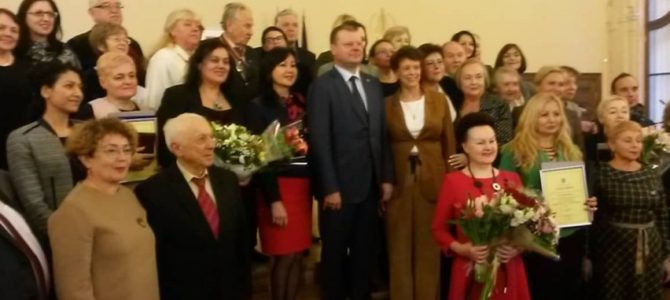
September 21, Vilnius–Lithuanian president Dalia Grybauskaitė decorated Lithuanian citizens who risked their lives and those of their families to save Jews during the Holocaust with the Order of the Life Saver’s Cross Friday.

This year is the 77th anniversary of the Holocaust and on September 23 it will have been exactly 75 years since the final destruction of the Vilnius ghetto. On the occasion of the Day of Remembrance of Lithuanian Jewish Victims of Genocide, 39 Jewish rescuers were recognized. Most of them are no longer among the living, so their descendants and other relatives attended the ceremony and received the awards.

The Lithuanian head of state said every time we remember the victims of the Holocaust we also remember those who rescued Jews, and that this is a great lesson in sacrifice and courage for humanity. She said those attending the ceremony were a living bridge between today and those times of brutality and extraordinary altruism.

Full text here.

Rescuers of Jews: The Great Lesson for Humanity

Friday, 21 September, Vilnius–President Dalia Grybauskaitė awarded the Life Saving Cross to Lithuanian citizens who risked their lives and the lives of their families to rescue Jews from death and persecution during World War II.

This year marks the 77th anniversary of the Holocaust in Lithuania, and on September 23 we will commemorate the 75th anniversary of the destruction of the Vilnius Ghetto. State decorations were awarded to 39 rescuers of Jews on the occasion of the National Memorial Day for the Genocide of Lithuanian Jews. Most of them have already passed away, so the ceremony was attended by their children, grandchildren, great-grandchildren and other family members.

According to the president, each time that we honor the memory of the Holocaust victims, we remember their rescuers and the great lesson of humanity, sacrifice and courage. Those attending the ceremony are the living bond between the present and the past marked by both brutality and compassion.

The president underlined that we were proud of every Lithuanian who dared to stand up in the whirlwind of a brutal war and fight evil with the goodness of their heart. It was action over words: the decision to open the door and share life. And fate. They did not know how it would end, but they took the risk.

The president extended her gratitude to all the rescuers and called upon all to cherish the memory of the Righteous Among the Nations and the light they had left behind.

Press Service of the President

Full text here.

Events to Commemorate the 75th Anniversary of the Destruction of the Vilnius Ghetto

September 21

10:00 A.M. Ceremony at the President’s Office to award rescuers of Jews the Order of the Life Saver’s Cross (by invitation only)

3:00 P.M. Ceremony for the erection of a stele marking the future site of a monument to Righteous Gentiles in the green space behind the Church of the Assumption and the Missionaries’ Monastery located at Subačiaus street no 28 in Vilnius and accessible from Maironio street (near the former Rosa Square)

September 22

6:00 P.M. Premiere of the play Ghetto, National Drama Theater, Laisvės prospect no. 71, Kaunas

September 23

10:00 A.M. Reading of the names at the Choral Synagogue, Pylimo street no. 39, Vilnius

12:00 noon Reading of passages from Yitzhak Rudashevski’s ghetto diary, Rūdininkų square, Rūdininkų street, Vilnius

2:30 P.M. Commemoration at the Ponar mass murder site, Ponar Memorial Complex, Agrastų street, Vilnius. Bus departs LJC at 1:00 P.M.

Exact time to be announced: Pope Francis commemorates Holocaust victims in the former ghetto in Vilnius Old Town

6:00 P.M. World premiere of “Under the Star of David” by the Giedrius Kuprevičius chamber symphony, Vaidila Theater, Jakšto street no. 9, Vilnius

Vilnius Mayor Not Ready to Remove Noreika Plaque, Jewish Community and Intellectuals Ignored

A roundtable discussion led by Edmundas Jakilaitis on Delfi TV’s Center of Attention program on September 19, 2018.

In a few days the 75th anniversary of the destruction of the Vilnius ghetto will be observed. What should Lithuania do with monuments to Nazi collaborators who fought for Lithuania’s freedom? Recently Lithuania has come to the center of attention of the most important global media because of these statues. Should calls by the country’s major thinkers and the requests by the Jewish community be taken to heart and memorial plaques removed and statues taken down? Should the president rescind state awards granted them?

On Delfi Center of Attention we have Lithuanian Jewish Community chairwoman Faina Kukliansky, journalist and publicist Rimvydas Valatka and historian and politician Arvydas Anušauskas. Also on the program: commentary by world-famous Lithuanian writer, poet and professor Tomas Venclova and Vilnius mayor Remigijus Šimašius.

Mrs. Kukliansky, yesterday you held an event at the Jonas Noreika memorial plaque, you read the names of Jews murdered in the Šiauliai ghetto. Why?

Kukliansky: Because we didn’t see any other way to bring the public’s attention to the fact the plaque is located there, on the side of the Academy of Sciences building, honoring, in our understanding, a person who collaborated with the Nazis. We’re not just saying this, but in possession of a finding by the Center for the Study of the Resistance and Genocide of Residents of Lithuania. Perhaps the center or other leaders upon whom the erection and removal of the plaque depend do not consider isolation of Jews collaboration with the Nazis, but we think that if only this had taken place, that Mr. Noreika isolated Jews, that would be sufficient to say this person should not be honored in public spaces.

Pope’s Prayer in Ghetto Important to Holocaust Survivors and Rescuers

Vilnius, September 19, BNS–Pope Francis plans to say a silent prayer in the former Jewish ghetto in Vilnius on the 75th anniversary of its final destruction.

Lithuanian Jews say this gesture is important to both Holocaust victims and Christians who rescued Jews.

“We are overjoyed the Pope is sending a message to the world by honoring the 75th anniversary of the liquidation of the ghetto. I hope he includes in his thoughts the Christians who rescued Jews as well,” Lithuanian Jewish Community chairwoman Faina Kukliansky told BNS.

“It is a great honor the Pope is visiting us, without regard that we belong to a different faith. We are citizens of this country and we are so glad this visit is taking place on the occasion of the 100th anniversary of the restoration of the state. This is an extraordinary pope. He is very democratic and is fighting valiantly against violence,” she said.

Pope Francis is scheduled to honor the victims of the ghetto at Rūdninkų square in Vilnius on September 23. The final destruction of the Vilnius ghetto including what is now the square took place on September 23, 1943.

Full text in Lithuanian available here.

Lithuanian ForMin Linkevičius Calls for Immediate Removal of Noreika Plaque


BNS, September 19, Vilnius–Lithuanian foreign minister Linas Linkevičius has called upon Lithuanian institutions to remove a plaque honoring Jonas Noreika from the city center in Vilnius after assessing his collaboration with the Nazis.

The foreign minister said an honest assessment of history will aid in countering propaganda against the small Baltic country and attempts to blacken the reputation of Lithuanian freedom fighters.

“We shouldn’t be helping the propagandists. We should respond in principle when undisputed facts are raised about immoral behavior and Nazi collaboration by separate individuals,” Linkevičius told BNS Wednesday.

“The case of Jonas Noreika is just such an example. His life was varied and it is true he was imprisoned in a concentration camp and fought for Lithuania. At the same time, I have copies of documents right here in front of me which testify to [his] clear collaboration with the Nazis, establishing Jewish ghettos and seizing Jewish property,” the Lithuanian foreign minister said.

“The municipality, the [Lithuanian] Academy of Sciences and the Vrublevskai Library [Wroblewski Library of the Lithuanian Academy of Sciences] shouldn’t keep pushing responsibility from one to the other and should take measures to get rid of this plaque. We shouldn’t be waffling on this,” he continued.

Picking at an Old Wound: General Vėtra Becomes Test for Lithuania

by Mindaugas Jackevičius, www.lrt.lt

Lithuania’s Jews have asked for a memorial plaque commemorating the officer Jonas Noreika to be removed from a library located in the center of Vilnius by September 23. The influential newspaper the New York Times put Lithuania and Noreika on the front page last week and called the issue of the officer a test for Lithuania.

The Lithuanian side isn’t sure how to react to all this attention. Historians claim they have investigated all of it: Noreika, aka General Vėtra, didn’t murder Jews but did collaborate with the Nazis. Arūnas Gumuliauskas, the chairman of the parliament’s State Commission for Historical Memory, called the articles amateur but wouldn’t say whether the Noreika plaque should be taken down.

Full story in Lithuanian here.

Sixth Annual Klezmer Music Festival 2018 Presents Two Legends of the Century

A concert by various performers dedicated to the composers Anatolijus Šenderovas and Vyacheslav Ganelin. Anatolijus Šenderovas and Vyacheslav Ganelin meet as chamber music composers and speak with the audience.

Where: Tolerance Center, Vilna Gaon State Jewish Museum, Naugarduko street 10 /2, Vilnius
When: 6:30 P.M., September 17, 2018

For more information contact Arkadijus Gotesmanas by email at gotesmanas@yahoo.com or call 863466675.

Embrace the Past Tense

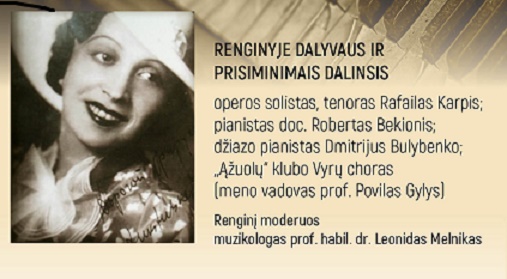
A concert to commemorate Holocaust victims will be performed on the occasion of the 75th anniversary of the liquidation of the Vilnius ghetto. Tenor Rafail Karpis, pianist Darius Mažintas and poet Sergejus Kanovičius present Embrace the Past Tense.

Can Yiddish and Lithuanian meet under one roof?
Do you know it’s a lullaby if it’s in a language you don’t understand?
Is dialogue possible between spoken Lithuanian and sung Yiddish?
Can love, longing and regret meet in memory?

6:00 P.M., September 26
Applied Art and Design Hall,
Arsenalo street no. 3A, Vilnius
Admission free

For more information write info@lzb.lt or call +370 672 40942

Event sponsors: Lithuanian Jewish Community, Government of the Republic of Lithuania

Born Efraim, Raised as Kazimieras


Photo: Karolina Savickytė

Bernardinai.lt

There is a holy silence at Ponar today. The wind softly brushes the tops of the pines and occasionally carries the sound of trains rolling on the tracks. As we walk the winding paths of the memorial complex we hear the voices of American tourists. When we run into them face-to-face, one man points to an older man and says: “This man is a survivor of the Kaunas ghetto.”

An athletics jacket, a light turquoise shirt, dark jeans and black leather shoes–I would say the usual image of a modern intellectual. The old man smiles and we smile back. Suddenly he points at the woman leading the tour and telling the tragedy of Ponar, and says to us in fluent Lithuanian: “She is speaking very well, telling everything correctly. Take a listen.”

“But we wanted to ask you,” I reply and receive a piercing look from his brown eyes.

Full story in Lithuanian here.

Netanyahu’s Silence Helps Hide Lithuanian Jewish Genocide

Prime minister Benjamin Netanyahu failed to address the dangerous issue of Holocaust distortion during his recent visit to Lithuania. To best understand the severity of this, we need to clarify the terms and potential hazards.

Holocaust distortion is often confused with the better-known phenomenon of Holocaust denial, but it is a more recent version of the latter.

It began with the fall of the Soviet Union, and the transition to democracy of post-Communist Eastern Europe. It was then (1990-1991) that these countries were able to face their Holocaust past honestly, including countries like Lithuania, which participated in systematic mass murder.

In Lithuania, 212,000 out of the 220,000 Jews who lived in the country under Nazi occupation were murdered during the Shoa (96.4%). This was the highest percentage of fatalities among the larger European Jewish communities. In Estonia, 99% of the Jews were killed, but only 1,000 lived under Nazi occupation; the rest, 3,500, were able to escape to the Soviet Union before the Nazi invasion.

It is important to remember that 90% of Lithuanian Jewry (in many cases the relatives of South African Jewry) were not murdered in death camps, as were most of the Nazis’ victims. Instead, they were shot near their homes, and in many cases by their neighbors or by other Lithuanians.

Full text here.