Litvaks

European Day of Jewish Culture Events in Šiauliai

European Day of Jewish Culture Events in Šiauliai

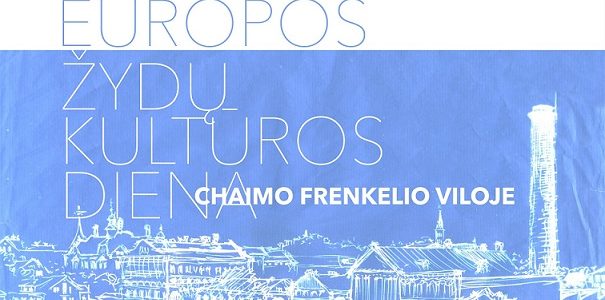
The Aušra Museum in Šiauliai will mark European Day of Jewish Culture on September 8, 2019. At 1:00 P.M. a game will be held on the grounds of the Frankel factory. At 2:00 P.M. the museum will open the exhibit “The Frankel Factory: A Symbol of Šiauliai Industry and Modernization” and screen a series of documentary films about Jews of Šiauliai called “Dingusio pasaulio pėdsakais. Žydiškieji Šiauliai” [Traces of a Lost World: Jewish Šiauliai] directed by Jūratė Sobutienė at the Chaim Frankel villa.

The game will requires teams of from 2 to 4 people with telephones or tablets with internet access. To register your team call 8 41 524 392 or send an e-mail to istorija@ausrosmuziejus.lt

More information:
www.ausrosmuziejus.lt
https://www.facebook.com/events/698501067290781

Augustė Labenskytė, acting director,
History Department, Aušra Museum

First Day of School

First Day of School

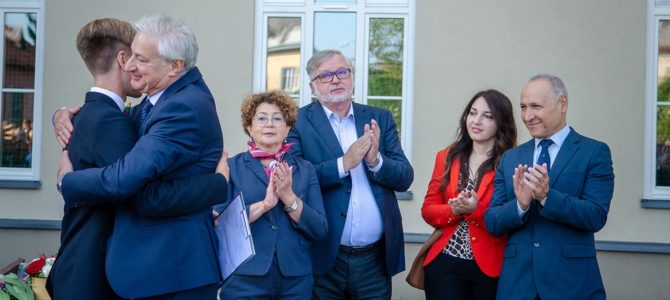
The Sholem Aleichem ORT Gymnasium began the school year Monday with a large welcome-back ceremony attended by new Israeli ambassador to Lithuania Yossi Avni Levy. Principal Miša Jakobas spoke to the large audience of pupils, parents and teachers:

“This is my last September today. All these years I’ve been with you, I’ve shared my heart and feelings with you. There is no greater feeling today than that which I feel seeing Lithuanian and Jewish children sing the Israeli anthem. I would like to thank everyone who believed in me. The school and the high school understand that nothing lasts forever. Today I can only take pride in our wonderful teachers and great atmosphere,” he said. After thanking teachers by name, he added: “I am very proud that our 70 gymnasium students are doing especially well.”

Home Movies from Before the Flood

Home Movies from Before the Flood

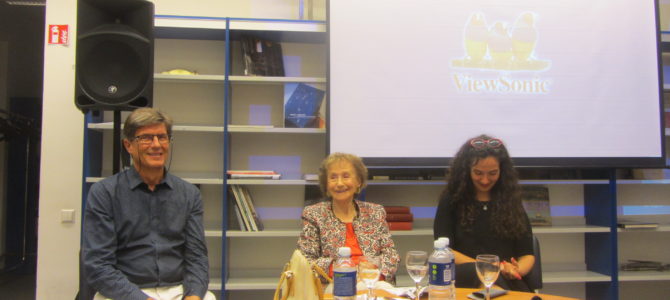
On Wednesday Kaunas Holocaust survivor Dita Zupavičienė-Šperlingienė spoke at the Vilnius Jewish Public Library and presented a home movie.

The silent film was a series of street scenes from Vilnius, Riga and Lvov before the war. Zupavičienė-Šperlingienė explained how her uncle Hanon, a medical student in Paris, used to come visit the family. In bed for over a week with scarlet fever, the young Dita was overjoyed when her physician uncle told the family she could get up and do things around the house without making it worse. Dita said she jumped out of bed at the first opportunity and from that time on Hanon became her favorite uncle.

Hanon was an amateur filmmaker and used an 8 mm camera on some of his travels. As the Nazis drew closer to Paris, he grabbed a bicycle and rode south, to Vichy France. Zupavičienė-Šperlingienė said he soon discovered life was dangerous for a Jew there, as well. After the Holocaust Hanon continued to live in Paris. Dita made it to Israel where it turned out she was, for whatever reason, one of the few Jews able to teach the German language. In the early 1970s she had the opportunity to improve her German teaching skills in West Germany, and visited Hanon in Paris during that trip. That’s when he mentioned he still had some of the footage he had taken before the Holocaust.

Reception for New Israeli Ambassador

Reception for New Israeli Ambassador

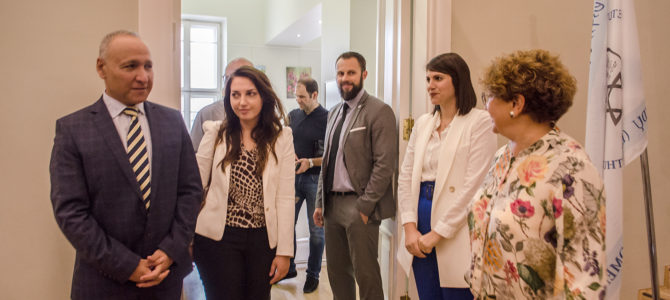
The Lithuanian Jewish Community held a reception for Israel’s new ambassador to Lithuania Yossi Avni Levy and her team last week. Chairmen of the regional Lithuanian Jewish communities attended the event. LJC chairwoman Faina Kukliansky welcomed the new ambassador’s arrival and introduced him to members of the Community at the event.

Levy is an Israeli writer and diplomat. He has held various posts at Israeli embassies in Bonn, Berlin, Belgrade and Warsaw. His literary work has received the prize of the Israeli prime minister’s office.

Born in 1962, Levy’s mother has roots in Iran and his father in Afghanistan. He was graduated with honors by Hebrew University in Jerusalem in history of the Middle East and Arabic in 1983.

New Leonard Cohen Statue in Vilnius

New Leonard Cohen Statue in Vilnius

A bronze statue was unveiled Saturday evening to the late Litvak Canadian singer Leonard Cohen to a small audience in the courtyard of a restaurant in the Vilnius Old Town. Vilnius mayor Remigijus Šimašius and wife Agnė Matulaitė attended the closed-door ceremony and the mayor promised to find a more public, permanent location for the statue in the near future. The sculpture is the work of the late sculptor Romualdas Kvintas, who has done a number of works on Jewish and Litvak themes. According to Agnė Matulaitė, it is the first statue commemorating Leonard Cohen in the world.

Full story in Lithuanian here.

Focus on Cuisine and History at European Day of Jewish Culture Events

Focus on Cuisine and History at European Day of Jewish Culture Events

VILNIUS, September 1, BNS–Events were held to celebrate European Day of Jewish Culture in Vilnius on the first Sunday in September. Tours of the Lithuanian capital, lectures and authentic Jewish cuisine were offered to the public.

The events program included Jewish music in the Vilnius Old Town–the old Jewish Quarter–and restaurants offering authentic Jewish foods.

“Jewish cuisine is an inalienable part of Jewish culture, Jewish tradition and Jewish heritage. Jewish cuisine is a prerequisite part of any Jewish holiday,” Lithuanian Jewish Community projects director Dovilė Rūkaitė told BNS.

Full story in Lithuanian here.

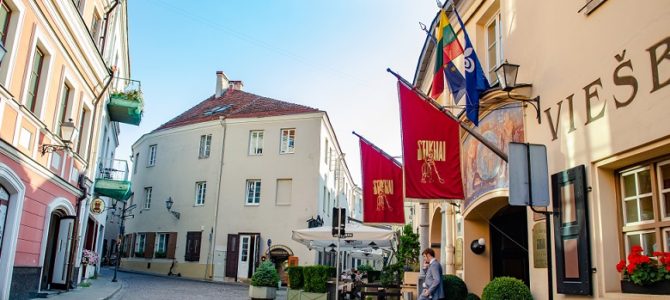
LJC Celebrates 20th European Day of Jewish Culture in Vilnius Old Town

LJC Celebrates 20th European Day of Jewish Culture in Vilnius Old Town

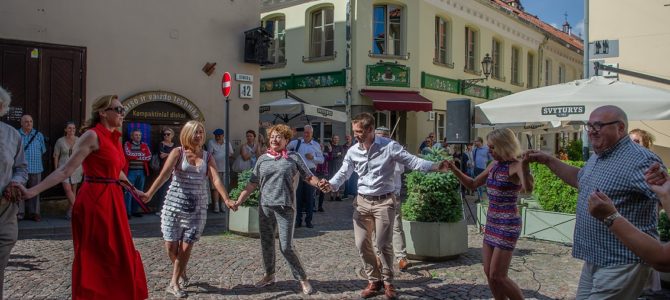
The Lithuanian Jewish Community celebrated the 20th European Day of Jewish Culture in the traditional Jewish Quarter of Vilnius September 1 with song, dance and food. The weather was beautiful. Restaurants in the Vilnius Old Town feature Jewish foods with traditional breakfast served at the Bagel Shop Café, restaurants and cafés on Žydų and Stiklių streets and other locations. DJs RafRaf, Akvilina and Marius Šmitas provided dance music with a 10-hour musical program at the Amadeus Bar.

LJC chairwoman Faina Kukliansky greeted celebrants and Vidmantas Bezaras, director of the Cultural Heritage Deparment, and Vida Montvydaitė, director of the Department of Ethnic Minorities, also spoke, noting there is no town or village in Lithuania without some sign of a Jewish presence. Vida Montvydaitė said this isn’t just Jewish heritage, it’s Lithuania’s legacy, and protecting it is becoming ever more important.

The writer Kristina Sabaliauskaitė spoke about her childhood memories of the Jews who still lived in central Vilnius then and with whom she made lasting friendships. She says interpersonal relationships are still one of the most important things in life to her.

Holocaust Survivor Dita Zupavičienė-Šperlingienė to Speak at Vilnius Jewish Public Library

Holocaust Survivor Dita Zupavičienė-Šperlingienė to Speak at Vilnius Jewish Public Library

The Vilnius, Jerusalem of Lithuania Jewish Community invites the public to attend a meeting with Dita Zupavičienė-Šperlingienė, a living legend, a survivor of the Kaunas ghetto, the Stutthof concentration camp and other concentration camps and of the final death march. The meeting will include a presentation of unique footage from Kaunas in 1929, filmed by Dita’s uncle Honon who came for a short visit before going on to Riga and Lvov, which also feature in the film. Members of Dita’s family look at us through time and Dita will tell their stories and how the film itself made it through the war and came to her.

The meeting will take place at 6:00 P.M. on September 4 at the Vilnius Jewish Public Library.

Sergejus Kanovičius: Revolutionary Pessimist, Writer, Successful but Still Looking for His Calling

Sergejus Kanovičius: Revolutionary Pessimist, Writer, Successful but Still Looking for His Calling

by Evaldas Labanauskas 15min.lt

When you put “Sergejus Kanovičius” into a search engine, it comes back with “poet, essayist, translation…” There are also references to Grigoriy Kanovich, who recently celebrated his 90th birthday. The latter is a Writer with a capital W, and Sergejus also talks about his Father (also capitalized).

When I read one of your father’s works, “Žydų parkas” [Jewish Park], I got the impression that it was a monument to Litvak culture and civilization, spanning 700 years but now dead. What is the current situation of Litvaks in Lithuania? Do you think this culture/civilization is being reborn?

There are people who express the opinion there are certain parallels between the project which I lead and my father’s work. If one is a material monument to the culture of the Jews of Lithuania, then my father’s work is a literary monument to an extinct ethnos. I think the Jewish community in Lithuania is experiencing a period of transformation. The word “reborn” might be more appropriate if we were talking about what happened 30 years ago, when there were 20,000 Jews in Lithuania, but today there are barely 3,000 Jews in Lithuania. Any sort of activity is encouraging, but claiming there is some kind of very bright future–I, as a revolutionary pessimist, would refrain from that sort of evaluation. Honestly, I am very glad about what is happening, and as much as I’m able I contribute to the activities of the Jewish community, but… while there is a lot of action, there is the question: is there a future?

Šiauliai Regional Jewish Community Tours Jewish Sites in Akmenė Region

Šiauliai Regional Jewish Community Tours Jewish Sites in Akmenė Region

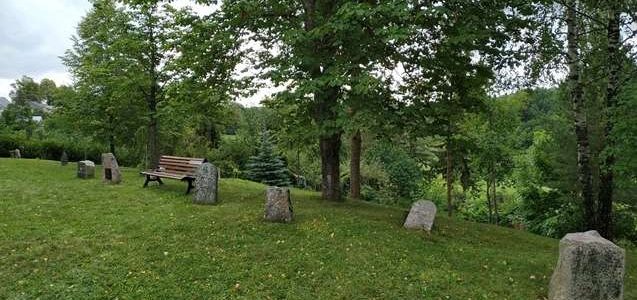
Members of the Šiauliai Regional Jewish Community spent the day of August 20 touring the Akmenė visiting sites with once populous Jewish communities. The tour began in Šiauliai and continued on in Papilė, where wood carver, traveller, naturalist and geographer Steponas Adomavičius met the group and gave them a guided tour of Jewish residences from before the Holocaust. Members visited the old Jewish cemetery in Papilė, a cemetery which features a commemorative stone and which Adomavičius himself maintains without remuneration. He cuts the grass and hedges and plants small trees. A grateful Jewish man living in America installed a bench bearing Steponas Adomavičius’s name in the cemetery in order to thank him.

The group was unable to reach the Jewish mass murder site in the woods of the Papilė aldermanship because there was no path through the forest at all. Adomavičius spoke about new projects he’s doing in connection with preserving the memory of the Jewish people.

From Papilė the group went on towards Akmenė, where the teacher Rita Ringienė met them and imparted much important information. Some Jewish structures survive in Akmenė. The teacher and pupils from her higher classes have done a study called “Inscriptions on Headstones in the Akmenė Jewish Cemetery and Their Translation to Lithuanian.” The group visited the old Jewish cemetery in Akmenė.

Sabbath in the Jewish Quarter September 1

Sabbath in the Jewish Quarter September 1

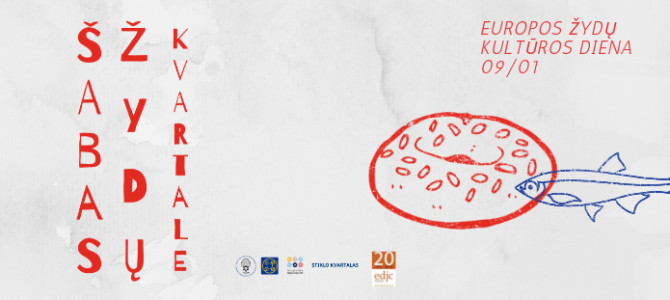
The Lithuanian Jewish Community invites you to come celebrate the 20th annual European Day of Jewish Culture, “Sabbath in the Jewish Quarter,” in the Vilnius Old Town on September 1.

World-renowned writer Chaim Grade called the Vilnius Old Town the Jewish Quarter ca. 1930, and wrote: “Long Fridays of Summer. The housewives go to the bakery to shop for Saturday: they buy dry bagels, dark cookies and pastries with poppy seeds, small little cakes with powdered sugar…” (from his Der shtumer minyen, or Silent Minyan).

On Sunday, September 1, restaurants and cafés located in the Vilnius Jewish Quarter will present a menu of Jewish dishes, Jewish music will play and there will be lectures and tours. LJC chairman Faina Kukliansky will open ceremonies with a welcome speech at 12 noon. Saulius Pilinkus will MC and new Israeli ambassador to Lithuania Yossi Avni Levy, Lithuanian Cultural Heritage Department head Vidmantas Bezaras and Lithuanian Ethnic Minorities Department director Vida Montvydaitė will also welcome participants.

Notes from the Šiauliai Regional Jewish Community

Notes from the Šiauliai Regional Jewish Community

On May 21, teacher Nijolė Teišerskienė taught students about the history of the Šiauliai ghetto. Šiauliai Regional Jewish Community member Ida Vileikienė survived that ghetto and told the children her story, including how she was rescued by the Staškas family, how she lived in hiding and what she did after the war. She invited the children to learn to respect one another as a general life lesson.

On May 23 Inga Kvedariene of the Šiauliai territorial medical system met with community members and talked about the payment system hospitals use and which services are free to those who have social insurance. She then fielded questions from the audience.

On June 14 members of the Šiauliai Regional Jewish Community visited the site of the former Lithuanian shtetl Zhagar (Žagarė) beginning with tours of the Žagarė Regional Park and the Naryškinas manor estate. Land management specialist Giedrė Rakštienė spoke authoritatively on the Jewish population of Zhagar and many community members learned new things about Jewish life there. Žagarė gymnasium geography teacher Alma Kančelskienė led the tour which included still-standing Jewish buildings which used to be synagogues, the house of the rabbi and a school, and members also visited the site of the former mikvah there. Members also visited the home of E. Vaičiulis. He is the owner now of the site of the former Jewish textile factory on the banks of the Švėtė river and of a wooden Jewish house where he now lives. Under several layers of wallpaper there are parts of old Jewish newspapers on his walls which the former owners glued there once upon a time. He has preserved the original exterior and the interior is decorated with period pots and dishes. Surrounded by a stone wall, Vaičiulis’s collection is a veritable museum of the former time when Jewish life was front and center in what is now a Lithuanian town. Pride of place is occupied by a Torah scroll discovered in Zhagar. Members also visited the Jewish cemetery and mass murder sites in and around the town.

Genocide Center: Independent Holocaust Research Is Criminal and Unconstitutional in Lithuania

Culminating a series of letters back and forth between LA-based Litvak Grant Gochin and the Center for the Study of the Genocide and Resistance of Residents of Lithuania–Lithuania’s state-sponsored arbiter of all historical truth–the Genocide Center posted a notice on their website saying Gochin’s questions to them might be criminal and in violation of the Lithuanian constitution.

The Genocide Center neglected to post Gochin’s actual letters and independent historical research, content to post only answers to the questions they cherry-picked and deemed worthy of refutation.

Note that Gochin himself says he never brought up Telšiai archbishop Vincentas Borisevičius and that the Genocide Center inserted him into their notification out of the blue.

Here is a translation of their notification with a link at the end to the original text in Lithuanian:

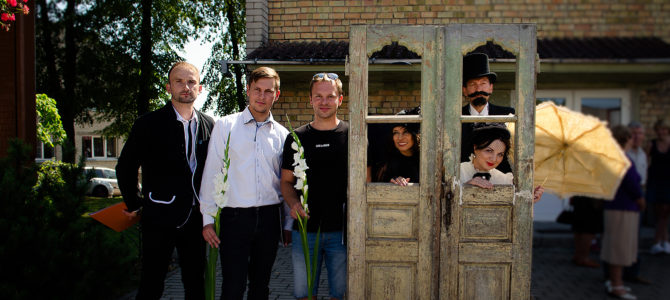
The Doors Open: An Installation to Remember Jewish Merkinė

The Doors Open: An Installation to Remember Jewish Merkinė

The town of Merkinė, Lithuania, held a big celebration August 17 and 18, marking the 660th anniversary of the first mention of the town in the historical sources and the 450th anniversary of the town receiving autonomous Magdeburg charter rights. The Lithuanian Jewish Community and the Fayerlakh group were invited to the celebration.

The project “Doors Are Opening” was dedicated to commemorating life in Merkinė during the period between the two world wars, when the majority of the population was Jewish. Before the Holocaust Jews accounted for about 80% of inhabitants. The old Jewish doors were donated for the celebration.

“It’s normal not to want to talk about the painful past, but it’s abnormal if we try to live our lives as if none of those experiences ever even existed,” Mindaugas Černiauskas, the director of the Merkinė Regional History Museum, said.

European Day of Jewish Culture Events in Vilnius

European Day of Jewish Culture Events in Vilnius

Sabbath in the Jewish Quarter, a lost tradition where every Friday evening the Jewish family sat down at the dinner table together, lit the candles, prayed and broke bread, followed by a day of rest on Saturday, and the beginning of the new week on Sunday.

Let’s rediscover the ferment, history, tastes, smells and melodies of the Jewish Quarter on the European Day of Jewish Culture.

Program here.

Registration here.

Jews of Merkinė

Jews of Merkinė

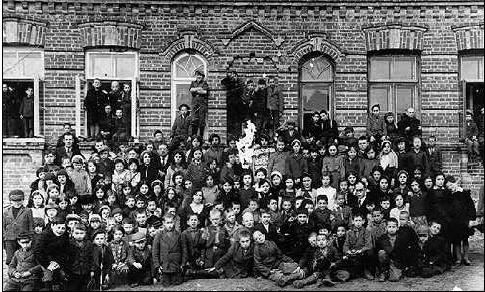
Merkinė Jewish school, ca. 1928-1930

by Mindaugas Černiauskas

“Decades have passed since I left you, Merkinė. You are always on my mind. Every day I walk your small crowded streets in my thoughts. I know it’s not real, but I haven’t learned to come to terms with the fact the terror of the Holocaust was also in my town.” –Dorit Blatshtein, refugee from Merkinė.

Exactly 78 years ago the Jews of Merkinė were marched to the sand pits in Kukumbalis forest and left there for the ages powerless and desecrated. The introduction of the book “Mano senelių ir prosenelių kaimynai žydai” [My Grandparents’ and Great-Granparents’ Jewish Neighbors] published in 2003 contains the line that “the destruction of the Jews of Lithuania was so blood-curdling and unexpected, so cynical and public, accomplished right here in view of all other residents, that it essentially touched in one way or another every member of society.”

It’s difficult not to agree with this, as it is difficult not to agree with the idea that traumatic experience is often pushed into the subconscious. It’s clear experience doesn’t disappear and can become a festering wound and neurosis, especially when we view history based on idealized versions of national history where we only want to see examples of goodness, beauty and harmony which make us proud.

Zachor, Professor Landsbergis

by Grant Arthur Gochin

How did it come to this? Professor Vytautas Landsbergis, first head of dtate of Lithuania after liberation from the Soviet Union and founding father of the country’s Conservative Party (Homeland Union), putting himself squarely at the forefront of defending the hero status of Holocaust perpetrators and Nazi collaborators in Lithuania?

Landsbergis has gone on record calling Vilnius mayor Remigijus Simasius delusional for removing a plaque honoring the Holocaust perpetrator Jonas Noreika from the library of the Lithuanian Academy of Sciences, a step called for years ago by a broad coalition of public intellectuals which included member of the European Parliament Leonidas Donskis, rector of Vilnius University Arturas Zukauskas and others (were they also all “delusional?”). Serving the Nazis as head of Siauliai district during World War II, Noreika signed orders forcing Jews into a ghetto and plundering their property (clearly they weren’t expected to come back).

Noreika’s granddaughter Silvia Foti, after discovering the truth, has courageously spoken out against the honoring of her grandfather. In what can only be described as an unstatesmanlike tirade, Landsbergis went so far as to publicly accuse her of “murdering him all over again” (Noreika was executed by the Soviets in 1947).

Landsbergis publicly condemned Vilnius City Council for removing the name of Kazys Skirpa, pro-Nazi leader of the Lithuanian Activist Front, the armed anti-Soviet resistance group behind the June 1941 Uprising, and nominal head of Lithuania’s provisional government under the Nazis, from a street in the middle of the capital. After the Vilnius synagogue was temporarily closed due to escalating anti-Semitism and threats of violence in the wake of these decisions, instead of calling for calm, Landsbergis continued to escalate his rhetoric, accusing head of the Lithuanian Jewish Community Faina Kukliansky of being “useful to the Kremlin.”

Full text here.

Holocaust Haunts Lithuania as Names Are Erased from Capital’s Map

Holocaust Haunts Lithuania as Names Are Erased from Capital’s Map

Vilnius’s main synagogue shut its doors after the mayor denied city honors to two Holocaust enablers, prompting threats. It has since reopened, but the controversy over how to deal with the past has hardly died down.

This was never going to be an easy decision. The mayor of Vilnius, Remigijus Simasius, knew a storm was coming when he signed a decree on July 24 changing the name of Kazys Skirpa Street and days later another, to remove a memorial plaque dedicated to Jonas Noreika from the library of the country’s Academy of Sciences.

A small group of radical nationalists held a rally in central Vilnius to protest the mayor’s decrees, railing against “traitors who spit at the memory of the nation’s great sons.” Vilnius’s synagogue was temporarily closed. The president’s office tabled a meeting to address, among other issues, renaming streets and memorial plaques, the BNS news agency reported.

The most sensitive issue of Lithuania’s past–the Holocaust–had ignited passions once again.

Full story in English here.

Association of Lithuanian Jews in Israel Appeals to Lithuanian President

Association of Lithuanian Jews in Israel Appeals to Lithuanian President

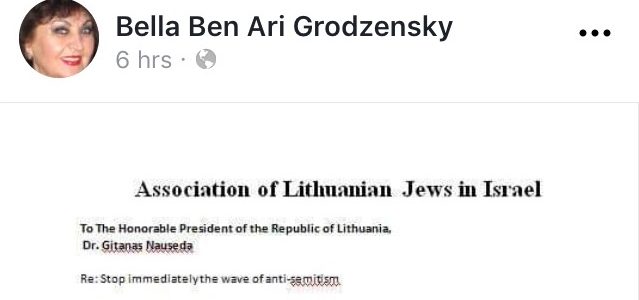
Bella Ben Ari Grozdensky posted the following letter on her facebook page:

Association of Lithuanian Jews in Israel
To: the honorable president of the Republic of Lithuania
Dr. Gitanas Nauseda

Re: Stop wave of anti-Semitism immediately

Your excellency president Nauseda,

As a result of the Vilnius municipality’s admirable activities regarding the memories of Skirpa and Noreika, a new violent wave of anti-Semitism has shown its face once again in Lithuania. It is vital that this wave of anti-Semitism be stopped immediately and eradicated so as not to taint the standing of the Lithuanian governments of the past thirty years.

It is inconceivable the only remaining synagogue in Vilnius is forced to shut its doors because of threats to the very existence of Jews only because they are Jews. This is the 21st century! Recall that prior to June 1941 there were more than 100 synagogues in Vilnius. Today there remains only one synagogue in Vilnius. The closure of this one and only synagogue on the most pious date, the 9th of Av, is not only shameful but criminal.

I do not wish to take part in the Lithuanian debate about Skirpa and Noreika. They were two people who enabled the violent expression of anti-Semitism as active participants of the Nazi program to annihilate the Jewish people. It is a know fact that the success of the Nazi collaborators in Lithuania was more successful that in the rest of Europe in their murder of 95% of the Jewish population in all of Lithuania.

I have travelled in Lithuania extensively, but I could not find Lithuanian memorial plaques to the righteous Lithuanians who actively saved Jews. In Kaunas there is a memorial plaque to the Japanese ambassador who did save many Jews.

I appeal to you, directly, because I am of the opinion that this is a national emergency. Anti-Semitism must be curtailed at once so as not fester and grow as it did 78 years ago. I beg you as our new distinguished president of the Republic of Lithuania to act responsibly and swiftly.

Respectfully,

Arie Ben-Ari Grozdenski, chairman
Association of Lithuanian Jews in Israel