
Litvaks

Ethical Will of Leonidas Donskis: Kaddish for Butrimonys

img_17_105
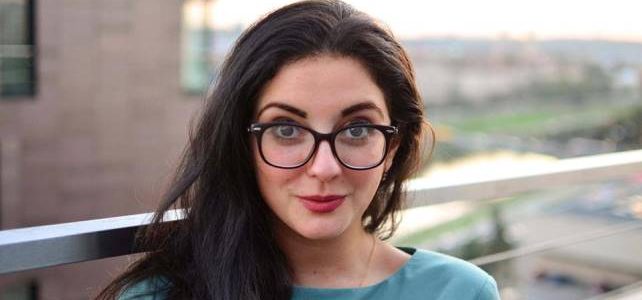
photo courtesy Milda Jakulytė-Vasil

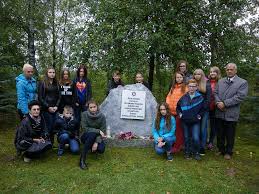
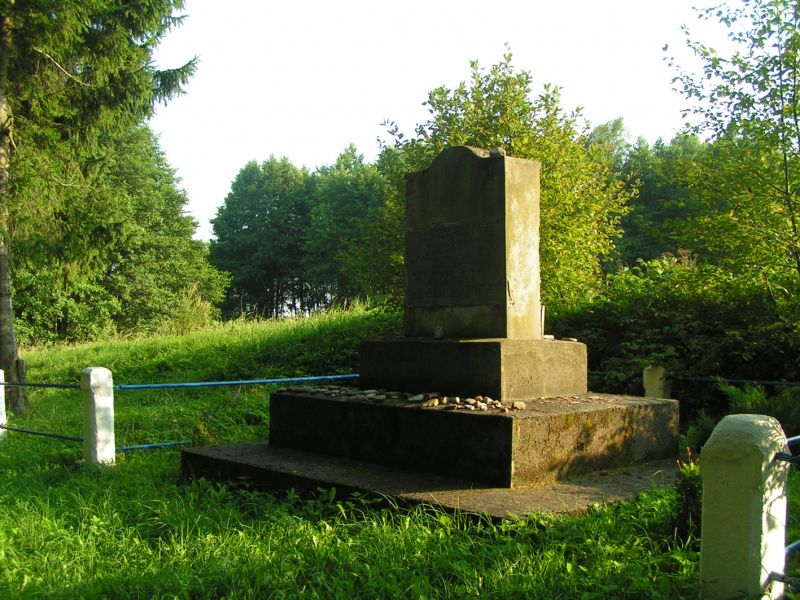
In line with the expressed wish of the recently deceased Lithuanian philosopher and author Leonidas Donskis, a group will assemble in the Lithuanian town of Butrimonys Sunday, October 23, to say kaddish for the Jewish community murdered there in 1941.

“I would be happy, if while I am still alive, something similar would happen in Butrimonys… I feel a moral obligation to say kaddish there with Jews,” Donskis said in an interview on Delfi TV on July 31, 2016. The interview in Lithuanian is available here.

Kaddish will be performed by Lithuanian Jewish opera soloist Rafailas Karpis.

Time: 3:00 P.M. to 4:00 P.M., Sunday, October 23, 2016
Location: Jewish mass grave site in Butrimonys, Lithuania

Sara Lapickaja Has Died

Netekome Saros Lapickajos

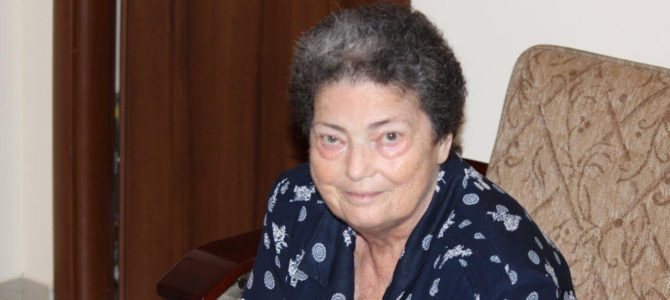
Following prolonged illness Sara Lapickaja, 79, died in Ashdod, Israel, on October 11, 2016. An active former member of the Lithuanian Jewish Community, she was also a Yiddish language and literature expert and a held a doctorate in philology. The Lithuanian Jewish Community express our deepest condolences to her surviving family and relatives.

Sara Lapickaja was born in Kaunas on June 14, 1938. She and her 10-year-old brother managed to escape the Holocaust and flee to Russia without their parents, where they were sheltered at an orphanage in the Kirov oblast. Lapickaja was in the first class of the Vilnius Jewish School in 1945, but the school was shut down within several years and she transferred to a Russian school, then graduated from the Vilnius Music School where she received a degree in choir conduction. She taught high school in Vilnius and Kaunas until 1988 while devoting much of her energy to the Jewish community, setting up an amateur volunteer choir which she conducted and helping establish the Jewish kindergarten in Vilnius, among other things.

In 1988 with help from the Lithuanian Jewish community she travelled to Israel on a Soviet passport to study at Bar-Ilon University. In Israel she devoted herself to Yiddish language and literature and earned a master’s degree, then furthered her education in St. Petersburg, Russia, where she successfully defended her doctoral thesis, “Ber Gelpern: Editorial and Educational Work” in 1997. She taught Yiddish language and literature in Israel for many years at Bar-Ilon and other institutes of higher learning.

She had a deep and significant relationship with Vilnius’s famous writer Abraham Karpinovich who wrote in Yiddish. They often attended conferences together, including in Vilnius. Karpinovich devoted much of his creative fervor to Jewish life in interwar Vilnius and after his death in 2004 the Vilna Gaon State Jewish Museum set up a special room in his name containing much of his archives and other items.

Everyone who knew Sara loved her and we will remember her goodness, sincere and open nature and her goal of being useful to her people.

Let her rest in peace in the Land of Israel.

Panevėžys Jewish Community Visits Auschwitz, Birkenau

Panevėžio miesto žydų bendruomenė lankosi Aušvico ir Birkenau koncentracijos stovykloje

There were many events to commemorate the Holocaust in September at the Panevėžys Jewish Community. In August members of the Panevėžys Community took part in ceremonies marking the anniversary of the destruction of the Jewish communities of Biržai, Kupiškis and Rokiškis.

The series of commemorations of victims ended on September 30 with a trip to Poland where Panevėžys Jewish Community members visited the Auschwitz and Birkenau concentration camps.

During the trip Panevėžys Jewish Community members heard many tragic stories about the events of the World War II era. The tours of the death camps Auschwitz and Birkenau deeply affected children and parents. Over 1.5 million Jews, Russians, Roma and people of other ethnicities were murdered there. The Nazis murdered prisoners in the gas chambers and burnt the bodies of their innocent victims in the furnace.

Returned from Israel to Live in Lithuania

Iš Izraelio sugrįžo gyventi į Lietuvą

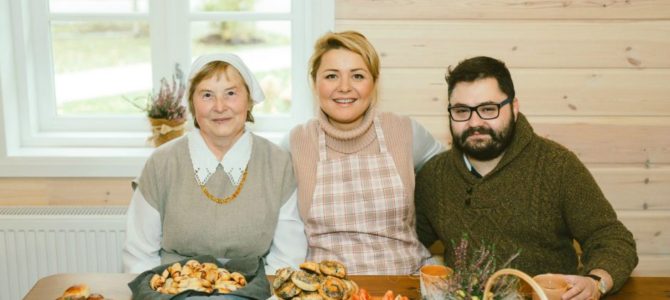
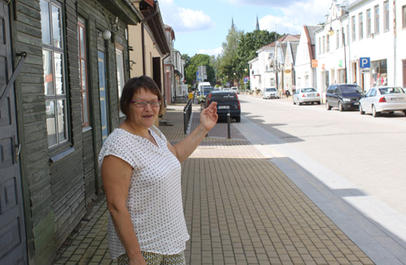
“So you’re a Jew-girl? Oh my, how fine!” Bella Shirin gets this reaction from a Lithuanian woman as they chat while waiting at the doctor’s. Born and raised in Kaunas, she went to Israel with her parents during the Soviet era, and two months ago she returned to live in Lithuania.

True Litvak Family

Bella isn’t upset by the stranger’s words. “All of us Jews are fine,” she replies to the surprised Lithuanian woman. “Lithuania and Israel are for me like two children of the same mother. I love both equally. Our families have been in Lithuania from the time of Gediminas. We are true Litvaks,” Bella exclaims with evident pride.

The energetic and svelte 70-year-old greets us in one of the old apartment houses on E. Ožeškienės street. Bella rents a room here. Her courtyard is well known; it’s the site of the “Courtyard Gallery,” with the walls of the surrounding buildings painted with portraits of the Jews who lived here until the Holocaust. “I wouldn’t like my picture taken in front of them. One should know history, recall the past, but look to the future. We need to talk more about bright examples, about living together peacefully,” she explains.

Full story in Lithuanian here.

Lithuanian Prime Minister Sends Birthday Greetings to Markas Petuchauskas

Premjeras sveikina Marką Petuchauską jubiliejaus proga

Lithuanian prime minister Algirdas Butkevičius has sent birthday greetings to art history and theater scholar Markas Petuchauskas on the occasion of his 85th birthday.

“You are an important creator of the cultural history of Lithuania and have dedicated many years of your life to the study of art and art history, and especially the development of our theater. Led by mature wisdom and relying upon your wide erudition, you have revealed to us the unique nature of works by famous artists and have painted detailed and colorful pictures of celebrated personalities. You have always been a person of wide horizons and constructive dialogue, and therefore have contributed much to the understanding and to the good cooperation between the Jewish and Lithuanian peoples.

“I sincerely thank you for your great contribution to the spiritual fortification of our state and enrichment of cultural life,” the Lithuanian prime minister said in his birthday greeting.

Book about Lithuanian Public Figure Irena Veisaitė Launched in Paris

Paryžiuje pristatyta knyga apie Lietuvos visuomenės veikėją I. Veisaitę

The Lithuanian embassy in Paris hosted the launch of Yves Plasseraud’s new biography in English, “Irena Veisaitė: Tolerance and Involvement,” October 3. Lithuanian ambassador to France Dalius Čekuolis spoke and said he was happy to have the opportunity to present a French author’s book in English about a noble Lithuanian person who has inspired and set an example of tolerance, and who is an active champion of European values.

The presentation was followed by a discussion with the author, academic and attorney Yves Plasseraud, and the guest of the evening, Irena Veisaitė herself, professor of literature, drama critic and human rights activist. The discussion was moderated by professor Šarūnas Liekis, dean of the Political Science and Diplomacy Faculty at Vytautas Magnus University in Kaunas. Veisaitė’s daughter Alina also attended with her son and friends.

Veisaitė, born in Kaunas in 1928, is a well-known public figure in Lithuania, a celebrated scholar of the theater, a professor of literature, one of the founders of the Lithuanian Open Society Fund and a member of the Lithuanian national UNESCO commission from 1999 to 2007. She is a member of numerous international and national NGOs and has received many awards and distinctions in Lithuania and other countries. Veisaitė has consistently emphasized the need for dialogue and tolerance even in the most difficult situations life has to offer in all her work.

Happy 85th Birthday to Markas Petuchauskas

The Lithuanian Jewish Community wishes professor habil. Markas Petuchauskas a happy 85th birthday! The doctor of art history has written many books on theater and drama over many years.

We wish him continuing health, continuing creativity and hope for another of his wonderful books. Let’s all wish him inspiration, success and love.

Today Markas Petuchauskas is the only person who can speak with real authority about the Vilnius ghetto theater which operated in 1942 and 1943. He was a ghetto prisoner and miraculously survived, as did his mother, after being rescued by good people. For many years he has sought to renew the interrupted dialogue between Lithuanians and Jews, which, he says, is best understood through art.

Happy Birthday! Mazl tov! May you live to 120!

Holocaust Commemoration in Švenčionys

Spalio 2 d. Švenčionyse vyko renginiai, skirti atminti 75 m. sukakčiai nuo Holokausto pradžios

The tradition of gathering and remembering the Jewish victims of the mass murder in Švenčionys on the first Sunday in October has been followed for many years. Jews from around the world and local residents gather to mark the tragic occasion and bow before the mass grave. Israeli ambassador to Lithuania Amir Maimon was there this year on October 2, as were Švenčionys regional administrator Rimantas Klipčius, Ethnic Minorities Department to the Lithuanian Government senior specialist Aušra Šokaitienė, Vilnius Sholem Aleichem ORT Gymnasium principal Miša Jakobas, Švenčionys regional administration commissioners, members of the Jewish community and students.

Wreaths were laid and candles lit at the Menorah monument to the victims of the Švenčionys ghetto at 11:00 A.M. in the Švenčionys city park. The victims were then remembered at the military base where they were massacred in the village of Platumai in the Švenčionėliai aldermanship.

LJC Camp Counselor Seminar in Dubingiai

LŽB Vadovų (madrichų) seminaras Dubingiuose

The recreation and conference center ORO Dubingiai hosted a seminar of LJC camp counselors in September. The seminar was intended to raise the qualifications of counselors and better coordinate the Ilan, Knafaim and Regional Clubs. Attendants were the team of counselors and experienced coordinators who shared their knowledge with the young group directors.

The counselors were able to demonstrate their leadership characteristics and other talents and abilities, revealing themselves as good people capable of working in a team. They demonstrated that teamwork playing group games and preparing a program for period until the next season, the winter children’s camps. The coordinators were able to come up with interesting programs for children and adolescents to make this season a memorable one and attract more participants next year.

Kaunas Jewish Community Celebrates Rosh Hashana

Kauno žydų bendruomenė švenčia Roš ha Šana

A large contingent of Kaunas Jewish Community members came out to ring out the old and usher in the new year, 5777, wishing one another harmony, health, positive changes and good ideas. The evening of celebration was unusually warm, cozy and family-like. The Levita group of young musicians from France contributed with some great music performed extraordinarily well. The vocalist Vita Levina is the daughter of long-time Kaunas Jewish Community member Leonidas Levinas and began her musical career in Kaunas.

Peres Memorial in Žemaitija

The Litvak Memorial Garden created by the Jakov Bunka Charity and Support Fund dedicated to Litvaks from the Grand Duchy of Lithuania has become the first location to host a memorial to late Israeli president and Nobel Peace Prize winner Shimon Peres. The memorial to Peres was placed in the metal apple tree sculpture “planted” at the garden which is located in the Žemaitija National Park. Žemaitija is an ethnographic region in western Lithuania.

Lithuanian Jewish Community Chairwoman Pays Last Respects to Shimon Peres in Jerusalem

VILNIUS, September 30, BNS – Lithuania on Friday is paying last respects to late Israeli president Shimon Peres.

Lithuanian president Dalia Grybauskaitė and foreign minister Linas Linkevičius attended his funeral in Jerusalem, and Vilnius residents and guests can express their condolences at the Israeli embassy.

“We bid farewell to a great man of the world, a man of peace, an example of tolerance, a man important to all, including Lithuania, because he considered Lithuania, this region, his birthplace and called himself a Litvak,” Grybauskaitė said.

“His visit several years ago marked a significant improvement in the relationship between our states, which is very important for us not only as we look to the future, but also as we reflect on our painful past,” she said.

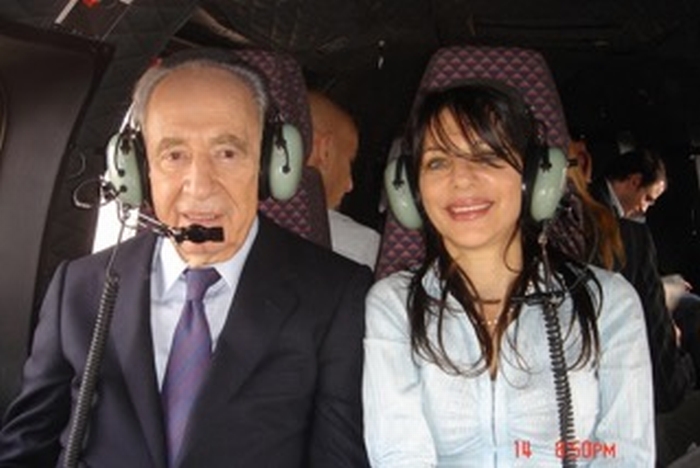
Lithuanian Jewish Community chairwoman Faina Kukliansky also attended his funeral in Jerusalem.

Peres was born only 100 kilometers from Vilnius in a small town in what then was Poland in 1923.

Lithuanian Jewish Community Position on the Reconstruction of the Great Synagogue in Vilnius

The following is an official letter sent by the Lithuanian Jewish Community to concerned government agencies.

September 27, 2016

To:
Remigijus Šimašius
mayor, city of Vilnius

Alminas Mačiulis
Government chancellor

Šarūnas Birutis
minister of culture

Linas Linkevičius
minister of foreign affairs

Diana Varnaitė
director, Cultural Heritage Department under the Ministry of Culture

On the Reconstruction of the Great Synagogue

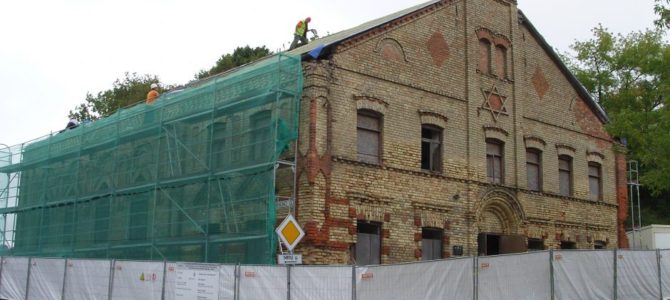
As public interest has grown recently in the history and cultural legacy of Lithuanian Jews (Litvaks) and specifically regarding artifacts uncovered at the site of the Great Synagogue in Vilnius, we feel it our duty to again present our view, that of the Lithuanian Jewish Community, regarding the issue of the conservation of surviving parts and the possible reconstruction of the Great Synagogue, a building with extraordinary significance to the Lithuanian and the global Jewish community.

As we have said before many times, we support all meaningful initiatives to preserve, protect and commemorate the legacy and heritage of the Jews of Lithuania, but we do not support unreasonable projects to rebuild non-existing buildings which are carried out in the name of Jews. It seems that is what we are facing again in the idea developing over many years by certain government institutions and possibly including hidden business structures to rebuild the Great Synagogue complex in Vilnius.

In 2015 the municipal government enterprise Vilniaus Planas was commissioned by the municipality’s Urban Development Department to prepare draft construction proposals for a memorial to the Great Synagogue under pre-project proposals submitted by the architect Tzila Zak. The terms of reference of the planning task itself revealed the client’s attitude towards the rebuilding of the Great Synagogue as an attractve real estate development project: the primary task presented to planners was to submit a list of the buildings proposed for rebuilding, to name the rooms and premises slated for reconstruction and to calculate floor space.

News from the Interwar Period in Jewish Lithuanian Newspapers

lit060

Editorial board of Di Yiddishe Stime, 1924. Sitting, right to left: Nathan Goren, Roza Khazan-Feigin, Moshe Cohen, David Cohen, Reuven Rubinstein, Moritz Helman, Rafael Khasman. Standing, right to left: Ya’akov Feigin, Israel Zhufer, Moshe Rabinowitz, Eliezer Shibolet. Photo courtesy jewishgen.com

Jews were the largest ethnic and religious minority in Lithuania in the period between the two world wars. The Jewish culture of Lithuania, just like that of Eastern Europe as a whole, was multifaceted and diverse, and the Yiddish language was an important vehicle of communication. When Isaac Bashevis Singer received the Nobel Prize for Literature in December of 1978, he wasn’t just speaking in vain when he said: “There are some who call Yiddish a dead language, but so was Hebrew called for two thousand years. It has been revived in our time in a most remarkable, almost miraculous way. … It is a fact that the classics of Yiddish literature are also the classics of the modern Hebrew literature. Yiddish has not yet said its last word. It contains treasures that have not been revealed to the eyes of the world. It was the tongue of martyrs and saints, of dreamers and Cabbalists—rich in humor and in memories that mankind may never forget.

Lithuanian President Awards Rescuers of Jews

VILNIUS, September 28, BNS–Lithuanian president Dalia Grybauskaitė Wednesday awarded nearly 50 persons with Life Saving Crosses for rescuing Jews from the Holocaust during World War II.

The majority, 44, were awarded posthumously.

Speaking at the ceremony at the President’s Office, Grybauskaite invited all participants to stand in a minute of silence to honor the memory of Israel’s former president Shimon Peres who passed away earlier that day.

Shimon Peres: An Exceptional Intellect and a True Litvak

Sh.Peresas buvo išskirtinio intelekto žmogus ir tikras litvakas – F.Kukliansky

Lithuanian Jewish Community chairwoman Faina Kukliansky says late Israeli president Shimon Peres was a person of exceptional intellect and always stressed his ties with Lithuania.

“It’s important for us, for Lithuanian Jews, that he was one of our own, we always considered him a Litvak and he considered himself a Litvak. After all, he came from Vishnev, a village 70 kilometers from Vilnius in what is now Belarus but which was Lithuanian territory then. It was so nice for us that our countryman was so intelligent, so educated, such an erudite, and could speak on any and every topic even at a venerable age. Our entire community is in mourning. We know human life has an end, but when you encounter death, great sadness overtakes you,” Kukliansky said.

Peres visited Lithuania three years ago and Lithuanian president Dalia Grybauskaitė met him when she visited Israel last year. This last spring he was decorated with the Lithuanian order of the Great Cross “For Contributions to Lithuania.”

Jewish Holocaust Victims Were Neighbors and Fellow Citizens

img_1142_700_700

The project is based on the fact that there are 227 Holocaust mass murder sites in Lithuania scattered all across the country.

I had never heard of Vėliučionys, a small village on the outskirts of Vilna (Vilnius) before Lithuanian author Rūta Vanagaitė and I set out in the summer of 2015 to visit sites of Holocaust mass murders for a book we wrote on Lithuanian complicity in Shoa crimes.

Our original list of destinations was compiled based on our biographies.

I chose the birthplaces of my maternal grandparents Samuel and Bertha Sar, and the towns in which they had grown up and studied, as well as the presumed site of the murder of my great-uncle Rabbi Efraim Zar, for whom I am named, his wife and two sons. Rūta chose the places where her grandfather Jonas Vanagas and her aunt’s husband Antanas Stapiulionis had played a role in the murder of Jews.

Yiddish for Pirates

barw_yiddish_comp-r6-1_500_739

No, it’s not the latest whacky facebook language option to spice up your social media experience, but a novel by Litvak Canadian author Gary Barwin which is up for the prestigious Scotiabank Giller Prize for best new novel or short story in English authored by a Canadian.

Yiddish for Pirates is one of six candidates for the annual prize, vying for the prestigious award with Do Not Say We Have Nothing by Madeleine Thien, Wonder by Emma Donoghue, Best Kind of People by Zoe Whittal, Party Wall by Catherine Leroux translated from French and Thirteen Ways of Looking at a Fat Girl by Mona Awad.

Every year the Giller Prize looks back at the previous year’s fiction and presents a winner from their shortlist. This year’s awards ceremony will take place in Canada on November 7.

Lithuanian Jewish Partisan Joseph Harmatz, “The Avenger,” Has Died

Mirė Lietuvoje gimęs ir Holokaustą išgyvenęs žydų „keršytojas“ J. Harmatzas

BNS and others

Jospeh Harmatz who led a Jewish attempt to take revenge on the Nazis has died at the age of 91. Harmatz’s son Ronel confirmed he had died Monday.

Harmatz was one of a handful of Jewish “avengers” who plotted to poison many SS officers held at an American POW camp in 1946. More than 2,200 Germans were poisoned during the operation, but none of them died from it as far as anyone knows.

Nonetheless the act took on symbolic meaning for the newly forming State of Israel: the day when attacks against Jews went unanswered had ended.

Harmatz was born in Lithuania and lost most of his family to the Holocaust. He gave an interview to AP shortly before his death in which he said he did not regret his actions or those of others in the Revenge brigade.

“We couldn’t understand why there shouldn’t be payback for that,” he said.