Litvaks

On Removal of the Plaque Commemorating Jonas Noreika

November 11, 2016
No. 367

To: Mayor Remigijus Šimašius
Vilnius Municipal Administration

On Removal of the Plaque Commemorating Jonas Noreika
November 11, 2016
Vilnius

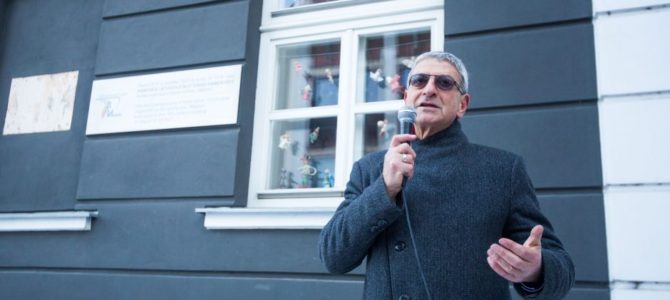
Currently there is a commemorative plaque on display on the façade of the library of the Lithuanian Academy of Sciences building located at Žygmantų street no. 1/8 in Vilnius dedicated to the dubious fame of Jonas Noreika, [also] known by the pseudonym General Vėtra. Information has reached us the plaque commemorating this person on the building at Žygmantų street no. 1/8 possibly was put up illegally, without required permission from the municipality of the city of Vilnius, and possibly in violation of the requirements of other laws as well. Please provide the Lithuanian Jewish Community with all documentation related to installation of the aforementioned commemorative plaque.

The honoring by commemorative plaque of this person with his undisputed role in committing genocide against citizens of Lithuania doesn’t make sense to the Lithuanian Jewish Community.

For information on and a copy of the order signed by Jonas Noreika seizing the property of Jews, please see http://www.anarchija.lt/component/content/article/81-istorija/38185-kodel-jonas-noreika-generolas-vetra-paskelbtas-vidvyriu and http://www.jpost.com/Opinion/Will-Lithuania-continue-to-honor-Nazi-collaborators-412701

The municipality of the city of Vilnius needs to take a look at article 170 of the criminal code of the Republic of Lithuania (incitement against any national, racial, ethnic, religious or other group of people) in which section 2 defines as a criminal act the mockery, belittlement, encouragement to hate or incitement to discriminate against a group of people or a member of that group based on gender, sexual orientation, race, ethnicity, language, origins, social status, religious belief or personal convictions and views.

The installation of a plaque commemorating Jonas Noreika in the city of Vilnius is wholly understood by the Lithuanian Jewish Community as a public mockery of the group of Lithuanian citizens who suffered the most during World War II, the Jews of Lithuania.

Please take measures quickly for the removal of the possibly illegal plaque from the building in Vilnius which commemorates Jonas Noreika and which publicly mocks the Jewish people.

[signed] Faina Kukliansky, chairwoman
Lithuanian Jewish Community

Shabbos Project a Great Success in Vilnius

ghg

The Lithuanian Jewish Community’s Shabbos Project event on Thursday, November 10, attracted a large number of participants including a majority of young people.

The event was held in the large space behind the Bagel Shop on the first floor.

Mainly girls and women but also a few young men took up stations around a number of tables preset with ingredients and mixing bowls. Different tables had different dominant languages. The largest group pushed two tables together, and spoke mainly English with some Hebrew, members and friends of the Lithuanian Jewish Student Union mainly in their 20s. United States ambassador to Lithuania Anne Hall and LJC chairwoman Faina Kukliansky shared a table with staff from the Bagel Shop. Another table conversed in Russian, another in Lithuanian, and children and younger people predominated at a normal and a small table near the back, including several students from the Sholem Aleichem Gymnasium.

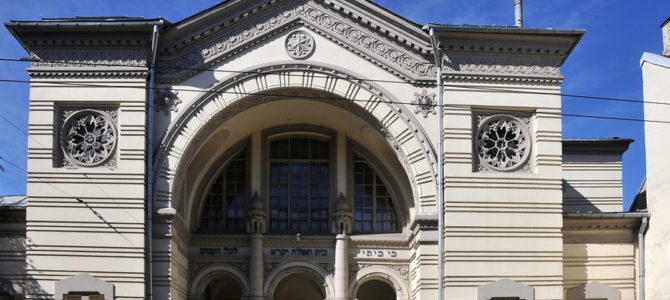
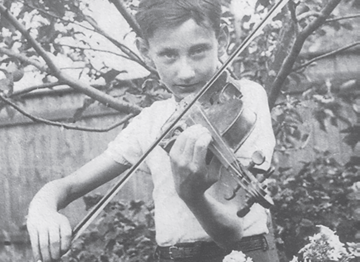
From the stage a presentation of challa and the Sabbath was provided, including a symbolic lighting of the Sabbath candles. A Sabbath song was performed by the cantor of the Choral Synagogue accompanied by violin. Rabbi Shimson Izakson was on hand for the entire event as well.

Yaffa Eliach, Historian Who Captured Faces of the Holocaust, Dead at 79

10eliach-obit2-articlelarge

Yaffa Eliach, who as a 4-year-old survived the Nazi massacres of Jews in her Lithuanian town, and went on to document their daily life in a kaleidoscopic book and a haunting, three-story canyon of photographs at the United States Holocaust Memorial Museum in Washington, died on Tuesday at her home in Manhattan. She was 79.

Her death, after a long illness, was confirmed by Thea Wieseltier, a family friend.

After a childhood that might have throttled a person of lesser spine, Professor Eliach (pronounced EL-ee-akh) dedicated herself to the study and memorialization of the Holocaust and its victims.

Starting in 1969, she did so as a professor of history and literature in the department of Judaic studies at Brooklyn College, and by founding the pioneering Center for Holocaust Studies at the Yeshivah of Flatbush in Brooklyn. Though modest in scale, its collection of taped interviews, diaries, letters, photographs and artifacts became a model for dozens of such centers.

Her mission, she said many times, was to document the victims’ lives, not just their deaths, to give them back their grace and humanity. She determined to do so as a member of President Jimmy Carter’s Commission on the Holocaust during a visit to the death camps, where she realized that the victims were portrayed only as bulging-eyed skeletons in ragged striped uniforms, not as the vital people they once were.

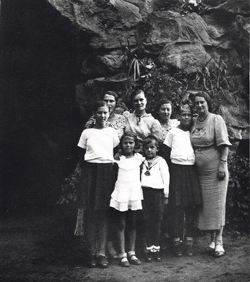
Professor Eliach decided to recreate the shtetl she had known in Lithuania — Eisiskes, known in Yiddish as Eishyshok — where 3,500 Jews, almost the entire Jewish population, were killed, by collecting photographs of its inhabitants.

Full necrology here.

Shabbat Project at the LJC

Press release, November 9, 2016

For the third year in a row Jewish communities around the world will host challa baking events and Sabbath celebrations. More than 1,006 cities around the world are participating in this enchanting event, and this year Vilnius is one of them. The Lithuanian Jewish Community officially joins the Shabbat Project Thursday, November 10, when we will host an evening of baking that special Jewish bread called challa with Community members and friends.

Challa is a special bread baked for Sabbath and holidays among Jewish families. The process of making and breaking challa is deeply rooted in tradition and religion. The word’s primary meaning is that of loaf or bun, as recorded in the Book of Numbers or Bamidbar in the Old Testament or Tanakh, and was one of the first commandments given the Israelites as they were preparing to leave the wilderness for the Promised Land: “Ye shall offer up a cake of the first of your dough for an heave offering: as ye do the heave offering of the threshing floor, so shall ye heave it.” (Numbers 15:20)

The event will feature a brief history of the Sabbath, music and hymns, kneading the dough together and baking traditional Sabbath challa. Ester Izakson, the wife of the rabbi of Vilnius, will lead the event. She will present the ceremony of separating a portion of the dough for the cohen, the haFrashat khalva, one of the three commandments incumbent of women in Judaism.

We’ll begin activating the yeast at 6:00 P.M. on November 10 at the Bagel Shop Café, Pylimo street no. 4, Vilnius. The Lithuanian Cultural Council is supporting the event.

The event will be attended by Lithuanian Jewish Community chairwoman Faina Kukliansky with family members, foreign ambassadors and guests.

For more information, contact Dovilė Rūkaitė, director of projects for the Lithuanian Jewish community, at projects@lzb.lt

Talking about the Holocaust

by Jūratė Juškaitė
manoteises.lt

The figure of the Jew remained even after the Holocaust in Lithuania, at Užgavėnės [Shrovetide carnival figure] and in libels concerning the blood of Christian children and matzo bread. These sorts of stories not only remind us how much daily anti-Semitism exists and is even enjoyed among us, but also forces us to think about an uncomfortable matter: who are these people whom we cannot forget, and where are they?

One of them is Amit Belaitė, the director of the Union of Lithuanian Jewish Students. It seems if not for the Holocaust our conversation might have been very simple, without long pauses and deep feelings of guilt. But after decades of silence, questions such as what happened to ‘your’ people, how did they survive, how did the Holocaust inform your experience, seem to erupt from within like a torrent.

Full interview in Lithuanian here.

Lithuanian Radio and Television Continues Shtetl Series with Trip to Šeduva

LRT

lrtradijas

Following the 9:00 A.M. news Tuesday, November 8, Lithuanian National Radio and Television continued their series about Lithuanian shtetls with a trip to Šeduva, which had a thriving and colorful multicultural, multi-linguistic life before the Holocaust, which wiped the town clean of its Jews and left very few material monuments to their former existence there.

How should we commemorate the Jews of Šeduva today? What were their lives like? How did they contribute to the foundation of an independent Lithuanian state? Vita Ličytė attempts to answer these and other questions in the fourth episode in the on-going series.

New Holocaust Memorial at Seventh Fort in Kaunas

Kaune atidengtas ženklas Holokausto aukoms

Kauno.diena.lt

A new Holocaust memorial was unveiled a the Seventh Fort in Kaunas. About 3,000 people were murdered at the Seventh Fort in July, 1941. Human remains were discovered at the largely abandoned site several years ago. The remains were turned over to the Kaunas municipality but have now been reburied at the mass grave site.

The Star of David stone monument appears to be springing up from the earth. It was made by Alfonsas Vaura. The sculpture is accompanied by three lights which come on at night. The project was financed by the Kaunas municipality.

Full story in Lithuanian here.

Long Awaited Changes Come to Sugihara House

Sugihara House

Long-awaited renovation work has finally begun at the museum set up at the house and office of Japanese diplomat Chiune Sugihara in Kaunas, Lithuania. So far renovation is going on inside the house. The façade also requires repair, but there are reports there are problems in financing all the repairs needed at this point in time.

The second floor of Sugihara House is currently being refurbished and all exhibits have been placed on the ground floor temporarily. The ground floor houses the diplomat’s office. When the second floor is finished, there will be more exhibit space drawing even more visitors from Japan, Lithuania and around the world fascinated by this man who rescued so many Jews from the Holocaust.

Full story in Lithuanian here.

Beata Nicholson and Rafailas Karpis Talk about Jewish Lithuania

B. Nicholson ir R. Karpis atskleis, kokia yra žydiškoji Lietuva

“Empty, boarded up, gone, pulled up the roots,” these are the words opera soloist Rafailas Karpis used to describe extant Jewish synagogues in Lithuania following a trip he made through northern Lithuania with Beata Nicholson, a noted Lithuanian journalist and television personality who produces a cooking show called “Keliauk ir ragauk. Lietuva” [Travel and Taste: Lithuania]. Karpis said the wooden synagogues of Lithuania used as store houses or sports gyms during the Soviet era are still being used as such in many locations. But not at the synagogue complex in Joniškis, rebuilt at the initiative of the local communities, where Beata and Rafailas will spend most of their time during the upcoming episode.

Full article in Lithuanian here.

Alytus Synagogue under Renovation

Tvarkoma XIX a. siekianti Alytaus sinagoga

Currently the roof and internal support skeleton of the synagogue located at Kauno street no. 9 in Alytus are being repaired. When repairs are complete a lightning rod is to be installed as well.

“We’re so glad to have the opportunity to renovate this brick-and-mortar synagogue still standing from the end of the 19th century, testifying to the high cultural and economic achievement of the Alytus community. Let’s not forget the synagogue after it was rebuilt in the early 20th century following a fire became one of the dominant features on the Alytus skyline. Its rich interior decoration also survives, including authentic multicolor decorations in the main prayer hall. The most important task now is to stabilize the building, to fix up the roof which had holes. After emergency repairs are made, water will no longer erode the bricks and mortar and the synagogue will be safe, and later more work will be done,” Cultural Heritage Department director Diana Varnaitė said.

Full story in Lithuanian here.

Book about Kupiškis Jewish Community

Author Aušra Jonušytė with Israeli ambassador Amir Maimon. Photo: Rasa Pakalkienė (LŽ)

Most of the Jewish communities in Lithuanian towns and villages were annihilated during World War II. The town of Kupiškis was no different. People of this ethnicity were murdered, but not removed from memory. This is demonstrated in the book “Kupiškio žydų bendruomenė. Praeities ir dabarties sąsajos” [The Kupiškis Jewish Community: Connections between Past and Present] presented at the Vilnius Jewish Public Library. The event by the Vilnius Jewish Public Library and the Kupiškis Ethnographic Museum launched the book by Aušra Jonušytė. She told the audience she considered with how to combine regional history work and student-teacher activities, and how to present the material in a way appropriate for children when she compiled the book.

Full story in Lithuanian here.

It’s His Secret

yona
by Yona Bartal

Shimon Peres insisted everyone hold a dialogue with tomorrow, to stare at the future in its eyes. he spoke of values, of morals. now, we must continue in his vision.

Today, a whole month after his passing, I look back on twenty-one years of non-stop round-the-clock work in Israel and the world in which I followed him, attempting to achieve his big steps and dive into his global ideas. I try to take my sack of immense personal feelings, tie them up with a big bow and for a minute to place them on a shelf. I sit myself in front of a historical mirror and try an explain to myself the phenomenon named Shimon Peres – from an up-close and intense acquaintance. I look at the huge pile of condolence letters from across the globe, I still feel the warm embrace of Clinton, Obama, president of France, French philosopher Bernard Henry Levi, the young Trudeau from Canada and numerous other leaders that came, stood silently and wept on Peres’s passing with us.

Great Aktion Remembered in Kaunas

The 75th anniversary of the Great Aktion, the day on which almost 10,000 Jews were murdered at the Ninth Fort, was marked in Kaunas on October 30.

In 1941 more than 9,200 Jews in the Kaunas ghetto were murdered at the Ninth Fort, including 4,273 children.

The remembrance ceremony was held at the field at the Ninth Fort where the mass murder was perpetrated.

75th Anniversary of Mass Murder of Jews of Veisiejai on November 3

Lapkričio 3d. – Veisiejų žydų bendruomenės sunaikinimo 75-osios metinės
The Jews of Veisiejai and Lazdijai were shot in Kaktiškės

Lithuanian Jewish Community chairwoman Faina Kukliansky lost twenty-nine relatives during the mass murders, and only her grandfather and his children survived because of help by rescuers. There are several members of the LJC who are descendants of Jews from Veisiejai, Lithuania, who survived the Holocaust, including: F. Kukliansky, A. Levinsonas, I. Bereznickis, Junona Bereznicky , V. Sideraitė and the sisters R. and L. Ofčinskaitė.

kaktiskesMonument to Holocaust victims in Kaktiškės

Saulius Kuklianskis. the pharmacist in Veisiejai, his wife the doctor Zinaida and their three children Moshe, Ana and Samuelis were living in Alytus when the war began in Lithuania. After the Nazis occupied the country, the family soon lost the young, cared, loving and beloved mother of three Zinaida Kuklianskienė, but the pharmacist and his children survived. The dramatic path to rescue for the family included fleeing occupied Lithuania, living in the Grodno ghetto for a year and a half, flight from Grodno and return to Lithuania, a road filled with danger and the continual fight for survival. After they returned to Lithuania in February, 1943, Saulius, Moshe, Ana and Samuelis hid for a year and half in the forests around Druskininai with the help of residents of the villages of Sventijanskas, Gerdašiai, Vainiūnai, Macevičiai and Bugieda.

Happy Birthday, Maša Grodnikienė!

Happy birthday, Maša!

Lithuanian Jewish Community deputy chairwoman Maša Grodnikienė is celebrating her 70th birthday! Maša is the initiator and intellectual force behind many of the cultural events held by the Community and has been deputy chairwoman for over 20 years now. Thanks to her the first World Litvak Congress was held in Vilnius in 2001, marking a turning point within the Community and the renaissance of Litvak culture in Lithuania. Maša has contributed so very much to fostering Litvak culture within the Community and in the world.

On the occasion of her birthday, the Community has nothing but the most heart-felt words to say to Maša. We congratulate her on her birthday and wish her the best health, joy at home with her grandchildren, many more creative initiatives in the Jewish Community, a great mood and many more warm moments in life. Happy birthday!

Mazl tov!

Housing Development Next to Old Jewish Cemetery

Kuriasi senųjų žydų kapinių kaimynystėje

Surveying and infrastructure construction are already going on next to the old Jewish cemetery. A residential and recreational complex is to be built here.

by Viktorija Vaškytė, Pajūrio naujienos

When you see the stakes being driven in and the infrastructure being built in the meadow next to the old Jewish cemetery, residents of Kretinga, Lithuania are concerned that business activity is taking place right next to the place of eternal rest. Chief and senior architect of the Architectural and Territorial Development Department of the Kretinga regional administration Reda Kasnauskė says the regional administration has ordered land surveys of the old Jewish cemetery, so locals have probably seen surveyors measuring the site. She says the territory of the old Jewish cemetery is surrounded by legal plots of land and each one them may be measured and marked.

statinys-planuojamas-kretingoje
This is how the residential and recreational complex to be built next to the old Jewish cemetery will look. To the right: the topography of the future neighborhood.

Full story in Lithuanian here.

Jurbarkas Jewish Community: Signs and Memories

Jurbarko žydų bendruomenė: ženklai ir prisiminimai

Leading tours of Jurbarkas, Nijolė Paulikienė tells tourists about Jews as well, because it is impossible to leave out the story of people who lived here for centuries. The guide gets her information from books and from Jurbarkas old-timers.

The large Jewish community who lived in Jurbarkas are now only commemorated on Kauno street, formerly called Didžioji and Vilniaus streets, where there are signs about genocide locations and graves. When Israeli ambassador Amir Maimon visited our town in June, Jurbarkas residents began to recall the legacy of the Jewish community more intently. At the end of October Israel Day events will be held at the public library, and there are plans for sites in the town to commemorate the memory of the Jews.

Guide and teacher Nijolė Paulikienė has much she can say about the Jews of Jurbarkas. She even dreams of setting up a Jewish museum there and is actively charting the vision for that museum. Individual old-timer residents of Jurbarkas still have memories of the Jews in the card-catalogs of their memories, as do the streets covered over in asphalt and the repainted façades of the Old Town. Before World War II Jews accounted for 42% of the population of Jurbarkas, but after the war only 76 were still alive.

Full story in Lithuanian here.

Israel Day Event in Jurbarkas

Izraelio dienos renginys Jurbarke

An Israel Day celebration took place in Jurbarkas, Lithuania on October 26, attended by Israeli ambassador to Lithuania Amir Maimon with embassy staff, representatives from the Jurbarkas regional administration, representatives from the Lithuanian Jewish Community and others.

Before the event the Israeli ambassador and Skirmantas Mockevičius, the head of the Jurbarkas regional administration, met and talked with students from the Antanas Giedraitis-Giedrius Gymnasium in Jurbarkas, and later with Lithuanian Jewish Community chairwoman Faina Kukliansky and Community members visited the Jewish cemetery in Jurbarkas. The official event took place at the Jurbarkas Regional Administration Public Library in the afternoon, where the photo exhibit “Pope Francis’s Visit to Israel” was opened and a sculpture by sculptor Dovydas Zundelovičius dedicated to the memory of the Jewish community of Jurbarkas was unveiled. The winners of a student drawing contest called “Let’s Draw Jerusalem” were also awarded, photos of trips to Israel were displayed and Jewish cuisine was showcased.

Cultural Historian Violeta Davoliūtė: Deportations to Siberia Were Lithuanianized, Catholicized

diskusija-apie-radikaliojo-nacionalizmo-nuotaikas-lietuvoje-51388c8860434-694x480

by Jūratė Juškaitė
manoteises.lt

Historians reckon about 17,000 people were deported from Lithuania during the first Soviet occupation. Cattle cars were sent deep into Russia from June 14 to June 18, 1941, and many of the deportees didn’t survive the first winter. Most people in Lithuania know these facts well, but June of 1941, often called the tragedy of the Lithuanian people, isn’t all that Lithuanian.

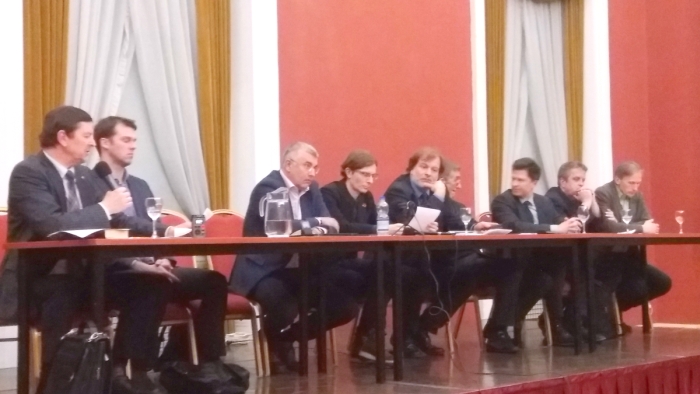
Research recently performed by cultural historian Violeta Davoliūtė soon to appear in the book “Population Displacement in Lithuania in the Twentieth Century” (Brill, 2016) attempts to bring the experiences of deported Lithuanian Jews back into collective memory regarding those days in June. The researcher says the narrative of deportations formed during the push for Lithuanian independence in the late 80s and early 90s contained ethnocentric elements and was often too “Catholicized.” Although the official politics of memory seem complicated if only for the widespread “Jewish Communist” stereotype, Davoliūtė says these and similar stereotypes have failed to divide this group of deportees, which is a tight-knit community based on shared experience.

In a recent discussion historian Dr. Arvydas Anušauskas was the first to call the 1941 deportations multiethnic. Why are they called this?