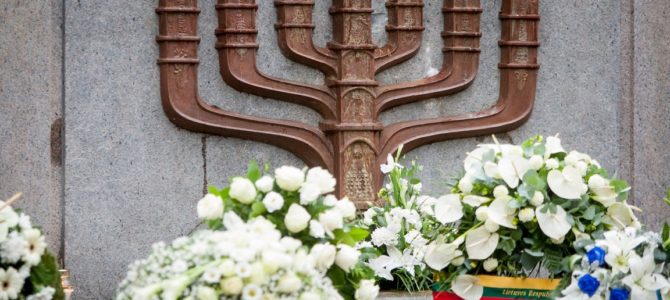
Holocaust

Condolences

Condolences

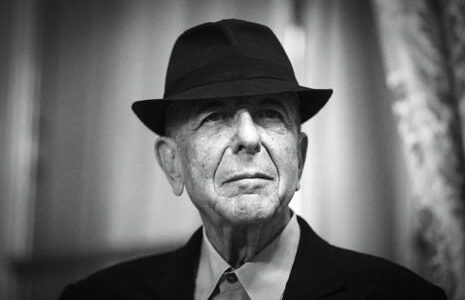
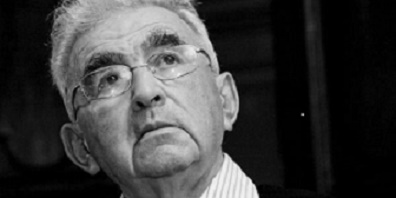
The Lithuanian Jewish Community extends our deepest condolences to the friends and family of noted writer and producer Felix Dektor who passed away at the age of 89 in Jerusalem. He was born December 21, 1930, in Minsk to a family of Litvaks. He lived there until being evacuated to the Ukraine and then Siberia during the Holocaust.

Graduated from the History and Philology Faculty of Vilnius University in 1955, Dektor continued studies at the Gorky Institute of Literature in Moscow including in Lev Ozerov’s literary translation seminar. Dektor translated a number of Lithuanian writers into Russian, including books by Justinas Marcinkevičius, Juozas Požėra, Alfonsas Bieliauskis and Mykolas Sluckis. His best-known translations were perhaps the novels of Icchokas Meras on Jewish death and valor during the Holocaust (Ничья длится мгновенье (Вечный шах) and На чём держится мир).

Dektor was removed from the Writers’ Union of the Soviet Union in 1975 in response to his publication and distribution of the Jewish cultural and educational magazine Tarbut.

Defiant Zionist Spirit of the Bergen-Belsen DP Camp

Defiant Zionist Spirit of the Bergen-Belsen DP Camp

by Menachem Z. Rosensaft, associate executive vice-president and general counsel, World Jewish Congress

When the remnant of European Jewry emerged from the death camps, forests and hiding places throughout Europe in the winter and spring of 1945, they looked for their families and, overwhelmingly, discovered that their fathers and mothers, their husbands, wives and children, their brothers and sisters, aunts, uncles and cousins had all been murdered by the Germans and their accomplices. Yet they did not give in to despair.

On the contrary, in Displaced People camps throughout Germany, Austria and Italy, the Jewish survivors of the Holocaust, who could easily have given up on humankind, dramatically returned to life–spiritually, physically, culturally, and socially. Instead of allowing themselves to remain the prisoners of a horrific past, they looked toward the future, married, started new families, and proved, if only to themselves, that they had not only remained alive but that they had, in fact, prevailed. I am one of more than 2,000 children who were born in Bergen-Belsen, the largest of the DP camps, between 1945 and 1950.

Simultaneously, the survivors’ affirmation of their Jewish national identity took the form of a political and spiritually redemptive Zionism. The creation of a Jewish state in what was then called Palestine was far more than a practical goal. It was the one ideal that had not been destroyed, and that allowed them to retain the hope that an affirmative future, beyond gas chambers, mass-graves and ashes, was still possible for them.

Full article here.

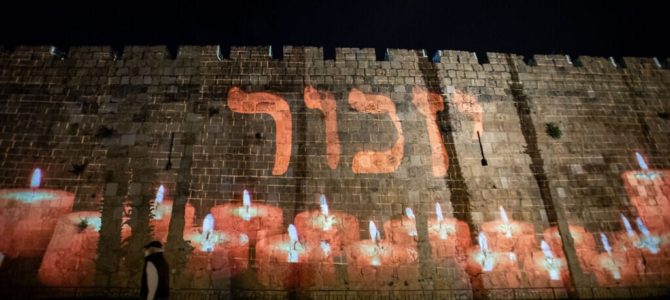
WJC Yom HaShoah Commemorative Ceremony April 20

WJC Yom HaShoah Commemorative Ceremony April 20

Dear Friends,

This year Yom HaShoah will be very different.

For the first time ever there will be no commemorative ceremonies bringing people together physically in solemn reflection held around the world.

Whilst we are of course all preoccupied with the effect that the COVID-19 corona virus pandemic is having on our lives, we still feel that it is important to mark this day and pay our respects to the victims of the Holocaust.

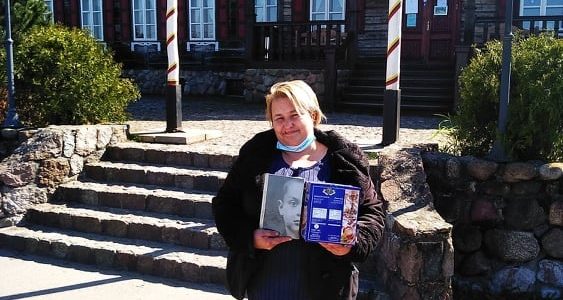
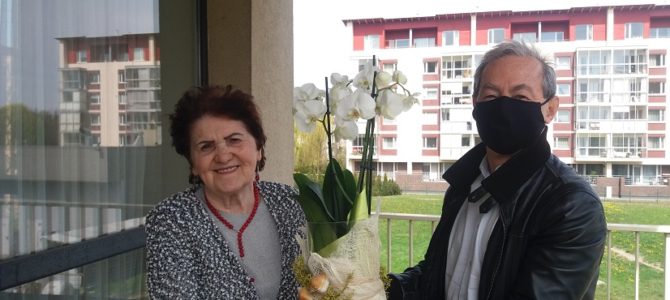
We Did It, We Got Matzo to Our Seniors

We Did It, We Got Matzo to Our Seniors

Two weeks ago the Community accepted the challenge to distribute and home-deliver more matzo to more than 900 seniors living in Vilnius. Today we can truly say, mission accomplished.

It would have been mission impossible without the help of our volunteers who heeded the Community’s call for help. We had from 3 to 4 teams of Community staff and volunteers on the street daily.

The distribution of matzo took place so very smoothly because we were able to harness so many who offered to help.

A mitzvah should be done quietly and without fanfare, but the Community has a right to know who its heroes are.

Menachem Rosensaft Sends Passover Greetings

Menachem Rosensaft Sends Passover Greetings

Dear Friends,

I want to wish all of you and yours a peaceful and health-filled Pesach. May we all succeed in adapting to the pandemic crisis sufficiently to have meaningful Seders, in many (most) cases connecting remotely to family members who should have been sitting with us.

In advance of Yom HaShoah, Holocaust Remembrance Day, I also want to share with you a video that the World Jewish Congress produced, in cooperation with the World Federation of Bergen-Belsen Associations, (WFBBA) about the liberation of the Bergen-Belsen concentration camp, the Belsen Displaced Persons camp, and the more than 2,000 children born in the DP camp’s Glyn Hughes Hospital:
https://youtu.be/Jv9M0yvi_J0

I hope that the example of the survivors’ resilience, determination and optimism as they emerged from the horrors of the Holocaust will inspire us at this difficult and anxious time. Please feel free to share the video widely.

I am also pleased to share with you a second video, also produced by the WJC together with the WFBBA, based on the beautiful photography of Debbie Morag featuring daughters of Auschwitz survivors:
https://youtu.be/b_PrrHLp8U4

Again, I wish you and yours a peaceful, health-filled Pesach.

With all warm regards,

Menachem

§§§

Menachem Z. Rosensaft (born 1948 in Bergen-Belsen, Germany) an attorney in New York and the Founding Chairman of the International Network of Children of Jewish Survivors, is a leader of the Second Generation movement of children of survivors,[1] and has been described on the front page of the New York Times as one of the most prominent of the survivors’ sons and daughters.

Panic and Contempt

Panic and Contempt

by Arkadijus Vinokuras

When the heads of state lack any experience managing crises, panic envelops society. When leaders try to compensate for their lack of ability through dictatorial means, they demonstrate contempt for society. It’s pointless to blame Lithuanian health minister Aurelijus Veryga for changing his directives several times daily. He was appointed by those who have no experience themselves, and who are therefore unable to manage the crisis effectively. It seems they don’t really understand human lives are at stake. And freedom.

On panic. Seeking somehow to demonstrate the abilities he doesn’t have, health minister Veryga even donned military costume. He seems to have wandered into the tragicomic league of Don Quixote by attempting to fight the virus this way. Where you’re not sure whether to laugh or cry. If he had served in the military even at the level of lieutenant, he would know how orders are issued by a military commander. They would be based–and this is the crucial matter–on emergency management scenarios drawn up by the military leadership. But from the very first days of the spread of the virus in Lithuania it was completely clear the Lithuanian Peasants/Green Union Government is not following any emergency management plan.

The minister who has turned himself into a laughing stock with his military uniform should at least understand in a general way that an order by a military commander first indicates the prevailing situation in the theater of war. It indicates the time frame. It also enumerates enemy forces and our own forces, e.g., what we have and what we don’t have. Only then comes the definition of missions.

Genocide Center Wins Case Demanding Retraction of Jonas Noreika Finding

Genocide Center Wins Case Demanding Retraction of Jonas Noreika Finding

The Lithuanian Telegraphic Agency ELTA reports the Lithuanian Supreme Administrative Court dismissed a suit lodged by US-resident Litvak Grant Gochin against the Center for the Study of the Genocide and Resistance of Residents of Lithuania.

ELTA reports said the panel of judges rejected Grant Gochin’s demand the Genocide Center retract an historical finding they issued earlier on the person of Jonas Noerika during a hearing on April 1.

The court’s finding isn’t subject to appeal. The court also obliged Gochin to pay additional court costs to the Genocide Center.

Gochin was appealing a finding issued by the Vilnius District Administrative Court on March 27, 2019, in favor of the Genocide Center.

Full text in Lithuanian here.

Thank You for Helping LJC Seniors

Thank You for Helping LJC Seniors

Lithuanian Jewish Community administrative secretary Liuba Šerienė would like to send a big thank-you to Social Department director Michailas Segalas and staff members Ema Jakobienė, Ninel Skudovičiūtė, Rokas Dobrovolskis and Neringa Stankevičienė and colleagues, and to Michailas Tarasovas, Aušra, Snieguolė, Danutė Lena, Žana and Sonia for their great work helping our Social Department clients and senior citizens. Thank you so very much.

Commemorating the Victims of the Children’s Aktion in Kaunas

Commemorating the Victims of the Children’s Aktion in Kaunas

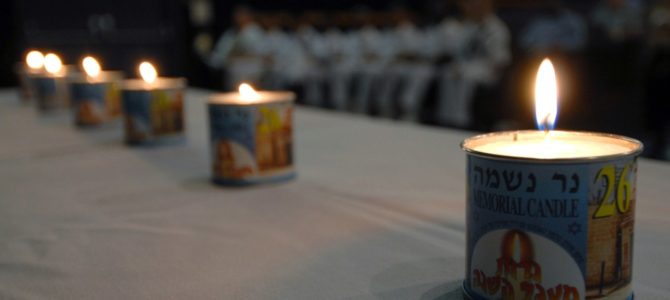
The Kaunas Jewish Community reports the annual commemoration of the mass murder of the children of the Kaunas ghetto was canceled this year because of the virus epidemic. Usually scheduled during the last days of March, this year we are invited to remember the victims at home, by lighting a candle, writing a name on a stone and reflecting.

The following is a list of some of the children who died in the Kaunas ghetto, drawn up on the 70th anniversary of the Children’s aktion by the Vilna Gaon State Jewish Museum. The names are presented in modern Lithuanian orthography.

No, Mr. Kasčiūnas, Jews Did Not Create the Corona Virus

No, Mr. Kasčiūnas, Jews Did Not Create the Corona Virus

by Arkadijus Vinokuras

I’m having a dark laugh, Homeland Union/Lithuanian Christian Democrats member of parliament Laurynas Kasčiūnas did not, thank God, accuse Jews for the corona virus. But he did accuse the Lithuanian Jewish Community of financially supporting “that liar” Rūta Vanagaitė’s book “How Did It Happen.”

You might ask what my fake headline has in common with MP Kasčiūnas’s accusation against the LJC. Well both ideas are false and allow for manipulating the truth.

See, the main figure in the book isn’t Rūta Vanagaitė, but Dr. Christoph Dieckmann, one of the best known European historians and an expert on the Holocaust in Lithuania. Or is it this fact which frightens Kasčiūnas? It’s one thing to criticize a “dilettante of history” (as Rūta Vanagaitė’s critics claim) and quite another to criticize a member of the International Commission for Assessing the Crimes of the Nazi and Soviet Occupation Regimes in Lithuania, convened and supported by the president of Lithuania.

ORT Celebrates Birthday

ORT Celebrates Birthday

by Ruth Reches, acting principal, Sholem Aleichem ORT Gymnasium

On March 18 the ORT, an extremely important global Jewish cultural organization, celebrated its birthday. Happy birthday!

ORT is the acronym for Общество ремесленного и земледельческого трудаm, the association of crafts, trades and agriculture founded 140 years ago in 1880. ORT’s goal was to provide Jews work skills and information. In its first decades schools started by the ORT organization graduated tens of thousands of Jews who went on to work as tailors, farmers, mechanics, glass-blowers, furniture makers and similar.

Happy Birthday to Švenčionys Jewish Community Chairman Moisejus Šapiro

Happy Birthday to Švenčionys Jewish Community Chairman Moisejus Šapiro

Dear Moshe, we are so very pleased to celebrate your birthday together again. We wish you much happiness, good health and energy as you undertake the serious work of leading the Švenčionys Jewish Community. Mazl tov! May you live to 120!

Chairman Šapiro has done much work engaging local residents in remembering and commemorating the names of Jews murdered in the Holocaust there, recording the names for future generations.

LJC Social Center Caring for Elderly

LJC Social Center Caring for Elderly

All LJC Social Center clients are at risk for the viral epidemic not just because of age but also because of illness. The media have reported the mortality rate for the ill and elderly continues to grow.

Doctor Ela Gurina is a member of the LJC Social Center Commission and the chairwoman of the committee for advising Holocaust survivors. She wants to remind walk-in care staff of the Social Center how to act during the epidemic.

What work are LJC Social Center employees engaged in currently?

Employees have to take care of their clients as well as possible. To isolate them from the environment so they don’t enter public spaces. They can only walk around in places where there aren’t other people and not to engage in conversation with people they encounter. When they get home they must wash their hands for at least two minutes with soap and water, and use a special disinfectant which destroys viruses. The Community is supplying the necessary disinfectant.

The Naked Truth: The Text “Hallelujah to the Communist Party of the Soviet Union” Judged Worthy of Doctorate in Independent Lithuania

The Naked Truth: The Text “Hallelujah to the Communist Party of the Soviet Union” Judged Worthy of Doctorate in Independent Lithuania

by professor Pinchos Fridberg, PhD habil.

Standard Foreword

The text of this article exists in three languages, Lithuanian, English and Russian. None of them has managed to get published in the better-known pages of the democratic Lithuanian press.

If an interested reader asks, “Why not?” I would tell him:

I guess it’s forbidden to publish “the Naked Truth!”

Of course he probably needs an “airbag,” i.e., the word “allegedly” should be added!

Probably if I wrote “the ALLEGED Naked Truth” there would be problem in publishing it.

On February 20 I sent the Lithuanian version of my article to the Lithuanian president, and I called and asked he be made aware of it. They promised me my request would be passed on to the Chancellery and an advisor to the president.

The story described is not the first, a similar thing happened with my article “The Jew Whom Ramanauskas-Vanagas Rescued, WHo Probably Wasn’t a Jew” (in Russian here).

Roman Abramovich to Plant 25,000 Trees in Israel in Memory of Litvaks

Roman Abramovich to Plant 25,000 Trees in Israel in Memory of Litvaks

The Jewish National Fund (Keren Kayemeth LeIsrael) held a ceremony to set aside a memorial site and begin planting a forest in memory of the Lithuanian Jewish community, the Russian-language website www.vesty.co.il reported on March 11. The plan is to plant 25,000 trees as part of a KKL environmental protection project for afforestation in southern Israel. Famous Russian-Israeli businessman and philanthropist Roman Abramovich is providing major financing for the project.

Abramovich’s great-grandparents were Litvaks from the Kovna guberniya in the Russian Empire. In spring of 1941–a year after Lithuania was made part of the Soviet Union–the affluent Abramovich family was exiled to Siberia.

Roman’s grandfather was born in Eržvilkas and his grandmother Toiba Berkover was born in Jurbarkas. His grandfather Nakhman died in a camp in Krasnoyarsk in 1942 and his grandmother raised their three sons on her own, Aaron Arkady being Roman’s father.

Lithuanian Government Lists Famous Litvaks

Lithuanian Government Lists Famous Litvaks

The web page of the Government of the Republic of Lithuania now features in Lithuanian and English texts about the Vilna Gaon, famous Litvaks and visual materials for celebrating 2020 as the Year of the Vilna Gaon and Litvak History.

§§§

Most Prominent Jewish Personalities in Lithuania

Lithuania has been home to many Jews, who were born in this country, lived and created here leaving an indelible mark in the scholarly and cultural heritage of Lithuania as well as of the world.

Writers

Icchokas Meras (1934-2014). The author of books on the Holocaust (Geltonas lopas (The Yellow Patch), Ant ko laikosi pasaulis (What the World Rests on), Lygiosios trunka akimirką (A Stalemate), and a film script writer for well-known Lithuanian films Kai aš mažas buvau (When I Was a Child), Birželis, vasaros pradžia (June, the Beginning of Summer) and Maža išpažintis (Small Confession).

Chaim Grade (1910-1982). Vilna-born writer, a member of Yung Vilne (Young Vilnius), a group of avant-garde writers and artists. Chaim Grade is considered to be one of the leading Yiddish writers in post-Holocaust period. Nominated for the Pulitzer Prize.

Happy Holidays, Žydelkos

Happy Holidays, Žydelkos

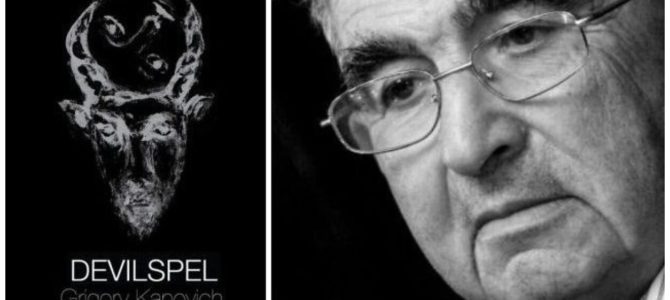
by Sergejus Kanovičius

Once, long ago, I attended a Lithuanian school. Back then there were two Jews, or more accurately, a Jewish boy and a Jewish girl. The boy was in the grade next to her. Dark-skinned speaking without an accent, the Jewish boy always got into fights when others reminded him he was different. Different and therefore not as good. No one tried to break it up. There were always observers. Later they called themselves pals because they didn’t get into fights with him. They didn’t defend him, but they didn’t beat him, either. It’s much safer to stand to the side and keep quiet. That’s been proven historically. The Jewish girl didn’t get into fist fights. She was shy and had curly hair. Whenever someone called her žydelka [Jew-girl], which is now for some reason considered an endearing diminutive term, she used to walk away, sometimes wiping a tear. When I used to hear these “terms of endearment,” unlike the majority of the žydelkos, I had to get into a fight again.

There have always been more apologists for epithets such as žydelka, žydo išpera [Jew-spawn] and others and they have always been stronger. But my family taught me one thing: never to retreat from abuse, to oppose it. I would be lying if I said I had ever been the victor in some fist fight. The combatants were always greater in number and I lost. No matter what, though, they got theirs. Of the many wonderful teachers there were only a few who didn’t give out beatings, they found a pseudo-intellectual way of telling the whole class that this one is different and therefore is worthy of less respect. This kind of intellectual pedagogical encouragement to hate. Like the mark for dictation, when because of one comma the dark kid used to get four [out of ten] with a minus. Just because. So I wouldn’t forget I was different.

Many years later as Lithuania counts her fourth decade of independence, no one dare beat me. Fists have become unpopular. They beat through words. Sometimes rather beautiful ones. The world is free. But it is painful the Lithuanian National Defense Ministry’s magazine Karys [Soldier] has published the lie of a pseudo-historian about the local leader of anti-Semitic ideology (who knows whether another NATO member who sometimes guards our airspace, if the French Defense Ministry would try to tell their soldiers what a great diplomat and patriot Pétain was). Or insistently try to prove “Jew-girl” is a term of endearment (happy International Women’s Day, žydelkos!). Frida Vismant of Šeduva recalls that’s what they called her on the streets in 1940. “You just wait, žydelka padalka, Hitler will come and we’ll show you!” (Out of endearment, I guess, they told her she was a žydelka in the Šiauliai ghetto after they took her firstborn Rachmielis and beat him to death along with 600 child žydelkos).

Lithuanian President’s Historic Apology 25 Years Ago

Lithuanian President’s Historic Apology 25 Years Ago

by Ugnius Antanavičius for 15min.lt

Exactly 25 years ago then-president of Lithuania Algirdas Brazauskas issued the biggest “I’m sorry” of his life. On a trip to Israel he apologized to the Jewish people for Lithuanians who robbed and murdered their Jewish fellow citizens during the Holocaust. Largely forgotten now, Brazauskas’s trip and apology caused many reactions in Israel and Lithuania then.

The apology came on March 1, 1995, when he addressed the Knesset, broadcast live on Israeli radio and television. The late Algirdas Brazauskas apologized in the name of the Lithuanian nation for the Lithuanians who robbed and murdered Jews during the Holocaust. His trip to Israel was surrounded by friction and controversy. Protesters greeted him in Israel, where Lithuania’s reputation was very bad at the time, protesting the rehabilitation of thousands of Holocaust perpetrators by the new independent Lithuanian state. Every word Brazauskas uttered and even his body language was closely scrutinized during that foreign visit.

At the time the prevailing unofficial opinion in Israel held that while the Germans were the most responsible for crimes against the Jewish people, the Lithuanians placed second, followed by Latvians, Romanians and Ukrainians.

Full story in Lithuanian here.

Hunters and Žydšaudžiai


by Grant Gochin

Amazon Prime recently released a fictionalized series called “Hunters.” It is an account of Nazi hunters searching for Holocaust perpetrators living in the USA. Unfortunately, it is not as fictional as we would like. Thousands of Holocaust perpetrators escaped to the USA, and more went to South America. Holocaust denial, cover-ups and lies helped almost all of the escapees live to ripe old ages in peace and comfort, living in wealth on stolen Jewish plunder, and pontificating their Jew hate to the next generations.

Concurrently released on Amazon is a book containing 121 testimonies of Holocaust survivors from the Lithuanian villages titled: The Lithuanian Slaughter of its Jews. These testimonies are harrowing in their stark recounting of rape, torture, enslavement and wholesale murder of Lithuanian Jews by their hunter neighbors (žydšaudžiai), often without any presence of German Nazis (Lithuanian Nazis were plentiful). These testimonies leave no room for Holocaust revisionism which is so predominant in Lithuania today.

President Nausėda of Lithuania states he stands firmly against Holocaust denial. It would be impossible to deny the Holocaust in Lithuania. Hunting and murdering Jews was such a common pastime in Lithuania that they even have a word for it: žydšaudžiai (Jew-shooters). The Holocaust in Lithuania was publicly conducted with massive collaboration of the local population. Death pits cover the country. As such, denying the Holocaust would be preposterous, and Lithuanians are not stupid people.

Nausėda and his government do not stand against Holocaust revisionism, rather, it is their national policy. Lithuania openly acknowledges somehow Jews were murdered; that is, the Jews murdered by Nazis, and the ones they claim were also murdered by their nemesis, Russia. Lithuania lies blatantly about Jews murdered by žydšaudžiai Lithuanians–possibly even up to 80% of the victims.

Full article here.

Lithuanian Defense Ministry Undertakes New Defense of Lithuanian Nazi Kazys Škirpa

Lithuanian Defense Ministry Undertakes New Defense of Lithuanian Nazi Kazys Škirpa

Lithuanian military magazine “Karys” [Soldier] published by the Lithuanian National Defense Ministry in its second issue for 2020 has published a long opinion piece by Vidmantas Valiušaitis, a Lithuanian journalist who has made a career of defending Lithuanian Nazi collaborators.

Printed on sepia tone pages apparently intended to show either age or the magazine’s distance from the piece, Valiušaitis engages in a fervent defense of Kazys Škirpa, the military officer in pre-WWII independent Lithuania who took up residence in Berlin and under the direction of Hitler’s Abwehr formed the Lithuanian Activist Front as a clandestine anti-Soviet system of underground resistance cells, and founded the political organ of the LAF, the Lithuanian Provisional Government, with himself as prime minister. The PG was the pro-Nazi puppet regime intended to give the Nazi invasion the cover of legitimacy as a national liberation movement.

The author devotes the first two pages (three columns per page) to defending Pope Pius XII as some sort of background he thinks the reader needs to place Kazys Škirpa in context. He then presents as true historical facts Nazi allegations Jews in Lithuania had fired upon Wehrmacht soldiers, which was used as a pretext to set up ghettos. Valiušaitis then presents a conspiracy theory the Nazis and Soviets conspired against Lithuanian independence, a theory which he says needs further research. He goes on to say attempts to besmirch pro-Nazi Lithuanians were begun by Stalin and are being continued in spirit by Russian president Vladimir Putin, most recently in public statements he made casting doubt on Polish innocence in the Holocaust. He also provides his personal version of Finland’s Winter War, Adenauer’s realpolitik and assorted other matters in fine detail.