
Holocaust

Claims Conference Holocaust Denial Campaign Launching This Week

Claims Conference Holocaust Denial Campaign Launching This Week

Dear Presidents,
Dear Friends,

We hope this email finds you and your close ones well and healthy.

Tomorrow, July 29, a grass-roots campaign will be launched by The Claims Conference to urge Facebook to remove Holocaust denial from its platform.

Holocaust survivors are putting much effort in order to make Facebook classify Holocaust denial as hate speech and remove it. Claims Conference has been working with survivors globally who are now recording messages to Facebook CEO Mark Zuckerberg. These messages will be posted daily on Claims Conference social media.

Despite the meeting between Mark Zuckerberg and civil rights organizations (including ADL and NAACP), Facebook has refused to classify Holocaust denial as hate speech.

Therefore, we would like to ask you (and your affiliated organizations) to take a moment to promote this campaign on your social platform. It is our duty to help giving Holocaust survivors this missing, while so deeply needed voice.

Each day from July 29th, a recorded message from Holocaust survivors to Facebook CEO Mark Zuckerberg will be posted on Facebook, Instagram (owned by Facebook) and other social media platforms such as Twitter.

The first video will be posted at 1PM (CET).

Facebook: https://www.facebook.com/ClaimsConference/
Twitter: @ClaimsCon
Instagram: @claims_conference

Information can also be found at the Claims Conference website on July 29 at: www.claimscon.org.

EJC is fully supporting this campaign and we encourage you to share these video messages using the hashtag: #NoDenyingIt.

Please do not hesitate to reach out to us for any further information you may require.

Best regards,
The EJC Team

tel. +32 25408159 fax +32 25408169
www.eurojewcong.org @eurojewcong

Year of Vilna Gaon and Litvak History Becomes City-Wide Celebration in Kaunas

Year of Vilna Gaon and Litvak History Becomes City-Wide Celebration in Kaunas

The year 2020 has provided the Kaunas Jewish Community with new friends and partners. The Lithuanian parliament passed a resolution last year naming 2020 the Year of the Vilna Gaon and the Year of Litvak History. Until now this has largely been a celebration on paper, but the city of Kaunas turned it into a real celebration with projects and events.

One such was called the Kaunas Musical Guide to Jewish History by the Kauno Santaika group. Most people in the large group of Kaunas residents who took an interest were probably participating in these kinds of unconventional tours for the first time, accompanied by a live orchestra throughout their excursion. The first tour route was accompanied by a guest from Vilnius, the Trimitas national woodwind orchestra. The second was accompanied by Ąžuolynas from Kaunas. The highly knowledgeable Dr. Marija Oniščik told the story of the many former Jewish buildings and sites visited. The tenor Edgaras Davidovičius joined the second tour at the renovated fountain on Freedom Alley in Kaunas and performed the legendary songs of the crooner Daniel Dolski.

Others included the wonderful young team Kaunas Piano Fest who held a competition of works by Litvak composers withing the frame of the festival, and the final concert of the festival, with a very limited audience because of indoor restrictions on gatherings, dedicated not just to the celebratory year of 2020 declared by the Lithuanian parliament, but also to the anniversary of the liquidation of the Kovna [Kaunas] ghetto.

Robertas Lozinskis and Anna Szałucka performed this concert live, while Nathan Cheung performed as if live from a recording. It was very pleasing the organizers invited members of the Kaunas Jewish Community to this concert. Those interested can listen to the performances on the youtube channel of the Kaunas Piano Fest group.

It is our sincere hope these new friends and partners will continue their cooperation with the Kaunas Jewish Community next year as well.

More photos below.

Šiauliai Regional Jewish Community Invites You to “Sholom, Akmenė” Events July 24

Šiauliai Regional Jewish Community Invites You to “Sholom, Akmenė” Events July 24

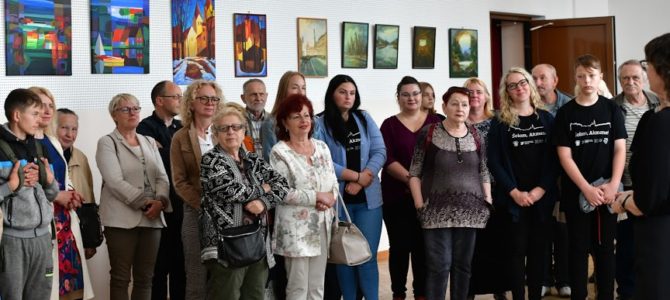
The Šiauliai Regional Jewish Community invites everyone to participate in “Sholom, Akmenė” events at the Akmenė Cultural Center (Sodo street no. 1, Akmenė, Lithuania) on July 24.

12:00 Conference “Memories of the Shtetl in Our Hearts”

Šiauliai Regional Jewish Community members Frida Šteinienė and Josifas Buršteinas will share their childhood memories, young participants at a creative workshop will speak about digitization efforts to record and preserve the Jewish cemeteries in the Akmenė region and Daumantas Todesas will share the secrets of making Sabbath treats. Also, Rita Ringienė will read excerpts from Indrė Daščioraitė’s work in 2001 recording the memories of Augustina Rušinaitė (1922-2007).

2:00 Jewish market (outside the Cultural Center)

The conference will be followed by a Jewish market set up by the Šiauliai Regional Jewish Community showcasing traditional Litvak treats on offer, with haggling required. The organizers are promising a lot of fun at the market.

6:00 Sabbath concert

The Jewish music concert, already a tradition at the Akmenė Days celebrations, will be performed by students from the music schools in the Akmenė region and from the Sholem Aleichem Gymnasium in Vilnius. The concert will teach traditions of the Sabbath evening in artistic form.

All events are free and open to the public. Organizers are asking participants to adhere to the authorities’ current recommendations for preventing corona virus infection. The events will be filmed and photographed.

Public Still Knows Little about 2021 as Year of  Lukša-Daumantas

Public Still Knows Little about 2021 as Year of Lukša-Daumantas

The Lithuanian parliament’s draft resolution naming 2021 the Year of Juozas Lukša-Daumantas is largely unknown to the public, as is the man Juozas Lukša-Daumantas. The Lithuanian parliament has made a tradition out of naming years after people and events, but this time it isn’t clear what is being celebrated, and perhaps only Lithuanian MPs know the answer.

So far we only have official explanations on the Lithuanian Activist Front and Juozas Lukša-Daumantas’s membership in this organization, including on the official website of Lithuania’s Orwellian Center for the Study of the Genocide and Resistance of Residents of Lithuania, where Juozas Lukša-Daumantas is listed as an LAF member.

We are presenting additional information from Chaim Bargman, amateur historian and tourist guide from Kaunas, to try to elucidate the nature of the historical figure. We would very much welcome additional information from scholars and academic works.

IHRA Statement on Rehabilitation

IHRA Statement on Rehabilitation

Adopted at the 2020 IHRA Berlin Plenary during the German Presidency

The IHRA condemns all attempts to rehabilitate the reputations of persons who were complicit in the crimes of the Holocaust and the genocide of the Roma.

Therefore, in light of rising anti-Semitism and Holocaust distortion, the IHRA is resolved to address the phenomenon of rehabilitation in member countries and across the organization. In the spirit of its 2020 Ministerial Declaration, the IHRA encourages “all countries and societies to address their respective pasts by dealing openly and accurately with the historical record.” Therefore, it is imperative for the IHRA to promote research, public awareness, and political responsibility around the issue of rehabilitation.

The countries affected by the Holocaust have long wrestled with the challenges of confronting the past and with thorny questions surrounding complicity for the crimes planned and carried out by Nazi Germany and those fascist and extreme nationalist partners and other collaborators who participated in these crimes.

These developments are not unique to any single country or historical experience, and they appear in IHRA member countries and beyond, including in those lands not directly affected by the Holocaust. Countries must engage with their national histories as they pertain to the Holocaust, as well as with the histories of those individuals who were complicit in its crimes.

Failure to remember truthfully demeans the living and disrespects the dead.

Down the Memory Hole: Orwellian Genocide Center Contradicts Itself Again

Down the Memory Hole: Orwellian Genocide Center Contradicts Itself Again

A week ago the Lithuanian news channel Info TV aired a program featuring a discussion between Mission to Siberia television program participant and Center for the Study of the Genocide and Resistance of Residents of Lithuania historian Mingailė Jurgaitė, and Lithuanian Jewish Community chairwoman Faina Kukliansky. They discussed the decision by the Lithuanian parliament to declare 2021 the year of Juozas Lukša-Daumantas, who was a member of the Lithuanian Activist Front in 1940 and 1941. The LAF was a pro-Nazi underground militia responsible for most of the atrocities against Lithuanian Jews in the early months of the German occupation in the summer of 1941, when the LAF declared an independent national government with Kaunas as its capital, the so-called Provisional Government.

LAF propaganda took aim mainly at Jews. In Kaunas in 1941 the LAF kidnapped several thousand Lithuanian Jews and their Provisional Government issued orders they be held at a concentration camp to be located at the Seventh Fort in Kaunas.

Large Jewish Community Lived in Švenčionys Region Before Holocaust

Large Jewish Community Lived in Švenčionys Region Before Holocaust

The Švenčionys region of Lithuania is a multicultural place where Lithuanians live alongside Poles, Russians, Belarussians, Jews and people of other ethnicities.

The Švenčionys Jewish Community was reconstituted in 2013. It is now headed by the energetic Švenčionys native Moshe Shapiro (aka Moisiejus Šapiro).

There was a large Jewish community living in the Švenčionys region in the period between the two world wars. In fact there were five synagogues operating there.

Jews there set up an herbal pharmaceuticals factory and different workshops in the center of the town of Švenčionys. Jewish effort, initiative and expertise were involved in all fields of production and business.

WJC Welcomes IHRA Members’ Strong Condemnation of Rehabilitation of Nazi Collaborators

WJC Welcomes IHRA Members’ Strong Condemnation of Rehabilitation of Nazi Collaborators

July 7, 2020, NEW YORK–Today the 35 member and liaison countries of the International Holocaust Remembrance Alliance (IHRA) issued a statement condemning “all attempts to rehabilitate the reputations of persons who were complicit in the crimes of the Holocaust and the genocide of the Roma.” The statement conveys the IHRA’s resolve to address the phenomenon within IHRA members.

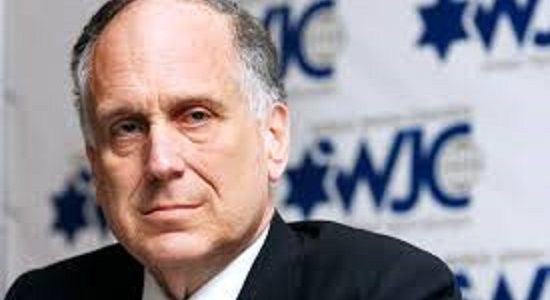
World Jewish Congress president Ronald S. Lauder welcomed the move, adopted at the 2020 IHRA Berlin Plenary, as a clear sign of a commitment to oppose and isolate such efforts. He said, “Historical truth and accuracy need to be safeguarded for the sake of future generations. Any efforts to distort or deny the true facts of the Holocaust, including the rehabilitation or even glorification of Nazi collaborators, are extremely dangerous as they open the way to all kinds of racist and xenophobic movements.”

Lauder warned that “all societies need to remain vigilant, educate the population about the true facts of history and strongly condemn any efforts to challenge the historical record.”

The World Jewish Congress has long focused on advocating against the phenomenon of rehabilitation and glorification of Nazi collaborators, a widespread issue, particularly in post-Communist countries.

Lauder added, “Efforts to create false national narratives lead to a whitewash of countries’ histories during the Second World War. This rewriting of history, where the people of respective countries are represented as victims and heroes and never villains, can become fertile ground for blind nationalism, racism, anti-Semitism, neo-Naziism and xenophobia.”

Kaunas Jewish Community Honors Our True National Heroes, Rescuers of Jews

Kaunas Jewish Community Honors Our True National Heroes, Rescuers of Jews

On June 25 the Kaunas Jewish Community paid honor to those who risked their own lives and those of their families to give the gift of life to those condemned to death. The people who rescued Jews were mainly quiet, everyday heroes, the Righteous Gentiles who are the real and unquestioned heroes of our country, heroes and heroines. On Thursday, June 25, the Kaunas Jewish Community was finally able to hold its annual evening to pay tribute to our Righteous Gentiles. Usually the event is held in spring just after Passover.

Kaunas Jewish Community members always look forward to the event, a meeting of friends. Time is merciless, however, and the ranks of rescuers and rescued grow thinner each year. Fortunately we have their children and grandchildren standing in for them, who are just as dear to us.

Lietūkis Garage Massacre Commemorated June 26

Lietūkis Garage Massacre Commemorated June 26

The Kaunas Jewish Community and members of the public gathered in Kaunas June 26 at the site of the infamous Lietūkis garage massacre of Jews by Lithuanians in the early days of the Holocaust in the last days of June of 1941. Relatives of victims attended as well. The ceremony was followed by kaddish for the Jews buried at the Slobodka (Vilijampolė) and Žaliakalnis Jewish cemeteries in Kaunas.

Brazilian Jewish Press Discusses LJC Response to Putin

Brazilian Jewish Press Discusses LJC Response to Putin

Lithuanian consul general in Sao Paulo Laura Tupe has sent notification to the two authors that their piece “Don’t Speak in Our Name, Mr. President of the Russian Federation” written especially for publication on the www.lzb.lt website, a response to Russian president Vladimir Putin’s article on World War II, was discussed in Kadimah, the Brazilian Jewish community magazine:

Judíos lituanos critican a Putin por “falsificar” la historia soviética

Los líderes de la comunidad lituana apuntaron contra el intento del presidente ruso de minimizar los crímenes soviéticos en el Báltico, afirmando que la población judía se convirtió en el grupo étnico más perseguido por la URSS durante la “esclavización” de Lituania después de la Segunda Guerra Mundial…

https://www.ynetespanol.com/actualidad/mundo-judio/article/r1Y0tAdAI

Renowned German Historian Christoph Dieckmann Says Lithuanian Heroes Noreika, Škirpa Were Both Fascists

Renowned German Historian Christoph Dieckmann Says Lithuanian Heroes Noreika, Škirpa Were Both Fascists

by prof. Pinchos Fridberg

Vilnius

At 5:30 A.M. yesterday, July 2, 2020, the Lithuanian Public Radio and Television (LRT) web page posted an interview with noted German historian Christoph Dieckmann:

Vokiečių istorikas apie Holokaustą Lietuvoje: žydus priversdavo šokti, dainuoti, o tada sušaudydavo” [German Historian on Holocaust in Lithuania: Jews Were Forced to Sing, Dance, Then Were Shot]

The point of my text here is to point the reader’s attention to the phrase “Both of them were fascists.” To avoid mistakes, here is that portion of the interview which I captured:

Translation:

In the book you wrote the majority collaborated with the Nazis seeking to serve their country and led by a certain vision of the future of their country, usually a fascist one, to create an ethnically pure, militarily strong nation state. So didn’t Kazys Škirpa and Jonas Noreika also believe they were serving their country?

Both of them were fascists. Noreika became one while very young, Škirpa at a bit later age. Škirpa had a fascist vision of Lithuania, a Lithuania without Jews. He spoke out in favor of driving the Jews out rather than murdering them. Noreika held similar views, he saw a Lithuania without Jews because he believed they were powerful and hindered the creation of statehood. …]

P.S. The same day at 9:57 A.M. the LRT internet site posted an abbreviated translation of the interview in Russian.

It’s interesting to note that this passage was omitted in the Russian version.

Co-Chairs of Goodwill Foundation Send Letter to Parliamentary Speaker on Naming 2021 Year of Lukša-Daumantas

Co-Chairs of Goodwill Foundation Send Letter to Parliamentary Speaker on Naming 2021 Year of Lukša-Daumantas

July 2, 2020

His Excellency Viktoras Pranckietis
Speaker of the Seimas
Vilnius, Lithuania

Dear Speaker Pranckietis,

We are deeply troubled to learn that the Seimas will entertain a resolution which would dedicate 2021 the Year of Juozas Lukša-Daumantas, a leader of the World War II-era Lithuanian Activist Front.

The Lithuanian Activist Front was founded in Berlin and was an early ally of the Nazis in the occupation of Lithuania. It was proudly anti-Semitic, and many of its members were directly involved in the persecution and murder of Lithuanian Jews. Despite its anti-Soviet focus and later conflict with the Nazi powers, its vision of an independent Lithuania was of an ethnically “pure” homeland with no place for Jewish citizens.

Some may question if there is sufficient documentary evidence to show that Lukša-Daumantas was guilty of war crimes. That is not relevant to the decision before the Seimas. There is today a worldwide reckoning with history and growing recognition in all Western democracies that even past leaders of great accomplishment must forfeit any honor if they were also racists, bigots, or anti-Semites. Surely Lithuania should do no less.

With that in mind we implore you to take no action which might give honor to any leader of the Lithuanian Activist Front. Instead you should defer such matters to the International Commission for Evaluating the Crimes of the Nazi and Soviet Occupational Regimes appointed by the Lithuanian president for a clear and critical understanding of this tragic period in the country’s history.

As co-chairpersons of the Lithuanian Goodwill Foundation, we have valued the warm cooperative relationship we have had with you since your first days as Speaker. We know we share a common commitment to maintain the legacy and history of Jewish life in Lithuania and to build an inclusive and tolerant future. It is in this spirit that we write to you.

With sincere regards,

Faina Kukliansky, Chairwoman, Lithuanian Jewish Community; Co-Chairperson, Goodwill Foundation

Rabbi Andrew Baker, AJC Director of International Jewish Affairs; Co-Chairperson, Goodwill Foundation

Tsemakh Shabad Statue Vandalized

Tsemakh Shabad Statue Vandalized

The statue made by Lithuanian sculptor Romualdas Kvintas ensemble featuring Vilna Jewish doctor Tsemakh Shabad–the prototype for the Dr. Aybolit character in children’s poems and stories by the Russian writer Korney Chukovsky–and a child was vandalized with acid or paint.

The attack was the second over the weekend on Jewish monuments in the Vilnius Old Town. On June 26, the day before, the monument to the Vilna Gaon was also vandalized, also using acid or paint.

The Tsemakh Shabad was vandalized before soon after its unveiling in 2007 using acid. Some in the Lithuanian media are speculating the attacks are intended to mirror the wanton destruction of statues in the USA and UK by mobs. Meanwhile Lithuanian Nazi leader and Holocaust perpetrator Jonas Noreika’s shrine at the very center of Vilnius remains unharmed and under 24-hour surveillance by video cameras. Recently news media have reported on a repeat-offender intent on making her mark on statues around Vilnius even before the Black Lives Matter mass hysteria swept the United States. The elderly primary school teacher was arrested last year after police reviewed video surveillance showing her throwing red paint on an installation at Vilnius’s Lūkiškės Square intended to commemorate Lithuanian anti-Soviet partisans.

Don’t Speak in Our Name, Mr. President of the Russian Federation

Don’t Speak in Our Name, Mr. President of the Russian Federation

We read the article “The Real Lessons of the 75th Anniversary of World War II” by Russian president Vladimir Putin in the American conservative magazine National Interest and reprinted by media representing the Russian opposition and pro-government position.

We feel the need to share our thoughts with readers on the fate of Jews, citizens of Lithuania, as red totalitarianism was replaced by brown totalitarianism in our country.

Many of my relatives, those of the chairwoman of the Lithuanian Jewish Community and those of many citizens of Litvak origin were imprisoned in the Stutthof (liberated by the USSR) and Dachau (liberated by American forces) concentration camps. My mother and Faina Kukliansky’s mother miraculously survived Stutthof.

New Genocide Center Director

New Genocide Center Director

The Lithuanian news site 15min.lt reports Teresė Birutė Burauskaitė has been replaced as director of Lithuania’s Orwellian Center for the Study of the Genocide and Resistance of Residents of Lithuania by Adas Jakubauskas, the 55-year-old chairman of the Union of Lithuanian Tatar Communities. Last week parliamentary speaker Viktoras Pranckietis called for replacing Burauskaitė. The director is appointed by vote of parliament to a 5-year term. Jakubauskas’s candidacy was put forth by the Lithuanian parliament’s Battles for Freedom and State Historical Memory Commission, whose member Arūnas Gumuliauskas recently promised to present a resolution to parliament claiming the Lithuanian state and people were guiltless in the Holocaust because they were both occupied at the time. The new director of the Genocide Center faced stern questioning by MPs during his confirmation process, with former Genocide Center historian and now conservative MP Arvydas Anušauskas digging into the Lithuanian Tartar community’s financial ties with Tartar communities in Russia.

Anušauskas once hosted a history program on state television and once spent more than an hour exploring the idea the Nazis and the Soviets staged the Lietūkis garage massacre in order to defame Lithuanians.

Tartars are an ethnic minority in Poland, Lithuania, Belarus, Ukraine, Russia and elsewhere who mainly adhere to Sunni Islam. There are major communities of Tartars in Tartarstan and in the Crimea.

The Center for the Study of the Genocide and Resistance of Residents of Lithuania has consistently defended Lithuanian Nazis including Kazys Škirpa and Jonas Noreika.

Full story in Lithuanian here.

Kaunas Jewish Community Invites You to Remember Victims of Lietūkis Garage Massacre

Kaunas Jewish Community Invites You to Remember Victims of Lietūkis Garage Massacre

The Kaunas Jewish Community will hold a commemoration of the victims of the Lietūkis garage massacre at Miško street no. 3 at 4:00 P.M. on June 26. Joris Rubinovas will perform Maurice Ravel’s Kaddish and Gabrielė Jocaitė will perform a song in member of the victims. The public is invited and encouraged to attend. Following the ceremony we will move to the Slobodka (Vilijampolė) Jewish cemetery on Kalnų street and then the Žaliakalnis Jewish cemetery on the Radvilėnų highway.

How It Happened

How It Happened

Lithuanian writer Rūta Vanagaitė and German historian Christoph Dieckmann presented their new book called “How Did It Happen?” at a launch ceremony held at the Choral Synagogue in Vilnius on June 25.

Dieckmann delivered what amounted to a lecture on the topic of the Holocaust in Lithuania lasting about one hour, and proposed rejecting some accepted Holocaust terminology as judicial rather than historical. He said looking through the lens of ethnicity creates a false picture, even though the actors at the time did so. He also said the idea of perpetrators, victims, collaborationists and so on should be revisited and the true picture is more complex, with people collaborating with the Nazis at one point and the same people resisting them at another. He said the grey cover of the Lithuanian-language edition of the book reflects this ambiguity.

Lithuanian Jewish Community chairwoman Faina Kukliansky served as moderator and challenged Dr. Dieckmann’s seeming rejection of the legal aspects in favor of the historical truth. Dieckmann responded saying so much of the narrative is dominated by legal defense and prosecutorial arguments that it’s difficult to see what really happened.

Four Historical Shames Which Afflict Us Lithuanians

Four Historical Shames Which Afflict Us Lithuanians

by Arkadijus Vinokuras DELFI.lt

History forms the collective experience and mentality of the generations of today and tomorrow. Running away from the unpleasant facts of history which are perceived as shameful, the aspiration of denying or justifying them, leads to a psychological, cultural and political dead end. Today Lithuanians are afflicted by four historical shames. These are the impotency of the debased pre-war government of Smetona, the first Soviet occupation, the Holocaust and the second Soviet occupation.

The first historical shame for Lithuanians. The rule of Antanas Smetona, the period from 1939 to 1940. The fissure in the Lithuanian state began in 1926 when the Tautininkai carried out a coup. Civic society along with democracy which is characterized by a political opposition in parliament were buried almost as soon as they were born.

You can go as deep as you want into the negative and positive side of each and every political figure from the time, into his assumptions concerning political decisions, or look at the global geopolitical processes of the time. You also can, in the name of justification, use the argument “we cannot decide about the events of that time from the tower of our present knowledge” to justify any stupidity or crime against peoples and humanity. But the handover of Klaipėda to the Nazis without any fight on March 23, 1939 and that same year the consent to allow 20,000 Soviet soldiers into Lithuania, and finally the handover of Lithuania without any resistance to the Soviets on June 15, 1940–these things are unanimously considered shameful by the Lithuanian public today. Even the public back then understood non-resistance to the Soviets was shameful, as was president Smetona’s flight, the public sees these as negative. (It should be noted here that under international law consent received under duress or by force is not binding, it is null and void, and doesn’t change the fact of aggression and the occupation of Lithuania).