Holocaust

Vilnius City Council Seeks Public Comment on Street Named after Holocaust Perp

kazys_skirpa

Vilnius City Council member Mark Adam Harold is part of a municipal event at the Vilnius Old Town Hall for Tuesday, November 29, 2016, to seek public comment on a proposal to rename the street named after Lithuanian Holocaust collaborator and chief of the Lithuanian Activist Front based in Berlin in 1941, Kazys Škirpa.

Harold’s facebook page contains the instructions: “If you would like the opportunity to speak during the public forum at Rotušė, Didzioji g. 31, on November 29th at 18:00, please tick this box. The first twenty applicants will be given one minute each from the podium.”

A separate post by a South African Litvak living in the United States contains more detail:

“220,000 Lithuanian Jews were murdered at the instigation of Škirpa and his cronies. The country of Lithuania is littered with honors for Škirpa, and for other murderers of Jews. Multi-year efforts to have a main Street in Lithuania’s capital city of Vilnius, currently named named to honor the Škirpa, is now culminating in public hearings by the Vilnius City Council.

“The Vilnius City Council was unable to decide for themselves if honoring Jew murderers is appropriate.

“Here is a link to a comment form where you can provide your opinion to the Vilnius City Council. It is in English, you just need to answer and hit submit. Please try to be somewhat respectful:

https://docs.google.com/forms/d/e/1FAIpQLSddIXIxTDEj5He6Qjh4pv_KjB1X1KlNlmOww9S76IF3Nr7fbA/viewform?c=0&w=1

k-skirpa1

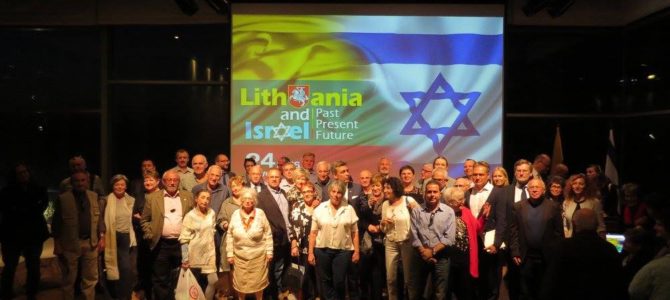
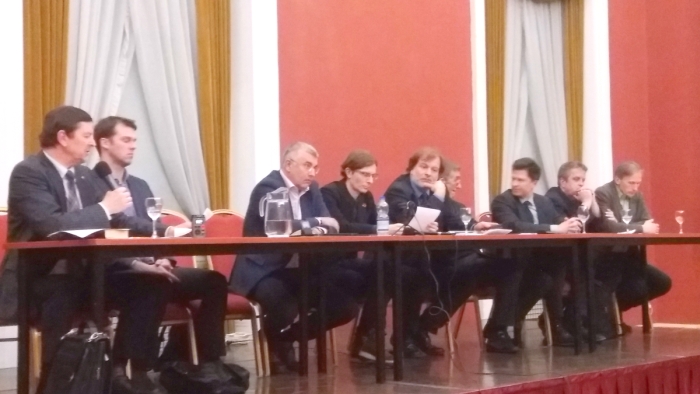
The event is advertised as a discussion with Vytautas Landsbergis, Sergey Kanovich, Darius Udrys, Lithuanian historians and others. Public comment will be sought afterwards. Conspicuously absent from the speakers’ roster: any representative of the Lithuanian Jewish Community, the International Commission on Assessing the Crimes of the Nazi and Soviet Occupational Regimes in Lithuania or even Vilnius mayor Remgijus Šimašius, who hasn’t kept his earlier commitments in writing to name a site in Vilnius by October 20 for erecting a statue to commemorate the heroes of World War II in Lithuania, those who rescued Jews. The Lithuanian Jewish Community is to issue a statement to be read out loud at the event.

The Lithuanian Jewish Community invites members of the public and representatives of interested institutions to submit their comments per the form linked above and to attend the event.

More event information here.

priemimas-pas-hitleri-1939-0421-k100Škirpa with Hitler celebrating the latter’s 50th birthday

April 21, 1939

An Unusual Story of Jewish Rescue

berniukas-su-smuiku_large

The Vilnius-based publishing house Kitos Knygos has published in Lithuanian a book by Yochanan Fein called Berniukas su smuiku [Boy with a Violin].

Yochanan Fein: Boy with a Violin

History, memoirs; 2017; ISBN 978-609-427-253-0 (printed edition), ISBN 978-609-427-296-7 (e-book); 304 pages; hardcover

translated by Ina Preiskel (Finkelšteinaitė) and Arvydas Sabonis, edited by Asta Bučienė

In the distant Kaunas neighborhood of Panemunė on the high banks of the Nemunas there once there stood a large wooden house with a stairwell inside. It was built by Lithuanian military volunteer and Šančiai railroad carpenter Jonas Paulavičius, who was called behind his back “father of the Jews” during World War II, having rescued 16 people from the clutches of death. He and his wife Antanina were recognized as Righteous Gentiles because of their heroic acts.

Among the fortunate was 14-year-old Yochanan Fein, who knew how to play violin, hiding in a pit dug in the garden together with a Russian POW and an Orthodox Jew. In his dotage he wrote a book of memoirs called “Boy with Violin” in which he explained the tragic stories of the lives of those rescued and presented an authentic painting of wartime and post-war Kaunas in many colorful details. The book was first published in Amsterdam in 2006 and two years later in Tel Aviv.

The Residents of Darbėniai Who Saved Their Doctor Jochveda

After the army of Nazi Germany invaded Soviet-occupied Lithuania on June 22, 1941, they soon began to carry out macabre repression turning into genocide against Jewish Lithuanian citizens.

1100-07
J. Marijampolskaitė (right) with her friends from
Darbėniai and children in Palanga, ca. 1935

Although a small portion of local residents became staunch Nazi supporters and contributed to the repressions, the majority felt sorry for their Jewish neighbors and tried to help them. Even now old-time Darbėniai residents remember the almost legendary story of the ultimately tragic rescue of the doctor of Darbėniai, Jochvedas Marijampolskaitė, discovered by this author [Romualdas Beniušis] as he browsed through the case of the deportation to Siberia of Būtingė village residents Katerina and Benediktas Bagdanavičius.

Jochveda Marijampolskaitė was born to a Jewish family in Vilkaviškis on April 23, 1898. It wasn’t possible to learn more about her family and childhood. The Lithuanian Central State Archive conserves documents concerning Jochveda Marijampolskaitė’s studies from the Medicine Faculty of the Lithuanian University, which they have shared with US-resident professor of history E. Goldstein, revealing some new information about her life. This includes a certificate showing she was graduated with a silver medal from the Tambov Women’s Gymnasium in 1917. It appears she was evacuated to Russia during World War I together with the students and staff of the Marijampolė [Staropol] Girls’ Pre-Gymnasium who moved to Trakai in February of 1915 when the Germans occupied Marijampolė, and then as the front drew near withdrew eastward to the town of Tambov in western Russia. She soon matriculated at one of the oldest schools of medicine in the Russian Empire, the medical faculty of Kharkov University, established in 1804. Female Jews were allowed to study medicine in Russia beginning in the late 19th century and many girls dreamed of pursuing this prestigious career with a steady salary and insuring social status. Students from Lithuania had studied at Kharkov University for a long time, and a Lithuanian Students Association was established there in 1894.

Full story in Lithuanian here.

Professor Sofya Gulyak Discovers Documents about Her Family in Lithuanian Central Archive

Professor Sofya Gulyak of London visited the Panevėžys Jewish Community during her trip to Lithuania to find out more about her family’s roots. Many Jews from around the world are currently looking for their roots in the Lithuanian archives. The documents they are finding reveal interesting family histories.

Sofya learned from the Central Archive her ancestors lived in Panevėžys. She received copies of the passports of her great-grandfather Meier Gelvan, great-grandmother Keila Ringaitė-Gelvan and grandmother Rocha Gelvan from the archives in 2013.

International Tolerance Day in Panevėžys

gennprin

In 1996 the General Assembly of the United Nations passed resolution 51/95 inviting member-states to observe November 16 as the International Day for Tolerance. The day has been observed in Lithuania for over a decade now. Each year’s commemoration has featured a different symbol. This year it was a bird. More than 700 cultural and educational institutions marked the day. Tolerance birds decorated schools, kindergartens, private educational agencies and daycare centers.

The Šviesa special education center organized Tolerance Day events for November 14 through 16 in Panevėžys, in which the Panevėžys Jewish Community participated. Also participating were representatives from the Panevėžys primary school for the deaf and hearing-disabled and students and teachers from other primary and secondary schools. Sign-language interpreters conveyed speech to deaf members of the audience.

Vilnius: In Search of the Jerusalem of Lithuania

The Lithuanian Jewish Community this week hosted the launch of the second corrected and expanded edition of Irina Guzenberg and Genrikh Agranovsky’s book in Russian about Jewish Vilna.

The new edition has been reorganized with a new structure and better indices of names and sites.

Author Irina Guzenberg has done exhaustive research to provide authentic street names from the period and the book is graced with attractive period photographs. Much of the history is unknown to modern residents of the Lithuanian capital, which was not very Lithuanian before the 1950s. Before the war one heard Yiddish, Polish and Russian spoken on the street.

World Union of Jewish Students Nominates LJC Student Union for Awards

The World Union of Jewish Students has nominated the Lithuanian Union of Jewish Students of the Lithuanian Jewish Community for awards in two categories.

Lithuanian Union of Jewish Students director Amit Belaitė is up for one of the awards, and says her friends and colleagues in the Union need to learn more about Jewish life and Jewish traditions. She said Jewish students in Lithuania have been cut off from many Jewish things, including how to celebrate Sabbath, largely because Jewishness was forced into hiding in Lithuania after the Holocaust. She added there is a revival underway in Lithuania, including of Jewish holidays our great-grandparents celebrated, and said now there is a great deal of communication with Litvaks of the same age as Union members living around the world who have not lost their traditions.

amit

Challa Event at the Kaunas Jewish Community

The Lithuanian Cultural Service supports the Lithuanian Jewish Community’s campaign to revive the baking of challa in the different regions of Lithuania.

On November 11 members of the Kaunas Jewish Community met together and separately to bake challa, and there was a strong sense of concentration and responsibility but also a lot of positive emotions. The fresh-baked challa adorned the Sabbath table within hours. Iser Shreiberg, the chairman of the Kaunas Hassidic religious community, gave an interesting presentation o the symbolism and traditions of making challa. Guests included former Kaunas ghetto prisoner Asia who came all the way from New York with her husband and son these many years later to her hometown to see her memories of early childhood again and to look for traces of the stories her mother told her.

kchala2

Sabbath Challa in Panevėžys

The Panevėžys Jewish Community joined the Shabbos Project November 11 to bake challa bread. Participants included staff from the educatio department, teachers and Community members.

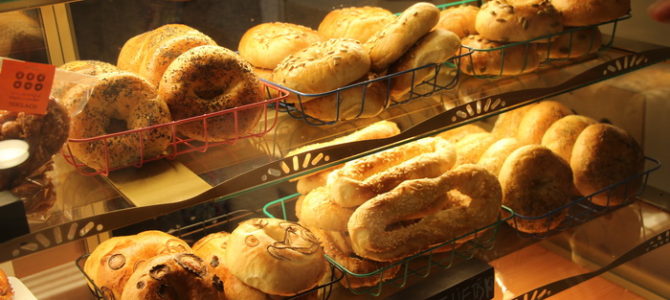
Preparations for the baking event got underway in the morning and all the necessary ingredients were purchased: eggs, yeast, oil, salt and poppy seeds. The main ingredient was of course highest-quality flour. Kosher flour left over from last year worked perfectly for making the dough. Different recipes were suggested, but in the end the traditional recipe was used, because the Panevėžys Jewish Community’s oven is not large and can’t be used for large-scale production. Housewife Virginija prepared the dough.

Administrator Lina gave a brief talk about challah-baking traditions in Jewish families. Although every housewife has her own recipe for challah bread baked for the Sabbath, the result is always the same: a blessed and delicious loaf of challa.

On Removal of the Plaque Commemorating Jonas Noreika

November 11, 2016
No. 367

To: Mayor Remigijus Šimašius
Vilnius Municipal Administration

On Removal of the Plaque Commemorating Jonas Noreika
November 11, 2016
Vilnius

Currently there is a commemorative plaque on display on the façade of the library of the Lithuanian Academy of Sciences building located at Žygmantų street no. 1/8 in Vilnius dedicated to the dubious fame of Jonas Noreika, [also] known by the pseudonym General Vėtra. Information has reached us the plaque commemorating this person on the building at Žygmantų street no. 1/8 possibly was put up illegally, without required permission from the municipality of the city of Vilnius, and possibly in violation of the requirements of other laws as well. Please provide the Lithuanian Jewish Community with all documentation related to installation of the aforementioned commemorative plaque.

The honoring by commemorative plaque of this person with his undisputed role in committing genocide against citizens of Lithuania doesn’t make sense to the Lithuanian Jewish Community.

For information on and a copy of the order signed by Jonas Noreika seizing the property of Jews, please see http://www.anarchija.lt/component/content/article/81-istorija/38185-kodel-jonas-noreika-generolas-vetra-paskelbtas-vidvyriu and http://www.jpost.com/Opinion/Will-Lithuania-continue-to-honor-Nazi-collaborators-412701

The municipality of the city of Vilnius needs to take a look at article 170 of the criminal code of the Republic of Lithuania (incitement against any national, racial, ethnic, religious or other group of people) in which section 2 defines as a criminal act the mockery, belittlement, encouragement to hate or incitement to discriminate against a group of people or a member of that group based on gender, sexual orientation, race, ethnicity, language, origins, social status, religious belief or personal convictions and views.

The installation of a plaque commemorating Jonas Noreika in the city of Vilnius is wholly understood by the Lithuanian Jewish Community as a public mockery of the group of Lithuanian citizens who suffered the most during World War II, the Jews of Lithuania.

Please take measures quickly for the removal of the possibly illegal plaque from the building in Vilnius which commemorates Jonas Noreika and which publicly mocks the Jewish people.

[signed] Faina Kukliansky, chairwoman
Lithuanian Jewish Community

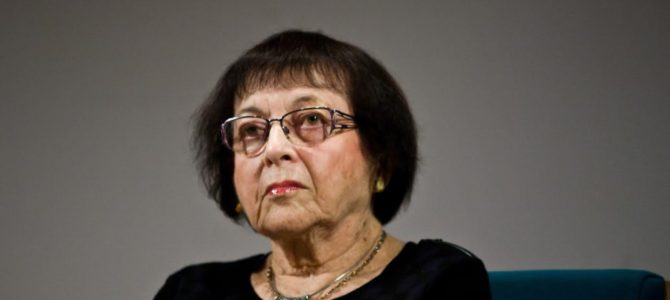
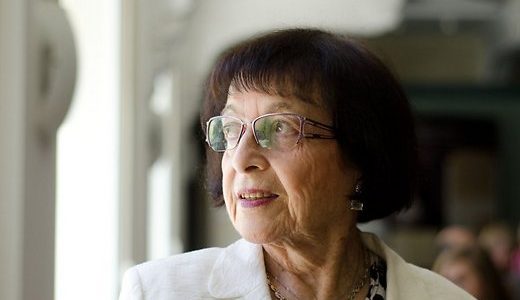
Yaffa Eliach, Historian Who Captured Faces of the Holocaust, Dead at 79

10eliach-obit2-articlelarge

Yaffa Eliach, who as a 4-year-old survived the Nazi massacres of Jews in her Lithuanian town, and went on to document their daily life in a kaleidoscopic book and a haunting, three-story canyon of photographs at the United States Holocaust Memorial Museum in Washington, died on Tuesday at her home in Manhattan. She was 79.

Her death, after a long illness, was confirmed by Thea Wieseltier, a family friend.

After a childhood that might have throttled a person of lesser spine, Professor Eliach (pronounced EL-ee-akh) dedicated herself to the study and memorialization of the Holocaust and its victims.

Starting in 1969, she did so as a professor of history and literature in the department of Judaic studies at Brooklyn College, and by founding the pioneering Center for Holocaust Studies at the Yeshivah of Flatbush in Brooklyn. Though modest in scale, its collection of taped interviews, diaries, letters, photographs and artifacts became a model for dozens of such centers.

Her mission, she said many times, was to document the victims’ lives, not just their deaths, to give them back their grace and humanity. She determined to do so as a member of President Jimmy Carter’s Commission on the Holocaust during a visit to the death camps, where she realized that the victims were portrayed only as bulging-eyed skeletons in ragged striped uniforms, not as the vital people they once were.

Professor Eliach decided to recreate the shtetl she had known in Lithuania — Eisiskes, known in Yiddish as Eishyshok — where 3,500 Jews, almost the entire Jewish population, were killed, by collecting photographs of its inhabitants.

Full necrology here.

National Prayer Breakfast Calls for End to Apathy

maldos-pusr-1

Photos: J. Stacevičius, lrytas.lt

Vilnius archbishop metropolitan Gintaras Grušas said a prayer of invocation at the prayer breakfast and Lithuanian foreign minister Linas Linkevičius, Kaunas archbishop metropolitan Lionginas Virbalas, Russian Orthodox priest Vitalijus Mockus of the Saint Paraskeva the Martyr Church in Vilnius and deputy Lithuanian Sunni Islam mufti Romualdas Krinickis spoke at the breakfast.

maldos-pusr3

Lithuanian Jewish Community member Tobijas Jafetas spoke about his personal experience as a Holocaust survivor at the prayer breakfast as well. The theme of the annual prayer breakfasts is “Conquering Apathy” this year, and young people, politicians, public figures and businesspeople spoke about how separate religions and creeds have shared values, and how by standing in solidarity these different faiths can contribute to the making of a more peaceful and safer world.

maldos-pusr2

Full story in Lithuanian here.

Jewish Headstones Removed from Vilnius Hospital Steps


photos: Saulius Žiūra

Information from the Vilnius municipality

Fewer and fewer examples of the barbarousness of the Soviet government remain in Vilnius. Locations where fragments of Jewish headstones are found are being put in order. Recently one such site was found in Antakalnis, where pieces of Jewish grave monuments were discovered in the stairs to the main entrance of the Vilnius Clinical Hospital. This week the Jewish headstones used as steps are being removed and taken to a location dedicated to honoring them, the old Jewish cemetery on Olandų street.

ismontuoja

Full story in Lithuanian here.

Talking about the Holocaust

by Jūratė Juškaitė
manoteises.lt

The figure of the Jew remained even after the Holocaust in Lithuania, at Užgavėnės [Shrovetide carnival figure] and in libels concerning the blood of Christian children and matzo bread. These sorts of stories not only remind us how much daily anti-Semitism exists and is even enjoyed among us, but also forces us to think about an uncomfortable matter: who are these people whom we cannot forget, and where are they?

One of them is Amit Belaitė, the director of the Union of Lithuanian Jewish Students. It seems if not for the Holocaust our conversation might have been very simple, without long pauses and deep feelings of guilt. But after decades of silence, questions such as what happened to ‘your’ people, how did they survive, how did the Holocaust inform your experience, seem to erupt from within like a torrent.

Full interview in Lithuanian here.

Lithuanian Radio and Television Continues Shtetl Series with Trip to Šeduva

LRT

lrtradijas

Following the 9:00 A.M. news Tuesday, November 8, Lithuanian National Radio and Television continued their series about Lithuanian shtetls with a trip to Šeduva, which had a thriving and colorful multicultural, multi-linguistic life before the Holocaust, which wiped the town clean of its Jews and left very few material monuments to their former existence there.

How should we commemorate the Jews of Šeduva today? What were their lives like? How did they contribute to the foundation of an independent Lithuanian state? Vita Ličytė attempts to answer these and other questions in the fourth episode in the on-going series.

Klaidas Navickas Paper Cutout Exhibition

Klaido Navicko karpinių paroda

An event to open an exhibition of Klaidas Navickas’s paper cutout works will be held at the LJC on the third floor at 6:00 P.M. on November 17.

Klaidas Navickas was born in Raseiniai, Lithuania, on November 30, 1962. He currently lives in Grigiškės and is an attorney and public servant. He began cutting paper into art in 1988. He has been a member of the Union of Lithuanian Folk Artists since 1991. In 2005 he was recognized as a working artist and in 2009 as a master of traditional arts and crafts. He has held personal exhibits of his paper cutouts at Expo 2005 in Japan; Linz, Austria; Expo 2010 in China; Gdansk and Warsaw; Philadelphia; Mogilev Podolsky, Ukraine; Moscow and St. Petersburg and Minsk. He has done over ten exhibitions of his work in Lithuania. A permanent exhibit has been on display in his workshop in Vilnius since 2003. He has published two catalogs of his cutouts.

karp-300x296

New Holocaust Memorial at Seventh Fort in Kaunas

Kaune atidengtas ženklas Holokausto aukoms

Kauno.diena.lt

A new Holocaust memorial was unveiled a the Seventh Fort in Kaunas. About 3,000 people were murdered at the Seventh Fort in July, 1941. Human remains were discovered at the largely abandoned site several years ago. The remains were turned over to the Kaunas municipality but have now been reburied at the mass grave site.

The Star of David stone monument appears to be springing up from the earth. It was made by Alfonsas Vaura. The sculpture is accompanied by three lights which come on at night. The project was financed by the Kaunas municipality.

Full story in Lithuanian here.

Long Awaited Changes Come to Sugihara House

Sugihara House

Long-awaited renovation work has finally begun at the museum set up at the house and office of Japanese diplomat Chiune Sugihara in Kaunas, Lithuania. So far renovation is going on inside the house. The façade also requires repair, but there are reports there are problems in financing all the repairs needed at this point in time.

The second floor of Sugihara House is currently being refurbished and all exhibits have been placed on the ground floor temporarily. The ground floor houses the diplomat’s office. When the second floor is finished, there will be more exhibit space drawing even more visitors from Japan, Lithuania and around the world fascinated by this man who rescued so many Jews from the Holocaust.

Full story in Lithuanian here.

Beata Nicholson and Rafailas Karpis Talk about Jewish Lithuania

B. Nicholson ir R. Karpis atskleis, kokia yra žydiškoji Lietuva

“Empty, boarded up, gone, pulled up the roots,” these are the words opera soloist Rafailas Karpis used to describe extant Jewish synagogues in Lithuania following a trip he made through northern Lithuania with Beata Nicholson, a noted Lithuanian journalist and television personality who produces a cooking show called “Keliauk ir ragauk. Lietuva” [Travel and Taste: Lithuania]. Karpis said the wooden synagogues of Lithuania used as store houses or sports gyms during the Soviet era are still being used as such in many locations. But not at the synagogue complex in Joniškis, rebuilt at the initiative of the local communities, where Beata and Rafailas will spend most of their time during the upcoming episode.

Full article in Lithuanian here.