Heritage

Kaunas Jewish Community Marks 75th Anniversary of Petrašiūnai Mass Murder and Intellectuals Aktion

Kauno žydų bendruomenė minėjo Petrašiūnų žydų žudynių ir Inteligentų akcijos IV forte 75-ąsias metines

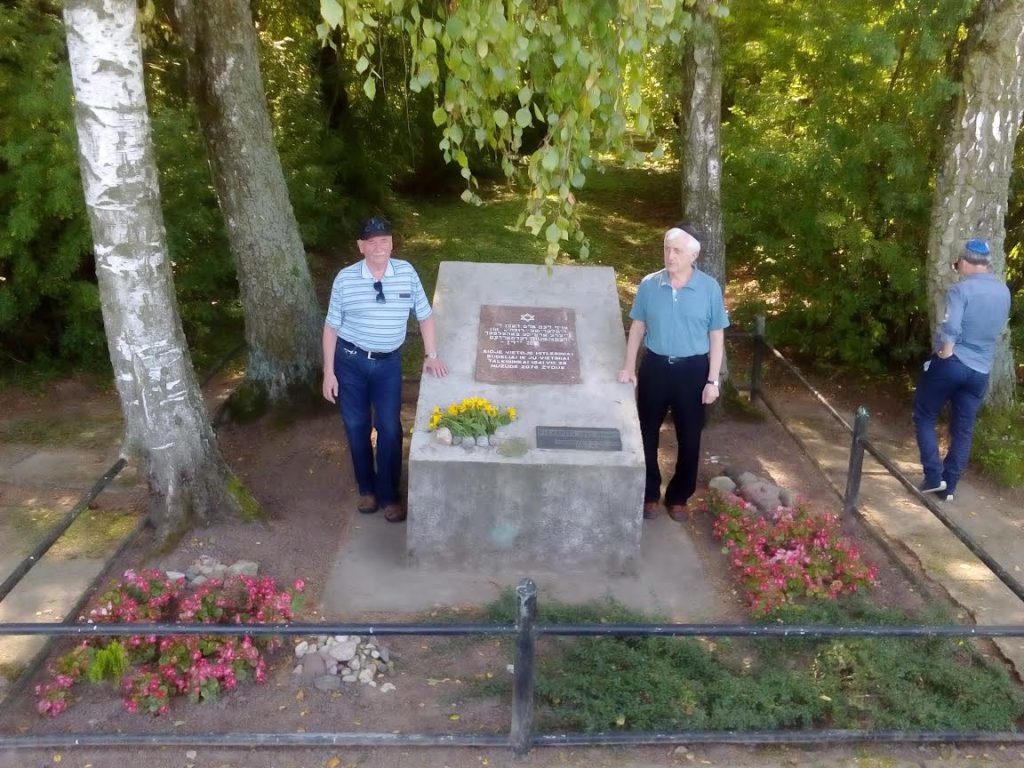
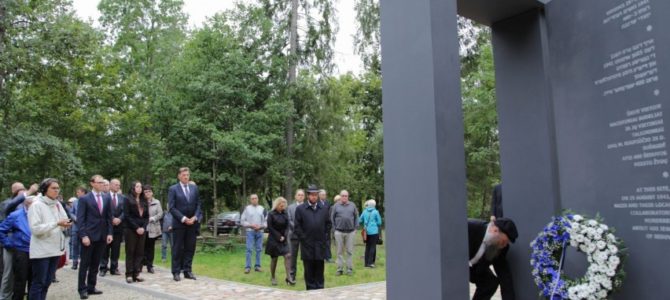
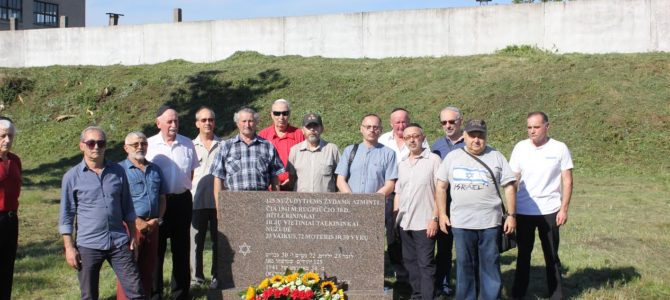
The Kaunas Jewish Community marked the 75th anniversary of the mass murder of the Jews of Petrašiūnai and the Intellectuals Aktion at the Fourth Fort in Kaunas. Lithuanian ambassador for special assignments Dainius Junevičius, his wife, representatives from the Kaunas municipality, residents of Petrašiūnai who witnessed the mass murder and members of the Kaunas Jewish Community honored the Holocaust victims. Community chairman Gercas Žakas and Junevičius both spoke of the Holocaust as a shared tragedy for all citizens of Lithuania. Iseris Šreibergas, the chairman of the Kaunas Hassidic Religious Community and a member of the Kaunas Jewish Community board of directors, honored the memory of the dead with a prayer.

Antanas Sutkus and His Photographs of Holocaust Survivors

Geto gyventojus įamžinęs A. Sutkus: prisiminti Holokaustą tikrai ne per vėlu
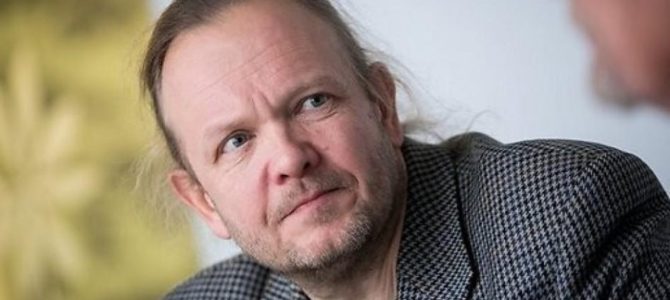
Antanas Sutkus, 2014. Photo by Jurga Graf

A little more than a month from now renowned Lithuanian photographer Antanas Sutkus will exhibit his photos of Holocaust survivors at the White Space Gallery in London. Most of the works come from his series of two decades ago called “Pro memoria: gyviesiems Kauno geto kankiniams” [In Memoriam: Living Martyrs of the Kaunas Ghetto]. The photographer says we must not forget the Holocaust and discussion of it is needed today more than ever.

Izabelė Švaraitė conducted an interview with the artist.

Your grandparents told you about the Holocaust. What did they say?

Village people didn’t talk much. But they very severely condemned and felt deep disgust for those Lithuanians who shot, transported and guarded Jewish prisoners.

In the catalog for your exhibit “Pro memoria: gyviesiems Kauno geto kankiniams,” the writer Alfonas Bukontas wrote you feel shameful about what happened in the Kaunas ghetto and Ninth Fort. Why do you feel ashamed?

The Holocaust isn’t some sort of ordinary crime. It was the highest metastasis of Naziism. Consider, for example, I live at home and a family of guests comes to me. At night bandits come threatening to murder me, and take them out in the yard and shoot them. Among the murderers is maybe a neighbor of mine. Although I didn’t shoot these people, and I didn’t have an association with those bandits, the scene would be burned into my eyes for the rest of my life.

I would say I feel sorrow and contrition that some many people died in Lithuania. Practically all the Jews in the country were shot… If Lithuania had come to the aid of Herkus Mantas [during the Prussian uprising of 1260 to 1274) or if Lithuania had saved its Jews, we would have progressed very far as a state.

Full interview in Lithuanian here.

GlassJazz International Symposium in Panevėžys

Panevėžyje vyko tarptautinis simpoziumas – projektas ,,GlassJazz“

The GlassJazz project/symposium was held in Panevėžys August 23. It is the only place in Lithuania, and perhaps all of Europe, where artistic glass meets jazz music. “Glass is unique, it can be improvised just like jazz. Improvising in the medium you can get indescribable forms. Jazz is like a meditation which stimulates artists to liberate themselves, to dive into creative thought, to experiment and look for unexpected forms,” GlassJazz initiator and glass artist Remigijus Kriukas said. He’s the director of the Glasremis artistic glass studio.

Participants from 16 countries attended the event at the Kupiškis Ethnographic Museum. The exhibit included 30 glass works of art.

The event was kicked off by Israeli artist Louis Sakalovsky’s exhibit of glass works and paintings called Return, named in honor of his parents and all his relatives who lived in Panevėžys and Kupiškis before the Holocaust. His mother and her relatives made aliyah to Israel before the war and all his father’s relatives were murdered in Panevėžys and Kupiškis.

Book about Ona Šimaitė, Righteous Gentile

Bernardinai logo

Epistolofilija by Julija Šukys. Biography of Ona Šimaitė. Translated from English by Marius Burokas. Lietuvos rašytojų sąjungos leidykla, Vilnius 2016. 256 pages

From 1941 to 1944 she visited the Jewish ghetto and work camps of German-occupied Vilnius and brought food, clothes medicine, money and forged papers to the people imprisoned there. She saved those who had lost hope, listening to their fears and replying to their letters, often the last letters ever written by these people. It is unknown how many lives she saved. It would have seemed strange to the librarian to count, and by intentionally forgetting the names and addresses of those she helped, she protected both herself and them. Instead of hard statistics, we have the personal stories, anecdotes and recollections of those who survived.

Full story in Lithuanian here

Kaunas Jewish Community Volunteers Clean Up Seventh Fort

Kauno žydų bendruomenės narių talka VII forte

A group of Kaunas Jewish Community members responded again to a call from the Seventh Fort for volunteers to clean up the area around the Kaunas military fortification. They collected trash littering the Holocaust mass grave site where a commemorative monument is scheduled to be set up in September in memory of the Jews murdered at the Seventh Fort.

The Road to Death (75th Anniversary of the Murder of the Jews of Molėtai)

Attorney Kazys Rakauskas sent the following to the Lithuanian Jewish Community webpage.

On central Vilniaus street in Molėtai the flowers bloom and the brightly-painted kindergarten greets the eye of passers-by. The bridge next to the statue of St. Nepomuk is also festooned with garlands of flowers. Small fish flash in the sun in the pure lake water flowing into the river. Cars quietly pass and young people flex their muscles on bicycles. The people of Molėtai hurry to work on foot.

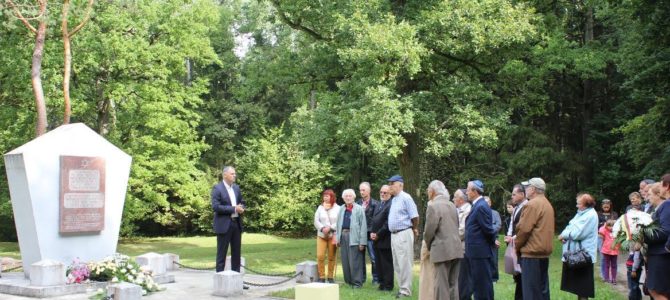
They are a different generation of people. Even their parents only heard vaguely of the terror, tears and suffering which once overtook this street. Seventy-five years ago hundreds of Jews of Molėtai realized where they were being taken at this bridge. They threw their things they had taken with them when they were removed from the synagogues under armed guard into the Siesartis river. This street leading from the three synagogues on Kauno street became the road to death for two thousand people. They had been held prisoner there [in the synagogues] for days without food or water.

Headstone Fragments Returned to Jewish Cemetery

Paminkliniai akmenys pagarbiai sugrįžta į senąsias Žydų kapines Olandų gatvėje

Fragments of Jewish headstones, removed from a transformer substation and other locations in Vilnius where they were used as construction material by the Soviets, have been returned to a Jewish cemetery in the Lithuanian capital. The city municipality this week ordered all fragments, both with legible fragments of inscriptions and without, to be removed to a clearing at the former Jewish cemetery on Olandų street. The move begun today was supervised by architects and representatives of the municipality, the Cultural Heritage Department, the Lithuanian Jewish Community and the Verkiai and Pavilniai Regional Park administration.

Photos by Martynas Užpelkis, heritage protection expert, Lithuanian Jewish Community

“It’s clear that it was time long ago to make sure Jewish gravestones be returned with dignity to the old Jewish cemetery and that such examples of the barbarism of the Soviet regime no longer remain in the city. Today I am glad that these thoughts have turned into concrete deeds: the city has renovated a vast territory of the old cemetery, and slowly alleys and paths have emerged there, and now the commemorative stones are being returned with dignity to the renovated territory. There has been exemplary and very constructive cooperation with the Jewish community and different institutions, and even though we haven’t had great resources, we’ve managed to find solutions which allow us to show due respect to the memory of the dead and testify to our values and culture,” Vilnius mayor Remigijus Šimašius said.

Šimašius Akmenys


Full story in Lithuanian here.

March to Commemorate Murdered Jews of Molėtai, Lithuania on August 29

A march to commemorate the 75th anniversary of the mass murder of the Jews of Molėtai is scheduled for August 29 in Molėtai, Lithuania.

There will be a conference and exhibit at the Molėtai Art Gallery at 3:00 P.M.

A procession will then walk down Vilniaus street in Molėtai at 4:00 P.M.

Unveiling of a monument by Davidas Zundelovičius follows at 5:00 P.M. at the mass murder site and mass grave of the Jews of Molėtai. Teachers Ela Pavinskienė and Roza Bieliauskienė of the Sholem Aleichem Gymnasium in Vilnius have organized an exhibit about cleaning up the old Jewish cemetery in Molėtai with photographs by Yehuda Vagner and Maceva volunteer Marius Lukoševičius.

Keeping the Faith in Vilnius

VilnaFaina
photo © Delfi/K. Cachovskis

Ellen Cassedy, author of We Are Here: Memories of the Lithuanian Holocaust (ellencassedy.com), has written about the Lithuanian Jewish Community and the Bagel Shop initiative.

Amit Belaite adores the long ode to the city of Vilna that was penned by writer and poet Moyshe Kulbak 90 years ago. Lines from the poem about Vilna’s stones and streets were running through her head on a warm summer afternoon as she led a walking tour through the narrow, winding streets of the city now known as Vilnius, the capital of the small Baltic nation of Lithuania.

Belaite, 23, heads the Lithuanian Union of Jewish Students. When she posted the announcement for the group’s tour of Jewish Vilnius, she expected a couple of dozen people to be interested. To her amazement, 400 signed up, many of them non-Jews.

“People know the city is rich in Jewish history,” she said. “They feel a big need to learn about it.”

En Plein Air Outdoor Painting Workshop at Įlanka Farm in Šaukšteliškiai Village

Plenerassu R.Savick2

Another outdoor painting workshop, or “plein air,” took place from August 8 to 14 at the Įlanka farmstead in Šaukšteliškiai village in the Molėtai region of Lithuania, organized by the Lithuanian Jewish Community. Participants stayed in and painted a scenic natural location where the surrounding lake, skies and fresh air inspired creativity. The program included ceramics as well as painting and featured professional teachers and lecturers and a significant recreational component. Participants included two recognized Lithuanian folk artists.

Lithuanian and Japanese Cities Join in Commemorating Righteous Gentile

Pasaulio tautų teisuolio atminimas sujungė Japonijos ir Lietuvos miestus ir žmones

Events to commemorate Chiune Sugihara, Japanese WWII-era consul in Kaunas and a Lithuanian festival were held in Sugihara’s hometown of Yaotsu, Japan, from July 31 to August 7.

Sugihara rescued thousands of Lithuanian Jews from the Holocaust and has been recognized as a Righteous Gentile and awarded the status of Righteous among the Nations by the Yad Vashem Holocaust memorial authority in Israel.

The week of commemorations was opened by the signing of a memorandum of cooperation by Yaotsu mayor Masanori Kaneko and Kaunas municipality representative Inga Pukelytė.

Acting Lithuanian ambassador to Japan Violeta Gaižauskaitė noted the events came on the 25th anniversary of the restoration of diplomatic ties between Japan and Lithuania and characterized ties between the people of Japan and Lithuania as sincere, and relations btween the two nations friendly. She also said both countries were dedicated to preserving the memory of the noble Japanese diplomat for future generations.

Commemoration of the Holocaust in Šeduva, Lithuania

UPDATE: Event organizers are providing transport from Vilnius and several free seats are left! Please register for a place before August 23 by sending an email to info@lostshtetl.com

You are invited to an event to commemorate the Šeduva Jewish community murdered in the Holocaust. The event is on on August 30 and will be a kaddish at the 3 mass murder sites and the old Šeduva Jewish cemetery.

Commemorative program

9:00–9:30 Kaddish at the Jewish mass murder site in Pakuteniai forest
https://goo.gl/maps/tdN5Y3mrWJw

9:45–10:15 Kaddish at Liaudiškiai Jewish mass murder site I
https://goo.gl/maps/fhjnq5ubSfk

10:30–11:00 Kaddish at Liaudiškiai Jewish mass murder site II
https://goo.gl/maps/mYLnGLUmVuK2

11:15–11:45 Kaddish at the Šeduva Jewish cemetery
https://goo.gl/maps/ZuHGdK9EHvF2

12:00–12:30 Coffee break at the Šeduva Culture and Crafts Center

12:45-1:30 Mass at the Holy Apparition of the Cross Church in Šeduva

1:30–2:15 Yiddish song concert by Rafailas Karpis and Darius Mažintas at the church in Šeduva

Download PDF format event program

More here.

Lithuanian Debut at the Olympics: The Isaac Anolik Story

by D. Baranauskaitė
manoteises.lt

“All riders have reached the finish line and the injured have been brought by automobile, but we haven’t seen Mr. Anolik and he isn’t found among the injured. Everyone has left. The stadium is empty, but he’s still not here. Asked by telephone, all the checkpoints reported they didn’t know and that there was not a single cyclist left on the route. He only came back at 11 at night, cold and hungry.”

This is how the newspaper Sportas reported the debut of the Lithuanian state at the Olympic Games in 1924. The subject of the report, Isaac Anolik, was a Lithuanian athlete of Jewish origins and the country’s cycling champion many times over. His accomplishments didn’t matter during the Holocaust. The leading Lithuanian cyclist was shot at the Ninth Fort.

isakas-anolikas-395x480

Full story in Lithuanian here.

Clarification

To whom it may concern,

In light of Mr. Gary Eisenberg’s recent article about Lithuanian citizenship for Litvaks published in Israel and South Africa, the Lithuanian Jewish Community states for the record:

1. There is no special legislation or program for recruiting Litvaks for Lithuanian citizenship. This is disinformation. The existing legislation on applications for Lithuanian citizenship by prewar citizens of Lithuania and their offspring was only reworded slightly to prevent misinterpretations of the intent of legislators by public servants to the detriment of Jewish applicants and applicants of other ethnicities. As far as we are aware, there is no “Lithuanian Citizenship Programme” for Litvaks in Lithuania or anywhere else, despite what was written in Mr. Eisenberg’s article.

2. The Lithuanian Jewish Community and the Choral Synagogue in Vilnius with the Vilnius Religious Jewish Community are firm followers of the traditions of the Vilna Gaon and have nothing to do with Chabad Lubavitch or their rabbi. We have a rabbinate of two rabbis who are firmly within the mitnagedic tradition. Mr. Eisenberg’s statements he celebrated Sabbath with Chabad Lubavitch Rabbi Krinsky, followed by the statement he visited the Choral Synagogue, could mislead some readers into thinking the Choral Synagogue in Vilnius is a Chabad Lubavitch center, which it is not.

Sincerely,

Faina Kuklianskay, attorney,
chairwoman,
Lithuanian Jewish Community

Summer Camp in Švenčionys

IMG_4003

This summer in August, a two-week international camp is being organised in Švenčionys. Our goal is to clean the old Jewish Švenčionys cemetery, remove trash, document gravestones and discover what we are able about Švenčionys Jewish history. We will be teaching our volunteers about Litvak culture, history and Jewish burial traditions in general.

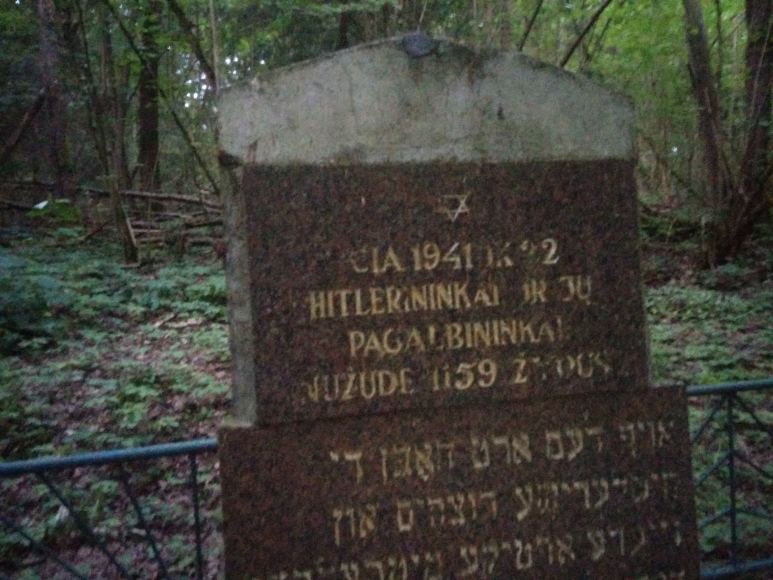
The old Jewish Švenčionys cemetery is one of the oldest Jewish burial places in Lithuania, dating back to the 17th century. The cemetery covers approximately 39,670 sq. meters (47,445 square yards) with existing gravestones estimated to number in the thousands. The number was higher prior to the Holocaust when gravestones were stolen for use in local construction, including for the construction of a horse stable. Much of the remaining cemetery was desecrated. In 1993, the stables were taken apart and many stones returned to the cemetery, and a remembrance monument was built.

Many ornate gravestones survive from the period 1900- 1930, and their condition varies. Many, if not most, are in fragile condition and need urgent repair and restoration.
We do not have data defining dates for the cemetery, we hope to discover that during our work.

The camp is organised in partnership with Action Reconciliation Service for Peace

http://www.actionreconciliation.org/

and will be our second joint project in consecutive years. We expect between 10-15 youngsters will visit Lithuania from Germany and other countries, to volunteer in this effort. More information can be found at https://www.asf-ev.de/en/summer-camps/activities/lithuania.html

If you are interested in the project and/or have any questions, please contact us via info@litvak-cemetery.info or sandra@litvak-cemetery.info

From http://www.litvak-cemetery.info/events/summer-camp-in-svencionys

Note: although the camp started today, there are still free spaces for interested volunteers, with housing and three meals per day provided. Please contact the email addresses above for more information.

Event in Dieveniškės to Commemorate Regional Jewish History

Dieveniškėse vyko renginiai, skirti regiono žydų istorijai

On August 4 Lithuanian Jewish Community representatives sold traditional Litvak bagels and sweets and spoke about Jewish tradition under the aegis of the LJC Bagel Shop Café at the Dieveniškės town square. The bagels quickly disappeared but local residents stuck around for the events to commemorate regional Jewish history.

The Dieveniškės Technological and Business School hosted the lectures “Jewish Funeral and Cemetery Traditions” and “Synagogues: How They’re Built, What Happens in Them and Why.” Participants manufactured models of synagogues from cardboard and other materials, and bricks made of clay to mark the locations of former Jewish buildings.

Lithuanian Citizenship for Litvaks

According to various reports in the Israeli media, there has been a sharp increase in South African Litvak applications for Lithuanian citizenship.

Some authors have even mentioned some sort of “Lithuanian Citizenship Programme,” whose existence is unknown to the Lithuanian Jewish Community.

Because of the seemingly increased interest, we are placing some of our earlier reporting back at the top of page one of the English version of the webpage.

We would like to take this opportunity to remind readers the amendment to the Lithuanian law on citizenship, the initiative of both the Lithuanian Jewish Community and the Lithuanian parliament, only removed and changed language which might have led to discrimination against Jews and Litvaks by individual public servants. There is no language about welcoming Litvaks with open arms, unfortunately. The amended law only levels the playing field to make sure Litvaks are treated equally with ethnic Lithuanians and others in the application process.

While the law doesn’t express welcoming Litvaks with open arms, the Lithuanian Jewish Community does welcome Litvaks from around the world, including South Africa, to become members, and does support Litvaks’ bids for Lithuanian citizenship. It has been our honor to have played a part in the amended legislation signed into law by the president of Lithuania last month.

Maya Pennington at the Lithuanian Jewish Community Thursday

mayapenn

Maya Pennington and the Hive!

Come… Hear… Fall in Love!

At 6:00 P.M. this Thursday, August 4, at the Lithuanian Jewish Community (Pylimo street no. 4, Vilnius)

About Maya

Singer, actress, composer.

Born in Jerusalem, Maya began learning music when she was 5. She graduated from the Ruben Academy for music and dance High School (majoring in Baroque flute), later studyied jazz voice and multi-disciplinary composition at the Academy of Music and Rimon. In order to supplement her acting training, she took part in courses held by Sadna’ot Habama with teachers from the Royal Academy of Music and Guildford and with teachers specializing in various acting methods. She toured internationally with the a cappella group Voca People (2009-2013), and performed as a soloist with a wide variety of performances, ranging from several performances with the Be’er Sheva sinfonietta to the international Red Sea Jazz Festival 2008, the Jerusalem Jazz Festival 2006, etc. and as a recording artist on several albums, including Ittai Rosenbaum’s “Between Waters and Waters” (2009).