Heritage

Lithuania and the Holocaust: Endless Seizures Instead of Healing Wounds (Part I)

Lithuania and the Holocaust: Endless Seizures Instead of Healing Wounds (Part I)

part one

by Vytautas Bruveris

What are the methods for Lithuania as a country and society to demonstrate by deeds rather than words true solidarity with the country’s Jewish community, almost completely exterminated in the Holocaust, with the victims and with their descendants?

After all, this year has been declared not only the Year of the Vilna Gaon but also the Year of Litvak History at the highest level of state.

Moreover, this year Lithuania and the world mark the round anniversary of a date connected with World War II, Nazi crimes and the Holocaust.

At least two such methods have long been clear.

Big Thank You to Svetlana Who Found a Jewish Headstone in Her Garden

Big Thank You to Svetlana Who Found a Jewish Headstone in Her Garden

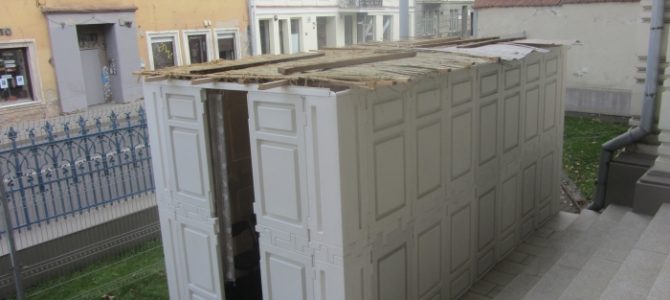
Vilnius resident Svetlana Šitelienė contacted the Lithuanian Jewish Community to report her discovery of what appears to be a Jewish headstone, or matzeva, on her farm.

Thank you, Svetlana.

We’ve reached Svetlana and thanked her, and sent her a box of matzo and the Vilnius ghetto diary of Yitzhak Rudasheviski translated into Lithuanian.

Studying the photographs she provided, it appears this might be an unfinished headstone made for someone named Esther, with the surname partially completed. Mrs. Šitelienė said the grave stone might have ended up in her yard 47 or more years ago, and according to relatives it came from the Jewish cemetery near the Palace of Marriage in Vilnius.

Faina Kukliansky Interviewed by Lithuanian Media on Yom haAtzma’ut

Lithuanian Jewish Community chairwoman Faina Kukliansky was interviewed by Lithuanian publicist Donatas Puslys on Yom haAtzma’ut, Israeli independence day, and spoke about what the holiday means to Jews in Lithuania, to her personally and to Jews around the world. She also spoke about the Holocaust, Litvaks living in Israel, the promise Eretz Israel held out to Soviet Jews and the country’s progress over the last 72 years. The interview was conducted in Lithuanian but concludes with warm wishes in Yiddish.

Yom HaZikaron, Israeli Memorial Day

Yom HaZikaron, Israeli Memorial Day

Yom haZikaron is the day Israel marks to honor its fallen soldiers, victims of terrorism and all who have died defending the state of Israel. According to the Jewish reckoning of time, it began on the evening of April 27 this year at around 8:00 P.M. and lasts until the evening of the next day.

President Rivlin spoke in the square in front of the Wailing Wall in Jerusalem and said it was sad there couldn’t be a mass public commemoration because of the virus epidemic. He said while we can’t cry together, we still remember and give honor to the 23,861 soldiers and victims of terrorism.

In Israel the commemorative holiday begins with an air-raid siren. People simply stop whatever they are doing and give honor to the dead. Those driving pull over and get out of their cars. All commercial activity ceases and people at the dinner table stop eating and sit in silence.

Greetings from Lithuanian Parliament on Gaon’s 300th Birthday

Greetings from Lithuanian Parliament on Gaon’s 300th Birthday

Dear Lithuanian Jewish Community chairwoman Mrs. Faina Kukliansky, dear Lithuanian Jewish Community,

We mark the 300th anniversary of that most exalted Litvak, Eliyahu ben Solomon Zalman, the Vilna Gaon. The parliament of the Republic of Lithuania named this year, 2020, the Year of the Vilna Gaon and Litvak History, to stress the priceless contribution the Jewish community, an inseparable part of our society for 700 years now, has made to Lithuania’s history, culture, learning and consolidation of statehood through your adherence to tradition and social activity.

In all times there have been people who do not conform to the canons of their era, who through their creativity and unconventional thinking have changed the world. The Jewish people have given so much to the world. One of them, the Gaon or Genius of Vilna, Eliyahu ben Solomon Zalman, was a scholar of Jewish texts and law and a Talmud interpreter and scholar. This was a brave challenge during his times but, happily, Eliyahu grew up in an intellectual environment and was supported by his family and appreciated by the community. Rumors about the young sage and his intellect spread far beyond the limits of Vilnius. The Vilna Gaon became the most renowned religious authority and he changed people’s life paths, thought and the concept of Litvak, and turned Vilnius into a Jewish spiritual center, the Jerusalem of Lithuania. This is a priceless historical, cultural and philosophical legacy of the Jews and Lithuanians of Vilnius and Lithuania and of the other peoples who live in Lithuania.

The Year of the Vilna Gaon and Litvak History is a great opportunity for all of us today, in the words of the Gaon, “to see with our own eyes, hear with our own ears and feel with our entire heart” what significant and rich heritage we have in creating the Lithuania of our future. Congratulations!

[signed]
Gediminas Kirkilas, deputy speaker, chairman of the European Affairs Committee
Lithuanian parliament

Jewish Confederation of Ukraine Sends Congratulations on 300th Birthday of Gaon

Jewish Confederation of Ukraine Sends Congratulations on 300th Birthday of Gaon

April 24, 2020

Dear friends!

The Jewish Confederation of Ukraine sincerely congratulates you on the 300th anniversary of the Vilna Gaon who is a symbol of wisdom and spirituality for Jews around the world.

The memory of the great leader of the best Jewish traditions and laws stands beyond the constraints of time and brings together generations of Jews.

May the brilliant heritage of the Vilnius Gaon help the Lithuanian Jewish Community to successfully develop and increase the traditions embodied in his philosophical teaching.

Jewish Confederation of Ukraine

Anniversary of Gaon Central in Conversation between Israeli and Lithuanian Presidents

Anniversary of Gaon Central in Conversation between Israeli and Lithuanian Presidents

April 23 was the 300th anniversary of the birth of the Vilna Gaon, the outstanding Torah-Talmud scholar from Vilnius in the 18th century. Lithuanian president Gitanas Nausėda and Israeli president Reuven Rivlin called each other to offer congratulations on the occasion.

The Lithuanian president expressed respect for the Vilna Gaon, the Rabbi Eliyahu ben Soiomon Zalman, who put Vilnius on the map as a center for Torah learning. He told the Israeli president the year 2020 had been declared the Year of the Vilna Gaon and Litvak History in Lithuania to honor the Gaon’s bright memory.

“The intellect and erudition of the Vilna Gaon made Vilnius the spiritual center of Jews in Europe, famous throughout the world. It was thanks to him that Vilnius appeared on the world map as the capital of Torah-Talmud scholarship and became the religious center of Judaism. The Gaon’s teaching, based on thoroughness, patience and dedication to revealing spiritual power and to seeking wisdom, is an inspiration in difficult times,” the Lithuanian president said.

President Nausėda emphasized Lithuania remains the home of the large Litvak community spread throughout the world. The Lithuanian Jewish Community maintains active ties with Litvaks living in Israel, the USA, South Africa, France and elsewhere, Nausėda noted.

The two presidents also discussed the health situation in their two countries and measures for restoring economic life. They agreed this time full of challenges the world faces demands special attention to international relations and solidarity between the nations.

At the end of their conversation the Lithuanian president greeted Israel on the 72nd anniversary of statehood and invited the Israeli president to visit Lithuania.

Information from the President’s Communication Group

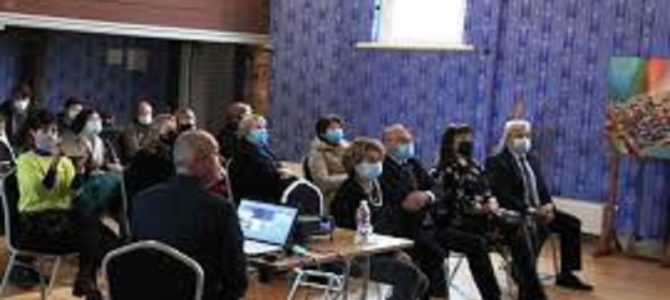
Small Gathering Honors Memory of Vilna Gaon at Nominal Grave in Vilnius

Small Gathering Honors Memory of Vilna Gaon at Nominal Grave in Vilnius

The Lithuanian Foreign Ministry reports Lithuanian Jewish Community chairwoman Faina Kukliansky, Lithuanian foreign minister Linas Linkevičius and Israeli ambassador Yossef Levy gathered at what is considered the final resting place of the mortal remains of the Vilna Gaon in the Jewish section of the Sudervės road cemetery in Vilnius April 23, the 300th anniversary of the birth of the Gaon.

The Lithuanian foreign minister expressed the hope events planned to mark 2020 as the Year of the Vilna Gaon which were postponed because of the virus epidemic will take place later in the year.

Three Hundredth Birthday of the Vilna Gaon

Three Hundredth Birthday of the Vilna Gaon

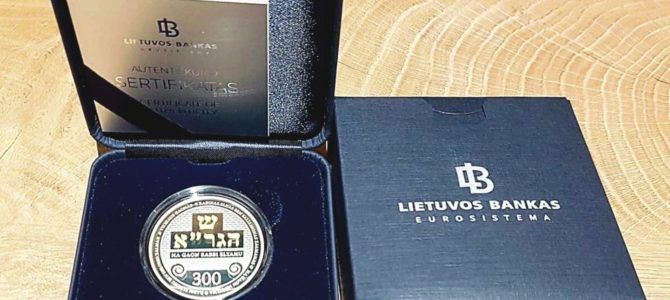
The Lithuanian parliament has proclaimed 2020 the Year of the Vilna Gaon, the 18th century scholar and cultural figure Eliyahu ben Solomon Zalman, and the Year of Litvak History. This anniversary has also been listed on UNESCO’s list of anniversaries for 2020 and 2021. On April 23 we mark the 300th birthday of the Vilna Gaon.

Scholars consider the Gaon the greated Talmudic scholar in Eastern European Jewish history. He is also the father of the rabbinical movement’s struggle against Hasidism and is considered the primary figure in rabbinical learning among Eastern European Jews. The Gaon and his followers, mitnagdim or misnagdim (literally “opponents,” i.e., of Hasidism) are sometimes called prophets of learning.

The Vilna Gaon had a deep interest in different branches of the exact sciences and his texts on geometry, astronomy and geography are often ascribed to the Haskalah, the Jewish enlightenment which arose in the 1770s in Central and Western Europe. Alan Nadler, professor emeritus of religious studies and formerly the director of a Jewish studies program in the USA, says the Gaon’s interest in secular subjects stimulated the expansion of many academic fields and the Gaon became a symbol of educated Judaism.

Jewish Holiday of Freedom Celebrated without Foods Recalling Slavery

Jewish Holiday of Freedom Celebrated without Foods Recalling Slavery

Judita Gliauberzonaitė, 42, chairwoman of the Vilnius Lithuanian Jerusalem Jewish community, recalls how her grandmother Cilė Žiburkienė every spring before Passover would cleanse the entire house so that, God forbid, not even a grain of flour would remain, which would mean leavened bread remained in the house, a sign recalling the enslavement of the Jews in the land of Egypt.

Jews around the world who count their history in millennia begin celebrating their Passover holiday on the 15th day in the month of Nisan (March or April), lasting for seven days in Israel and eight elsewhere in the world. Secular Jews who keep to tradition usually celebrate the first and last days of Passover, gathering as families for dinner.

Judita Gliauberzonaitė says more religious Jews attend synagogue every day of Passover.

Passover often coincides with Catholic Easter. This year it began on April 8 and continues till April 15.

LJC Chairwoman Faina Kukliansky and Lithuanian Jewish Religious Community Chairman Simas Levinas Send Passover Greetings to Community

LJC Chairwoman Faina Kukliansky and Lithuanian Jewish Religious Community Chairman Simas Levinas Send Passover Greetings to Community

Dear Community members,

So Passover, the holiday eagerly awaited by Jews around the world, has come.

The seder night is so important to Jews, when we eat matzo, meditate and remember G_d’s revelation during the flight from Egypt. We do this year after year. This is what our fathers and forefathers have done, and we do it, and we teach it to our children.

This year the seder won’t be so large, not all family members are able to come to the table, not here in the Diaspora and not in our historical homeland Eretz Israel.

This has happened to Jews many times before–slavery, the Inquisition, wars and other misfortunes have separated families so many times before, leaving some of us alone, turning some of us into outsiders. This year we celebrate Passover during a time which is difficult not just for Jews.

Nonetheless, let’s try. Let’s remember and tell in our thoughts the story of the exodus from Egypt. Let’s pose the questions to ourselves and find the correct answers. Let’s remember at least a few of the 248 mitzvot, let’s believe in miracles if only briefly, and in the arrival of the Messiah.

Let’s believe, let’s dream, let’s think and let’s thank the Most High that we are alive and spring has come, and let’s give thanks for every day lived and believe in the future.

Next year will be better. We just have to believe it.

A happy holiday to all, be free and be happy.

We Can’t Give Up Hope Now

We Can’t Give Up Hope Now

Community chairwoman Faina Kukliansky. Photo: Blanka Weber

by Blanka Weber

The country’s Jewish community is watching the time of pandemic with alarm

Faina Kukliansky is currently managing her life and that of her members from her home office in Vilnius. “This is a time that demands everything from us,” the 65-year-old chairwoman of the Lithuanian Jewish Community says.

This is a time when preparations for Passover would be underway normally. The Bagel Shop next to the Community building on Pylimo street is now only open for a few hours and only accepts cards for payment. Cash is forbidden. There are strict rules here, too. Matzo will be distributed to Community members here and should be delivered in the next few days.

No, Mr. Kasčiūnas, Jews Did Not Create the Corona Virus

No, Mr. Kasčiūnas, Jews Did Not Create the Corona Virus

by Arkadijus Vinokuras

I’m having a dark laugh, Homeland Union/Lithuanian Christian Democrats member of parliament Laurynas Kasčiūnas did not, thank God, accuse Jews for the corona virus. But he did accuse the Lithuanian Jewish Community of financially supporting “that liar” Rūta Vanagaitė’s book “How Did It Happen.”

You might ask what my fake headline has in common with MP Kasčiūnas’s accusation against the LJC. Well both ideas are false and allow for manipulating the truth.

See, the main figure in the book isn’t Rūta Vanagaitė, but Dr. Christoph Dieckmann, one of the best known European historians and an expert on the Holocaust in Lithuania. Or is it this fact which frightens Kasčiūnas? It’s one thing to criticize a “dilettante of history” (as Rūta Vanagaitė’s critics claim) and quite another to criticize a member of the International Commission for Assessing the Crimes of the Nazi and Soviet Occupation Regimes in Lithuania, convened and supported by the president of Lithuania.

Plan for Commemorating Vilnius Great Synagogue Becomes Clearer

Plan for Commemorating Vilnius Great Synagogue Becomes Clearer


by Roberta Tracevičiūtė for 15min.lt

The Vilnius city municipality reports agreement has been reached wit the Lithuanian Jewish Community on how best to commemorate the site of the former Great Synagogue in Vilnius’s historical Jewish quarter.

The plan according to the city is to set up a memorial square or park with an open-air exhibition and no permanent construction of any kind. According to the city, the undeveloped other side of Jewish Street will host a playground and athletics field [which it does now--LZB].

Discussion on how to commemorate the site has gone on for years. Vilnius mayor Remigijus Šimašius said earlier the synagogue site will be commemorated in 2023 when Vilnius celebrates its 700th birthday.

Roman Abramovich to Plant 25,000 Trees in Israel in Memory of Litvaks

Roman Abramovich to Plant 25,000 Trees in Israel in Memory of Litvaks

The Jewish National Fund (Keren Kayemeth LeIsrael) held a ceremony to set aside a memorial site and begin planting a forest in memory of the Lithuanian Jewish community, the Russian-language website www.vesty.co.il reported on March 11. The plan is to plant 25,000 trees as part of a KKL environmental protection project for afforestation in southern Israel. Famous Russian-Israeli businessman and philanthropist Roman Abramovich is providing major financing for the project.

Abramovich’s great-grandparents were Litvaks from the Kovna guberniya in the Russian Empire. In spring of 1941–a year after Lithuania was made part of the Soviet Union–the affluent Abramovich family was exiled to Siberia.

Roman’s grandfather was born in Eržvilkas and his grandmother Toiba Berkover was born in Jurbarkas. His grandfather Nakhman died in a camp in Krasnoyarsk in 1942 and his grandmother raised their three sons on her own, Aaron Arkady being Roman’s father.

Lithuanian Government Lists Famous Litvaks

Lithuanian Government Lists Famous Litvaks

The web page of the Government of the Republic of Lithuania now features in Lithuanian and English texts about the Vilna Gaon, famous Litvaks and visual materials for celebrating 2020 as the Year of the Vilna Gaon and Litvak History.

§§§

Most Prominent Jewish Personalities in Lithuania

Lithuania has been home to many Jews, who were born in this country, lived and created here leaving an indelible mark in the scholarly and cultural heritage of Lithuania as well as of the world.

Writers

Icchokas Meras (1934-2014). The author of books on the Holocaust (Geltonas lopas (The Yellow Patch), Ant ko laikosi pasaulis (What the World Rests on), Lygiosios trunka akimirką (A Stalemate), and a film script writer for well-known Lithuanian films Kai aš mažas buvau (When I Was a Child), Birželis, vasaros pradžia (June, the Beginning of Summer) and Maža išpažintis (Small Confession).

Chaim Grade (1910-1982). Vilna-born writer, a member of Yung Vilne (Young Vilnius), a group of avant-garde writers and artists. Chaim Grade is considered to be one of the leading Yiddish writers in post-Holocaust period. Nominated for the Pulitzer Prize.

Happy Holidays, Žydelkos

Happy Holidays, Žydelkos

by Sergejus Kanovičius

Once, long ago, I attended a Lithuanian school. Back then there were two Jews, or more accurately, a Jewish boy and a Jewish girl. The boy was in the grade next to her. Dark-skinned speaking without an accent, the Jewish boy always got into fights when others reminded him he was different. Different and therefore not as good. No one tried to break it up. There were always observers. Later they called themselves pals because they didn’t get into fights with him. They didn’t defend him, but they didn’t beat him, either. It’s much safer to stand to the side and keep quiet. That’s been proven historically. The Jewish girl didn’t get into fist fights. She was shy and had curly hair. Whenever someone called her žydelka [Jew-girl], which is now for some reason considered an endearing diminutive term, she used to walk away, sometimes wiping a tear. When I used to hear these “terms of endearment,” unlike the majority of the žydelkos, I had to get into a fight again.

There have always been more apologists for epithets such as žydelka, žydo išpera [Jew-spawn] and others and they have always been stronger. But my family taught me one thing: never to retreat from abuse, to oppose it. I would be lying if I said I had ever been the victor in some fist fight. The combatants were always greater in number and I lost. No matter what, though, they got theirs. Of the many wonderful teachers there were only a few who didn’t give out beatings, they found a pseudo-intellectual way of telling the whole class that this one is different and therefore is worthy of less respect. This kind of intellectual pedagogical encouragement to hate. Like the mark for dictation, when because of one comma the dark kid used to get four [out of ten] with a minus. Just because. So I wouldn’t forget I was different.

Many years later as Lithuania counts her fourth decade of independence, no one dare beat me. Fists have become unpopular. They beat through words. Sometimes rather beautiful ones. The world is free. But it is painful the Lithuanian National Defense Ministry’s magazine Karys [Soldier] has published the lie of a pseudo-historian about the local leader of anti-Semitic ideology (who knows whether another NATO member who sometimes guards our airspace, if the French Defense Ministry would try to tell their soldiers what a great diplomat and patriot Pétain was). Or insistently try to prove “Jew-girl” is a term of endearment (happy International Women’s Day, žydelkos!). Frida Vismant of Šeduva recalls that’s what they called her on the streets in 1940. “You just wait, žydelka padalka, Hitler will come and we’ll show you!” (Out of endearment, I guess, they told her she was a žydelka in the Šiauliai ghetto after they took her firstborn Rachmielis and beat him to death along with 600 child žydelkos).

Eugenijus Bunka Named Tolerant Person of the Year

Eugenijus Bunka Named Tolerant Person of the Year

Eugenijus Bunka was named Tolerant Person of the Year February 2 in Kaunas. Bunka is the creator of the Litvak Memorial Garden, a regional historian, writer and journalist. At the awards ceremony he said he was carrying on the work of his father, Jakovas Bunka. The Bunka welfare and support fund finances children’s camps, meetings at schools and other events.

The award comes from the Sugihara Foundation/Diplomats for Life, which has been giving the award since 2001. They said Bunka received the distinction for his many years directing the Jakovas Bunka fund and carrying out civic and educational initiatives, commemorating the Jews of Plungė, Žemaitija and Lithuania both in his own region and around the world.

The foundation said Bunka in 2019 undertook active educational work, refuting the wartime and postwar stereotype of Jews as Communists specifically in the administration in Plungė using arguments and facts. They also noted his research into Louis Armstrong’s Litvak foster parents in America, Leiba and Tilė Karnovskiai from Vilkija, Lithuania.

Donskis Prize Winner Linas Vildžiūnas’s Acceptance Speech

Donskis Prize Winner Linas Vildžiūnas’s Acceptance Speech

LRT.lt

The Leonidas Donskis prize was awarded this year to Linas Vildžiūnas, the director of the “7 meno dienos” [Seven Days of Art] weekly newspaper, by the board of directors of the Sugihara Foundation/Diplomats for Life and Jolanta Donskienė.

On February 2 the Sugihara Foundation/Diplomats for Life announced their annual award for Tolerant Person of the Year at Vytautas Magnus University in Kaunas. This year that person was Eugenijus Bunka. They also awarded the Donskis prize to Linas Vildžiūnas. Leonidas Donskis was a philosopher, professor, the author of numerous books, a television personality, an advisor to the Lithuanian president and an important voice in the modern Republic of Lithuania.

Vildžiūnas was awarded the distinction “for his meaningful presence on the cultural scene which was unaffected by regime changes and fashion, and for his continuous reminder culture is a fundamental value whose quality is enriched by supporting dialogue and discussion. [And] for his long-time battle against forgetfulness, reminding us that only the maintenance of memory, however uncomfortable it might be, strengthens dialogue and empathy, that the memories of our grandparents and great-grandparents is of value for the younger generation rather than a fading memory. [And] for his belief and the example he set, showing that a strong civic attitude is able to withstand tendentious attacks, manipulations and efforts to ‘nationalize’ it.”

This is the speech Linas Vildžiūnas gave on acceptance of the Donskis prize:

§§§

Dear Mrs. Jolanta Donskienė, honored members of the board of directors of the Sugihara Foundation/Diplomats for Life, ladies and gentlemen,

In accepting from your hands this honorable award in recognition of my humble efforts, I am deeply moved and at the same time disturbed. The Leonidas Donskis prize set a very high standard, bearing in mind his irreplaceable role in our public life and academic discourse and his novel insights which have added to our lexicon of philosophy and sociology (take just for example his and Zygmunt Bauman’s idea of “liquid evil” in the final book coauthored by both thinkers). We all feel that void which appeared in public life on the loss of Leonidas Donskis, who was the most remarkable and sometimes the only voice of our intellectual elite.

Jewish Quarter of Vilnius: From Grand Duke’s Privilege to Soviet Demolition

Jewish Quarter of Vilnius: From Grand Duke’s Privilege to Soviet Demolition

Photo: Antokolskio street, 1940/Mečys Brazaitis

The spacious square by Žydų (Jewish) Street in central Vilnius now contains little else than a children’s playground, parking lots and a derelict kindergarten, but it was densely packed with houses before World War Two. Most of the houses were occupied by Jews and the area was the center of the city’s Jewish quarter.

Lithuania has dedicated the year 2020 to the Vilna Gaon and the History of the Jews of Lithuania. LRT English together with Vilnius University and Jewish Heritage Lithuania bring you a series of stories exploring Litvak history.

The official beginnings of the Jewish quarter of Vilnius date back to the 17th century when king of Poland and grand duke of Lithuania Wladyslaw Vasa granted a privilege [charter] to the Jews to reside in this quarter. Jewish Street had this name even before that, so it is likely Jewish residents already lived there.

Full story here.