Announcements

Lithuanian National Radio and Television Hosts Exhibit on Righteous Gentiles

LRT atidaroma paroda, skirta Pasaulio Teisuoliams

An exhibit of photographs of upstanding and courageous Lithuanian Righteous Gentiles who rescued Jews from the Nazis, performing the highest service to their nation, will open at the Lithuanian National Radio and Television Gallery at Konarskio street no. 49 in Vilnius at 3:00 P.M. on Thursday, January 19. The Yad Vashem Holocaust memorial authority and museum in Israel bestows the title Righteous among the Nations, or Righteous Gentile, on citizens of other countries who rescued Holocaust victims. This exhibition was shown earlier at the Lithuanian parliament. As readers will recall, the Lithuanian Jewish Community’s annual calendar features Lithuanian Righteous Gentiles this year as well, with a photograph of Lithuanian president Kazys Grinius and wife Kristina on the cover.

Writer Icchokas Meras, the winner of the Lithuanian National Prize for Art and Culture who was saved from the Holocaust by Lithuanians, wrote about the rescuers: “They were the blooms of the morality of the nation, the spiritual giants of the nation, no matter whether they were educated or simple people, whether they were illiterate, clergy who carried with them the true love of one’s neighbor or simple peasants broadcasting seed to the ground by hand. They, intentionally or unintentionally, opposed the destroying power of the Nazis and its tool: those who murdered. We should remember and honor their heroism based on conscience, goodness, love of one’s neighbor and simply human pity.”

Panevėžys Jewish Community to Mark International Holocaust Remembrance Day

Dovydo žvaigždė

January 27 marks the day in 1945 when the victims of the Auschwitz death camp were liberated. Auschwitz was the largest concentration camp set up by Nazi Germany where about 1.5 million people were murdered, including children, and approximately 1 million of the victims were Jews, according to the best estimates.

The Panevėžys Jewish Community will observe International Holocaust Remembrance Day on January 26 at the “Sad Jewish Mother” statue on Memory Square at Vasario 16 street next to the Vyturis Pre-Gymnasium.

Program:

2:00 P.M. Assembly, wreath-laying ceremony, speeches;

2:45 P.M. Wreath-laying ceremony at the statue “Ghetto Gate” (at the intersection of Klaipėdos and Krekenavos streets);

3:00 P.M. Forum dedicated to International Holocaust Remembrance Day at the Panevėžys Jewish Community (Ramygalos street no. 18). Documentary film about the Holocaust.

Let’s remember the heroic rescuers.

Event supporters:

LZB _LOGO2GVF_logo-01

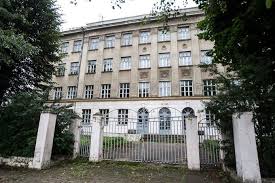
Lithuanian Jewish Community Position on Reconstruction of the Vilnius Palace of Concerts and Sports and Its Use as a Conference Center

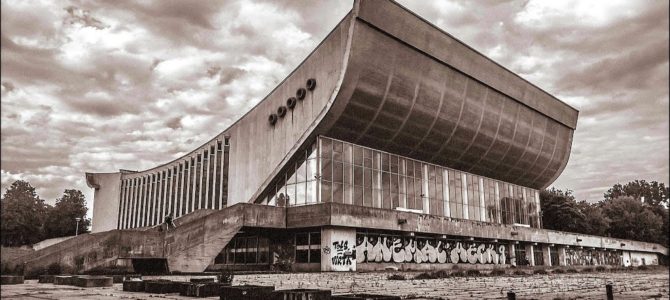
In light of the recent intensification of statements in the media on the alleged danger now threatening the conservation of the Šnipiškės Jewish graveyard in Vilnius (hereinafter Cemetery), the Lithuanian Jewish (Litvak) Community (hereinafter LJC) feel it our duty yet again to present the main facts in the case and the LJC’s well-founded position based on those facts regarding the issue of the reconstruction of the Vilnius Palace of Concerts and Sports (hereinafter Sports Palace) and its adaptation as a conference center.

1. To date no work for the reconstruction of the Sports Palace has been carried out, and therefore no possibly negative impact on the graveyard which was destroyed in the 1950s is being effected at the current time. The remains of the Vilna Gaon were removed to the Vilnius Jewish cemetery located on Sudervės street long ago and his headstone is located there.

False statements and rumors have been circulating for some time, so again it is necessary to explain the headstones in the Cemetery were destroyed long ago and the Sports Palace was constructed there back in the Soviet era. At the current time only pre-planning proposals have been drawn up, which could serve later as the basis for a detailed technical project for the renovation and adaptation of the Sports Palace which will be carefully examined and assessed by competent institutions.

2. The Cemetery is entered on the Registry of Cultural Treasures and has been declared a state-protected site, meaning any construction or reconstruction work in the area of the graves or in the buffer zone around it, and any plans for this sort of work, are carefully assessed and strictly controlled under the provisions of the law of the Republic of Lithuania on protection of real estate heritage and the specific requirements of a special protection plan for this Cemetery.

3. This special protection plan for the Cemetery was prepared under the requirements and principles contained in a protocol agreement signed on August 26, 2009, by the leaders of the LJC, the Committee for the Preservation of Jewish Cemeteries in Europe and the Cultural Heritage Department under the Lithuanian Ministry of Culture. All these institutions share responsibility for keeping the agreement and ensuring sufficient authority for doing so.

4. The protocol agreement of August 26, 2009, resolves that:

4.1. Earth-moving work is forbidden in the Cemetery;

4.2. Three additional possible buffer-function zones are defined; the Sports Palace falls into zone A where earth-moving work is proscribed except in cases involving engineering construction (utility pipeline, transportation and communication infrastructure) and/or work to maintain the Vilnius Sports Palace. Jobs involving the movement of earth require consent by the LJC and must be accomplished in the smallest scope possible. All work involving the movement of ground must be done under the supervision of an archaeologist and an authorized LJC delegate. To insure adherence to this requirement, the LJC makes all decisions regarding the conservation of the Cemetery and plans for the reconstruction of Sports Palace only with the knowledge and consent of the Committee for the Preservation of Jewish Cemeteries in Europe.

5. The Vilnius Sports Palace was constructed in 1973. The building and the Cemetery upon which it was built have been listed on the Registry and are protected as a cultural treasure since 2006.

6. According to the original construction documents presented to the LJC, the foundation of the Sports Palace extends 7.37 meters underground, so most likely all burials there were destroyed during building construction. Therefore pre-planning proposals for reconstruction of the Sports Palace are based on the assumption burials do not remain under the building. Despite the low likelihood there are still graves under the building, in the event of actual reconstruction of the Sports Palace the LJC will demand earth-moving work be of minimal scope and conducted under the supervision of representatives of the Committee for the Preservation of Jewish Cemeteries in Europe.

Therefore, bearing in mind that:

1) existing burials were destroyed during construction of the Vilnius Sports Palace;

2) currently not a single headstone remains at the Cemetery (the last monuments were torn down back in 1955), the Cemetery territory is in disrepair, and there are no signs in the huge territory of the Cemetery testifying to its history except for a symbolic statue and an information plaque set up a few years ago;

3) the Sports Palace building along with the Cemetery surrounding it are listed on the Registry of Cultural Treasures and it cannot be torn down, but in its current state cannot either be used and requires renovation;

4) the abandoned Vilnius Sports Palace is in a state of ruin and is unbefitting the city center and the Cemetery, and stands as a horrid symbol recalling the Soviet era when the headstones of the Cemetery were destroyed and the human remains there disturbed;

The Government of the Republic of Lithuania have the right to do as they please with the property in their possession, and certainly the right to merely consider the reconstruction of the Vilnius Sports Palace, adapting it for one or another use, and the LJC has no legal foundation or rational arguments for quelling these activities. Instead of engaging in unconstructive criticism, the LJC is undertaking all measures to insure these plans and their possible realization do not violate Jewish law and tradition, and believes the Government of Lithuania, as a responsible institution with a vested interest in maintaining its reputation, will also exhaust all efforts so that the project is carried out to the highest standards of transparency, quality and respect for heritage. If the project is carried out appropriately, the LJC would achieve our goal of preserving the Cemetery:

1) establishing in city planning and physically demarcating the limits of the Cemetery;

2) renovating the territory of the Cemetery and setting up walking paths there in line with Jewish law and tradition;

3) erecting a commemorative composition including the names of the people buried in the Cemetery;

4) installing necessary educational and information material on site.

Ping-Pong Training

The Lithuanian Jewish Community
and the Naujų Žvaidždžių Club
invite you to play ping-pong

Everyone is invited to attend the ping-pong practice sessions,
to improve their skills and to compete.

This is for people of all ages and all or no skill level,
with professional tables and equipment (no need to bring anything),
freestyle games among friends and family for fun

The practice sessions will be held

in the ping-pong room at at the S. Daukantas Pre-Gymnasium, Naugarduko street no. 7, Vilnius
from 5:00 P.M. to 8:00 P.M. on weekdays and from 12 noon to 2:00 P.M. on Saturday

Cost:

for adults: 3 euros for 2 hours
for students: first session free (with discounts for those who wish to continue)

Everyone is welcome to attend the first introductory practice session free of charge.

For more information, call +370 613 75124 or email stalotenisoklubas@gmail.com

Hen Alon, director
Naujų Žvaidždžių Club
Lithuanian youth team coach

Sholem Aleichem Reunion

Šolomo Aleichemo g-ja kviečia abiturientus į susitikimą

The Vilnius Sholem Aleichem ORT Gymnasium invites former students to its annual reunion to be held at 6:30 P.M. on February 3.

See you there!

Ponar Oratorio to Premiere at National Philharmonic

The premiere of Ponar Oratorio is to open at 6:00 P.M. on January 25, 2017, at the Lithuanian National Philharmonic in Vilnius. The new musical work was composed by Max Fedorov. The author of the libretto is Edward Trusewicz. Different parts of the oratorio are to be performed by Maciej Nerkowski, the Podlasie Opera and Philharmonic Choir and the Kaunas Symphony Orchestra. Martynas Staškus is to conduct.

“The motif of the oratorio is about the confession of a man who took the lives of many people at the Ponar forest. The executioner has kept silent for many years but has finally decided to show his blood-stained hands,” premiere producer Edward Trusewicz said.

The oratorio is to be performed in Polish with a running text translation in Lithuanian and English during the performance.

Reservations and tickets available here.

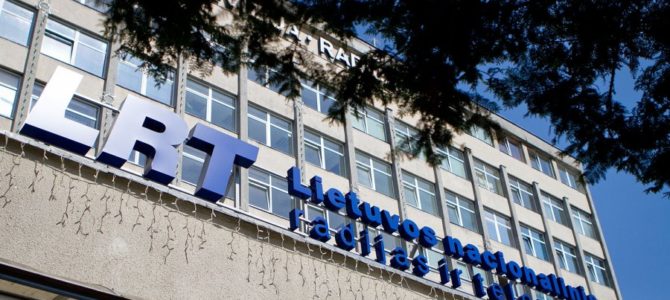
On the Position of Director General Siaurusevičius and Lithuanian National Radio and Television

lzb.lt

Lithuanian Jewish Community chairwoman Faina Kukliansky believes, as does the entire Lithuanian Jewish community, the position taken by Lithuanian Radio and Television director general Audrius Siaurusevičius and by the national broadcaster LRT in response to gestures depicting Hitler made by actress Asta Baukutė on the LRT television program “Atspėk dainą” is the right one and expresses the state’s position regarding its Jewish citizens. “I have to say Lithuanian National Radio and Television have demonstrated consistently and professionally their view on the centuries-long history of the Jews of Lithuania and have raised ‘uncomfortable’ Holocaust issues, something which even officials responsible for education haven’t done for many years. Also, LRT radio journalists are currently doing programs about painful historical events which to the present time influence life in the small towns after the destruction of the shtetls. I give them my gratitude for the work they’re doing and ask them to continue the radio series. No one should be afraid to say the word ‘Jew,’ but it’s important to understand and never forget what happened and how their Lithuanian fellow countrymen acted during the Holocaust, and why the Litvak community is so small today, and sensitive to all signs of anti-Semitism and Naziism,” chairwoman Kukliansky stated.

Lithuanian National Radio: Slobodka

lrtradijas

The Lithuanian National Radio and Television radio program Radijo dokumentika [Radio Documentary] for Sunday, January 8, rebroadcast Tuesday, January 10 after the morning news program at 9:00 A.M. The small area at the confluence of the Neris and Nemunas Rivers created by the Radziwiłłs in the 17th century, Slabada, a “serfdom-free zone,” was originally smaller and is called a village in the documentation, but by the second half of the 18th century the shtetl was a competitor in arts and crafts and trade with the city of Kaunas across the rivers. Industry developed quickly in the 20th century. Slobodka, as it came to be called, was the home to the world-famous Slobodka Yeshiva. Known in Lithuanian as Vilijampolė, the city on the Viliya River [a synonym for the Neris], the district became part of the city of Kaunas before World War II.

This is the eighth episode in a series dedicated to the Jewish shtetls of Lithuania in Lithuanian National Radio and Television’s retrospective on the forgotten past of the Jews of Lithuania.

LJC Birthdays in January

Happy birthday to all members of the communities celebrating their birthdays in January!

Vilnius Jewish Community

Nina Dubrovskaja (January 22)
Ninel Efros (January 15)
Malka Fišer (January 9)
Borisas Kacas (January 5)
Galina Matskevitch (January 19)
Judif Rozina (January 8)
Ilana Rozentalienė (January 16)
Mira Bloch (January 15)
Ela Kruglova (January 12)
Zinaida Vinickaja (January 12)
Zofija Tunkel (1942 01 10)
Jurij Riabov (January 13)
Jakovas Bumšteinas (January 26)
Polina Kurbanova (January 5)
Michail Safjan (January 26)
Dina Ščerbinkina (January 23)

Kaunas Jewish Community

Civa Čereškienė (January 13)

Panevėžys Jewish Community

Valentina Darinceva (January 28)

Call for Information about Jews Murdered near Švenčionėliai, Lithuania, in 1941

svencionys1

Please contact Moshe Shapiro at moisa50@mail.ru if you have any information.

No one who witnessed or lost relatives to the tragic events in the Švenčionys region in October of 1941 will ever forget.

All Jews living in the Švenčionys region, including doctors, bankers, rabbis and any number of other professionals, were locked up in a ghetto and then shot that fall after the Nazis occupied New Švenčionys (that’s what it was officially called in the Lithuanian Soviet Socialist Republic) in October, 1941.

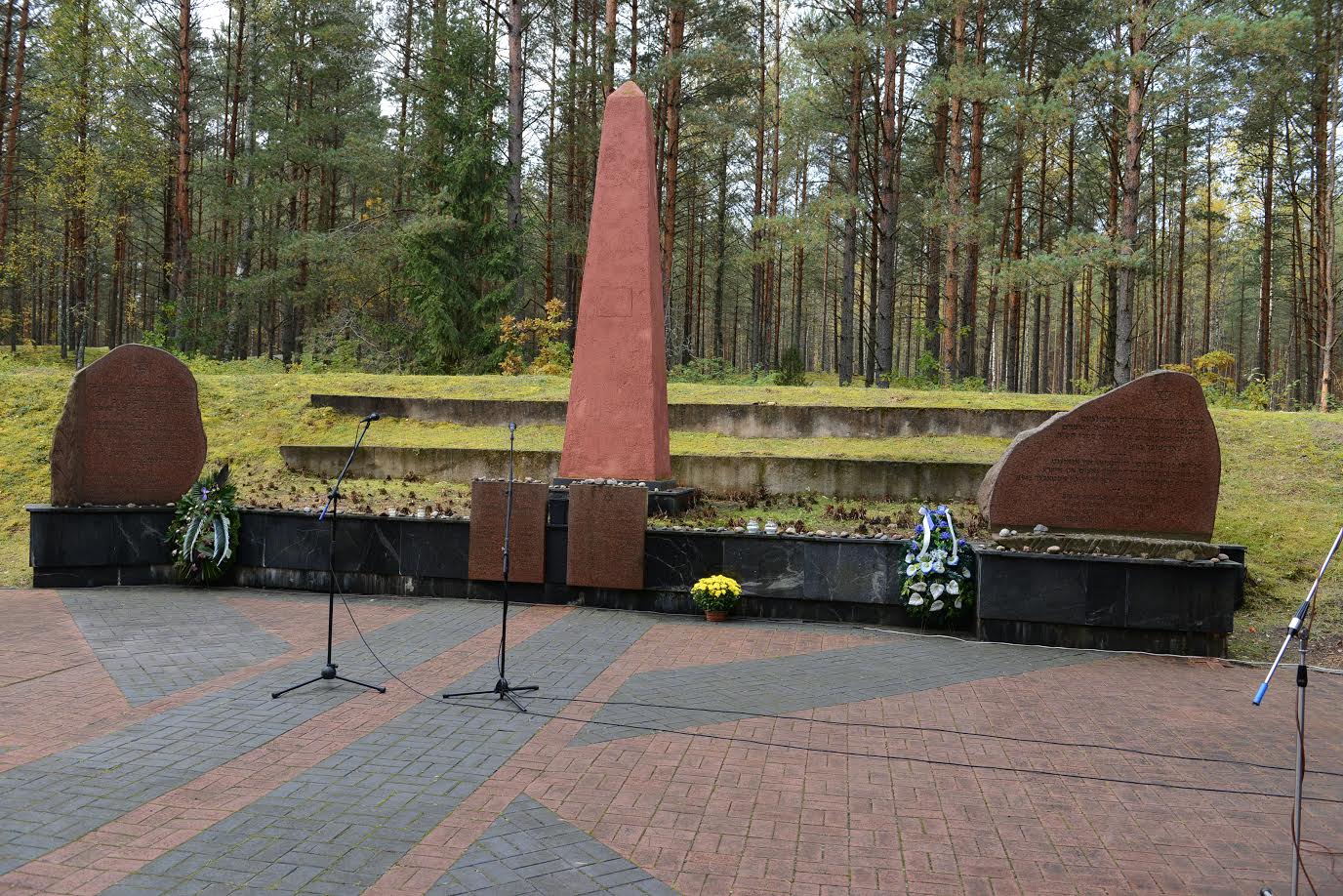
A site for the mass murder of Jews in the Švenčionys region was selected in a pine forest in the village of Platumai near the town of Švenčionėliai across the Žeimena River. The remains of military barracks still stood there. Local police received secret orders in August of 1941 for sending all Jews to Švenčionėliai and stealing their property. Jews held in the barracks for a week suffered hunger and cold besides the looming uncertainty over their future. The barracks were surrounded by a fence and the area around that had land mines.

In October the local district police chief delivered the order by the German regime to shoot all the Jews of Švenčionys and the 22 surrounding towns and villages. About 8,000 Jews were murdered in cold blood at the execution site in October. Locals were shocked.

A memorial first erected in 1961 to the murdered Jews hasn’t been repaired in more than a decade. After standing there for two decades it needed repairs in 1984 and was reconstructed by the architect Astutė Bučinskaitė then. It was again reconstructed in 1993. The centerpiece is a granite slab with the names of the shtetls. The last major refurbishment was in 2002 when benches were installed and gravel brought in.

The Švenčionys Regional Jewish Community wants to fix up the memorial and better commemorate the victims.

The project will cost about 6,200 euros. The Ethnic Minorities Department under the Lithuanian Government will provide partial funding, and the Švenčionys regional administration will also make a financial contribution, totaling 20 percent of total costs or 1,200 euros.

The project will learn the names of victims and compile a comprehensive list, and the new memorial will include an information board. Although some names are known from the Lithuanian archives and from the book in Hebrew and Yiddish called the Book of Memory of the Twenty-Three Jewish Communities of Švenčionys Region published in Tel Aviv in 1965, there are still real difficulties in learning the specific identities of those who were murdered and buried across the river from Švenčionėliai.

Švenčionys Regional Jewish Community chairman Moshe Shapiro is highly cognizant and appreciative of the grave responsibility posed by this important project, and is asking those who survived the Holocaust from the smaller towns in the Švenčionys region, their children, grand-children and relatives, wherever they might live now, to share any information they might have, including stories and the names and surnames of the victims.

Please contact Moshe Shapiro at moisa50@mail.ru if you have any information.

svencionys3

Nominate an Outstanding Foundation Professional for the 2017 JJ Greenberg Award!

jfn-h-350

jfunders.org

December 26, 2016

Hi Friend,

I wanted to remind you that we’re still collecting nominations for the JJ Greenberg Memorial Award (see the previous email below for more details.) Believe it or not, it’s almost the new year and after that there will only be two weeks until the deadline. Don’t leave it until the last minute!

Watch some of the past acceptance speeches for this award, and I know you’ll agree that it’s quite an honor for the recipient, and an important way for the Jewish philanthropic field to identify and promote excellence and commitment. Nominate someone now!

Call me if you have questions: 212-726-0177, x205.

Warmly,
Merav

Rome Remembrance Run, January 22, 2017

To: All WJC Affiliated Communities & Organizations

From: Robert Singer, WJC CEO & EVP

Re: Rome Remembrance Run – 22 January 2017

Dear Friends,

I am delighted to share with you a wonderful initiative of the Union of Jewish Communities of Italy: the ‘Run for Remembrance’, which will be held in Rome as part of the International Holocaust Commemoration Day activities, on 22 January 2017.

The Run for Remembrance will consist of two separate races, one of 10 KM and one of 3.6 KM, and each of the runs will stop at places of historical significance along the way and pay tribute to the victims of Nazism.

WJC is very pleased to be supporting this initiative of the Italian community and we are inviting our member communities to send some participants to join in the run.

Attached is the Flyer for the event (click to download): please share this with members of your community.

Greetings from Lithuanian Jewish Community Chairwoman Faina Kukliansky

unnamed

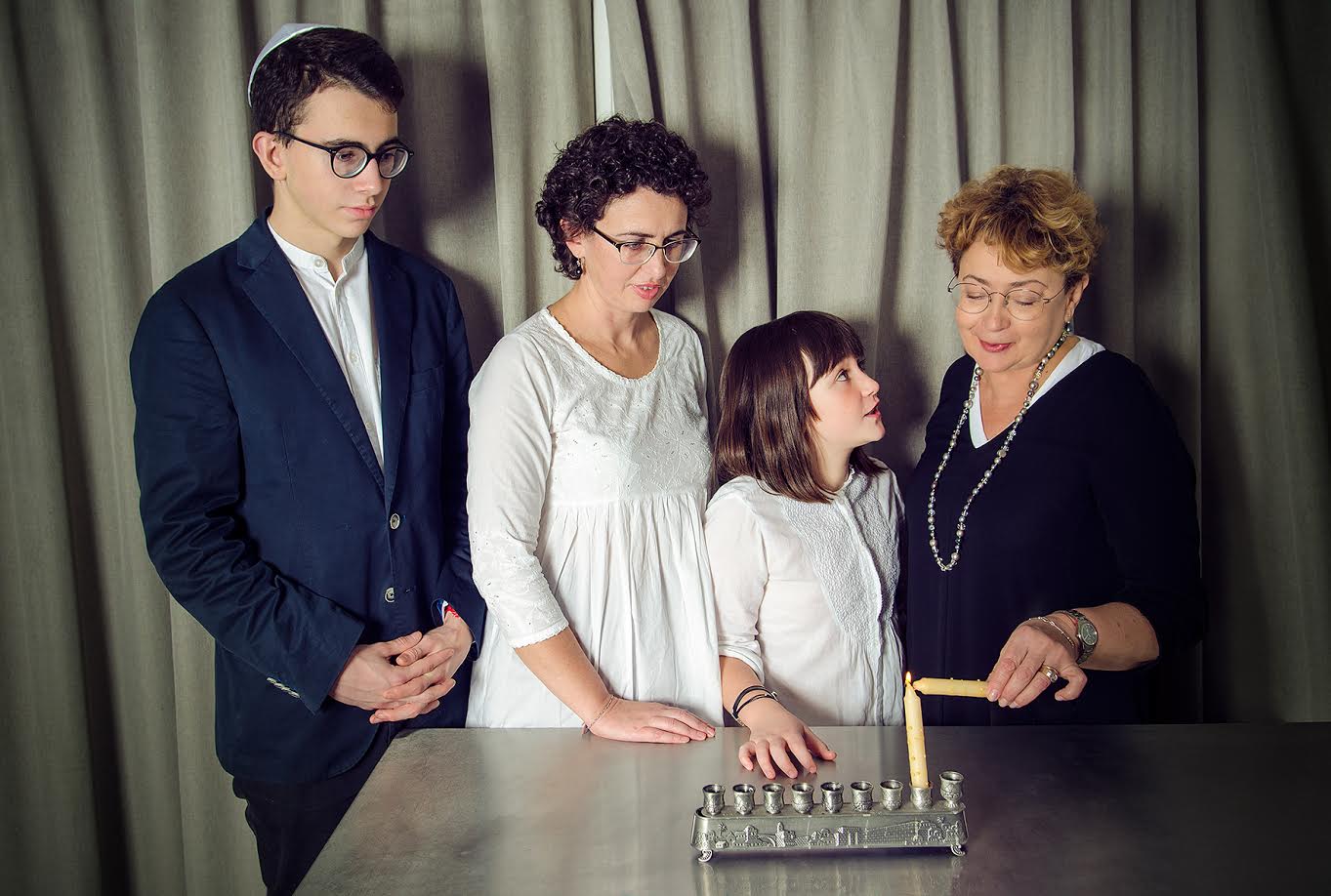
Dear members of the Jewish community, greetings to all on this holiday of Hanukkah!

I hope good feelings and warm and pleasant moments with loved ones will accompany you as you light the first Hanukkah candle. I wish you health and concord in your family, and that our children would grow up safe, dignified and happy and be proud of their parents and their roots.

It is a happy thing that there is ever-growing interest in the rich history of the Jews, and I probably won’t be making a mistake to say that there was never so much interest in the Jewish community as there is now, although so few Jews are left in Lithuania. The Jewish Community works actively to insure the rights and freedoms of our members and to promote Jewish interests. Unfortunately we weren’t able to achieve all our goals in 2016, but we will continue to strive after them in the coming year: monuments to those who shot Jews need to be removed, and Vilnius needs to have a monument commemorating those who rescued Jews from the Holocaust. We will continue to work on the issue of restitution of private property.

The Jewish Community is investing in the future, issuing scholarships and stipends for Jewish students and accomplished athletes. Plans for a new kindergarten have been completed, a kindergarten which will insure Jewish values are passed down to the youngest members of our community and prepare them for further education at the Jewish school.

One of the Lithuanian Jewish Community’s top priorities is to improve the living conditions of clients in our Social Programs Department. We help when emergencies and misfortune occur. This will remain our priority in 2017. We also help rescuers of Jews, whose humility and sincere gratitude encourage us to grow and improve. I would like to thank Jewish rescuer Regina for the gloves and socks she knitted.

The Community building itself has become lighter and cozier. We have new audio-visual equipment in the Community concert hall and there are always new and different exhibitions on display. It’s a great joy that there is cultural life, ferment and creativity in the community, and that performers from Lithuania, Israel, the USA, the Netherlands, Romania and other countries perform concerts here. It is also a happy occasion that we have deepened our contacts with the foreign embassies, other countries, municipal institutions and NGOs. Thanks to this cooperation legal amendments were finally adopted to make it easier for Litvaks to restore Lithuanian citizenship. We signed an agreement on cooperation with the American Jewish Committee, we are enjoying wonderful relations with other world Jewish organizations and we are expanding contacts in the West as well as in the East, with the Jewish communities in India and Japan.

Interest in religion is reviving as well. We have two rabbis working at the Community who give lessons educating young and old on various topics in Judaism.

In cooperation with international Jewish organizations and based on their recommendations, we have increased security at the Community and synagogue buildings, and are approaching western standards of security.

We have the only kosher café in Vilnius. The Bagel Shop has attracted significant attention and television crews from Canada, Germany and of course Lithuania, too, have featured the café. It has become a place where not only Jews gather, but also aficionados of Jewish cuisine and culture. Our challa-baking event was a good time for all, and US ambassador Anne Hall was enchanted by the experience. The Jewish languages project carried out with the Cultural Heritage Department attracted much attention by many residents of the Lithuanian capital and visitors from elsewhere. In greeting you all, I invite Community members to show even greater initiative and self-confidence in proposing ways to make their hopes and dreams come true, because the Community exists to benefit its members.

My holiday greetings go out as well to Israeli ambassador Amir Maimon and the chairmen of the regional communities: Gennady Kofman, Gercas Žakas, Artūras Taicas, Feliksas Puzemskis, Moisej Šapiro and Josifas Buršteinas. Thank you all for the active roles you play and for working together.

Khag Khanuka Sameakh!

Lithuanian National Radio and Television Names Marius Ivaškevičius Man of the Year

lrtradijas-1

Marius Ivaškevičius, the writer and organizer of a Holocaust commemoration march in Molėtai, Lithuania, has been named Man of the Year for 2016 by Lithuanian National Radio and Television.

Last May Ivaškevičius published an internet appeal for the public to attend a march in his hometown along the route Jews were taken to their deaths in 1941. He followed this appeal with an essay called “I’m Not Jewish,” a translation of which attracted the most visitors to any single item on the Lithuanian Jewish Community web site ever.

Ivaškevičius’s march in Molėtai attracted international attention and dominated the Lithuanian media on August 29, 2016. About 3,000 people from Lithuania and abroad marched from the town square to the mass grave site, the same route about 2,000 Jews marched to their deaths 75 years earlier.

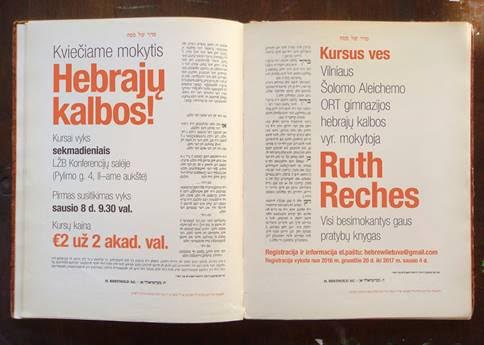
Hebrew Classes Begin in January

hebraju-kursai

Dear Community members and friends,

The long-awaited Hebrew classes are coming back to the Community! Classes will be held Sundays and the first class is at 9:30 A.M. for beginners and 10:15 for more advanced students on January 8, 2017.Senior Hebrew language teacher of the Sholem Aleichem Gymnasium Ruth Reches will teach the classes. The course costs 2 euros per 2 academic hours. Workbooks will be made available to all students. Don’t miss out on a wonderful opportunity and please register quickly, before January 4, via email to hebrewlietuva@gmail.com

Security First

by Eli E. Hertz
December 13, 2016

In the aftermath of the 1967 Six Day War, after three Arab armies converged on Israel’s nightmarish borders, even the United Nations was forced to recognize that Israel’s pre-1967 Six-Day War borders invited repeated aggression. Thus, UN Resolution 242, which formed the conceptual foundation for a peace settlement, declares that all states in the region should be guaranteed “safe and secure borders.”

Lt. general (ret.) Tom Kelly:

“I cannot defend this land (Israel) without that terrain (West Bank) … The West Bank Mountains, and especially their five approaches, are the critical terrain. If an enemy secures those passes, Jerusalem and Israel become uncovered. Without the West Bank, Israel is only eight miles wide at its narrowest point. That makes it indefensible.” [i]

Piscator Awards Recipients Named

James C. Nicola and Marina Kellen French to receive Erwin Piscator Awards on March 30, 2017

Dear Friends,

Two days ago, on December 17, we commemorated the 123rd anniversary of Erwin Piscator’s birth. Born in 1893 in a small village near Wetzlar, Germany, Piscator quickly made headlines in 1920s Berlin with his groundbreaking theatre productions. During the artistically fertile years of the Weimar Republic, Erwin Piscator founded the political and epic theatre and earned a reputation as one of the most innovative theater impresarios and producers far beyond Germany. After Hitler’s rise to power, Piscator fled and eventually found exile in New York where he founded and ran the Dramatic Workshop at the New School for Social Research teaching a whole generation of first-class American artists, among them Harry Belafonte, Marlon Brando, Judith Malina, Tony Randall, Elaine Stritch, and Tennessee Williams. In the 1960s, Piscator again made theater history as the artistic director of the Freie Volksbühne (Free People’s Theater) in West Berlin, where he directed the world premieres of Rolf Hochhuth’s The Deputy and Peter Weiss’s The Investigation.

Al Jolson Birthday Concert

al-jolson

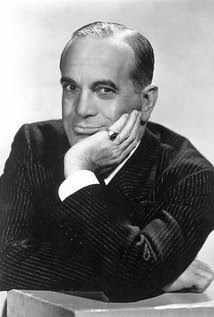
You are invited to a concert to celebrate the 130th birthday of Litvak musician and screen star Al Jolson at 7:00 P.M. on Tuesday, December 20, 2016 at the Lithuanian Jewish Community, Pylimo street no. 4, Vilnius.

Free to the public, come and enjoy!

Radio Documentary: Jews of Zarasai Region United by Love of Nature and Tragic Fate

lrtradijas

At 11:05 A.M. on Sunday Lithuanian National Radio, to be rebroadcast Tuesday at 9:00 A.M.

Lithuanian National Radio and Television looks back at the forgotten past of the Jews of Lithuania.


“Zarasai occupies a very warm place in my heart. There I spent what were probably the most important years of my childhood,” famous US cartoonist Al Jaffee (Mad Magazine and others) says. One might say his mother was killed by her love of her native land, according to a biography of the famous caricaturist from Zarasai. Those who left the region and the children of Holocaust survivors have a palpable nostalgia for the land with its lakes, forests and easy-going and care-free life. This sense is shared by all the residents of the different towns and villages interviewed, and who are creating their own initiatives to remember this forgotten part of their history.

Zarasai, Dusetos, Salakas, Antalieptė–the life of all the Jews who lived in these towns was snuffed out in Krakynė forest. Radio Documentary will take a look at the past of all these interconnected towns and how the Jewish community there is remembered today.

Hostess Vita Ličytė