
Religion

Lecture Series

Basia Nikiforova gives the lecture “Zygmunt Bauman: Life and Legacy” at 12 noon, Sunday, February 12 in the conference hall of the Lithuanian Jewish Community, Pylimo street no. 4, Vilnius.

Jared Kushner, Trump Aide and Son-in-Law, Has Litvak Roots

Kushner

Jared Kushner is the son-in-law and chief adviser to US president Donald Trump. His roots are in traditional Litvak lands, the areas where Jews lived in the mediaeval Grand Duchy of Lithuania. His grandmother Reichel Rae Berkowitz-Kushner hailed from Novogrudok, known in Lithuanian as Naugardukas, south of Grodno (Gardinas) in Belarus. She was imprisoned in the famous ghetto there where prisoners dug an escape tunnel and fled to the Jewish partisans in the forests.

Born on February 27, 1923, Rae Kushner was the second-oldest of four children in Novogrudok, then part of Poland and spelled Nowogródek.

The city had a thriving Jewish population, comprising just over half of the town’s 12,000 inhabitants. In the summer of 1941, the Nazis invaded Poland at the start of Operation Barbarossa. Though rumors of mass killings had reached Novogrudok by that point, few Jews actually believed that the Germans would carry out such atrocities. Following several massacres, the remaining Jewish population was forced into a ghetto. Rae lived in the city’s courthouse with her family and nearly approximately 600 other Jews. Rae’s mother and older sister were killed in a subsequent massacre on May 7, 1943. Before long, Rae, her father and younger sister were among only 300 Jews left. These remaining Jews managed to dig and escape through a 600-foot tunnel during the nights, using special-made tools in the workshops and hiding the dirt in the walls of buildings. When completed, the 600-foot tunnel was only large enough for one person to crawl through. Upon emerging from it, the escapees were met with gunfire, darkness and disorientation. Consequently, only 170 survived out of the 250 that escaped. Rae’s brother was among the fallen, having lost his glasses during the crawl through the tunnel. Rae and her surviving family spent ten days hiding in the woods, eventually making their way to the home of an acquaintance. The woman fed them and allowed them to sleep in her stable with the cows for one week–a risk that carried the penalty of a violent death. Shortly thereafter, the Bielski partisans took in the escapees from Novogrudok–including Rae and her family.

Letter from Šilalė Affirms Respect for Jewish Cemetery

The Lithuanian Jewish Community has received a letter following publication of an interview with the sole survivor of the Holocaust in Šilalė, Lithuania, Ruvin Zeligman, who spoke about the disrespect shown the memory of the 1,500 Jews murdered there and the lack of care shown the Jewish cemetery and mass murder site.

Silale1

We received a letter from Jurgita Viršilienė, senior specialist of the Education, Culture and Sports Department of the Šilalė regional administration, and from the alderman of Šilalė, denying the facts about which Zeligman spoke.

Sole Jewish Survivor of Holocaust in Šilalė Says Old Jewish Cemetery Cattle Pasture Now

Until World War II, the majority of the residents of the western Lithuanian town of Šilalė were Jews. The brick synagogue was built sometime around 1910 to 1914 at what is now the corner of V. Kudirkos street and Maironio street. There is a hardware store there now. The old Jewish cemetery is now pasture for livestock, with just the Holocaust mass murder site next to it fenced off.

Zeligmanas

Lithuanian Jewish Community member Ruvin Zeligman is the sole survivor of approximately 1,500 Šilalė Jews murdered in the Holocaust. He was 10 when World War II began in Lithuania in 1941.

Although he hasn’t lived in Šilalė for many years now, when he speaks he still falls into the western Lithuanian dialect. His wife also comes from the region and they speak in dialect at home.

Zeligman remembers the great fire which ravaged the town in 1939, burning down his family home and the entire street, taking a terrible toll on the town’s mainly wooden buildings.

How do you remember Šilalė when you lived there with your parents and family?

At that time about 60% of Šilalė’s population was Jewish. My father was a religious figure: the cantor, mohel [performer of circumcision], a religious teacher and a reznik [a man educated in the rules of kosher slaughter]. My father graduated from the famous Telz yeshiva. He was a respected man and he helped the local residents of Šilalė with his knowledge of medicine, healing the sick. There were four of us children in the family. Mother took care of the home and the children. We lived well, back then each of us, the four children, had a golden goblet at home and mother used to bring out a silver candleholder for holidays.

Zeligmanas Ruvinas2
Zeligman lights candles for the murdered Jews of Šilalė at the Choral Synagogue in Vilnius

Holocaust Remembrance Day Commemoration in Šešuoliai

Holokausto aukų minėjimo diena Šešuoliuose

On January 27 Stanislovas Budraitis, the chairman of the community of villages of the Šešuoliai aldermanship, organized and held an observance of International Holocaust Remembrance Day. The Šešuoliai administration building hosted an exhibit of photographs called Jews Are Our Neighbors and an exhibit of the book Lietuvos žydai [Jews of Lithuania]. Šešuoliai alderwoman Jolanta Lukšienė gave a welcome speech to those who gathered for the event.

Uk01

Stanislovas Budraitis, an historian, gave a presentation called “The Contribution of Jewish Culture to the History of Lithuania,” Želva Gymnasium Museum director Zita Kriaučiūnienė gave a report called “Jewish Life in Želva,” Molėtai Regional History Museum director Viktorija Kazlienė read her “Memories of Jews of the Molėtai Region,” Sketches of the Almanac editor Vytautas Česnaitis read “Jews of Ukmergė in the Pages of the Almanac” and Anita Albužienė, a member of the Ukmergė Jewish Community, recalled tragic events and shared them with those present.

A menorah with candles was lit at the former Jewish house of prayer and participants vitisted four mass murder sites 2 kilometers from Šešuoliai on the way to Želva. Members of the Ukmergė Jewish Community and the Gutman family, now resident in Vilnius but originally from Šešuoliai, participated in the commemoration.

Meeting with Dr. Antony Polonsky

Polonskis bendr

LJC members and members of the public attended a meeting with professor Antony Polonsky, whose book on Jewish history in Lithuania, Poland and Russia has been translated to Lithuania. Professor Šarūnas Liekis moderated the discussion.

The Brandeis professor is one of the most authoritative scholars of Eastern European Jewish history. His new book Jews in Poland and Russia provides an exhaustive view of the historical, political and cultural evolution of Jewish communities in these countries. Litvaks haven’t been left out, of course, and form a major part of the book.

In the 18th century the Polish-Lithuanian Jewish community was the largest in the world. The author elected not to look at Jewish history through the prisms of conflict and suffering, but instead to seek out the different principles by which the communities organized Jewish life and life with other communities.

Sale

Memorial to Lithuanian Jewish Holocaust Victims to Be Unveiled in Karl Jäger’s Home Town

church

January 27 has been marked as an official day to commemorate Nazi victims since 1996. On this occasion the film “Karl Jäger und Wir – die langen Schatten des Holocaust in Litauen” [Karl Jäger and Us: The Long Shadow of the Holocaust in Lithuania], a multi-generational project, is to be screened in Waldkirch, Germany. A monument commemorating the Jews murdered in Lithuanian and Holocaust victims from 1941 and 1942 is also to be unveiled there on January 29.

The City of Waldkirch, the “Waldkirch in the Nazi Period” workshop and the Catholic pastoral care unit in Waldkirch are to unveil the new memorial on January 29. The public is invited to attend the unveiling.

The “Waldkirch in the Nazi Period” workshop initiated the idea for the memorial in October of 2011 and it was approved by city council in 2015. It will be located by the Church of St. Margarethen and the Elztal Museum. The opening begins at 6:00 P.M. at the museum and will feature Mike Schweizer accompanied on saxophone.

The second part of the event is scheduled to take place in the church and will feature Katharina Müther, who is renowned for Yiddish, Sephardic, Sinti and Roma songs from Eastern Europe. German MP Gernot Erler, who served as state minister in the foreign ministry from 2005 to 2009, will deliver a speech, as will historian Dr. Wolfram Wette and pastor Heinz Vogel, with possible discussion and reflection afterwards.

The film “Karl Jäger und Wir – die langen Schatten des Holocaust in Litauen” is to be screened at the church at 8:00 P.M. The film is the fruit of a multigenerational project by Black Dog eV.

Representatives of the Lithuanian Jewish Community plan to attend the commemoration which has caused some surprise in Lithuania. It’s important to note Karl Jäger lived in Waldkirch as a young man, although he was born in Schaffhausen, Switzerland. Jäger, an SS colonel, was the main force behind the Holocaust in Lithuania. His report, known in Holocaust studies as the Jäger Report, is a detailed account of Nazi mass murder operations against Jews in Lithuania, listing mass murders by date and location and breaking down the number of victims in the categories of males, females and sometimes children.

Jegeris

After the war Jäger evaded capture by the Allies using a false identity. He worked as a farm hand until his report was discovered in March of 1959. Jäger committed suicide in Hohenasperg prison near Stuttgart in the German state of Baden-Württemberg awaiting trial in June of 1959. The Soviet Union only released the Jäger Report to West Germany investigators in 1963 during the trial of Hans Globke in East Germany.

The Jäger Report is one of the primary documents witnessing to the scope of the Holocaust in Lithuania. The Jäger Report details the murder of 47,326 men, 55,556 woem and 34,464 children in Lithuania, for a total of 137,346 Lithuanian Jews murdered in the first months of the Nazi occupation of Lithuania in the summer and fall of 1941.

Full story in German here.

Reminder: International Holocaust Remembrance Day Events Begin Today

You’re invited today at 4:30 P.M. to attend a ceremony at the Choral Synagogue in Vilnius where candles will be lit in memory of the victims of the Holocaust and the El malei Rakhamim prayer will be sung. Afterwards all are invited to the Lithuanian Jewish Community at Pylimo street no. 4 in Vilnius to a discussion of Jewish history with professor Antony Polonsky, moderated by professor Šarūnas Liekis, at 6:00 P.M.

Scratch an Historical Lithuanian Town, You Might Get a Shtetl

The Lithuanian Cultural Heritage Department announced they are already planning for this year’s European Day of Jewish Culture and have selected a theme, “The Diaspora and Heritage: The Shtetl.” They characterized the choice as an intentional, mature and topical one for a country where the formerly large Jewish ethnic and religious minority thrived until the 1940s in shtetls.

They explained the word “shtetl” means small town in Yiddish. “When the Jerusalem Temple was destroyed in 70 C.E., Jews spread throughout the world, starting a new stage in the existence of the people, life in the Diaspora. Jews who settled in the Grand Duchy of Lithuania from the latter half of the 14th century and their descendants are called Litvaks. They are a branch of the Ashkenazi, Jews fleeing persecution in the German lands in the Middle Ages,” the department noted in a press release.

They continue: “It’s possible the origins of the shtetls reach back to the 18th century, but one shouldn’t get the mistaken impression that every historical Lithuanian Grand Duchy or Lithuanian town may be called a shtetl. Not so! Only a town where Litvaks comprised up to half, and often more, of the population and where the spirit of Litvak enterprise and intellectual ferment was felt can be called a shtetl without reservations.”

Radio Documentary: Lost Traces of Vilkaviškis

„Radijo dokumentika”: dingusio Vilkaviškio pėdsakais
Vilkaviškis synagogue

lrtradijas

The Lithuanian National Radio program Radijo Dokumentika aired the episode on at 11:05 A.M. on January 22. It is to be rebroadcast at 9:00 A.M. on January 24 just after the morning news program Ryto Garsai.

Feiga Koganskienė, who lived in the town in the Suvalkija region right up till World War II, says: “Vilkaviškis is only the name Vilkaviškis, it has nothing in common with the former Vilkaviškis.” When she returned to her home town after the war, the woman did not recognize it, and found none of her Jewish family or friends.

Vilkavišio ž buvusi gimnazija

The modern Vilkaviškis Jewish Gymnasium between
the wars, now the city municipal building.

Before the war Vilkaviškis was one of the most ethnically and culturally diverse towns in the region, but now it’s perhaps the most Lithuanian town in the entire country. Today only a handful of people remember Vilkaviškis in the interwar period, and even fewer are prepared to look into the town’s Jewish history. In the Lost Traces of Vilkaviškis episode, Radijo Dokumentika reporters walk with residents for whom the Vilkaviškis of that time is not just a collection of faded facts from history.

A Mekhaye Winter Children’s Camp 2016

Camp6

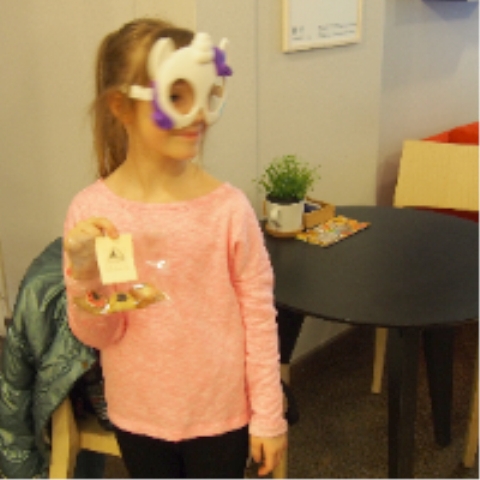
The Lithuanian Jewish Community and the Joint Distribution Committee traditionally hold the A Mekhaye winter camp for Children and did so late last year in 2016 as well. The camp is held in Dubingiai, Lithuania. It usually includes about 90 children who spend the holiday period together. This year as in earlier years we assembled a great team, people who know their work and who have been part of camp staff for several years now.

This year the theme was “Hanukkah in the shtetl,” since the camp coincided with the holiday. Each day camp counselors introduced a new topic and taught the children about it. Besides just being fun, the camp is very educational, even if information comes through games, as it often does. The children and staff say they feel right at home in Dubingiai now, as if it were their second home.

Lithuanian Jewish Community Position on Reconstruction of the Vilnius Palace of Concerts and Sports and Its Use as a Conference Center

In light of the recent intensification of statements in the media on the alleged danger now threatening the conservation of the Šnipiškės Jewish graveyard in Vilnius (hereinafter Cemetery), the Lithuanian Jewish (Litvak) Community (hereinafter LJC) feel it our duty yet again to present the main facts in the case and the LJC’s well-founded position based on those facts regarding the issue of the reconstruction of the Vilnius Palace of Concerts and Sports (hereinafter Sports Palace) and its adaptation as a conference center.

1. To date no work for the reconstruction of the Sports Palace has been carried out, and therefore no possibly negative impact on the graveyard which was destroyed in the 1950s is being effected at the current time. The remains of the Vilna Gaon were removed to the Vilnius Jewish cemetery located on Sudervės street long ago and his headstone is located there.

False statements and rumors have been circulating for some time, so again it is necessary to explain the headstones in the Cemetery were destroyed long ago and the Sports Palace was constructed there back in the Soviet era. At the current time only pre-planning proposals have been drawn up, which could serve later as the basis for a detailed technical project for the renovation and adaptation of the Sports Palace which will be carefully examined and assessed by competent institutions.

2. The Cemetery is entered on the Registry of Cultural Treasures and has been declared a state-protected site, meaning any construction or reconstruction work in the area of the graves or in the buffer zone around it, and any plans for this sort of work, are carefully assessed and strictly controlled under the provisions of the law of the Republic of Lithuania on protection of real estate heritage and the specific requirements of a special protection plan for this Cemetery.

3. This special protection plan for the Cemetery was prepared under the requirements and principles contained in a protocol agreement signed on August 26, 2009, by the leaders of the LJC, the Committee for the Preservation of Jewish Cemeteries in Europe and the Cultural Heritage Department under the Lithuanian Ministry of Culture. All these institutions share responsibility for keeping the agreement and ensuring sufficient authority for doing so.

4. The protocol agreement of August 26, 2009, resolves that:

4.1. Earth-moving work is forbidden in the Cemetery;

4.2. Three additional possible buffer-function zones are defined; the Sports Palace falls into zone A where earth-moving work is proscribed except in cases involving engineering construction (utility pipeline, transportation and communication infrastructure) and/or work to maintain the Vilnius Sports Palace. Jobs involving the movement of earth require consent by the LJC and must be accomplished in the smallest scope possible. All work involving the movement of ground must be done under the supervision of an archaeologist and an authorized LJC delegate. To insure adherence to this requirement, the LJC makes all decisions regarding the conservation of the Cemetery and plans for the reconstruction of Sports Palace only with the knowledge and consent of the Committee for the Preservation of Jewish Cemeteries in Europe.

5. The Vilnius Sports Palace was constructed in 1973. The building and the Cemetery upon which it was built have been listed on the Registry and are protected as a cultural treasure since 2006.

6. According to the original construction documents presented to the LJC, the foundation of the Sports Palace extends 7.37 meters underground, so most likely all burials there were destroyed during building construction. Therefore pre-planning proposals for reconstruction of the Sports Palace are based on the assumption burials do not remain under the building. Despite the low likelihood there are still graves under the building, in the event of actual reconstruction of the Sports Palace the LJC will demand earth-moving work be of minimal scope and conducted under the supervision of representatives of the Committee for the Preservation of Jewish Cemeteries in Europe.

Therefore, bearing in mind that:

1) existing burials were destroyed during construction of the Vilnius Sports Palace;

2) currently not a single headstone remains at the Cemetery (the last monuments were torn down back in 1955), the Cemetery territory is in disrepair, and there are no signs in the huge territory of the Cemetery testifying to its history except for a symbolic statue and an information plaque set up a few years ago;

3) the Sports Palace building along with the Cemetery surrounding it are listed on the Registry of Cultural Treasures and it cannot be torn down, but in its current state cannot either be used and requires renovation;

4) the abandoned Vilnius Sports Palace is in a state of ruin and is unbefitting the city center and the Cemetery, and stands as a horrid symbol recalling the Soviet era when the headstones of the Cemetery were destroyed and the human remains there disturbed;

The Government of the Republic of Lithuania have the right to do as they please with the property in their possession, and certainly the right to merely consider the reconstruction of the Vilnius Sports Palace, adapting it for one or another use, and the LJC has no legal foundation or rational arguments for quelling these activities. Instead of engaging in unconstructive criticism, the LJC is undertaking all measures to insure these plans and their possible realization do not violate Jewish law and tradition, and believes the Government of Lithuania, as a responsible institution with a vested interest in maintaining its reputation, will also exhaust all efforts so that the project is carried out to the highest standards of transparency, quality and respect for heritage. If the project is carried out appropriately, the LJC would achieve our goal of preserving the Cemetery:

1) establishing in city planning and physically demarcating the limits of the Cemetery;

2) renovating the territory of the Cemetery and setting up walking paths there in line with Jewish law and tradition;

3) erecting a commemorative composition including the names of the people buried in the Cemetery;

4) installing necessary educational and information material on site.

Israeli Supreme Court Ruling Favors Women’s Prayer at Western Wall

jta
January 11, 2017, JERUSALEM (JTA) — Israel’s Supreme Court has ruled in favor of women being allowed to read from the Torah in the women’s section at the Western Wall and declared that an egalitarian prayer area set aside at nearby Robinson’s Arch does not constitute access to the holy site.

In an interim injunction announced Wednesday, the court gave the wall’s Orthodox administrators and state agencies 30 days to show cause why women cannot pray “in accordance with their custom” or allow them to pray as they choose.

It also declared that women should not be subjected to body searches before entering the plaza. The Western Wall Heritage Foundation, the Orthodox-run body that oversees activity at the site, has authorized such searches to prevent worshipers from entering the women’s side with Torah scrolls, prayer shawls, tefillin and menorahs.

Zygmunt Bauman is Dead

Zigmunt_Bauman

Polish philosopher Zygmunt Bauman passed away at the age of 91 surrounded by family at his home in Leeds Monday following illness. Bauman was born in 1925 in Poznan (Posen) and in 1939 fled Nazi-occupied Poland for Soviet-occupied Poland. In the Communist Polish military Bauman did political education, took part in the battles for Kolberg (Kołobrzeg) and Berlin and worked in Communist security and espionage institutions.

Bauman took up sociology at the Warsaw Social Sciences Academy after the war and then transferred to philosophy at Warsaw University. He published his first book in 1960. Born to a non-observant Jewish family, Bauman left Poland during the anti-Semitic wave of 1968 and moved to Israel, teaching at Tel Aviv University. He soon moved from there to Leeds where he taught at Leeds University. Since the move to Leeds he wrote in English.

Bauman authored about 50 books and more than 100 articles on the topics of globalization, modernity, post-modernism, consumerism, morality and the Holocaust. His views concerning the Holocaust were extremely nuanced and included at times denouncements of Western Holocaust commemoration as a culture of death and a new religion with its own list of martyrs, “the Names,” intended to act as a sort of surrogate Judaism for the non-observant and Gentiles, or as a completely new religion but offering nothing of value to the human soul. Bauman’s most famous book, Modernity and the Holocaust (1989), draws upon Hannah Arendt and Theodor Adorno’s books on totalitarianism and the Enlightenment. Bauman argues he Holocaust should not be considered exclusively an event in Jewish history nor a regression to pre-modern barbarism. Instead, the Holocaust is deeply connected to modernity and its attempts to impose order. Procedural rationality, the division of labor into smaller and ever more specialized tasks, ever more refined taxa for species and seeing obedience as morally good all played a role in making the Holocaust possible. He said for this reason modern societies have not fully grasped the lessons of the Holocaust. It is viewed, according to Bauman’s metaphor, like a picture hanging on a wall, static, without utterance or meaning.

The late Lithuanian philosopher Leonidas Donskis counted Zygmunt Bauman among his friends and greatly respected his work. In 2007 Vytautas Magnus University in Kaunas conferred an honorary doctoral degree upon Bauman.

Our condolences to his many friends and surviving family members.

Rav Moshe Shapiro Has Died

The Lithuanian Jewish Community reports with deep sadness the death of Rav Moshe Shapiro, the Petirah of Hagaon, the Litvak ultra-Orthodox community’s spiritual leader in Israel. The author of numerous seforim and the noted rosh yeshiva of Jerusalem’s Yeshiva Pischei Olam passed away January 6 at Hadassah Ein Kerem Hospital at the age of 82 following a lengthy illness.

His father Rav Meir Shapiro with his brother Rav Simkha Ziselom left Lithuania for Israel to study Torah at the Hebron yeshiva. Rav Moshe Shapiro studied both in Panevėžys and at the Hebron yeshiva. His mentors were the Rav Eliyahu Eliezer Dessler and Rav Yitzchok Hutner.

By the age of 18 Shapiro already new the entire Babylonian Talmud by heart. The Rav Avrohom Yeshaya Karelitz recommended he intensify his study of the Talmud.

Rav Moshe Shapiro is one of the first contemporary rabbis who performed Jewish outreach, returning Jews to the faith of their fathers and teaching Judaism.

Rav Shapiro visited Lithuania last year and spent some time in towns and cities connected with his family history. When he and Lithuanian Jewish Community chairwoman Faina Kukliansky met then, he told her the Lithuanian Jewish Community has a great future ahead.

The Lithuanian Jewish Community is deeply saddened by the death of Rav Moshe Shapiro and express our deepest condolences to his family, friends and students.

Baruch dayan ha’emet.

Lithuanian National Radio: Slobodka

lrtradijas

The Lithuanian National Radio and Television radio program Radijo dokumentika [Radio Documentary] for Sunday, January 8, rebroadcast Tuesday, January 10 after the morning news program at 9:00 A.M. The small area at the confluence of the Neris and Nemunas Rivers created by the Radziwiłłs in the 17th century, Slabada, a “serfdom-free zone,” was originally smaller and is called a village in the documentation, but by the second half of the 18th century the shtetl was a competitor in arts and crafts and trade with the city of Kaunas across the rivers. Industry developed quickly in the 20th century. Slobodka, as it came to be called, was the home to the world-famous Slobodka Yeshiva. Known in Lithuanian as Vilijampolė, the city on the Viliya River [a synonym for the Neris], the district became part of the city of Kaunas before World War II.

This is the eighth episode in a series dedicated to the Jewish shtetls of Lithuania in Lithuanian National Radio and Television’s retrospective on the forgotten past of the Jews of Lithuania.

What We Lost in WWII

by Marius Debesis
15min.lt

You could characterize Vilnius today as a city emerging from post-traumatic stress syndrome, covered with the wounds of war still visible to the naked eye, or sometimes only visible under profound examination, scars testifying to the city’s losses, slicing through the street plan but every year receding into the distance, into oblivion. To really understand Vilnius, one must consider the totality of losses, summing up what the capital lost during the war.

vilnius-1944-58653a4296640

Walking through the city looking for the “heritage” of the war, it’s useful to define several categories for what the Lithuanian capital lost during the war. The one to begin with is not cultural, but rather personal losses, from the loss of people who were an indivisible part of the city of Vilnius. Consider the most painful loss—the Holocaust of Vilnius Jews, which deprived the city of one of its greatest portions of identity, so significant that in Jewish culture Vilnius was bestowed the title of Jerusalem of the North. Although this text talks mainly about Jews, death hovered above everyone in Vilnius without regard to social status or religious or political conviction.

mazasis-getas-vilnius-po-58653a4459f50

Full story in Lithuanian here.