


Shavuot Begins May 28
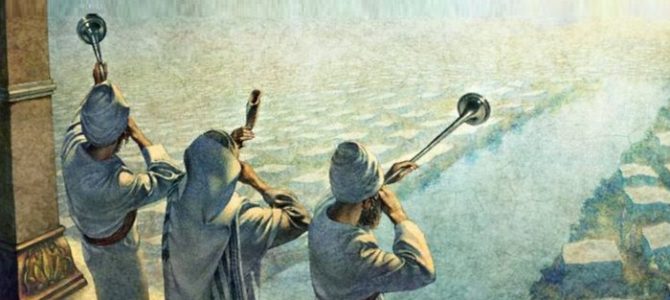
Shavuot is the holiday which celebrates the receiving of the Torah. This marks the day the Jewish people received the Law. It is celebrated on the 6th day of Sivan on the Jewish calendar. This is a state holiday in Israel.
Shavuot means “weeks” in Hebrew. It is the seventh week from the second day of Passover. It marks the day when Moses received the Ten Commandments of G_d on Mount Sinai. They were written on two stone slabs. These are known in Hebrew as “Aseret haDvarim” and in Greek as the Decalogue.

Choral Synagogue Reopens
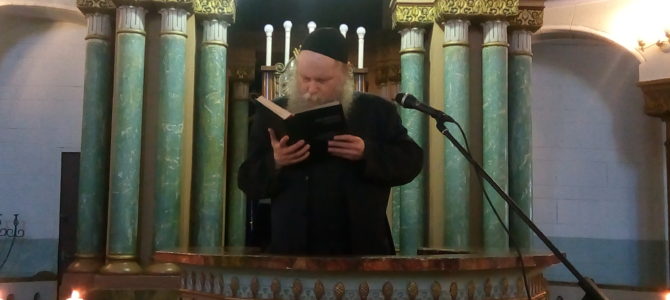
The Choral Synagogue in Vilnius reopened for morning prayers on Monday, May 25, following the quarantine. Special measures in place include mandatory wearing of face masks and gloves, taking the temperature of those attending and disinfectant for hands.
The faithful had to rediscover their seats, now marked, at a safe 2 meters distance from one another.
Agreement was reached with the congregation on how to behave during Torah reading. We agreed to abbreviate the number of prayers temporarily, they will now take place during the day during Torah readings on Monday, Thursday and Saturday. This will be changed according to traditional holidays.

Jerusalem Day
The 28th day of the month of Iyar, May 22 this year, is commemorated as the day the state of Israel took the eastern section of the holy city in the Six Day War in 1967. Initially proclaimed an international city by the United Nations, Jerusalem was partitioned between Israeli and Jordanian forces following the Israeli-Palestinian and Israeli-Arab wars from 1947 to 1949. Israel occupied the entire city in the Six Day War, despite having proclaimed its capital at Jerusalem earlier and setting up government buildings in West Jerusalem.
Because of the original plan by the United Nations for the city sacred to three religions to be administered as an international, shared city, for decades countries around the world have refused to recognize it as the capital of Israel, maintaining diplomatic representations in Tel Aviv instead. The United Nations plan of 1947 called for a corpus separatum along the lines of the Papal States/Vatican City inside Rome, or the former “free cities” before World War II such as Danzig and Trieste. The city’s status is a bone of contention in hopes for peace between Israelis and Palestinians; Palestinians claim the city as their capital.

Lithuanian Web Site: Let’s Learn about Lite, the Great Synagogue and the Vilna Gaon
by Karolina Aleknavičė, 15min.lt
This year, 2020, has been declared the Year of the Vilna Gaon and Lithuanian Jewish History, and it’s a good opportunity to learn about the authentic culture which thrived for whole centuries in our neighborhood.
We spoke with Vilna Gaon State Jewish Museum Jewish culture and identity exhibit coordinator Saulė Valiūnaitė, Vilnius University historian Dr. Akvilė Naudžiūnienė and Kėdainiai Multicultural Center director Audronė Pečiulytė about Lite, the Litvaks who lived here, Vilnius as the Jerusalem of the North and the Gaon, Eliyahu, who lived there.
Lithuanian Jewish History an Integral Part of Lithuanian History
Valiūnaitė told 15min.lt Lithuanians’ attitude towards Jewish history has changed over the last 15 years. “It’s inspiring that in Vilnius and other Lithuanian cities there are ever more initiatives appearing, and most importantly, a desire to commemorate the history and heritage of the Jews who lived there. Some do this by setting up commemorative markers, others by organizing events or writing books about the Jewish history of their cities and towns,” she said.
In the Spotlight: William Stern

Mr. William Stern was born in Budapest in 1935; after the Nazi occupation of Hungary in March 1944, he and his family were taken to the Bergen-Belsen concentration camp. They survived the War and emigrated to New York in 1952 where Mr Stern pursued studies first at Yeshiva University and subsequently at Harvard Law School.
It was during his stint at Harvard Law School that Mr Stern discovered the many risks and temptations which face a student when he leaves his home environment and suddenly becomes enmeshed in a totally new and different culture. He was shocked at seeing some of his friends shed their tradition and previous way of life in just a matter of months. Having married a young lady resident in London, Mr Stern moved to England in 1960. Early in his career, he established in London in 1971 a kosher canteen which welcomed students of Imperial College, located opposite his offices at Albert Court. This canteen has been going strong for the past 45 years and is presently catering to 30-35 Imperial College students every day of the academic year.
When he expanded his business to Lithuania, Mr Stern discovered the presence in Kaunas of approximately 100 Israeli medical students. He felt that during the 6-year period which medical studies require, many of these students might lose not only their Israeli but also their Jewish identity. In 2010, he established the Jewish Club which grew and developed over the years into the Jewish Centre Kaunas. Its aim is to provide the Jewish students in Kaunas a home away from home and prevent the loss of Jewish identity which otherwise might occur.

NCSEJ Webinar with Lithuanian, Latvian Jewish Community Leaders May 14

WASHINGTON, D.C.
Please join us for a webinar Thursday, May 14, 2020, at 11:00 A.M. ET with Dmitry Krupnikov, deputy chairman of the Latvian Council of Jewish Communities and Faina Kukliansky, chairwoman of the Lithuanian Jewish Community
They will discuss the impact of the corona virus on the Jewish communities in Latvia and Lithuania and other issues affecting the Baltic region.
About the Speakers:
Dmitry Krupnikov is deputy chairman of the Latvian Council of Jewish Communities and Chairman of the Latvian Jewish Community Restitution Fund (LEKOREF), which was set up by the Council after restitution to the Community by Latvia of five religious and communal properties in 2016. All restituted properties were transferred to LEKOREF, which is now in charge of maintaining and managing the properties.
Faina Kukliansky is chairwoman of the Lithuanian Jewish Community. She has also served as chairwoman of the Vilnius Jewish Community. In May, 2017 she was re-elected chairwoman of the Lithuanian Jewish Community. She is the co-chair of the Foundation for the Disposal of Good Will Compensation for the Immovable Property of Jewish Religious Communities (Goodwill Foundation).
Register here.
Note: ZOOM has numerous significant security flaws. Use it at your own risk.
Šiauliai Regional Jewish Community: Life under Quarantine
It’s no secret the quarantine has altered the rhythms and habits of our lives. It had been customary in the Šiauliai Regional Jewish Community to celebrate all sorts of holidays and birthdays and to attend different events, educational activities and tours we organized, and simply to gather and talk at the Community building… Today that building stands quiet and empty…
Jews around the world were celebrating Passover when the quarantine began here in Lithuania. The Jews of Šiauliai were not able as we were in past years to come together and celebrate happily to the sound of Jewish melodies this beautiful spring holiday. This year each of celebrated separately at home. The Lithuanian Jewish Community provided home deliveries of matzo to all the regional Communities, so as the quarantine got under way the Šiauliai Regional Jewish Community had to insure every member had the requisite matzo for the Passover seder table. Every member of the Community did receive safe delivery of boxes of matzo before the holiday began.
Despite disruption to the rhythm and conventions of daily life, we continue to provide crucial care to our seniors who were victims of the Nazis. Home-care workers continue to visit them and help them with their daily needs, insuring the safety of our elderly during these days so difficult for all of us.

Big Thank You to Svetlana Who Found a Jewish Headstone in Her Garden
Vilnius resident Svetlana Šitelienė contacted the Lithuanian Jewish Community to report her discovery of what appears to be a Jewish headstone, or matzeva, on her farm.
Thank you, Svetlana.
We’ve reached Svetlana and thanked her, and sent her a box of matzo and the Vilnius ghetto diary of Yitzhak Rudasheviski translated into Lithuanian.
Studying the photographs she provided, it appears this might be an unfinished headstone made for someone named Esther, with the surname partially completed. Mrs. Šitelienė said the grave stone might have ended up in her yard 47 or more years ago, and according to relatives it came from the Jewish cemetery near the Palace of Marriage in Vilnius.

Kaunas Jewish Community Distributing Sabbath Care Baskets
The Kaunas Jewish Community has redirected efforts under quarantine and is using the telephone and internet to make sure members, especially the elderly, don’t feel cut off from the world.
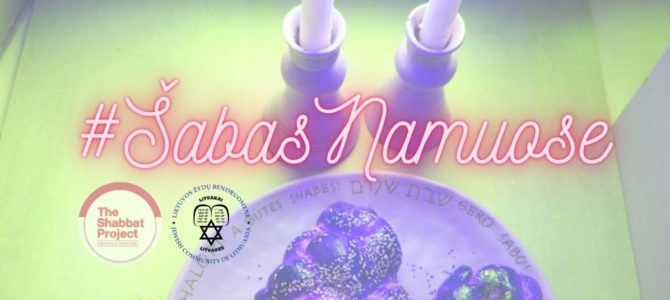
Many Community members celebrate Sabbath together and miss face-to-face interaction at the Sabbath table. While conditions aren’t allowing that to resume yet, the Kaunas Jewish Community, in the spirit of fellowship and keeping with tradition, is offering a free Sabbath care basket to members so that everyone can celebrate the Sabbath at home. Now members can break challa bread alone but at the same time together. The care baskets contain more than just challa, though, and include other traditional Sabbath dinner dishes.
KJC chairman Gercas Žakas is pleased this initiative has received the approval of the Goodwill Foundation and the interest and support of so many KJC members. One member said: “It really does feel as if you aren’t alone, but are celebrating Sabbath together with the entire community.” Look for the Jewish communities in other cities and towns to do the same thing, Žakas predicted.

Yom HaZikaron, Israeli Memorial Day
Yom haZikaron is the day Israel marks to honor its fallen soldiers, victims of terrorism and all who have died defending the state of Israel. According to the Jewish reckoning of time, it began on the evening of April 27 this year at around 8:00 P.M. and lasts until the evening of the next day.
President Rivlin spoke in the square in front of the Wailing Wall in Jerusalem and said it was sad there couldn’t be a mass public commemoration because of the virus epidemic. He said while we can’t cry together, we still remember and give honor to the 23,861 soldiers and victims of terrorism.
In Israel the commemorative holiday begins with an air-raid siren. People simply stop whatever they are doing and give honor to the dead. Those driving pull over and get out of their cars. All commercial activity ceases and people at the dinner table stop eating and sit in silence.

Greetings from Lithuanian Parliament on Gaon’s 300th Birthday
Dear Lithuanian Jewish Community chairwoman Mrs. Faina Kukliansky, dear Lithuanian Jewish Community,
We mark the 300th anniversary of that most exalted Litvak, Eliyahu ben Solomon Zalman, the Vilna Gaon. The parliament of the Republic of Lithuania named this year, 2020, the Year of the Vilna Gaon and Litvak History, to stress the priceless contribution the Jewish community, an inseparable part of our society for 700 years now, has made to Lithuania’s history, culture, learning and consolidation of statehood through your adherence to tradition and social activity.
In all times there have been people who do not conform to the canons of their era, who through their creativity and unconventional thinking have changed the world. The Jewish people have given so much to the world. One of them, the Gaon or Genius of Vilna, Eliyahu ben Solomon Zalman, was a scholar of Jewish texts and law and a Talmud interpreter and scholar. This was a brave challenge during his times but, happily, Eliyahu grew up in an intellectual environment and was supported by his family and appreciated by the community. Rumors about the young sage and his intellect spread far beyond the limits of Vilnius. The Vilna Gaon became the most renowned religious authority and he changed people’s life paths, thought and the concept of Litvak, and turned Vilnius into a Jewish spiritual center, the Jerusalem of Lithuania. This is a priceless historical, cultural and philosophical legacy of the Jews and Lithuanians of Vilnius and Lithuania and of the other peoples who live in Lithuania.
The Year of the Vilna Gaon and Litvak History is a great opportunity for all of us today, in the words of the Gaon, “to see with our own eyes, hear with our own ears and feel with our entire heart” what significant and rich heritage we have in creating the Lithuania of our future. Congratulations!
[signed]
Gediminas Kirkilas, deputy speaker, chairman of the European Affairs Committee
Lithuanian parliament

Jewish Confederation of Ukraine Sends Congratulations on 300th Birthday of Gaon
April 24, 2020
Dear friends!
The Jewish Confederation of Ukraine sincerely congratulates you on the 300th anniversary of the Vilna Gaon who is a symbol of wisdom and spirituality for Jews around the world.
The memory of the great leader of the best Jewish traditions and laws stands beyond the constraints of time and brings together generations of Jews.
May the brilliant heritage of the Vilnius Gaon help the Lithuanian Jewish Community to successfully develop and increase the traditions embodied in his philosophical teaching.
Jewish Confederation of Ukraine

Anniversary of Gaon Central in Conversation between Israeli and Lithuanian Presidents
April 23 was the 300th anniversary of the birth of the Vilna Gaon, the outstanding Torah-Talmud scholar from Vilnius in the 18th century. Lithuanian president Gitanas Nausėda and Israeli president Reuven Rivlin called each other to offer congratulations on the occasion.
The Lithuanian president expressed respect for the Vilna Gaon, the Rabbi Eliyahu ben Soiomon Zalman, who put Vilnius on the map as a center for Torah learning. He told the Israeli president the year 2020 had been declared the Year of the Vilna Gaon and Litvak History in Lithuania to honor the Gaon’s bright memory.
“The intellect and erudition of the Vilna Gaon made Vilnius the spiritual center of Jews in Europe, famous throughout the world. It was thanks to him that Vilnius appeared on the world map as the capital of Torah-Talmud scholarship and became the religious center of Judaism. The Gaon’s teaching, based on thoroughness, patience and dedication to revealing spiritual power and to seeking wisdom, is an inspiration in difficult times,” the Lithuanian president said.
President Nausėda emphasized Lithuania remains the home of the large Litvak community spread throughout the world. The Lithuanian Jewish Community maintains active ties with Litvaks living in Israel, the USA, South Africa, France and elsewhere, Nausėda noted.
The two presidents also discussed the health situation in their two countries and measures for restoring economic life. They agreed this time full of challenges the world faces demands special attention to international relations and solidarity between the nations.
At the end of their conversation the Lithuanian president greeted Israel on the 72nd anniversary of statehood and invited the Israeli president to visit Lithuania.
Information from the President’s Communication Group
Letter from WJC President to Member Organizations: Getting Back to Normal
Subject: The Jewish imperative of the coronavirus crisis
From : Ronald S. Lauder, WJC President
To: Affiliate organizations
Dear Friends,
I hope that, despite the difficult circumstances, you and your families had a good Pesach, and that you are managing to deal with the difficulties of the current situation without too much hardship.
As the COVID-19 coronavirus continues to spread around the world and impact all of our lives significantly on a daily basis, I have been giving a lot of thought to how we, as representative of Jewish communities around the world, should act now and also start to prepare for the challenges of transition to the post-corona world.
I hope that you will find my views on this critical issue, published in the Jerusalem Post, to be of interest:
Of course, I would be most interested to hear your reactions.
Please keep well and stay safe. If there is anything at all that we can do to be of assistance to you or your community, at this time, please let us know.
Best wishes and Shabbat Shalom,
Ronald

Small Gathering Honors Memory of Vilna Gaon at Nominal Grave in Vilnius
The Lithuanian Foreign Ministry reports Lithuanian Jewish Community chairwoman Faina Kukliansky, Lithuanian foreign minister Linas Linkevičius and Israeli ambassador Yossef Levy gathered at what is considered the final resting place of the mortal remains of the Vilna Gaon in the Jewish section of the Sudervės road cemetery in Vilnius April 23, the 300th anniversary of the birth of the Gaon.
The Lithuanian foreign minister expressed the hope events planned to mark 2020 as the Year of the Vilna Gaon which were postponed because of the virus epidemic will take place later in the year.

Three Hundredth Birthday of the Vilna Gaon
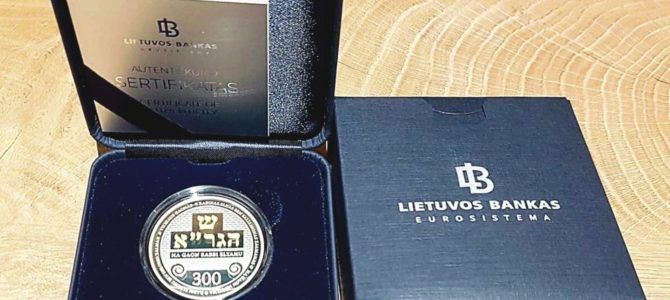
The Lithuanian parliament has proclaimed 2020 the Year of the Vilna Gaon, the 18th century scholar and cultural figure Eliyahu ben Solomon Zalman, and the Year of Litvak History. This anniversary has also been listed on UNESCO’s list of anniversaries for 2020 and 2021. On April 23 we mark the 300th birthday of the Vilna Gaon.
Scholars consider the Gaon the greated Talmudic scholar in Eastern European Jewish history. He is also the father of the rabbinical movement’s struggle against Hasidism and is considered the primary figure in rabbinical learning among Eastern European Jews. The Gaon and his followers, mitnagdim or misnagdim (literally “opponents,” i.e., of Hasidism) are sometimes called prophets of learning.
The Vilna Gaon had a deep interest in different branches of the exact sciences and his texts on geometry, astronomy and geography are often ascribed to the Haskalah, the Jewish enlightenment which arose in the 1770s in Central and Western Europe. Alan Nadler, professor emeritus of religious studies and formerly the director of a Jewish studies program in the USA, says the Gaon’s interest in secular subjects stimulated the expansion of many academic fields and the Gaon became a symbol of educated Judaism.

Eliyahu ben Shelomoh Zalman, the Vilna Gaon
Eliyahu ben Shelomoh Zalman
(Gaon of Vilna; 1720–1797), Torah scholar, kabbalist, and communal leader. The Gaon of Vilna (known also by the acronym Gra, for Gaon Rabbi Eliyahu) was a spiritual giant, a role model and source of inspiration for generations, and the central cultural figure of Lithuanian Jewry. Eliyahu ben Shelomoh Zalman was born into a rabbinical and scholarly family, and following a short period of study in a heder, studied Torah with his father. At age 7, he was sent to study with Mosheh Margoliot, rabbi of Keydan (Lith., Kėdainiai). Soon thereafter, he began to study on his own, and at 18, left Vilna to go into “exile”—a period of wandering through Jewish communities of Poland and Germany.
Upon Eliyahu’s return to Vilna, he shut himself in his house and devoted his energy to Torah study. He continued in this path throughout his life, supported by the local Jewish community. When Eliyahu was 35 years old, Yonatan Eybeschütz, who was suspected of Sabbatian leanings, turned to him, seeking support and referring to him as “one who is unique, saintly, holy, and pure, the light of Israel, possessing all-embracing knowledge, sharp and well-versed, with 10 measures of esoteric knowledge . . . whose praise is recognized in all of Poland . . .” (Eybeschütz, Luḥot ha-‘edut [1756], p. 71). It seems, then, that the Gaon of Vilna had already achieved legendary status during his lifetime.

Fayerlakh Performs Next Year in Jerusalem by Internet
During Passover this year the members of the Fayerlakh song and dance group didn’t meet for seder or perform a concert, but they did sing Next Year in Jerusalem together from their homes.

Jewish Holiday of Freedom Celebrated without Foods Recalling Slavery
Judita Gliauberzonaitė, 42, chairwoman of the Vilnius Lithuanian Jerusalem Jewish community, recalls how her grandmother Cilė Žiburkienė every spring before Passover would cleanse the entire house so that, God forbid, not even a grain of flour would remain, which would mean leavened bread remained in the house, a sign recalling the enslavement of the Jews in the land of Egypt.
Jews around the world who count their history in millennia begin celebrating their Passover holiday on the 15th day in the month of Nisan (March or April), lasting for seven days in Israel and eight elsewhere in the world. Secular Jews who keep to tradition usually celebrate the first and last days of Passover, gathering as families for dinner.
Judita Gliauberzonaitė says more religious Jews attend synagogue every day of Passover.
Passover often coincides with Catholic Easter. This year it began on April 8 and continues till April 15.